• Link to X
  • Link to Facebook
  • Link to Instagram
  • Link to TikTok
  • Link to Youtube
  • About
    • About Us
      • President
      • Board of Directors
      • Board of Advisors
      • Financials
      • Our Methodology
      • Success Tracker
      • Contact
  • Act Now
    • 30 Ways to Help
      • Email Congress
      • Call Congress
      • Volunteer
      • Courses & Certificates
      • Be a Donor
    • Internships
      • In-Office Internships
      • Remote Internships
    • Legislation
      • Politics 101
  • The Blog
  • The Podcast
  • Magazine
  • Donate
  • Click to open the search input field Click to open the search input field Search
  • Menu Menu

Tag Archive for: Nigeria

Posts

Children, Education, Global Poverty

Great Strides for Education in Nigeria

 Education in Nigeria

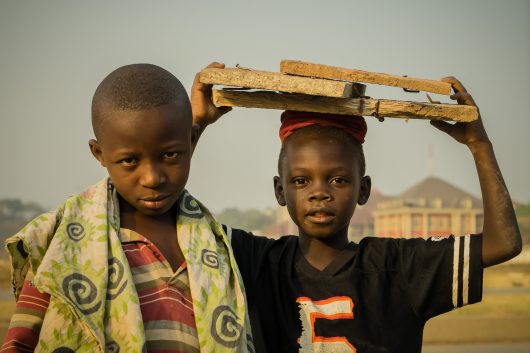
Children walking to school: an image many take for granted and expect as a given in the world today. But in many places, such as Nigeria, not every child has the opportunity to learn.

Nigeria, the most populated country in Africa, comprises 20 percent of the total children not currently attending school in the world. And the problem is far from stagnant as there are 11,000 babies born every day in the country.

Politically insecure and vulnerable to attack, Nigeria’s children are at great risk for not receiving an education. The northern part of the country faces a devastating statistic as two-thirds of the children are illiterate.

An attack in Northern Nigeria forced 2.2 million people to flee their homes, resulting in the displacement of families whose children no longer have a school to attend. In 2015, USAID set out to change the status quo, teaming up with state officials and a number of non-profit organizations to improve education in Nigeria.

They developed the Education Crisis Response Program: a program designed to relieve the local schools of some of their overwhelming demands by providing education for children between the ages of six and 17 in three different Nigerian states.

Two hundred ninety-four learning centers were built for classes three days per week. In-class meals and necessary school supplies were provided. The Education Response Program did not stop there. Recognizing the possible trauma many of these children may have experienced in the rapid displacement of their families from their homes, the program also provides psychological treatment.

Teachers in these learning programs have been trained to approach their classrooms through a psychosocial mindset. They encourage group work, remain aware of the history these children hold and provide open student-teacher interaction to help them feel safe and comfortable back in the classroom.

The Nigerian government supports this program and will be entrusted with the task of carrying its essential goals through when the program is phased out in 2017. The country is also planning financially so that the education response will grow with time.

Furthermore, the World Bank announced in September of 2016 a budget of $500 million for basic education in Nigeria.

Nigeria joined the Global Partnership for Education in 2012, established to increase the amount of people receiving quality, basic education. This partnership has worked with each state to develop a plan “to outline its priorities and objectives.”

In addition, an organization called the Nigerian International Athletes Association (NIAA) will hold a conference in October. The NIAA is a union based in the United States comprised of former Nigerian athletes seeking to improve the future of athletics, education and healthcare in their home country.

According to Premium Times, the NIAA’s president plans to use the conference’s funds “to support kids from disadvantaged homes with their education and help talented young athletes to combine sports and education.”

Perhaps the NIAA’s efforts combined with those of USAID and World Bank will result in not only the maintainence of millions of children’s education, but the advancement as well. With teachers trained to care for them beyond the classroom and former athletes enabling them to chase their dreams, education in Nigeria is surely on the rise.

– Rebecca Causey

Photo: Flickr

September 29, 2016
https://borgenproject.org/wp-content/uploads/borgen-project-logo.svg 0 0 Borgen Project https://borgenproject.org/wp-content/uploads/borgen-project-logo.svg Borgen Project2016-09-29 01:30:582024-12-13 17:55:51Great Strides for Education in Nigeria
Children, Global Poverty, Hunger

Children in Danger of Death from Hunger in Nigeria

Hunger in NigeriaAfter assessing areas of the country previously cut off from foreign assistance by Boko Haram, the U.N. released a statement on July 1, declaring that 50,000 children in northern Nigeria stand to die from undernourishment and hunger in Nigeria if left untreated.
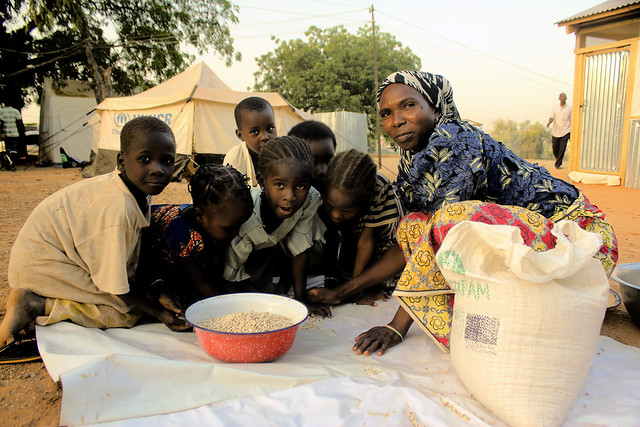
“Unless we reach these children with treatment, one in five of them will die. We cannot allow that to happen,” stated Jean Gough, Nigeria Representative of UNICEF.

Over the past year, the Nigerian army, with the help of troops from neighboring countries, fought to reclaim territories in the north taken by Boko Haram. The struggle resulted in the displacement of 2.4 million people in Nigeria, Chad, Niger, and Cameroon, making food insecurity and malnutrition an emergent issue in these countries.

The violence in northern Nigeria greatly disturbed the supply of food to markets, increasing the cost of basic commodities. However, the recapturing of northern territories allowed humanitarian agencies like MSF to provide aid in the form of medical services and health supplies to the most vulnerable residents of these areas.

In addition, on June 27, the U.N. Central Emergency Response Fund allocated $13 million to provide immediate life-saving aid to northern Nigeria. Funds will be used to provide food, money for purchasing food, nutritional supplements, and seed and tools for the forthcoming planting season.

Unfortunately, this is only a portion of what needs to be done to end hunger in Nigeria. Conflict between the militant group and the Nigerian army is still ongoing, and the afflicted areas need more rapid assistance.

“While the government and humanitarian organizations have stepped up relief assistance, the situation in these areas requires a much faster and wider response,” said the U.N. Humanitarian Coordinator for Nigeria, Munir Safieldin.

Hopefully increased efforts from international organizations will continue to assist reducing malnutrition and the under-five mortality rate in the country.

– Ugochi Ihenatu
Photo: Flickr

September 24, 2016
https://borgenproject.org/wp-content/uploads/borgen-project-logo.svg 0 0 Borgen Project https://borgenproject.org/wp-content/uploads/borgen-project-logo.svg Borgen Project2016-09-24 01:30:142024-12-13 17:55:33Children in Danger of Death from Hunger in Nigeria
Health

Bringing Immunization Training to Nigeria

Immunization training
Last November, the Gates Foundation hosted the Teach to Reach: Innovative Methods for Immunization Training summit in Seattle. Some of the Nigerian summit attendees have since returned to their home country to share what they have learned about immunization training.

The Teach to Reach website describes the event as “a resource for immunization professionals to share and explore recent advances in educational psychology and instructional design, and to discuss how best to use new strategies and tools to improve immunization training.”

Doctor Bassey, the current Head of Routine Immunization and Essential Services at the National Primary Health Care Development Agency in Nigeria leads a group “working to revitalize the national immunization training task team.” Two of his major partners are Doctors Abiola and Abisola from Clinton Health Access Initiative.

The team has faced many challenges in an attempt to increase immunization training in the country. One of the major issues is ensuring access to every health facility in the country of 180,000 people. The doctors are also pushing for each immunization center to use the same training manuals.

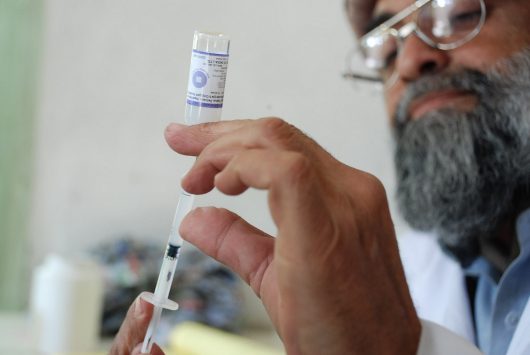
Abiola and Abisola have done major work in the state of Lagos to provide more hands-on rather than theoretical training– for instance using life-size dolls to practice delivering immunizations. They report that Lagos State Government officials have been very supportive of their efforts.

Increased immunization training also works to advance adult learning and strengthen the skilled labor market within Nigeria.

Bassey, Abiola and Abisola are not the first to focus on immunizations in Nigeria. Nigeria has worked to increase immunizations and improve training within the country for decades. Nigeria’s Expanded Programme on Immunization began in 1979, and 20 years later, the fight against polio has resulted in a renewed focus on vaccinations. Thus, the resulting creation became the National Programme on Immunization.

Despite the countless initial obstacles, the future of immunization training in Nigeria looks bright and displays the success of the Teach to Reach Summit message.

– Carrie Robinson

Photo: Flickr

September 12, 2016
https://borgenproject.org/wp-content/uploads/borgen-project-logo.svg 0 0 Borgen Project https://borgenproject.org/wp-content/uploads/borgen-project-logo.svg Borgen Project2016-09-12 01:30:552020-06-06 09:40:54Bringing Immunization Training to Nigeria
Aid, Food & Hunger, Food Aid

The Dangote Foundation Donates Food in Abuja, Nigeria

Dangote FoundationThe Dangote Foundation delivered food items worth millions of Nigerian naira to thousands of vulnerable internally displaced persons (IDPs) in Abuja, the Federal Capital Territory of Nigeria.
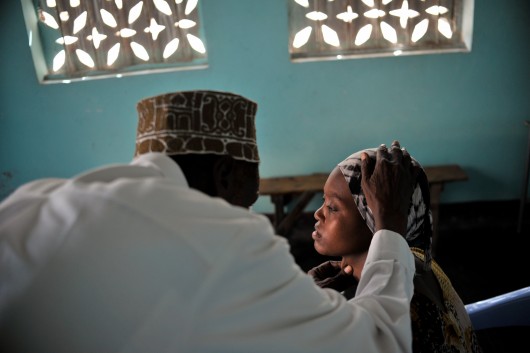
During a visit to the IDP camps of Abuja, Dangote Foundation chairman Alhaji Aliko Dangote was saddened by what he saw and pledged to alleviate the suffering of thousands of IDPs. The Dangote Foundation is a branch of the Dangote Group. The foundation provides charitable funds to a variety of causes in Nigeria and other African states.

Abuja currently has 13,481 internally displaced persons according to the latest assessment by the International Organization for Migration’s Displacement Tracking Matrix. The Dangote Foundation donated food items to the IDPs during Ramadan as a philanthropic action geared toward alleviating poverty in Nigeria.

The Federal Capital Territory (FCT) Minister Malam Muhammad Musa Bello directly received the donation and ensured that the IDPs would expressly benefit from the donations. These items included Dangote sugar, Dangote salt, Dangote Spaghetti, rice, Danvita and wheat meal.

The FCT Minister stated that the donation Abuja received was extremely generous and the country is grateful to the foundation. Moreover, the FCT Administration is committed to alleviating poverty and respects non-governmental organizations with a similar mission.

This donation has been one of many recent philanthropic actions by the Dangote Foundation in Nigeria. Within a span of five years, the foundation has donated N6.3 billion to various IDP camps in Nigeria. Currently, one US dollar equals 315.25 Nigerian Naira.

Previously, the Foundation made donations to Nigerian universities and women’s causes. They have also provided donations during ethnoreligious crises. In addition, the Dangote Foundation donated to the World Food Program to help Pakistan during massive flooding in 2010 and raised over N11billion for flood relief in Nigeria.

In coordination with the Gates Foundation; the Dangote Foundation, USAID and Nigerian governors joined together to secure political and financial resources to enhance immunization programs within Nigeria in order to keep the country polio-free.

The Dangote Foundation focuses on health, education, economic development and disaster relief through their commitment to decreasing the amount of people suffering or dying from poverty-related issues.  The Dangote Foundation’s donations work to rectify the lack of education for children, to create quality healthcare and support underprivileged adults by improving access to education and healthcare.

– Kimber Kraus

Photo: Flickr

August 20, 2016
https://borgenproject.org/wp-content/uploads/borgen-project-logo.svg 0 0 Borgen Project https://borgenproject.org/wp-content/uploads/borgen-project-logo.svg Borgen Project2016-08-20 01:30:092024-05-27 09:35:03The Dangote Foundation Donates Food in Abuja, Nigeria
Global Poverty

Doctors Without Borders

Doctors Without Borders

In discussing the origins of Doctors without Borders, Bernard Kouchner, its founder stated that “It’s simple really: go where the patients are. It seems obvious, but at the time it was a revolutionary concept because borders got in the way. It is no coincidence that we called it Medecins Sans Frontiers.”

Origins

Doctors Without Borders was conceived by a group of young doctors that decided to go and help victims of wars and major disasters during the period of upheavals in Paris in 1968.

In 1971, Raymond Borel and Philippe Bernier, journalists from the medical review Tonus, “issued an appeal to establish a band of doctors to help the suffering in the midst and the wake of major disasters.”

Doctors Without Borders was officially created on December 22, 1971 with about 300 volunteers including doctors, nurses and other staff including the 13 founders such as Dr. Jacques Beres, Phillipe Bernier, Raymond Berel and Dr.Jean Cabrol, among others.

The organization is predicated on the belief that all people have the right to medical care regardless of “gender, race, religion, creed or political affiliation and that the needs of these people outweigh respect for national boundaries.”

Shifting Focus

Since 1991, Doctors Without Borders has been working in Haiti and its teams have “tended to patients, assisted in births and provided access to medical care for hundreds of thousands of Haitians who otherwise would have gone without.”

In Syria, Doctors Without Borders was able to provide medical supplies to networks of doctors already in the country whilst trying to lay the groundwork to provide direct medical care to the victims of the war in that country.

In Nigeria the organization’s staff responded to outbreaks of measles and meningitis, especially in the northern region of the country, and often had to travel to remote areas to reach patients.

In Sierra Leone and Burundi, where death during childbirth has been a serious problem, Doctors Without Borders was able to create programs that set up “free of charge central referral facilities and emergency ambulance services to bring women from remote health centers to hospitals where they could deliver safely 24 hours a day, seven days a week.” These programs operated in Sierra Leone’s Bo District and Burundi‘s Kabezi District.

Thanks to Doctors Without Borders, many lives have been saved because they “reject the idea that poor people deserve third-rate medical care and strive to provide high quality health care to patients.” It is not surprising that they received a Nobel Peace Prize in 1999.

– Vanessa Awanyo

Photo: Flickr 

April 14, 2016
https://borgenproject.org/wp-content/uploads/borgen-project-logo.svg 0 0 Borgen Project https://borgenproject.org/wp-content/uploads/borgen-project-logo.svg Borgen Project2016-04-14 01:30:142024-05-27 09:33:36Doctors Without Borders
Education, Global Poverty

Supplementing Educational Institutions in Nigeria

Afterschool Centre For Career Development

According to research conducted by McKinsey Global Institute, by 2040, 50 percent of the world’s youth will be African. This number reflects the urgent need for educational institutions in countries such as Nigeria to get their children into schools to learn basic academic credentials.

With this aim in mind, the Esther Eshiet’s program Afterschool Centre For Career Development (ACCD) was established. Founded in 2011, the organization is committed to inspiring, investing, engaging and facilitating growth opportunities for young people in the transitional stage of their lives. By learning creative problem-solving techniques, the children obtain innovative skills to expand on the work of educational institutions in Nigeria.

So far, the program has partnered with 30 different secondary schools and developed an online program to reach as many young people as possible. There are currently 42,000 subscribers, according to Changemakers.

Eshiet runs her organization with the idea that “children need the navigation skills to help them determine what skills and direction they need, not to learn for, but to create their own jobs and careers.” It is crucial that children understand their strengths and apply them to specific fields that will foster their full potential in future career services.

The problem ACCD seeks to address is the fact that 62 percent of people in Nigeria live in poverty. Of all those people, 60 percent are young people who find it extremely difficult to find work outside of school. Notably, most of the youths receive little to no career counseling and the transition from school to the real world comes as quite a shock.

Educational institutions in Nigeria often require a ‘transition period’ in which students spend two to four years at home between school and university due to finances and corrupt admission processes. ACCD works with kids during this critical time to actively engage them in society and the economy. That way, the kids do not have to waste time waiting for university acceptance.

Once they are accepted to university, ACCD continues to guide the youths by exposing them to apprenticeships, voluntary placements and other prospects, which continue to build their entrepreneurial experiences and skills needed to develop their individual career paths. By providing kids with the proper tools and resources, Eshiet hopes to spark passion and creativity in the lives of young Nigerians.

Eshiet obtains funds for her organization through friends, family, individuals, foundations and clients. Her goal for ACCD is to become a self-funded organization by offering direct service that is paid for and also through a pay-it-forward model.

The foundation’s growing success in supplementing educational institutions in Nigeria predicts a brighter future for Nigerian youth in years to come.

– Megan Hadley

Sources: Business Fights Poverty, McKinsey, After School Centre, Change Makers
Photo: Flickr

March 4, 2016
https://borgenproject.org/wp-content/uploads/borgen-project-logo.svg 0 0 Borgen Project https://borgenproject.org/wp-content/uploads/borgen-project-logo.svg Borgen Project2016-03-04 01:30:212024-05-27 09:33:16Supplementing Educational Institutions in Nigeria
Education, Global Poverty, Technology

Etisalat Raise ICT Literacy Through Donations

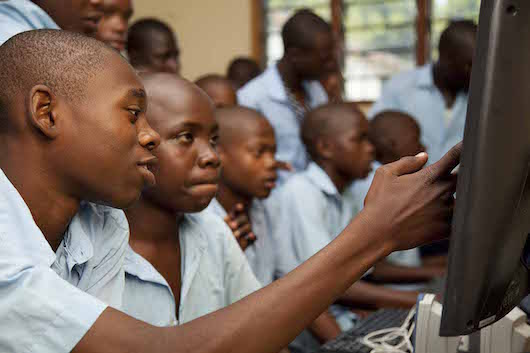
EtisalatEtisalat contributed 30 desktop computers in an attempt to improve Information Communication Technology (ICT) education at the Nuhu Bamali Primary School in Kano State. Etisalat hopes the computer donations will raise ICT literacy at the primary school.

The computers were presented to the school during a commissioning of facilities ceremony where Etisalat also unveiled school renovations, according to It News Africa.

The Vice President of Government and Regulatory Affairs for Etisalat, Ibrahim Dikko, said the donation was in line with their commitment to improving education in Nigeria through partnerships with the government.

ICT education has become a basic component of learning and will provide a greater benefit if students in primary and secondary schools are exposed to it early on. The company is dedicated to creating an improved and conducive learning environment for Nigerian children, according to Dikko.

Headmistress of Nuhu Bamali Primary School, Hajia Asmau Mohammed Lawan, hopes the computers will go a long way in giving pupils the cutting edge education to prepare them for their individual career paths according to It News Africa.

In October 2015, Etisalat donated desktop computers to the ICT center of Girls’ Government College in Nigeria, which is also located in Kano State.

According to Etisalat’s Head of Government and Community Relations, Mohammed Suley-Yusuf, “Etisalat is proud to be able to contribute positively to achieving the government’s objective of improving Kano State, especially in the area of education.”

Etisalat Group is a telecommunications provider who offers services to 18 countries throughout the Middle East, Asia and Africa. It is one of the world’s leading telecom groups and ranks among the most profitable telecom groups in the world. They work with the British Council to provide a Pan-Nigerian teacher training program and they continue to focus on improving education through their Adopt-a-School program.

The company is currently working on an initiative to create an Etisalat Telecommunications Engineering Postgraduate Program within the education sector.

– Jordan Connell

Sources: Etisalat, It News Africa, Prompt News Online
Photo: Manic

February 1, 2016
https://borgenproject.org/wp-content/uploads/borgen-project-logo.svg 0 0 Borgen Project https://borgenproject.org/wp-content/uploads/borgen-project-logo.svg Borgen Project2016-02-01 01:30:342024-05-27 09:28:46Etisalat Raise ICT Literacy Through Donations
Global Poverty, Technology

Yudala Makes First Drone Delivery in Nigeria

YudalaYudala made the first drone delivery in Nigeria during its Black Friday sale.
A group of spectators and several media organizations came with camera crews to watch the drone take off from the Yudala headquarters in Gbagada.

The drone delivered a Nokia smart phone to a customer who ordered from the Yudala website. It flew all the way to an Access Bank branch located along the Gbagada-Oshodi Expressway where the item was successfully delivered, according to Vanguard.

The customer who received the smart phone, Yetunde Lawal, said, “I am extremely delighted and indeed short of words to explain how I feel to be the first person to receive an item via drone delivery in Nigeria, all thanks to Yudala. This is an innovative concept in the evolution of e-commerce in the country, which I am sure other competitors will want to copy.”

Yudala continued to make drone deliveries throughout the rest of its Black Friday sales, which took place from November 26 to November 30.

Lawal said, “Yudala has met and exceeded my expectations, and I can only encourage all my colleagues, friends and family to shop and shop on Yudala. Black Friday is here, and I am glad that the Yudala offer will run till Monday.”

Companies such as Amazon are working to incorporate drone deliveries into their businesses, according to CNN. Drone deliveries are believed to be the future for online delivery companies.

Yudala is Nigeria’s first true composite online and offline retail chain. The word means “best wishes, peace of mind and prosperity” and is the first organization in Nigeria to combine an online platform with offline stores located in cities across Africa.

According to MSN News, Yudala has a strong ambition to control the pace and set new milestones for online and offline retail business. The company started up four months ago and has been very successful ever since.

They have been working on some powerful campaigns to break through to Africa, including “Neighbor to Neighbor Mega-Deals” and “October Mid-Day Madness,” according to Innov8tiv.com.

They have also entered into partnerships with other companies such as HP, Lenovo, Apple, Microsoft, Sony and Dell.

– Jordan Connell

Sources: CNN, Innov8tiv.com, MSN News, Vanguard
Photo: Somtoo

January 26, 2016
https://borgenproject.org/wp-content/uploads/borgen-project-logo.svg 0 0 Borgen Project https://borgenproject.org/wp-content/uploads/borgen-project-logo.svg Borgen Project2016-01-26 01:30:362024-12-13 18:05:35Yudala Makes First Drone Delivery in Nigeria
Education, Global Poverty, Technology

Intel: Preparing Nigerian Students for Future Employment

Nigerian_Students
Intel Corporation is using its resources to improve education in Nigeria by teaching educators to successfully incorporate technology into classrooms. The company believes this program will be the key to increasing 21st-century employment opportunities for Nigerian students.

Intel’s technology teacher training program is being implemented in conjunction with national governments and public institutions. The program focuses on a student-centered approach to learning instead of the traditional teacher-centric one.

Through this method, the teacher serves as a guide for students and helps maintain group collaboration. The students learn together and with each other. In addition, they also choose their own areas of study which keeps them engaged and fosters a passion for learning.

Another problem related to student engagement is the generation gap. Elderly teachers are not familiar with the latest technology and therefore, shun it in the classroom. This upholds the traditional pen and paper classrooms with their teacher-centered focus leading to boredom in the classroom.

Intel’s technology teacher training will help address this problem by educating instructors. For example, Dr. Kemi Banjoko, a Senior Lecturer in Chemistry, said what intrigued him the most was “the use of mobile phone and tablets in teaching.”

Intel’s corporate affairs group manager, Babatunde Akinola, stressed the importance of this education for Nigeria. He said, “The world is getting more global and if you do not fit in, you face being dis-enfranchised.”

Nigeria is a growing country with massive oil reserves and a large youth population. However, the country lacks a strong education system. Notably, the primary school attendance rate for males is 72 percent but drops to 54 percent for secondary school. The government is hoping that the inclusion of technology will help keep Nigerian students engaged in learning.

Intel’s program has trained over 10 million educators in 70 different countries and Nigeria is hoping to benefit from the collaboration. Since 2013, Intel has teamed up with major educational institutions in Nigeria like Tai Solarin University of Education and Sa’adatu Rimi College of Education.

– Andrew Wildes

Sources: AllAfrica, Edutopia, Intel, TechTrends Nigeria, UNICEF
Photo: Flickr

December 14, 2015
https://borgenproject.org/wp-content/uploads/borgen-project-logo.svg 0 0 Borgen Project https://borgenproject.org/wp-content/uploads/borgen-project-logo.svg Borgen Project2015-12-14 01:30:182024-12-13 18:05:29Intel: Preparing Nigerian Students for Future Employment
Development, Global Poverty

Aliko Dangote is Paving the Road to Success in Africa

Dangote
Aliko Dangote is known not only as the wealthiest person in Africa but also as the continent’s largest donor. This year, Dangote appeared in Forbes business magazine’s list of the most powerful people on the planet. Dangote is known for utilizing the rich agricultural land of his native country, Nigeria, to generate profits.

In 1981, Dangote founded the Dangote Group, a conglomerate offering products ranging from flour and salt to cement. The cement sector of the Dangote Group has operations in Nigeria and 14 other African countries, and Dangote Cement is the only Nigerian company on the Forbes Global 2000 Companies.

Despite his success, Dangote’s critics accuse him of using his political connections with African leaders to ban imports from his competitors. In 2012, only five percent of Dangote Cement was publicly traded.

However, Dangote claims the primary purpose behind his business strategies was and is to use Africa’s resources to bring money to Africa. This type of business approach is called “backward integration,” a process wherein a country uses its own production to replace imports.

Nigeria’s abundance of limestone provides the country with easy access to concrete. This concrete, Dangote argues, could improve Nigeria’s roads. In September of this year, Dangote urged the federal government to consider concrete roads in lieu of bitumen roads claiming that the concrete is cheaper and more durable.

In addition, concrete roads supposedly require less maintenance and upkeep. The concrete road discussion is being rigorously debated among members of the Nigeria Economic Summit Group (NESG).

Of course, in most parts of the world, accessible roads are vital to transportation. Nigeria has the largest road network in West Africa and the second largest south of the Sahara. Whether or not the discussion is about concrete roads, improving a country’s infrastructure is pivotal to both broadening its economy and increasing its opportunities for advancement.

– Dana McLemore

Sources: Economist, Forbes, Reuters, The News Nigeria, Vanguard Newspapers
Photo: Wikimedia

November 21, 2015
https://borgenproject.org/wp-content/uploads/borgen-project-logo.svg 0 0 Borgen Project https://borgenproject.org/wp-content/uploads/borgen-project-logo.svg Borgen Project2015-11-21 11:34:392024-12-13 18:05:24Aliko Dangote is Paving the Road to Success in Africa
Page 6 of 13«‹45678›»

Get Smarter

  • Global Poverty 101
  • Global Poverty… The Good News
  • Global Poverty & U.S. Jobs
  • Global Poverty and National Security
  • Innovative Solutions to Poverty
  • Global Poverty & Aid FAQ’s
Search Search

Take Action

  • Call Congress
  • Email Congress
  • Donate
  • 30 Ways to Help
  • Volunteer Ops
  • Internships
  • Courses & Certificates
  • The Podcast
Borgen Project

“The Borgen Project is an incredible nonprofit organization that is addressing poverty and hunger and working towards ending them.”

-The Huffington Post

Inside The Borgen Project

  • Contact
  • About
  • Financials
  • President
  • Board of Directors
  • Board of Advisors

International Links

  • UK Email Parliament
  • UK Donate
  • Canada Email Parliament

Get Smarter

  • Global Poverty 101
  • Global Poverty… The Good News
  • Global Poverty & U.S. Jobs
  • Global Poverty and National Security
  • Innovative Solutions to Poverty
  • Global Poverty & Aid FAQ’s

Ways to Help

  • Call Congress
  • Email Congress
  • Donate
  • 30 Ways to Help
  • Volunteer Ops
  • Internships
  • Courses & Certificates
  • The Podcast
Scroll to top Scroll to top Scroll to top