• Link to X
  • Link to Facebook
  • Link to Instagram
  • Link to TikTok
  • Link to Youtube
  • About
    • About Us
      • President
      • Board of Directors
      • Board of Advisors
      • Financials
      • Our Methodology
      • Success Tracker
      • Contact
  • Act Now
    • 30 Ways to Help
      • Email Congress
      • Call Congress
      • Volunteer
      • Courses & Certificates
      • Be a Donor
    • Internships
      • In-Office Internships
      • Remote Internships
    • Legislation
      • Politics 101
  • The Blog
  • The Podcast
  • Magazine
  • Donate
  • Click to open the search input field Click to open the search input field Search
  • Menu Menu

Tag Archive for: Malnutrition

Posts

Education, Food & Hunger, Women's Empowerment

3 Keys to Ending World Hunger Forever

World HungerThe plight of world hunger is nothing new. On average, one in eight individuals go hungry every day. Currently, about 795 million people suffer from chronic hunger.

This is especially critical in developing countries. There, food productivity and sustainability are just one amongst a plethora of other issues, including overpopulation, civil conflict and lack of education.

However, while the effects of hunger are not limited by race, religion or country, the answer to ending the world’s food shortage problem lies in many, perhaps unexpected places.

Women’s Empowerment

For instance, one such solution can be found in empowering women. Of the 600 million small farmers, herders and food providers in the world, half are women. However, this large fraction of food providers is hindered from producing adequate quotas due to cultural and gender boundaries.

Typically, women have less access to education, ownership of land or livestock. They also receive less credit than their male counterparts. As a result, half of the world’s food providers are unable or not producing nearly enough to sustain themselves, let alone the world’s population.

If these restrictions on female agriculturists decreased, however, according to the Food and Agriculture Organization of the United Nations (FAO) the number of hungry people in the world would drop 17%.

Education

Another solution to ending world hunger revolves around education. Countries in Africa and South America have fertile land, but with ignorant farmers, food production remains low. These uneducated agriculturists practice outdated farming techniques and in turn reap poor results.

But programs such as Food for Training projects focus on educating food providers in developing nations. They can dramatically improve food production levels and encourage long term self-sustainability at very little cost.

Moreover, school meal projects also reduce hunger amongst children, who most heavily feel the effects of food shortages. In turn, the free or reduced meals schools provide encourage families to send their children to school, which supports education.

Reducing Food Waste

Lastly, a crucial part of reducing and eventually ending world hunger lies in ending global food waste. If the world were to reduce its food waste, a third of the world’s entire food supply would be saved, which is enough to feed 3 billion people.

Ultimately, this would result in a food surplus that could sustain entire countries. However, food recycling projects and campaigns such as Feedback, which focuses on saving leftover produce and creating nutritious meals from marketable food scraps, help reduce hunger. This provides thousands of people around the world with free, nutritious meals.

World hunger has reduced significantly since the 1990s; however, it has since leveled in 2010. Strategies such as food waste reduction campaigns, education and discouraging gender inequality can make significant dents in the fight to end this battle.

– Jenna Salisbury

Photo: Pixabay

August 16, 2016
https://borgenproject.org/wp-content/uploads/borgen-project-logo.svg 0 0 Borgen Project https://borgenproject.org/wp-content/uploads/borgen-project-logo.svg Borgen Project2016-08-16 01:30:232024-12-13 17:54:393 Keys to Ending World Hunger Forever
Food & Hunger, Global Poverty

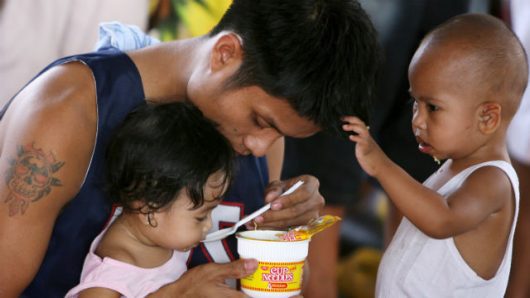
Eliminating Hunger In The Philippines: More Than Just Food Aid

Hunger in the Philippines
Despite an increase in the rate of employment (by about 5 percent), poverty in the Philippines has seen relatively no improvement. The Philippine Statistics Authority (PSA) conducted research in order to guide policymakers in their efforts to alleviate hunger in the Philippines.

In 2015, 17.2 percent of the population lived under the poverty threshold.

Amado Parawan is the health and nutrition advisor for an organization called Save the Children. He recently urged Filipino presidential candidates to re-evaluate their methodologies to address hunger in the Philippines.

Parawan stated that feeding programs are really only a “band-aid solution” to solving the infection of hunger and malnutrition. In addition, he encouraged them to seek foreign aid and consult experts on globally accepted intervention policies.

His plea to candidates follows a recent initiative by Save the Children Philippines called the ‘Lahat Dapat’ campaign. This movement highlights the importance of healthcare in the prenatal and early stages of development for Filipino children.

Current foreign initiatives include the World Food Programme (WFP) of the U.N., which began their work in 1968. However, they had to reestablish their presence in 2006, after the government requested more aid in light of increasing armed conflict.

The program focuses on improving food insecurity and helping communities to build resilience in preparing for natural disasters. In addition, the program also emphasizes the importance of providing healthy meals for children in school.

Each school year, over 65,000 children in the areas of Lanao del Sur, Lanao del Norte and Maguindanao receive crucial nourishment school meals. Good nutrition then increases school retention rates, as well as the quality of the education children receive.

Additionally, Action Against Hunger works to eliminate hunger in the Philippines. Armed conflicts have displaced many Filipinos. One such area is Zamboanga, where efforts have been directed towards providing clean water, sanitation, and nutrition education.

The government of the Philippines is known for its $450-million conditional cash transfer program, Pantawid Pamilyang Pilipino Program. It also recently received a new financing package from the World Bank. This social safety net program helps to reduce the vulnerability of families to sudden economic difficulties. The money ensures that children receive ample nutrition and access to education. It also gives pregnant mothers access to regular health exams.

By assessing the methodologies that have been successful in other nations and modifying them to fit the Philippines’ unique needs, the partnership of the government and the international community established a successful food aid program.

The most important consideration when working to eliminate hunger in the Philippines is fostering independence. Humanitarian organizations and the governments involved will not only provide food, but they will also help families become self-sufficient.

If aid continues to be this sustainable and organizations continue to educate households about efficient and healthy lifestyles, Filipinos will develop their own economy and reduce hunger in the process.

– Veronica Ung-Kono

Photo: Rappler

August 12, 2016
https://borgenproject.org/wp-content/uploads/borgen-project-logo.svg 0 0 Borgen Project https://borgenproject.org/wp-content/uploads/borgen-project-logo.svg Borgen Project2016-08-12 06:01:452024-12-13 17:54:42Eliminating Hunger In The Philippines: More Than Just Food Aid
Global Poverty, Refugees and Displaced Persons

Refugee Camps: Temporary Solutions to Long-Term Problems

Refugee camps

Refugee camps are supposed to be temporary living settlements for displaced people fleeing violence and persecution from their home countries. While the accommodations within refugee camps are built on short-term solutions, the idea of “temporary” for refugees grows obsolete as their living situations become more permanent.

A refugee spends an average of 12 years living in a camp according to the New York Times. These camps face their own significant problems. In the last 10 years, the number of displaced people in the world tripled. Over 60 million people are now displaced, said the United Nations High Commissioner for Refugees (UNHCR). Refugee camps are constantly subjected to insufficient funding and support from the international community, overcrowding, scarcity of food, shortage of clean water and poor sanitation.

Without adequate food, refugees are susceptible to chronic malnutrition, which increases their risk of disease or illness. While the UNHCR recommends a daily minimum of 20 liters per person per day, many refugee camps fail to meet these standards. A lack of clean water and poor sanitation systems result in more diseases, such as diarrhea and cholera.

Proactive health measures, however, are being taken. To combat malnutrition and nutrient deficiencies, some refugee camps have implemented community gardens. At the Meheba refugee camp in Zambia, for example, refugees can grow their own food and add fruits and vegetables to their diets. Calls for improvements in both the latrine and sufficient waste disposal systems have also been made, as these will not only improve sanitation but also prevent disease.

The Kilis Refugee Camp in Turkey resembles more of a permanent shelter. There are no tents, but sturdy containers instead. The camp has amenities that many others lack; electricity, maintenance, a clinic and grocery stores. Within the grounds, there are also schools and counselors.

However nice the camp is, the prolonged stay of many of the refugees makes it more difficult to maintain psychological well-being. The placement of refugee camps away from society and the increasing length of stay by their residents make it hard for the people to remain engaged. Without employment and integration, refugees cannot practice their skill sets or feel connected to the local community.

UNHCR Engineer and Physical Planning & Shelter Officer Anicet Adjahossou found that one solution to strengthen community building within refugee camps was to work with anthropologists and refugees to redesign the standard refugee camp grid format into a new housing layout.

In 2012, Adjahoosu worked with UNHCR at the Dollo Ado refugee camp in Ethiopia to organize the homes into sets of U-shaped enclosures. The innovative arrangement prompts more family interaction and allows for larger communal areas. Also included were locations for schools, water distribution points, markets and health centers.

In addition to improving the living conditions in refugee camps, more aid must be given to prevent and end conflicts, so that we do not continue to see an increase in people forced to flee their homes in search of safety. Luckily, it appears that advocates like Anicet Adjehossou are taking the lead.

– Erica Rawles

Photo: Flickr

August 10, 2016
https://borgenproject.org/wp-content/uploads/borgen-project-logo.svg 0 0 Borgen Project https://borgenproject.org/wp-content/uploads/borgen-project-logo.svg Borgen Project2016-08-10 01:30:282024-12-13 17:55:31Refugee Camps: Temporary Solutions to Long-Term Problems
Global Poverty

Satellite Technology Fighting Drought in Ethiopia

drought in Ethiopia

Ethiopia is no stranger to drought. However, as they face their worst bout in decades, Middle Eastern turbulence and the Refugee Crisis have spread international relief funds thin.

Determined not to be overcome, Ethiopians and partners like UNICEF are stepping in—with the unexpected help of satellite technology.

The introduction of satellite remote sensing allows areas affected by the drought in Ethiopia to be mapped rapidly, increasing the impact and timeliness of first-response measures. The satellites can also identify ideal well sites, providing valuable freshwater supply when other wells go dry. This technology is moving the approach to facing drought from reactionary to pre-planned, which is making efforts to alleviate the effects of drought more efficient, while preempting some of them all together.

The innovation comes at a pivotal time, with the 2015-2016 El Nino bringing devastating drought in Ethiopia and impacting some of the nation’s most impoverished people. Food security, livestock survival, national economy and basic human needs are all jeopardized by the water shortage. The Ethiopian government and the United Nations have identified 10.2 million Ethiopians in need of food assistance funding.

For Ethiopian farmers and herders, who represent over 80 percent of the nation, groundwater access is fundamental to ensuring food security. That security is greatly jeopardized by freshwater wells going dry at rates as high as 70 percent in some regions. Satellite remote sensing enables farmers to place new wells in more strategic location, using information on hydrogeology, ground vegetation, topology and morphology to find the most successful well locations.

That same satellite technology has the potential to address drought long before those wells go dry. Used to monitor precipitation, vegetation health, and soil moisture, the technology signals where the need is greatest for preventative action.

Satellite use in the region has swiftly made a positive impact. In the hard-hit northern region, satellites have been utilized to identify locations for new water boreholes which could provide water for 100,000 people. The project and others like it, have combined the efforts of the Ethiopian government, UNICEF and private contractors.

The effects of drought in Ethiopia extend beyond crop failure, malnutrition and death of livestock. For impoverished students, it can mean forgoing school in order to walk distances of eight or more hours to fetch water. Others drop out after contracting water-borne diseases from sharing water with animals, or lack the energy to attend school due to their living circumstances. For the international community, it means deciding how to bare and share the burden of 10 million Ethiopians in need of food assistance and six million in need of emergency water.

As the U.N. warns of millions of Ethiopians in danger of acute malnutrition, the U.S. has sent aid in the form of 4 million dollars in maize and wheat seed for households, as well as a variety of disaster experts to work on the ground. Working to counteract drought in Ethiopia represents a growing commitment by the U.S. to humanitarian aid, as well as the protection of a valuable counter-terrorism ally. The seeds sent by the U.S. are expected to feed 226,000 households.

While conditions remain dire, innovation like satellite technology represents a larger atmosphere of determination. Such determination is vital in keeping the more dire reaches of famine at bay.

– Charlotte Bellomy

May 21, 2016
https://borgenproject.org/wp-content/uploads/borgen-project-logo.svg 0 0 Borgen Project https://borgenproject.org/wp-content/uploads/borgen-project-logo.svg Borgen Project2016-05-21 14:30:342024-12-13 18:06:05Satellite Technology Fighting Drought in Ethiopia
Children, Disease, Global Poverty, Hunger

Progress For Child Malnutrition Treatment

Child Malnutrition
Child malnutrition is the leading cause of death in children under five years old. Some 2.7 million children die annually due to undernourishment. However, promising research coming from the Washington University School of Medicine in St. Louis is raising hopes to change that.

Two studies led by Jeffrey I. Gordon, MD and Dr. Robert J. Glaser demonstrate potentially life-saving progress in the treatment of child malnutrition.

Gordon and Glaser have been studying the connection between gut microbes and the development of children. Child malnutrition is often diagnosed in children with stunted growth and they have found that the gut microbes in these malnourished children resemble microbes of a much younger child.

These findings suggest that the microbes themselves have become stunted. Healthy gut microbes are extremely important to the development of a child’s health. Such microbes contribute to the child’s ability to properly extract the necessary nourishment from their food. Without them, this inability means that even children who have received treatment for malnutrition can continue to have problems in the future.

The first study published in Science and carried out by Laura V. Blanton found that “that malnourished children have defects in this developmental scenario, leaving them with gut microbial communities that look younger than what would be expected based on their chronological ages.”

Blanton took samples from healthy and malnourished children from Malawi and implanted them in germ free mice. Knowing that mice eat each others feces, Blanton hoped that when caged together the healthy microbes would transfer to the mice implanted with the microbes from the malnourished children. She found just that, meaning that a process for implanting healthy microbes into malnourished children could be in the works.

The second study, done by graduate student Mark R. Charbonneau and published in Cell, targeted the effects of the mother’s breast milk on child malnutrition. Research shows that these mothers breast milk often contain low levels sialic acid, which is linked to healthy brain development.

Charbonneau, again using germ free mice, implanted healthy and malnourished microbes with differing levels of sialic acid. He found that the mice that received sialic acid at comparable levels to healthy mothers breast milk, grew much larger then the mice without it, even though each group of mice received the same diet.

Mice in both studies experienced “improvements in skeletal development and a better metabolic profile in the blood, brain and liver.” The researchers were also able to reproduce these results in germ free piglets, which more accurately reflect the metabolism of a human.

While the conditions of the two studies may not exactly represent natural conditions, microbial interventions in combination with more research could lead to improved treatments and perhaps even a cure. With millions of children and families relieved from the stress of finding their next meal, the globe moves one step closer to eliminating poverty.

– Michael Clark

Sources: The New York Times, The Source, The Washington Post

March 31, 2016
https://borgenproject.org/wp-content/uploads/borgen-project-logo.svg 0 0 Borgen Project https://borgenproject.org/wp-content/uploads/borgen-project-logo.svg Borgen Project2016-03-31 01:30:452024-12-13 18:05:52Progress For Child Malnutrition Treatment
Global Poverty

Improving the Diet of the Poor in Cuba

Poor in CubaIn the Post-World War II era, policies in the Global South have focused on improving the diet of impoverished populations, including the poor in Cuba, specifically on increasing animal protein consumption.

According to the U.N. Food and Agriculture Organization (FAO), there are 852 million undernourished people in the world, of whom approximately 815 million reside in developing countries.

“Rampant hunger and malnutrition impair the economic performance of individuals, households, and entire nations, and can lead to political instability and civil strife,” said Carmen G. Gonzalez, a professor at the University of Seattle.

Likewise, the health systems of the majority of countries, whether rich or poor, are inefficient and fragmented, preventing marginalized communities’ access to crucial health systems.

Nonetheless, in Cuba, these policies have reduced hunger in recent years, and the number of undernourished people is significantly diminishing.

“Cuba represents an important alternative example where modest infrastructure investments combined with a well-developed public health strategy have generated health status measures comparable with those of industrialized countries,” suggested the International Epidemiological Association.

After the 1959 Revolution in Cuba, the government led efforts to improve the diet and the health of impoverished citizens. One form of these efforts was an increase in animal protein production and consumption.

According to the World Health Organization (WHO), “there has been an increasing pressure on the livestock sector to meet the growing demand for high-value animal protein. The world’s livestock sector is growing at an unprecedented rate and the driving force behind this enormous surge is a combination of population growth, rising incomes and urbanization.”

Urbanization stimulates improvements in social and political spheres and there is still a gap between rural and urban nutrition. “Compared with the less diversified diets of the rural communities, city dwellers have a varied diet rich in animal proteins and fats, and characterized by higher consumption of meat, poultry, milk and other dairy products,” said WHO.

As diets become richer and more diverse, the protein derived from the livestock sector could improve the nutrition of the poor in Cuba. But through a developed health system, the Cuban government has not only successfully reduced malnutrition but also developed an advanced socio-economic strategy uniquely designed for developing nations.

– Isabella Rolz

Sources: World Health Organization , International Epidemiological Association , FAO
Photo: Flickr

March 20, 2016
https://borgenproject.org/wp-content/uploads/borgen-project-logo.svg 0 0 Borgen Project https://borgenproject.org/wp-content/uploads/borgen-project-logo.svg Borgen Project2016-03-20 01:30:412024-12-13 18:05:52Improving the Diet of the Poor in Cuba
Global Poverty, Malnourishment

One Stop Shop Improves Health Care in Lesotho

Healthcare in LesothoUNICEF and the German Agency for International Cooperation (GIZ) have announced that they will launch four pilot health centers in 2016. As a result, thousands of rural residents may be able to receive basic health care in Lesotho.

The health centers, called One Stop Shops, are an effort to bring HIV, malnutrition, blood pressure screenings, immunizations and infant checkups to the most remote areas of the country. Community members in mountain regions are currently unable to get these services without traveling to district capitals, which is a severe hardship that often deters them from seeking help at all.

“Without easy access to these service providers, they won’t go after these services,” said district council secretary for Maseru, Mamajara Lehloenya. “One wouldn’t take the initiative to go test your high blood pressure (hypertension) unless you are very sick.”

This is a serious problem in a country facing a number of national health burdens. The most recent reports from the World Health Organization indicate that the hypertension prevalence rate is more than 30 percent. HIV affects over 23 percent of the population. At the same time, Lesotho is experiencing an under-five mortality rate of 100/1000 children.

To remedy this lack of accessible health care in Lesotho, which is taking away lives, UNICEF and GIZ are bringing services to the most accessible level of government: community councils.

After the pilot phase is over, agencies hope that One Stop Shop will be a “reliable information hub” where community members can learn what services they can receive near home and how to receive them. One Stop Shop also aims to strengthen the referral network for more technical services offered in the capitals.

Social workers will also be included in the initiative in order to assist residents with government documents, including birth certificates and identification cards, as these are often necessary to receive help outside of local communities.

Empowering rural citizens of Lesotho to take charge of their health is critical to sustainably improving human and economic development in the country.

“By linking them to services that build their human capital – like health and education – a safety net of public assistance programs can help the poor rise out of long-term poverty,” said UNICEF Social Protection Consultant Betina Ramirez.

The efforts will complement those of the United Nations Development Program (UNDP), which has been working to build capacity in the country, especially in the agricultural sector. UNDP urges that, together, improving health and food security will be critical if Lesotho is to get back on track with the Millennium Development Goals.

– Ron Minard

Sources: UNDP, UNICEF, WHO
Photo: Flickr

February 13, 2016
https://borgenproject.org/wp-content/uploads/borgen-project-logo.svg 0 0 Borgen Project https://borgenproject.org/wp-content/uploads/borgen-project-logo.svg Borgen Project2016-02-13 01:30:172024-05-27 09:28:51One Stop Shop Improves Health Care in Lesotho
Food & Hunger, Global Poverty, Health, Malnourishment

Going Door-to-Door to End Malnutrition in South Sudan

malnutrition_in_south_sudan
UNICEF and the World Food Programme announced recently that volunteers will go door to door over the next 12 months in an effort to screen 250,000 children for acute malnutrition in South Sudan.

The initiative will target households in the state of Warrap in Buhr el Ghazi, where an estimated 26,000 children are thought to suffer from life-threatening cases. Volunteers have been chosen from local communities and trained by the state Ministry of Health with support from UNICEF and WFP.

“Visiting every single home will help ensure that children who are malnourished or sick will be referred for treatment and will receive life-saving care,” said Vilma Tyler, Chief of Nutrition for UNICEF in South Sudan.

The announcement comes just as the recent Integrated Food Security Phase Classification warns that the situation in some areas of the country could escalate to famine levels if humanitarian assistance isn’t delivered by December. Nearly 238,000 children in South Sudan are currently experiencing Severe Acute Malnutrition (SAM).

Widespread food insecurity in the newly formed country has been the result of ongoing conflict between various rebel groups and the fledgling South Sudanese governing body.

Civil war came to a head in Juba in 2013 amidst ethnically motivated attacks, civilian massacres, and the displacement of over 750,000 children as people fled their homes to escape the violence.

Record food prices caused by the resulting economic downturn and unreliable rainy seasons have exacerbated an already dire problem; the number of children facing SAM doubled from the previous year.

With time running out, volunteers are working quickly to triage those in need. Children at risk of starvation will receive treatment at UNICEF-supported health facilities and outpatient therapeutic programs while caregivers will be offered guidance on how to keep children healthy through nutrition, hygiene and sanitation practices.

For children with SAM, initial treatment often means utilizing Ready-to-Use Therapeutic Food (RUTF) – 500kcal spreads containing essential amino acids, lipids, and minerals – as their sole nutritional intake.malnutrition_in_South_Sudan

UNICEF is hoping to build on the progress it made in 2014 by prioritizing three strategic objectives: continuing humanitarian intervention in UN Protection of Civilian (PoC) and Internally Displaced Person (IDP) sites, scaling up its Rapid Response Mechanism (RRM) in hard to reach locations and supporting capacity building by engaging community-based organizations.

Until March 2014, UNICEF primarily operated within United Nations’ PoC and IDP sites, which sheltered only a fraction of the 800,000 people displaced by conflict. Ethnic and gender-based harassment and shifting security situations prevented volunteers and specialists from reaching 90 percent of at-risk individuals across the country.

Still, for 90,000 people, life-saving treatment and sustainable training came just in time. In addition to nutrition services, children benefited from guidance on sanitation and hygiene and were enrolled in school.

The development of RRM revolutionized UNICEF’s reach in the country. Mobile teams of specialists are now equipped to deploy to locations previously inaccessible because of deteriorated security.

During the 34 missions these teams conducted last year, more than 500,000 additional people were screened, and the number of children receiving life-saving treatment for SAM climbed to 93,000.

These teams are also equipped to collect more extensive data on the ground and to implement warning systems, which will alert them to return to communities when progress begins to reverse. UNICEF is hopeful that by ramping up RRM capabilities, they will continue to see more patients.

To prevent recurring cases, UNICEF will step up engagement with community-based organizations with a focus on capacity building. Last year, the organization worked with 88 local organizations to train around 1,900 partners on SAM treatment, infant and young child feeding, and nutrition surveys.

It also supported local working groups seeking to maintain progress in affected areas and engaged the government of South Sudan on water sanitation and national planning.

These efforts will be critical to ensuring that sustainable development continues even after these next 12 months, and UNICEF is hopeful that, for children in South Sudan, it will.

– Ron Minard

Sources: IpcInfo 1, IpcInfo 2, UNICEF 1, UNICEF 2
Photo: Flickr, Wikipedia

November 13, 2015
https://borgenproject.org/wp-content/uploads/borgen-project-logo.svg 0 0 Borgen Project https://borgenproject.org/wp-content/uploads/borgen-project-logo.svg Borgen Project2015-11-13 01:30:382024-12-13 18:05:23Going Door-to-Door to End Malnutrition in South Sudan
Food & Hunger, Global Poverty, Health

How Fortified Ingredients Can Stop Hidden Hunger


With one in three affected by malnutrition globally, hidden hunger is a prevalent but treatable epidemic. Africa is currently home to the highest levels of hidden hunger.

The UN stated in a report that, “of the 34 countries that account for 90% of the global burden of malnutrition, 22 are in Africa,” with 56 million children suffering stunted growth as a result.

But the good news is that an affordable solution appears to be on the horizon.

Marie Konaté, founder of Protein Kissèe-La (PKL), has created a key vitamin and mineral fortified cereal for children. Sourced locally from Côte d’Ivoire, the children’s cereal is targeted at the group most susceptible to hidden hunger: children under the age of 5.

As 46% of the African staple-based diet is composed of cereals, according to the Food and Agriculture Organization (FAO), Marie’s cereal is an affordable and delicious way to fight micro-malnutrition.

The Global Alliance for Improved Nutrition (GAIN) has teamed up with PKL to provide the powdered supplements that are added to the cereal, thus keeping the costs even lower to consumers.

The fortification of food staples has already been implemented in a variety of products, from Nestlé’s bouillon cubes with added iron and iodine in Western and Central Africa to cooking oil with iron and vitamin A in Senegal.

Yet, one of the simplest ingredients used globally could be one of the most effective in fighting hidden hunger: iodized salt.

Commonly used in developed nations, iodized salt looks, smells and tastes the same as non-iodized, costing only 5 to 10 cents per person per year, reports Aljazeera America.

Iodine Deficiency Disorders (IDDs), including goiter, hypothyroidism, reproductive problems in adults and mental and structural defects in infants, can all be combated through the simple consumption of iodized salt.

GAIN estimates that the number of children dying under the age of 5 could be halved if they received better nutrition.

Given that a whole host of staple ingredients, including salt, grain and oil are able to be fortified without compromising the taste and appearance of the product, it’s only a matter of funding to drastically reduce the numbers of micronutrient deficient people globally.

At the 2015 Future Fortified summit in Tanzania, GAIN, the African Union, the Bill and Melinda Gates Foundation, the World Health Organization, UNICEF, the World Food Program and USAID hashed out a viable global plan to put an end to hidden hunger.

They estimated that for every dollar spent on ending malnutrition, $138 would be saved on healthcare and previously lost productivity.

Since then, the African Union has requested $150 million in donations to fund food fortification and progress analytics in 25 nations.

Going forward, as more countries commit to mandating fortification, hidden hunger is closer than ever to being a problem of the past.

– Claire Colby

Sources: Aljazeera America, Associated Press, EurActive, Food and Agriculture Organization, GAIN, Global Post, New York Times, UN, UNICEF
Photo: LinkedIn

October 11, 2015
https://borgenproject.org/wp-content/uploads/borgen-project-logo.svg 0 0 Borgen Project https://borgenproject.org/wp-content/uploads/borgen-project-logo.svg Borgen Project2015-10-11 01:30:312024-05-27 09:28:02How Fortified Ingredients Can Stop Hidden Hunger
Food & Hunger, Global Poverty, Malnourishment

Addressing Guatemala’s Food Emergency

Guatemalan Drought Creates Food Emergency
Over the last three years, Guatemala has experienced a drought that has taken a hungry nation and made conditions even more severe.

Before the drought, the nation experienced some of the highest levels of “inequality, poverty, chronic malnutrition and mother-child mortality in the region.” Almost 50 percent of children under the age of five suffer from chronic undernutrition; that is the highest number in their region and fourth highest in the world.

The drought has now taken what little bit of food supply the region can supply on their own and caused the crops to be stunted or not grow. Also, any food reserves have been depleted. Nearly one million hungry people are growing even hungrier with the drought.

The food emergency was an issue last year as well. On August 26, 2014, a state of emergency was declared in Guatemala after a particularly brutal drought was affecting the nation. The state of emergency was issued in 16 of the 22 provinces and at that time was affecting 236,000 families.

Currently, much of the nation’s population is relying on the government and U.N. handouts to feed their families.

Part of the reason that the drought is so devastating is the lack of improvements to the water infrastructure. The inefficiencies in collecting, storing and then irrigating the rainwater that does come expounds the problems that are associated with the drought.

Organizations are working to help those suffering most from the ravaging drought. The World Food Programme has created programs “geared towards reducing food insecurity, improving the nutritional status of mothers and children under 5 and living conditions of vulnerable groups by increasing agricultural productivity and farmer’s marketing practices.”

They cite two main programs they are conducting in Guatemala:

  1. Country Programme: 45,500 people will be given supplementary food in order to combat the chronic undernutrition, 12,000 subsistence farmers will be assisted and the program will help 3,000 farmers gain access to markets.
  2. Purchase for Progress: This program is working to link a much broader base of farmers and markets together. Also, guidance on best farming practices will be given to help grain quantity and quality.

While these programs may not directly stop the widespread hunger, it is putting food in the mouths of many who need it and creating an infrastructure to ensure that severe food shortages do not happen in the future.

They are also not the only programs that the World Food Programme is working on in Guatemala. There are long-term plans to help the country through future droughts and streamline food voucher distribution to help those hungry right now.

Guatemala has a long way to go. During this drought, so many people are suffering from worsening hunger. Unfortunately, this is not a new revelation or situation. The first area that has been addressed is the immediate need to feed the hungry.

But long-term action needs to be enacted. Thankfully, the Guatemalan government understands this and the World Food Programme has programs in place. Hopefully, in the future, a drought will not cause such widespread hunger again.

– Megan Ivy

Sources: Guatemala: WFP Country Brief, NBC, Trust, WFP
Photo: Flickr

September 25, 2015
https://borgenproject.org/wp-content/uploads/borgen-project-logo.svg 0 0 Borgen Project https://borgenproject.org/wp-content/uploads/borgen-project-logo.svg Borgen Project2015-09-25 01:30:082024-12-13 18:04:57Addressing Guatemala’s Food Emergency
Page 11 of 19«‹910111213›»

Get Smarter

  • Global Poverty 101
  • Global Poverty… The Good News
  • Global Poverty & U.S. Jobs
  • Global Poverty and National Security
  • Innovative Solutions to Poverty
  • Global Poverty & Aid FAQ’s
Search Search

Take Action

  • Call Congress
  • Email Congress
  • Donate
  • 30 Ways to Help
  • Volunteer Ops
  • Internships
  • Courses & Certificates
  • The Podcast
Borgen Project

“The Borgen Project is an incredible nonprofit organization that is addressing poverty and hunger and working towards ending them.”

-The Huffington Post

Inside The Borgen Project

  • Contact
  • About
  • Financials
  • President
  • Board of Directors
  • Board of Advisors

International Links

  • UK Email Parliament
  • UK Donate
  • Canada Email Parliament

Get Smarter

  • Global Poverty 101
  • Global Poverty… The Good News
  • Global Poverty & U.S. Jobs
  • Global Poverty and National Security
  • Innovative Solutions to Poverty
  • Global Poverty & Aid FAQ’s

Ways to Help

  • Call Congress
  • Email Congress
  • Donate
  • 30 Ways to Help
  • Volunteer Ops
  • Internships
  • Courses & Certificates
  • The Podcast
Scroll to top Scroll to top Scroll to top