• Link to X
  • Link to Facebook
  • Link to Instagram
  • Link to TikTok
  • Link to Youtube
  • About
    • About Us
      • President
      • Board of Directors
      • Board of Advisors
      • Financials
      • Our Methodology
      • Success Tracker
      • Contact
  • Act Now
    • 30 Ways to Help
      • Email Congress
      • Call Congress
      • Volunteer
      • Courses & Certificates
      • Be a Donor
    • Internships
      • In-Office Internships
      • Remote Internships
    • Legislation
      • Politics 101
  • The Blog
  • The Podcast
  • Magazine
  • Donate
  • Click to open the search input field Click to open the search input field Search
  • Menu Menu

Tag Archive for: Haiti

Posts

Food & Hunger, Food Security, Global Poverty, USAID

Haiti’s Hunger Crisis

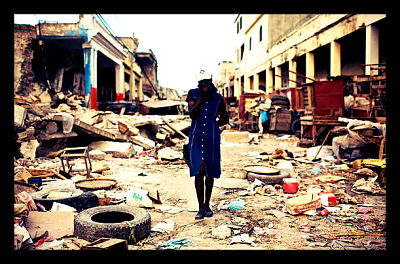
Haiti Hunger Crisis Earthquake Reconstruction
Last June, when reports abounded of the chronic hunger and food insecurity crisis that was ravaging Haiti, the world learned that 1.5 million people were in need of food assistance in the struggling nation, while another 6.7 million people were failing to meet their food needs on a regular basis.

Soon, images of broomstick-thin children with distended stomachs crossed the globe, while international donors and NGOs pledged additional donor dollars to the nation that was devastated by an earthquake in 2010. Despite the international assistance, a staggering 67 percent of the population still has limited access to food, according to the government’s National Coordination of Food Security.

Much of the crisis stems from extreme weather conditions such as floods and droughts which destroyed key crops last year. Worse still, scientists predict that more natural disasters are on their way due to climate change.

Klaus Eberwein, general director of the government’s Economic and Social Assistance Fund believes that the current hunger crisis is due to “decades of bad political decisions,” last year’s storms and drought, and the fact that hunger is not new to Haiti.

The country’s food insecurity issues also have to do with the fact that 80 percent of Haiti’s rice and half of all its food is imported now. With so much depending on imports, meals are becoming harder to obtain on a minimum wage, which is about $4.54 a day.

To make matters worse, Haiti has lost almost all of its forest as poor Haitians continue to chop down trees to make charcoal. Consequently, the loss of trees does not help to contain heavy rainfall or to yield crop-producing soil.

One of the organizations that continues to help stem the widespread hunger is USAID, which has provided over $38 million for emergency and development food assistance in Haiti. This past month, the organization launched a four-year food security program to improve nutrition and access to locally produced foods for the most vulnerable households in Haiti. The project, the Kore Lavi Program, is part of the U.S. government’s global hunger and food security initiatives Feed the Future and Title II.

The program supports the Haitian government in establishing a voucher-based safety-net system to increase poor household’s access to food and prevent malnutrition in children under 2 years of age. It is expected to reach 250,000 households by providing food vouchers, improving maternal and child health and nutrition knowledge, strengthening links between households and health systems, and improving the quality of health and nutrition services. Additionally, it aims to develop a national database system within the Government of Haiti’s Ministry of Social Affairs and Labor to target vulnerable households.

The goal is to change the harsh reality of the statistic that two in three Haitians currently face hunger as the country’s woes continue to mount.

– Nayomi Chibana
Feature Writer

Sources: USAID AP
Photo: TIME
October 20, 2013
https://borgenproject.org/wp-content/uploads/borgen-project-logo.svg 0 0 Borgen Project https://borgenproject.org/wp-content/uploads/borgen-project-logo.svg Borgen Project2013-10-20 17:19:212024-06-05 01:53:40Haiti’s Hunger Crisis
Global Poverty

TOMS Builds Shoe Industry in Haiti

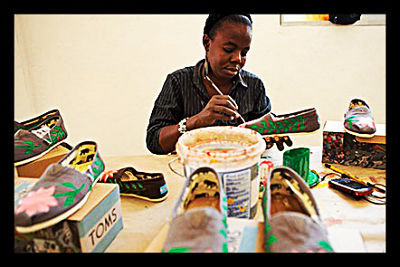
TOMS Shoes Haiti production
Founded in 2006, TOMS Shoes quickly gained mainstream popularity largely because of its socially responsible, feel-good, “one for one” model of operation. Under this model, TOMS gives away a pair of shoes to someone in a developing country for every sale of their retail shoes. However, TOMS has also come under fire over this same model that has fueled its popularity. Critics argue that donating shoes to people in developing countries can hinder economic growth by undercutting local producers.

At the 2013 Clinton Global Initiative (CGI), TOMS founder Blake Mycoskie announced his plans to begin manufacturing some of the company’s shoes in Haiti, starting early next year. This five-year investment will initially employ 50 local workers, with a goal of doubling this amount by the end of the year. This initiative comes in addition to TOMS’ existing Haiti Artist Collective program, which partners with 31 local Haitian artisans to design and hand-paint custom shoes for sale on the company’s website.

In addition to creating living wage jobs for people in Haiti, TOMS aims to provide healthcare, education and early childhood support to its factory employees by partnering with local organizations. Throughout the process, TOMS vows to oversee working conditions in Haiti and ensure that fair wages are being paid.

TOMS currently produces its shoes in China, Argentina and Ethiopia, and exports them to impoverished places. According to Public Radio International, Mycoskie has pledged that TOMS will produce at least one-third of its shoes in the countries where they are being donated to by the end of 2015. This will help build a more a sustainable, locally minded shoe industry in the countries the company serves.

After donating more than 10 million pairs of shoes to people in need, Toms is shifting its focus to targeting the causes of poverty, rather than providing temporary solutions to its complex effects.

– Tara Young

Sources: Toms Shoes, Miami Herald, Slate
Photo: HaitiLuxe Blog

October 18, 2013
https://borgenproject.org/wp-content/uploads/borgen-project-logo.svg 0 0 Borgen Project https://borgenproject.org/wp-content/uploads/borgen-project-logo.svg Borgen Project2013-10-18 15:11:092024-06-04 01:17:32TOMS Builds Shoe Industry in Haiti
Global Poverty

UNHCR Concerned About Impact of Dominican Court Ruling

UNHCR_dominican_replublic
A court case ruling of the Constitutional Tribunal of the Dominican Republic regarding a Dominican woman, Ms. Juliana Dequis Pierre, 29, and her four children is causing great concern and eagerness to act by UNHCR.

Ms. Juliana Dequis Pierre’s parents were migrants from Haiti, and moved to the Dominican Republic several decades ago. Although she was considered a Dominican citizen when born, she does not meet qualifications based on the ruling. If implementation of the case ruling progresses, hundreds of thousands of persons of Haitian descent would be forced out of the state, and rendered stateless. According to the Tribunal’s criteria, descendents of Haitians registered as Dominicans as far back as 1929 would be considered, and instructed to leave the country they have called home for decades.

Several UNCHR officials voiced worry for the fate of almost 300,000 people born in Dominican Republic since 1929. Gonzalo Vargas Llosa, UNHCR’s Chief of Mission in Santo Domingo explained, “it is difficult to image the devastation of being told you are no longer a citizen of the country where you were born and lived your entire life.” Shelly Pitterman, UNHCR’s Regiona; Representative for the U.S. and Caribbean furthered these concerns by discussing a potential risk of these people being stripped of a recognized nationality, and how it is a “basic principle of international law that no one be deprived of a nationality if that action leads to statelessness.”

According to the ruling, the people should not have nationality because their parents were considered “in transit” and were never truly citizens of the Dominican Republic. Defending the ruling against a backlash of humanitarian supporters, Roberto Rosario, President of the Central Electoral Board, states, “The ruling unifies the country,” and “clarifies and defines a legal way and provides a framework to seek a humanitarian way of for those people.”

However, within the harsh criticism of so many humanitarians, information has leaked about the working conditions for Haitian descendents in the nation’s profitable sugar cane trade. The U.S. was able to conduct reports, and found Haitian sugar cane workers were underpaid, and worked in unsanitary conditions.

Additionally, children of Haitian descent have lived the effects of the hardship caused by a ruling in 2008, because parents were undocumented. School-aged children were stripped of the opportunity to take required standardized tests because they lacked their birth certificate.

Ms. Deguis’s lawyer states, “It’s essentially a life suspended.” U.S. involvement is at a consequential place in this case, as the U.S. imports more sugar from the Dominican Republic than any other nation. The U.S. Department of Labor announced it will revisit the situation involving labor laws in six months and a year.

As for the court ruling, Roman Catholic priest Father Christopher Hartley described the situation saying, “The truth is finally coming out.” Haitian officials will consult with UN members on how to further respond to the ruling.

– Laura Reinacher

Sources: UNHCR, UN Radio, Haiti Innovation
Photo: Castlebar News

October 10, 2013
https://borgenproject.org/wp-content/uploads/borgen-project-logo.svg 0 0 Borgen Project https://borgenproject.org/wp-content/uploads/borgen-project-logo.svg Borgen Project2013-10-10 19:34:292020-06-25 09:43:49UNHCR Concerned About Impact of Dominican Court Ruling
Global Poverty

4 Crises Where AMURT Makes an Impact

AMURT_Disaster_Relief
Since its founding in India in 1965, Ananda Marga Universal Relief Team (AMURT) has been dedicated to implementing disaster relief and development solutions to impoverished communities around the world. Instead of a cookie cutter based approach where every community receives the same aid regardless of circumstance, AMURT strives to localize solutions based on each community’s unique needs. With relief teams now set up and helping in 34 countries, here are 4 crisis zones where AMURT is making a major difference.

1. Ghana – Safer Water & Healthier Villages

Through the Mafi-Zongo Area Water Project, surface water from a seasonal river is treated with a variety of filters to make it safe for drinking. It is then pumped down a mountain through 45 pipes. Ghanaians pay about 2 pennies for a 20 liter bucket of water, the cost of which goes towards water treatment staffing and running the generators. Because of AMURT’s project, 9,000 people now have access to disease-free water that is not contaminated by the Guinea worm which is very prevalent in the area.

2. Syria – Help for the Displaced

The current civil war in Syria has led to a humanitarian crisis where more than 2 million refugees are fleeing to surrounding countries. The number of people increases daily, yet supplies for the displaced are dwindling. AMURT is now in Lebanon distributing precious, basic items to Syrian refugees. These goods include stoves, bedding, medicine, and 40 kilograms of food. Though it may not seem like much, these basic items mean everything for the survival of refugees.

3. Kenya – HIV/AIDS Assistance

As part of an initiative to help people living with AIDS in Kenya, AMURT has created a home-based care provider program to improve lives through “nursing care, nutritional education, [and] counseling.” These local providers are trained through the country’s Ministry of Health, and they make routine visits to AIDS patients’ homes when they are too sick to move. With this program, over 100 care providers have already been trained who are making a difference in the lives of thousands of patients and their families.

4. Haiti – Earthquake Relief

In the time since the devastating 2010 earthquake in Haiti, AMURT raised over $4.2 million to help with the social and structural redevelopment of the country. Their main project worked on restoring well-being to Haitian children’s lives through nutritional assistance, motivational activities, and various kinds of educational enrichment. Since its inception, the psycho-social support program has reached 4,000 impoverished youth. In addition, AMURT helped thousands of people in displacement camps throughout Port-au-Prince with water filtration, cholera prevention, and even microfinance projects.

AMURT has proven that one organization can help tackle any disaster by utilizing local solutions and long-term development ideas. To find out more about AMURT and their wide-array of relief projects around the globe, visit their website.

– Caylee Pugh

Sources: AMURT, Haiti Aid Map
Photo: Flikr

August 6, 2013
https://borgenproject.org/wp-content/uploads/borgen-project-logo.svg 0 0 Borgen Project https://borgenproject.org/wp-content/uploads/borgen-project-logo.svg Borgen Project2013-08-06 04:23:452024-05-25 00:13:504 Crises Where AMURT Makes an Impact
Nonprofit Organizations and NGOs

What is AME-SADA?

AME_SADA
The African Methodist Episcopal Church Service and Development Agency, or AME-SADA, is a part of the African Methodist Episcopal Church (AME). The organization provides humanitarian relief and supports development within Africa. Their primary goal is to improve the overall quality of life for those living in Africa, as well as those living in the Caribbean.

AME-SADA was created nearly 30 years ago by a few committed people within the African Methodist Episcopal Church, including Bishop Frederick C. James, Reverend Lonnie Johnson, Dr. Joseph McKinney, Bishop John Hurst Adams, and Bishop Donald G. K. Ming.

AME-SADA’s mission is, “Helping People Help Themselves.” This means that, rather than giving people food or shelter, they would rather provide them with sustainable practices so they can support themselves. It goes along with the famous saying, “Give a man a fish, feed him for a day; teach a man to fish, feed him for a lifetime.”

AME-SADA focuses on programs of education, health, and micro-credit, although they also provide emergency humanitarian aid in both Africa and Haiti. AME-SADA is supported by the African Methodist Episcopal Church, governments, foreign institutions and agencies, and their donors who wish to create a better world.

AME-SADA is currently working on a project to provide health care and other services to those living in Haiti, particularly in the western part of the country. As of now, they have provided healthcare for over 400,000 people. One healthcare program they have is to address child and maternal health by providing pre and post-natal care for women between the ages of 15 and 49. The program gives aid through newborn care, vaccinations to children under the age of 5, diarrhea treatment, nutritional aid to malnourished children, family planning, upper respiratory infection treatment, counseling to new families, and more. Currently, AME-SADA supports nine outpatient clinics, which provide services such as HIV and STD education, as well as treatment and counseling. Over 150,000 people benefit from this each year.

Two other programs are SADA-KREDI and a school health program. The SADA-KREDI program supports economic opportunities for those living in both rural and urban areas. It gives micro-loans to 2,500 people in order to stimulate growth in the economy and allow people to prosper on their own. In addition, the school health program helps 30,000 children at an elementary school level in the poorest neighborhoods of Haiti. It provides healthcare to children whose families cannot afford it.

Overall, those programs only represent part of what AME-SADA does. They support and fund many other programs in South Africa and Haiti in order to help the locals prosper and flourish. They promote sustainability in their programs, especially in the micro-loan programs to allow entrepreneurs in Haiti and South Africa to have a chance to implement their business plans, and create a source of income to support their family, and to stimulate the community.

– Corina Balsamo

Sources: AME-SADA, AME-CHURCH, Our Health Ministry
Photo: Digitation

August 5, 2013
https://borgenproject.org/wp-content/uploads/borgen-project-logo.svg 0 0 Borgen Project https://borgenproject.org/wp-content/uploads/borgen-project-logo.svg Borgen Project2013-08-05 05:55:122017-03-20 13:03:39What is AME-SADA?
Global Poverty

An Initiative to Reforest Haiti

trees_opt
One of the primary causes of poverty in Haiti is deforestation. Only 2% of the Haitian side of the island is covered by forest, one of the lowest rates in the world and less than a fifth of the global average. Satellite images show a striking contrast between the forested Dominican Republic and the barren Haiti. Severe deforestation leads to poor soil quality and water scarcity, both of which reduce agricultural yields. Additionally, natural disasters are worsened with the instability of bare soil, increasing the threat of mudslides and the damage caused by earthquakes.

This issue is not a new one in Haiti. Deforestation began on a massive scale in colonial times, when land was cleared for sugar plantations. Since then though it has continued, with as many as 40 million trees felled annually for cooking fuel. However, a recent government initiative marks a turning point. The government of President Michel Martelly is beginning a push to reforest Haiti, committing to planting 50 million trees a year. The goal is to double forest cover by 2016, and then to continue to improve on that gain. Until now, reforestation programs have all been carried out by non-government organizations, the majority of which are foreign operated.

To further the actual planting of trees, the campaign will include various methods of educating the populace. The initiative’s success requires readjusting the view all Haitians have towards deforestation. Radio programs will be used as educational tools, as well as pamphlets and the addition of environmental studies to the school curriculum. Gas-powered stoves will be promoted as efficient alternatives to the burning of wood and charcoal for cooking.

In order to be successful, this initiative will require a lot of effort from the government. In addition to education and the actual reforestation process, a concerted effort will need to be made to enforce legislation and prevent illegal logging in protected areas. The project is only just beginning, but if it is successful, we will see significant benefits in just a few years.

– David M. Wilson

Sources: The Guardian, Botanic Gardens Conservation International
Photo: UNDP 

July 31, 2013
https://borgenproject.org/wp-content/uploads/borgen-project-logo.svg 0 0 Borgen Project https://borgenproject.org/wp-content/uploads/borgen-project-logo.svg Borgen Project2013-07-31 04:00:312024-05-25 00:12:08An Initiative to Reforest Haiti
Developing Countries, Development, Technology

How Build Change is Building Life-Saving Houses

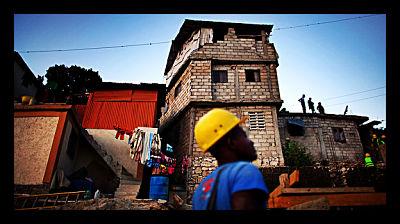
build-change-building-life-saving-houses-borgen-project-poverty-global_opt
In 2010, a 7.0 magnitude earthquake struck the country of Haiti, claiming tens of thousands of lives and costing $7.8 billion in damages. Build Change, a non-profit international organization, is fortifying impoverished nations to prevent another disaster of this scale.

Working in Haiti, China, and Indonesia, Build Change provides earthquake-resilient house designs to be implemented by local homeowners and carpenters. Instead of proposing revolutionary design choices, Build Change analyzes the architecture of affected areas and makes specific modifications to improve stability. This allows local workers to quickly learn the new designs and eventually become able to build safer housing without outside help.

After an impoverished country endures an earthquake, houses built as replacements can either be culturally inappropriate or suffer from the same instability that caused the original houses to collapse. By intervening after a time of disaster, Build Change enables home owners to be involved in the building of secure housing. This in turn sparks the creation of new jobs for local workers. In a country like Haiti, with 70% of the population either unemployed or underemployed, this is a huge boom for the economy.

With 18,701 houses built, success stories have been numerous. Haitian Mirlande Joseph recounts her experience working with Build Change after her house was leveled by the devastating earthquake. Although they could not offer her financial support, they were able to walk her through the process of building a new house by engineering the design and providing onsite training of the workers tasked with the physical labor. Although this required more monetary investment than Joseph anticipated, the experience was so positive that she considered taking up construction as a profession.

Build Change was founded in 2004 by Dr. Elizabeth Hausler, who started the organization in response to the tragic number of lives lost following earthquakes. Hausler realized the insurmountable amounts of damage could be avoided if those in poverty had access to better housing. Finding immediate solutions to this issue helps prevent millions of dollars in repairs that would be spent following a national disaster. To Hausler, it’s imperative to provide these designs to those in struggling countries, regardless of whether their respective economies have fully recovered or not.

This sentiment is encapsulated in the Build Change site’s timeline: “Earthquakes don’t kill people… poorly built buildings do.”

In 2011, Hausler received the $100,000 Lemelson-MIT reward for sustainability in recognition of the work model utilized by Build Change. By winning the award, Hausler hopes to inspire governments and building agencies to create affordable building codes that are sustainable and efficient. She hopes more young inventors will take time to work with the locals of struggling countries to conceive practical and economic solutions with their products and methods.

– Timothy Monbleau

Source: BBC News, Build Change, Economic Impact of Haiti Earthquake, MIT Press Release
Photo: Build Change Universal Giving

July 20, 2013
https://borgenproject.org/wp-content/uploads/borgen-project-logo.svg 0 0 Borgen Project https://borgenproject.org/wp-content/uploads/borgen-project-logo.svg Borgen Project2013-07-20 05:00:252024-05-25 00:00:52How Build Change is Building Life-Saving Houses
Education, United Nations

Universal Primary Education

Universal Primary Education
Since 1999, when 106 million children were not in school, much progress has been made. Today, approximately 61 million are out of school, and yet more progress is needed. In the past five years, due to the economic crisis, many nations decreased their foreign aid spending and thus progress was hindered. According to the World Bank and the U.N., the majority of children not attending schools live in sub-Saharan Africa and South Asia, with at least half living in areas that are politically unstable.

Despite some progress, it is crucial to note that there is a percentage of people/areas that is not accounted for in the statistics of progress and primary education. For example, according to the U.N., 90% of primary aged children living in developing countries are now in school as opposed to that percentage being 82% in 1999. While the rise in percentage sounds great, “broad figures [have the tendency to] mask localized problems,” and thus, in actuality some countries barely have any primary aged children attending school. The children who are most unaffected by the progress and recent advancement are the extremely poor and the minorities. Nigeria, Yemen, Ethiopia, South Sudan, India,  Haiti, the Democratic Republic of Congo, and Bangladesh account for half of the world’s children not going to school.

There is a demand for new donors or ‘funders,’ now that many nations have cut back on their foreign aid, from the private sector and through public fundraising. Part of the U.N. 2015 Millennium Goals was to ensure that all children have equal access to primary education and to increase females’ enrollment in schools. However, experts are claiming that education goals are difficult to reach due to issues such as child labor, cultural values, and other reasons. For example, in some cultures, it is valued more that daughters stay home while the sons receive an education. The women assume the housewife role while the men are valued to be the knowledgeable providers.

In addition to child labor and cultural values, there are many concerns regarding harassment and safety of the children attending schools. For example, some female students in Sierra Leone reported being sexually harassed by teachers in exchange for good grades. And it is almost impossible to forget the story of Malala Yousafzai, the Pakistani girl, who was shot by the Taliban for her advocacy of education for girls. Despite the unfortunates, where instituting education does work, it makes an incredible difference. Rebeca Winthrop, the director of the Center of Universal Education at the Brookings Institution in Washington, expressed that there are children who continue to learn even in refugee camps. Where there is desire, willingness, and determination, there is much hope for universal primary education and even further schooling.

– Leen Abdallah
Source: New York Times
Photo: Globalization 101

May 19, 2013
https://borgenproject.org/wp-content/uploads/borgen-project-logo.svg 0 0 Borgen Project https://borgenproject.org/wp-content/uploads/borgen-project-logo.svg Borgen Project2013-05-19 04:26:112024-05-24 23:49:42Universal Primary Education
Children

Haiti Babi: Moms Helping Moms

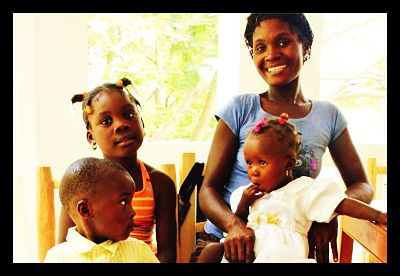
Haiti_family_orphanage_mom_mother_volunteer_program_babi_opt
When Katlin Jackson volunteered at an orphanage in Haiti, she expected to do a lot of important work.  What she didn’t expect was how her trip inspired Haiti Babi, an organization that aims to keep Haitian children in their homes and out of orphanages.
One in ten children in Haiti lives in an orphanage.  That’s nearly 500,000 kids who don’t live with their parents.  Many of them aren’t even orphaned; their parents just can’t afford to provide for them, so they are removed from their care and placed in orphanages.  As a volunteer, Katlin met and fell in love with one of these “orphans”.  One year old Sterly, like so many residents, had been taken from his parents not because they had died or mistreated him, but because they couldn’t afford a house, food, or basic medical care.
On a second trip to Haiti, Katlin was able to visit Sterly and his family after they had been reunited.  She was able to see firsthand the love in Sterly’s home, and that his parents wanted nothing more than to be able to care for and be with their son.  Katlin left Haiti with her mind made up that a loving family should not be forced apart due to poverty.  So she founded Haiti Babi, an organization that employs Haitian mothers wanting to provide for their children.
Haiti Babi, partnered with Second Mile Ministries in Haiti, enables Haitian moms to earn a reliable income for their family by knitting and crocheting artisan baby blankets.  Mothers around the world have the opportunity to support these women by purchasing their quality, handmade products online.  The sentiment behind the idea: moms helping moms.
So next time you’re in the market for a baby blanket, buy one that can warm your heart; a Haiti Babi blanket, handmade by a mother, doing everything she can for the children she loves.
– Dana Johnson

Source: Haiti Babi

May 16, 2013
https://borgenproject.org/wp-content/uploads/borgen-project-logo.svg 0 0 Borgen Project https://borgenproject.org/wp-content/uploads/borgen-project-logo.svg Borgen Project2013-05-16 05:00:292020-05-29 21:48:26Haiti Babi: Moms Helping Moms
Aid Effectiveness & Reform

Aid to Haiti: What Lessons Can We Learn?

Aid to Haiti: What Lessons Can We Learn?A controversy with foreign aid does not always relate to misuse but the reality of the numbers and figures after the aid is delivered. A popular example of this has been the $9 billion in donations made to the Haitian government since the 2010 earthquake.

Last week, National Public Radio (npr) interviewed Jonathan Katz, the author of The Big Truck That Went By: How the World Came to Save Haiti and Left Behind a Disaster. This new book focuses on the damages to both the Haitian government and its people due to communication issues, lack of coordination, and the general failure of donor countries to follow-through on their promises.

After reading the interview, it is important to keep in mind that foreign aid is not a waste. There have been thousands and thousands of completely successful large-scale and small-scale transactions and projects throughout the centuries. Governments, however, need to really sit down and review their policies. In this review, one would hope they would seriously consider making more use of direct aid. As Katz briefly touches on in his interview, there is the uncommon but possible option of paying victims of the earthquake (or any crisis) and removing the middleman. Perhaps not handing them a band of cash exactly, but focusing the energy and time spent on drafting contracts, debt relief plans, and the such to send volunteers and individuals who are willing and passionate about making small but immediate and tangible changes, such as Syrian-American Omar Chamma has been doing in Syria.

The transcript of the interview follows:

Aid pledged to Haiti — $9.3 billion worth from 2010 to 2012 — is about a third of all global health aid donated in 2012. What happened to the money that was supposed to go to Haiti?

Katz: Money did what money tends to do in most foreign aid situations. That is, rather than being a model in which a rich country gives a poor country a big bag of cash and says, “Here spend this on fixing things up from whatever the latest crisis was,” what actually happens is that very little of the money actually leaves the donor countries. First of all, you’ve got billions of dollars that are promised but just never delivered. You’ve got billions of dollars more that were sort of creative accounting. Donor nations say they’re providing debt relief, yet those debts were never realistically going to be paid back. So some of the money is sort of fictive.

So how much actually made it into Haiti?

Even among the real money, if you look at what was labeled as humanitarian relief, in the months right after the quake, that amounts to about $2.5 billion.
Ninety-three percent of that money either went to United Nations agencies or international nongovernmental organizations, or it never left the donor government.
So you had the Pentagon writing bills to the State Department to get reimbursed for having sent troops down to respond to the disaster.
If we’re talking about reconstruction, it’s really a misnomer to think that relief aid was necessarily going to have the effect of rebuilding a country in any shape or form.

So what was that money spent on?

Band-Aids. Literally bandages. Short-term relief. Tarps to put over your head. Food to fill emergency gaps in supply.
But food gets eaten. Tarps wear out. Band-Aids get pulled off. And ultimately, all that money is spent, but people aren’t left with anything durable.When you hear about all these billions of dollars [in aid donations], the imagination is that they’re going to go and rebuild the country after the earthquake. They were never intended to do so and, lo and behold, they didn’t.

There are often complaints after big disasters about waste and inefficiencies. Was the Haiti earthquake different from any other international disaster or is this typical?

What is interesting about Haiti is the extremes.
There are lots of places that have weak governments, but Haiti’s government is weak in a special way. It’s the product of so many years of aid going around the government and international efforts to undermine the government. Presidents being overthrown and flown out on U.S. Air Force planes and then reinstalled and then overthrown again. That left the Haitian government in such a weakened state.
Then the disaster itself was also so much more extreme. It was so concentrated. It hit the capital city. Whether your estimates for a death toll is in the 80,000 range or closer to the government’s estimate of 316,000 — in a city of 2.5 million people — it’s just an extraordinary number.
It was an incredibly horrific disaster. It hit the country right at its heart and destroyed a government that was already weakened.
But beyond that, the attitude that so many foreign aid groups have regarding Haiti is that you can basically come in and do whatever you want. So there was no accountability, no coordination.
People were just running around doing what they thought was best or what they thought was best for them. And it really created a mess.

– Deena Dulgerian

Source: npr

March 4, 2013
https://borgenproject.org/wp-content/uploads/borgen-project-logo.svg 0 0 Borgen Project https://borgenproject.org/wp-content/uploads/borgen-project-logo.svg Borgen Project2013-03-04 14:04:072024-05-24 23:43:02Aid to Haiti: What Lessons Can We Learn?
Page 7 of 8«‹5678›

Get Smarter

  • Global Poverty 101
  • Global Poverty… The Good News
  • Global Poverty & U.S. Jobs
  • Global Poverty and National Security
  • Innovative Solutions to Poverty
  • Global Poverty & Aid FAQ’s
Search Search

Take Action

  • Call Congress
  • Email Congress
  • Donate
  • 30 Ways to Help
  • Volunteer Ops
  • Internships
  • Courses & Certificates
  • The Podcast
Borgen Project

“The Borgen Project is an incredible nonprofit organization that is addressing poverty and hunger and working towards ending them.”

-The Huffington Post

Inside The Borgen Project

  • Contact
  • About
  • Financials
  • President
  • Board of Directors
  • Board of Advisors

International Links

  • UK Email Parliament
  • UK Donate
  • Canada Email Parliament

Get Smarter

  • Global Poverty 101
  • Global Poverty… The Good News
  • Global Poverty & U.S. Jobs
  • Global Poverty and National Security
  • Innovative Solutions to Poverty
  • Global Poverty & Aid FAQ’s

Ways to Help

  • Call Congress
  • Email Congress
  • Donate
  • 30 Ways to Help
  • Volunteer Ops
  • Internships
  • Courses & Certificates
  • The Podcast
Scroll to top Scroll to top Scroll to top