• Link to X
  • Link to Facebook
  • Link to Instagram
  • Link to TikTok
  • Link to Youtube
  • About
    • About Us
      • President
      • Board of Directors
      • Board of Advisors
      • Financials
      • Our Methodology
      • Success Tracker
      • Contact
  • Act Now
    • 30 Ways to Help
      • Email Congress
      • Call Congress
      • Volunteer
      • Courses & Certificates
      • Be a Donor
    • Internships
      • In-Office Internships
      • Remote Internships
    • Legislation
      • Politics 101
  • The Blog
  • The Podcast
  • Magazine
  • Donate
  • Click to open the search input field Click to open the search input field Search
  • Menu Menu

Tag Archive for: Haiti

Posts

Global Poverty, Violence Against Women

Victims of Rape in Haiti Stand Up for Justice

Rape_in_haiti
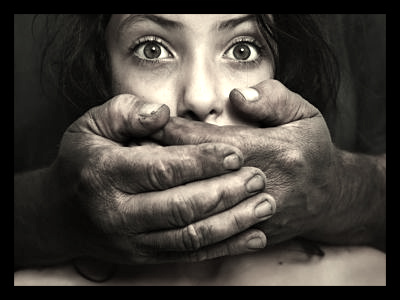
Loutchama was just 12 years old when she was a victim of rape in Haiti. Her attacker, a man named Etienne Rene, and Loutchama’s neighbor at the time, reportedly had noticed none of her family members were home on April 30, 2011. After hearing of the rape, a physical altercation between Rene and Loutchama’s mother, Adrienne, would result in Adrienne’s eventual arrest.  Yet, while Rene, too, was arrested at his home soon afterward and would eventually be put on trial and sentenced to 15 years in prison, Adrienne feels devoid of justice. Loutchama died on August 26, 2013, and Adrienne believes it to be a direct result of Rene’s sentencing.

It would not be until a year and a half after Loutchama and her mother filed for rape against Rene that he would be sentenced. Haiti’s Minister of Justice, Jean Renel Sanon, says that it usually takes “four months” from the time a rape is reported to make it to court. Yet, all too regularly, cases are prolonged. Inevitably discouraged by Haiti’s judicial patriarchy, cases are usually given up by the victim mere months after their happening.

Poverty is a factor, too. Those with more money can afford to have warrants served expeditiously, guaranteeing them quicker justice. Yet, for the majority of poor Haitian women, their cases — which are at the hands of the judge — can be held stagnant for as long as five years if they are not dropped prior. A UN study conducted in 2012 proved just this. In a sample of 2010 reports, only one of a total of 62 rape cases filed over a three-month period made it to court.

For women like Loutchama, going through the judicial process is a constant reminder of their attack. Many of these women, most who work as street vendors, cannot afford a day off from work to go to trial and, subsequently, resort to unofficial monetary arrangements with their rapists. Of course, this poses a major problem. More often than not, poor rapists cannot actually afford to pay their victims, and zero judicial ties to the promise results in complete injustice.

Now crippled by her daughter’s death and worried for her own safety, Adrienne — who, prior to the case, had never even heard of the term “human rights” — believes Rene’s payback has just begun. “I’m poor,” she said. “And I will never have justice.”

Yet, Rene’s 15-year sentence may just be the long-awaited beginning of said justice for rape victims in Haiti. Through the recent works of Haitian organizations such as the Bureau des Avocats Internationaux, more rapists are being persecuted than ever before. In 2011, 13 of 22 rape cases resulted in conviction. While rape culture in Haiti is still all too prominent, many of these women are just beginning to feel secure enough to stand up for their own human rights.

– Nick Magnanti

Sources: IJDH, JJIE, Salon
Photo: Ehowzit

May 30, 2014
https://borgenproject.org/wp-content/uploads/borgen-project-logo.svg 0 0 Borgen Project https://borgenproject.org/wp-content/uploads/borgen-project-logo.svg Borgen Project2014-05-30 12:00:302024-06-05 01:57:27Victims of Rape in Haiti Stand Up for Justice
Activism, Economy, Global Poverty

Deforestation and Economic Injustice in Haiti


Spring is upon us but in many places April showers don’t necessarily bring the hope of May flowers, instead they promise environmental disaster and damage to surrounding communities.


Every year, floods ravage Haiti’s countryside, injuring, displacing, and economically crippling many of its rural villages and townships. Rainfall, though necessary for agriculture in the hot Caribbean nation is more feared than it is welcomed these days. Due to widespread deforestation, the soil around riverbanks has eroded, the land has become arid, and there is nothing to anchor the foothills and prevent devastating mudslides.

Between 1954 and 1984 alone, nearly 90% of Haiti’s once abundant rainforests were depleted. An estimated 2% of what was once there remains today, and even that is at risk. Without tree cover or a natural means to replenish the soil with nutrients, the mountain region is now agriculturally useless, only perpetuating a cycle of poverty and harmful environmental practices.

Deforestation has been made significantly more prevalent by corrupt business practices and irresponsible regulations. Under the abusive dictatorships of Francois and Jean-Claude Duvalier, many Haitians was forced to rely on the production of charcoal for subsistence, turning to the harvesting and burning of trees to supplement widespread unemployment. Charcoal is now, unfortunately, one of Haiti’s most thriving markets.

Additionally, like other developing nations, economic instability and unaffordable trade options have forced millions of Haiti’s inhabitants to rely on this “woody biomass” for fuel.  More viable options of electricity, petroleum, and even kerosene, though also not earth friendly, are less encroaching on the communities themselves. However they are nearly unattainable in many areas.

In more recent years, illegal logging, price negotiations, structural trade agreements, and the seizure of property rights from outside actors has also contributed to an economic environment that leaves many Haitians without much choice but to contribute to cutting down the forests.

For example, Swine Flu paranoia in the 80’s essentially wiped out Haiti’s once successful pork market. This forced pork farmers to annihilate their own acclimatized pigs and replace them with the more delicate North American variety which was too expensive to keep. This paved the way for Reagan’s “American Plan” for the country, which implemented a weak export economy of cheaply and inhumanely manufactured goods. With such bleak options, charcoal and deforestation are increasingly chosen out of necessity.

Journalist and political analyst Amy Wilentz states, “You can read about deforestation and its affects in the books and pamphlets written by these experts, and then you can read about it in the faces and bodies of Haitian peasants…. The summation of a story of dry earth, of the need for sustenance and comfort, of crops that are impossible to raise, even with the hardest and most grueling work, of rain that never falls, of food that just isn’t there.”

People continue to fight back, such as Chavannes Jean-Baptiste, who is a renowned in the world of environmental activism for his work in Haiti. After receiving a formal education in agronomy, he went on to found the Peasant Movement of Papay (MPP) in 1973 with the expressed goal of establishing principles of sustainable agriculture. The Movement has been effective in the fight against deforestation and other contributions to soil erosion.

His life of activism has not been without contention though. Before winning the Goldman Environmental Prize in 2005, he suffered multiple assassination attempts, death threats, and periods of forced exile. His outspokenness regarding forest protection and his role in sparking political dissent made him highly targeted. Still, he leaves an unwavering legacy of land protection in a previously colonized nation, and the MPP continues to be a strong political force.

Deforestation’s effect has been horrible, for the people, the infrastructure, and the very landscape of Haiti, which has seen its fair share of economic and political storms over the past half century. However, scientific awareness, increased environmental consciousness, and a climate of political activism provide hope that Haiti’s rainy season will come to an end.

— Stefanie Doucette

Sources: The Energy Journal 1, The Energy Journal 2, The Ecological Society of America, The World Today, The Journal of Developing Areas, Nathan C. McClintock, The Rainy Season
Photo: 

May 15, 2014
https://borgenproject.org/wp-content/uploads/borgen-project-logo.svg 0 0 Borgen Project https://borgenproject.org/wp-content/uploads/borgen-project-logo.svg Borgen Project2014-05-15 04:00:532024-06-05 01:57:25Deforestation and Economic Injustice in Haiti
Education, Foreign Aid, USAID

Education in Haiti: All Children Reading

education_haiti
March 26 marked the grand opening of a brand new school for the Lekol S&H students in Caracol, Haiti. The students celebrated the inauguration alongside United States Ambassador Pamela White, U.S. Agency for International Development (USAID) Mission Director John Groarke and Haitian officials, according to USAID Haiti’s Facebook page.

The new facility is one of many schools that fall under USAID’s All Children Reading program in Haiti. Also known as Tout Timoun Ap Li (ToTAL,) All Children Reading is one of the programs supported by U.S. and Haitian government collaboration in Haiti. Starting in 2011, Haiti’s Ministry of National Education and Vocational Training unveiled a plan to get more than 1.5 million students in school by 2016, says USAID.

The ToTAL program focuses on developing reading skills for Haitian students in first grade through third grade in the Port-au-Prince, Saint Marc and Cap Haitien areas. All Children Reading will provide more nearly 30,000 children and 900 teachers with critical reading curriculums to meet international literacy standards, says USAID. “In developing countries,” says the All Children Reading experts, “literacy leads to improved health, better education, greater employment opportunities, and more stable governments.”

The All Children Reading program partners with USAID, World Vision and the Australian government to utilize competitive science, technology and education grants to improve the school systems and educational opportunities for students in developing countries.

Awards are disseminated in two rounds, each of which has a different development focus. Round 1 “focuses on creating teaching and learning materials and education data applications to promote accountability and transparency” and has been awarded to 32 projects in more than 20 nations, according to the All Children Reading website.

Round 2 looks more to implementation strategies and technology solutions to improve education in Haiti. The three areas of focus for this branch of the project include promoting mother tongue instruction and reading materials, enhancing family and community engagement and supporting children with disabilities. All Children Reading prioritizes reading in the early school levels in order to instill strong education practices and create better and wider opportunities for children as adults.

Through programs such as ToTAL, the U.S government has trained nearly 900 teachers in new curriculum in both Haitian Creole and French. In addition, USAID has supplied Haitian students with more than 46,000 textbooks and workbooks. The ToTAL program has been introduced in more than 300 schools nationwide, such as the one in Caracol. In the years to come USAID hopes to reach more than 1 million children throughout Haiti, especially “as other partners extend the use of the program’s reading curricula and training methods beyond the development corridors.”

– Mallory Thayer

Sources: USAID, All Children Reading, Facebook
Photo: Save the Children

April 5, 2014
https://borgenproject.org/wp-content/uploads/borgen-project-logo.svg 0 0 Borgen Project https://borgenproject.org/wp-content/uploads/borgen-project-logo.svg Borgen Project2014-04-05 04:00:552024-12-13 17:50:12Education in Haiti: All Children Reading
Food Aid, Global Poverty

Malnutrition in Haiti: Philanthropic groups

world map
Since the catastrophic earthquake four years ago, the number of people suffering from malnutrition in Haiti has risen dramatically. Even before the earthquake hit, people were struggling to eat a nutritious balance of food, with complications from malnutrition contributing to 60% of deaths in children and a relatively high mortality rate in adults.

Although children are the primary worry, the concern regarding malnourishment extends to those sick with HIV and tuberculosis, pregnant women and young adults. Poor sanitation also contributes to poor health by spreading disease, which can critically damage the immune system or cause severe dehydration. Other effects of malnutrition include hindered mental and physical growth, emotional changes (depression or anxiety) and difficulty learning or concentrating.

There are ways to help ebb malnutrition in Haiti.  Here are a couple of philanthropic causes that are focused on heightening nutrition in Haiti.

The Nourimanba Production Facility

Located in a modest two-story building in Haiti’s Central Plateau, the Nourimanba Production Facility is more than it appears on the outside. The facility is quite sophisticated, using top-of-the-line stainless steel devices to process peanuts and mix the peanut based paste with vitamins in order to create a nutritious and essential medicine. Andrew Marx, Director of Communications at Partners in Health (PIH) stated that this facility enables 350 tons of Nourimanba to reach 50,000 children a year, with each child taking the medicine daily for up to eight weeks.  The company supports local peanut farmers and opens up an incredibly convenient and dependable market for the community to yield both sales and even jobs.

Hunger Relief International (HRI)

HRI works with local farmers to provide three meals per day consisting of beans, rice, cornmeal and pasta, to 1,450 orphans in 28 different orphanages. HRI also helps children and women plant gardens at homes and schools, helps tackle malnutrition in Haiti, promotes healthy eating and forms new sources of income for the communities. The easy access to nutritional food will relieve the families of unnecessary spending, which will allow their money to be spent on education or school supplies, for example.

World Food Programme (WFP)

WFP is a leading agency in the fight to provide young children and mothers with the proper nutrients necessary during crucial developmental stages. The WFP is working with the Ministry of Agriculture to build a link between local smallholder farmers and the school meal system to produce a greater market for farmers and cut down on food insecurity. An estimated 3,000 metric tons of rice will be bought from Haitian farmers during the current school year in order to provide the National School Meals Programme with a supply large enough to sustain the 685,000 children in school. Milk is also bought from local smallholder farmers and distributed to 84 different schools.

With continued support from these various causes, Haiti is making strides to rebuild its health and economy. Farmers and the most vulnerable members of the community are also being given the necessary resources needed to help strengthen them and curb malnutrition in Haiti.

– Becka Felcon

Sources: Partners in Health, Partners in Health, Hunger Relief International, World Food Programme

February 28, 2014
https://borgenproject.org/wp-content/uploads/borgen-project-logo.svg 0 0 Borgen Project https://borgenproject.org/wp-content/uploads/borgen-project-logo.svg Borgen Project2014-02-28 11:50:122024-05-26 23:16:22Malnutrition in Haiti: Philanthropic groups
Global Poverty

4 Years After Earthquake, Haiti Tries to Rebuild

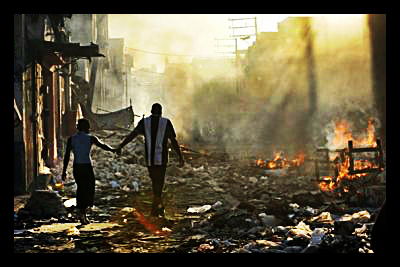
haiti_earthquake
In January of 2010 Haiti was hit by a devastating earthquake that killed over 100,000 people. There was an immediate outpouring of relief for the beleaguered island nation, with supplies and relief workers pouring in to help rebuild. Four years later there is still a lot of work to be done in the nation and the aid relief that came in 2010 is not available now. 

Immediately following the earthquake there were 1.5 million Haitians living in tent cities, and while that number is currently down to 146,000 people the country is hurting to relieve those displaced citizens. There is a sense that the United States and United Nations have failed the Haitian people considering the massive problems that still exist in the country and Haitians face on a daily basis.

Obviously one of the biggest issues facing post-earthquake Haiti was the shortage of safe housing with the million Haitians displaced. According to a Center for Economic and Policy Research (CEPR) study, only 7,515 houses had been built in Haiti out of a planned 15,000. This points to a lack of money gone directly through the Haitian government and being used as efficiently as it could be.

The lack of safe housing has kept many in the refugee camps that were set up for temporary use after the earthquake, but the pressure put on those administering the camps has caused the Haitian government to make some drastic decisions. In December of 2013 at least 54,000 people had been removed from camps in Canaan, a suburb of the capital of Port-Au-Prince, according to a CEPR report. That was the largest example of a series of forced evictions from these camps in 2013. The UN Refugee Agency has not extended Internally Displaced Person (IDP) protections to those in Haiti’s camps, leaving them at the whim of the government.

Part of the problem with the still-standing IDP camps is the risk for spreading disease compacted by unsanitary conditions. Cholera outbreaks have been pandemic over the last few years with thousands falling victim to the disease though it had never been reported in the nation prior to the earthquake. Over 8,000 people have died of cholera in Haiti during that that time, with 65,000 cases being reported in 2013 alone.

Since cholera had never been an issue in Haiti prior to the earthquake, there was no infrastructure to deal with the disease. While agencies and aid groups from other nations have been brought in to deal with these problems as they arise, some Haitians feel that they have just made the cholera crisis worse. In October the Institute for Justice and Democracy in Haiti (IJDH) filed a lawsuit against the United Nations claiming their practices inadvertently caused and exacerbated the epidemic. Over 5,000 Haitians were listed as plaintiffs in the suit.

There is still much work to be done in Haiti, a nation that was in dire straits even before the 2010 earthquake. There are clearly still many Haitians suffering in the aftermath of the quake, and it does not help that outside assistance has been at times hard to come by and misdirected. The situation in Haiti points to the importance of outside assistance and the need to sustain efforts well after an event like the earthquake happens. It goes to show that the events of today have far-reaching consequences and must be kept on aid agendas well after public shock has subsided.

– Eric Gustafsson

Sources: YouTube, Amnesty International, CEPR, Washington Post
Photo: The Washington Post

February 12, 2014
https://borgenproject.org/wp-content/uploads/borgen-project-logo.svg 0 0 Borgen Project https://borgenproject.org/wp-content/uploads/borgen-project-logo.svg Borgen Project2014-02-12 10:43:412024-12-13 17:50:004 Years After Earthquake, Haiti Tries to Rebuild
Global Poverty, Politics and Political Attention

Sean Penn and Fellow Celebrities Help Haiti Home

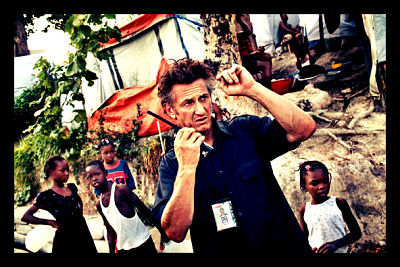
Sean_Penn_Haiti_celeberties_help_aid
Sean Penn is best known for portraying the cult character Spicoli in “Fast Times at Ridgemont High” as well as his Academy Award winning roles in “Mystic River” and “Milk.” Penn has also been known for his humanitarian efforts, and over the years, he has yet to slow down.

Recently, Penn hosted the Help Haiti Home Gala in Beverly Hills’ Montage Hotel, where he helped raise $6 million for his charity, the J/P Haitian Relief Organization. Celebrities in attendance included Julia Roberts, Gwyneth Paltrow, Chris Martin, Anderson Cooper, Chris Hemsworth, Goldie Hawn and rumored girlfriend Charlize Theron.

Founding the origination in 2010, Penn acts as the Chief Executive Office Chairman of the Board of the J/P Haitian Relief Organization where he has conducted the Help Haiti Home Gala for its third annual year. J/P Haitian Relief Organization primary focus includes striving for improved medial aid, protection, and re-location of internally displaced persons (IDP) across the globe. The J/P Haitian Relief Organization has organized many camp management sites for thousands of IDP’s across the Haiti region.

The Help Haiti Home Gala also included a surprise guest appearance by U2 which saw Bono and his fellow band members perform such songs as “Vertigo” and “Desire” for the first time in four years. There were a plethora of various donations which were auctioned at the gala including a $1.4 million sculpture made out of discarded firearms which was purchased by CNN news anchor Anderson Cooper. Gwyneth Paltrow and Chris Martin also donated to the cause by outbidding Charlize Theron for a $650,000 Banksy art piece.

Penn was in high spirits following the event where he told People Magazine, “This town has been very supportive of me and, more importantly, what our organization is doing in Haiti. I got a lot of gratitude and no complaints.”

Since the inception of the J/P Haitian Relief Organization, Penn and company have built a tent city on a golf course which has served as a temporary home to nearly 60,000 people.  Of those people, nearly 80 percent of them have successfully returned homed, a primary goal of the organization. Penn’s organization has also provided educational, health, community development, and other economic opportunities for many Haitian citizens and continues to do so today.

– Jeffrey Scott Haley
Feature Writer

Sources: Haitian Relief Organization, M Starz, Crowdrise
Photo: The Accidental Activist

February 3, 2014
https://borgenproject.org/wp-content/uploads/borgen-project-logo.svg 0 0 Borgen Project https://borgenproject.org/wp-content/uploads/borgen-project-logo.svg Borgen Project2014-02-03 04:00:272024-06-11 02:21:36Sean Penn and Fellow Celebrities Help Haiti Home
Activism, Global Poverty, Philanthropy, Poverty Reduction, USAID

Clean Streets: Road to Entrepreneurship in Haiti

Throughout the developing world, infrastructure insufficiencies often create barriers for aspiring entrepreneurs. However, these shortcomings can also provide the platform for innovative and sustainable business opportunities.

Such is the case for entrepreneurs like Edouard Carrie, who started his company Environmental Cleaning Solutions S.A. (ECSSA) as a way to clean up Haiti’s streets and generate income. Founded in 2010, the company’s mission is simple yet profound: “to change a nation through recycling.” Via its material recovery facility in Port-au-Prince, ECSSA aims to collect over 80 tons of recyclable products per day.

Not only does it positively impact the environment, increased waste management also helps Haiti’s lowest income citizens.

For example, individuals can increase their income by collecting recyclable materials and thus afford schooling for their children, healthcare or other necessities. In addition, the various collection centers create jobs around the region.

The start-up has had great success in the three years since its conception. According to USAID, “ECSSA has grown to provide extra cash to over 6,000 Haitians who deposit bags of discarded bottles at 65 collection points throughout the Port-au-Prince region.” Furthermore, the company has shipped nearly 300 million plastic bottles to other countries for additional processing to create other products.

ECSSA’s growth would not have been possible without the support of both USAID and the Pan American Development Foundation (PADF).

PADF sponsors the Leveraging Effective Application of Direct Investments (LEAD) Business Plan Competition, a grant program that assists small and medium enterprises in finances, business development and access to capital. LEAD operates in Cap-Haitien, Saint-Marc and Port-au-Prince with a targeted focus on “industries and businesses with the greatest potential to create jobs, including construction, tourism, agribusiness and alternative energy.”

Outside assistance – such as that from LEAD and USAID – has allowed ECSSA to thrive and transform the landscape in Port-au-Prince.

“My company now has the capacity to increase its individual collectors from 6,000 people to up to 20,000,” Carrie said. “Additionally, the increase in collection points and processing capacity provide entrepreneurs the opportunity to grow their own businesses by serving as intermediary plastic collectors and suppliers for ECSSA.”

Not only cleaning the streets, ECSSA is clearing the way for sustainable environmental and business development throughout Haiti’s capital city.

– Mallory Thayer

Sources: USAID, Leveraging Effective Application of Direct Investments, Environmental Cleaning Solutions S.A.
Photo: United Nations Photo

January 31, 2014
https://borgenproject.org/wp-content/uploads/borgen-project-logo.svg 0 0 Borgen Project https://borgenproject.org/wp-content/uploads/borgen-project-logo.svg Borgen Project2014-01-31 04:00:332024-05-26 23:05:27Clean Streets: Road to Entrepreneurship in Haiti
Activism, Advocacy, Global Poverty, Migration, USAID

Importance of Citizenship in the Dominican Republic

citizenship_dominican_republic_protests
The Constitutional Court of the Dominican Republic has decided to strip thousands of Dominicans of Haitian descent of their citizenship, causing unruly behavior both inside and outside the country.

Latin American human rights groups are speaking out against the ruling and citing international and regional human rights models, believing the ruling to be fundamentally racist and inhuman, according to Al Jazeera.

Not only is the ruling causing issues in the Dominican Republic, but there have even been protests in New York City.  New Yorkers are, furthermore, not supportive of the annulment of citizenship of anyone born in the country to noncitizens after 1929. The New York Times reports that this decision is applicable to many as 200,000 people, mostly of Haitian decent.

Many have said that the ruling emphasized a history of racial prejudice in the country against not only Haitians, but their descendants as well.

Edward Paulino, assistant professor of history at John Jay College of Criminal Justice in Manhattan, who is Dominican-American, explains that, “Anything that’s seen as a criticism is seen as treasonous.”

Several years ago, two United Nations human rights experts described in a report a “profound and entrenched problem of racism and discrimination” against Haitians in particular, throughout the Dominican Republic.

The Dominican Republic has fought with criticism for its treatment of Haitian migrants and this ruling has brought shame upon people within the country as well as internationally. The residents are already struggling with poverty and social exclusion and it is not beneficial in any way for them to be denounced.

Throughout the ruling the United States has signed an agreement worth 184 million to improve citizen safety and promote economic growth according to Dominican Today. The agreement accompanies the new strategy by the U.S. Agency for International Development (USAID) that is working to provide assistance to support the growth of small Dominican business and get them out of extreme poverty.

The businesses are primarily in the rural sector and USAID assists them by identifying new market opportunities.  They are also providing training and technology transfers to help such businesses produce quality products and services.

Despite this assistance, people throughout the Dominican Republic are focused on the issue of citizenship. There are tens of thousands of lives hanging in the balance and inaction is no longer an option. They are working to get out of poverty and the issue surrounding citizenship is distracting from finding the correct solutions.

– Lindsey Lerner

Sources: Al Jazeera, New York Times, Dominican Today
Photo: Crowd Voice

January 26, 2014
https://borgenproject.org/wp-content/uploads/borgen-project-logo.svg 0 0 Borgen Project https://borgenproject.org/wp-content/uploads/borgen-project-logo.svg Borgen Project2014-01-26 04:00:592024-12-13 17:49:56Importance of Citizenship in the Dominican Republic
Charity, Global Poverty

Michael Jackson: We Are the World 25 for Haiti

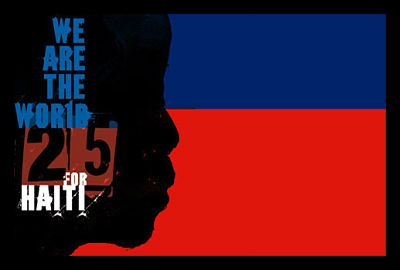
we_are_the_world
Legendary pop king Michael Jackson has been dead for the past five years, but the sentiment of his charity single “We are the World” rings on brightly and truly. The charity single was originally composed by Michael Jackson and Lionel Richie and performed by USA for Africa to promote humanitarian efforts against famine in Africa.

Since its release in 1985, the globally-successful super-hit single has gone on to sell over 20 million copies, raising over $63 million for charity and has gleaned three Grammy Awards, an honor regarded as the highest accomplishment in the American music industry.

Following its original release, venerated artists have continued to remake the single. For instance, preserving the benevolence and enthusiasm of the original recording, over eighty artists, including the likes of Justin Bieber and Janet Jackson, participated in recording “We Are the World 25 for Haiti” in 2010 following the devastating magnitude 7.0 earthquake in Haiti. In the months after the earthquake, Haitians scrambled to recover from the widespread mutilation of their homeland.

According to the Disasters Emergency Committee, as a result of the earthquake, 220,000 lives had been lost, 1.5 million civilians lost their homes, and over 19 million meters of debris, a vast enough amount to stretch from London to Beirut, was scattered through Port-au-Prince, the Haitian capital. In response, artists featured on “We are the World 25 for Haiti” rallied together, forgoing royalties, in order to raise money for aid in Haiti. Although the single received largely negative reviews from critics, it was commercially successful, debuting at number two on the Billboard Hot 100.

Despite the efforts of “We are the World” remake, nearly four years after the earthquake in Haiti, recovery remains slow, with many spectating that relief organizations themselves have misused the aid money. However, progress, albeit timely, has indeed taken place. For instance, the United Nations has pledged to donate $2.2 billion to protect Haitians against cholera, while the Red Cross has donated nearly all of its $486 million in donations to help rebuild the nation.

Although critics allege that most relief efforts that have taken place in Haiti only tackle superficial problems rather than healing more inherent, complex issues that require more than mere repair of infrastructure and clean-up of debris, with donations and international support, Haiti continues to rebuild and recover from the destruction wrought by the 2010 earthquake. As long as people around the globe spread the message of “We Are the World,” Haiti, along with other countries affected by natural disasters, will be able to mend and flourish.

– Phoebe Pradhan

Sources: We are the World Foundation, Disasters Emergency Committee, NBC, Billboard, Huffington Post

January 15, 2014
https://borgenproject.org/wp-content/uploads/borgen-project-logo.svg 0 0 Borgen Project https://borgenproject.org/wp-content/uploads/borgen-project-logo.svg Borgen Project2014-01-15 15:54:332024-12-13 17:53:48Michael Jackson: We Are the World 25 for Haiti
Activism, Advocacy, Global Poverty

15 Memorable TED Quotes

ted_quotes.jpg
TED, which stands for Technology, Entertainment, Design, is a global set of conferences owned by the private nonprofit organization Sapling Foundation. Under the slogan “ideas worth spreading,” TED events are held throughout the world, addressing a variety of topics, from science and culture to health, medicine, and global development. Here are some of the most memorable quotes made by TED speakers on the topic of poverty and development.

1.       “You don’t wake up one day no longer a racist. It takes generations to tear that intuition, that DNA, out of a soul of a people.”

–Lawrence Lessig: We the People, and the Republic we must reclaim

2.       “I’d grown up thinking that a [sanitary toilet] was my right, when in fact it’s a privilege — 2.5 billion people worldwide have no adequate toilet.”

–Rose George: Let’s talk crap. Seriously.

3.       “Child mortality [since 2000 is] down by 2.65 million a year. That’s a rate of 7,256 children’s lives saved each day. … It drives me nuts that most people don’t seem to know this news.”

–Bono: The good news on poverty (Yes, there’s good news)

4.       “What you do [to provide better aid is] you shut up. You never arrive in a community with any ideas.”

–Ernesto Sirolli: Want to help someone? Shut up and listen!

5.       “The challenge of development: abject poverty surrounded by corruption.”

–Sanjay Pradhan: How open data is changing international aid

6.       “I have never met a villager who does not want a vote.”

–Rory Stewart: Why democracy matters

7.       “You don’t have to get rich to have [fewer] children. It has happened across the world.”

–Hans Rosling: Religions and babies

8.       “We get so little news about the developing world that we often forget that there are literally millions of people out there struggling to change things to be fairer, freer, more democratic, less corrupt.”

–Alex Steffen: The route to a sustainable future

9. “Connectivity is productivity — whether it’s in a modern office or an underdeveloped village.”

–Iqbal Quadir: How mobile phones can fight poverty

10. “We’ve seen how distributed networks, big data and information can transform society. I think it’s time for us to apply them to water.”

–Sonaar Luthra: Meet the Water Canary

11. “Birth control has almost completely and totally disappeared from the global health agenda, and the victims of this paralysis are the people of Sub-Saharan Africa and South Asia.”

–Melinda Gates: Let’s put birth control back on the agenda

12. “Human development, not secularization, is what’s key to women’s empowerment in the transforming Middle East.”

–Dalia Mogahed: The attitudes that sparked Arab Spring

13. “The United Street Sellers Republic — the USSR — [would be] the second-largest economy in the world after the United States.”

–Robert Neuwirth: The power of the informal economy

14. “We need to deliver [mental] health care using whoever is available and affordable in our local communities.”

–Vikram Patel: Mental health for all by involving all

15. “It was the buildings [in Haiti], not the earthquake, that killed 220,000 people, that injured 330,000, that displaced 1.3 million people, that cut off food and water and supplies for an entire nation.”

–Peter Haas: Haiti’s disaster of engineering

– Nayomi Chibana
Feature Writer 


Read global poverty quotes.

Sources: TED, Reddit
Photo: Lingholic

December 5, 2013
https://borgenproject.org/wp-content/uploads/borgen-project-logo.svg 0 0 Borgen Project https://borgenproject.org/wp-content/uploads/borgen-project-logo.svg Borgen Project2013-12-05 04:00:492024-05-25 00:31:1515 Memorable TED Quotes
Page 6 of 8«‹45678›»

Get Smarter

  • Global Poverty 101
  • Global Poverty… The Good News
  • Global Poverty & U.S. Jobs
  • Global Poverty and National Security
  • Innovative Solutions to Poverty
  • Global Poverty & Aid FAQ’s
Search Search

Take Action

  • Call Congress
  • Email Congress
  • Donate
  • 30 Ways to Help
  • Volunteer Ops
  • Internships
  • Courses & Certificates
  • The Podcast
Borgen Project

“The Borgen Project is an incredible nonprofit organization that is addressing poverty and hunger and working towards ending them.”

-The Huffington Post

Inside The Borgen Project

  • Contact
  • About
  • Financials
  • President
  • Board of Directors
  • Board of Advisors

International Links

  • UK Email Parliament
  • UK Donate
  • Canada Email Parliament

Get Smarter

  • Global Poverty 101
  • Global Poverty… The Good News
  • Global Poverty & U.S. Jobs
  • Global Poverty and National Security
  • Innovative Solutions to Poverty
  • Global Poverty & Aid FAQ’s

Ways to Help

  • Call Congress
  • Email Congress
  • Donate
  • 30 Ways to Help
  • Volunteer Ops
  • Internships
  • Courses & Certificates
  • The Podcast
Scroll to top Scroll to top Scroll to top