• Link to X
  • Link to Facebook
  • Link to Instagram
  • Link to TikTok
  • Link to Youtube
  • About
    • About Us
      • President
      • Board of Directors
      • Board of Advisors
      • Financials
      • Our Methodology
      • Success Tracker
      • Contact
  • Act Now
    • 30 Ways to Help
      • Email Congress
      • Call Congress
      • Volunteer
      • Courses & Certificates
      • Be a Donor
    • Internships
      • In-Office Internships
      • Remote Internships
    • Legislation
      • Politics 101
  • The Blog
  • The Podcast
  • Magazine
  • Donate
  • Click to open the search input field Click to open the search input field Search
  • Menu Menu

Tag Archive for: Haiti

Posts

Developing Countries, Development, Food & Hunger, Global Poverty, Health

Cooking Up a Solution to Poverty and Malnutrition in Haiti

malnutrition_in_haiti
A chef connects solutions to poverty and malnutrition in Haiti with cooking.

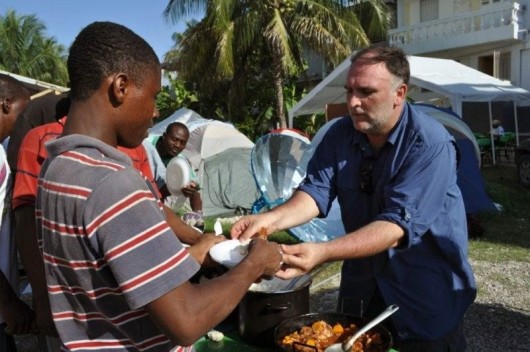
Chef José Andrés has discovered a new approach to solving poverty in Haiti, and it starts in the kitchen.

In Huffington Post’s recent feature on Andrés, Lifestyle Blog Editor Zoë Lintzeris details Andrés’ love affair with Haiti, describing his innovative ideas to improve the country’s cooking conditions and, subsequently, save it from poverty.

Andrés’ solution focuses on improving cooking apparatus to decrease safety hazards in the cooking process with his “clean cook stoves.”

Cooking safety hazards in the region include the use of “dirty” firewood and coal, two fuel sources that are unsustainable and not very profitable.

These dangerous methods have gone hand in hand with deforestation and pollution in the region. Erosion of soil, extreme and frequent flooding, degradation of water resources and habitat destruction are some forces linked to socioeconomic turmoil.

“Haiti has the highest rates of deforestation of any country in the world — a mere 2 percent of Haiti’s original forests remain,” says TriplePundit.

In turn, deforestation is responsible for a large portion of Haiti’s increasing poverty rate. Haiti’s real GDP growth has slowed down in the past two years, going from 4.2 percent in 2013 to a forecasted 1.7 percent in 2015, according to the World Bank.

GOOD Magazine suggests that “efficient stoves can help in the meantime, according to Jean Kim Chaix, the founder of the Charcoal Project, which aims to become a clearinghouse on charcoal alternatives and a consultant for green entrepreneurs.”

The Charcoal Project has undertaken a project to provide an energy efficiency program for schools, to teach them to produce fuel for cooking and lighting.

The project utilizes wood and stoves that reduce smoke and save fuel, which is just what Andrés is shooting for with his clean cookstoves.

The Global Alliance for Clean Cookstoves, hosted by the UN foundation, is Andrés’ initiative to save lives and protect the environment by creating a global market for “clean and efficient household cooking solutions.”

The Alliance has set out a 10-year goal to foster the adoption of clean cookstoves and fuels in 100 million households by 2020.

Andrés also discussed Haitian cuisine in his PBS special, “Undiscovered Haiti with José Andrés.” In the video, he describes the deep ties between the food and the country’s history and culture.

Andrés’ relationship with Haiti has led him to uncover a revolutionary solution to a problem that has a long history. Perhaps economic prosperity really can start in the kitchen.

– Ashley Tressel

Sources: Huffington Post, Good.is, TriplePundit, World Bank, Charcoal Project, Clean Cook Stoves
Photo: SCINet
November 13, 2015
https://borgenproject.org/wp-content/uploads/borgen-project-logo.svg 0 0 Borgen Project https://borgenproject.org/wp-content/uploads/borgen-project-logo.svg Borgen Project2015-11-13 01:30:192024-06-04 04:33:52Cooking Up a Solution to Poverty and Malnutrition in Haiti
Global Poverty, Women & Children

Wood for Maternal Healthcare in Haiti

Wood for Haitian Maternal Health Care
The island nation of Haiti is the poorest country in the Western Hemisphere, with one in four inhabitants of this small Caribbean nation living in extreme poverty. Plagued by political instability, as well as the devastating aftermath of the 2010 earthquake, the country of Haiti is still struggling for recovery.

In the wake of the worst earthquake in a 200-year history for Haiti, an estimated 1.5 million people were left homeless. The rehabilitation process for the affected population is crippled by the financial hardships of the country. According to a World Bank report, one in two Haitians live in poverty, living on less than $3 a day.

The extreme poverty conditions in the country have unsurprisingly affected the healthcare system as well. The insufficient healthcare system was dealt a further blow after the earthquake of 2010, which is estimated to have destroyed 60 percent of the healthcare infrastructure in Haiti.

The deterioration of the healthcare system has especially affected the maternal and neonatal health in the country. According to UNICEF, maternal mortality in Haiti is 35 women out of every thousand; neonatal health care is equally abysmal, with 3.1 percent of newborns dying within the first month after birth.

Most of the maternal and neonatal deaths are considered largely preventable, given adequate healthcare resources. Accessibility to these resources is another important issue, with less than 36 percent of pregnant women giving birth in any healthcare facility.

The poor state of maternal health has spurred Maternal Life International — a nonprofit organization based in Montana — to direct its efforts for better maternal and neonatal health care at Haiti. Its objective is to build family health offices in the country to assist pregnant women and newborns.

As laudable as its mission is, it is faced with the difficulties of resource scarcity in Haiti. The lack of lumber in Haiti is a major obstacle in rebuilding the country.

The deforestation of Haiti has long been an issue of concern for the island nation, affecting the economic and ecological health of the country. Wood is quite significant for building structures in Haiti, as cement buildings are a danger in a region susceptible to earthquakes.

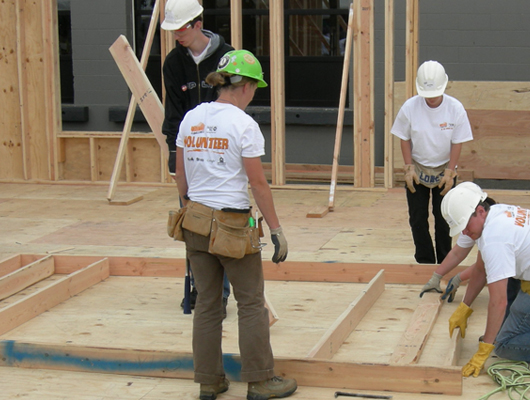
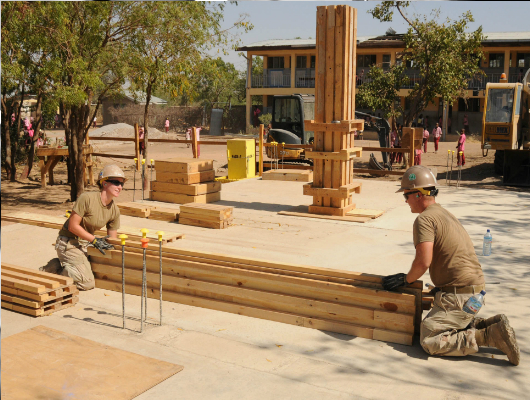
The volunteers for Wood for Haiti have a solution to the problem: lumber for the family healthcare facility building shipped straight from the forests of Montana. The group of volunteers from Missoula will assist in providing Maternal Life International procure 5 tons of lumber for construction of the family healthcare facility in Haiti.

The volunteers are working first to gather lumber in Butte, where Maternal Life International is based. The lumber is currently stored in a warehouse in Butte to be shipped to Haiti later when the construction projects begin.

The Wood for Haiti is a commendable effort by the Montana lumber industry. The donation of building materials is somewhat of a novel idea in an era of usually monetary donations. It does, however, provide for the delivery of natural resources, which Haiti needs but lacks.

It is not to say that lumber is all Wood for Haiti provides. It also provides vocational training to Haitians for the construction and rebuilding projects. With a combination of resource provision and training local labor, Haiti can be brought that much closer to economic stability.

The collaborative efforts of Wood for Haiti and Maternal Life International are anticipated to be a stepping stone toward improving the standards of maternal health in Haiti and ultimately conditions across the country.

– Atifah Safi

Sources: MATR, UNICEF, Doctors Without Borders, Maternal Life International, CIA
Photo: Google Images

September 23, 2015
https://borgenproject.org/wp-content/uploads/borgen-project-logo.svg 0 0 Borgen Project https://borgenproject.org/wp-content/uploads/borgen-project-logo.svg Borgen Project2015-09-23 01:30:062024-05-27 09:27:46Wood for Maternal Healthcare in Haiti
Aid, Charity, Global Poverty

Mission of Hope Haiti Builds 500 Homes

Mission_of_Hope_Haiti
In 2010, an earthquake killed over 200,000 Haitians and left crumbling housing infrastructure. Since then, homelessness in Haiti has steadily declined but more than 85,000 people still remain without a home. Rebuilding from the damage is the toughest task for the poorest country in the Americas.

Before the earthquake, Haitians lived in relatively poor housing built from inadequate materials. Haiti ranks near the bottom in the world in providing shelter for their citizens. Shelter includes availability of affordable housing, access to electricity, quality of electricity supply, and household air pollution attributable deaths.

The international community has been very supportive of Haiti. The EU provided $996 million to Haiti from 2008 to 2013. Money that was used for roads, education, food security, human rights, agricultural, electricity, and trade.

On a smaller level, charities and volunteers have been a strong driving force for recovery in Haiti.

Mission of Hope Haiti, a Christian missionary organization, provides education for people in the island nation. The organization has a partnership with Hope for Haiti, and the government in Haiti to build homes. Recently, Mission of Hope celebrated its 500th home built for the affected families since 2010, an average of 100 homes each year.

Every house has three rooms, land for farming, detached bathroom, access to education, water, two fruit trees, and agricultural training. The cost of each home is relatively low at $6,000.

Mission of Hope has educated 6,000 children, provided 91,000 nutritious meals each day, and housing for hearing-impaired families. Their work has helped make Leveque one of the best settlements in Haiti.

“Our vision from the first home built has been to provide those who lost their homes with a quality, cost efficient Haitian home that will not only provide a place to live but a place to thrive,” said Mission of Hope President Brad Johnson.

Homelessness in Haiti is still a serious threat to human security, but organizations like Mission of Hope provide solutions and help that will benefit thousands of people’s lives.

– Donald Gering

Sources: EurActiv, Good News Network, Huffington Post, Social Progress Imperative
Photo: Google Images

September 20, 2015
https://borgenproject.org/wp-content/uploads/borgen-project-logo.svg 0 0 Borgen Project https://borgenproject.org/wp-content/uploads/borgen-project-logo.svg Borgen Project2015-09-20 01:30:412024-05-27 09:27:52Mission of Hope Haiti Builds 500 Homes
Global Poverty

Life Size Lego: Turning Rubble into Homes

rubble_into_homes
One of the largest and most difficult tasks that aid workers face in disaster relief is finding those affected shelters. When disaster strikes, it either forces people out of their homes or reduces residences to piles of rubble. As for the governments of the affected regions, there exists the enormously expensive logistical challenge of clean up. Structural debris and rubble are the largest solid polluter by volume. One Dutch company may have found a single solution to both of these problems.

The Mobile Factory is, as the name suggests, a compact, and portable concrete production facility. It fits into two standard size shipping containers, and can be sent anywhere in the world with relative ease. It is solar powered as well, and thus can be operated in areas with limited or damaged power grids.

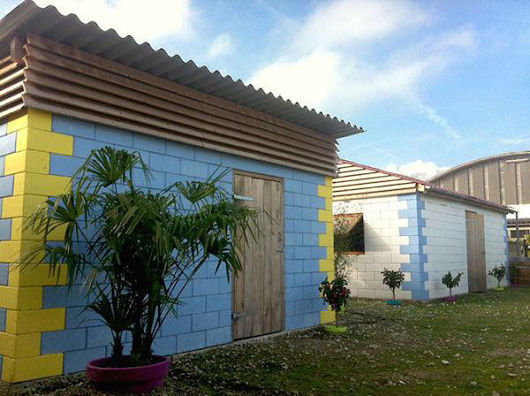
Rubble is fed into the factory and it emerges as liquid concrete. This is only the first step. The concrete is then taken and molded into standardized bricks, called Q-Brixx, that resemble large Lego bricks.

Mobile Factory has pledged to instruct users in how to use the life size lego bricks to build, modestly sized, earthquake-proof shelters. The device allows communities to safely and affordably rebuild, while also removing environmentally and physically hazardous debris.

Mobile Factory is currently being tested on a small scale in Haiti. The 2010 earthquake left 1.3 million Haitians without a home and many of its towns decimated. The Mobile Factory is testing its product where it might be needed most.

The test village is being conducted in a town of 30 families. In addition to receiving Mobile Factory homes, the families are also being instructed in the factory’s operation and how to build the homes. Mobile Factory hopes that this instructional program will empower communities to teach each other how to rebuild.

– Joe Kitaj

Sources: IndieGoGo, The Chive, The Mobile Factory
Photo: The Chive

September 7, 2015
https://borgenproject.org/wp-content/uploads/borgen-project-logo.svg 0 0 Borgen Project https://borgenproject.org/wp-content/uploads/borgen-project-logo.svg Borgen Project2015-09-07 01:30:382020-06-30 18:48:14Life Size Lego: Turning Rubble into Homes
Activism, Education, Global Poverty, Women and Female Empowerment

Chelsea Clinton Visits Haiti

haiti

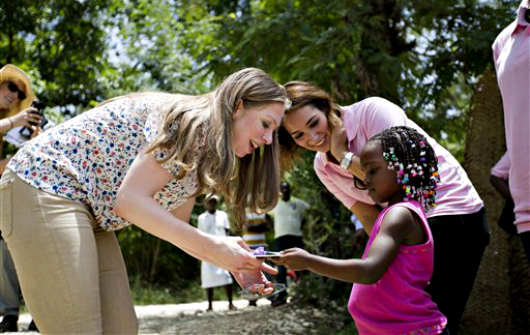
On July 28 and 29, Chelsea Clinton, the Clinton Foundation Vice Chair, visited Clinton Foundation-funded Haitian projects in Port-au-Prince to oversee agricultural improvement, health reform and female employment progress.

The Clinton Foundation’s slogan is “Partners in Haiti’s Future,” and the organization has definitely created many opportunities for the country to flourish in the present. The work of the foundation and its supporters has aided more than 85,000 farmers with new agriculture techniques. In addition, more than 350,000 people’s lives were bettered because of the organization’s social enterprises, and 9.9 million people have access to HIV/AIDS medication.

In total, the Clinton Foundation has helped raise more than $30 million for Haiti for its Trees of Hope program, Clinton Climate Initiative, Chakipi Acceso Distribution Enterprise, the Clinton Health Access Initiative and more.

Clinton visited Haiti to supervise the projects as well as inspire those who are being helped by the foundation. Clinton observed local artisans, posting an Instagram picture of herself holding a locally crafted doll with the caption “#ActionIsGreater through partnership and collaboration.”

This photo practices some of the Clinton Foundation’s guiding principles: “We’re all in this together,” and “The greatest good is helping people live their best life story.”

To further acknowledge these principles, Clinton hosted a meeting with the Clinton Foundation President, Donna Shalala, where the two discussed women’s success in the Haitian workplace and ways to create more opportunities for female employment.

Clinton said the implementation of new programs for the betterment of Haiti’s female youth is crucial to female empowerment and achievement.

“We need programs… to help close the gap, so that girls and young women who haven’t had the chance to get educated don’t live with the burden of illiteracy their whole lives,” she said.

During her stay, Clinton made it a point to visit local female-owned businesses to show support for successful female entrepreneurship. The business, Caribbean Craft, is supported by the Clinton Foundation where products are crafted and later sold in popular U.S. stores like Anthropologie and HomeGoods.

In support of other projects, Clinton visited the Clinton Giustra Enterprise Partnership’s (CGEP) Acceso-Haiti depot. There, local farmers can store their peanuts for safe-keeping. The depot also serves to empower local farmers.

“Across Haiti, CGEP is helping more than 1,500 local smallholder farmers increase their peanut yields dramatically and better sort and store their peanuts,” Clinton said.

Because of depots like this, the Clinton Foundation has helped Haitian farmers grow higher yields of crops and improve market access. In turn, the organization’s help with agriculture creates greater opportunities for a healthy lifestyle.

To check up on the Foundation’s projects for better health in Haiti, Clinton visited Partners in Health’s Mirebalais Hospital. This hospital is the country’s top educational hospital because of the influence of one of the Clinton Foundation’s supporters, Paul Farmer.

Because of his commitment, Clinton said that the hospital employees were just as good as health workers in any developed country.

After leaving the hospital, Clinton said she took time to reflect on stories about the projects created by the Clinton Foundation in her heart. She said she feels confident that Haiti’s future is bright.

“I left with an even stronger belief in what’s possible in Haiti,” Clinton said.

The Clinton Foundation has many projects that have greatly benefited the people of Haiti, and the organization is continually editing and drafting plans to implement for the persistent improvement of the Caribbean country.

– Fallon Lineberger

Sources: ABC News, Caribbean Journal, Clinton Foundation 1, Clinton Foundation 2, Vogue
Photo: Jakarta Post

August 6, 2015
https://borgenproject.org/wp-content/uploads/borgen-project-logo.svg 0 0 Borgen Project https://borgenproject.org/wp-content/uploads/borgen-project-logo.svg Borgen Project2015-08-06 07:47:362024-12-13 18:04:39Chelsea Clinton Visits Haiti
Global Poverty

Sustainable Development and Poverty in Hispaniola

Sustainable Development and Poverty in Hispaniola

Haiti and the Dominican Republic share the island of Hispaniola. Despite the proximity, the two countries are worlds apart.

Haiti is the poorest country in the Western hemisphere. Eighty percent of the population lives in some degree of poverty. According to the U.N. Human Development Index, Haiti ranks 149th out of 182 countries.

About a third of the Dominican Republic’s citizens live in poverty. Not an ideal rate by any means, but markedly better than Haiti’s. If you live in the Dominican Republic, you can expect to live 74 years and there is a 90% chance you are literate. In Haiti, those numbers drop to 61 years and 50%, respectively. Child mortality rates are three times higher in Haiti.

Dominican Republic citizens also enjoy infrastructure such as roads and reliable electricity. In Haiti, that is a dream.

How did two countries that share an island become so different? The answer is rooted in their histories and geography, and how both of those shaped their use of the rainforest that once covered most of Hispaniola.

Haiti has a larger coastline than its neighbor, making it more susceptible to hurricanes. Since its biggest cities are on the coast, they are adversely impacted by flooding.

During colonial times, Haiti was a colony of France. The economic driver was forestry and sugar-related agriculture, which caused considerable environmental degradation. The French owners also imported a lot of slaves for labor. Due to the mixing of so many cultures, there has been much political instability since Haiti’s independence in 1804.

The Dominican Republic was ruled by Spain until 1844. Although Spain did exploit the island’s resources for monetary gain, it imported far fewer slaves, leading to a more homogenous culture when they ceded control. Its primary economic driver was livestock farming.

Although the Dominican Republic has endured its fair share of political strife, the country has been politically and economically stable since the institution of a democratic system. The stability has played a role in the preservation of their rainforest. This has had many economic benefits, as tourism is the biggest cog in the country’s economy. There are also many residual effects. The rainforest inhibits mudslides from occurring during rainstorms, preventing millions of dollars of damage to infrastructure. The rainforest also keeps the soil intact for substance farming, which provides a source of livelihood for many people.

In Haiti, 98% of the rainforest has been removed. This process started under French rule and continues to this day. Haiti’s lack of reliable electricity makes wood burning the island’s primary source of power. It is estimated that 15 thousand acres of topsoil are washed away annually. This lowers the monetary and crop productivity of the land, which causes more poverty, which leads to more deforestation.

To break this vicious poverty cycle, the Haitian government has pledged to prevent the complete deforestation of Haiti. President Michel Martelly launched a campaign in 2013 to plant 50 million trees a year. Reforestation is considered essential to raise living standards. The goal is to have forest cover 29% of the country by 2060.

The campaign has slowed deforestation through educational outreach to farmers, and by promoting non-wood burning stoves. Apparel company Timberland and its partner, Smallholder Farmers Alliance, have assisted with the process by planting over five million trees.

The link between poverty and excessive resource exploitation is clear in Haiti. Long-term planning about ecosystem viability is essential, not just for the environment, but also for the people who live there. That’s something every country should notice.

– Kevin Meyers

Sources: Time, Deutsche Welle, Food Tank, Heritage.org, Index Mundi, The Guardian
Photo: UNEP

August 1, 2015
https://borgenproject.org/wp-content/uploads/borgen-project-logo.svg 0 0 Borgen Project https://borgenproject.org/wp-content/uploads/borgen-project-logo.svg Borgen Project2015-08-01 09:12:332020-07-07 06:47:51Sustainable Development and Poverty in Hispaniola
Global Poverty, Health

Bolivian Healthcare: Percentages over People

Bolivian-Healthcare

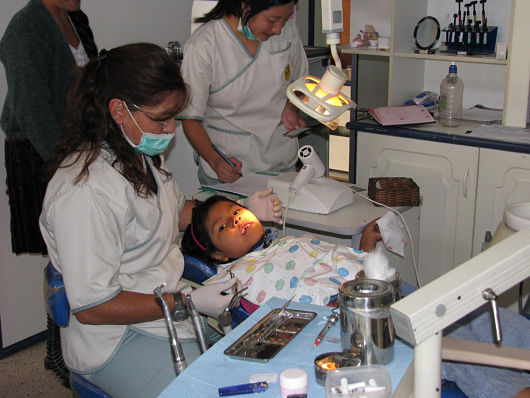
Although the Bolivian government’s new and improved universal healthcare plan has made a considerable dent in child and maternal mortality numbers, the plan still seems to be more suited for improving statistics than the lives of rural Bolivian women.

With one of highest rates of maternal and child mortality in the Latin America, second only to Haiti, Bolivia remains one of the worst places in the world to give birth, especially in rural areas. Mortality rates have historically totaled to 390 mortalities for every 100,000 live births in central cities (like the capital, La Paz), and reach as high as 887 per 100,00 live births in rural areas, according to UNICEF.

Beginning in 1994, Bolivian government officials centered in La Paz developed a series of free healthcare plans—or, more aptly, three free service packages—intended to keep mothers and children alive past the ordeal of childbirth. The most recent addition to these packages is the “Universal Maternal and Child Heath Insurance plan (SUMI).”

Upon its creation, SUMI was lauded as the symbol of iconic change of fate for Bolivian mothers. Targeted at pregnant women and children under the age of five, the program boasted that it would cover 500 common ailments. Additionally, SUMI was the first Bolivian public health program that did not come from a presidential decree, meaning that it would have longevity through congress even as presidential power shifted.

“The system was created to fight child mortality, to fight that economic barrier that prevented the mother from having proper attention from the start,” said Dr. Dante Ergueta, who works with SUMI at the Bolivian Health Ministry, in an interview with the U.K. Guardian. “It is an icon for Bolivia and I might even say for Latin America.”

Initially, SUMI managed to cut the alarming child mortality statistics. After its introduction, Bolivia saw reduction in infant mortality between 37.7% in urban areas. Even in rural areas, the program saw a 29.9% drop in infant mortality, which, although still less than the drop in metropolitan areas, represented a significant change.

However, the effects of SUMI have been blunted, if not entirely counteracted, since this initial drop.

The seeds for this decline can be found written into SUMI itself. According to a study done by Focal, SUMI’s plan to attack statistics was limited to quick fixes. Every service that SUMI provided was a double-edged sword, all of which left the deep roots of maternal health barriers in Bolivia untouched.

Where SUMI expanded the number of ailments covered by insurance, it also drastically tightened the program’s membership requirements, restricting it to women who had given birth within the past six months and children under the age of five. Previously, Bolivian health insurance had covered all women of childbearing age as well as the general population for endemic disease. SUMI cut the general public endemic disease coverage entirely, along with several family planning services for non-pregnant women.

Focal reports that “health indicators worsened after its [SUMI’s] implementation, particularly in rural areas. Inequity in health outcomes also grew because the services of high complexity that the SUMI plan made available in urban areas never reached the segment of the population [rural, indigenous communities] that needed them most.”

This “icon for Bolivia” is perhaps one of the most stark examples of one of the most common failures in public health: the rush to address startling statistics, instead of attacking underlying socioeconomic, or even cultural, gender-based problems.

According to UNICEF, Bolivian women exist in a culturally persistent subordinate role to men. Their rates of illiteracy are significantly higher, ranging as high as 37.91%, compared to 14.42% of men. This gap also drastically decreases the number of women who are capable of participating in the workforce, giving women less access to employment-based private healthcare options.

These socioeconomic and cultural forces show that the answer to improving Bolivian maternal health is more complicated than implementing a system of health-services handouts. It is not about the number of services the state can provide; it is about changing the situations of people receiving those services.

– Emma Betuel

Sources: Unicef, The Guardian, ITG, WHO, Focal
Photo: Projects Abroad

July 31, 2015
https://borgenproject.org/wp-content/uploads/borgen-project-logo.svg 0 0 Borgen Project https://borgenproject.org/wp-content/uploads/borgen-project-logo.svg Borgen Project2015-07-31 08:53:382024-06-04 03:53:07Bolivian Healthcare: Percentages over People
Global Poverty

Effect of Expulsion Plans on Hispaniola’s Poorest Citizens

Rope isolated on white background
On the island of Hispaniola, evenly split down the middle and home to both the Dominican Republic (D.R.) and Haiti, there has long been cross-over between the two countries, with an estimated 450,000 Haitian migrants currently residing in the D.R., a richer country.

In recent weeks, however, the Dominican Republic’s President Danilo Medina announced plans to register migrants and expel undocumented Haitians (or those of Haitian descent) from the country. President Medina’s expulsion plans, which come on the heels of his re-election campaign, have been enormously popular domestically, with many Dominican Republic residents claiming that Haitian migrants drain resources from what is already a very poor country. Systemic racism also plays a part, as many D.R. residents regard their darker, French-speaking and poorer Haitian neighbors as intruders who have put a strain on the country’s weak public system.

As part of the plan, President Medina’s government also proposed the Amnesty Plan – migrants were required to register with the government by June 17, 2015 or face deportation from the D.R. However, according to Celso Perez, a fellow at Human Rights Watch, the government has accepted less than 2 percent of applicants for regularization of Haitian immigrants. Officials also say that the paperwork process carries hidden costs and is frustratingly bureaucratic, which makes it hard for the less educated and the well-off to successfully complete the process. Applicants, for example, must pay RD$1,000 to 1,5000 (US$23 to US$35) to get documents signed by a notary public. For applicants who have to travel to cities where they used to live, the expense can also become compounded. Costs of attorneys, who can help ensure all the paperwork is in order, can also cost up to RD$15,000 (US$350) – an insurmountable cost for applicants who earn low salaries. John Thomas, a D.R. police officer working in Sabaneta, stated that “a lot of the Haitians who have paid fees but keep having to pay more and submit more documents feel like they are being robbed.”

According to officials, only 290,000 of the estimated 450,000 migrants eligible to apply for naturalization completed the application process before the June deadline. These people, who lack sufficient documentation proving ties to the D.R., now must live in a state of uncertainty and fear of sudden expulsion from the country.

President Medina’s plans have had the biggest impact on the D.R.’s poorest migrants; many of whom came to the country in order to escape horrible levels of poverty in Haiti (which has still not recovered economically from the 2010 hurricane). Unable to pay the application fees, and faced with a complicated application process, these poor migrants now live in uncertainty and anxiety of being woken up in the middle of the night by D.R. police and forced to leave. Many mixed families, cities and villages throughout the country now find themselves living in fear of suddenly being ripped apart.

For those who have not been forcibly expelled, many have started to regard leaving the country of their own volition as their best option. According to government figures, more than 31,000 Haitians have left the country so far, with many carting their belongings over the border in the middle of the night in order to avoid police-mandated expulsion.

For now, however, it seems that pressure placed on the D.R. government by human rights organizations and the international community have been effective in stopping what many feared would be a mass exodus of migrants from the country and a ‘human rights catastrophe.’ However, according to Laurel Fletcher, a human rights professor at University of California, Berkeley, it is now more critical than ever that the United States and international community continue to maintain pressure on the Dominican Republic and scrutinize President Medina’s plans to expel undocumented Haitians from the country.

– Ana Powell

Sources: Huffington Post, The New York Times,,US News

July 20, 2015
https://borgenproject.org/wp-content/uploads/borgen-project-logo.svg 0 0 Borgen Project https://borgenproject.org/wp-content/uploads/borgen-project-logo.svg Borgen Project2015-07-20 17:16:072020-07-09 20:14:19Effect of Expulsion Plans on Hispaniola’s Poorest Citizens
Global Poverty

Americas Relief Team

americas relief teamHurricane season is peculiar season. Some show precaution, warning everyone to evacuate. Storm chasers show appreciation, drooling over the site of swirling super cells that could create awe-invoking spectacles. Some show helplessness; some aren’t awarded the luxury of mobility and are left to their homes to take on a monsoonal fate. Americas Relief Team is there for those who feel helpless when danger is imminent, especially around hurricane season.

ART is a nonprofit organization that focuses on preparing, responding to and assisting those who would be affected by critical events. More specifically, ART focuses on disaster preparedness by conducting disaster prevention programs in urban centers and ports in Latin America. They focus on disaster response and aid by collaborating with partners to stage and deliver humanitarian aid after a crisis occurs, and finally they focus on humanitarian assistance to alleviate human suffering in the Americas.

ART accomplishes its mission of providing humanitarian logistics assistance by creating strategic agreements with key nonprofit and corporate partners—nearly 20 other influential organizations. SeaFreight Agencies is one of many of the companies that ART collaborated with. SeaFreight Agencies, teaming up with ART, provided excellent assistance to the Caribbean, especially Haiti, during the 2008 Hurricane season.

Backed by a good history, ART has been aiding the Americas for over a decade now. In 2004, ART responded to Tropical Storm Jeanne, which wreaked havoc on the Caribbean. The next year, they delivered millions of pounds of humanitarian assistance to the Caribbean region as a response to Hurricanes Charley, Frances and Ivan.

In 2010, 36 NGOs, along with ART, joined to create the largest long-term, single-country reconstruction project in Haiti as a response to the major earthquake that took place. Nearly 20 million pounds of humanitarian assistance was provided.

One of ART’s most recent developments is the Port Resiliency Project. PReP, started in 2013, will prepare airports and seaports in the Caribbean and Latin America to be more resilient in the face of natural disasters by applying the best practices learned from Hurricane Katrina and the earthquake in Haiti.

Hurricanes and natural disasters can extract many emotions from the human mind; depending on what type of person you are, you will do something different about it. Americas Relief Team prepares, responds and assists. Along with a conglomeration of teammates, ART aims to help alleviate the suffering found in the Americas.

– Erik Nelson

Sources: Americas Relief Team, Global Hand, SeaFreight Agencies
Photo: Family Now

March 23, 2015
https://borgenproject.org/wp-content/uploads/borgen-project-logo.svg 0 0 Borgen Project https://borgenproject.org/wp-content/uploads/borgen-project-logo.svg Borgen Project2015-03-23 04:00:322024-06-04 03:53:00Americas Relief Team
Development, Politics and Political Attention

7 Facts About the Assessing Progress in Haiti Act

Almost five years after the 2010 earthquake in Haiti, the United States Congress is using the Assessing Progress in Haiti Act of 2014 to evaluate how U.S. funds are being used in reconstruction efforts in Haiti.

1. The legislation noted that conditions have not improved enough.

Although more than 90 percent of displaced people have been able to leave camps, around 171,974 people still remain in camps. On top of that, corruption is widespread, the business climate is not ideal, unemployment is high and the government is weak.

2. Aid has been slow to materialize.

The United States Agency for International Development, or USAID, has distributed only 31 percent of its reconstruction funds pledged to Haiti. The vision of thousands of new homes has not happened, which has forced earthquake victims to return to existing housing through a rental subsidy program. The June 2013 report by the GAO saw that goals were not being met and projects were very far behind.

3. The act gives Congress the power of monitoring assistance to Haiti.

The act allows Congress to supervise the $3.6 billion that has gone to Haiti since the 2010 earthquake. The Assessing Progress in Haiti Act passed in the Senate 15 days earlier and it is awaiting President Obama’s signature to be signed into law.

4. The Assessing Progress in Haiti Act of 2014 entails the U.S. Secretary of State submitting an annual report to Congress.

The legislation requires the U.S. Secretary of State to submit an annual report on the condition of development projects and earthquake recovery in Haiti, no later than December 31 each year, through December 31, 2017.

5. The bill was sponsored by U.S. Senator Bill Nelson, D-Fla.

Nelson, like many others, has expressed fear about the transparency in United States foreign aid, and the slow distribution of aid in Haiti. The Assessing Progress in Haiti Act received bipartisan support and the House passed it with no objection.

6. The legislation was applauded by several groups.

The Assessing Progress in Haiti Act has received support from many groups such as the American Jewish World Service (AJWS), which provides financial aid to grassroots organizations and agencies in Haiti.

7. The act states that certain promises are to be met by Haiti’s government.

The Assessing Progress in Haiti Act specifically addresses “transparency, a market economy, rule of law, and democracy.” The bill emphasizes that the situation in Haiti does not depict improved conditions and that the country is far behind in reconstruction.

“In the wake of the devastating earthquake in Haiti, our government laudably committed a significant amount of aid to help Haiti rebuild, but a lack of transparency made it difficult to understand how U.S. government funds were being used and if recovery efforts were making progress and were being measured,” stated the president of American Jewish World Service, Ruth Messinger. She believes that the “legislation embodies a new commitment to transparency, accountability, and good governance.”

Read more facts about the Haiti Earthquake.

– Colleen Moore

Sources: The Sentinel, McClatchy DC News
Photo: Washington Memo

August 12, 2014
https://borgenproject.org/wp-content/uploads/borgen-project-logo.svg 0 0 Borgen Project https://borgenproject.org/wp-content/uploads/borgen-project-logo.svg Borgen Project2014-08-12 08:00:122024-05-27 09:20:517 Facts About the Assessing Progress in Haiti Act
Page 4 of 8«‹23456›»

Get Smarter

  • Global Poverty 101
  • Global Poverty… The Good News
  • Global Poverty & U.S. Jobs
  • Global Poverty and National Security
  • Innovative Solutions to Poverty
  • Global Poverty & Aid FAQ’s
Search Search

Take Action

  • Call Congress
  • Email Congress
  • Donate
  • 30 Ways to Help
  • Volunteer Ops
  • Internships
  • Courses & Certificates
  • The Podcast
Borgen Project

“The Borgen Project is an incredible nonprofit organization that is addressing poverty and hunger and working towards ending them.”

-The Huffington Post

Inside The Borgen Project

  • Contact
  • About
  • Financials
  • President
  • Board of Directors
  • Board of Advisors

International Links

  • UK Email Parliament
  • UK Donate
  • Canada Email Parliament

Get Smarter

  • Global Poverty 101
  • Global Poverty… The Good News
  • Global Poverty & U.S. Jobs
  • Global Poverty and National Security
  • Innovative Solutions to Poverty
  • Global Poverty & Aid FAQ’s

Ways to Help

  • Call Congress
  • Email Congress
  • Donate
  • 30 Ways to Help
  • Volunteer Ops
  • Internships
  • Courses & Certificates
  • The Podcast
Scroll to top Scroll to top Scroll to top