• Link to X
  • Link to Facebook
  • Link to Instagram
  • Link to TikTok
  • Link to Youtube
  • About
    • About Us
      • President
      • Board of Directors
      • Board of Advisors
      • Financials
      • Our Methodology
      • Success Tracker
      • Contact
  • Act Now
    • 30 Ways to Help
      • Email Congress
      • Call Congress
      • Volunteer
      • Courses & Certificates
      • Be a Donor
    • Internships
      • In-Office Internships
      • Remote Internships
    • Legislation
      • Politics 101
  • The Blog
  • The Podcast
  • Magazine
  • Donate
  • Click to open the search input field Click to open the search input field Search
  • Menu Menu

Tag Archive for: Extreme Poverty

Posts

Global Poverty

MDG 1: Eradicate Extreme Poverty and Hunger

MDG_1_poverty_hunger_world
The Millennium Development Goals are a set of eight targets agreed upon by almost all countries around the world. (For a more in-depth description of the MDGs, review this excellent post by Delice Williams: https://borgenproject.org/what-are-the-un-millennium-development-goals) Overseen by the United Nations, these goals are to be reached by 2015. Two years out from this deadline, it’s important to recognize how much progress we have made, and how far we have to go. This is the first in a series of posts that will do just that, focusing on each MDG individually in order to better understand the intricacies of each one.

The first MDG states that we will eradicate extreme poverty and hunger. This goal consists of three facets:

  1. Cut the proportion of people whose income is less than $1.25/day in half between 1990 and 2015.
  2. Ensure the opportunity for full and productive employment and decent work for everyone, including women and young people
  3. Cut the proportion of people who suffer from hunger in half between 1990 and 2015

The first of these goals, to halve the proportion of people living in extreme poverty, was met five years ahead of schedule. This represents 700 million less people facing extreme poverty in 2010 than in 1990. Extreme poverty is falling in every region. It is incredibly encouraging to know that progress is possible everywhere, especially considering that 1.2 billion people around the world are still living in extreme poverty.

In regards to the second goal, 294 million workers have been raised out of extreme poverty as of 2011. However, this still leaves 384 million workers living on less than $1.25 per day. Progress in this area has been made in part through UN partnerships with governments that provide job training for unemployed youth in developing countries. One such program, The Youth Employment Fund, was instated in Serbia, where over 2000 young Serbs were given job training and opportunities for work.

Despite significant progress towards the second goal, a significant gender gap remains. The employment percentage was still almost 25% higher for men than for women in 2012. UN Women, a women’s rights group sponsored by the United Nations, has been working towards this goal by empowering women in the workplace, especially when it comes to food production. Women all over the world are benefiting from their programs, such as those in Timor-Leste and Rwanda. These programs include self-help groups and agricultural training, as well as financial education that gives women more sway when it comes to family financial decisions.

According the UN’s progress report, the goal of halving the proportion of hungry people around the world is within reach by 2015. In fact, 38 countries have already met this target. However, roughly 1 in 8 people worldwide still go to sleep hungry each night, and about 870 million people are still undernourished. While undernutrition is a significant problem, malnutrition affects many more people worldwide, with two billion people suffering from one or more micronutrient deficiencies.

With advancements in each of the three facets of the first MDG, we should celebrate our success. And yet, with billions of people still facing extreme poverty and hunger every day, we must continue to make progress.

This series will continue by considering the significant advancements made and work to be done in regards to the second MDG, the achievement of universal primary education.

– Katie Fullerton

Sources: UN Women, UN NewsCentre, UN MDGs
Photo: Mwebantu,

August 2, 2013
https://borgenproject.org/wp-content/uploads/borgen-project-logo.svg 0 0 Borgen Project https://borgenproject.org/wp-content/uploads/borgen-project-logo.svg Borgen Project2013-08-02 04:00:112024-06-11 01:47:14MDG 1: Eradicate Extreme Poverty and Hunger
Extreme Poverty

Extreme Poverty in the United States

Extreme Poverty in the United States
Throughout the world, extreme poverty rates have decreased significantly in the past years. According to the United Nations, “the number of extreme poor has dropped by 650 million in the last three decades.” Economic investment and poverty relief work in developing countries have played a significant part in reducing extreme poverty rates across the globe.

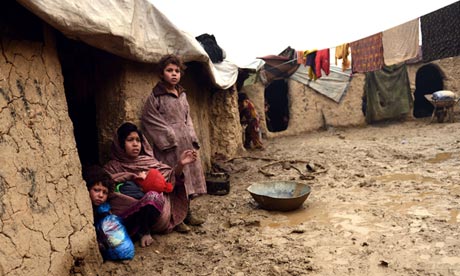
Although the majority of the people living in extreme poverty reside in developing nations, extreme poverty has yet to be eradicated from even the wealthiest of countries in the world. A recent study conducted by sociologists from Harvard and the University of Michigan have determined that extreme poverty in the United States still exists. Nearly 1.65 million households in the United States survive on less than $2 a day. This figure “accounted for 4.3% of all non-elderly households with children” in the United States.

The conditions of an American living in extreme poverty are certainly different than those of people who live in the developing world. Fortunately for the American impoverished, the United States has established a number of programs to assist people living under the poverty line. Food stamps, housing subsidies, and refundable tax credits are available to ensure that a person’s basic needs are met. The United States spent $9.6 billion on funding Temporary Assistance for Needy Families in 2011. This program provides temporary financial assistance to the impoverished, allowing them to pay for daily expenses when they are struggling to earn a sufficient income.

Although extreme poverty is concentrated in developing nations, extreme poverty is truly a global issue. Poverty reaches rich and poor countries alike, and the impoverished need aid no matter where they live. The difference between the impoverished living in a wealthy country and a developing one, however, is that wealthy countries have well-established safety nets for those living below the poverty line. In other parts of the world, this is not the case, making foreign assistance to these areas even more critical to ensure that the impoverished have their most basic human needs fulfilled.

– Jordan Kline

Sources: CNN, UNDP, Washington Post
Photo: HandsOn Blog

July 23, 2013
https://borgenproject.org/wp-content/uploads/borgen-project-logo.svg 0 0 Borgen Project https://borgenproject.org/wp-content/uploads/borgen-project-logo.svg Borgen Project2013-07-23 06:52:082024-12-13 17:49:27Extreme Poverty in the United States
Foreign Aid, Poverty Reduction, United Nations

Extreme Poverty Has Been Cut in Half Since 1990

Economist_global_poverty_stats _opt
In 1990, 43% of the world’s population subsisted on less than $1.25 per day. By 2010, that number had shrunk to 21%. This success comes 5 years before the United Nation’s Millennium Development Goal of achieving such a number by 2015.

The conversation has now shifted to the remaining 21%. Optimists hope to achieve similar success by 2030. However, there are several unique obstacles to addressing that 21%, and the economic conditions that allowed such a rapid decline before are unlikely to be replicated in the coming decade.

Much of the success of the last two decades was achieved by slightly elevating the conditions of those living just below the $1.25 per day line. Pulling a person living at $1.15 per day over the $1.25 line is much easier than pulling someone living at $0.25 to over $1.25. In other words, much of the remaining 21% was the bottom half of the original 43 percent. The challenge of the next decades will be to improve the lives of the most impoverished people on Earth.

China’s growth over the past decades was instrumental in lowering the extreme poverty rate. In the twenty years, from 1981 to 2001, China pulled 680 million of its own citizens out of extreme poverty as it rapidly developed. With China’s extreme poverty rate now at low levels, the focus will now shift to new developing countries, primarily India and Africa. The challenge will be to replicate the economic conditions for such an achievement in vastly different governmental and cultural contexts.

Should such a success be achieved by 2030, however, the fight against poverty will hardly be over. The $1.25 a day figure is simply an accepted global standard of extreme poverty, and does not account for those living in poverty in developed countries. In the U.S., the poverty line sits at $30 a day–a marked difference. However, with extreme poverty levels eradicated, the world would be able to focus anew on those living just below the line.

– Andrew Rasner

Sources: The Economist, The Wall Street Journal, The Economist
Photo: The Economist,

July 17, 2013
https://borgenproject.org/wp-content/uploads/borgen-project-logo.svg 0 0 Borgen Project https://borgenproject.org/wp-content/uploads/borgen-project-logo.svg Borgen Project2013-07-17 08:46:192013-08-14 15:18:42Extreme Poverty Has Been Cut in Half Since 1990
Aid Effectiveness & Reform, Developing Countries, Extreme Poverty

Bread For The World Institute

Bread For The World Institute

Finding up-to-date information on research concerning hunger, poverty, and agriculture can be a difficult task.  To make this easier, the Bread for the World Institute compiles all their research into easy-to-understand formats. Bread for the World Institute is the research arm of Bread for the World. The institute focuses on research in several key areas including U.S. hunger and poverty, trade and agriculture, the Millennium Development Goals, maternal and child nutrition, immigration, global hunger and poverty, foreign assistance to reduce poverty, and climate change and hunger.  The staff work on policy analysis focused on hunger and strategies to end it. They use their research to educate world leaders, policymakers, and the public about hunger in the United States and abroad.

Within each research area, working papers can be found highlighting current research and findings happening. In addition, the institute is committed to the idea that development assistance does indeed work. They have a section of seven short essays telling stories and providing facts relating to the results of effective development aid. The essays are available for use by anyone from activists to politicians to Sunday school teachers. The essays serve to help individuals get a better picture of the fight against global hunger and extreme poverty.

The Bread for the World Institute also has a blog that provides current updates on what is going on within the fight to end world hunger and extreme poverty. The blog breaks down some of the information into a more comprehensible format. The goal of the institute and the research is to help people become informed and take action in the fight.

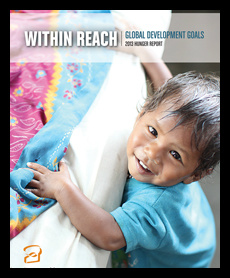
The 2013 Hunger Report is also produced by the Bread for the World Institute. The Hunger Report looks at issues surrounding global hunger such as malnutrition and food insecurity. The 2013 edition calls for a final push towards meeting the Millennium Development Goals.  Overall, the Bread for the World Institute is an excellent resource for information and facts on global hunger and on the fight to end it.

– Amanda Kloeppel
Source:Bread for the World Institute,Hunger Report

July 2, 2013
https://borgenproject.org/wp-content/uploads/borgen-project-logo.svg 0 0 Borgen Project https://borgenproject.org/wp-content/uploads/borgen-project-logo.svg Borgen Project2013-07-02 16:29:462024-06-04 02:43:54Bread For The World Institute
Development, Global Poverty

Poverty Reduction in the Comoros

Poverty Reduction in the Comoros
The Comoros consists of four islands located in the Indian Ocean near Madagascar and Mozambique. Affectionately calling their country Masiwa, or “the islands”, the population totals to 1,080,000 citizens. The country, among several other small island states, is considered underdeveloped. Although the country gained independence in 1975, political and institutional crises created sustained instability.

In 2012, the Union of the Comoros, under the leadership of the newest president, Dr. Ikililou Dhoinine, drafted an official Poverty Reduction Strategy, highlighting six distinct goals to reducing their nation’s poverty.

1. Stabilize the economy by building a foundation for strong equity.

Although the external debt of the Comoros is said to remain unsustainable, the country’s external trade has increased from 47.8% in 2010 to 52% in 2011, increasing imports from 8.9% in 2010 to 9.1% in 2011.

2. Strengthen profitable sectors, including institution building and participation of private economic operators.

The Comorian government has set a priority to repair highly damaged roads including 17 km on Ngazidja, 17 km on Ndzouani, and 6.5 km on Mwali, among other main highway repairs.

3. Strengthen governance and social cohesion.

Studies on citizenship, prejudice, discrimination, the roles of women and youth in society, the establishment of 16 peace committees, introducing biometrics into the electoral process, and the institutionalization of a national commission to fight corruption.

4. Improve the health of citizens.

According to the recently drafted strategy, 300 households are currently benefiting from implemented sanitation programs, far surpassing the target set in 2011. A sanitary water network has reached 23 km, active in Djando on Mohéli, Domoni, and Sima on Anjouan.

Fighting against avoidable illnesses has also made significant progress. Through obtaining instruments and equipment, support for training programs, and the installation and management of vaccine distribution. Comorians were able to see high percentages of vaccination effectiveness per antigen.

5. Promote education and vocational training.

The main objective in education was to improve access to educational institutions per capita. Enrollment in professional and vocational roles reported an increase from 3% in 2010 to 8% in 2011. Although this rate is lower than the projected improvement of 15%, there has been a significant increase in admissions at the University of the Comoros.

6. Promote environmental sustainability and civil society.

Priority zones for biodiversity conservation resulted in the completion of five inventories of flora and fauna, exceeding the 2011 forecast. 1,531 citizens were educated in several areas of agricultural management, complying with government-instated goals for sustainable use of renewable resources.

Although one out of two people in the Comoros is considered poor, the Comorian government is taking active steps to reduce their poverty and improve the lives of their citizens.

– Kali Faulwetter

Sources: IMF, Every Culture, Maps of World

June 24, 2013
https://borgenproject.org/wp-content/uploads/borgen-project-logo.svg 0 0 Borgen Project https://borgenproject.org/wp-content/uploads/borgen-project-logo.svg Borgen Project2013-06-24 07:37:572024-06-04 02:43:53Poverty Reduction in the Comoros
Global Poverty

95% Discount on HPV Vaccines for Girls in Poverty

95% Discount on HPV Vaccines for Girls in Poverty

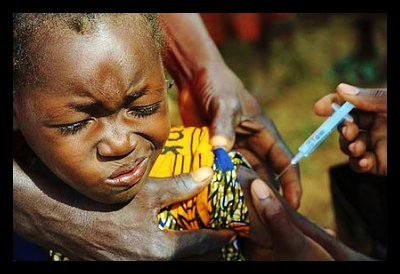
HPV vaccines costing an average of $130 a dose in the United States will now be offered in poor countries for as low as $4.50 a dose, a monumental step made possible by the generous and focused work of the GAVI Alliance. These vaccines help prevent strains of human papillomavirus, or HPV, that cause almost 75% of cervical cancers.

According to GlaxoSmithKline and Merck, the two pharmaceutical companies offering these deeply slashed prices, more than 85% of cervical cancer deaths occur in the developing world. “We hope that this will help reduce the burden of cervical cancer and positively impact future generations,” said GSK President and General Manager Christophe Weber in a press release. GSK already supplies 80% of its total vaccine volume to developing countries.

The GAVI Alliance, formerly the Global Alliance for Vaccines and Immunization, was launched under a generous donation from the Bill & Melinda Gates Foundation in 1999; the Alliance works to partner charitable donations with private pharmaceutical companies by negotiating significantly lower vaccine costs for countries in need. This model has allowed over 370 million children to receive immunizations since GAVI’s founding.

In the next few months, GAVI will provide support to countries worldwide by carrying out demonstration programs that raise awareness among the vaccination target group — pre-adolescents — which will allow countries to incorporate the vaccine into their own immunization programs.

– Naomi Doraisamy

Sources: GAVI Alliance, Merck
Photo: Polifaso

May 30, 2013
https://borgenproject.org/wp-content/uploads/borgen-project-logo.svg 0 0 Borgen Project https://borgenproject.org/wp-content/uploads/borgen-project-logo.svg Borgen Project2013-05-30 04:30:422024-06-05 01:53:3095% Discount on HPV Vaccines for Girls in Poverty
Global Poverty

Birth Rates Decrease As People Rise Out of Poverty

Birth Rates Decrease As People Rise Out of Poverty
Many people argue that deaths resulting from poverty are an unfortunate solution to overpopulation. They assume that raising families out of poverty will only give them more resources to support ever more children. However, the evidence actually shows that birth rates decrease as people rise out of poverty. This is because parents are often forced by high child mortality rates to have several children to ensure that they will have someone to care for them as they age. When these families are no longer living in extreme poverty, they can be more confident that their children will survive, allowing them to have fewer children. According to the World Health Organization, both the actual death and the fear of death of a child results in higher fertility rates, regardless of a family’s size or income level.

Over the last two decades, reduced levels of extreme poverty in numerous countries, including Guatemala, Cambodia, and Namibia, has coincided with a decrease in average family size to about half. Since the 1960s, Latin American women’s fertility rates have decreased from about 6 to between 2 and 3. This has resulted from decreased child mortality rates, as well as improved maternal health and family planning education in many areas. USAID has been instrumental in helping many Latin American countries, such as the Dominican Republic, El Salvador, Honduras, and Nicaragua, start family planning programs. Most of these programs have become self-sustaining and are preparing for USAID’s gradual departure.

While poverty is an extremely reliable indicator and contributing cause of high birth rates, a society’s treatment of women must also be considered. In societies where women are disenfranchised, birth rates tend to be high and inflexible. This shouldn’t necessarily come as a surprise, given that in these societies girls are taken out of school at a young age, females are often victims of multiple forms of violence, and most women have minimal knowledge of or power to enact family planning strategies. Many women are essentially forced into prolonged motherhood, which can be incredibly damaging to their health, as well as their children’s. With improved family planning education around the world, the lives of 1.6 million children under five could be saved each year.

A woman’s education level is an excellent indicator of her fertility. Well-educated women are much more likely to have smaller families. It is important to note that the education of women does not necessarily cause lower fertility rates. Instead, education is just one aspect of improved social standing for women, and it is likely that this improved status leads to smaller families, not to mention improved women’s health in general.

It is essential to recognize that decreasing levels of extreme poverty will also help minimize the problem of overpopulation. When families no longer live in fear of unacceptable child mortality rates, they decrease their fertility levels. Part of this effort to decrease birth rates also includes family planning education for both men and women and improved societal standing for women.

– Katie Fullerton

Sources: USAID, USAID Blog, Population Institute, Global Issues
Photo: Hatter

May 30, 2013
https://borgenproject.org/wp-content/uploads/borgen-project-logo.svg 0 0 Borgen Project https://borgenproject.org/wp-content/uploads/borgen-project-logo.svg Borgen Project2013-05-30 04:00:412020-06-27 02:43:06Birth Rates Decrease As People Rise Out of Poverty
Extreme Poverty, Health

Universal Health Care Can End Extreme Poverty

Universal Health Care Can End Extreme Poverty
Universal health care in all countries could help bring an end to extreme poverty by 2030, says World Bank President Jim Yong Kim. He explains that “every country in the world can improve the performance of its health system in the three dimensions of universal coverage: access, quality and affordability.” Last month Kim set the goal of ending extreme global poverty around the world, which means that nobody will be living on $1.25 or less each day by the year 2030. He claims that universal health coverage is essential to be able to reach this goal because it is costly to receive medical care, and many of the poorest families cannot afford these costs.

Health issues are a major reason people are in extreme poverty, putting 100 million people into extreme poverty as well as creating severe financial stress for an additional 150 million people around the world each year. Kim states that to create a valuable and helpful system, those in the public sector should take tips from private sector companies to be more efficient and provide “value-for-money health care.” He further explains that to create the best universal health care in poor, developing countries, point-of-service and out-of-pocket costs must be eliminated, because they hinder people’s ability to obtain the services they need but cannot afford.

Kim knows that for the poorest people around the world, even what would seem like small costs to visit a doctor or receive a vaccine can be detrimental to a family’s financial stability, and could push some people back into poverty or extreme poverty. With universal health care, these individuals and families can receive these necessary health benefits without sacrificing other areas of life or worrying about being forced back into poverty.

– Katie Brockman
Source: Businessweek
Photo: World Health Coverage

May 29, 2013
https://borgenproject.org/wp-content/uploads/borgen-project-logo.svg 0 0 Borgen Project https://borgenproject.org/wp-content/uploads/borgen-project-logo.svg Borgen Project2013-05-29 04:00:352020-06-27 02:44:31Universal Health Care Can End Extreme Poverty
Extreme Poverty

Extreme Poverty or Higher Aggregate Happiness

Extreme Poverty or Higher Aggregate Happiness
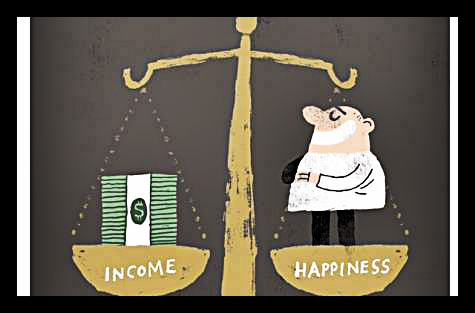
In a recent research analysis regarding the after-effects of eradicating extreme poverty, researchers found that the world’s well-being as a whole is much more important to focus on. During the past decade, the main focus of the U.N. and developed nations has been to eradicate extreme poverty, but now researchers are asking: what comes after the end of poverty? The argument is that many people will still be considered poor in comparison to those who are rich. Daniel Altman of Foreign Policy asserts that even if people move up from extreme poverty (living on less than 2 dollars a day), the more they are exposed to ads and a TV showing them how the “other half lives,” the more the income gap will yet remain.

Altman writes, “the link between income and happiness is strong in countries around the globe.” Thus, rising income maintains constant happiness which means that focusing on non-extreme poverty is just as important as focusing on eradicating extreme poverty. Basically, even if poor farmers and sweatshop workers’ lives were advanced “beyond the level of mere subsistence,” there needs to be a constant advancement of their lives in order to maintain consistent and constant well-being and happiness.

Although the aid industry has been successful in lifting small numbers of people out of poverty for a given time, there is a need for “big changes in living standards,” and that calls for the growth of the private sector and a change of political institutions. By following up on the Bill and Melinda Gates Foundation’s slogan that every human life has equal value, perhaps there is a need for a new slogan for the aid industry, argues Altman. Rather than it being the eradication of extreme poverty, perhaps it should be the building of higher aggregate happiness.

– Leen Abdallah

Source: SBS News
Photo: Google

May 18, 2013
https://borgenproject.org/wp-content/uploads/borgen-project-logo.svg 0 0 Borgen Project https://borgenproject.org/wp-content/uploads/borgen-project-logo.svg Borgen Project2013-05-18 04:46:582024-05-24 23:52:17Extreme Poverty or Higher Aggregate Happiness
Global Poverty

What Are Social Safety Nets?

What Are Social Safety Nets?
Now that extreme global poverty has an expiration date, we can begin to think more closely about the methods that are helping us achieve this momentous goal. While some of them may seem obvious, such as providing better education and increased numbers of job opportunities, others are not so obvious. One of these methods is the idea of social safety nets.

Social safety nets are programs that help the poorest and most vulnerable people stay out of extreme poverty. These are the people who teeter on the edge of poverty and could fall back into their old lifestyle quickly if not helped. The programs help cushion them from unexpected crises, such as if a family member gets sick or their crops are destroyed in a natural disaster.

These social safety nets come in many forms and from many places. They can be in the form of cash, food, healthcare, or schooling, and they can come from the state, donors, or the private sector. The programs can also be altered to fit the particular needs of the country, and are not limited to countries with certain income levels. Also, increased technology is helping spread the rate at which people receive help from the programs, as well as allowing the aid to go to the people who need it most, therefore increasing its efficiency.

Social safety nets are one of the most important factors that can help not only eradicate extreme poverty but also make sure it’s gone for good.

– Katie Brockman

Source: The Guardian
Photo: NCRW

May 17, 2013
https://borgenproject.org/wp-content/uploads/borgen-project-logo.svg 0 0 Borgen Project https://borgenproject.org/wp-content/uploads/borgen-project-logo.svg Borgen Project2013-05-17 08:33:242020-06-21 22:13:51What Are Social Safety Nets?
Page 5 of 6«‹3456›

Get Smarter

  • Global Poverty 101
  • Global Poverty… The Good News
  • Global Poverty & U.S. Jobs
  • Global Poverty and National Security
  • Innovative Solutions to Poverty
  • Global Poverty & Aid FAQ’s
Search Search

Take Action

  • Call Congress
  • Email Congress
  • Donate
  • 30 Ways to Help
  • Volunteer Ops
  • Internships
  • Courses & Certificates
  • The Podcast
Borgen Project

“The Borgen Project is an incredible nonprofit organization that is addressing poverty and hunger and working towards ending them.”

-The Huffington Post

Inside The Borgen Project

  • Contact
  • About
  • Financials
  • President
  • Board of Directors
  • Board of Advisors

International Links

  • UK Email Parliament
  • UK Donate
  • Canada Email Parliament

Get Smarter

  • Global Poverty 101
  • Global Poverty… The Good News
  • Global Poverty & U.S. Jobs
  • Global Poverty and National Security
  • Innovative Solutions to Poverty
  • Global Poverty & Aid FAQ’s

Ways to Help

  • Call Congress
  • Email Congress
  • Donate
  • 30 Ways to Help
  • Volunteer Ops
  • Internships
  • Courses & Certificates
  • The Podcast
Scroll to top Scroll to top Scroll to top