• Link to X
  • Link to Facebook
  • Link to Instagram
  • Link to TikTok
  • Link to Youtube
  • About
    • About Us
      • President
      • Board of Directors
      • Board of Advisors
      • Financials
      • Our Methodology
      • Success Tracker
      • Contact
  • Act Now
    • 30 Ways to Help
      • Email Congress
      • Call Congress
      • Volunteer
      • Courses & Certificates
      • Be a Donor
    • Internships
      • In-Office Internships
      • Remote Internships
    • Legislation
      • Politics 101
  • The Blog
  • The Podcast
  • Magazine
  • Donate
  • Click to open the search input field Click to open the search input field Search
  • Menu Menu

Tag Archive for: Education

Posts

Education, Global Poverty

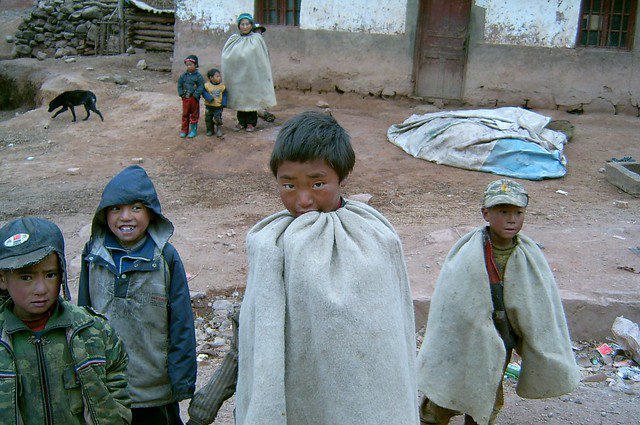
10 Facts About Poverty in China

Poverty in ChinaIn recent years, poverty in China was cut poverty in half making it one of the great success stories.

“China is doing well, but you still see children begging on street corners with horrible diseases,” said university student Ariqua Furse, whose mother emigrated from Hong Kong.

By 2020, China will replace the U.S. as the biggest economy, according to Standard Chartered Bank. Much of the world anticipates China becoming the global superpower, with its increasing overseas investments and influence.

However, it has a ways to go if it wants to match these expectations within five years. China is polarized by its advancing technologies and a large number of people that remain impoverished. Tall glass-and-steel skyscrapers loom over gritty, crumbling slums.

Part of the problem is the lack of education in rural areas, which keeps families steeped in poverty.

“Kids in some southern provinces don’t have access to education,” said Ji Da, a native of Chengdu, Sichuan. “We send them clothes.”

Because much of the population is doing well and China functions like a healthy first world country, it’s not easy to determine the full extent of poverty in the country.

10 Facts about Poverty in China:

  1. China is one of the top five poorest countries in the world.
  2. One in 10 Chinese is poor.
  3. At least 82 million people in China live below the poverty line.
  4. Two hundred thousand Chinese don’t have access to electricity.
  5. The Chinese yuan is less valuable in areas with a greater gender imbalance.
  6. Close to 70 million earn an annual income of 2,300 yuan ($376).
  7. Over 6 million Chinese don’t have access to clean fuel to heat their homes and cook.
  8. Three-quarters of global poverty reduction between 1990 and 2005 occurred in China.
  9. About 12.3 million people rose above the poverty line in 2013.
  10. Since 2013, the percentage of Chinese living below the poverty line has been cut nearly in half.

China has made significant progress in recent years in reducing poverty and is continuing to do so. Beijing hosted the 2015 Social Good Summit to raise awareness for the Sustainable Development Goals, which include eradicating poverty.


Poverty in China Graph

During the conference, Tencent, Inc., China’s largest Internet service portal, relayed its efforts to reduce the digital divide between urban and rural areas of China.

Ji reported that the Chinese government is building schools and “government-subsidized housing for the poor.”

If the country can face the facts about poverty in China and stabilize the economy, it will be well on its way to matching, and even surpassing, the U.S. economy in 2020.

– Sarah Prellwitz

Sources: MIC, All Girls Allowed, UNDP, Forbes, IB Times, Index Mundi, RT, Rural Poverty Portal, Personal Interviews

Photo: Flickr

October 23, 2016
https://borgenproject.org/wp-content/uploads/borgen-project-logo.svg 0 0 Borgen Project https://borgenproject.org/wp-content/uploads/borgen-project-logo.svg Borgen Project2016-10-23 01:30:222024-05-27 09:28:1210 Facts About Poverty in China
Education

A Call for Education for Indigenous People

Education for Indigenous People
The indigenous community of many countries often becomes the most disadvantaged group of people in the country. In Latin America and the Caribbean, only about 40 percent of aboriginal children complete their secondary education.

The U.N. is promoting the need for greater access to education for indigenous people with events in many countries around the world including Colombia, Ghana, Honduras, Indonesia, Peru and Sri Lanka. One of the major hurdles facing the global education sector in order to provide education for indigenous communities around the world is providing an education that fulfills their linguistic and cultural necessities.

Many indigenous children are unable to take full advantage of the education provided to them by their country because of linguistic and cultural barriers. A country’s educational system most often utilizes their national language, which disregards native languages spoken by indigenous communities. Particularly in Latin America and the Caribbean, history lessons focus on teaching history from the colonial empirical standpoint versus the perspective of the indigenous community.

By not providing the tools necessary for public education for indigenous people, they will be marginalized in the wider community. U.N. Secretary General Ban Ki-moon stated, “Indigenous peoples regularly face stigmatization of their cultural identity and lack of respect and recognition for their heritage and values, including in textbooks and other educational materials.” This creates an uncomfortable learning environment for indigenous students in schools where they are often the minority.

The lack of assistance towards the indigenous community is most evidently seen in the statistics that reveal that indigenous people represent only five percent of the global population but account for 15 percent of the world’s most impoverished according to the World Bank.

The International Work Group for Indigenous Affairs (IWGIA) reports that in Latin America alone there are about 41 million, or about 6.3 percent, of the region’s population that identify as indigenous people. Most governments in the region have chosen not to accommodate the needs of the students belonging to this demographic which explains why graduation rates are much lower compared to the national majority population.

When discussing countries like Bolivia, where 10.6 million of the population, or 62 percent, identify themselves as belonging to an indigenous community, it’s a problem that must be addressed. UNICEF stated that in Bolivia, a non-indigenous child in an urban zone belonging to the upper-middle class completes approximately 14.4 years in education, while an indigenous girl in a rural zone from a low-income family is only able to complete two years of education.

All indigenous people are at a disadvantage in Australia. Participation of indigenous 15 to 19-year-olds in higher education was 60 percent in 2013, below the 80 percent participation for all Australians in the same age group. The numbers concerning indigenous communities can be disheartening but the U.N. has called on all countries to improve the lives of 370 million indigenous people.

Although currently, indigenous communities worldwide have been marginalized, they are finally receiving the international recognition they deserve in terms of education. Experts suggest that the solution to the problem lies in providing education for indigenous people that is linguistically and culturally fitting for each community. Special attention is being given to girls and women because they are at an even greater disadvantage and possibly in more danger than their male counterparts.

The U.N. has declared a firm position on the issue concerning the report that is due to be released later this year on the education of indigenous communities worldwide. The World Bank has also shown solidarity by working actively with indigenous people worldwide on a number of issues. The topic of educating indigenous people is now part of the global education conversation.

– Mariana Camacho

Photo: Flickr

October 20, 2016
https://borgenproject.org/wp-content/uploads/borgen-project-logo.svg 0 0 Borgen Project https://borgenproject.org/wp-content/uploads/borgen-project-logo.svg Borgen Project2016-10-20 04:39:332024-05-27 23:53:19A Call for Education for Indigenous People
Education, Global Poverty

Bridging the Global Youth Skills Gap

Youth Skills Gap
On July 15, the U.N. celebrated World Youth Skills Day. U.N. Secretary-General Ban Ki-moon called for sustained investment in youth skills to help achieve the 2030 Sustainable Development Goals. Across the world, a huge generation of young people is entering the workforce.

Unfortunately, many of them lack the skills necessary to have successful and engaging careers or even to be gainfully employed. Those aged 15-24 make up 40% of those unemployed worldwide, even though they only make up 18% of the global population. Many of those who are lucky enough to be employed are working jobs that provide little in the way of remuneration or protection.

The inability of young people to find good jobs is a major contributor to continuing poverty. This poverty, in turn, plays a powerful role in breeding both localized violence and global extremism. Addressing this situation calls for many responses, one of which is attacking the global youth skills gap.

In today’s economy, digital and communicative skills are in demand but schooling, especially in poorer countries, often emphasizes traditional skills, meaning that educational models that may have been successful in the past are in danger of becoming outmoded. According to a survey from the Asian Development Bank, communicative and language skills are seen as being most valuable. More broadly, in many places, there is a significant mismatch between the skills needed for work and the skills that people have.

Fortunately, there are many steps that can be taken to address the youth skills gap head-on. According to the World Economic Forum, social and emotional learning (SEL) provides children with the framework they need to adapt to a wide array of situations in their future careers. Training children to adapt to different situations, rather than over-focusing on specific skills that may or may not be useful, increases their readiness to participate in a wide range of careers.

The World Bank has sought to address the issues of the youth skills gap and youth unemployment head-on through a variety of individual programs. From the Caribbean to South Asia to Sub-Saharan Africa, these programs have helped increase employment and provided youth with skills of lasting value.

Efforts to improve the effectiveness of education, direct job training projects and job-search assistance are just a sampling of the work being done to bridge the gap.

Like so many contributors to global poverty, the youth skills gap is anything but an intractable problem. Rather, with the concerted effort of individuals, governments, businesses and multilateral organizations it can become less and less of an obstacle to shared prosperity.

– Jonathan Hall-Eastman

Photo: Flickr

October 14, 2016
https://borgenproject.org/wp-content/uploads/borgen-project-logo.svg 0 0 Borgen Project https://borgenproject.org/wp-content/uploads/borgen-project-logo.svg Borgen Project2016-10-14 01:30:282024-06-11 02:48:22Bridging the Global Youth Skills Gap
Gender Equality, Global Poverty

India’s Gender Gap in Literacy

India's Gender Gap

As two-thirds of the world’s illiterate population or 496 million people are women, the gender gap in literacy rates remains conspicuous. The Guardian calls the gap “stubbornly unchanging” as gender inequality persists and overall literacy rates improve.

In the past 20 years, youth literacy rates have jumped from 83% to 91%, while the number of illiterate youth declined from 170 million to 115 million. Yet the difference between literacy rates for men and women has remained quite stable.

For instance, India’s gender gap is stark. The country holds the largest illiterate population and constitutes one-third, or 187 million, of all illiterate women around the world; there is a 24 percentage point difference between men and women. About 75% of Indian men have at least a basic level of literacy while 51% of women are literate.

This disparity in literacy rates remained persistent throughout the years according to data collected by India’s National Commission on Population. For example, in 1951, the literacy rate for males was 27% while just a mere 8% of women were literate — a 19 percentage point difference. In addition, in 1981, 56% of men were literate with a 30% literacy rate for women — a 26 percentage point difference.

Taking a Closer Look at India’s Gender Gap

As the gender gap remains stable although overall literacy rates are on the rise, this predicament is an interesting puzzle that requires a closer look at possible causes.

According to Planet Read, the following social factors have contributed to India’s gender gap:

  1. Gender-based inequality
  2. Social discrimination and economic exploitation
  3. Domestic responsibilities dominating educational responsibilities
  4. Low female enrollment in schools
  5. Low retention rate and high dropout rate

It is obvious that abiding social and cultural norms have been a roadblock towards promoting a more balanced ratio in literacy rates.

In a report by the University of Maryland, College Park, Aparna Sundaram and Reeve Vanneman observed a counter-intuitive relationship between an increase in women’s labor force participation and literacy rates. In areas that promote the idea of women in the labor force, there are also lower rates in literacy and education levels.

One may assume that the participation of women in the labor force contributes to an equalization in women’s status and, thus, a decrease in the gap between men and women literacy rates. However, this does not seem to be the case. The solutions towards resolving disparity seem much more complex than simply promoting an equalized labor force.

As more education is provided to a society as a whole, the more likely it would be for the persisting gender gap in literacy rates to decrease. Sounds like a paradox, but it is a solution worth noting.

As literacy is tied to thriving economies, it is important to focus on improving the gender gap in literacy rates. According to data, an increase in literacy rates correlates with a decrease in the share of the population living in poverty — on less than $2 per day. Moreover, focusing on educating women more specifically would, according to Bloomberg, yield a “growth premium” in DGP trends around the world.

– Priscilla Son

Photo: Flickr

October 7, 2016
https://borgenproject.org/wp-content/uploads/borgen-project-logo.svg 0 0 Borgen Project https://borgenproject.org/wp-content/uploads/borgen-project-logo.svg Borgen Project2016-10-07 01:30:102024-12-13 17:55:49India’s Gender Gap in Literacy
Education, Global Poverty

She’s the First Offers Scholarships for Future Female Leaders

 Female Leaders She's the First
She’s the First is a non-profit organization dedicated to providing scholarships for girls in developing countries.

The organization allows donors to directly sponsor the education of girls in low-income areas around the world. Research shows that girls at the secondary school level are particularly vulnerable, but thankfully She’s the First focuses on these girls and partners with local organizations to find potential secondary school level scholars based on academic merit, personal hardship and potential to contribute to the community following graduation.

The founders of the organization — Tammy Tibbetts and Christen Brandt — were inspired by their personal experiences with education and the power of a woman’s support network.

The education offered by She’s the First leverages these support networks to stretch beyond basic academics. The organization connects girls with support systems and mentors who teach them how to apply their newfound skills in their everyday lives, hoping that by being provided with such scholarships, the girls will be able to delay marriage and childbirth, avoid domestic violence, secure better wages and ultimately break the cycle of poverty.

Scholarships for girls are part of an overarching goal to achieve gender equality on all fronts. The United Nations recognizes the importance of girls’ education and have listed equitable education for all as one of its Sustainable Development Goals.

Research shows that investing in education for girls is not a futile effort; it increases both women’s earning potential and countries’ economic outputs. According to She’s the First, “only one in every five girls in the developing world finish primary school, and only one out of every three countries (37 percent) has as many girls as boys in secondary schools.”

Already, the United Nation’s previous Millennium Development Goals have made great strides in providing education for girls around the world. According to the 2015 MDG report, in Southern Asia, 74 girls for every 100 boys attended primary school in 1990. That number has now risen to 103 girls for every 100 boys.

She’s the First, meanwhile, has provided scholarships for over 750 scholars in 11 countries. According to their website, She’s the First has one main goal with their scholarships for girls: “We can transform a girl’s life if we help her be the first to reach her high school graduation, changing the trajectory of her entire life.”

– Sabrina Santos

Photo: Flickr

October 1, 2016
https://borgenproject.org/wp-content/uploads/borgen-project-logo.svg 0 0 Borgen Project https://borgenproject.org/wp-content/uploads/borgen-project-logo.svg Borgen Project2016-10-01 01:30:242024-12-13 17:55:37She’s the First Offers Scholarships for Future Female Leaders
Education, Global Poverty

A Focus on Early Childhood Education in the Middle East

Early Childhood Education in the Middle EastOngoing conflict continues to hinder early childhood education in the Middle East. There are about 8,500 schools that are unusable in the region. UNICEF reports that 13 million children are not attending school as a result of violence, displacement and structural damages to schools.

Schools in countries like Jordan, Syria, Yemen, Iraq, Libya and Sudan are used as shelters and storage areas in war zones. This damages the quality of the education facilities and makes them unusable when the conflict ends.

The report also suggests that there should be more financial support for early childhood education in the Middle East. Such a change needs effective work from policy makers to bring the attention of donors and supporters to the problems of child education in the region.

Moreover, the Middle Eastern governments were known for their low spending on education and basic educational facilities for children. This has even decreased from in the recent few years. In 2001, the Middle East and North Africa region spent 17.6 percent of its GDP in education. In 2008, this measure fell to 13.6 percent.

In spite of the discouraging statistics, parents in the Middle East are realizing the importance of providing education. For example, families in the UAE are willing to spend less on luxurious services and more on their children’s education. Parents realize that improving early childhood education in the Middles East provides a foundation for success in higher education and sustainable future generations.

Many students in the Middle East are looking forward to studying abroad, mainly in the United States. Parents want their children to gain an international experience that will ensure success and interaction with different cultural perspectives.

– Noman Ahmed

Photo: Flickr

October 1, 2016
https://borgenproject.org/wp-content/uploads/borgen-project-logo.svg 0 0 Borgen Project https://borgenproject.org/wp-content/uploads/borgen-project-logo.svg Borgen Project2016-10-01 01:30:062024-12-13 17:55:49A Focus on Early Childhood Education in the Middle East
Education

UNICEF’s Mission to Save Education in Aleppo

Education in Aleppo
The Syrian civil war is now in its fifth year, but Stephen O’Brien, the U.N. Under-Secretary-General for Humanitarian Affairs, believes that the current fighting in Aleppo, Syria represents “the apex of horror at its most horrific extent of the suffering of people.” No group is more vulnerable to this horror than the children of Aleppo, who do not have access to fresh food, clean water, shelter, or medical care. Needless to say, education in Aleppo is also not the highest priority.

The fighting in Aleppo has not slowed, even after the recent photo of Omran Daqneesh, a five-year-old boy who was pulled from the rubble of his former home, went viral. Following the image’s release, Russia, the main ally of al-Assad’s regime, swore that it would enact a 48-hour ceasefire, but the combat has continued.

Control in Aleppo is split between rebels in the east and the Syrian government in the west. The 275,000 civilians in eastern Aleppo have not been able to receive any aid, while scarce amounts of goods have reached the 1.5 million in western Aleppo. According to an article published by TIME, there is “an estimated 75,000 children fighting to survive in eastern Aleppo”.

Education in Aleppo has suffered because of the danger that children are put in when they try to attend school. Save the Children reported that in the month of August 16 schools that they support have been hit or affected by bombings.

While UNICEF is fighting on many fronts in Aleppo, their most prominent initiative is providing children from the war-torn city with a proper education. In a recent article, UNICEF shared that it has built 130 prefabricated classrooms throughout Aleppo.

Unfortunately, one of UNICEF’s crowning achievements in their education campaign has recently become another victim to the fighting in Aleppo. UNICEF’s intermediary school in the 1070 neighborhood was severely damaged by bombings that began on July 31. The all girls’ school had 32 prefabricated classrooms with 2,500 students enrolled.

The 1,070 school offered hope to many children in the western Aleppo neighborhood, which is made up of thousands of displaced families. Though this tragedy is horrific, it does not signal the end of UNICEF’s campaign. The organization plans to rebuild these classrooms and is collaborating with Syrian officials on self-learning programs that will restore education in Aleppo.

– Liam Travers

Photo: Flickr

September 30, 2016
https://borgenproject.org/wp-content/uploads/borgen-project-logo.svg 0 0 Borgen Project https://borgenproject.org/wp-content/uploads/borgen-project-logo.svg Borgen Project2016-09-30 01:30:262024-12-13 17:55:43UNICEF’s Mission to Save Education in Aleppo
Children, Education, Global Poverty

Great Strides for Education in Nigeria

 Education in Nigeria

Children walking to school: an image many take for granted and expect as a given in the world today. But in many places, such as Nigeria, not every child has the opportunity to learn.

Nigeria, the most populated country in Africa, comprises 20 percent of the total children not currently attending school in the world. And the problem is far from stagnant as there are 11,000 babies born every day in the country.

Politically insecure and vulnerable to attack, Nigeria’s children are at great risk for not receiving an education. The northern part of the country faces a devastating statistic as two-thirds of the children are illiterate.

An attack in Northern Nigeria forced 2.2 million people to flee their homes, resulting in the displacement of families whose children no longer have a school to attend. In 2015, USAID set out to change the status quo, teaming up with state officials and a number of non-profit organizations to improve education in Nigeria.

They developed the Education Crisis Response Program: a program designed to relieve the local schools of some of their overwhelming demands by providing education for children between the ages of six and 17 in three different Nigerian states.

Two hundred ninety-four learning centers were built for classes three days per week. In-class meals and necessary school supplies were provided. The Education Response Program did not stop there. Recognizing the possible trauma many of these children may have experienced in the rapid displacement of their families from their homes, the program also provides psychological treatment.

Teachers in these learning programs have been trained to approach their classrooms through a psychosocial mindset. They encourage group work, remain aware of the history these children hold and provide open student-teacher interaction to help them feel safe and comfortable back in the classroom.

The Nigerian government supports this program and will be entrusted with the task of carrying its essential goals through when the program is phased out in 2017. The country is also planning financially so that the education response will grow with time.

Furthermore, the World Bank announced in September of 2016 a budget of $500 million for basic education in Nigeria.

Nigeria joined the Global Partnership for Education in 2012, established to increase the amount of people receiving quality, basic education. This partnership has worked with each state to develop a plan “to outline its priorities and objectives.”

In addition, an organization called the Nigerian International Athletes Association (NIAA) will hold a conference in October. The NIAA is a union based in the United States comprised of former Nigerian athletes seeking to improve the future of athletics, education and healthcare in their home country.

According to Premium Times, the NIAA’s president plans to use the conference’s funds “to support kids from disadvantaged homes with their education and help talented young athletes to combine sports and education.”

Perhaps the NIAA’s efforts combined with those of USAID and World Bank will result in not only the maintainence of millions of children’s education, but the advancement as well. With teachers trained to care for them beyond the classroom and former athletes enabling them to chase their dreams, education in Nigeria is surely on the rise.

– Rebecca Causey

Photo: Flickr

September 29, 2016
https://borgenproject.org/wp-content/uploads/borgen-project-logo.svg 0 0 Borgen Project https://borgenproject.org/wp-content/uploads/borgen-project-logo.svg Borgen Project2016-09-29 01:30:582024-12-13 17:55:51Great Strides for Education in Nigeria
Education

Education in South Africa

Read more
September 29, 2016
https://borgenproject.org/wp-content/uploads/borgen-project-logo.svg 0 0 Borgen Project https://borgenproject.org/wp-content/uploads/borgen-project-logo.svg Borgen Project2016-09-29 01:30:322025-10-07 12:34:43Education in South Africa
Education, Global Poverty

How South Sudan Is Improving Its Education Sector

South Sudan Education Sector
As the world’s newest country, South Sudan has made strong progress in improving its education sector. In just four years, the enrollment of children in primary school has doubled, and the chance for a child in South Sudan to receive schooling has increased by 20 percent in the past decade. South Sudan’s Alternate Education System is also helping over 200,000 youth and adults catch up on their education.

Unfortunately, education in the country is still considered among the worst in the world. The adult literacy rate is only 27 percent and 70 percent of children ages 6-17 have never set foot in a classroom. The dropout rate for children in their first six years of primary education is 60 percent.

Overcrowded primary schools are extremely common and qualified teachers are few and far between. Only 15 percent of teachers in South Sudan are qualified with just three out of five teachers receiving a salary from the government.

In a World Bank article, the Country Director for South Sudan stated that in order to catch up with the rest of Africa, South Sudan needs consistent investment in classrooms, more schools in rural areas, more trained teachers and an efficient distribution of educational resources.

In order to make those improvements and boost education in South Sudan, USAID has implemented various programs and projects benefiting both students and teachers across the country.

USAID has greatly improved the accessibility of education in South Sudan. The Agency has contributed to the construction and rehabilitation of 140 primary schools and five secondary schools across the country.

In the past five years, the Agency has awarded over 9,000 scholarships to girls and disadvantaged boys who were previously unable to afford secondary education.

USAID’s South Sudan Teacher Education Program is helping to improve teacher qualification through in-service training and the implementation of a curriculum and professional teaching standards.

In 2012, the Agency provided technical assistance for the drafting and passage of South Sudan’s General Education Bill. According to a member of South Sudan’s National Legislative Assembly, “The bill provides for compulsory and free education for all citizens of the country through primary level.”

Although education in South Sudan is improving, there is still a lot of ground to make up. Organizations like USAID, UNICEF and the World Bank are working with the government of South Sudan to develop a stronger, self-sustaining education system.

– Kristyn Rohrer

Photo: Flickr

September 29, 2016
https://borgenproject.org/wp-content/uploads/borgen-project-logo.svg 0 0 Borgen Project https://borgenproject.org/wp-content/uploads/borgen-project-logo.svg Borgen Project2016-09-29 01:30:012024-12-13 17:55:37How South Sudan Is Improving Its Education Sector
Page 35 of 67«‹3334353637›»

Get Smarter

  • Global Poverty 101
  • Global Poverty… The Good News
  • Global Poverty & U.S. Jobs
  • Global Poverty and National Security
  • Innovative Solutions to Poverty
  • Global Poverty & Aid FAQ’s
Search Search

Take Action

  • Call Congress
  • Email Congress
  • Donate
  • 30 Ways to Help
  • Volunteer Ops
  • Internships
  • Courses & Certificates
  • The Podcast
Borgen Project

“The Borgen Project is an incredible nonprofit organization that is addressing poverty and hunger and working towards ending them.”

-The Huffington Post

Inside The Borgen Project

  • Contact
  • About
  • Financials
  • President
  • Board of Directors
  • Board of Advisors

International Links

  • UK Email Parliament
  • UK Donate
  • Canada Email Parliament

Get Smarter

  • Global Poverty 101
  • Global Poverty… The Good News
  • Global Poverty & U.S. Jobs
  • Global Poverty and National Security
  • Innovative Solutions to Poverty
  • Global Poverty & Aid FAQ’s

Ways to Help

  • Call Congress
  • Email Congress
  • Donate
  • 30 Ways to Help
  • Volunteer Ops
  • Internships
  • Courses & Certificates
  • The Podcast
Scroll to top Scroll to top Scroll to top
