• Link to X
  • Link to Facebook
  • Link to Instagram
  • Link to TikTok
  • Link to Youtube
  • About
    • About Us
      • President
      • Board of Directors
      • Board of Advisors
      • Financials
      • Our Methodology
      • Success Tracker
      • Contact
  • Act Now
    • 30 Ways to Help
      • Email Congress
      • Call Congress
      • Volunteer
      • Courses & Certificates
      • Be a Donor
    • Internships
      • In-Office Internships
      • Remote Internships
    • Legislation
      • Politics 101
  • The Blog
  • The Podcast
  • Magazine
  • Donate
  • Click to open the search input field Click to open the search input field Search
  • Menu Menu

Tag Archive for: Economic Growth

Information and news about economic growth

Posts

Economy, Global Poverty

The Future Course of Alleviating Poverty in Iran

Poverty in Iran

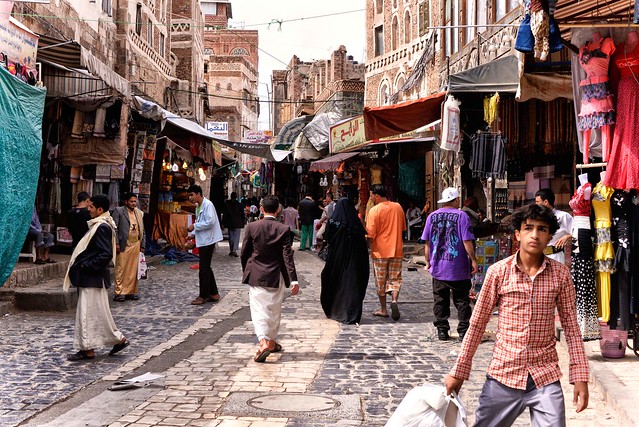
As Iran is currently at the epicenter of geopolitics and regional conflicts in the turbulent Middle East, the country’s role in international affairs is steadily growing in importance. Moreover, the Iran nuclear deal is also revitalizing Iran’s presence and significance on the global stage at the same time.

The Current Situation in Iran

According to the World Bank Group, Iran’s GDP in 2017 was $439.5 billion while its population peaked at 80.6 million. On the poverty alleviation front, poverty in Iran fell from 13.1 percent to 8.1 percent between the years 2009 to 2013. Also, in the changing dynamic of its domestic politics and a new wave of secularism and liberalism brought on by a burgeoning young population in the country, addressing poverty in Iran is a very key objective for various stakeholder groups.

However, according to a report by the Independent from Dec. 2017, the economic situation in Iran appears rather bleak in some regard because food prices are on the rise and unemployment figures are at an all-time high at over 12.4 percent. Expanding income inequalities in the country are also becoming quite widespread due to major deficiencies in the taxation and welfare systems offered to the people.

How Iran’s Political Climate Could Affect Poverty

Historically, since the culmination of the Pahlavi dynasty and revolution in Iran in 1979, the country’s social and economic progress has been a vital priority. In recent years, owing to the perceived threat of its nuclear arsenal, Iran’s diplomatic relations with its western counterparts have impacted its trade and commerce majorly due to the imposition of crippling international sanctions.

Furthermore, the changing attitudes of the Trump administration are a major threat to the deal as it may be detrimental to the future economic and diplomatic recovery Iran is trying to seek. Unfortunately, the collapse of the deal could be a major hindrance to countering poverty in Iran.

The Iran nuclear deal can help greatly bolster the capacity to alleviate poverty in Iran due to the level of investment Iran could easily achieve in the future with the expansion of its oil market, given its vast and abundant reserves. Iran can boost its oil output, GDP and household incomes in the future with diminished sanctions.

Consequently, the introduction of the Iran nuclear deal was followed by noticeable economic recovery in the country with Iran’s economy growing at an annual rate of about 12.5 percent after a sizeable contraction of about 1.6 percent in the year 2015. The country hopes to maintain growth amounting to four percent annually.

Alleviating Poverty in Iran through Investment

Moreover, remediating poverty in Iran can also be achieved by increasing the level of investment and tapping into Iran’s potential. Iran is beginning to expand and diversify its industries, especially its hydrocarbon, agriculture and services sectors, and is also continuing to focus on boosting its financial and manufacturing capabilities as well. Additionally, this may help decrease Iran’s over-reliance on its oil market as prices have often tended to remain quite volatile, especially in recent years.

The government is also implementing its twentieth-year vision and sixth five-year development plan in order to focus more on market-based reforms and techniques. This strategy is targeting three important realms: economy, science and technology. The subsidy reforms orchestrated by the government will directly help reduce poverty in Iran as they aim to target price adjustment and further increase cash transfers to low-income households in the country.

Alleviating poverty in Iran shall largely depend on existing and future initiatives that involve opening up the economy further, engaging in economic and trade liberalization with its key trading partners and embarking on further domestic structural reforms.

– Shivani Ekkanath
Photo: Flickr

June 10, 2018
https://borgenproject.org/wp-content/uploads/borgen-project-logo.svg 0 0 Borgen Project https://borgenproject.org/wp-content/uploads/borgen-project-logo.svg Borgen Project2018-06-10 10:25:202019-10-13 17:45:08The Future Course of Alleviating Poverty in Iran
Global Poverty

10 Extremely Important Facts About Poverty in Rwanda

10 Facts About Poverty in Rwanda

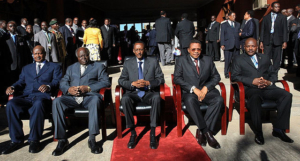
Small, landlocked and with a densely packed population of approximately 11.9 million people, Rwanda has become one of the fastest growing economies in Central Africa. Since the 1994 genocide that left 800,000 dead, Rwanda has seen over two decades of uninterrupted economic growth and social progress.

However, even with these great strides, more than 60 percent of the population continues to live on less than $1.25 a day. The government has guarded its political stability since the genocide and has prioritized long-term developmental goals to assure that its economy continues to grow and poverty falls. Here are 10 important facts about poverty in Rwanda.

10 Facts About Poverty in Rwanda

  1. Rwanda’s global income ranking has improved from the seventh poorest in 2000 to the twentieth in 2015. This is due to the government’s commitment to strong governance and the principles of market economy and openness.
  2. Although more than 60 percent still live in extreme poverty, Rwanda has reduced the percentage of people living below the poverty line from 57 percent in 2005 to 45 percent in 2010.
  3. The decline in poverty can be attributed to three main reasons: an increase in farm productivity, an increase in non-farm employment and an “increase in the number of livelihood activities in which an individual engages, such as running small businesses,” according to United Nations Rwanda.
  4. The country’s Vision 2020 is a strategy that aims to “transform the country from a low-income, agriculture-based economy to a knowledge-based, service-oriented economy with middle-income country status by 2020,” the World Bank reports.
  5. To achieve Vision 2020’s goals, the government has developed a medium-term strategy, the second Economic Development and Poverty Reduction Strategy (EDPRS 2). This showcases its overarching goal of growth and poverty reduction through four areas: rural development, economic transformation, government accountability, productivity and youth employment.
  6. Inequality measured by the Gini coefficient fell from 0.49 in 2011 to 0.45 in 2014.
  7. Almost 64 percent of parliamentarians are women in Rwanda, compared to just 22 percent worldwide. This has enabled women to advance economically.
  8. As it continues to rebuild after the genocide, foreign aid still contributes to 30-40 percent of the Rwandan government’s revenues.
  9. Economic growth fell by 4.7 percent in 2013 after some donors withheld aid over a 2012 U.N. report that alleged the government was backing rebels in the Democratic Republic of Congo.
  10. At the end of 2015, Rwanda had met most of the U.N.’s Millennium Development Goals (MDGs). With a two-thirds drop in child mortality and near-universal primary school enrollment, the country saw strong economic growth accompanied by substantial improvements in living standards.

These facts about poverty in Rwanda demonstrate the current programs and priorities. With a strong focus on homegrown policies and governmental initiatives like Vision 2020 and EDPRS 2, Rwanda has contributed to significant improvements in access to services and human development. The country’s Growth Domestic Product (GDP) grew eight percent each year from 2001 to 2014 and continues to see improvements in life expectancy, primary school enrollment, literacy and healthcare spending.

However, economic growth has been slowing down recently and remained subdued in 2017. Although the country still has some ways to go, these 10 facts about poverty in Rwanda are meant to show a glimpse into the remarkable growth the country has seen already.

– Aaron Stein
Photo: Google

May 9, 2018
https://borgenproject.org/wp-content/uploads/borgen-project-logo.svg 0 0 Borgen Project https://borgenproject.org/wp-content/uploads/borgen-project-logo.svg Borgen Project2018-05-09 17:50:382019-10-24 12:48:3210 Extremely Important Facts About Poverty in Rwanda
Global Poverty

Three Companies That Use Franchising to Fight Poverty

franchising to fight povertyThe concept of franchising is not new. But for most people, the word “franchising” only brings up images of fast food restaurants. This is not a surprise; food giants like McDonald’s remind consumers of how impactful franchising can be. But the impact of franchising stretches beyond the food industry. Franchising has worked for countless industries, ranging from pet supplies to hair salons.

With the benefits that franchising provides, it is not hard to see why. The training and resources that franchisors offer make starting a business much easier. A complete business model helps offset the risk of failure. For many, this makes the dream of entrepreneurship a reality.

In the developing world, franchising can be a powerful force as well. The business systems that franchising provides are a framework for success. With more citizens owning businesses, empowerment is inevitable. For these three businesses, the usefulness of franchising to fight poverty is clear.

Jibu Uses Franchising to Fight Poverty

In Kenya, Rwanda and Uganda, Jibu uses franchising to increase water access. The company establishes storefronts in communities that lack adequate clean water. The storefronts use filtration to produce and provide water to those that need it.

In addition, the stores provide a path to entrepreneurship. Franchisees start off with a micro-franchise business. These businesses distribute (but do not produce) clean water. This allows the franchisee to become accustomed to running the business.

Throughout the process, Jibu provides training and support. If successful, a full franchise with on-site filtration is set up. Franchise owners can then produce and distribute clean water. Despite the greater effort, allowing business owners to become accustomed to running a store is a key part of its strategy. And since the average Jibu business owner breaks even in three months, the effort is worth it. With the Jibu model, using franchising to fight poverty is a reality.

Fan Milk Limited

The model of franchising in developing nations is not new to Fan Milk Limited. Established more than 50 years ago, this company sells ice cream products in Ghana.

Business owners set out on a bike each day and distribute product throughout the country. The vendors bike to a central depot to pick up the product. After this, they bike around various routes in their region to sell the ice cream treats.

In the case of Fan Milk Limited, biking is profitable. With this business, the average franchisee breaks even in about two weeks. This provides a lifestyle benefit, as well as a clear use of franchising to fight poverty.

Like Jibu, the franchisee can expand. Vendors can fund their own depots with greater investment. This provides a host of opportunity for Fan Milk Limited business owners.

Mr. Bigg’s

In the case of Mr. Bigg’s, the benefit provided by franchising is less direct. This Nigerian fast food chain, owned by UAC Restaurants, is a favorite in the country. With the franchising model, this company has managed to expand to more than 150 locations.

The effects of Mr. Bigg’s are far-reaching. The franchised restaurants provide meaningful employment to 6,000 Nigerians. Having income helps to lift Nigerians out of poverty and improves their quality of life.

On top of this, the restaurant owners receive extensive training to help them succeed. These tools aim to ensure that the businesses thrive. The average Mr. Bigg’s restaurant owner breaks even between 24 and 30 months after opening. And when businesses succeed, the country as a whole does, too. With its model, Mr. Bigg’s uses franchising to fight poverty.

Whether with water, ice cream or fast food, franchising brings results. Franchising implements a system of support that helps business owners find success. In developing nations, this concept can drive concrete change. Jibu, Fan Milk Limited and Mr. Bigg’s show exactly that. For these companies, franchising is more than smart business. It is the right thing to do.

– Robert Stephen

Photo: Google

April 30, 2018
https://borgenproject.org/wp-content/uploads/borgen-project-logo.svg 0 0 Borgen Project https://borgenproject.org/wp-content/uploads/borgen-project-logo.svg Borgen Project2018-04-30 07:30:182024-06-06 00:07:57Three Companies That Use Franchising to Fight Poverty
Development, Global Poverty

Economic Development In Iran Could Help Reduce Poverty

Economic development in Iran
Economic development in Iran seems to be on the horizon. The World Bank released a report called “Iran’s Economic Outlook” in which it states that 2018-19 will see an overall economic improvement in the nation as the increase in investments and the reelection of President Hassan Rouhani in May 2017 provides political stability.

Moreover, the GDP growth rate is estimated at 3.6 percent, and the International Monetary Fund projects the Iranian GDP to expand by 3.8 percent in 2018, for a future economic growth of 4.1 percent in 2022. According to many analysts, such unprecedented economic development in Iran is most likely due to the removal of international sanctions over the country’s nuclear energy program in 2016.

Iran’s Economy is On the Rise

Both the World Bank and the International Monetary Fund (IMF) have revealed that Iran has seen a staggering 12.5 percent increase of its GDP in 2016. The increase in oil output was a major factor toward such economic development in Iran, after restrictions on crude sales were removed.

Such economic improvement gives hope for a comprehensive reduction of poverty in Iran. In fact, the Institute for Management and Planning Studies has released a study in which it shows more than 900 figures of what the poverty line in Iran looks like.

Data of Economic Development

This data was collected from over 40 reports released by the Statistical Center of Iran, the Central Bank of Iran and other independent research centers. Furthermore, according to study co-authors and economists Majid Einian and Davoud Severi, 12.31 percent of all Iranians are poor and a total 10.61 percent of urban and 17.03 percent of rural households live in poverty.

According to the Financial Tribune, however, the Ministry of Cooperatives and Labor and Social Welfare draws the poverty line at $159 a month for a household of 3 to 5 members. Interestingly, the economists who led the study chose $61.3 for an individual living in urban areas and $38.6 for each person living in rural areas as the standard to define what living in poverty means.

As the World Bank has reported, Iran managed to reduce poverty to 8 percent between 2009 and 2013. However, the divide between rural and urban is still quite impressive. On average, in fact, poverty in rural areas is three times higher than in urban areas.

Action to Reduce Poverty in Iran

Between 2009 and 2014, the Iranian government took action towards the reduction of poverty by assisting its citizens with universal cash transfer. This action contributed to a economic growth of 1.3 percent of the bottom 40 percent of the population.

As far as other sectors of the economy are concerned, the World Bank foresees a growth of the agriculture at a rate of 4.1 percent in both 2018 and 2019 and of the industrial sector at 4.7 percent and 4.8 percent for 2018 and 2019 respectively, and the services sector is expected to grow at 3 percent and 3.4 percent. With these statistics in sight, the future of Iran’s economic development is promising.

– Luca Di Fabio

Photo: Pixabay

April 22, 2018
https://borgenproject.org/wp-content/uploads/borgen-project-logo.svg 0 0 Borgen Project https://borgenproject.org/wp-content/uploads/borgen-project-logo.svg Borgen Project2018-04-22 10:45:172019-11-28 15:26:48Economic Development In Iran Could Help Reduce Poverty
Development, Global Poverty

Foreign Investment Growing Development Projects in Mauritius

development projects in Mauritius
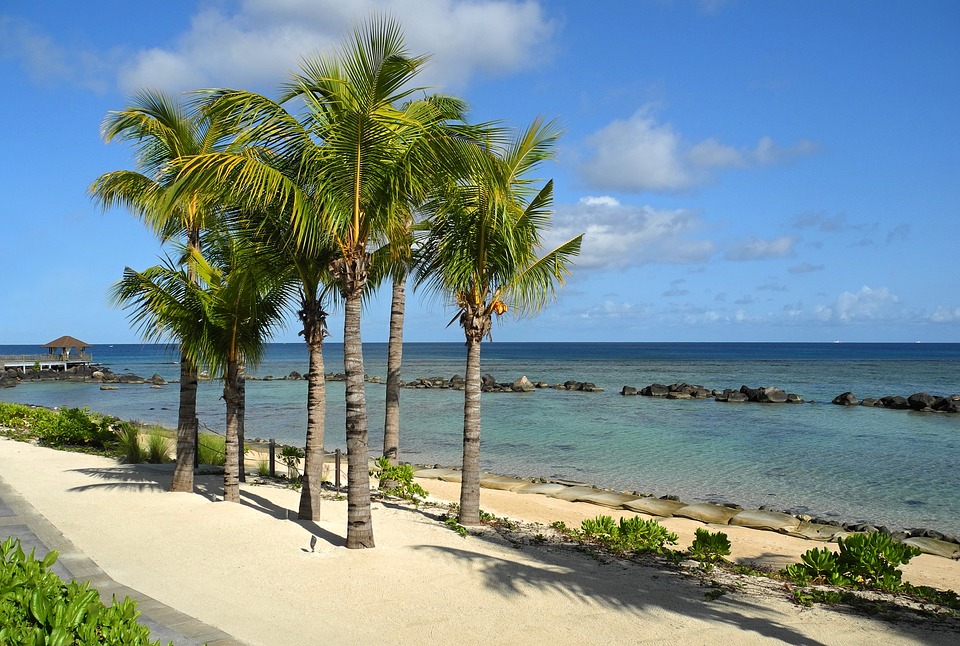
Mauritius is a southern African island country in the Indian Ocean that is famous as a tourist destination. The country is known for its peaceful people comprised of mixed races and multiple languages. Mauritius initially had an agriculture-based economy which the nation diversified into various sectors, including sugar, tourism, textiles and apparel and financial services, transforming it from a lower- to an upper-middle-income economy.

At present, the country is trying to achieve the status of a high-income economy by 2020. In order to reach this goal, various development projects in Mauritius are aiming to create job opportunities, update primary education, generate sustainable energy and improve the infrastructure of the country.

Indian Government Development Projects in Mauritius

In March 2017, India allocated ₨ 12.7 billion for various priority development projects in Mauritius, including the following:

  1. Metro Express Project
    In August 2017, ₨ 9.9 billion was earmarked for the construction of an express metro, which will facilitate transportation between Curepipe and Port Louis, covering a distance of 26 km. The project aims to decrease traffic congestion and save ₨ 4 billion each year. It consists of 19 stations, 6 urban terminals and four interchanges with 18 air-conditioned trains in operation. It is expected to be completed by September 2019.
  2. Early Digital Learning Program
    The project started in 2017 with the aim of supplying digital tablets to students in grades one and two containing digitized study materials. ₨ 500 million has been spent on this program, which includes the cost of hardware, software and training assistance.
  3. Trident Project
    India is providing a fund of $4 million with an additional $52.3 million line of credit for this project. Its aim is to upgrade the maritime and surveillance operations of the Mauritius National Coast Guard to fight against drug trafficking in the Indian Ocean.
  4. Building Projects
    The remainder of the ₨ 12.7 billion is going towards the construction of several new buildings, including ₨ 1.1 billion for a new Supreme Court building in the capital city of Port Louis, ₨ 700 million for construction of social housing units and ₨ 500 million for an up-to-date ENT hospital.

Projects with the African Development Bank

In 2013, the Sustainable Energy Fund for Africa granted $1 million for the development of a Deep Ocean Water Application Project in Mauritius. The aim of the project was to install an innovative low carbon seawater air conditioning system.

Mauritius has no oil or natural gas reserves, and so to reduce its energy imports, it has employed this seawater air conditioning system. The system extracts and pumps cold water from the Indian Ocean, which is used to air condition the business district of Saint Louis and its adjacent regions.

This innovative technique has helped to lower the cost of air conditioning systems and reduced carbon emissions by 40,000 tons. It has provided jobs to local engineers and technicians and also created job opportunities in other sectors like aquaculture, pharmaceuticals and bottling.

Mauritius is also looking forward to other development projects in cooperation with India as well as the World Bank, which will help it achieve the status of a high-income developed country.

– Mahua Mitra

Photo: Flickr

April 5, 2018
https://borgenproject.org/wp-content/uploads/borgen-project-logo.svg 0 0 Borgen Project https://borgenproject.org/wp-content/uploads/borgen-project-logo.svg Borgen Project2018-04-05 01:30:092024-05-29 22:39:03Foreign Investment Growing Development Projects in Mauritius
Global Poverty

Iboga Growers and Sustainable Agriculture in Equatorial Guinea

sustainable agriculture in Equatorial Guinea

Agrarian-minded agents have shared farming methods online that enable sustainable agriculture in Equatorial Guinea for traditional tribespeople who grow Tabernanthe iboga, a shrub that has many uses in traditional tribal medicinal practices.

One important use of Tabernanthe iboga is to provide hunters and fisherman with stamina and a reduced need to eat and drink as they are hunting and fishing. Iboga also has a lot of other medicinal properties that make its cultivation and use important to the people who live in Equatorial Guinea and surrounding areas. Tabernanthe iboga has been shown to help with diarrhea and various disorders of the mind, and some traditional healers even claim that it helps lessen pain in people who have AIDS.

The Internet Helps Iboga Growers

Before learning new farming methods that encouraged sustainable agriculture in Equatorial Guinea, some of the farmers growing Tabernanthe iboga employed more environmentally destructive slash and burn methods to harvest the plant. Through self-agency by using information about farming available online, the farmers learned about the importance of not removing the whole plant so that the crop can continue to grow in the future, and the need to replace the soil so that the nutrients required to grow the plants do not get destroyed.

The farming methods that were shared online by agrarian-minded agents and used by Iboga growers provide a beacon of light that promotes and supports sustainable agriculture in Equatorial Guinea. However, companies that are not agrarian-minded have passed laws that restrict farmers in Equatorial Guinea from sharing their seeds with other farmers. Such laws, which are designed to protect the profits of biotechnology firms that have created new seeds, hurt farmers in developing countries.

Seed Sovereignty Addressing Restrictions

A political movement called Seed Sovereignty is attempting to repeal the legislation that makes it a crime to save and share seeds. This movement is attempting to restore the right to use seeds to the farmer so that sustainable agriculture in Equatorial Guinea and other areas of the world is possible without needing to buy new seeds each year.

Farmers who violate the law and decide to share the seeds from their harvest with other people can go to prison. In some areas of Africa, the farmer who defies the law by sharing his seeds can spend up to 12 years in prison. Agrarian-minded agents take the opposite approach and empower farmers in places like Equatorial Guinea to protect the plants they grow by sharing their seeds and environmentally-safe farming techniques with others rather than putting them in prison for sharing their knowledge with other people.

An Online Repository of Sustainable Agriculture in Equatorial Guinea

The promotion of methods that support sustainable agriculture practices is needed to help preserve biodiversity and empower farmers in impoverished areas of the world. They offer this help by sharing the knowledge required to farm without destroying the environment so that farmers can produce without worrying about destroying the natural resources that they depend on for food and medicine.

Farmers in Equatorial Guinea have access to new methods to sustainably grow Tabernanthe iboga because of the information shared online by agrarian-minded agents. Tabernanthe iboga is an important plant in Equatorial Guinea, it is a part of their rich culture, and farmers can ensure that Tabernanthe iboga will always be there by growing it using sustainable farming methods.

– Michael Israel

Photo: Google

March 23, 2018
https://borgenproject.org/wp-content/uploads/borgen-project-logo.svg 0 0 Borgen Project https://borgenproject.org/wp-content/uploads/borgen-project-logo.svg Borgen Project2018-03-23 01:30:552019-11-26 14:11:02Iboga Growers and Sustainable Agriculture in Equatorial Guinea
Developing Countries, Development, Global Poverty

Rapid Change: Top 10 Countries Seeing Economic Growth

economic growth
Gross Domestic Product, or GDP, is the measure of goods and services produced in an economy — an often-used tool to measure the success of a nation’s economic growth. While this has been the main measure of success over the last century or so, many are starting to questions its effectiveness at measuring total welfare of a country. While it is important to look at other factors in country growth, GDP remains a key aspect of reflecting the top ten countries with growing business.

The average world GDP growth is slightly under 3 percent, annually. As of 2017, the following countries have made the top ten list of fastest growing economies; interestingly, they are all developing countries.

10 Countries Seeing Economic Growth

  1. Ethiopia: 8.3 Percent
    Ethiopia has predominantly been an agricultural country — a fact that is still one of the main sources of business used. However, the country is growing into other fields that shows promising investment opportunities, such as construction or real estate and manufacturing items that range from anything from consumer purchasing to company purchasing.At this point, income for the average citizen still remains at one of the lowest levels, but the continued economic growth has had a positive effect i.e. bringing extreme poverty from 55.3 percent in 2000 to 33.5 percent in 2011.
  2. Uzbekistan: 7.6 Percent
    Uzbekistan is mainly known for its natural gas, gold and copper exports; however, when Russia and China’s markets decreased, this had a directly negative impact on the nation from 2013 to 2016. The Uzbekistan government evaluated its form of market and created space for investment and business growth within its systems. This evaluation had a positive impact, as Uzbekistan moved from fifth on the GDP growth list in 2015 to second in 2017.
  3. Nepal: 7.5 Percent
    A good deal of business has been drawn to Nepal and developed within Nepal due to a need for basic resources such as water, electricity and communication within the nation, especially after the 2015 earthquake. While this market still exists, Nepal’s ability to take the natural disaster and use it as an opportunity to grow and develop is a sign of its imagination and strength.
  4. India: 7.2 Percent
    India is the highest country for outsourcing, and the nation’s ability to use its resources of education and skills has created a unique market to many other countries. Inequality still holds India back from reaching its full potential, but many are speaking out against caste systems and gender inequality, thus drawing attention to the varying gaps (wage and education) surrounding different demographics.
  5. Tanzania: 7.2 Percent
    Tanzania’s rapid economic growth has been attributed to its gold export and tourism influx, but this development has led to new business in energy fields, real estate, infrastructure and agriculture. Tanzania still remains one of the poorest, but this is mostly attributed to population growth rather than an inability to grow business as the poverty rate fell from 60 percent in 2007 to 47 percent in 2016.
  6. Djibouti: 7 Percent
    Djibouti is a small country next to Ethiopia based off the water — a location creating a perfect market for shipping and trade. The nation’s recent spike in economic growth has been largely attributed to foreign investors finding opportunities in port facilities and construction. While the extreme heat in the country and low resources on clean water is still a battle for many citizens, the steady growth of market and job opportunities will surely increase quality.
  7. Laos: 7 Percent
    Laos possesses rich natural resources and a high utilization for hydroelectricity. Its central location in southeast Asia created strong trade with its neighboring countries, and also a growing global interest in the nation has created increased levels of tourism.
  8. Cambodia: 6.9 Percent
    Cambodia is in a similar situation as Laos, particularly with being in the same region. While starting a business in Cambodia can be difficult, especially without bribes, the nation’s economy continues to develop with the help of tourism, natural resources and water-based operations.
  9. Myanmar: 6.9 Percent
    In the past, Myanmar attracted an influx of foreign investment due to its many opportunities to expand business fronts such as telecom, tourism, natural resources and infrastructure; however, foreign investment in the nation has dropped in recent years. In 2017, the Myanmar government began to make a real push to increase investment again by restructuring its government and economy to a democracy form of government (from a military-based one) and creating a more market-oriented economy.
  10. Philippines: 6.9 Percent
    Many tourists flock to the Philippines to visit inexpensive hotels and visit beautiful beaches, particularly in recent years,. While this interest has increased economic growth, Phllippinian stubbornness is actually what continues to keep the economy moving despite the nation’s corrupt government and natural disasters.

While citizens fight for more freedom and better business opportunities, the Philippines’ economy and quality of life will improve even more quickly once government and citizens are able to reach more amicable agreements.

– Natasha Komen

Photo: Flickr

March 22, 2018
https://borgenproject.org/wp-content/uploads/borgen-project-logo.svg 0 0 Borgen Project https://borgenproject.org/wp-content/uploads/borgen-project-logo.svg Borgen Project2018-03-22 01:30:332019-11-21 14:13:45Rapid Change: Top 10 Countries Seeing Economic Growth
Global Poverty

Credit Access in Liberia Improving Thanks to Efforts of Central Bank

Credit Access in LiberiaLiberia is a predominantly rural nation. Because of this, the financial literacy of its citizens and the country’s financial institutions are often put on the backburner. This has resulted in credit access in Liberia lagging behind when compared to other countries.

In the country of Liberia, there has not been an effective credit rating system, and many businesses lack the records needed for credit approval. In response to this, the Central Bank of Liberia (CBL) has established a credit reference system that contains credit history and derogatory information about certain creditors. The CBL focuses on delivering financial services to the communities in the country without any services available to them. These services allow these sections of the country to become integrated into the formal economy.

These services include increasing access to medium-term financing, creating an environment for private-sector job creation and improving and empowering the Liberian-owned business segment of the economy. This will help improve credit access in Liberia and allow more citizens and businesses to have up-to-date financial records. It will also improve the legitimacy of those businesses and their credit records.

The CBL has also begun to issue treasury bills in an effort to develop a capital market. This has allowed the country to expand its foreign market, which helps improve the economy of the country as a whole. With the help of the CBL, the financial system in Liberia is steadily improving. This is happening despite the Ebola crisis and external shocks from the fall in international commodities. Liberia is slowly becoming more financially stable, which is helping both citizens and businesses.

Throughout the country, there has been significant progress in strengthening the banking sector. This has included the adoption of a national corporate governance framework and increasing the regulatory capital adequacy ratio and the minimum capital requirements. These changes to Liberia’s banking system have helped improve the effectiveness of financial institutions throughout the country.

The CBL has recently implemented regulations for all licensed insurance companies operating in Liberia. The regulation sets the capital requirement for each class of insurance business. It also requires each company to maintain a minimum amount of capital. This has been implemented in the hopes of strengthening the insurance sector. These regulations have had a positive effect on credit access in Liberia. They help improve the economy of the country and strengthen its finances.

Despite a significant portion of the population still residing in rural areas, the financial institutions throughout the country are helping businesses become more credible and allowing them to maintain their financial records through banks. As a whole, Liberia has greatly improved its banking sector, and is well on its way to being a significant part of the formal economy.

– Simone Williams

Photo: Flickr

March 15, 2018
https://borgenproject.org/wp-content/uploads/borgen-project-logo.svg 0 0 Borgen Project https://borgenproject.org/wp-content/uploads/borgen-project-logo.svg Borgen Project2018-03-15 01:30:412019-11-04 01:38:31Credit Access in Liberia Improving Thanks to Efforts of Central Bank
Global Poverty

The Expansion of Infrastructure in Croatia


infrastructure in CroatiaCroatia officially became part of the European Union on July 1, 2013. With membership in the European Union came an increase in access to funds and European Union-backed financing. These funds, along with outside funding from institutions such as The World Bank, are helping to make the much-needed expansion of infrastructure in Croatia possible. Below are five examples of ways that infrastructure in Croatia is expanding.

The Building of the Pelješac Bridge

One of the largest infrastructure projects in Croatia is the building of the Pelješac Bridge. This bridge will connect southern Croatia and Dubrovnik, as well as some access roads. On January 12, 2018, it was announced that the bridge will be constructed by a Chinese consortium led by the Chinese Road and Bridge Corporation. The building of this bridge has been long awaited in Croatia, and this decision signals the beginning of what will become one of Croatia’s largest infrastructure expansion projects in recent years.

The Opening of a New Terminal at Zagreb International Airport

A new terminal was opened at Zagreb International Airport on March 22, 2017. The terminal cost $450 million, and was built by a consortium supported by the International Finance Corporation. Up to this point, the construction of this terminal was the largest infrastructure project that had occurred in Croatia in the last 10 years. This terminal is 65,000 square meters, and more than doubled the airport’s capacity, increasing it from two million to five million passengers per year. The hope is that this new terminal will allow for increased tourism in Croatia, which will ultimately improve the nation’s economy.

Reconstruction of the Croatian Road Network

There is currently a Modernization and Restructuring of the Roads Sector Project underway in Croatia. On April 28, 2017, the World Bank’s board of directors approved a $23.32 million loan to aid Croatia in this project. The road network in Croatia carries more than 75 percent of transport demands in the country, so the reconstruction and expansion of the road network will strengthen the effectiveness of this vital sector of infrastructure in Croatia.

Railway Construction

The Croatian railway network has been largely ignored in recent years, but that is beginning to change. The reconstruction of the railway that connects Dugo Selo to Križevci is underway. The 38-kilometer line is undergoing extensive reconstruction, and a second track is being added to it as well. This project is being largely funded by the European Regional Development Fund, and is expected to be completed by 2020.

Clean Water Project

Clean water will be more readily available to thousands in northern Croatia thanks to a project directed at improving infrastructure for water management and treatment. This project will cost €64.3 million, and is being funded by the European Union. In a press release on November 29, 2017, commissioner for regional policy Corina Cretu said, “Croatian households now have access to clean water thanks to our investment – this is a practical example of the value added by the European Union which cares about the environment and health of its citizens.”

The above projects are just a handful of the infrastructure projects that Croatia has undertaken since becoming an official member of the United Nations in 2013. These, along with the numerous other improvements being made to infrastructure in Croatia, are helping to expand economic opportunities in the country and improve the overall quality of living for the citizens of Croatia.

– Nicole Stout

Photo: Flickr

March 13, 2018
https://borgenproject.org/wp-content/uploads/borgen-project-logo.svg 0 0 Borgen Project https://borgenproject.org/wp-content/uploads/borgen-project-logo.svg Borgen Project2018-03-13 01:30:152024-05-29 22:39:47The Expansion of Infrastructure in Croatia
Development, Global Poverty

The Curious Case of Development in Bangladesh

development in BangladeshIn 1971, shortly after Bangladesh had secured its independence from Pakistan following a brutal conflict, National Security Advisor Henry Kissinger dismissed the newfound nation as an “international basket case” set up to fail. With their views obscured by the haze of its violent founding, Kissinger and many other onlookers failed to see the nation’s potential. Today, though, the success of development in Bangladesh demands that the country be characterized not as a basket case, but one worthy of emulation.

Struggle for Independence

The nation of Bangladesh experienced an especially tumultuous and traumatic founding. In 1971, present-day Bangladesh was still a province known as East Pakistan. Concerned that East Pakistan was threatening its power, the ruling military government of West Pakistan, then supported by its American ally, began a crackdown against eastern rebels in March 1971.

The attempt to quell the rebellion descended into genocide. Eventually, India intervened on East Pakistan’s behalf and helped secure Bangladesh’s independence. By its conclusion, an estimated 200,000 had perished, and close to 10 million people were forced to flee to neighboring India.

Set against this bloody backdrop, the new country’s prospects did not appear particularly promising.

Defying the Detractors

Despite this maelstrom, Bangladesh has managed to develop economically. In 2000, the poverty headcount, as measured by the percentage of residents making less than $2 a day, accounted for nearly half of the population. By 2017, that number had decreased to less than a quarter of Bangladeshis.

According to World Bank statistics, Bangladesh’s gross national income was around $170 in 1974; today, it has increased to nearly $2,000. This tenfold increase has been the result of growth rates consistently around 6 to 7 percent. Such growth, sustained since the early 1990s, has resulted in demonstrable improvements in conditions for the people of Bangladesh.

Perhaps as impressive as the substantive progress in Bangladesh has been its rather unorthodox path to get there. Most countries given the title of “development success” typically follow the rapid growth models of nations like South Korea or the “support-led pathways” of dramatically increased public spending on national welfare programs.

Development in Bangladesh has seemingly followed neither. Its growth rates have been steady, but not comparable to the hyper-growth rates seen in the Four Asian Tigers of South Korea, Taiwan, Hong Kong and Singapore, all of which went from fledgling low-income countries to upper-income nations at a record pace. Bangladesh also spends just 2.2 and 3.5 percent of its GDP on education and healthcare, respectively, levels below average for low-income nations. How, then, has Bangladesh managed to make such significant development strides?

How Development in Bangladesh Became Possible

Many experts attribute successful development in Bangladesh to innovative programs like micro-financing that target women, as well as a burgeoning garment industry which has made Bangladesh somewhat of an export powerhouse. Both have empowered females in the country, increasing their wages and decreasing their fertility rates. As of 2014, the nation had reached gender parity in school enrollment.

The atrocities Bangladeshis endured in their fight for independence remain a sordid prologue in their history, as do the sweeping dismissals from much of the international community. In any case, Bangladesh has been able to turn the page to an encouraging chapter of growth and development.

– Brendan Wade

Photo: Wikimedia Commons

March 12, 2018
https://borgenproject.org/wp-content/uploads/borgen-project-logo.svg 0 0 Borgen Project https://borgenproject.org/wp-content/uploads/borgen-project-logo.svg Borgen Project2018-03-12 07:30:072019-11-05 01:21:31The Curious Case of Development in Bangladesh
Page 10 of 44«‹89101112›»

Get Smarter

  • Global Poverty 101
  • Global Poverty… The Good News
  • Global Poverty & U.S. Jobs
  • Global Poverty and National Security
  • Innovative Solutions to Poverty
  • Global Poverty & Aid FAQ’s
Search Search

Take Action

  • Call Congress
  • Email Congress
  • Donate
  • 30 Ways to Help
  • Volunteer Ops
  • Internships
  • Courses & Certificates
  • The Podcast
Borgen Project

“The Borgen Project is an incredible nonprofit organization that is addressing poverty and hunger and working towards ending them.”

-The Huffington Post

Inside The Borgen Project

  • Contact
  • About
  • Financials
  • President
  • Board of Directors
  • Board of Advisors

International Links

  • UK Email Parliament
  • UK Donate
  • Canada Email Parliament

Get Smarter

  • Global Poverty 101
  • Global Poverty… The Good News
  • Global Poverty & U.S. Jobs
  • Global Poverty and National Security
  • Innovative Solutions to Poverty
  • Global Poverty & Aid FAQ’s

Ways to Help

  • Call Congress
  • Email Congress
  • Donate
  • 30 Ways to Help
  • Volunteer Ops
  • Internships
  • Courses & Certificates
  • The Podcast
Scroll to top Scroll to top Scroll to top