• Link to X
  • Link to Facebook
  • Link to Instagram
  • Link to TikTok
  • Link to Youtube
  • About
    • About Us
      • President
      • Board of Directors
      • Board of Advisors
      • Financials
      • Our Methodology
      • Success Tracker
      • Contact
  • Act Now
    • 30 Ways to Help
      • Email Congress
      • Call Congress
      • Volunteer
      • Courses & Certificates
      • Be a Donor
    • Internships
      • In-Office Internships
      • Remote Internships
    • Legislation
      • Politics 101
  • The Blog
  • The Podcast
  • Magazine
  • Donate
  • Click to open the search input field Click to open the search input field Search
  • Menu Menu

Tag Archive for: Economic Growth

Information and news about economic growth

Posts

Global Poverty

Developments In Sustainable Agriculture in Sao Tome and Principe

Sao Tome
Sao Tome and Principe is a small island nation in Africa, close to the equator. It has a population of less than 200,000, and extreme poverty is widespread in the country, particularly in rural areas.

Sao Tome and Principe is Africa’s smallest country geographically and relies heavily on agriculture, specifically the production of cocoa. Approximately 95 percent of the country’s exports are in cocoa; however, due to recent droughts and a lack of sustainable agriculture in Sao Tome and Principe, production has steadily decreased.


Current State of the Economy

Roughly 60 percent of the nation’s employment is in the rural sector and as of 2016, the unemployment rate was just under 14 percent. Since the nation is so small, the economy doesn’t have much room to grow — it increases approximately four percent per year. This growth is not enough for the country to sustain itself, and due to the lack of sustainable agriculture in Sao Tome and Principe, the economy cannot flourish or grow any more than it currently is.

With a sustainable agriculture system, the country will be able to decrease poverty, increase employment, and by extension, better the economy.


Efforts Towards Sustainable Agriculture

Since the late 1980s, the World Bank introduced and implemented projects in Sao Tome and Principe to help strengthen the country’s agriculture and production. Though most of these projects have been met with limited success, the World Bank has invested over 20 million in Sao Tome and Principe’s agriculture over the years.

Most projects still being implemented by the World Bank are now dedicated towards financials and budgeting; however, the African Development Bank Group (AfDB) has taken over improving and developing agriculture within the nation.

In November 2010, AfDB introduced the Infrastructure Rehabilitation for Food Security Support Project (PRIASA). The aims of this project are to increase appropriate infrastructure and support rural communities in creating sustainable agriculture in Sao Tome and Principe. These efforts will increase crop production in these areas as well as create more jobs thus decreasing unemployment.


Improvements Already Underway

Sao Tome and Principe has already reaped benefits from the project in the last seven years. The nation has integrated gravity-fed irrigation systems, built greenhouses and created and installed solar dryers. All of these improvements can hopefully lead to the continued presence of sustainable agriculture in Sao Tome and Principe.

The project also helps support the infrastructure development needed to create sustainable agriculture. AfDB has roads, offices and modernized technology in Sao Tome and Principe, and so far, the project has reached over 10 thousand beneficiaries.


Training and Continued Development

Training is also a part of the initiative. Over 100 technicians and officials of the Ministry of Rural Development in Sao Tome and Principe have been specifically trained in how to sustain the developments made to the country’s agricultural system.

While improvements still have to be made before the nation can state complete sustainable agriculture, Sao Tome and Principe is definitely making significant headway. With the groundwork laid, Sao Tome and Principe has a strong chance of making themselves a prosperous and fortified country.

– Courtney Wallace

Photo: Flickr

February 24, 2018
https://borgenproject.org/wp-content/uploads/borgen-project-logo.svg 0 0 Borgen Project https://borgenproject.org/wp-content/uploads/borgen-project-logo.svg Borgen Project2018-02-24 07:30:382019-12-18 13:08:52Developments In Sustainable Agriculture in Sao Tome and Principe
Global Poverty

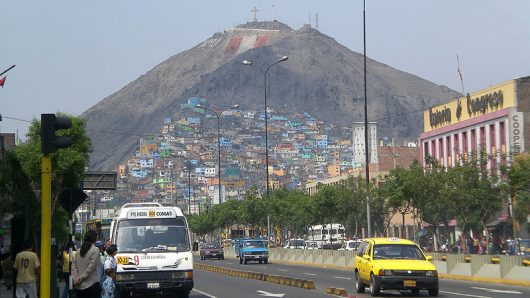
National and International Efforts to Increase Credit Access in Peru

credit access in Peru
The access to bank accounts is not what first comes to mind when one thinks of privilege, but this issue is a major reality for numerous countries. Amongst these countries lies Peru and its amount of accessible bank accounts and credit access for the financial institutions in the country.


Lack of Bank Accounts

Despite Peru possessing the fastest-growing economy in their region, having a bank account is not a common occurrence amongst the population. This lack is due in part to the absence of information available to people about their bank accounts, as well as services of banks being severely limited. These instances contribute to a common theme among Peruvian banks that incites little incentive in the citizens of Peru to create accounts.


General Absence of Financial Literacy

The lack of financial literacy in the country is another problem with credit access in Peru. Many Peruvians don’t have savings in a bank of any kind, and only 40 percent of people know how to calculate annual interest rates. With little to no financial literacy, Peruvians have a hard time putting their trust into financial institutions, especially when those institutions aren’t forthcoming with information about accounts.


Banks Withhold Information

For the citizens that do have bank accounts, their financial situation is not much better than citizens who do not because the banks of Peru often conceal information from the public about their own accounts. These instances make it hard for citizens to put their trust into banks, as these institutions are the ones keeping private information that should be available to account-holders.


Credit Impacts to Lower Income Individuals and Communities

This is especially crippling for the lower-income citizens. Those citizens with less substantial income, and who put their trust in banks have a very hard time finding out what their account balance is. This could have a supremely negative effect on families that do not have much and cannot afford to overdraft their account and go into debt. They would not know when their account was low, and therefore never know if they overdraft the account until it is too late.

The lower-income communities are also the communities that are comprised of lower education rates, an instance which is directly correlated to the lack of financial literacy in the citizens of those same neighborhoods.


The Grupo Monge and Credit Access in Peru

Despite their lack of financial literacy, the Grupo Monge (GMG) works with the Entrepreneurial Finance Lab (EFL) to help people with no previous credit history become financially literate and create bank accounts within the financial institutions of Peru. These efforts have the potential to help almost 12 million citizens of Peru.

The GMG has helped create bank accounts for more than 3,000 citizens without credit access in Peru. This fiscal growth increased the Peruvian market for financial institutions and helped many citizens become more financially literate in securing and monitoring their finances. These changes will have a positive effect on the Peruvian economy because with more citizens contributing to the credit of the country, the nation should continue to grow as a result.

– Simone Williams

Photo: Wikimedia Commons

February 24, 2018
https://borgenproject.org/wp-content/uploads/borgen-project-logo.svg 0 0 Borgen Project https://borgenproject.org/wp-content/uploads/borgen-project-logo.svg Borgen Project2018-02-24 07:30:292024-05-26 23:38:04National and International Efforts to Increase Credit Access in Peru
Global Poverty

6 Major Reasons for How and Why Social Enterprise Works

Social Enterprise
Traditional businesses measure their success by profit and how much they can bring shareholders. Social enterprises have multiple bottoms lines: profit, people and planet. Profit is important in sustaining a business, but the idea of corporate social responsibility (CSR) is gaining in popularity. Consumers educate themselves on products which leads businesses into action. Focusing on multiple areas of business (triple bottom line) is the crucially important reason why social enterprise works.

The Traditional Standard: Profit

Profit is an excellent measure of growth and is quantifiable. A business that has a surplus by the end of the year means bills were paid and employees provided for. It doesn’t hurt that investors or shareholders see a return on their money. If there is profit, that means the company is an asset to the economy; this then means more customers, more employees and more investors overall. This business detail remains a critical factor in why social enterprise works.

The Growing Standard: People

People want to be happy, and as most of a person’s waking hours are spent at work, these two aspects of life are thereby deeply intertwined. It’s becoming common knowledge that a happier employee means a more productive workplace. An employee who feels empowered and enjoys what they do generally equates to higher productivity and profitability.

Success with people can lead to 65 percent in higher share prices and 100 percent more job applications for the company.

The Growing Concern: Planet

Consumer understanding of the planet’s dwindling resources are slowly impacting their buying habits. There hasn’t been a huge move towards green living, but some like social enterprises make this a priority along with profit and people. A new awareness day, Overshoot Day, marks the calendar for when humanity has used up Earth’s resources for that year.

From 2000 to 2017, Overshoot Day crept up from late September to early August, almost by two months. Social enterprises have noticed this trend and are now making moves to change it through sustainable resources.

A Moral Solution: Changing the Trajectory for an At-Risk Individual

Many businesses might choose a social entrepreneurial path because there is an issue the organization wants to address. At the heart of freedom businesses (a subgroup of social enterprises) is the goal to hire at-risk individuals. Some businesses like Purnaa, a manufacturing business in Nepal, were inspired to create opportunities for marginalized people and survivors of exploitation. Others like Papillion Enterprise, an Artisan shop in Haiti, wanted to prevent orphans through job creation.

Using Resources to Continue the Process

A difficult move for many small social enterprises is growth, particularly in some countries outside of the U.S. There might not be property to mortgage against or the interest rate would kill the purpose. Some social enterprises — like Kairos Trader — use profits and fundraising to provide 0 percent loans to social enterprises. As business grows and money is repaid, the loan can then be cycled into another loan to help social enterprises start or step up.

Economic Growth: The Ripple Effect

This list would not be complete without mentioning social enterprises’ impact on economic growth– freedom businesses’ commitment to marginalised people and the Earth is why much of its social enterprise works.

Communities that may have been jobless or ostracised now have opportunities. Those with jobs are able to educate their children and become consumers which grows consumerism on a generational scale building the economy with it.

According to Matt Peterson, founder of Kairos Traders, every sector is needed to make a change for people and planet, but business offers a unique solution. It can seem counterintuitive to have a triple bottom line, but success is proving why social enterprise works.

Profit is needed to be able to grow and provide jobs and materials, but a business that bases its impact on community and planet is a more holistic approach that will bear more fruitful results.

– Natasha Komen

Photo: Flickr

February 24, 2018
https://borgenproject.org/wp-content/uploads/borgen-project-logo.svg 0 0 Borgen Project https://borgenproject.org/wp-content/uploads/borgen-project-logo.svg Borgen Project2018-02-24 07:30:212019-11-29 15:01:296 Major Reasons for How and Why Social Enterprise Works
Global Poverty

Plans to Improve Sustainable Agriculture in Turkmenistan

Plans to Improve Sustainable Agriculture in Turkmenistan Sustainable agriculture in Turkmenistan has been difficult to implement due to a lack of resources and an effective way of maintaining agricultural plans. Improvements to the country’s agricultural systems are currently being discussed by activists and governments across the globe.

The United States Agency for International Development (USAID) cites lack of management and effective irrigation systems as barriers to the implementation of sustainable agriculture practices. To address these barriers, aid organizations will not only need an effective irrigation plan in a country where, according to USAID, 80 percent of land is classified as desert, but will need to outline a sound managerial plan for maintaining it.

According to Support for Further Sustainable Agriculture and Rural Development in Turkmenistan (SARD III), the European Union has drawn plans for a four-year project. This complex initiative to improve sustainable agriculture in Turkmenistan required presentations in addition to a lengthy outline. In addition to government plans, aid organizations have chosen to address the issue through education and new technology.

Last fall, a partnership between The United Nations Development Program (UNDP), the Global Environment Facility and the Ministry of Agriculture and Water Economy of Turkmenistan resolved to construct a water pipeline to assist with the issue of sustainable agriculture. According to UNDP, a seminar was given in Ashgabat to outline the plan for the pipeline, explain its success in the past and discuss the importance of daily water conservation practices.

Education about effective agricultural methods has been adopted by other agencies as well. In a statement on the USAID Turkmenistan website, the organization claims to “…prioritize greenhouse horticulture, helping high-value fruit and vegetable growers, processors and marketing specialists connect with local and international markets.” Although the actions and projects by aid organizations as well as plans for improvement are important, aid organizations also emphasize education and explain ways people can make a difference in their everyday lives.

Although activists are doing what they can to address their concerns about sustainable agriculture in Turkmenistan, citizens also consider agriculture a priority and referenced agriculture in a 2015 UNICEF report about goals for the future. Aid organizations and volunteers aim to make sustainability projects a priority and to make sustainability plans a reality.

– Gabriella Evans

Photo: Flickr

February 23, 2018
https://borgenproject.org/wp-content/uploads/borgen-project-logo.svg 0 0 Borgen Project https://borgenproject.org/wp-content/uploads/borgen-project-logo.svg Borgen Project2018-02-23 07:30:562024-06-05 23:55:39Plans to Improve Sustainable Agriculture in Turkmenistan
Global Poverty

Infrastructure in Timor-Leste Growing According to Strategic Plan

infrastructure in Timor-LesteTimor-Leste is a young nation facing many difficulties, but it is also a nation striving to advance itself daily. One of the areas in which the nation is making strides is in the development of its infrastructure.

On August 30, 1999, the people of current day Timor-Leste voted on whether they wanted to remain part of Indonesia or become an independent nation. Ultimately, 78.5 percent of voters voted for independence. During this time, violence broke out and approximately 70 percent of the infrastructure in Timor-Leste was destroyed.

The Democratic Republic of Timor-Leste officially became a sovereign nation on May 20, 2002. Since then, the nation has been working to resolve the problems it faces. The damaged and underdeveloped infrastructure in Timor-Leste is one of the major challenges that the country has been working on in recent years.

The government of Timor-Leste created and released a strategic plan that it aims to complete by 2030, which it hopes will improve quality of life, health and education standards. Included in this plan is an entire section on developing the nation’s infrastructure. In this section, plans to improve roadways, bridges, waterways, sanitation techniques, electricity, seaports, airports and telecommunications are laid out.

Recently, the government of Timor-Leste opened the nation’s second airport, the Suai Airport, on June 20, 2017. The opening of this airport was included in the strategic development plan and is an example of one of the many ways the infrastructure of Timor-Leste is being improved upon.

In addition to the opening of the Suai Airport, there are future plans to upgrade Timor-Leste’s other airport, the Presidente Nicolau Lobato International Airport. This airport currently handles around 80,000 to 100,000 passengers each year, but after renovations are completed, the airport should be capable of handling up to one million passengers per year.

Another example of the infrastructural developments being made in Timor-Leste is the road expansion project that the country is undergoing. The World Bank is currently helping to fund Timor-Leste’s road expansion project. In April 2017, a $35.2 million credit was given to Timor-Leste from the World Bank to expand the nation’s transportation project.

This project will make roadways safer for travelers and increase travel opportunities between the northern and southern parts of the country. Having dependable roadways will aid Timor-Leste in developing other aspects of its infrastructure and lead to increased economic opportunity within the nation. These roadways will promote rural development and support the growth of healthcare and education in Timor-Leste.

The development of infrastructure in Timor-Leste is still ongoing, but advances can be seen. The opening of a second airport and the major transportation project are just two examples of the work being done on the infrastructure in the country. The government of Timor-Leste plans to continue to build on these advancements in hopes that a developed infrastructure will improve the standard of living for every one of its citizens.

– Nicole Stout

Photo: Flickr

February 23, 2018
https://borgenproject.org/wp-content/uploads/borgen-project-logo.svg 0 0 Borgen Project https://borgenproject.org/wp-content/uploads/borgen-project-logo.svg Borgen Project2018-02-23 01:30:552024-05-29 22:29:50Infrastructure in Timor-Leste Growing According to Strategic Plan
Global Poverty

Increasing Subsistence Yields Key to Sustainable Agriculture in Kiribati

sustainable agriculture in Kiribati

Kiribati is a Pacific coral atoll nation located close to Australia. An atoll is a ring-like island formed by the rim or border of the mouth of a former volcano which is now submerged in water. Atolls are an ideal habitat for colorful coral reefs, but on the other hand, only a small set of crops can flourish here. Hence, the pressing need for sustainable agriculture in Kiribati must be acknowledged.

Kiribati is one of the most impoverished and least developed countries in the world. Here, families largely depend on subsistence agriculture for survival and nutrition. Common crops are coconuts, pandanus, pumpkins, taro, breadfruit, banana, papaya and mango. Most food items are imported from other parts of the world.

Like several other small island nations, Kiribati is critically vulnerable to climate change and global warming. According to the New Yorker, experts believe that at the current pace of rising water levels, “there would be no Kiribati after 30 years”. Kiribati president Anote Tong told the New Yorker in 2013 that “according to the projections, within this century, the water will be higher than the highest point in our lands”.

In 2014, Tong finalized the purchase of a 20-square-kilometer stretch of land on Vanua Levu, one of the larger Fiji islands, 2,000 kilometers away. The move was described by Tong as an “absolute necessity” should the nation be completely submerged.

Developing sustainable agriculture in Kiribati could increase productivity, ensure food and income security, enhance the quality of life and create inclusive and equitable economic growth for everyone. Thankfully, Kiribati has access to financial aid and agricultural expertise. Global organizations and developed nations are offering their powerhouse of knowledge to assist with sustainable economic growth in the country. It receives $36 million in foreign aid, largely from Australia, New Zealand and Taiwan.

An agreement signed by Tong and the International Fund for Agricultural Development promises $7 million to promote activities to increase the household production of fruits, vegetables, poultry, root crops and tree crops. The agreement also aims to improve diets through the consumption of a higher proportion of calories and nutrients from local food crops. It will also implement ways to harvest rainwater to increase household water supply.

The Food and Agriculture Organization of the United Nations has designed and implemented several programs for farmer training and soil improvement in the area to enhance the production of coconut and banana. It has slowly and steadily phased out the senile coconut trees that comprised 40 percent of the entire plantation and replaced them with a new rodent-resistant variety.

In addition, by leveraging a novel narrow pit planting system and tissue culture technology, farmers have successfully increased the production of bananas and other fruits and vegetables. In partnership with the Timber and Forestry Training College at Papua New Guinea’s University of Technology, hundreds of farmers have been trained in nursery establishment and management, use of equipment and tissue culture technology, among others.

Needless to say, the future of sustainable agriculture in Kiribati looks hopeful and bright, just like the bright yellow sun rising above the ocean waves on its national flag.

– Himja Sethi

Photo: Flickr

February 23, 2018
https://borgenproject.org/wp-content/uploads/borgen-project-logo.svg 0 0 Borgen Project https://borgenproject.org/wp-content/uploads/borgen-project-logo.svg Borgen Project2018-02-23 01:30:302024-05-29 22:39:29Increasing Subsistence Yields Key to Sustainable Agriculture in Kiribati
Global Poverty

Modernizing Credit Access in Azerbaijan

credit access in AzerbaijanAs is the case in many developing economies, credit access in Azerbaijan is not as easy to come by as it should ideally be. That being said, significant efforts are being made to improve the ease of credit access and ensure that the country’s financial system has the capacity to cope with the increase in demand for credit that will likely come with greater ease of access.
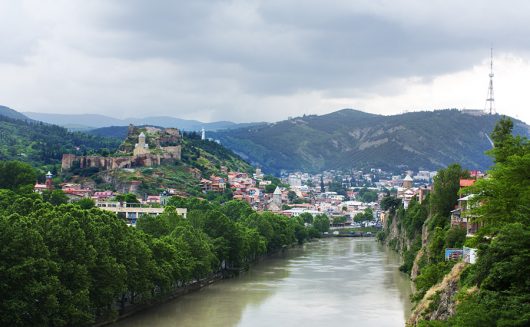
Many of the obstacles to credit access in Azerbaijan are similar to the ones present in other countries. It is particularly difficult for businesses to secure a line of credit. Lenders require extensive collateral and often charge high interest rates. Encouragingly, there are government programs that enable particularly small businesses to secure funding even if they cannot secure a line of credit from a private institution.

Poor financial literacy, especially among business owners, is also impeding credit access in Azerbaijan. Many are often denied loans because of problems that they could rectify if given the needed support and education. For example, many Azerbaijani businesses fail to keep written records because they fail to understand that this impacts their perceived creditworthiness.

Improving financial literacy is an important part of expanding credit access in Azerbaijan. The MicroFinance Bank of Azerbaijan has reported that consumer loans, in particular, are being disbursed at a much higher rate than before, suggesting that creditors are becoming more willing to lend more liberally to reasonably worthy clients.

Also noteworthy are the extensive efforts that are underway to modernize the financial system and promote new lending and borrowing practices. The country’s first private credit bureau was recently established and intends to promote risk pooling and information sharing among the 20 largest domestic financial institutions. It is anticipated that this alone will greatly improve credit access in Azerbaijan by promoting responsible lending and eliminating some of the logistical hassles of applying for and granting credit.

– Michaela Downey
Photo: Flickr

February 22, 2018
https://borgenproject.org/wp-content/uploads/borgen-project-logo.svg 0 0 Borgen Project https://borgenproject.org/wp-content/uploads/borgen-project-logo.svg Borgen Project2018-02-22 01:30:582019-12-05 08:53:56Modernizing Credit Access in Azerbaijan
Global Poverty

Credit Access in Georgia Among the Best in the World

credit access in GeorgiaCredit in Georgia is comparatively easy to access compared to similar economies in the region. That being said, any deficit in this area is still a major obstacle to economic development. However, steps are being taken to identify the factors standing in the way of credit access in Georgia and determine how to eliminate them

Georgia is ranked as one of the best countries in eastern Europe and central Asia for credit access. Very well-qualified borrowers are able to secure lines of credit without too much difficulty, and the country’s financial system is conducive to lending. It is worth noting that a significant share of applicants are denied because they have unacceptably high levels of existing debt.

However, credit access in Georgia is an issue mainly for new businesses. It is estimated that 40 percent of the small to medium-sized enterprises in Georgia that need credit cannot access it because they are denied or discouraged from even applying. Those who can theoretically be approved for loans often find that the interest rate offered to them is prohibitively high. Seventy percent of applicants for financing said that high interest rates were an issue for them.

Another more minor problem is that it is easier to get a loan in U.S. dollars than it is to get a loan in Georgian lari. As a result, the exchange rate is depreciating and borrowers are extremely vulnerable to fluctuations. Many borrowers are not even aware that borrowing in a foreign currency exposes them to this kind of risk. This is a good example of the unintended consequences of poor access to credit denominated in the local currency.

Fortunately, those who are able to borrow thanks to microfinance programs offered by the U.S. and others generally report that they are happy with their experience. Georgia also has a good financial infrastructure in that there is centralized credit reporting, although many people do not fully understand how it works and are unsure of what to do if they run into trouble.

The Smart Campaign has done extensive research on financial literacy and credit access in Georgia. This research has helped to identify several ways to improve credit access in Georgia, which, if enacted, promise to boost the Georgian economy by encouraging greater financial security while also liberalizing lending practices.

– Michaela Downey

Photo: Wikimedia Commons

February 22, 2018
https://borgenproject.org/wp-content/uploads/borgen-project-logo.svg 0 0 Borgen Project https://borgenproject.org/wp-content/uploads/borgen-project-logo.svg Borgen Project2018-02-22 01:30:112024-05-29 22:39:28Credit Access in Georgia Among the Best in the World
Aid, Global Poverty, Humanitarian Aid, USAID

The Many Forms of US Humanitarian Aid to Pakistan

U.S. humanitarian aid to Pakistan
On January 4, 2018, U.S. president Donald Trump’s administration announced that it would cut military aid to Pakistan on the grounds that Pakistan has not been doing enough to combat the more than 14 terrorist organizations operating within its borders. Many of these organizations support international terrorist operations and carry out attacks within the borders of Pakistan.

The United States is concerned with the operations being carried out against its forces in Afghanistan, which borders Pakistan. The mountainous border is porous and is a haven for terrorists. Some regions are officially governed by the Pakistani government but under the de facto control of the terrorists. North and South Waziristan are the most contested territories.

The Pakistan government recently launched a military operation in North Waziristan to liberate the area from the terrorist organizations that controlled it. The continuing success of this operation could hinge on the possible $900 million cut in military and security aid from the United States. However, the Trump administration has made it clear that the cuts would not affect U.S. humanitarian aid to Pakistan.

The United States has been aiding Pakistan for many decades, with a focus on humanitarian aid and economic development. In the 1960s and 1970s, economic aid helped to build two major hydroelectric dams. During the 1980s and the early 1990s, the United States helped to build a large power station and Lahore University for Management Science. These are only a few examples of early and continued non-military aid to Pakistan.

Currently, most of the U.S. humanitarian aid to Pakistan is delivered by USAID. According to USAID, more than $7.7 billion has been spent on non-military aid to Pakistan. The United States government has budgeted $344.5 million in humanitarian aid to Pakistan for 2018. USAID projects in Pakistan focus on six major areas: energy, economic and agricultural growth, democratic and societal resilience, education and gender equality. Examples of USAID work in these areas are:

  • Energy
    USAID energy projects have been successful because they are multifaceted. Not only do they increase the power output of the existing infrastructure, the funds also help repair it. The most important projects are the repairs of the hydroelectric dams. Repairing these dams increases their electrical output and increases the efficient use of water from rivers and reservoirs.
  • Economic and Agricultural Growth
    Agriculture contributes to 24.7 percent of Pakistan’s GDP. Up to 40 percent of the working population is employed by the agricultural sector. USAID has helped improve the agricultural sector by helping small and medium farms gain access to financing. They have also introduced new crops or modified versions of existing crops. A similar approach is used to help the private sector.
  • Reliance
    USAID has worked hard to increase access to common markets, education and government in an attempt to solidify social engagement. They have also worked to rebuild areas destroyed by internal conflict and help displaced families. Helping society function smoothly helps people feel that they are part of something bigger and are not being left behind. This helps to stabilize the fragile democratic government of Pakistan.
  • Education
    USAID has provided more than 18,000 scholarships for higher education over the last eight years, built or repaired over 1,300 schools since 2011 and increased the quality of basic education across the country.
  • Health
    U.S. humanitarian aid to Pakistan has helped to build two new hospitals in the last five years. USAID projects have helped over 9.4 million women and children. Working with the government of Pakistan, USAID plans to increase funding for women’s and children’s healthcare through 2025.
  • Gender Equality
    USAID has helped form a registration of 496,000 women to promote voting rights, awarded 6,000 college scholarships to women and improve the care and representation of gender-based violence.

U.S. humanitarian aid to Pakistan has been effective. Over the last three years, the country’s GDP has grown by an average of 4.6 percent and 2017 saw a 5 percent industrial growth rate. Other social issues such as gender equality will take much more time to show major results. The most important milestone came in 2013, when Mahmoon Hussain was elected president of Pakistan and Asif Ali Zardari stepped down. The role of the president of Pakistan is mostly ceremonial; however, this was the first time that a democratically elected president served a full term in Pakistan. Hopefully, with time Pakistan will begin to transition and will be seen as a pillar of stability and peace in the region rather than a place of instability and violence.

– Nick DeMarco

Photo: Flickr

February 22, 2018
https://borgenproject.org/wp-content/uploads/borgen-project-logo.svg 0 0 Borgen Project https://borgenproject.org/wp-content/uploads/borgen-project-logo.svg Borgen Project2018-02-22 01:30:092024-05-29 22:39:28The Many Forms of US Humanitarian Aid to Pakistan
Global Poverty

Microfinance Growing Credit Access in Guatemala

credit access in GuatemalaGuatemala, a country located in Central America, is known for its dedication to financial transparency, especially in regards to credit access.

Credit access in Guatemala is a make-or-break factor in determining the success of a business, regardless of its size. Credit allows businesses and their owners to make purchases that typically lie outside of their disposable income. This often includes startup costs and capital improvements; however, it can also be used for everyday expenses such as payroll.

Larger companies tend to have an easier time attracting creditors, whereas smaller businesses often have trouble, an alarming problem for a country where 60 percent of the economy is made up of small businesses.

Banks are the most common provider of credit access in Guatemala. Microlending is the main reason people turn to banks for credit access, as it allows citizens who do not have any credit history to build credit in a timely fashion. As of now, there are 24 microfinance institutions in Guatemala.

The top five microfinance institutions in Guatemala are:

  1. Genesis Empresarial
  2. Compartamos – GTM
  3. FONDESOL
  4. FINCA – GTM
  5. FUNDEA

However, since 2014 there has been an increase in the default rates on microloans. Rocael Garcia, manager of the microfinance firm Finca, credits this problem to people in rural areas having less ability to pay and people in the middle class having less willingness to pay.

Other, less conventional ways of acquiring credit include financial freedom, venture capital and equity investors. While some people try to acquire credit access on their own, it proves to be difficult, as the government controls 50 percent of the financial services offered in Guatemala.

Of the three unconventional methods above, venture capital is the strongest, most secure option. There is a 39 percent chance that Guatemalan entrepreneurs will successfully find venture capital. Since 2014, the amount of people looking into venture capital has steadily increased.

Equity investors are considered to be the least effective sources of credit access in Guatemala, as it is incredibly difficult to raise money by issuing shares on the stock market. To make the process even more difficult, a public offering is only allowed if it is previously registered according to the Law of Value Markets.

Credit access in Guatemala continues to be available as the country focuses on economic opportunity and financial transparency. While the distribution of income remains relatively unequal, credit access – or rather, the opportunities given to business owners who have access to credit – steadily works to even out the scale.

– Chylene Babb

Photo: Flickr

February 21, 2018
https://borgenproject.org/wp-content/uploads/borgen-project-logo.svg 0 0 Borgen Project https://borgenproject.org/wp-content/uploads/borgen-project-logo.svg Borgen Project2018-02-21 07:30:382024-05-29 22:39:26Microfinance Growing Credit Access in Guatemala
Page 12 of 44«‹1011121314›»

Get Smarter

  • Global Poverty 101
  • Global Poverty… The Good News
  • Global Poverty & U.S. Jobs
  • Global Poverty and National Security
  • Innovative Solutions to Poverty
  • Global Poverty & Aid FAQ’s
Search Search

Take Action

  • Call Congress
  • Email Congress
  • Donate
  • 30 Ways to Help
  • Volunteer Ops
  • Internships
  • Courses & Certificates
  • The Podcast
Borgen Project

“The Borgen Project is an incredible nonprofit organization that is addressing poverty and hunger and working towards ending them.”

-The Huffington Post

Inside The Borgen Project

  • Contact
  • About
  • Financials
  • President
  • Board of Directors
  • Board of Advisors

International Links

  • UK Email Parliament
  • UK Donate
  • Canada Email Parliament

Get Smarter

  • Global Poverty 101
  • Global Poverty… The Good News
  • Global Poverty & U.S. Jobs
  • Global Poverty and National Security
  • Innovative Solutions to Poverty
  • Global Poverty & Aid FAQ’s

Ways to Help

  • Call Congress
  • Email Congress
  • Donate
  • 30 Ways to Help
  • Volunteer Ops
  • Internships
  • Courses & Certificates
  • The Podcast
Scroll to top Scroll to top Scroll to top