Posts

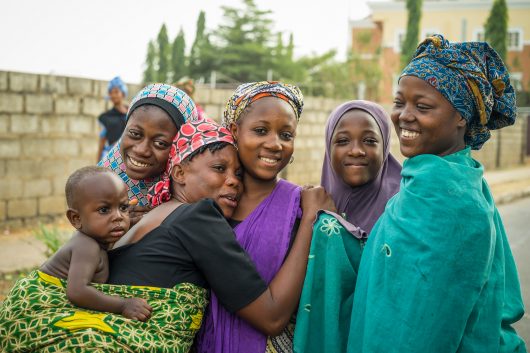
Women's Empowerment in NigerWomen living in Niger face great adversity due to a lack of education, a prevalence in child marriages, and challenges stemming from conflict. Fortunately, many women are taking steps to ensure a better future for their daughters.

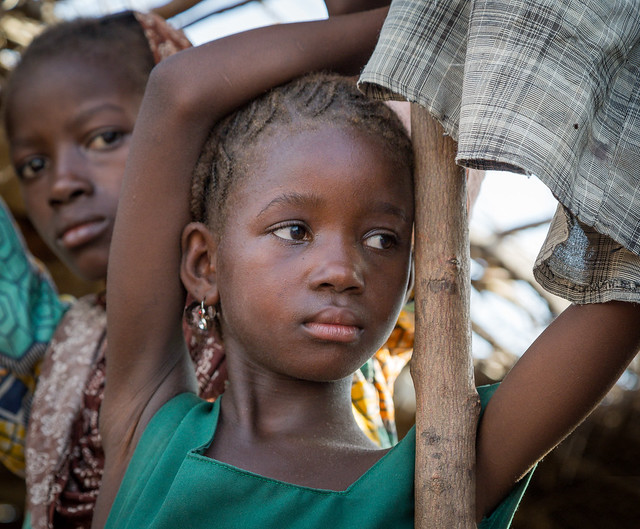
Women and girls in Niger are some of the least educated in the world. Less than a quarter are literate and less than a tenth ever attend secondary school. This is a big deal considering that attending secondary school for a year can mean as much as a 25 percent increase in a woman’s earnings later in life.

Niger has the highest rate of child marriages in the world. Three in four girls under the age of 18 are married. The legal age for marriage in Niger is 15, but various women’s organizations and groups are hoping for the passage of a proposed law that would change the legal age to 18 years.

Aminata Gba Kamara, aged 19, said “Girls in our country need so many things. They need psychological support, they need counseling. Their esteem is very low.” Many women think husbands are needed for protection, and life outside the home is not given much thought, said Kamara.

Protection is a real concern for many, as conflict is a daily fact of life. In the past three years, over 100,000 women and girls have been forced to leave their homes in order to flee from violence perpetrated by the Boko Haram. There are shelters and places of refuge, but women forced into seeking these often fall victim to a cycle of poverty. Most women fleeing from Boko Haram have been traumatized by physical and sexual violence. There is a normalization of discrimination and violence against women and girls on a daily basis.

Even with all these challenges, there are feasible solutions and women’s empowerment in Niger is a large part of it. Change is being implemented from the ground up, and youth are driving it forward. Campaigns have been formed to raise awareness about the issue and boost the self-esteem of women and girls. Tackling the problem of child marriage is important for Niger, as it will increase the number of citizens attending school rather than staying at home.

There are rays of hope for women’s financial empowerment in Niger as well. For instance, a recent push by CARE to help Nigerien women become financially independent via combined insurance policies and female financial groups has been fruitful. The savings groups, called Village Savings and Loan Associations have been a major factor behind women’s financial empowerment, and serves as a base for improving inclusion, health, nutrition, and agricultural productivity.

– Sam Bramlett

Photo: Flickr
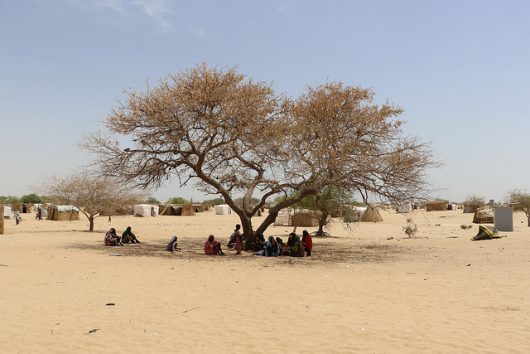
Education and ReintegrationSince 2015, Niger has been subject to attacks by jihadist group Boko Haram. In 2016, Niger launched a new political initiative: a de-radicalization and reintegration program based on education and participation for the captured Boko Haram fighters. This strategy, also known as disarmament, demobilization and reintegration (DDR), can be effective during violent times. It is the means to achieving post-war goals and maintaining order in society.

DDR, now seen as a useful tactic to countering violent extremism, has become a political strategy, one that supports education and vocational training rather than violence and imprisonment. Rather than fighting violence with violence, the idea is to stimulate peace by instilling conventional development goals for society. Despite the de-radicalization classes and vocational training in the DDR camps, jobs are scarce and poverty is still rampant, making extremism more attractive to civilians.

Structural issues in the prison system and reintegration issues in society create more obstacles for the government in maintaining peace. Niger lacks the proper legal mechanisms or sorting criteria for prisons and the DDR program. No set standards exist for distinguishing between the detainees and escapees sent to prison or to the DDR program. Without these legal processes, the Boko Haram ex-insurgents are still legally terrorists. The U.N. excludes Niger and refuses to provide them with international assistance; the U.S. also does not grant them foreign material aid.

There is a need for supporting this method at the community level as well. Many ex-insurgents find it hard to reintegrate into a society that rejects them. People need to understand that in order to thwart the threat of extremism, it is necessary to destroy the ideology and punish those who spread it, not those who were a product of it.

This initiative has been pioneered by the southern town of Diffa. Diffa governor Mahamadou Lawaly Dan Dano has requested that the University of Diffa help build the community for those in the program. With 150 people in the program, including fighters’ wives and 28 young boys, conditions in Diffa became poor. After an escape attempt, it was relocated to a refugee camp in Goudoumaria where it can expand. They now have food, water and even a small infantry.

Despite not having schools until the 1990s, this region is now receiving 12 EU-funded vocational training centers and is set to put this into action. Another DDR program is working with this effort to release some of the 80 minors detained on both sides of the border to transit and orientation centers in Diffa.

Limiting risk through a national acceptance of the larger enemy and incentivizing peace through a collaborative systematic process are how education and reintegration could save Niger from Boko Haram.

Tucker Hallowell

Photo: Flickr

State of Emergency for EducationEarlier this month, Nobel Peace Prize laureate Malala Yousafzai visited Nigeria and met with Acting President Yemi Osinbajo to discuss the changes she envisions for Nigeria’s education system. Additionally, she has declared “a state of emergency for education in Nigeria.”
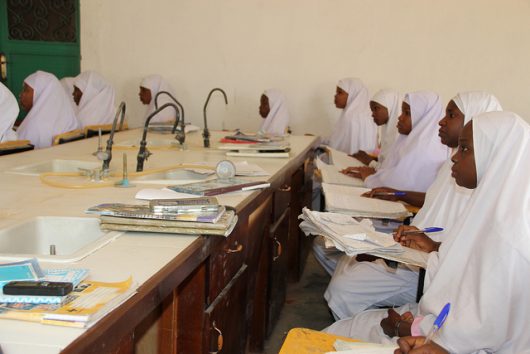
While Nigeria is one of Africa’s wealthier nations, it also has the highest number of out-of-school children in the world. In fact, 10.5 million Nigerian children are out of school, 60 percent of them girls, according to the United Nations Children’s Education Fund (UNICEF). Many of these children live in the country’s northeast region, particularly in the Boko Haram hub of Maiduguri, in which education has been under attack for the past nine years.

Boko Haram destroyed the classrooms and schools in the area. Most notably, the group is responsible for the abduction of more than 200 girls from their school in the remote town of Chibok in April 2014. This prompted international outrage and the #BringBackOurGirls movement, for which Malala herself campaigned online. Of the abducted girls, only 106 were released, rescued or escaped after more than three years in captivity. The other 113 are still in custody of the extremist group. As a long-time advocate for girls’ education, especially in war torn areas, Malala is the perfect spokesperson for the state of emergency for education in Nigeria.

In an op-ed in The Guardian, Malala detailed her visit to Maiduguri and the girls she met there “who have faced so much violence and fear in their young lives but are still determined to go to school.”

“Studies are clear,” she says in another interview, ”educating girls grows economies, reduces conflict, and improves public health.” The percentage of Nigeria’s budget for education decreased from 9 percent to 6 percent since her last visit to Nigeria in 2014. Meanwhile, the international benchmark for education spending is 20 percent of a country’s overall budget. In her meeting with President Osinbajo, she outlined several necessary key changes including declaring a “state of emergency for education” to focus attention on the education of Nigerian children.

She also suggested that Nigeria make school funding public and triple its education budget. She emphasized that the country should implement the Child Rights Act in all states. Her main goal is to raise awareness of unenrolled children in Nigeria and to highlight the fact that if Nigeria makes education a priority, it has the material means to make vast improvements.

Nigeria is in a state of emergency for education. Across West Africa, 46 percent of primary school-aged children out of school are Nigerian. Globally, one in five children not enrolled in school is Nigerian. During the Boko Haram insurgency which began in 2009, the group killed 2,295 teachers and destroyed almost 1,400 schools, displacing over 19,000 people.

Organizations such as UNICEF work closely with the Nigerian government to decrease these worrying statistics, especially in northeastern Nigeria. More than 525,000 children enrolled in school this year alone, while the country established over 37 temporary learning spaces. Relief organizations distributed about 92,000 packs of learning materials to help children continue their educations in areas especially vulnerable to attack.

Advocates like Malala are important in creating change because they put new international spotlights and pressure on governments to reprioritize education. Time will tell if the changes she envisions for schoolchildren in Nigeria come to pass. Continued advocacy work around this issue is important to ensure that a generation of schoolchildren does not fall behind.

Saru Duckworth

Photo: Flickr


Boko Haram, the dangerous Islamic extremist terrorist organization in Nigeria, has been severely attacking the country’s education system. If the attacks continue, the lasting negative legacy will be detrimental for Nigeria.

Boko Haram is based in Nigeria and a translation of the group’s name in Hausa is “Western education is forbidden.” Boko Haram’s impact on education has flipped the Nigerian educational system as a whole by stealing the education of the youth and attacking the system in every way possible. Boko Haram gained publicity when they kidnapped 276 schoolgirls from a secondary school in Chibok.

Girls as young as 11 have been employed as suicide bombers. Teachers have been targeted, resulting in 600 teachers being murdered and 19,000 teachers fleeing in fear. Other teachers have been threatened, injured or even kidnapped.

“I have been a teacher for 20 years now, but I’m always afraid to attend class,” Ahmadau Abba, a teacher at Jajiri Government Day School in Maiduguri explained. “Most of our colleagues have been killed or injured.”

Finding teachers who are willing to teach in the region has become a great struggle because of the dangerous repercussions. Boko Haram’s impact on education has been felt throughout the entirety of the Nigerian educational system.

Out of a total population of 160 million, about 10 million Nigerian youths are not in school, many of them girls. Instead of reading and learning, they are married off in their teens, while out-of-school boys are recruited into terrorist ranks.

By early 2016, an estimated 952,029 school-aged children have fled the violence, with little or no access to education.

The high displacement from the hands of Boko Haram has forced school-aged children to be placed in private homes and communities. In such communities, schools are made up of students of the same age congregating in large rooms or under trees for about three to four hours a day. However, these children do not have access to textbooks and their teachers must teach without any teaching aids.

In Borno, one of the devastated states, schools at all levels have been closed in 22 out of the 27 local government areas for a minimum of two years. With this gridlock on education, children are more vulnerable to becoming trapped in a cycle of poverty.

Boko Haram’s impact on education has impacted thousands of students by stealing what is rightfully theirs. For a nation that has the lowest school attendance nationwide, the attacks on the educational system have been severely damaging for Nigeria.

“Education is the foundation of society; without it, development is very difficult,” says Margee Ensign, the president of the American University of Nigeria. “I don’t think that many in the international community understand the dimension of the problems here in the northeast.”

Mary Waller

Photo: Flickr

Lake Chad_Hunger
A hunger crisis in the Lake Chad basin has unfolded since Boko Haram has left much of Nigeria and surrounding nations in ruins.

The people in the region are facing famine-like conditions due to being forced to abandon their crops to flee Boko Haram. More than eight million people in the Lake Chad basin are currently struggling with hunger. The area is plunging further into food scarcity as more crops go unharvested. Some crops are even being burned as Boko Haram raids and loots villages.

Boko Haram is a militant Islamist group that has created unrest with bombings, abductions and assassinations. Its followers believe that the Nigerian government is run by non-believers, and Muslims should be forbidden from taking part in any activities associated with Western society, including voting in elections and participating in secular education.

While the group was founded in 2002, military operations began in 2009 in an attempt to create an Islamic state. The name Boko Haram means “Western education is forbidden,” when translated loosely from the Hausa language. The U.S. declared Boko Haram a terrorist group in 2013.

Boko Haram spread its military campaign into the neighboring countries of Niger, Chad and Cameroon. The U.N. estimates that 14 million people in the region are in need of humanitarian assistance.

An estimated 480,000 children across the four countries affected by Boko Haram are suffering from acute malnutrition. Basic supplies in refugee camps are scarce, and aid groups cannot reach those in villages occupied by Boko Haram as well as remote areas to offer humanitarian assistance. Of the children in critical need of assistance, U.N. officials estimate that 75,000 could die within a few months.

The hunger crisis in the Lake Chad basin is so severe that Doctors Without Borders physicians have added food to their bags of medical supplies. The U.N.’s World Food Programme delivered aid to more than one million people in December 2016, a sharp increase from the 160,000 people it assisted in October 2016. The World Food Programme is in desperate need of more funding to deliver life-saving assistance to all those in need in the region.

To help relieve the hunger crisis in the Lake Chad basin, you can make a donation to the World Food Programme.

Cassie Lipp

Photo: Flickr

The Five Best Ways USAID Helped Nigeria in 2016
As 2016 ends, USAID has announced encouraging news in regards to their long-time relationship with the country of Nigeria. Going forward, USAID plans to add $92 million to their humanitarian assistance program for the country. This move is symbolic of the year the two partners have shared; one rich with progress in support of refugees displaced and suffering from the Boko Haram insurgency. Here are five more ways USAID helped Nigeria in 2016:

  1. In November 2016, USAID and Chi Farms, which invests in emerging Nigerian economies by making use of local resources, partnered to add roughly 4,000 tons of catfish to the country’s water bodies. Part of USAID’s Feed the Future initiative, the two will also train 6,000 farmers and entrepreneurs in order to establish a more stable backbone for Nigeria’s economy.
  2. One of the most effective ways USAID helped Nigeria in 2016 was through its humanitarian assistance to those affected by the Boko Haram insurgency near the Lake Chad Basin. As of August 2016, more than 2 million people were internally displaced due to the conflict. USAID provides stability for refugees by administering such simple things as electronic vouchers, which cover things like food and household supplies in local shops – not only does the family benefit, but so does the local business. By August 2016, USAID had given $98 million in humanitarian aid to this region of Nigeria.
  3. In June 2016, USAID donated 160 metric tons of seeds to 6,000 Nigerian households, which they now estimate effects the lives of 60,000 internal refugees. Food insecurity has proven an endemic problem since the beginning of the conflict with Boko Haram, and this ambitious initiative lends a great deal of stability to families throughout the country that are now in control of their food supply. The donation of seeds also includes food packets to help sustain families as they await the harvest.
  4. USAID deployed a Disaster Assistance Response Team (DART) in November 2016 to confront increasingly dire food insecurity in areas affected by the conflict. A study conducted by the organization in October estimated that 20 to 50 percent of children in the past six months suffered from acute malnourishment. The humanitarian crisis currently puts 9.2 million in need of help, and the arrival of DART means assistance can spread to more people, and more quickly.
  5. Assisting with food security wasn’t the only way USAID helped Nigeria in 2016 – they also trained personnel to staff 44 private hospitals for family planning counseling and implementation. As part of their USAID SHOPS project (Strengthening Health Outcomes for the Private Sector), the organization worked to increase quality and accessible family planning services throughout Nigeria. Completed in 2016, the project ran for five years and reached six states, and also trained 115 pharmacists to provide counseling to families. As a result, local healthcare facilities are reporting an increase in the use of effective contraception.

Since 2015, the U.S. has been the largest donor to Nigeria, giving $291 million in the 2016 fiscal year toward humanitarian aid. With the incredible news of their upcoming $92 million increase, USAID has extended help to tens of thousands more people and strengthened a partnership that will continue to improve the lives of millions of Nigerians.

Emily Marshall

Photo: Flickr

Hope in Nigerian Education
There is new hope in Nigerian education since an Islamic militant group, Boko Haram, ripped through certain parts of the country. Boko Haram, which means western education is forbidden, primarily operates in the northern states of Nigeria. These states include Yobe, Kano, Bauchi, Borno and Kaduna. Boko Haram has a long history of terrorizing prisons, police headquarters and heavily populated civilian locations. Boko Haram’s egregious actions have forced around 2.2 million Nigerians to flee their homes, creating one of the largest concentrations of internally displaced persons in Africa.

Consequently, the terrorism has effected many families and in turn hindered thousands of children from attending school and receiving the educations they desperately need. Due to this growing problem, the USAID and many NGOs have created a program called the Education Crisis Response.

Started in 2014, Education Crisis Response focuses on children ages 6 to 17 and plans to “expand access to quality and protective non-formal education and alternative education opportunities for out-of-school children.” The program provides students with the necessary school supplies, school provided meals and psychological teaching methods. According to Ayo Oladini, the programs director, returning to the classroom is more than therapeutic for the children who have been away for years at a time.

The program helps the students cope with their traumatizing pasts by having the students work as one unit and establish a great rapport with their teachers. The local community places an important role by stressing peace and other beneficial values.

Since the program was launched, 294 non-formal learning centers have been created and adhere to a curriculum that includes literacy, numeracy and life skills. The communities in Nigeria open up their schools and other various buildings to be used for these learning sessions. Oladini and the other trained facilitators are using hope in Nigerian education to instill positive values in the many children they teach. They want them to strive for better futures no matter what happened in the past, and education is the key to unlock it.

“We make sure that we don’t create any more trauma, either for these children or within the community where they live,” Oladini explained. “We tell them ‘Look, the future is still there for you. You [may] have lost this, you [may] have lost that…but there is still hope for you.”

Documented evaluations conducted by state officials have proven that Education Crisis Response works and the Nigerian Government has continued to fund the program. Even though the program will begin to phase out in 2017, the government will sustain the program for the long haul. The combined efforts of the local government and communities has given these many children hope in Nigerian education, and a reason to care about the lives they will lead in the future.

It has returned ambitious attitudes to children who at one time believed all hope was lost. They are being taught “to move forward and persevere in a state of difficulty.” They have to fight for a brighter future and finding hope in education has given them that chance.

Terry J. Halloran

Photo: Flickr

Hunger in NigeriaAfter assessing areas of the country previously cut off from foreign assistance by Boko Haram, the U.N. released a statement on July 1, declaring that 50,000 children in northern Nigeria stand to die from undernourishment and hunger in Nigeria if left untreated.
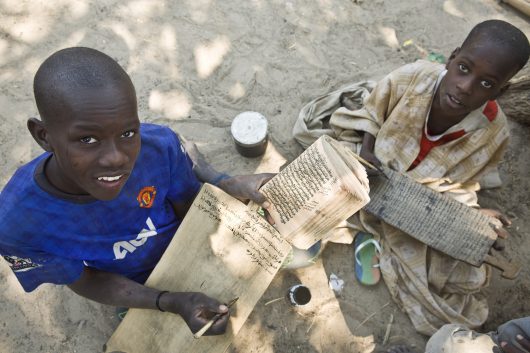
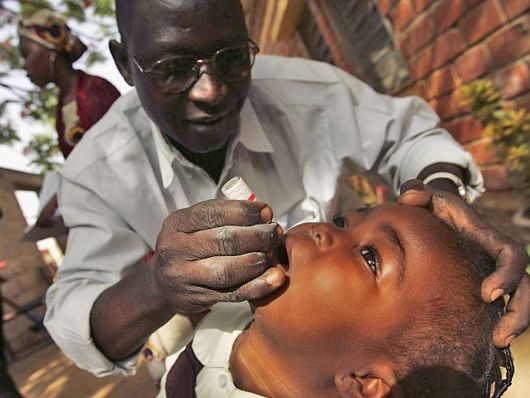
“Unless we reach these children with treatment, one in five of them will die. We cannot allow that to happen,” stated Jean Gough, Nigeria Representative of UNICEF.

Over the past year, the Nigerian army, with the help of troops from neighboring countries, fought to reclaim territories in the north taken by Boko Haram. The struggle resulted in the displacement of 2.4 million people in Nigeria, Chad, Niger, and Cameroon, making food insecurity and malnutrition an emergent issue in these countries.

The violence in northern Nigeria greatly disturbed the supply of food to markets, increasing the cost of basic commodities. However, the recapturing of northern territories allowed humanitarian agencies like MSF to provide aid in the form of medical services and health supplies to the most vulnerable residents of these areas.

In addition, on June 27, the U.N. Central Emergency Response Fund allocated $13 million to provide immediate life-saving aid to northern Nigeria. Funds will be used to provide food, money for purchasing food, nutritional supplements, and seed and tools for the forthcoming planting season.

Unfortunately, this is only a portion of what needs to be done to end hunger in Nigeria. Conflict between the militant group and the Nigerian army is still ongoing, and the afflicted areas need more rapid assistance.

“While the government and humanitarian organizations have stepped up relief assistance, the situation in these areas requires a much faster and wider response,” said the U.N. Humanitarian Coordinator for Nigeria, Munir Safieldin.

Hopefully increased efforts from international organizations will continue to assist reducing malnutrition and the under-five mortality rate in the country.

Ugochi Ihenatu
Photo: Flickr

Ten Facts about the Nigerian Refugee Crisis
Although most know of the atrocities committed by ISIS and the millions of displaced refugees throughout The Middle East and Europe, mainstream media has very much undercovered the Sub-Saharan terrorist group, Boko Haram. Consequently, very few are aware of an equally saddening Nigerian refugee crisis and the need for foreign aid.

Boko Haram is an Islamic extremist group based in northeastern Nigeria that has allied itself with ISIS. Although an extreme religious group, it has targeted Christians and Muslims alike, rebelling against the Nigerian government to form an Islamist state.

Since 2009, the group has killed more than 20,000 and displaced more than 2.3 million, of whom 1.3 million are children. In 2014 alone, the group killed more than 6,600 and abducted 276 schoolgirls from Chibok, Nigeria. In 2015, The Global Terrorism Index named Boko Haram the world’s deadliest terror group, ahead of ISIS. Just under 2 million have been displaced in Nigeria so far, according to the UNHCR.

Unlike Syrian refugees, who have escaped to countries with reasonable resources and social benefits, Nigerians are surrounded by countries with much less wealth. With so much less news coverage, western citizens are also less likely to contribute to this cause.

Here are 10 facts about Nigerian refugees:

  1. In a northeast Nigerian aid camp, more than 1,200 people have died of starvation and illness. One-fifth of the 800 children suffered from malnourishment and almost 500 had died.

  2. Maiduguri, Nigeria alone is estimated to host between 1.2 million to 2 million refugees.

  3. In August of 2016, the government began to investigate the theft of food from refugee camps by officials.

  4. In one feeding center, between 10 and 25 percent of children die.

  5. Without proper food or drinking water, refugees must also endure temperatures easily over 100 degrees Fahrenheit.

  6. The UNHCR has requested $30 million in funding but received only $12.5 million from the U.S. government.

  7. Beyond refugees, around 5.5 million people do not have enough to eat in Nigeria.

  8. Niger is facing its own food crisis, even as more than 87,000 Nigerian refugees enter the country.

  9. Just over 31,000 Nigerians have requested asylum in Italy, with more than half in Italy.

  10. Only five percent of Nigerian migrants are granted refugee status in Europe.

As the U.S. focuses on its own refugee crisis from South America and Europe focuses on a primary stream of refugees from the Syrian/Iraqi region, it will be difficult to find financially capable nations to help Nigerian refugee crisis. As for countering Boko Haram, mainly Niger, Nigeria, Chad, Benin and Cameroon are actively fighting the terror group.

If not militarily, perhaps the western world may consider helping refugees by welcoming them into its own societies or sending money to refugee camps. China, which has pledged $60 billion to invest in Africa, may also want to secure its investment and social standing by aiding refugees and the Nigerian government.

Henry Gao

Photo: Flickr

polio_eradication_in_nigeria

1. Is Nigeria “polio-free?”

Not yet. Global health organizations have not documented a case of polio in Nigeria–one of three nations that have never fully eradicated polio–since July 24, 2014. However, the World Health Organization (WHO) will not declare Nigeria “polio-free” until the West African nation reaches a full year with no new cases.

2. Is it probable that polio will permanently be eradicated in Nigeria?

That depends on whom you ask. On one hand, polio eradication in Nigeria has almost been successful, and recent media coverage seems hopeful that no new cases will appear in the twenty-some days before the WHO’s approval. Eradication of polio on the entire contiguous continent of Africa also seems plausible, as officials declared in June 2015 that the outbreaks in Equatorial Guinea, Ethiopia and Kenya are no longer health threats. This could mean that worldwide efforts to eradicate polio from Africa have improved since the outbreaks began in 2013.

However, some health officials warn that the world should not be too quick to celebrate. Hamid Jafari, the polio chief at the WHO, warned that the virus is very difficult to detect.

“We are not yet certain that the wild poliovirus is gone from the African continent,” said Jafari, “there are areas in the African region in the northeast of Nigeria, Lake Chad, the north of Cameroon where the situation is uncertain security-wise. We may have undetected transmission of poliovirus there.”

3. Why is polio so difficult to detect in Nigeria?

There are a variety of health and political concerns that have made the nation difficult to vaccinate since the early 2000s. From the medical perspective, people often spread the virus without showing any symptoms. Only one in 200 polio cases cause paralysis.

In short, the fact that health officials have not reported any cases does not mean that people in Nigeria are not infected.

Additionally, some areas in Nigeria–like the locations that Jafari referenced above–are near impossible for vaccination teams to reach because of the control of Islamic militant groups. Boko Haram, one of the most “lethal and resilient” jihadist groups in the history of Nigeria, has repeatedly denounced efforts to eradicate polio, claiming that vaccinations are a ploy by the West to sterilize Muslim children.

4. Is religious opposition to vaccinations in Nigeria the source of the problem?

Not really. Boko Haram’s skepticism and violence toward polio vaccination campaigns are based more on its opposition to Western culture than the specific religious beliefs of Islam. Boko Haram is a loose translation of “Western education is forbidden.” Present in Nigeria since 2002 and active in military operations since 2009, Boko Haram is a group of roughly 9,000 men (according to CIA estimates) that seeks to establish the Islamic State in Nigeria by purging the nation of Western influence.

Analysts say that governmental effort to reduce Nigeria’s chronic poverty and construct an education system that is inclusive of local Muslims is the only way to eliminate the threat of Boko Haram. However, the violent actions of jihadist groups against vaccination campaigns are not representative of the entire Islamic community in Nigeria.

Although resistant to vaccination efforts initially, Muslim leaders were actively involved and very influential in vaccination campaigns in the years before 2012, often citing moral principles as justification.

“We don’t care if it’s something that will affect you and your family alone. But [if] you don’t comply with us, you allow your child to go—he’s going to spread it to 200 other innocent children around the vicinity,” said Nigeria’s top-ranking Muslim and the “polio point man” for the region of Kano, Wada Mohamed Aliyu.

5. What outside assistance do foreign organizations provide to Nigeria?

National and local municipalities and organizations in Nigeria play a role in polio detection and prevention as well as immunization, but many global actors have greatly contributed to efforts in order to eradicate the virus. The Global Polio Eradication Initiative (GPEI), spearheaded by the World Health Organization, Rotary International, UNICEF, the United States Center for Disease Control and Prevention, and the Bill & Melinda Gates Foundation, have worked with Nigerian groups to lower the global incidence of polio by 99% since 1988. The GPEI and its associated organizations have not only financially funded eradication efforts but have also actively been strategic partners that have provided technical and political support to Nigeria. Gavi, the vaccine alliance, has also been a major player in facilitating the implementation of inactive polio vaccines, which work in tandem with oral polio vaccines to secure a polio-free world.

Paulina Menichiello

Sources: NPR 1, NPR 2 , BBC, NPR 3, NPR 4, Polio Eradication
Photo: Monitor Healthcare