• Link to X
  • Link to Facebook
  • Link to Instagram
  • Link to TikTok
  • Link to Youtube
  • About
    • About Us
      • President
      • Board of Directors
      • Board of Advisors
      • Financials
      • Our Methodology
      • Success Tracker
      • Contact
  • Act Now
    • 30 Ways to Help
      • Email Congress
      • Call Congress
      • Volunteer
      • Courses & Certificates
      • Be a Donor
    • Internships
      • In-Office Internships
      • Remote Internships
    • Legislation
      • Politics 101
  • The Blog
  • The Podcast
  • Magazine
  • Donate
  • Click to open the search input field Click to open the search input field Search
  • Menu Menu

Archive for category: Women’s Empowerment

Women and Children, Women's Empowerment

The Equal Rights and Access for the Women of South Sudan Act

South Sudan ActWhile Sudan is home to beautiful landscapes and countless wildlife, women in the country face several issues. Activists in South Sudan say parties to the 2018 peace deal are violating a particular provision that calls for 35% of legislative positions to consist of women. In light of the ongoing struggles of women in South Sudan, the Equal Rights and Access for the Women of South Sudan Act was introduced to Congress.
H.R. 116

Congresswoman Sheila Jackson Lee introduced H.R. 116, also known as the Equal Rights and Access for the Women of South Sudan Act, to the House of Representatives on January 4, 2021. It is currently under review by the House Committee on Foreign Affairs. The bill requires “that activities carried out by the United States in South Sudan relating to governance, reconstruction and development and refugee relief and assistance support the basic human rights of women and women’s participation and leadership in these areas.”

Women consist of 60% of the population in South Sudan but still face the most hardships. Furthermore, more than 80% of Sudanese women are illiterate and 50% of girls under the age of 18 are married, contributing to a higher rate of maternal mortality. Gender-based violence is prevalent for women in South Sudan and abortion is still illegal even in circumstances of rape. The law of the country does not protect women due to the prevalent use of customary law, which often discriminates against women and minorities.

Current Challenges in South Sudan

South Sudanese women still face a violation of their human rights but continued support from the U.S. can ensure that women’s progression, since July 2011 when the Republic of South Sudan gained independence, will continue. The U.S. has already made considerable contributions to emergency relief and humanitarian efforts in South Sudan. Still, to ensure the protection and advancement of women as well as overall stability in the country, there needs to be a long-term investment in the development and reconstruction of South Sudan. A significant concern is that inadequate healthcare in the country means a high maternal and infant mortality rate. The maternal mortality rate is 1,054 deaths per 100,000 live births, one of the highest rates globally.

South Sudan faces issues with its infrastructure, which hampers human development and marginalizes women. Due to high illiteracy rates in the country, it is essential to secure and inform women of their rights. International aid can support local women’s organizations and can include equality in efforts for the country’s development. Humanitarian and development programs that the U.S. sponsors can help girls and women exercise their human rights. The U.S. can also help South Sudan include more women in politics.

Proposals of the South Sudan Act

South Sudanese women should be integral to policy-making efforts relating to the governance of South Sudan. This equates to the involvement of more women in all legislative bodies and ensuring that women’s rights form part of the constitution and other legislative policies. Furthermore, regarding post-conflict reconstruction and development, the U.S. should guarantee that a significant portion of  U.S. developmental assistance and relief aid goes to women’s organizations in South Sudan.

The U.S. should also promote female-centered economic development programs, including programs that support widows, female heads of household, rural women and women with disabilities. Furthermore, it is important to “increase women’s access to ownership of assets such as land, water, agricultural inputs, credit and property. ”

These are just some of the directives of the Equal Rights and Access for the Women of South Sudan Act. Overall, the Act calls on the U.S. as a global leader to take action to prioritize women in South Sudan so that women can advance and progress. Women form an integral part of poverty reduction, which is why gender equality is so important. Uplifting women in South Sudan means reducing poverty in the country. For truly lasting global change, women’s empowerment is essential.

– Nyelah Mitchell
Photo: Flickr

March 28, 2021
https://borgenproject.org/wp-content/uploads/borgen-project-logo.svg 0 0 Kim Thelwell https://borgenproject.org/wp-content/uploads/borgen-project-logo.svg Kim Thelwell2021-03-28 08:14:302021-05-10 08:14:53The Equal Rights and Access for the Women of South Sudan Act
Child Marriage, Global Poverty, Refugees, Women's Empowerment, Women's Rights

5 Women Advancing Equal Rights for Women

Equal Rights for Women
Throughout history, women have not always had access to the same rights as men. More recently, women are increasingly demanding and fighting for equal rights, especially by women who witness the oppression or have lived subject to the inequalities. Here are five women who are taking leadership in advancing equal rights for women.

5 Women Advancing Equal Rights for Women

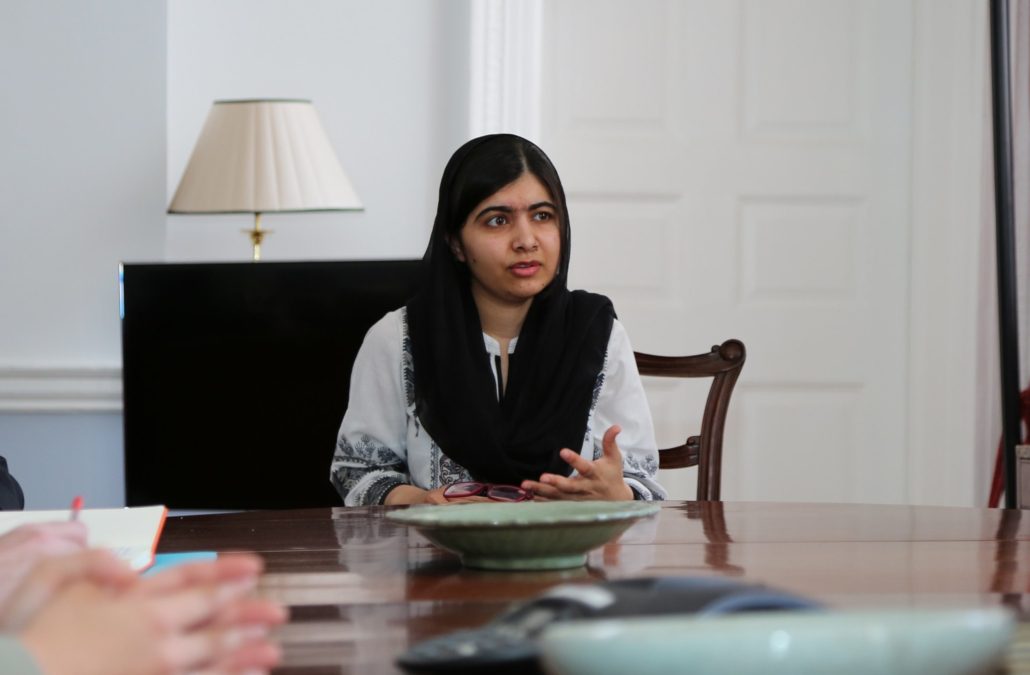
  1. Malala Yousafzai, alongside her father, established the Malala Fund. In 2012, the Taliban targeted Malala, a vocal advocate for a girl’s right to education, and shot her on the left side of her head on her way home from school. When Malala recovered, she decided that she wanted to continue fighting for education for girls around the world. With the allyship of her father, she established the Malala Fund. It supports educators in eight different countries with $22 million invested in Malala Fund campaigns. Malala Yousafzai is a woman advancing equal rights for women by advocating for every girl’s right to an education as well as financially supporting schools for women in various countries.
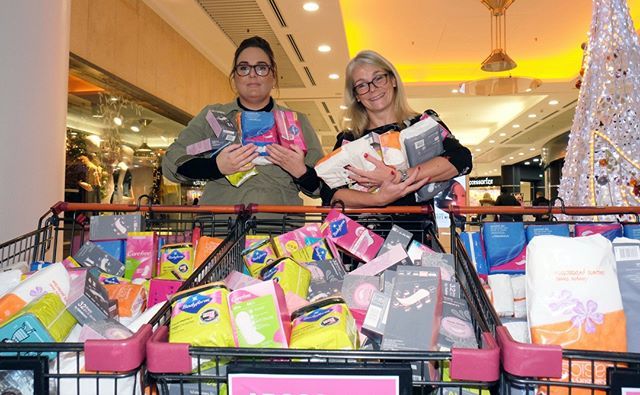
  2. Gabby Edlin is the founder of The Bloody Good Period Campaign. While volunteering at a refugee center, she noticed that women did not receive menstrual products with their kit of essentials. Gabby started a small campaign on Facebook, and the interest in helping women grew. This led to her creating The Bloody Good Period Campaign, overcoming resistance from men who did not believe that the resource was a necessity. Bloody Good Period focuses its efforts on asylum-seeking women who are unable to purchase food or other necessities because of their need to purchase menstrual products; it seeks to educate women and destigmatize menstruation. Gabby Edlin is a woman advancing equal rights for women by educating and garnering the support of the public. She also uses the funds to provide menstrual product needs to refugees.
  3. Forgotten Women is an organization that women run for women. They founded the organization after witnessing the abuse of vulnerable women around the world. Forgotten Women developed the LIFT Model which stands for “Leveraging Investment for Transformation.” Through this model, it provides the means for women to be permanently self-sufficient and provides emergency aid to women in vulnerable positions. Forgotten Women has a sexual trauma clinic that currently reaches an average of 105,000 women per year; it continues to advocate for equality, defending women who stand for this value. Forgotten Women is a group of women advancing equal rights for women by imparting unconditional aid to vulnerable women and supplying them with the means to be self-sustained providers.
  4. Abisoye Ajayi-Akinfolarin founded Pearls Africa. Abisoye lost her mom when she was 4 years old, and at a young age, she learned about computers through a family friend’s support. Her tech skillset enabled her to intern with EDP Audit & Security Associates, an IT auditing firm in Lagos, Nigeria. She noticed the underrepresentation of women within the industry of tech and determined to change this disparity. In an interview with Unearth Women, she said, “In Nigeria, there are very few girls in STEM fields, as they have been made to believe that tech is not something that they can pursue due to their sex or gender. This is a lie, and it’s something we’re trying to change systematically through the GirlsCoding initiative.” One of the successes of GirlsCoding took place in the impoverished Makoko slum in Lagos. After the young women left GirlsCoding, they became leaders in their communities. Then, they started Makoko Fresh, an e-commerce platform that supports and improves the livelihoods of local fishermen. GirlsCoding is just a part of the work that occurs through the organization Pearls Africa. Abisoye Ajayi-Akinfolarin is a woman whose intellectual leadership advances equal rights for women by expelling doubts and stigmas about female capabilities and equipping girls with the resources to pursue a meaningful career.
  5. Sonita Alizadeh is a champion and advocates on the behalf of Girls Not Brides. At the age of 16, Sonita found out that her parents were going to sell her into marriage. Despite her family’s disapproval, she recorded music about her experiences as a woman and a refugee. Sonita released her song­, “Daughters for Sale” on YouTube. The video went viral, and her parents decided not to sell her into marriage. Sonita Alizadeh now lives in the United States and continues to fight on behalf of child brides. She works as an advocate with Girls Not Brides and speaks with global authorities on the issue. The organization urges countries to develop laws, policies and programs that end child marriage; Sonita Alizadeh is a woman whose creative leadership advances equal rights for women, specifically young girls, who would otherwise be sold into marriage before maturity.

The leadership of these women advances equal rights for women across the world. Their personal experiences and courage, often in the face of insurmountable odds, led them to activism on behalf of vulnerable or oppressed women. The example that they set serves as an inspiration to all people that each person’s voice has value, meaning and power. The impact of each organization demonstrates the importance of advocacy and activism.

– Hannah Brock
Photo: Flickr

March 25, 2021
https://borgenproject.org/wp-content/uploads/borgen-project-logo.svg 0 0 Jennifer Philipp https://borgenproject.org/wp-content/uploads/borgen-project-logo.svg Jennifer Philipp2021-03-25 07:30:032021-03-26 05:15:105 Women Advancing Equal Rights for Women
Activism, Gender Equality, Global Poverty, Women's Empowerment

Examining Women’s Rights in Pakistan

Women's Rights in Pakistan
A lot of progress has occurred to achieve women’s rights in Pakistan. However, gender inequality still remains a prominent issue. According to the World Economic Forum, the Global Gender Index Report ranks Pakistan second to last in domestic violence.

Fortunately, the government has taken significant action. In December 2020, Pakistan instilled a new anti-rape law to speed up convictions and toughen sentences. According to White Ribbon Pakistan, an estimated 4,734 women faced sexual violence between 2004 and 2016. Furthermore, there were over 15,000 cases of registered honor crimes and more than 1,800 cases of domestic violence. However, conviction rates remain low. Only 2.5% of all cases result in convictions. The new law requires sex offenders to be nationally registered. Additionally, the courts will protect the identity of victims.

Domestic Abuse

Pakistan ranks as the sixth most dangerous country for women in regards to domestic violence. Patriarchal and cultural norms greatly impact women’s rights in Pakistan.

Honor killings and violence within the home are prevalent. Recently, social media model and activist Qandeel Baloch’s brother strangled her to death. According to her brother, she had ruined the family’s image and honor. Fortunately, Pakistan has made progress to prevent violence within the household. For instance, the court denied Baloch’s parents’ wishes and convicted Baloch’s brother of murder. Additionally, more than 1,000 domestic violence cases appeared in court in June 2019.

Furthermore, Ms. Quandeel wrote, “I wonder how long it will take us to recognize that we shouldn’t let ourselves off the hook, that our social structure is rotten and works against people like #Qandeel who wish to make something of themselves on their own terms.” The death of Qandeel Baloch generated a movement for gender equality in Pakistan.

The Good News

The good news is that Pakistani women are fighting back. Since 2018, women have demanded economic and environmental justice, reproductive rights and better access to public spaces. On International Women’s Day, thousands took to the streets to demonstrate their commitment to bettering women’s rights in Pakistan. However, conservative groups criticized the movement and labeled it as a “western campaign.”

One of the main slogans of the march was “mera jism, meri marzi” (my body, my choice). Many said it was a promiscuous demand that did not empower women. Yet, women continue to defend their objectives, raise awareness against sexual harassment and gender-based violence and promote bodily autonomy.

Additionally, women began riding bikes in order to accentuate their presence in public spaces. Girls at Dhabas organized a bike ride to promote certification in all public events and fight against restrictions that prohibit women. One cyclist said, “We have an advantage with this lockdown and corona and all. The cycling has become really common among the girls in Islamabad.”

Various organizations are spreading awareness of domestic violence. Additionally, the government continues to implement new laws to protect women. Although women’s rights in Pakistan are lacking in many ways, the government and organizations continue to strive for gender equality.

– Marielle Marlys
Photo: Flickr

March 22, 2021
https://borgenproject.org/wp-content/uploads/borgen-project-logo.svg 0 0 Jennifer Philipp https://borgenproject.org/wp-content/uploads/borgen-project-logo.svg Jennifer Philipp2021-03-22 07:30:482021-03-21 06:43:54Examining Women’s Rights in Pakistan
Global Poverty, Women's Empowerment

3 Businesses Aiding Female Cacao Farmers in Cameroon

Female Cacao Farmers in Cameroon
Cameroon is a country rich in natural resources and agricultural products such as coffee, cassava and cacao. This nation is the fifth-largest cacao producer in the world. The industry is a vital source of economic activity for small-scale rural farmers and contributes to about 1.2% of the country’s total GDP. However, female cacao farmers in Cameroon struggle to benefit from this industry.

The Gender Inequality Index ranks Cameroon 141 of 189. Expectations have determined that women must take care of daily chores such as cooking and fetching water. On average, women spend 8.2 more hours completing unpaid household tasks than men. Cacao fields are typically family-run enterprises. Thus, women often work in these fields as well. Cacao farming particularly affects women because it does not generate a lot of income.

Cameroon’s Cacao Industry

Cameroon liberalized its cacao industry in hopes of recovering from the economic crisis in the 1980s. At this time, the value of the national currency fell significantly after global oil prices fell.

Consequently, the industry swiftly deregulated. The regulatory branch of Cameroon overseeing cacao production and quality control lost its influence without government support. As a result, this lead to corruption of local middlemen, a lack of accurate information on cacao production and fluctuations in the quality of produced cacao. Only 10% of Cameroon’s cacao producers belonged to producer associations by 2002. Thus, Cameroon continues to struggle to compete in the world market.

Female Cacao Farmers in Cameroon

Female cacao farmers in Cameroon face additional challenges to the already competitive market due to the patriarchal society. Cacao production grew from 123,000 tons in 2000 to 290,000 in 2016. However, the quality of cacao decreased due to a lack of quality control in pre and post-harvest activities.

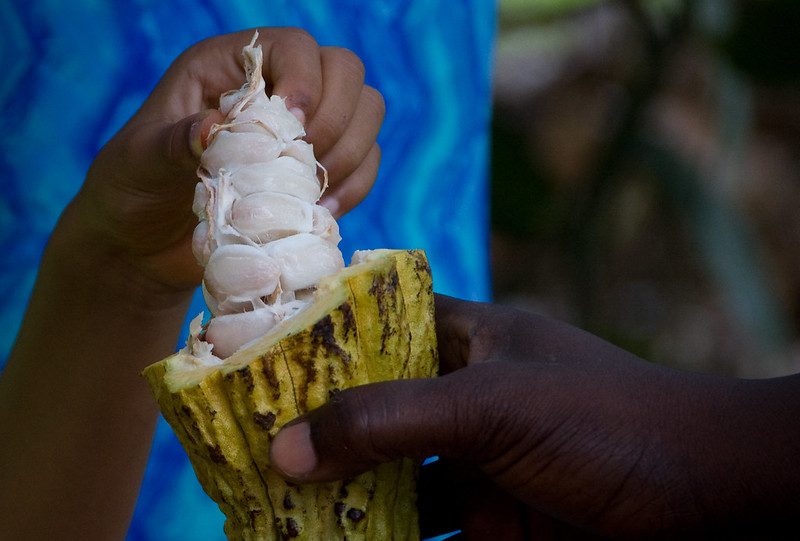
Men and women conduct different tasks in cacao production. Men take on physically demanding and dangerous tasks such as pesticide spraying and harvesting. Women focus on post-harvest activities fundamental to the quality of cacao such as pod-breaking, fermenting and drying.

Although labor is equally distributed, female cacao farmers in Cameroon often do not benefit from cacao revenue because they do not own the land. About 3% of women own a house without a property title and 1.6% own a property title in their name. This means men in households keep the profit that the cacao generates.

Furthermore, women lack representation in cacao production decision-making. In addition, women often do not have equal access to education. Men receive an average of 13 years of education, while women receive only 11 years. As a result, about 71.6% of women and 82% of men in Cameroon are literate. The lack of education hinders women’s ability to maintain financial independence.

Telcar

Telcar is one of Cameroon’s largest cacao trading companies. The International Finance Corporation installed cassava grinding machines in 10 cooperatives to help female cacao farmers in Cameroon. Many women supplement their income by selling manually-produced cassava starch to local markets. Kate Fotso grew up in a cocoa-producing village and is now managing director of Telcar. She installed cassava grinding machines to ease the laborious process, empower women and improve their economic status.

Female farmers in organized management committees learned how to use, maintain and pass knowledge about the machines to others. Additionally, Telcar recruited female farmers into financial literacy training programs and worked with micro-finance institutions to support women’s cassava enterprises. It increased their access to finance through saving and encouraged them to take on leadership roles within their cooperatives.

The Farmgate Cacao Alliance

The Farmgate Cocoa Alliance is a global nonprofit organization that focuses on achieving cacao sustainability in Cameroon. Women Empowerment Through Cacao Farming is its project that takes a holistic approach in supporting female farmers. The organization trains women to run professional and sustainable cacao farms. It allocated female community field agents to 50 women within the region to help identify group needs, challenges and lessons learned.

Furthermore, female farmers in Cameroon received encouragement to form cooperatives for better market access, more stable income and received 2 HA of land to combat a lack of access to farmland. Finally, the organization taught women advocacy skills to approach local and national governments concerning legal restrictions such as applying for land, financing and other assets and services.

SNV Netherlands Development Organization

SNV is a nonprofit from the Netherlands that focuses on empowering women through the cacao value chain. The Cameroon Golden Cacao Project aims to increase cooperatives and farmers’ income by implementing standardized post-harvest practices. The goal was to increase the production of high-quality cocoa by 10% by 2020.

Cooperatives and partners created more than 400 jobs for women. In addition, 500 of the 2,000 cooperative members who practice standardized knowledge were women by 2020. Women continue to increase their involvement at the post-harvest stages of the cacao value chain. In the future, women will develop other income generations and business models to find relevant financial partners.

Although female cacao farmers in Cameroon face many difficulties, organizations’ initiatives are already improving the lives of these workers. Providing educational opportunities will empower women and improve cacao production and the economy.

– Charlotte Ehlers
Photo: Flickr

March 21, 2021
https://borgenproject.org/wp-content/uploads/borgen-project-logo.svg 0 0 Jennifer Philipp https://borgenproject.org/wp-content/uploads/borgen-project-logo.svg Jennifer Philipp2021-03-21 01:31:262024-05-30 07:56:483 Businesses Aiding Female Cacao Farmers in Cameroon
Global Poverty, Women's Empowerment

World Bank Group: Digital Identification vs. Poverty

digital identification and the fight against global poverty
As the world continues to populate and technology becomes more widely available, the need for digital identification has become vital in the fight against global poverty. Currently, the World Bank has calculated that nearly one billion people worldwide do not have any formal identification, half of whom are in Africa. Thus, many people are without access to a range of essential services like banking, healthcare and general education.

In response, the World Bank Group began an initiative in 2014 to directly tackle this issue. The Identification for Development (ID4D) organization comprises experts, investors and technologies working to bring every person into the digital world.

What is Digital Identification?

Simply put, digital identification is a process in which an individual’s identity is confirmed through digital channels. A digital ID can range from a government-issued ID to a PIN to biometric data. Digital identification provides multiple important opportunities, such as opening bank accounts, establishing credentials for jobs and gaining access to education. Though these forms of identification seem common, many people struggle daily to prove their identity through these methods.

To understand the importance of identity management, one must understand the value and advantages it brings. In low-income countries, over 45% of women and 30% of men have no ID at all. In addition to the gender gap, a World Bank Group survey cited that the most impoverished 20% are the most likely to lack an ID. This places a veil over these communities, making them virtually “invisible.” It bars them from the opportunities and services that they most need to break out of the cycle of poverty.

However, digital identification can and is changing this. Identification for Development (ID4D) is doing pivotal work in building digital bridges, keeping transparency and empowering communities.

How ID4D Works

The ID4D initiative works in conjunction with 10 World Bank Group sectors that work toward digital expansion, economic inclusion, social safeguards and more for those in need of these services. The program primarily focuses on educating communities on the need and benefit of digital identification. Additionally, the group works alongside governments to implement effective and inclusive digital identification systems. The process of building up communities takes time and research. ID4D, therefore, performs assessments and creates a dialogue to understand the communities it serves.

Who ID4D Serves

Identification for Development serves the global community. For instance, the World Group Bank has supported the Moroccon government by designing and implementing a digital ID system. This project reformed the Moroccan social safety net system into a secure and functional digital society and economy.

Likewise, in West Africa, ID4D is in the beginning stages of implementing a new national ID system. This system will allow for easier access to mutual recognition and authentication processes throughout the area. A part of this project involves setting legal standards, industry standards and overall help promote and establish reliable ID systems between borders.

The Benefits of Digital Identification

There are numerous benefits to bringing underdeveloped regions into the digital atmosphere. First and foremost being the generation and broadening of new markets and customer indexes. Giving untapped markets the ability to tap into the digital realm financially gives poor communities a way to build savings, establish a digital trail, build credit and pay for what they need in micro-payments. Furthermore, digital identification helps to prevent fraud in various aspects. For example, with the help of digital identification, Nigeria and other countries have successfully used biometric records to reduce federal beneficiaries.

Not only does digital identification help communities at large, but it paves the way for women to provide for their families. Women account for around 70% of the world’s working population but receive only 10% of the income. As a result, women cannot afford to help raise their families out of poverty. Therefore, increasing women’s ability to verify their identities allows them to claim their income without issue, creating a highly effective method to combat global poverty.

– Sallie Blackmon
Photo: Flickr

March 8, 2021
https://borgenproject.org/wp-content/uploads/borgen-project-logo.svg 0 0 Jennifer Philipp https://borgenproject.org/wp-content/uploads/borgen-project-logo.svg Jennifer Philipp2021-03-08 01:30:542024-05-30 07:56:29World Bank Group: Digital Identification vs. Poverty
Global Poverty, Health, Women's Empowerment

Celebrity Solutions to Period Poverty

Celebrity Solutions to Period PovertyCombinations of cultural stigmas and taboos, lack of access to menstrual products and inadequate sanitation facilities all contribute to period poverty. UNICEF highlights that 2.3 billion people across the world still do not have access to basic sanitation services. Each day, 800 million women and girls menstruate yet these barriers hinder them from properly managing their menstruation. Celebrity solutions to period poverty hope to address this global issue.
Period Poverty

The umbrella term of period poverty is used to describe “the inadequate access to menstrual hygiene tools and educations, including but not limited to sanitary products, washing facilities and waste management.” Oftentimes, women and young girls in countries that prominently experience this form of poverty are ostracized from activities such as socializing or eating particular foods. Furthermore, the cultural shame that menstruators carry with them hinders them from going to school and work. Generally, this results in girls being uneducated, further exacerbating the cycle of poverty. As the issue of period poverty increases, celebrity solutions to period poverty help raise awareness and look toward ways to reduce period poverty.

Celebrities Fighting Period Poverty

  1. Hilary Duff. In 2019, actress Hilary Duff partnered with Naturalena Brands and launched Veeda, a 100% natural period product line. Duff made it her mission to provide affordable and quality menstrual products for women and girls around the world. She spoke about period poverty in an interview with the Morning Show, “It is horrifying that something like your period is holding girls back from being able to go to school for a week every single month because they don’t have access to proper supplies.” Veeda works closely with the Naturalena Foundation which had donated more than three million feminine hygiene products to more than 10 countries.
  2. Gina Rodriguez. Actress Gina Rodriguez wrote an article for Teen Vogue in August 2018 in which she reflected on how different her life would have been if she had personally been impacted by period poverty. After learning about how many girls could not go to school because of their menstrual cycles, Rodriguez partnered with Always for the #EndPeriodPoverty campaign. The campaign aims to ensure that women and girls always feel supported so that their periods do not hold them back from living up to their fullest potential. Though the campaign addresses period poverty in the United States, it serves to raise awareness about the global issue of period poverty so that more people can become involved to take action globally.
  3. Amika George. In 2018, British activist Amika George was nominated for Teen Vogue’s “21 under 21” list by actor Emma Watson for her work toward achieving menstrual equality and ending period poverty. At the age of 17, after realizing that girls in the U.K. were not attending school because they were unable to afford period products to manage their menstruation, George started the campaign Free Periods to end period poverty. She also started a petition that received more than 200,000 signatures. This created awareness of the issue and resulted in a period poverty protest of 2,000 people outside the residence of U.K. Prime Minister Theresa May.

These celebrity solutions to period poverty help create awareness and address a global issue that prevents girls and women around the world from reaching their full potential.

– Meghana Nagendra
Photo: Flickr

March 1, 2021
https://borgenproject.org/wp-content/uploads/borgen-project-logo.svg 0 0 Kim Thelwell https://borgenproject.org/wp-content/uploads/borgen-project-logo.svg Kim Thelwell2021-03-01 08:50:362024-05-30 22:23:36Celebrity Solutions to Period Poverty
Violence Against Women, Women's Empowerment

3 Movies Bringing Awareness to Honor Killings

Awareness to Honor KillingsThe Human Rights Watch (HRW) defines honor killings or honor crimes as “acts of violence, usually murder, committed by male family members against female family members who are perceived to have brought dishonor upon the family.” The practice is not specific to any region but is instead an international issue that goes largely unrecognized and is sometimes even condoned by the apathy and inaction of certain governmental bodies. Advocacy efforts by groups like the HRW have made strides in educating the public on the prevalence of this issue. Through filmmaking, individuals are also bringing awareness to honor killings. Films about honor killings detail the many facets of the practice and its impact on families and communities.

“A Girl in the River: The Price of Forgiveness” (2015)

In this 40-minute-long documentary, director Sharmeen Obaid-Chinoy tells the story of Saba, a Pakistani woman who was sentenced to death for falling in love and marrying a man who was once promised to her. Her story of survival is harrowing and heart-wrenching and the aftermath offers one of the most scathing indictments of honor killing in recent years. This Oscar-winning short film is undoubtedly one of the best stories about honor killings in the cinematic canon and is a must-see for anyone interested in international women’s rights.

“Sairat” (2016)

This popular Indian film tells the story of two star-crossed lovers on opposite sides of the economic and social spectrum. Parshya is the son of a fisherman while Aarchi is the daughter of a powerful politician who will not sacrifice his status in the caste system under any circumstances. This romantic tragedy is a slightly more macabre adaptation of Shakespeare’s Romeo and Juliet but accomplishes more than simple entertainment. The film takes place in the progressive state of Maharashtra, disrupting the common narrative that honor killings occur exclusively in traditional states.

“A Regular Woman” (2019)

Based on a true story, “A Regular Woman“ follows a young, self-determined German woman of Turkish descent. Her deeply patriarchal family frequently stands in the way of her living her own life, rejecting her lifestyle as improper. Eventually, tensions escalate to the point where she no longer feels safe at home so she runs away with her child. She then reports her brother, the chief agitator, to the police. While primarily a story about an honor killing, the film also examines the greater threat of patriarchal oppression and a women’s struggle to be heard.

Artistic expression plays a pivotal role in giving voice to people silenced by oppressive forces in the world. It offers perspective and situates observers in a world that they would not otherwise understand. Cinema offers viewers visceral and visual experiences which become more and more important as we hear stories about the unimaginable. These three films are examples of how artistic expression can bring awareness to honor killings and give voice to victims as well as survivors.

– Matthew Hayden
Photo: Flickr

February 20, 2021
https://borgenproject.org/wp-content/uploads/borgen-project-logo.svg 0 0 Kim Thelwell https://borgenproject.org/wp-content/uploads/borgen-project-logo.svg Kim Thelwell2021-02-20 04:20:022024-12-13 18:02:253 Movies Bringing Awareness to Honor Killings
Children, Developing Countries, Global Poverty, Women, Women's Empowerment

Little Light Uganda: Empowering Ugandan Women

Little Light UgandaLittle Light Uganda is a nonprofit organization located in Namuwongo Slum, which is in Uganda’s capital, Kampala. Since its establishment in 2007, Little Light’s mission has been to provide aid to those in the community who are living in poverty.

Little Light Helps Uganda

Uganda’s economy has had a reduction in growth because of the COVID-19 pandemic, a locust invasion and heavy rains that led to flooding. With subsequent job loss along with the economic decline, programs like Little Light Uganda are essential for giving help to those in need. Little Light’s services include “giving access to proper education, economic empowerment and psycho-social support.”

Little Light Uganda has two groups in the organization, its youth group and its women’s group. The youth group, officially known as Spoon Youth, aims to provide the young people in Namuwongo a safe and reliable environment. The group also educates children on how to navigate life living in poverty, including matters of crime and violence. Children and youth make up more than 70% of Namuwongo’s population, half of them without parents, which is why Little Light works to provide them sanctuary and resources.

Women’s Empowerment Group

The mothers of children in the youth group are invited into Little Light’s women’s empowerment group, called “Umoja,” which is Swahili for “Unity.” The group’s mission is to give women living in the Namuwongo slum tools to better their economic and social situation. Members of the women’s group meet every afternoon at the organization to make authentic African jewelry from recycled newspapers and hand-rolled beads. The jewelry is marketed in Uganda and abroad to provide an income and livelihood for women.

Mama Pendo Jewelry

The name the group has coined for the jewelry brand is Mama Pendo, which translated from Kiswahili means “The Mother of Love.” The initiative aims to improve the quality of life for refugees and single mothers trying to provide their children with an education.

Little Light Uganda volunteers have worked with the women to support their hard work and create a website for their jewelry to be sold. The proceeds from sold jewelry go toward projects the women feel passionate about, all of which intend to benefit the conditions for struggling women and other vulnerable individuals.

Combating Malaria and COVID-19

One of the group’s projects is dedicated to fighting malaria in Uganda, which is one of the main causes of death in the country. According to the American Journal of Tropical Medicine & Hygiene, between 70,000 to 100,000 children in Uganda die from the disease every year. The group uses money earned from sold bracelets to buy an organic mosquito-repellent soap, which is given to disadvantaged families that live in places that are more vulnerable to malaria.

The women have also created an initiative to combat COVID-19. Since hygiene is an essential tool for preventing the spread of the virus, the group has pledged one bar of soap for a family in Namuwango living in poverty for every website purchase.

Women’s Empowerment for Poverty Reduction in Uganda

Little Light Uganda does a lot for its community with initiatives like the Mama Pendo project. Not only is the organization helping those in need but it is also empowering women living in poverty. Women with more resources and liberation are more likely to pursue their own education and prioritize the health, nutritional and educational needs of their children.

– Celia Brocker
Photo: Flickr

February 12, 2021
https://borgenproject.org/wp-content/uploads/borgen-project-logo.svg 0 0 Kim Thelwell https://borgenproject.org/wp-content/uploads/borgen-project-logo.svg Kim Thelwell2021-02-12 06:17:422021-02-12 06:17:42Little Light Uganda: Empowering Ugandan Women
Economy, Gender Equality, Global Poverty, Women's Empowerment, Women's Rights

Creating Female Entrepreneurs in Afghanistan

Female entrepreneurs in AfghanistanIt is no secret that women’s rights in Afghanistan have been suffering due to decades of war and Taliban rule in the country. Afghan women have endured the denial of employment, education, health care and basic freedoms for years and faced violent punishment by the Taliban for attempting to find work or go to school. Years after Taliban rule, women are picking up the pieces of a broken society that drove them and many other Afghans into severe poverty. Organizations such as the Women’s Economic Empowerment Rural Development Project (WEERDP) and the Afghanistan Reconstruction Trust Fund (ARTF), both funded and backed by the World Bank, set up savings and loan associations in different communities to allow Afghan women to start their own businesses. Female entrepreneurs in Afghanistan have the potential to help the economy and reduce poverty within the country.

Women’s Empowerment Projects of the World Bank

International aid to Afghanistan is essential for empowering Afghan women and bringing communities out of poverty. The World Bank has a variety of programs dedicated to poverty eradication. It implemented the Afghanistan Rural Enterprise Development Project to support Village Savings and Loan Associations (VSLA). VLSAs operate as a community bank that gives out micro-loans to women to create employment opportunities to sustain economic growth. Examples of businesses started by women are hair salons, tailor shops and bakeries.

While the Afghanistan Rural Enterprise Development Program came to a close in 2018, WEERDP replaced it and continues to receive backing from the World Bank and the International Development Association (IDA) to ensure steady funding.

VSLAs receive funding from the World Bank and the IDA to ensure sustainable financial institutions are available in Afghanistan, with the hope that the VSLAs will partner with larger commercial banks in the future.

Benefits of Female Entrepreneurs in Afghanistan

There are roughly 275,684 Afghan women beneficiaries of the WEERDP. Many of them have had access to financial services for the first time with the program. Many others are taking loans, learning how to repay these loans and beginning to save for the future. These are valuable life skills for women who could not enter the workforce or gain an education in the past.

With the increase of women-run businesses in Afghanistan’s rural communities, VSLAs can begin to partner with larger banks to begin serving bigger loans to women after seeing the success of the businesses that began with micro-loans. The support of financial institutions is important to give women the confidence to become entrepreneurs, especially in a country where the percentage of women in the workforce is statistically low. Skills like leadership, management and problem-solving are derived from starting a business and female entrepreneurs can spread these skills throughout communities to strengthen the role of women in the economy.

These women can even pass down the skills through generations. Building a structure with programs like the WEERDP is vital for long-term economic growth and success because it can open doors for creativity and innovation for an economy that would benefit.

The Future of Female Entrepreneurs in Afghanistan

Increasing the number of women entrepreneurs with savvy financial skills can benefit the communities of Afghanistan in many ways. Successful women can begin to venture out into local politics and health care fields to build on their skills while sharing their talents with the community. Women have important input on what types of businesses their communities need and can reduce poverty in specialized ways.

Afghan women make up roughly half of the nation’s population, so their representation is necessary to drive economic and societal progress. The visibility of women in the business sector can allow for gender equality to improve in Afghanistan over time, improving the development of the nation as a whole.

– Julia Ditmar
Photo: Flickr

February 4, 2021
https://borgenproject.org/wp-content/uploads/borgen-project-logo.svg 0 0 Kim Thelwell https://borgenproject.org/wp-content/uploads/borgen-project-logo.svg Kim Thelwell2021-02-04 07:30:332022-05-11 07:59:51Creating Female Entrepreneurs in Afghanistan
Activism, Global Poverty, Women's Empowerment

Make Equality Reality Gala 2020 Goes Virtual

Make Equality RealityEquality Now was founded in 1992 in New York when three feminist lawyers, Jessica Neuwirth, Navanethem “Navi” Pillay and Feryal Gharahi decided that domestic violence, rape and female genital mutilation could no longer be acceptable. The lawyers began to challenge cultural norms, recognizing that the best way to encourage the world at large to care about their cause was to choose specific cases of abuse and focus all media attention on these cases. The three established a mission to use the legal system to promote and protect the human rights of women around the world. Each year, the organization hosts a Make Equality Reality Gala to raise money to support the organization’s legal team. Dec. 3, 2020, marked the eighth annual gala, though the organization had to host it virtually due to the COVID-19 pandemic.

Make Equality Reality Gala 2020

The star-studded gala included special appearances from Jane Fonda, Meryl Streep, Jameela Jamil, Karamo Brown, Margaret Atwood, Aubrey Plaza, AnnaSophia Robb, Rob Reiner and many more. Gloria Steinem also wrote a tribute to the late U.S. Supreme Court Justice Ruth Bader Ginsburg, who passed away in September 2020.

The Make Equality Reality Gala opened with a few words from the actor, author and producer Sheetal Sheth as well as actor, writer and producer Aasif Mandvi. They informed their audience of the mission of Equality Now and reiterated that the best way to support the organization is to donate to the cause. The video then cuts to snippets of interviews with the Equality Now staff explaining their activities throughout the year and how they made the best of quarantine. Some of their responses were light-hearted, like learning how to knit and bake. Other responses took on a more serious note, like working with other human rights organizations.

Jameela Jamil marks the first-star appearance to tell viewers that the future lies in the hands of young girls. However, she also notes that the future is at risk. Jamil tells audiences that one in 10 girls faces sexual violence in her lifetime. In addition, she says that 3 million young girls are victims of female genital mutilation in 92 countries, including the United States, and that girls make up the vast majority of victims of sex trafficking all around the world.

Organization Achievements

The gala included a presentation outlining the work of Equality Now since its founding, including helping young girls win rape cases in court or assisting girls in winning back their freedom after being married off as children. This organization has also helped women in Kuwait secure the right to vote. The organization works with governments in 193 countries around the world to create and change laws so that women and young girls are free to reach their full potential.

A Call to Action and Awareness

Over the course of the rest of the Make Equality Reality Gala, the lineup entailed performances from the cast of Netflix’s “Grand Army,” English singer/songwriter Jess Glynne and numerous speeches and calls to action from the biggest names in entertainment. There was also a performance of Two Girls, a play written by Katie Cappiello to raise awareness of the exploitation and abuse of women that occurs on the internet. Meryl Streep also delivered a tribute to the late Supreme Court Justice Ruth Bader Ginsburg. Glynne closed out the gala with a performance of her song “I’ll Be There” and a montage of photos and videos of frontline healthcare workers, women at protests and women in positions of power.

Gucci and Chime for Change presented the Changemaker Award to Nadeen Ashraf. Ashraf is a 22-year-old filmmaker from Cairo, Egypt, best known for her work as the founder of Assault Police, an Instagram account Ashraf uses to highlight the gendered injustices happening in Egypt. She began to gain notoriety through the Instagram account and played an instrumental role in the passing of an Egyptian law to protect the identity of sexual violence victims.

Ways to Show Support

The Make Equality Reality Gala raised more than $380,000 in 2020 to continue to support the efforts of the lawyers and other staff around the world who work tirelessly to promote equal rights for women. Even an ordinary individual can make a difference by donating or fundraising to support the work that Equality Now does to empower girls and women across the globe.

– Jessica Lyn
Photo: Flickr

February 3, 2021
https://borgenproject.org/wp-content/uploads/borgen-project-logo.svg 0 0 Kim Thelwell https://borgenproject.org/wp-content/uploads/borgen-project-logo.svg Kim Thelwell2021-02-03 10:22:222022-05-10 08:00:39Make Equality Reality Gala 2020 Goes Virtual
Page 23 of 54«‹2122232425›»

Get Smarter

  • Global Poverty 101
  • Global Poverty… The Good News
  • Global Poverty & U.S. Jobs
  • Global Poverty and National Security
  • Innovative Solutions to Poverty
  • Global Poverty & Aid FAQ’s
Search Search

Take Action

  • Call Congress
  • Email Congress
  • Donate
  • 30 Ways to Help
  • Volunteer Ops
  • Internships
  • Courses & Certificates
  • The Podcast
Borgen Project

“The Borgen Project is an incredible nonprofit organization that is addressing poverty and hunger and working towards ending them.”

-The Huffington Post

Inside The Borgen Project

  • Contact
  • About
  • Financials
  • President
  • Board of Directors
  • Board of Advisors

International Links

  • UK Email Parliament
  • UK Donate
  • Canada Email Parliament

Get Smarter

  • Global Poverty 101
  • Global Poverty… The Good News
  • Global Poverty & U.S. Jobs
  • Global Poverty and National Security
  • Innovative Solutions to Poverty
  • Global Poverty & Aid FAQ’s

Ways to Help

  • Call Congress
  • Email Congress
  • Donate
  • 30 Ways to Help
  • Volunteer Ops
  • Internships
  • Courses & Certificates
  • The Podcast
Scroll to top Scroll to top Scroll to top