The Equal Rights and Access for the Women of South Sudan Act
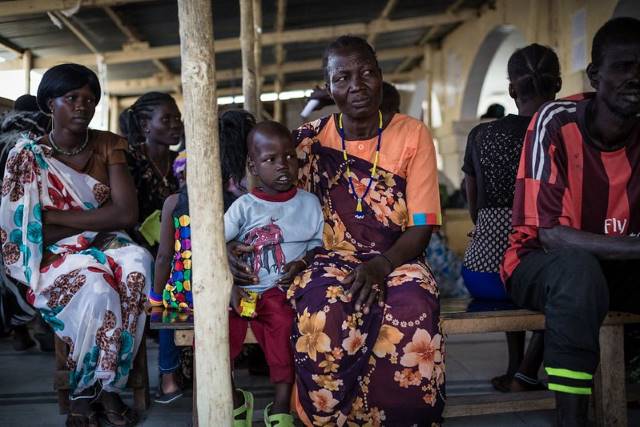 While Sudan is home to beautiful landscapes and countless wildlife, women in the country face several issues. Activists in South Sudan say parties to the 2018 peace deal are violating a particular provision that calls for 35% of legislative positions to consist of women. In light of the ongoing struggles of women in South Sudan, the Equal Rights and Access for the Women of South Sudan Act was introduced to Congress.
H.R. 116
Congresswoman Sheila Jackson Lee introduced H.R. 116, also known as the Equal Rights and Access for the Women of South Sudan Act, to the House of Representatives on January 4, 2021. It is currently under review by the House Committee on Foreign Affairs. The bill requires “that activities carried out by the United States in South Sudan relating to governance, reconstruction and development and refugee relief and assistance support the basic human rights of women and women’s participation and leadership in these areas.”
Women consist of 60% of the population in South Sudan but still face the most hardships. Furthermore, more than 80% of Sudanese women are illiterate and 50% of girls under the age of 18 are married, contributing to a higher rate of maternal mortality. Gender-based violence is prevalent for women in South Sudan and abortion is still illegal even in circumstances of rape. The law of the country does not protect women due to the prevalent use of customary law, which often discriminates against women and minorities.
Current Challenges in South Sudan
South Sudanese women still face a violation of their human rights but continued support from the U.S. can ensure that women’s progression, since July 2011 when the Republic of South Sudan gained independence, will continue. The U.S. has already made considerable contributions to emergency relief and humanitarian efforts in South Sudan. Still, to ensure the protection and advancement of women as well as overall stability in the country, there needs to be a long-term investment in the development and reconstruction of South Sudan. A significant concern is that inadequate healthcare in the country means a high maternal and infant mortality rate. The maternal mortality rate is 1,054 deaths per 100,000 live births, one of the highest rates globally.
South Sudan faces issues with its infrastructure, which hampers human development and marginalizes women. Due to high illiteracy rates in the country, it is essential to secure and inform women of their rights. International aid can support local women’s organizations and can include equality in efforts for the country’s development. Humanitarian and development programs that the U.S. sponsors can help girls and women exercise their human rights. The U.S. can also help South Sudan include more women in politics.
Proposals of the South Sudan Act
South Sudanese women should be integral to policy-making efforts relating to the governance of South Sudan. This equates to the involvement of more women in all legislative bodies and ensuring that women’s rights form part of the constitution and other legislative policies. Furthermore, regarding post-conflict reconstruction and development, the U.S. should guarantee that a significant portion of U.S. developmental assistance and relief aid goes to women’s organizations in South Sudan.
The U.S. should also promote female-centered economic development programs, including programs that support widows, female heads of household, rural women and women with disabilities. Furthermore, it is important to “increase women’s access to ownership of assets such as land, water, agricultural inputs, credit and property. ”
These are just some of the directives of the Equal Rights and Access for the Women of South Sudan Act. Overall, the Act calls on the U.S. as a global leader to take action to prioritize women in South Sudan so that women can advance and progress. Women form an integral part of poverty reduction, which is why gender equality is so important. Uplifting women in South Sudan means reducing poverty in the country. For truly lasting global change, women’s empowerment is essential.
– Nyelah Mitchell
Photo: Flickr
