• Link to X
  • Link to Facebook
  • Link to Instagram
  • Link to TikTok
  • Link to Youtube
  • About
    • About Us
      • President
      • Board of Directors
      • Board of Advisors
      • Financials
      • Our Methodology
      • Success Tracker
      • Contact
  • Act Now
    • 30 Ways to Help
      • Email Congress
      • Call Congress
      • Volunteer
      • Courses & Certificates
      • Be a Donor
    • Internships
      • In-Office Internships
      • Remote Internships
    • Legislation
      • Politics 101
  • The Blog
  • The Podcast
  • Magazine
  • Donate
  • Click to open the search input field Click to open the search input field Search
  • Menu Menu

Archive for category: Water

Nonprofit Organizations and NGOs, Sanitation, Water

WaterAid America

WaterAid America
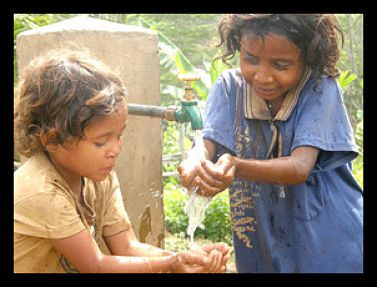
Water sanitation is an issue in development that receives minimal coverage when compared to its impact. Only recently the importance of access to clean water has gained international attention.

A lack of clean water not only makes basic tasks like washing, cooking, and drinking more difficult but also leads to widespread disease. Healthy members of the family are then burdened by taking care of the ill. Livelihoods are often impacted, with women often having to travel long distances to carry water back to their homes, missing out on education or economic opportunities and forcing children to take on responsibility roles in the household.

Established in 1981, WaterAid America works exclusively to provide safe water to at-risk communities globally. It currently works in 27 countries which are among the poorest countries in the world. A country must be on the lower end of the UNDP’s Human Development Index is a criteria for Wateraid to begin work.

The organization works with governments and other international NGOs, receiving funding from the U.S. and U.K. governments to carry out their work. They offer training to foreign departments which lack the resources or background to adequately handle their countries’ crises, thereby creating a sustainable solution rather than a short term intervention.

WaterAid’s impact was documented in Pulitzer Prize winning author Tina Rosenburg’s essay “The Burden of Thirst.” In it, she describes the immense difference made by having access to clean water. Hours previously spent gathering water are instead spent on gathering food or raising animals, diseases plummet and as such, families are no longer forced to care for sick relatives. Girls who previously bore the burden of fetching water are now free to spend their time getting an education.

The problem of unsafe water remains prevalent throughout the world. According to their website, today, 768 million people lack access to clean water and even more, 2.5 billion, lack sanitation.

– Farahnaz Mohammed

Sources: The Burden of Thirst
July 16, 2013
https://borgenproject.org/wp-content/uploads/borgen-project-logo.svg 0 0 Borgen Project https://borgenproject.org/wp-content/uploads/borgen-project-logo.svg Borgen Project2013-07-16 06:50:362024-05-25 00:01:53WaterAid America
Water

Poverty in Morocco

Poverty in Morocco
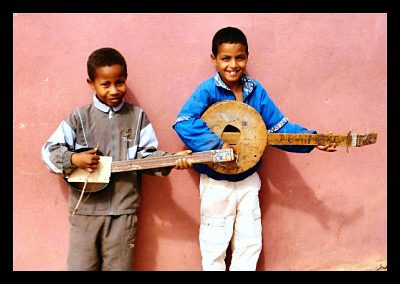
Poverty in Morocco is a fact of life for many. The name Morocco does not immediately conjure images of destitution. The country has done well as branding itself as an exotic tourist destination, but the country is suffering a significant poverty problem, one that cannot be disguised even to foreigners.

A blogger wrote of her travels in Morocco:

“…from the minute you arrive, the beggars, orphans, story-tellers and snake charmers, all desperately competing to prize a few pennies from the newest tourist’s pockets, not only colourfully line the city’s streets, but paint a picture that poverty, in one of Morocco’s most imperial cities and capital of the south, is depressingly genuine.”

The majority of poverty in Morocco is in rural areas –- according to the Rural Poverty Portal, of the 4 million people living under the poverty line in Morocco, 3 million of them are in rural areas. This may stem from the number of people depending on agriculture as a source of income in a geographically challenging region, as well as a lack of access to resources like water and financial credit and also a low level of training and education.

Morocco has seen vast improvement in its poverty levels in the last two decades, but is still far behind other countries at the same income level. Infant mortality is higher than most lower-middle income countries and total school enrollment and female enrollment are both lower. In rural areas, the vast majority still do not have access to clean water or electricity.

The Moroccan government is indeed working towards alleviating poverty in the country, though recommendations by the world bank have suggested they focus more on improving the agricultural sector as well as targeting services towards the poor and encouraging the better off to use private services.

– Farahnaz Mohammad
Source: UN Post, Rural Poverty Portal, World Bank
Photo: Sanatoy


July 11, 2013
https://borgenproject.org/wp-content/uploads/borgen-project-logo.svg 0 0 Borgen Project https://borgenproject.org/wp-content/uploads/borgen-project-logo.svg Borgen Project2013-07-11 07:00:112024-12-13 17:49:27Poverty in Morocco
Activism, Education, Food & Hunger, Food Security, Health, Sanitation, Water

Bruno Mars Sings for Poverty Relief

bruno mars sings for poverty relief
Bruno Mars isn’t just another handsome face singing catchy love songs. He — along with over 70 artists — is partnering with the Global Poverty Project to address poverty worldwide by using a fanbase to raise awareness and funds.

Global Citizen is a website managed by the Global Poverty Project that centralizes information about global poverty and opportunities to help. Its ultimate goal is to increase the number of citizens actively advocating for change. The site is comprised of actions related to education and advocacy campaigning, all of which address 13 key issues:

  • Food and Hunger
  • Primary Education
  • Gender Equality
  • Child Mortality
  • Maternal Health
  • Fighting Diseases
  • Water and Sanitation
  • Environmental Sustainability
  • Global Partnerships
  • Fighting Corruption
  • Effective Governance
  • Polio Eradication
  • Fair Trade

Participation in Global Citizen actions such as watching a video about extreme poverty, signing petitions, contacting representatives or volunteering time or money earn points for users, which can be redeemed for prizes.

14-time Grammy Award nominee Bruno Mars is one of over 70 artists who realize the importance of ending global poverty. As touring recording artists, they are exposed to areas of the world that suffer the effects of extreme poverty in outrageous percentages. Recognizing the power of their celebrity, they have stood up to support the movement. Mars joins a group of industry power-players like Jay-Z, Beyoncé, Bruce Springsteen, Pearl Jam, Kings of Leon, Kesha, Kanye West, John Mayer and more who have donated at least 2 tickets from each show scheduled in their current tour, resulting in over 20,000 tickets donated to Global Citizen. Once users reach enough points, they can enter a drawing for a chance to win concert tickets. Another option is simply redeeming a higher number of points for tickets, similar to the ‘Buy It Now’ feature on eBay.

Extreme poverty has been cut in half in the last 30 years, and the knowledge and resources necessary to end the crisis completely within a generation are available. It won’t happen overnight, but Global Citizen is breeding an army: an army with the power to end extreme poverty by making informed consumer decisions and advocating for change. Global Citizen and artists like Bruno Mars are helping people to see that every voice counts and every person is capable of changing lives around the world.

– Dana Johnson

Source: Global Citizen, New York Times
Photo: Smash Vault

July 10, 2013
https://borgenproject.org/wp-content/uploads/borgen-project-logo.svg 0 0 Borgen Project https://borgenproject.org/wp-content/uploads/borgen-project-logo.svg Borgen Project2013-07-10 07:00:312016-04-07 18:48:02Bruno Mars Sings for Poverty Relief
Water

Drilling for Change: Water for South Sudan

1-south-sudan-water_poverty_opt

The accessibility of clean, safe water sources across the world varies greatly. Americans are afforded the luxury and don’t have to think twice about how they are going to collect water daily. It is so easy and natural to walk into a kitchen and fill up a glass of water or hop in the shower and bathe. For others, it is not that simple.

345 million people in Africa live without local water access, being forced to walk miles on end to collect where it can be found. The water is often dirty and contaminated with dangerous parasites, posing health risks to those who drink it. This may contribute to the extremely high mortality rates in Sudan.

Water for South Sudan has decided to address this issue. WSS has drilled over 168 borehole wells, providing remote villages in South Sudan with the basic human need of clean, safe water.

WSS has a deeply rooted belief that clean, accessible water is the framework for entrepreneurship and the growth of markets. Removing the huge issue of water from the equation opens up room to address other issues such as the economy and growth.

There are ways to help the people of Sudan through the Water for South Sudan organization. The H2O Project Challenge takes all of the money spent on beverages for two weeks and donates it to the charity. This means that for two weeks, the only drink a person can have is water. A little commitment such as this can have a profound impact on the lives of those in South Sudan.

– William Norris
Source: Water for South Sudan, Water.org, Save the Children
Photo: ICRC

July 3, 2013
https://borgenproject.org/wp-content/uploads/borgen-project-logo.svg 0 0 Borgen Project https://borgenproject.org/wp-content/uploads/borgen-project-logo.svg Borgen Project2013-07-03 17:14:102024-12-13 17:49:27Drilling for Change: Water for South Sudan
Water

Global Majority & Potential Water Shortage

UN_clean_waterWithin two generations, the majority of the world’s people could find it difficult to access clean water. That was the warning issued at an international conference on water held last month in Bonn, Germany. The conference, entitled “Water in the Anthropocene: Challenges for Science and Governance: Indicators, Thresholds and Uncertainties of the Global Water System,” sought to “address the global dimensions of water system changes” brought on by human and natural influences.

Water experts warned that in addition to climate change, inefficient extraction methods and pollution from the runoff of agricultural fertilizers will combine to compromise the world’s freshwater sources. Without more concerted efforts to change this situation, they warn, a global majority with soon face water shortage on a regular basis.

Already nearly a billion people do not have access to clean water. Four and a half billion people live within 50km (31 miles) of an “impaired” water source, one that is either polluted or running dry. People in the 1st world are also vulnerable as pollutants like endocrine disrupters, which have spread into rivers and other freshwater bodies in many parts of the developed world, and have been shown to cause fish to change gender.

UN Secretary General Ban Ki-moon echoed these calls to attend to the global water crisis. In a speech at the United Nations International Day of Biological Diversity, Ban said, “We live in an increasingly water insecure world where demand often outstrips supply and where water quality often fails to meet minimum standards.” He warned that current trends will make shortages all but inevitable.

Along with the scientists and officials meeting at the Bonn water conference, Secretary Ban called for the next set of Millennium Development Goals to include goals related to water sustainability. As one official at the Bonn conference stated, “There is no citizen of the world who can be complacent about this.”

– Délice Williams

Sources: Water in the Anthropocene, The Guardian
Photo: Shale Shock Media

June 29, 2013
https://borgenproject.org/wp-content/uploads/borgen-project-logo.svg 0 0 Borgen Project https://borgenproject.org/wp-content/uploads/borgen-project-logo.svg Borgen Project2013-06-29 05:54:102020-08-21 11:33:19Global Majority & Potential Water Shortage
Developing Countries, Development, Water

Brazil Pledges Development for Favelas

rio-de-janeiro-development
The Rousseff administration in Brazil has announced that its next step in its Growth Acceleration Programme (PAC) will be to allocate more than $1.2 billion for improving three favelas in Rio de Janeiro. The announcement comes three years before Rio de Janeiro is set to host the 2016 Olympic Games. Next year Brazil also will host the football World Cup.

PAC was launched in 2007 by the previous administration, that of President Lula da Silva, and focused on six initiatives to improve infrastructure, sanitation, and social development. Within three years, positive results were reported. Brazilian finance minister Guido Mantega called the effects of PAC on Brazilian growth “a great success.”

PAC 2, President Rousseff’s continuation of the program, has since been implemented. A June report from the Brazilian government announced major highlights by sector, including more than 3 million electricity connections, 540 water supply improvement projects in urban areas, and more than 7 million km of highways in progress throughout the country.

The Rio favelas that will receive the aid are Rocinha, Jacarezinho, and the Lins complex. Rocinha is the biggest slum in Brazil with a population of over 70,000, and it is also among the most developed favelas in Brazil. Many favelas are not as developed, suffering from lack of proper sewage and water facilities, as well as a high crime rate.

– Naomi Doraisamy
Source: BBC News, World Bank
Photo: iWall Screen

June 28, 2013
https://borgenproject.org/wp-content/uploads/borgen-project-logo.svg 0 0 Borgen Project https://borgenproject.org/wp-content/uploads/borgen-project-logo.svg Borgen Project2013-06-28 05:06:032024-12-13 17:49:26Brazil Pledges Development for Favelas
Development, Water

Nature Iraq: The One and Only

Nature Iraq: The One and Only
In a land where so much global attention is focused on its politics, Iraq’s environmental and agriculture issues have been left on the back burner. Until 2003, there was no sustainability or environmental organization that dealt with the dried-up marshlands of Iraq. Saddam Hussein purposefully dried them up to reduce the use of the marshes as hiding spots during his reign. This in turn damaged irrigation systems and the flow of water, almost bringing an end to thousands of years of Iraq’s farming culture.

Azzam Alwash, an Iraqi-American civil engineer and former CEO of Nature Iraq, found himself back in Iraq to tackle this very issue in the early 2000s. “If Iraq does nothing to improve irrigation standards, agriculture is going to die in the place where it started,” Alwash stated. After hefty biological surveys, Alwash and his team began restoring the marshlands and reintroducing sustainable irrigation techniques. Their work was met with constant adversities and even threats from the government. Despite these obstacles, about half of the marshlands have been restored in the past decade and will now become a national park.

Achieving such a success is vital to the economy of Iraq, as many of its people rely on farming for food and livelihood. Alwash’s next project is working with the Syrian and Turkish governments to address the issues of the dams that are being built on the borders of those countries which stop the flow of water to the marshes. While the main goal is to prevent the loss of water, Alwash also sees this as an opportunity to prevent war in the Middle East. Of it, he says, “If we succeed in creating economic ties [between the countries], it’s going to be too difficult to go to war. Borders disappear when ties are strong.”

Nature Iraq, still the only environmental non-profit in Iraq, has expanded since its founding in 2003. It works with global organizations such as the UK’s Darwin Initiative to collect data on biodiversity and educate communities in those areas about the dangers of ignoring environmental issues. It also built the Adobe House on the banks of the Euphrates River to illustrate how people can build low-cost and sustainable housing even in marshlands.

Among all its projects, Azzam Alwash’s organization has proven that no matter the political stability of a country, environmental issues can be addressed. By creating stable communities that will foster a growing economy, it eliminates possible grounds of impoverished people and politicians forming uprisings.

– Deena Dulgerian

Source: Co.EXIST

April 20, 2013
https://borgenproject.org/wp-content/uploads/borgen-project-logo.svg 0 0 Borgen Project https://borgenproject.org/wp-content/uploads/borgen-project-logo.svg Borgen Project2013-04-20 11:49:222020-06-12 23:03:30Nature Iraq: The One and Only
Health, Water

Motorbikes Role in Reaching the UN’s Millennium Development Goals

Motorbikes Role in Reaching the UN's Millennium Development Goals
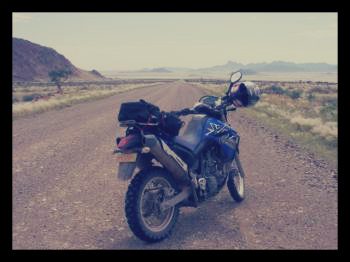
UNICEF donated 73 motorbikes to nonprofit organizations to help them better and more effectively monitor and implement their water and sanitation projects in Sierra Leone. These projects are to build or revamp wells and sanitation spaces in communities, schools, and health centers.

By giving these nonprofit organizations access to motorbikes, UNICEF is hoping to help reach the UN’s Millennium Development Goals by 2015. The motorbikes are thought to help by accelerating the efforts being made to improve access to water and, thus, contribute to the push for anti-poverty that the Millennium Development Goals are in place for.

As of now, only 57 percent of people in Sierra Leone have access to clean drinkable water with access to such water in rural areas being much rarer than in more urban areas. Accordingly, only 48 percent of people have access to clean water sources in rural areas, whereas 76 percent of those living in urban households have access. A significant amount of water consumed in rural areas is sourced to surface water, which is vulnerable to a multitude of waterborne diseases. This makes it imperative to improve water conditions and provisions and rural areas. The motorbikes will help make this possible by enabling NGOs to bring life-saving facilities to areas that are very remote and hard to access. They will also cut down on the amount of time necessary to get from local to local, allowing for NGO members to monitor their projects faster and easier.

Earnest Sesay, Director of Family Homes Movement, one of the NGOs that received motorbikes from UNICEF,  said “On behalf of the implementing partners of UNICEF WASH, I would like to express my gratitude and appreciation for this donation. With these motorbikes, the hurdles of reaching out to remote communities will be a problem of the past.”

– Angela Hooks

Source: AllAfrica

April 18, 2013
https://borgenproject.org/wp-content/uploads/borgen-project-logo.svg 0 0 Borgen Project https://borgenproject.org/wp-content/uploads/borgen-project-logo.svg Borgen Project2013-04-18 09:08:092020-06-12 20:53:51Motorbikes Role in Reaching the UN’s Millennium Development Goals
Developing Countries, Development, Water

MENA Focuses on Water Reduction

rsz_drip_irrigation
For many North African and Middle Eastern (MENA) countries, the goal of greater water acquisition had been the standard policy for developers and government officials aiming to combat the low annual rainfall and dry climate of the region. Huge projects involving the construction of desalinization plants, dams, and canals resulted in only marked successes in solving the region’s water scarcity problems. Enter the Canadian-led International Development Regional Centre (IRDC) in 2004 that – with a fresh set of eyes and a renewed focus on efficiency – set out to implement a new policy of development that focuses on water reduction as opposed to acquisition.

The water conservation project, known as WaDlmena and co-sponsored by the IRDC, introduced a “demand management” program that focused on decreasing the amount of water used through innovative water conservation methods and development that focuses on water reduction. Techniques such as greywater – which utilizes non-sewage wastewater for crops – along with drip irrigation and nightly crop watering were researched, implemented, and tested by local farmers, policymakers, and community members. Various concerns such as issues involving poor farmers and tariffs on water usage were also addressed, leading to creative new ideas such as allowing small amounts of free well water to local growers.

Since the WaDlmena program has been enacted, nations such as Jordan and Morocco have adopted water conservation techniques ranging from mandatory wastewater systems in new buildings and drip irrigation for the agricultural industry. Thanks to the IRDC’s efforts in funding development that focuses on water reduction instead of water acquisition, a realistic solution to the water scarcity problem in the Middle East may soon be reached.

– Brian Turner

Source: Science Daily
Photo: National Geographic

April 16, 2013
https://borgenproject.org/wp-content/uploads/borgen-project-logo.svg 0 0 Borgen Project https://borgenproject.org/wp-content/uploads/borgen-project-logo.svg Borgen Project2013-04-16 10:04:322020-06-12 01:19:30MENA Focuses on Water Reduction
Water

Third World Children Read First World Problems for Water

Third World Children Read First World Problems for Water“I hate it when I tell them no pickles and they still give me pickles,” are among the first world problems chosen by the charitable organization Water is Life to be read by third-world children. Labeled First World Problems Anthem, the video is meant to raise awareness of Water for Life’s efforts to provide clean drinking water to impoverished countries. It does this by starkly contrasting the two perspectives of what constitutes a problem in each walk of life.

Rich in very dark satire, Water for Life presents a hard-hitting video of children in impoverished conditions reciting complaints such as “[I hate] when my mint gum makes my ice water taste too cold,” which is said by a child in what looks to be a boarding house for kids. All of the gripes read in the video have been chosen from the Twitter hashtag First World Problems. Water for life hopes this video will assist the organization in battling poor water sanitation.

According to UNICEF, poor water sanitation is among the leading causes of illness and death in the world. To combat this, Water for Life is providing a water purifier called “The Straw.” The Straw works to filter out waterborne diseases such as typhoid, cholera, dysentery, and guinea worm. By donating $10 to Water is Life, members of the first world can send this water purifier to a community in need of clean potable water.

– Pete Grapentien

Source Huffington Post

April 12, 2013
https://borgenproject.org/wp-content/uploads/borgen-project-logo.svg 0 0 Borgen Project https://borgenproject.org/wp-content/uploads/borgen-project-logo.svg Borgen Project2013-04-12 09:39:302024-05-24 23:47:31Third World Children Read First World Problems for Water
Page 55 of 57«‹5354555657›»

Get Smarter

  • Global Poverty 101
  • Global Poverty… The Good News
  • Global Poverty & U.S. Jobs
  • Global Poverty and National Security
  • Innovative Solutions to Poverty
  • Global Poverty & Aid FAQ’s
Search Search

Take Action

  • Call Congress
  • Email Congress
  • Donate
  • 30 Ways to Help
  • Volunteer Ops
  • Internships
  • Courses & Certificates
  • The Podcast
Borgen Project

“The Borgen Project is an incredible nonprofit organization that is addressing poverty and hunger and working towards ending them.”

-The Huffington Post

Inside The Borgen Project

  • Contact
  • About
  • Financials
  • President
  • Board of Directors
  • Board of Advisors

International Links

  • UK Email Parliament
  • UK Donate
  • Canada Email Parliament

Get Smarter

  • Global Poverty 101
  • Global Poverty… The Good News
  • Global Poverty & U.S. Jobs
  • Global Poverty and National Security
  • Innovative Solutions to Poverty
  • Global Poverty & Aid FAQ’s

Ways to Help

  • Call Congress
  • Email Congress
  • Donate
  • 30 Ways to Help
  • Volunteer Ops
  • Internships
  • Courses & Certificates
  • The Podcast
Scroll to top Scroll to top Scroll to top