• Link to X
  • Link to Facebook
  • Link to Instagram
  • Link to TikTok
  • Link to Youtube
  • About
    • About Us
      • President
      • Board of Directors
      • Board of Advisors
      • Financials
      • Our Methodology
      • Success Tracker
      • Contact
  • Act Now
    • 30 Ways to Help
      • Email Congress
      • Call Congress
      • Volunteer
      • Courses & Certificates
      • Be a Donor
    • Internships
      • In-Office Internships
      • Remote Internships
    • Legislation
      • Politics 101
  • The Blog
  • The Podcast
  • Magazine
  • Donate
  • Click to open the search input field Click to open the search input field Search
  • Menu Menu

Archive for category: Sustainable Development Goals

Global Poverty, Sustainable Development Goals, United Nations

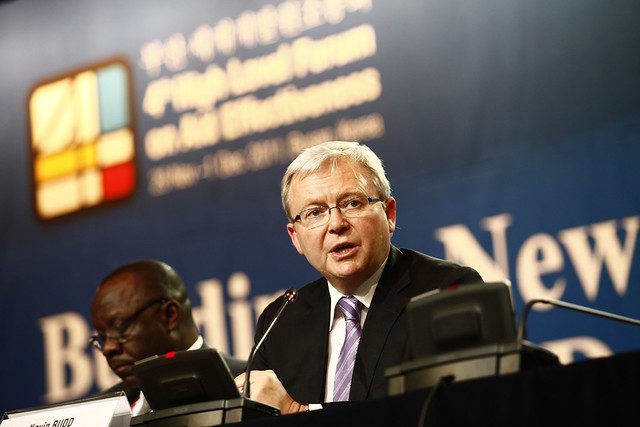
Candidates for UN Secretary General: the Future

UN Secretary General

As UN Secretary General Ban Ki-Moon’s term comes to an end in 2016, the selection procedure for the next leader has been underway since January. The position is indeed invested with the prestige and heavy responsibilities as old as the organization itself – but the promises of candidates and the unprecedented public stage the selection process is taking this year indicate the body is adapting to new currents as well.

The UN General Assembly website lists nine official candidates for UN Secretary General:

  1. Dr. Srgjan Kerim, the former Minister of Foreign Affairs of Yugoslav Republic of Macedonia
  2. Prof. Vesna Pusic, Minister of Foreign and European Affairs of the Republic of Croatia
  3. Dr. Igor Lukšic, former Prime Minister and current Minister of Foreign Affairs of Montenegro
  4. Dr. Danilo Türk, former president of Slovenia and Slovenian Ambassador to the United Nations
  5. Ms. Irina Bokova, former Minister of Foreign Affairs of Bulgaria and current Director-General of UNESCO
  6. Ms. Natalia Gherman, former Minister of Foreign Affairs and European Integration of Moldova and Acting Prime Minister of Moldova
  7. Mr. António Guterres, former Prime Minister of Portugal and UN High Commissioner of Refugees
  8. Ms. Helen Clark, former Prime Minister of New Zealand and Administrator of the UN Development Program
  9. Vuk Jeremić, former Minister of Foreign Affairs of Serbia and President of the UN General Assembly

The disclosed Vision Statements of these candidates address a variety of policies, but many focus on the issue of structurally reforming the UN body, especially the Security Council. Their approach on reform ranges from Natalia Gherman’s “zero tolerance policy on mismanagement, fraud, abuse, corruption and unethical behavior” to Vuk Jeremic’s promise for utilizing social media to communicate with youth and ensure transparency. Economic empowerment of women worldwide and consistent effort for Sustainable Development Goals were also recurring topics.

The selection procedure is expected to be the most transparent in the UN’s 70 years of history, as the UN General Assembly will organize public debates in London and New York. Not only will diplomats of all 193 member’s states attend, but the event will be open to social organizations and individuals as well. A video of the event will be released on the UN website – the first round of informal dialogues and Q&A sessions with the civil society board has already been uploaded. Compared to how all debates and hearings were held behind closed doors until Secretary General Ban Ki-Moon’s election, this constitutes a big step in guaranteeing the equity in deciding the leadership of the world’s largest coalition of nations.

Following the principle of regional rotation, the next Secretary General is most likely to be selected from Eastern Europe. But many organizations, such as Equality Now, are also arguing for a fair gender representation. The first female UN Secretary General would not only be a symbolic empowerment for female politicians worldwide but would also increase the body’s knowledge in women’s issues. “A woman as secretary general would send a strong signal of progress,” said Phumzile Mlambo-Ngcuka, head of UN Women.

– Haena Chu

Photo: Flickr

June 13, 2016
https://borgenproject.org/wp-content/uploads/borgen-project-logo.svg 0 0 Borgen Project https://borgenproject.org/wp-content/uploads/borgen-project-logo.svg Borgen Project2016-06-13 01:30:372024-12-13 18:06:02Candidates for UN Secretary General: the Future
Global Poverty, Sustainable Development Goals, Technology

CyberSmart Africa: Technology for African Classrooms

CyberSmart Africa

90 million children in Africa go to schools that lack electricity. CyberSmart Africa harnesses technology in Sub-Saharan African classrooms in order to educate the world’s poor.

CyberSmart Africa, founded by Jim Teicher in 2007, is a social enterprise that provides educational technology specifically designed to meet the needs of schools in developing nations. In 2016, 12,500 students will have access to this technology.

In 2006 Jim Teicher visited Senegal, a country on Africa’s West Coast, and was concerned by the unequal distribution of technology across communities. There was a discrepancy between accessibility of technology in cities and youth in schools.

This observation led to the creation of CyberSmart Africa in 2007. The technology works exclusively in classrooms that have poor physical infrastructure, including those with little or no electricity. In addition to addressing the U.N. Sustainable Development goals, this digital learning platform reaches 250 students in Africa per day. It operates on less than $1.00/student/month.

Most schools in developing nations lack electricity. In Sub-Saharan Africa, three out of four primary schools do not have electricity. According to the World Bank, educational technology is expensive and it is difficult to train teachers in highly technical equipment.

The CyberSmart device uses solar technology, an energy-efficient projector, an interactive whiteboard, speakers, cooling fans and a dust filtration system. Teachers can easily adapt to the simplified technology with the help of directions received through SMS mobile text as well as through video tutorials.

Michael Trucano, a World Bank Senior Education and Technology Specialist, wrote a blog post commenting on CyberSmart Africa’s initiatives. Noting that there are not enough computers for the amount of students in schools, Trucano commends this technology as it allows for an entire classroom to access information at one time, increasing student engagement.

Senegalese schools have had great successes with this technology. CyberSmart Africa has allowed for students to create videos, with the support of parents and the community and post them on the Internet. These videos are meant to bring traditional storytelling of everyday Senegalese life into a digital realm.

Some of CyberSmart Africa’s partners include USAID, Senegalese Ministry of Education, Earth Institute at Columbia University and the United Nations Development Programme.

– Kimber Kraus

Photo: Flickr

June 12, 2016
https://borgenproject.org/wp-content/uploads/borgen-project-logo.svg 0 0 Borgen Project https://borgenproject.org/wp-content/uploads/borgen-project-logo.svg Borgen Project2016-06-12 01:30:192024-12-13 18:06:07CyberSmart Africa: Technology for African Classrooms
Sustainable Development Goals, United Nations, Women

2016 Women Deliver Conference: Advocating for Health

Women_Education

The 4th annual Women Deliver Conference, the largest conference in the world discussing women’s rights and issues, was held on May 16-19 in Copenhagen, Denmark.

Women Deliver is an organization that advocates for women’s and girls’ health and well-being. The organization holds conferences and focuses on building partnerships, gaining new allies, and developing and sharing advocacy tools to help others participate in the cause.

Building on the success three previous Women Deliver Conferences, the Conference focuses this year on the Sustainable Development Goals (SDGs) laid out by the United Nations. Specifically, the focus will be on women’s health issues and women’s and girls’ education and economic empowerment.

5,700 policymakers, researchers and advocates participated in what is being called the largest convention to discuss female rights in a decade. People from 2,000 organizations and 169 countries all convened in an effort to bring women and girls to the forefront of the SDGs. Among the participants were journalists, young people and representatives from both the private sector and UN agencies.

This is an important time to bring attention to the SDGs and make progress towards those goals.

In a blog for the Council on Foreign Relations, Dr. Daniela Ligiero, Vice President of the Girls and Women Strategy at the United Nations Foundation, explains why now is such an important time to take a real look at female rights.

One of these reasons is that it is important to revitalize the community’s energy in addressing women’s rights. As Dr. Ligiero points out in her blog, the biggest threat to the SDGs is the loss of momentum driving the impetus to find real strategies and solutions for approaching the very real problem of gender inequality around the world.

Additionally, the discussion of women’s rights cannot be limited to Goal 5 of the SDGs, which pertains to gender equality alone. Other goals of the SDGs that focus on education and on health issues must be included in the big picture in order to make real advances for women and girls as a whole.

The Conference provides scholarships for participants to travel to the event and has inspired a lot of participation, with over 5,000 applicants.

The biggest hope for the Women Deliver conference is to take the ambitious goals set forth for improving women’s and girls’ rights and create concrete strategies for accomplishing them.

– Katherine Hamblen

Photo: Flickr

June 11, 2016
https://borgenproject.org/wp-content/uploads/borgen-project-logo.svg 0 0 Borgen Project https://borgenproject.org/wp-content/uploads/borgen-project-logo.svg Borgen Project2016-06-11 01:30:082024-12-13 17:54:302016 Women Deliver Conference: Advocating for Health
Development, Global Poverty, Sustainable Development Goals

Why Foreign Aid is Important for the SDGs

SDGs
The recent announcement of the Sustainable Development Goals (SDGs) in September creates a shift in the mentality towards foreign aid and international development.

While the previous United Nations (U.N.) initiative for development, the Millennium Development Goals (MDGs) focused strictly on improving the conditions for those in developing countries, the SDGs apply to every country.

The SDGs include 17 target goals on various issues such as climate change, economic growth, women’s rights, equality and health. This is an expansion from the MDGs, which included eight goals.

Furthermore, by making SDGs relevant to every country that ratifies them, the SDGs blur binaries such as developing/developed, global north/global south and first world/third world.

As Professor Heinrietta Moore, director of the UCL Global Prosperity Institute, said in an op-ed published in The Guardian, “we are all developing countries from now on.”

The U.N. is hopeful that this shift in mentality will promote teamwork, collaboration and partnerships between countries across boundaries. Furthermore, the SDGs create a list of goals that all countries must work towards. No country has already completed the SDGs.

While all countries must strive to complete the SDGs, some countries are more equipped to do this than others. Funding will be critical to achieving the SDGs. Currently, it costs $30 billion per year to eradicate global hunger and another $66 billion per year to provide a social safety net to help those in extreme poverty.SDGs

However, the most critical goal is implementing long-term positive change to meet the SDGs. According to Dr. Kohona, a former chief of the U.N. Treaty Section, building and maintaining the infrastructure required will come at an astronomical price.

He roughly estimates that annual investments to infrastructure will cost $7 trillion per year. These investments will be crucial to meeting SDGs targets on water, electricity, agriculture and transportation.

Naturally, this $7 trillion cost must be shared, but how it will be shared has yet to be fully determined. The development assistance commitment made by developed countries to share 0.7 percent of their GNP with developing countries would be a great start.

Presently, this commitment is not fulfilled by all countries. The U.S., for example, invests less than 0.2 percent. On average, countries who have agreed to share 0.7 percent of their GNP send about 0.3 percent.

Funding this investment in infrastructure could also be supported through other initiatives on a national level. U.S. legislation, such as the Electrify Africa Act and the Reach Every Mother and Child Act, if ratified, would fit under this category.

In a recent letter received by the author from President Obama regarding foreign policy states “ultimately, we will brighten America’s future and the lives of countless women and men by growing the ranks of prosperous, capable, and democratic states that can work with us in the decades ahead.”

Hopefully, our intentions are matched by our actions, and this is done on a global level. While incredibly ambitious, every bit of progress made towards the SDGs indicates an improvement in someone’s livelihood.

– Priscilla McCelvey

Sources: The Borgen Project, The Guardian, IPS News, Personal letter from the President
Photo: Flickr, Wikipedia

December 1, 2015
https://borgenproject.org/wp-content/uploads/borgen-project-logo.svg 0 0 Borgen Project https://borgenproject.org/wp-content/uploads/borgen-project-logo.svg Borgen Project2015-12-01 01:30:112020-06-24 20:13:54Why Foreign Aid is Important for the SDGs
Family Planning and Contraception, Nonprofit Organizations and NGOs, Sustainable Development Goals, Women and Female Empowerment

Health Education for Women Improves in Southern Asia

health_education_for_women
Non-governmental organizations (NGOs) across southern Asia have developed programs in line with the new United Nations Sustainable Development Goals (SDGs) on health education for women.

SDG #3 aims to ensure healthy lives and promote well-being for all ages, and SDG #5 aims to achieve gender equality and empower all women and girls.

In Bangalore, India, mDhil, an online medical resource center, has developed social media campaigns that provide important health education for women. The organization has created a variety of videos that inform women about topics such as menstruation, pregnancy and hormones. mDhil content reaches over 2.5 million people each month.

These videos are available in many local languages, are easily accessible and can be viewed in private. In a survey, mDhil found that 60 percent of women prefer watching videos about intimate health issues rather than visiting a doctor.

Because most doctors offering healthcare for women were male, most women did not feel comfortable discussing family planning or reproductive health with them.

mDhil is empowering girls and women by giving them the information to better understand their bodies and make choices to better their health.

In Bangladesh, the HERHealth project aims to educate female factory workers on their health. Women employed in large factories tend to come from low-income backgrounds and work in unsafe, unhealthy conditions.

Using peer educators, HERHealth raises awareness on common diseases such as anemia and reproductive tract infections. Their health education for women even includes family members and communities of the female factory workers. Reportedly, this has resulted in decreasing cases of cholera.

The quality of work from factories involved with HERHealth has improved because the female workers are less likely to miss work due to injury or sickness. The impact of HERHealth is also met with factory managers asking for the same program for male workers.

In Ho Chi Minh City, Vietnam, the first Human Milk Human Babies Bank opened, allowing mothers to share their extra milk. The milk bank provides mothers the opportunity to give milk to other mothers who do not have enough milk to feed their own babies.

The founder of the bank, Trinh Tuan, also started a Youtube channel called the Journey of Breastmilk to allow women to share maternal and childcare knowledge.

NGOs in the global south are working towards the SDGs, particularly health education for women, and are making a difference using peer training, technology and sharing strategies and knowledge.

– Marie Helene Ngom

Sources: URB, Huffington Post, UN
Photo: Google Images

November 26, 2015
https://borgenproject.org/wp-content/uploads/borgen-project-logo.svg 0 0 Borgen Project https://borgenproject.org/wp-content/uploads/borgen-project-logo.svg Borgen Project2015-11-26 01:30:572024-06-04 01:17:42Health Education for Women Improves in Southern Asia
Global Poverty, Sustainable Development Goals, United Nations

What Exactly Does Sustainable Mean?

SustainableThis year, 190 world leaders committed to the 17 Sustainable Development Goals (SDGs) endorsed by the U.N. to help eradicate poverty in a maintainable manner.

The goals focus on reducing hunger and inequality as well as increasing good health, quality education and economic growth around the globe. All of this must be done sustainably. But what exactly does sustainable mean?

The word sustainable or sustainability is used more than 75 times in the SDGs and has really become a buzzword among ecologists, researchers and policy makers.

Douglas Beal, who is the managing director of the Boston Consulting group, points out that sustainability was first used in the business world and really just means “longevity—something that can continue.”

The programs and public policies developed and instilled to accomplish the standards set through the SDGs must be able to be maintained long term in order to make prolonged effective progress.

While the SDGs are a recent set of targets, sustainable development is not a new goal.

The concept first appeared during the World Commission on Environment and Development’s report Our Common Future in which they stated that sustainable development is that which “meets the needs of the present without compromising the ability of future generations to meet their own needs.”

So while we need to feed people through agriculture in order to end hunger and starvation, we must also ensure that we do not deplete natural resources in the process.

These conflicts occur in almost every aspect of our social, political, economic and environmental spheres, which is why development goals must balance meeting our current needs while still guaranteeing that we can continue to meet those needs in the future.

Some of the ways we can work to avoid depletion is through innovations that create renewable and clean energy. Natural resources are limited; they take far more time to be replenished than the amount provided by how fast we need them. Therefore, part of the sustainable aspect of our future will need to include renewable energy.

Sustainability is more than a noble goal or a catchy buzzword, it is a requirement for creating development that not only lasts but also improves our global policies and thereby our future.

– Brittney Dimond

Sources: World Bank, Global Giving, NPR
Photo: Flickr

November 3, 2015
https://borgenproject.org/wp-content/uploads/borgen-project-logo.svg 0 0 Borgen Project https://borgenproject.org/wp-content/uploads/borgen-project-logo.svg Borgen Project2015-11-03 01:30:142024-12-13 18:05:19What Exactly Does Sustainable Mean?
Global Poverty, Sustainable Development Goals

The International Poverty Line Increases


In October 2015, the World Bank raised the international poverty line from $1.25 to $1.90 per day.

The international poverty line was originally introduced in 1990 and is determined by combining national poverty lines from the world’s poorest nations. From there, the World Bank uses Purchasing Power Parity (PPP) rates to convert the poverty line into U.S. dollars and currencies of other developing countries.

The international poverty line has become the benchmark for policy goals regarding poverty, including the U.N.’s Millennial Development Goals (MDGs) and the Sustainable Development Goals (SDGs).

Every few years, the Independent Comparison Program (ICP) publishes new sets of PPPs, reflecting both changes in relative price around the world and methodological changes.

Beginning in 1991, PPPs from 1985 created the very first international poverty line at $1 per day. Since then, new sets of PPPs have been published in both 1993 and 2005, increasing the international poverty lines $1.08 per day and $1.25 per day, respectively.

Using PPPs from data collected in 2011, the international poverty line increased is now set at $1.90, based on an increase in the cost of living globally

Today’s poverty line reflects accurate costs of food, clothing and shelter needs around the world. Based on data from the World Bank, more than 700 million people still live below the poverty line compared to 900 million in 2012.

While extreme poverty has decreased over the past 10 years, organizations similar to The Borgen Project are essential in raising awareness for the continued struggle to end poverty.

New data regarding global poverty will be collected in April 2016 and will determine how well efforts to eradicate poverty have paid off.

– Alexandra Korman

Sources: Jagran Josh, The World Bank
Photo: The Guardian

November 2, 2015
https://borgenproject.org/wp-content/uploads/borgen-project-logo.svg 0 0 Borgen Project https://borgenproject.org/wp-content/uploads/borgen-project-logo.svg Borgen Project2015-11-02 01:30:042020-06-24 19:07:38The International Poverty Line Increases
Global Poverty, Health, Sustainable Development Goals

Global Maternal Newborn Health Conference in Mexico City

newborn_health_conference

In response to the recent sustainable development goals created by the UN, Mexico City hosted a Global Maternal Newborn Health Conference to focus attention on and propel efforts towards improving maternal and newborn health and healthcare around the world.

Representatives of more than 50 countries, which included policymakers, healthcare workers, researchers and organization leaders, attended the conference.

The general public or those unable to attend in person had ample opportunity to participate virtually through webcasts, live converge and social media engagements. The theme of the Conference was “Reaching every mother and newborn with quality care.”

The talks, group sessions and skill demonstrations focused on six primary tracks: innovating to accelerate impact at scale, measuring for evaluation and accountability, bridging equity divides, generating new evidence to fill critical knowledge gaps, strengthening demand for health care and increasing health systems’ capacity to respond to population needs.

The conference was hosted with the intention of increasing collaboration to encourage innovation and improved global health.

Every day, about 800 women die from preventable causes related to pregnancy or childbirth. These deaths are often due to the fact that the women did not have access to adequate healthcare.

This helps explain why 99 percent of all maternal deaths occur in developing countries where woman are restricted geographically or economically from the medical care they need.

Mexico City was selected to host the conference because Mexico is a recognized global leader in maternal and newborn health improvements.

Their national maternal and newborn health agenda has been greatly improved through successful government policies and programs, as well as through assistance from local and national NGOs, philanthropic entities and academic organizations.

In order to abide by and accomplish the UN’s Sustainable Developmental Goals, nations and international organizations must find ways to work together to set satisfactory standards and procedures and flush out what strategies and techniques work and what ones do not.

Conferences like the Global Maternal Newborn Health Conference allow information to be shared as well as spur insight to solutions and inspire hope for progress.

– Brittney Dimond

Sources: Global MNH 2015, The Guardian, WHO
Photo: Flickr

October 28, 2015
https://borgenproject.org/wp-content/uploads/borgen-project-logo.svg 0 0 Borgen Project https://borgenproject.org/wp-content/uploads/borgen-project-logo.svg Borgen Project2015-10-28 01:30:452020-06-24 17:53:09Global Maternal Newborn Health Conference in Mexico City
Children, Education, Global Poverty, Sustainable Development Goals

Early Childhood Development and Economic Stability

early_childhood_development
Early childhood development (ECD), or the time from a child’s birth to turning 8 years old, is considered the most critical window of childhood development.

During this eight-year window, children undergo intensive physical and social growth, shaping their bodies and perceptions of society.

But many children in developing nations lack the nutrition, healthcare and social engagement necessary during ECD to have a strong foundation for future growth and development.

ECD initiatives, ranging from parental training to preschool, have been shown to dramatically improve children’s earning potential and help them to escape the poverty cycle.

In the post-2015 Sustainable Development Goals, the United Nations specifically addressed the value of ECD in Goal 4, stating that by 2030 all children will “have access to quality early childhood development, care and pre-primary education so that they are ready for primary education.”

The British Prime Minister, David Cameron, echoed the importance of providing aid to ECD for the termination of global poverty, saying, “Children have been educated who otherwise would have missed out.”

Through aid efforts, programs are sprouting throughout some of the world’s poorest regions, showing promising results.

The World Bank reports that children in developing nations who have participated in ECD programs have higher levels of cognitive and academic performance than their peers.

Children who have benefitted from ECD initiatives are also more prepared to enter primary school and learn more efficiently while in class. This early success in schools has led to lower levels of dropouts and grade repetitions.

As educational levels rise, so does earning potential. Especially for girls. For every year of primary education a girl receives, her earning potential rises 10 percent to 20 percent, and for every additional year of secondary education, her earning potential rises another 15 percent to 25 percent, empowering her in the workforce.

As the workforces in developing nations expand with more educated and skilled laborers, the population at large benefits from an expanded consumer base.

With increased earning and buying power comes a more complex and stable economy that is less susceptible to shock and a higher gross domestic income.

According to UNICEF, this increase in school attendance shrinks the gap between the wealthiest and poorest families, hoisting children and their families out of the poverty cycle.

– Claire Colby

Sources: The Guardian 1, The Guardian 2 UNICEF, UN, USAID, World Bank
Photo: Sharp School

October 22, 2015
https://borgenproject.org/wp-content/uploads/borgen-project-logo.svg 0 0 Borgen Project https://borgenproject.org/wp-content/uploads/borgen-project-logo.svg Borgen Project2015-10-22 01:30:312024-12-13 18:05:16Early Childhood Development and Economic Stability
Development, Global Poverty, Sustainable Development Goals

The US Struggles to Meet SDGs

SDGs
According to a study conducted by Bertelsmann Stiftung, a German foundation that researches and advocates social responsibility, the United States is ranked among the countries least likely to complete the Sustainable Development Goals or SDGs aimed at ending poverty and combating climate change by 2030.

The Sustainable Development Goals are a set of 17 goals that were conceived at the 2012 U.N. Conference on Sustainable Development.

UN Secretary-General Ban Ki-moon says the goals will replace the Millennium Development Goals in January 2016 and are based on six elements: dignity, people, prosperity, our planet, justice and partnership.

“The MDGs were about resource transfer from rich countries. The SDGs are universal—they’re supposed to apply to all countries and try to overcome the ‘West lecturing the rest’ dynamic,” said Sarah Hearn, associate director and senior fellow at New York University’s Center on International Cooperation.

While the U.S. struggles to meet SDGs, Sweden, Norway, Denmark and Finland have the best chances of completing the goals. The countries with the lowest rankings are the U.S., Greece, Chile, Hungary, Turkey and Mexico.

Even though the U.S. has a high GDP, clean air and abundant housing, the country struggles with income inequality, over-consumption and environmental protection.

“We in the rich nations, with our growing social inequality and wasteful use of resources, can no longer present ourselves as the world’s teachers,” said Aart de Geus, Bertelsmann Stiftung chairman. “Rather, the analysis shows us where we, too, have to do our homework.”

During his visit to the U.S., Pope Francis addressed Congress and the U.N. Council, discussing the urgency of eradicating world poverty and climate change and how a solution cannot wait for future generations.

President Barack Obama, whose plans for a climate change bill were denied by Congress early in his presidency, agrees with the pope and his efforts to make the U.S. more involved.

“Holy Father, you remind us that we have a sacred obligation to protect our planet — God’s magnificent gift to us. We support your call to all world leaders to support the communities most vulnerable to a changing climate and to come together to preserve our precious world for future generations,” said President Obama.

– Alexandra Korman

Sources: ABC News, Council on Foreign Relations, Huffington Post, The Daily Star
Photo: Turner

October 16, 2015
https://borgenproject.org/wp-content/uploads/borgen-project-logo.svg 0 0 Borgen Project https://borgenproject.org/wp-content/uploads/borgen-project-logo.svg Borgen Project2015-10-16 01:30:272024-05-27 09:28:06The US Struggles to Meet SDGs
Page 15 of 16«‹13141516›

Get Smarter

  • Global Poverty 101
  • Global Poverty… The Good News
  • Global Poverty & U.S. Jobs
  • Global Poverty and National Security
  • Innovative Solutions to Poverty
  • Global Poverty & Aid FAQ’s
Search Search

Take Action

  • Call Congress
  • Email Congress
  • Donate
  • 30 Ways to Help
  • Volunteer Ops
  • Internships
  • Courses & Certificates
  • The Podcast
Borgen Project

“The Borgen Project is an incredible nonprofit organization that is addressing poverty and hunger and working towards ending them.”

-The Huffington Post

Inside The Borgen Project

  • Contact
  • About
  • Financials
  • President
  • Board of Directors
  • Board of Advisors

International Links

  • UK Email Parliament
  • UK Donate
  • Canada Email Parliament

Get Smarter

  • Global Poverty 101
  • Global Poverty… The Good News
  • Global Poverty & U.S. Jobs
  • Global Poverty and National Security
  • Innovative Solutions to Poverty
  • Global Poverty & Aid FAQ’s

Ways to Help

  • Call Congress
  • Email Congress
  • Donate
  • 30 Ways to Help
  • Volunteer Ops
  • Internships
  • Courses & Certificates
  • The Podcast
Scroll to top Scroll to top Scroll to top