• Link to X
  • Link to Facebook
  • Link to Instagram
  • Link to TikTok
  • Link to Youtube
  • About
    • About Us
      • President
      • Board of Directors
      • Board of Advisors
      • Financials
      • Our Methodology
      • Success Tracker
      • Contact
  • Act Now
    • 30 Ways to Help
      • Email Congress
      • Call Congress
      • Volunteer
      • Courses & Certificates
      • Be a Donor
    • Internships
      • In-Office Internships
      • Remote Internships
    • Legislation
      • Politics 101
  • The Blog
  • The Podcast
  • Magazine
  • Donate
  • Click to open the search input field Click to open the search input field Search
  • Menu Menu

Archive for category: Sustainable Development Goals

Global Poverty, Sustainable Development Goals, United Nations

“Small Smurfs, Big Goals” and US Sustainable Development Goals

Sustainable Development Goals
“Smurfs: The Lost Village” and the U.N. are working together on the Small Smurfs, Big Goals campaign. The campaign aims to promote the United Nation’s Sustainable Development Goals for 2030. The International Day of Happiness, which the U.N. has celebrated since 2013 on March 20, was central to this campaign.

Demi Lovato, Joe Manganeilio and Mandy Patinkin, three of the main voice actors from the “Smurfs: The Lost Village” movie, came to the International Model U.N. Conference to honor a few students for their projects to help achieve the Sustainable Development Goals (SDGs).

Karan Jerath, a 20-year-old, created a device to protect marine life from oil spills. Sarina Davin, a 17-year-old, helped with a U.N. girl empowerment program. Noor Samee, also 17, blogs for UNICEF about social justice issues.

Patinkin, who plays Papa Smurf in the film, congratulated the students at the conference.

“On behalf of all Smurfdom,” he said, “thank you for your work in awakening everything, in your community, through your social media, all over the world, in the ways that you have chosen to encourage people everywhere to make this world a better place for those who are so vulnerable in every way imaginable.”

Each of the students received a symbolic key to Smurf Village.

The visit to the International Model U.N. Conference was one way the Small Smurfs, Big Goals campaign honored the International Day of Happiness and the SDGs. On March 20, the Smurf cast and the U.N. lit the Empire State building blue.

On the Small Smurfs, Big Goals website, visitors can take a quiz to find which Smurf they are most like based on the issues they care about. Then, they can share their smurfs and support or learn more about what they can do to support these issues.

The campaign also has a lesson plan for elementary school teachers to use “Smurfs: Lost Village” to teach children about SDGs.

World leaders in September 2015 adopted the SDGs for 2030 and implemented them in January 2016. The SDGs build on the Millennium Development Goals (MDGs.) The goals focus on education, equality, access to jobs and other key issues.

– Jennifer Taggart

Photo: Flickr

March 28, 2017
https://borgenproject.org/wp-content/uploads/borgen-project-logo.svg 0 0 Borgen Project https://borgenproject.org/wp-content/uploads/borgen-project-logo.svg Borgen Project2017-03-28 16:49:112024-12-13 17:57:43“Small Smurfs, Big Goals” and US Sustainable Development Goals
Developing Countries, Global Poverty, Sustainable Development Goals

Organizations Partner for Global Internet Access


Global internet access creates an equal playing field for both the most and least developed countries in our world socially, politically, and economically. Bridging the digital divide requires hard work from the public, private, and nonprofit sectors.

Part of the U.N.’s goals in the 2030 Agenda for Sustainable Development is to “significantly increase access to information and communications technology and strive to provide universal and affordable access to the Internet in the least developed countries by 2020.”

In 2015, 54 percent of people in developing countries reported using the internet at least occasionally. Eighty-seven percent reported using the internet in developed countries in the same year.

The World Economic Forum described how the internet boosts economies in developing countries through increasing efficiency and productivity in many industries, and also provides financial, health, and educational services to those in developing countries.

Also, social media empowers people to rebel against dictatorships. For example, in 2011, Egyptian citizens organized protests against former President Hosni Mubarak using Facebook and Twitter. Similarly, in 2013, Turkish citizens turned to social media outlets such as Facebook, Twitter, Ustream, and Vine for information on protests, since formal media outlets were censored.

So Who’s Involved?

There are many different sectors working toward global connectivity. Google Alphabet is working on Project Loon, allowing for global internet coverage through balloons. Project Loon is a project under X, Google Alphabet’s moonshot (technological innovation) factory. Google is not the only major technology company getting involved in global connectivity. Facebook has the Connectivity Labs, and Microsoft has the Affordable Access Initiative.

One major organization that helps promote global connectivity is the Alliance for Affordable Internet. This organization focuses on reforming regulations and policies in various nations through forming on-the-ground coalitions in each nation, with representatives in the public and private sectors. Facebook, Google, and other businesses and nonprofits are members of the Alliance for Affordable Internet.

In late January, the Digital Gap Act passed in the U.S. House of Representatives. The Digital Gap Act is a foreign policy bill that aims to increase internet access for those around the globe, especially for rural farmers and women.

Many different sectors will have to work together in order to successfully achieve the important goal of global internet access.

– Jennifer Taggart

Photo: Flickr

March 27, 2017
https://borgenproject.org/wp-content/uploads/borgen-project-logo.svg 0 0 Borgen Project https://borgenproject.org/wp-content/uploads/borgen-project-logo.svg Borgen Project2017-03-27 01:30:372020-04-24 11:57:29Organizations Partner for Global Internet Access
Global Poverty, Sustainable Development Goals

6th World Sustainability Forum Held in Cape Town

At the end of January, Cape Town, South Africa played host to the 6th World Sustainability Forum. The journal Sustainability sponsored this international scientific conference. The Molecular Diversity Preservation International (MDPI) organizes the annual World Sustainability Forum. The forum includes the presentation of research in many areas relating to sustainability and sustainable development.

Sustainable Development Goals

The 17 U.N. Sustainable Development Goals (SDGs), adopted in September 2015 as part of the 2030 Agenda for Sustainable Development, motivated discussions at the 2017 conference. The sustainability agenda outlined by the U.N. has the main aim that “countries will mobilize efforts to end all forms of poverty, fight inequalities and tackle climate change while ensuring that no one is left behind.” Madame Graca Machel, a member of the SDGs Advocacy Group of the United Nations, was one of the keynote speakers at the conference.

Key Messages

The themes of this year’s forum were environmental management and social and economic development. There were key national and international speakers in attendance, including world-renowned professor of economics Jeffrey Sachs, who is also director of the Center for Sustainable Development and the U.N. Sustainable Development Solutions Network. Sachs’ messages in his presentation included:

  • Africa needs to significantly increase its investment rates, which would increase its overall growth rate and decrease poverty.
  • The time to end poverty in Africa started in 2015 has to continue through 2030. Doing so will allow it to “become one of the most dynamic centers of the world economy.”
  • Investments in technology are essential steps in overcoming poverty.

Sachs went on to say that “achieving the SDGs is the moonshot for our generation […] when 193 governments agree on something […] that is really something for us to grab hold of. That is a lifeline.” Plans are already underway for next year’s conference, which will be held in Beijing.

– Kristin Westad

Photo: Flickr

March 10, 2017
https://borgenproject.org/wp-content/uploads/borgen-project-logo.svg 0 0 Borgen Project https://borgenproject.org/wp-content/uploads/borgen-project-logo.svg Borgen Project2017-03-10 01:30:272020-05-15 14:18:376th World Sustainability Forum Held in Cape Town
Developing Countries, Global Poverty, Sustainable Development Goals, United Nations

Sustainable Development Goals: Create Economic Opportunities

 Economic OpportunitiesThe United Nations Sustainable Development Goals (SDGs), adopted in 2015, intend to end poverty, protect the planet and ensure prosperity for all. The 17 interrelated goals aim to work towards an economic model which is not only environmentally sustainable but also turns poverty, inequality and lack of financial access into new opportunities for businesses, especially in developing countries.

The Business and Sustainable Development Commission recently released a report on the role of business in working towards the SDGs and how the goals create economic opportunities in developing countries. According to this report, by seizing opportunities in high growth sectors (like food and agriculture, cities, energy and materials, and health and wellbeing), achieving the Sustainable Development Goals will create an estimated $12 trillion in economic growth. Over half of this growth will be in developing countries. The goals also offer an opportunity to create up to 340 million new jobs in developing countries by 2030.

To capture these opportunities, companies and entrepreneurs will have to use innovative and game-changing business models. One of these is the circular economy business model. A circular economy is an alternative to the traditional linear economy (make, use, dispose) in which resources are kept in use for as long as possible by recovering and reusing spent materials and products. This model aligns to SDG12 – responsible consumption and production.

Another market that could benefit greatly from the circular economy business model and offer substantial growth opportunities in developing countries (an estimated $810 billion by 2030) is the automotive industry. While collection rates for vehicles at the end of their life in Europe and elsewhere in the industrialized world are generally very high, it is not an effective process. Most collected vehicles are recycled into their base materials, a process which is energy-intensive and results in loss of value.

Many developing countries, however, have developed robust car repair and refurbishing industries because they cannot afford new cars. Rather, these countries import used vehicles from industrialized countries. In Nigeria, for example, 95 percent of cars are second-hand.

Ghana is another such an example. In a neighborhood called Suame Magazine, an estimated 200,000 artisans take discarded western cars and use the parts to build easily repairable vehicles that are more suitable for African roads. Car parts are also used to build anything from fences and swings to water pumps and welding machines.

These are just some of the ways that illustrate that by rethinking the approach to consumption and production, the Sustainable Development Goals create economic opportunities in developing countries while also addressing the issues of poverty and environmental sustainability.

– Helena Jacobs

Photo: Flickr

February 12, 2017
https://borgenproject.org/wp-content/uploads/borgen-project-logo.svg 0 0 Borgen Project https://borgenproject.org/wp-content/uploads/borgen-project-logo.svg Borgen Project2017-02-12 01:30:162024-06-05 03:02:24Sustainable Development Goals: Create Economic Opportunities
Global Poverty, Sustainable Development Goals, United Nations

Power to The People: Reaching Sustainable Development Goals

Power to The People: Reaching Sustainable Development GoalsSustainable development goals, also known as Transforming Our World: the 2030 Agenda for Sustainable Development, is comprised of 17 global goals that elucidates 169 targets. The goals were founded by the U.N., and are listed as follows:
  1. End global poverty
  2. Achieve food security, thereby ending world hunger
  3. Ensure healthcare for everyone
  4. Make education accessible to all
  5. Achieve gender equality
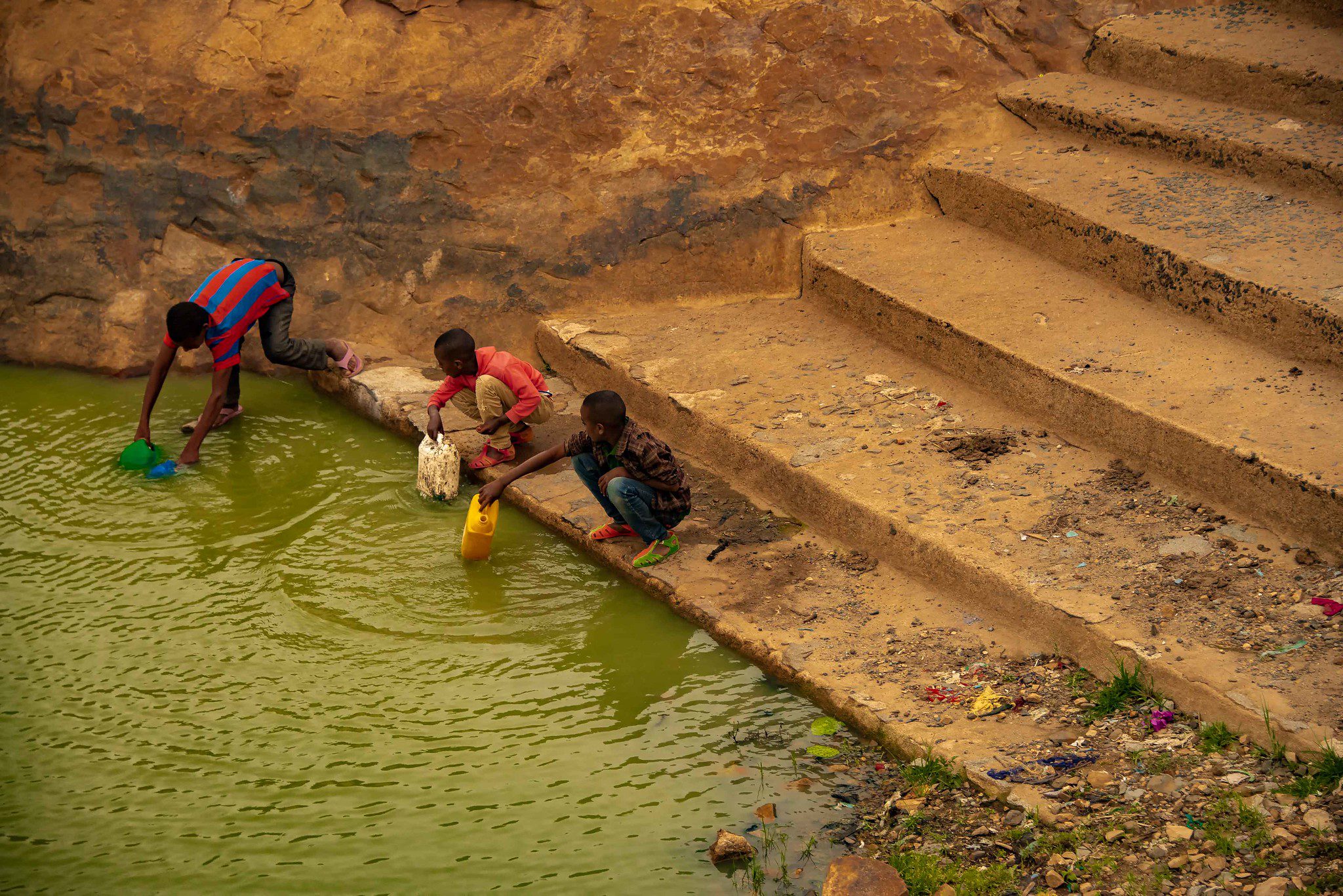
  6. Ensure availability to sanitary water for all
  7. Provide jobs and sustainable economic growth
  8. Build resilient infrastructure and foster innovation
  9. Make cities and other dense human settlements inclusive and safe
  10. Ensure sustainable consumption and production patterns
  11. Take urgent action to combat climate change by regulating emissions
  12. Conserve and use marine resources sustainably
  13. Switch to affordable and clean energy
  14. Reduce income inequalities
  15. Protect and conserve the biodiversity of terrestrial ecosystems
  16. Provide access to justice for all
  17. Strengthen global partnership

While it is important for the global community to focus on the macro-cosmic picture of tackling these issues, having local governments and citizens face these issues is equally vital. Beneficiaries are often the last group to be consulted about the efforts that are being implemented to help their lives. Problem solving that addresses the specific needs of different communities is so beneficial because it does not focus on one overarching idea, but rather the specific needs of the people within the community.

With the global community and local communities working simultaneously, there is a greater chance for more widespread empathetic progress being made in terms of achieving sustainable development goals worldwide. One of the largest problems is that those who have political power are not impoverished and those who are impoverished do not have political power.

Thus, poverty is often overlooked by those in seats of power. This starts with education. If education is made available to those people who are impoverished, then they are being given an effective say in their communities, and therefore some degree of power.

Eradication of global poverty will not happen unless we are able to give power over to the people who are impoverished and thereby have a more nuanced understanding of the situations that they themselves face. This empowers people in lower income communities to receive an education, making it possible for them to impart the change they want to see in their communities.

However, this is still a tandem effort. By supporting the Education for All Act, a bipartisan initiative that would advance basic education worldwide while protecting U.S. security interests, even those who are citizens of developed nations can help to empower individuals to reach sustainable development goals in developing nations to help themselves and their communities.

– Kayla Provencher

Photo: Flickr

November 10, 2016
https://borgenproject.org/wp-content/uploads/borgen-project-logo.svg 0 0 Borgen Project https://borgenproject.org/wp-content/uploads/borgen-project-logo.svg Borgen Project2016-11-10 07:53:112024-12-13 17:55:58Power to The People: Reaching Sustainable Development Goals
Global Poverty, Sanitation, Sustainable Development Goals, Water

Water For People: Ending Water Scarcity Through Infrastructure

Ending Water ScarcityAn international organization believes in ending water scarcity in developing countries. Water For People is a non-profit that focuses on establishing proper infrastructure and sanitation to remedy the lack of clean water around the globe.

They are especially concerned with the impact water scarcity has on women and girls, who often bear the burden for water collection.

They work at the ground level to build trust within the community and by tailoring their solutions to the issues at hand. Local governments, community members and business owners are all required to co-invest, ensuring that all partners have an equal stake in the results. This collaboration allows for a better understanding of the abilities of a community to finance and maintain the projects for the future.

The U.N. states that more than 2 billion people are affected by water scarcity. That figure is expected to rise due to climate change. This is especially problematic for developing countries struggling with poverty.

According to Jim Yong Kim, president of the World Bank Group, “Economic growth in some regions could be cut by as much as six percent because of water scarcity alone.”

That is why one of the U.N.’s Sustainable Development Goals for 2030 includes improved access to clean water and sanitation. There are several targets for doing so, including moves to:

  1. End open defecation, which can threaten the viability of water resources;
  2. Improve water quality by reducing pollution, dumping and the release of hazardous materials;
  3. Protect and restore water-related ecosystems;
  4. Support the participation of local communities in improving water management;

This last target is where Water For People comes in. The organization, which was established by the American Water Works Association (AWWA) in 1991, has provided access to clean water in nine developing countries: Honduras, Guatemala, Nicaragua, Bolivia, Peru, Malawi, Rwanda, Uganda and India.

Sanjay Wijesekera, UNICEF’s global head of water, sanitation and hygiene put it simply: “No matter where you look, access to clean drinking water makes a difference in the lives of people.”

The fight for ending water scarcity is ongoing but there continues to be an increase in access to clean water thanks to Water For People.

– Sabrina Santos
Photo: Flickr

October 31, 2016
https://borgenproject.org/wp-content/uploads/borgen-project-logo.svg 0 0 Borgen Project https://borgenproject.org/wp-content/uploads/borgen-project-logo.svg Borgen Project2016-10-31 01:30:252024-12-13 17:55:51Water For People: Ending Water Scarcity Through Infrastructure
Food Security, Sustainable Development Goals

Feed the Future: Prioritizing Global Food Security

Feed the FutureThe White House Summit on Global Development opened with a panel analyzing Feed the Future, a government initiative focused on improving global food security.

In July 2016, President Obama signed the Global Food Security Act of 2016. This shows that increasing growth in the developing world and eradicating poverty are national security interests for the U.S.

The Obama Administration has shown dedication to improving global food security by implementing government organizations to address the various problems of global food security. One of those government organizations is Feed the Future.

Feed the Future began in 2009 and has focused on improving the agriculture industry of partner countries and nutrition to combat poverty and hunger. Their approach is as follows:

  1. Selection
    Nineteen countries have been selected based on five criteria:

    • Level of need
    • Opportunity for partnership
    • Potential for agricultural growth
    • Opportunity for regional synergy
    • Resource availability
  2. Strategic Planning
    The selected countries and the U.S. work together to make plans to create a more sustainable society through policy reform and domestic and foreign investments.
  3. Implementation
    The U.S. makes core investments in the countries’ agricultural sectors, as well as women, nutrition and agricultural infrastructure.
  4. Review and Scaling Up
    Progress reports of Feed the Future programming are published annually and reviewed so that programs can be improved upon for the future.

In 2015, Feed the Future helped over 9 million farmers gain access to improved technologies and management practices. This increased agricultural productivity and boosted the agricultural economy by more than $800 million. The organization also improved the nutrition of over 17 million children under the age of five.

In September 2015, many countries — including the U.S. — adopted a set of 17 goals to ensure a sustainable planet in the future. These goals, which are expected to be achieved by the year 2030 include, but are not limited to, no poverty, no hunger, good health and well-being, quality education and gender equality. Feed the Future is a vital part of the U.S. government’s role in achieving these goals.

As the Obama administration comes to a close, one can only hope that government initiatives like Feed the Future will continue to prosper and take significant steps towards ending poverty and hunger.

– Ugochi Ihenatu
Photo: Flickr

October 18, 2016
https://borgenproject.org/wp-content/uploads/borgen-project-logo.svg 0 0 Borgen Project https://borgenproject.org/wp-content/uploads/borgen-project-logo.svg Borgen Project2016-10-18 07:44:562024-05-27 09:35:01Feed the Future: Prioritizing Global Food Security
Development, Foreign Aid, Sustainable Development Goals

New Deal Promotes Peace Necessary for Development

New Deal Promotes PeaceThe traditional conception of foreign aid simply involves transferring funds to a foreign government, but this model proved extremely limited in its effectiveness in weak states. As a consequence, the recognized government has limited ability to exercise authority and doesn’t possess a full monopoly on the use of force. A new deal promotes peace, though, and has the potential to improve these shortcomings.

One way that governments have attempted to address these issues is through the New Deal for Engagement in Fragile States, signed by over 40 countries at the Fourth High-Level Forum on Aid Effectiveness in Busan, Korea in 2011. The New Deal promotes peace in the hopes that increased societal stability will lead to development.

In 2014, then-UN General Assembly President John Ashe said that “stability and peace are essential enablers of sustainable development, just as violence is one of its greatest obstacles.”

In accordance with the idea that peace and development are inextricably linked, the New Deal established Five Peacebuilding and Statebuilding Goals (PSGs) that both strong and fragile states committed to pursuing in states with weak institutions: legitimate and inclusive politics, justice, security, revenue and services and economic foundations.

The project was based upon the notion that civil society, development partners and government can work together for development. For the last five years, the New Deal worked on how to better integrate civil society into the peace-building process as a central actor, rather than one on the periphery. As a framework, the New Deal promotes peace and can be used by countries as a means to effectively implement sustainable development.

Unfortunately, while lofty in ideals, the implementation of the PSGs and the New Deal has had mixed levels of success. As each country faces different types and levels of fragility, integrating New Deal policies with existing frameworks can be difficult; and, assessing that fragility requires comprehensive engagement with the population.

Additionally, the technocratic tendencies of the New Deal could oftentimes hamper dialogue and meaningful participation of civil society.

While yet imperfect, commitment to the New Deal remains strong, as countries realize the necessity to address peace and development in conjunction with one another. Therefore, societies cannot experience growth and development without a responsive and resilient state.

For the 1.4 billion people who live in fragile states today, there is still much work that remains to be done. The building of stable institutions requires time, political capital, prolonged commitment and country leadership. In the context of the New Deal, peace and development must be pursued, in conjunction with one another, in order to establish stable institutions and resilient growth.

– Adam Gonzalez
Photo: Flickr

September 9, 2016
https://borgenproject.org/wp-content/uploads/borgen-project-logo.svg 0 0 Borgen Project https://borgenproject.org/wp-content/uploads/borgen-project-logo.svg Borgen Project2016-09-09 01:30:382024-06-11 02:48:20New Deal Promotes Peace Necessary for Development
Global Poverty, Sustainable Development Goals, United Nations

G20 Summit Aims for Sustainable and Inclusive Development

Sustainable Development

From Sept. 4 to 5, heads of state and government from nineteen countries and the European Union will gather in Hangzhou, China for the 11th G20 summit. The theme of this year’s conference is “Towards an Innovative, Invigorated, Interconnected and Inclusive World Economy”, a motto which many officials and experts find encouraging.

In an interview with the Xinhua News Agency, China’s state-owned media outlet, Atsushi Sunami, the vice president of the National Graduate Institute for Policy Studies (GRIPS) in Tokyo, explained that the G20 summit could forge consensus on implementing the 2030 Agenda for Sustainable Development. Adopted by the U.N. last fall, the 2030 Agenda includes 17 Sustainable Development Goals (SDGs) and aims to end poverty and hunger by the end of the third decade in the 21st century.

Sunami also called on countries to work together and build innovation across borders. The conference in Hangzhou, in his view, could jump-start the dialogue on open innovation and inclusive development.

Also speaking with Xinhua, Peter Thompson, who will be the president of the upcoming 71st Session of the U.N. General Assembly, voiced his support for the summit’s theme as well as the U.N.’s desire to work with the G20 organizers. “We will certainly be doing our part here at the United Nations in terms of the G20 outcome to make sure it’s built into the international implementation plans,” he said.

Likewise, Daniel Funes de Rioja, President of the International Organization of Employers (IOE), expressed his hope that the G20 summit will be a step in the direction of inclusive development. “Prosperity requires growth, investment, technology and innovation, with employment and social coverage for all,” according to de Rioja.

Indeed, while the G20 is primarily a forum for leaders of the developed world, developing countries are also starting to make their voices heard.

Senegal, which will be present at the summit in Hangzhou, sees the G20 as a platform to call attention to African issues as well as an opportunity to explore solutions. Alioune Sarr, the country’s commerce minister, told China Central Television (CCTV) that the conference will highlight the necessity of poverty eradication and inclusive development on the continent.

The G20 has consistently underscored the importance of international cooperation when it comes to solving the world’s problems, and the renewed emphasis on inclusive development and shared prosperity is certainly a welcome change.

– Philip Katz

Photo: Flickr

August 29, 2016
https://borgenproject.org/wp-content/uploads/borgen-project-logo.svg 0 0 Borgen Project https://borgenproject.org/wp-content/uploads/borgen-project-logo.svg Borgen Project2016-08-29 01:30:462024-05-27 23:53:31G20 Summit Aims for Sustainable and Inclusive Development
Education, Foreign Aid, Global Poverty, Sustainable Development Goals

Why the World’s Aid to Education Dropped Again

Aid to EducationCelebrating Global Action Week for Education from April 24-30th, EFA Global Monitoring Report’s analysis showed a gradual increase in the world’s aid to education from 2002 to 2014. However, a closer look reveals a four percent drop between 2013 and 2014. Amid the atmosphere of optimism in the transition from the Millennium Development to the Sustainable Development Goals, this discovery provides a realistic reminder of what challenges lie ahead.

The fourth agenda of the Sustainable Development Goals aims to “ensure inclusive and equitable quality education and promote lifelong learning opportunities for all.” This includes ensuring “that all girls and boys complete free, equitable and quality primary and secondary education” by 2030.

According to the Education for All Global Monitoring Report, this would require an annual total cost averaging $340 billion between 2015 and 2030 for low and lower income countries, more than double the amount previously estimated. The cost will more than triple in low income countries. This is mainly due to population growth and lower GDP per capita in developing countries.

In this context, the decline in aid to education seems alarming. Four of the main donors, France, Japan, Netherlands and Canada decreased their support due to domestic austerity measures while facing economic depression. The Netherlands, for one, cut their aid by over a third in 2011. As Pauline Rose, director of the Education for All Global Monitoring Report, said, “it is essential that donors maintain their funding, and make sure it is reaching the countries—and children—most in need.”

Furthermore, analysis shows the steepest drop in aid to education in Sub-Saharan Africa, where half of the world’s out of school children reside.  Of the “57 million out-of-school children of primary age, almost half (49 percent) will probably never enter school. A further 23 percent have attended school but dropped out, and the remaining 28 percent are expected to enter school in the future.”

Precedence in the region suggests that this drop is not a one-time occurrence but part of a continuing stagnation. The educational progress of this region has been closely related to economic growth. In periods of steady growth of an annual one to two percent per capita, more resources were allocated to education although the school age population had actually increased. This implies that a long-term solution must include investment in local businesses and infrastructure, in addition to education itself.

– Haena Chu

July 4, 2016
https://borgenproject.org/wp-content/uploads/borgen-project-logo.svg 0 0 Borgen Project https://borgenproject.org/wp-content/uploads/borgen-project-logo.svg Borgen Project2016-07-04 01:30:392024-12-13 17:54:27Why the World’s Aid to Education Dropped Again
Page 14 of 16«‹1213141516›»

Get Smarter

  • Global Poverty 101
  • Global Poverty… The Good News
  • Global Poverty & U.S. Jobs
  • Global Poverty and National Security
  • Innovative Solutions to Poverty
  • Global Poverty & Aid FAQ’s
Search Search

Take Action

  • Call Congress
  • Email Congress
  • Donate
  • 30 Ways to Help
  • Volunteer Ops
  • Internships
  • Courses & Certificates
  • The Podcast
Borgen Project

“The Borgen Project is an incredible nonprofit organization that is addressing poverty and hunger and working towards ending them.”

-The Huffington Post

Inside The Borgen Project

  • Contact
  • About
  • Financials
  • President
  • Board of Directors
  • Board of Advisors

International Links

  • UK Email Parliament
  • UK Donate
  • Canada Email Parliament

Get Smarter

  • Global Poverty 101
  • Global Poverty… The Good News
  • Global Poverty & U.S. Jobs
  • Global Poverty and National Security
  • Innovative Solutions to Poverty
  • Global Poverty & Aid FAQ’s

Ways to Help

  • Call Congress
  • Email Congress
  • Donate
  • 30 Ways to Help
  • Volunteer Ops
  • Internships
  • Courses & Certificates
  • The Podcast
Scroll to top Scroll to top Scroll to top