• Link to X
  • Link to Facebook
  • Link to Instagram
  • Link to TikTok
  • Link to Youtube
  • About
    • About Us
      • President
      • Board of Directors
      • Board of Advisors
      • Financials
      • Our Methodology
      • Success Tracker
      • Contact
  • Act Now
    • 30 Ways to Help
      • Email Congress
      • Call Congress
      • Volunteer
      • Courses & Certificates
      • Be a Donor
    • Internships
      • In-Office Internships
      • Remote Internships
    • Legislation
      • Politics 101
  • The Blog
  • The Podcast
  • Magazine
  • Donate
  • Click to open the search input field Click to open the search input field Search
  • Menu Menu

Archive for category: Sustainable Development Goals

Development, Global Poverty, Sustainable Development Goals

How Farmers Following The SDGs Can Help End Hunger

Farmers_Following_the_SDGs
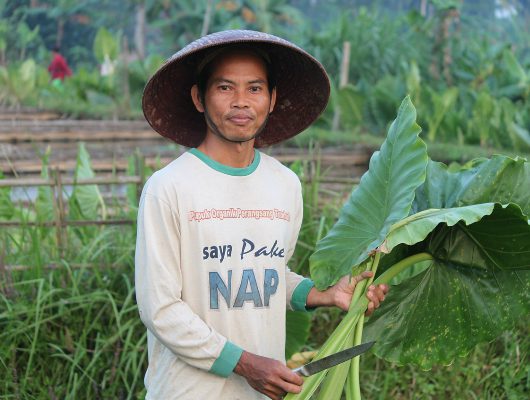
The Sustainable Development Goals (SDGs) have been officially chosen and released with a target date of 2030. According to Farming First, “agriculture accounts for 37 percent of employment, 34 percent of land use, 70 percent of water use and up to 30 percent of greenhouse gas emissions.”

If agriculture can be made more efficient, we may have a shot at feeding everyone in the world, a number that will reach 9 billion in 2050.

Farmers following the SDGs can help end poverty and hunger, consequently reducing negative effects caused by these problems. They can also help fight climate change globally. Farming First talked to farmers to see what they had to say about what they needed most to help them reach goals that were attainable for them.

In Bangladesh, Anwar Hosen had been selling seed, fertilizer and crop protection without any formal kind of training. The Feed the Future initiative taught Anwar about high-quality agricultural inputs and was given more readily available access to these inputs. Anwar now understands the difference that high-quality seeds and fertilizer can make, as his clients have reported a higher crop yield.

In Cambodia, Chieng Sophat is a bean and cucumber farmer in the province of Battambang. Sophat has been farming since the 1980s and has always had trouble making money due to flooding that can often destroy an entire crop yield. Sophat notes that things are getting worse as climate change all over the globe intensifies.

Thanks to the project Cambodia HARVEST, Sophat has been shown ways to better manage the water on his farm. Through methods like raised plant beds and drip irrigation, which help get his crops through the dry season, Sophat has seen notable success.

He now has extra income from his higher crop yield that he is able to use to “pay for his children’s school and household improvements,” according to Impatient Optimists. Most of the world’s farmers live in developing countries, and growing agriculture has been proven to be twice as effective in reducing poverty compared to the growth of any other sector.

In order for us to be able to end global poverty and be able to feed 9 billion people by 2050, we must ensure that farmers have access to the knowledge and training that will allow them to increase the quantity, quality and diversity of their crops while using sustainable methods.

– Drusilla Gibbs

Sources: Farming First, Impatient Optimists
Photo: Pixabay

October 16, 2015
https://borgenproject.org/wp-content/uploads/borgen-project-logo.svg 0 0 Borgen Project https://borgenproject.org/wp-content/uploads/borgen-project-logo.svg Borgen Project2015-10-16 01:30:162024-12-13 18:05:13How Farmers Following The SDGs Can Help End Hunger
Education, Global Poverty, Hunger, Sustainable Development Goals

5 Things to Expect from the Post-2015 Development Agenda

agendapost2015
The Millennium Development Goals (MDGs) are set to expire at the end of 2015, and a new proposal of 17 Sustainable Development Goals (SDGs) will be discussed in September. MDGs have helped alleviate poverty and hunger, reduce fatality rates for children under 5, improve maternal health and help prevent HIV/AIDS from spreading.

For the last 15 years, the MDGs have been the most important global humanitarian effort to help improve living conditions in developing countries. The SDGs have an even more ambitious agenda and will involve all member states instead of just developing countries.

Here are 5 things you can expect from the Post-2015 Development Agenda

  1. Goal 1 is to end all forms of poverty–and achieving this goal is realistic. The MDGs halved the number of people living on less than $1.25 per day. From 1990 to 2008, the extreme poverty rate fell from 47 percent to 24 percent. To eradicate extreme poverty by 2030, it would cost about $66 billion a year.
  2. Goal 2 focuses on ending hunger and improving nutrition. About 800 million people still live in hunger, and many children are underweight. Despite population growth, the number of hungry people has declined by 200 million since 1990, and it will cost $30 billion per year in order to end world hunger. By 2025, it would cost $300 billion, which is less than 1 percent of the world’s combined GDP.
  3. Goal 4 builds off of the MDG to achieve universal primary education and calls for member states to ensure children have free quality primary and secondary education that results in effective learning outcomes. This means ensuring that gender disparities are eliminated. By 2009, 43 million children were enrolled in primary education worldwide, but there are still about 60 million children not enrolled, mostly in Sub-Saharan Africa. This will involve tackling child labor, building more classrooms and training more teachers.
  4. Goal 9 promotes sustainable industrialization and the building of resilient infrastructure, including an increase in access to the Internet. About 66 percent of people globally do not have access to the Internet. The SDGs call for infrastructure developments in order to improve economic sustainability. Innovation will revolve around increased scientific research, enhanced technology and clean technologies and investments for the Internet and technology in developing countries.
  5. Goal 13 calls to take action on the impacts of climate change and may be one of the most challenging goals to reach. Climate change impacts poverty, economic growth and sustainability, but countries cannot work alone to reduce the impact of climate change. Individual cities will have to change climate policies because they generate 70 percent of carbon emissions. Partnerships between local governments, civil society and the private sector will help make this goal achievable.

If the commitment to the MDGs is a sign of things to come, then there will be many success stories involving the new SDGs.

– Donald Gering

Sources: End Poverty 2015, Global Education, Green Biz, The Guardian, Huffington Post, Internet.org, LA Times, UN
Photo: concorditalia

October 3, 2015
https://borgenproject.org/wp-content/uploads/borgen-project-logo.svg 0 0 Borgen Project https://borgenproject.org/wp-content/uploads/borgen-project-logo.svg Borgen Project2015-10-03 02:17:252024-05-27 09:26:195 Things to Expect from the Post-2015 Development Agenda
Global Poverty, Poverty Reduction, Sustainable Development Goals, United Nations

From Millennium Development Goals to Sustainable Goals

From Millennium Development Goals to Sustainable Development Goals
The final report of the Millennium Development Goals (MDGs) says it has been the most successful anti-poverty effort in history. But despite significant gains, there are many global poverty issues that still need to be addressed. These include sanitation, gender equality, maternal and children’s health, and access to family planning, among others.

After 15 years, the transition from MDGs to the Sustainable Development Goals (SDGs) begins. The new goals will be adopted this September at the United Nations Sustainable Development Summit, which will provide a guideline for policy and funding for the next 15 years. There are set to be 17 goals and 169 indicators to measure the progress of these goals.

Among the proposed goals are the following:

  • No poverty
  • Zero hunger
  • Good health and well being
  • Quality Education
  • Gender Equality
  • Clean Water and Sanitation
  • Affordable and Clean Energy
  • Decent Work and Economic Growth
  • Industry, Innovation and Infrastructure
  • Reduced Inequalities
  • Sustainable Cities and Communities
  • Responsible Consumption and Production
  • Climate Action
  • Life Below Water
  • Life on Land
  • Peace and Justice, Strong Institutions
  • Partnerships for the Goals

The goals were conceived through a collaboration of the UN Development Programme (UNDP) and the UN Development Group (UNDG), which undertook an unprecedented global conversation among a diverse group of stakeholders over the last three years. Stakeholders included women, young people, people with disabilities, the private sector and all levels of government.

For example, the UN’s online My World Survey, which asked participants to rank their six highest priority issues, gathered the ranked priorities for the future of 7.3 million people.

In addition, the UNDG collected the perspectives from over one million people on “the world we want,” eliciting 88 national consultations and input on 11 thematic dialogues.

“As member states consult on the shape and content of a successor framework to the Millennium Development Goals (MDGs) beyond 2015, it is hoped that the opportunity to listen to these voices will contribute to reaching consensus on what is needed to move towards a common sustainable future,” states the World We Want website.

Partnerships will be key to realizing the proposed goals. Some of the important players that will assist in partnerships and collaboration between different entities are the Department of State’s Office of Global Partnerships, which will work with public and private sectors. The U.S. Agency for International Development will work with corporations, foundations, NGOs and others in developing countries through the Global Development Alliance.

Looking ahead, the need to work together across stakeholder groups is paramount. “World leaders have an unprecedented opportunity this year to shift the world onto a path of inclusive, sustainable and resilient development,” said Helen Clark, UNDP Administrator. And the message from the global conversation was clear: People want to be involved in the process of accomplishing these goals and to hold governments and businesses accountable for their promises and commitments.

– Paula Acevedo

Sources: Millennium Development Goals Final Report, Devex, United Nations Development Programme
Photo: Flickr

September 18, 2015
https://borgenproject.org/wp-content/uploads/borgen-project-logo.svg 0 0 Borgen Project https://borgenproject.org/wp-content/uploads/borgen-project-logo.svg Borgen Project2015-09-18 02:55:262024-12-13 18:04:38From Millennium Development Goals to Sustainable Goals
Aid Effectiveness & Reform, Education, Global Poverty, Sustainable Development Goals

Education and the Sustainable Development Goals

Education and the Sustainable Development GoalsLong idolized were the Millennium Development Goals, a set of eight targets created and adopted by the United Nations in 2000. Central to their aim was the eradication of global poverty by improving maternal health and access to clean water, food and education while reducing the number of people living on under $1.25 a day across the developing world.
However, the days of the Millennium Development Goals are over. They expired this year after 15 years mixed with success and failure. A new set of global development goals is now on the horizon: the Sustainable Development Goals. Once again, there will be a specific goal tailored to improve equal education access for all. But before delving into how that goal is currently shaping up, it is worth examining how education fared with the Millennium Development Goals.

Goal two of The Millennium Development Goals aimed to achieve universal primary education. The goal only had one target: “ensure that, by 2015, children everywhere, boys and girls alike, will be able to complete a full course of primary schooling.”

Unfortunately, this target was not met. On the bright side, the number of children globally that now attend primary school has risen dramatically since 1990. Enrollment in the developing world has risen to 91 percent, but the goal was for universal primary education, meaning all children everywhere. There is also still a fairly large gender gap in some areas. Of the 57 million kids out of school, 33 million are in Sub-Saharan Africa and 55 percent of those 33 million children are girls.

So where are the Sustainable Development Goals heading in terms of education development in the next 15 years? First off, education gets another specific goal for itself. The target this time is to “ensure inclusive and equitable quality education and promote lifelong learning opportunities for all,” not all that different from the Millennium Development Goal before it.

The Sustainable Development Goals’ “vision is to transform lives through education, recognizing the important role of education as a main driver of development.” Looking to continue with the progress created by the Millennium Development Goals, goal four of the Sustainable Development Goals will look to expand access to all by providing 12 years of free, publicly-funded, high-quality equal education. Nine of these years will be compulsory.

Particular emphasis is put on the quality of education going forward. By increasing quality of education, the 100-year education gap between the developed and developing has the potential to be reduced. Another benefit of an improvement in the quality of education is that it will improve learning outcomes. How can this be done? By “strengthening inputs, processes and evaluation of outcomes and mechanisms to measure progress.”

Another facet to quality education is ensuring that the teachers are well trained, empowered, motivated and supported. This ensures a higher level of quality when it comes to education.

Often seen as a gateway out of poverty, education is an extremely important issue when it comes to development in the developing world. It will be interesting to track the evolution of the Sustainable Development Goals’ development toward a fully-fledged goal. Hopefully, it can continue the inroads created by the Millennium Development Goals and improve education for the millions of children without it.

– Gregory Baker

Sources: UNDP, UNESCO UN Millennium Goals, UN Sustainable Development,
Photo: Flickr

September 3, 2015
https://borgenproject.org/wp-content/uploads/borgen-project-logo.svg 0 0 Borgen Project https://borgenproject.org/wp-content/uploads/borgen-project-logo.svg Borgen Project2015-09-03 09:41:122024-06-04 04:33:48Education and the Sustainable Development Goals
Global Poverty, Sustainable Development Goals, United Nations

How the U.N.’s Sustainable Development Goals Build on Past Goals

Sustainable Development Goals Build on Millennium Goals
In 2000, the United Nations set out to complete a long list of goals with the ultimate goal of ending global poverty. This year marks the expiration of the so-called Millennium Development Goals and the advent of the United Nations’ latest set of Sustainable Development Goals.

The United Nations set in motion eight core goals at the start of the new millennia, each with individualized target goals and ideal success rates. These broad goals were:

1) Eradicate extreme poverty and hunger
2) Achieve universal primary education
3) Promote gender equality and empower women
4) Reduce child mortality
5) Improve maternal health
6) Combat HIV/AIDS, malaria and other diseases
7) Ensure environmental sustainability
8) Global partnership for development

Some of the specific rates of success targeted under individual goals include: halving the number of people living on less than $1.25 a day and the number of people suffering from hunger, eliminating gender disparity in education, reducing child mortality by two-thirds and stopping the spread of HIV/AIDS. These targets were supposed to have been met by 2015.

While great strides have been made in the last decade and a half, the United Nations was not 100 percent successful in reaching their goals. With the 2000 set of goals expiring, a new set of updated goals was drafted to continue their focus effort toward ending global poverty.

The Sustainable Development Goals of 2015 build upon the foundation laid by the Millennium Development Goals of 2000 and “seek to complete the unfinished business of the MDGs, and respond to new challenges,” according to the proposal statement from the Sustainable Development Knowledge Platform.

The 2015 set of goals expands and goes beyond the original goals, addressing an updated list of challenges faced by people of developing nations. The new set of goals includes:

1) End poverty in all forms everywhere
2) End hunger, achieve food security and improved nutrition and promote sustainable agriculture
3) Ensure healthy lives and promote well-being for all ages
4) Ensure inclusive and equitable quality education and promote lifelong learning opportunities for all
5) Achieve gender equality and empower all women and girls
6) Ensure availability and sustainable management of water and sanitation
7) Ensure access to affordable, reliable, sustainable and modern energy for all
8) Promote sustained, inclusive and sustainable economic growth, full and productive employment and decent work for all
9) Build resilient infrastructure, promote inclusive and sustainable industrialization and foster innovation
10) Reduce inequality within and among countries
11) Make cities and human settlements inclusive, safe, resilient and sustainable
12) Ensure sustainable consumption and production patterns
13) Take urgent action to combat climate change and its impacts
14) Conserve and sustainably use the oceans, seas and marine resources for sustainable development
15) Protect, restore and promote sustainable use of terrestrial ecosystems, sustainably manage forests, combat desertification and halt and reverse land degradation and halt biodiversity loss
16) Promote peaceful and inclusive societies for sustainable development, provide access to justice for all and build effective, accountable and inclusive institutions at all levels
17) Strengthen the means of implementation and revitalize the global partnership for sustainable development

The new and expanded list retains many of the original target goals of the Millennium Development Goals, including ending global poverty (established as living on less than $1.25 a day), ending global hunger, expanding education and enhancing women’s rights, as well as encouraging a focus on sustainable development options.

As with the Millennium Development Goals, the United Nations hopes to meet their Sustainable Development Goals in fifteen years, by the year 2030.

– Gina Lehner

Sources: UN, Sustainable Development
Photo: Daily Development

August 26, 2015
https://borgenproject.org/wp-content/uploads/borgen-project-logo.svg 0 0 Borgen Project https://borgenproject.org/wp-content/uploads/borgen-project-logo.svg Borgen Project2015-08-26 15:48:592024-05-27 09:25:22How the U.N.’s Sustainable Development Goals Build on Past Goals
Advocacy, Development, Foreign Aid, Sustainable Development Goals

Global Financing Conference Looks to End Poverty

Global Financing Conference Looks to End Poverty - TBPOn July 15, leaders from all over the world will gather at a global financing conference in Addis Ababa, Ethiopia’s capital, to discuss major reforms and policies to make a legitimate dent in the issue of global poverty. This meeting marks the first of three summits in 2015 that aim to lock down funding for poverty programs worldwide. World Bank leader Jim Yong Kim summarized the magnitude of the summit by saying, “If we seize this moment we can accomplish the greatest achievement in human history.” The success of this and subsequent summits may finally put humanity on the correct path for eliminating poverty.

A topic of discussion at this summit will be on how to expand on the Millennium Development Goals, a set of eight target goals set in 2000 to combat poverty. These goals were set to expire after fifteen years, when a new summit would meet to establish new goals moving forward. The upcoming summit in Addis Ababa will spend time creating what will be known as the Sustainable Development Goals (SDGs).

The SDGs will be designed to reflect the changes in the global economy that have occurred since the initial MDGs were created. An excerpt from the World Bank’s website says, “The global development landscape has changed since the MDGs were adopted in 2000. Middle-income countries now account for a much larger share of global GDP. At the same time, inequality within many countries is on the rise and the gap between the rich and the poor is growing.” World leaders will assess a variety of new data to develop effective plans to reduce future poverty.

In order to make the eradication of poverty a reality, nations participating in this summit are preparing to raise the amount of money contributed to fighting poverty from billions to trillions of dollars. The funds necessary to achieving this goal will come “from private investment and domestic tax revenues. Foreign aid is already dwarfed by private financial flows, but it is still a precious resource, important because it reaches people and challenges that private finance alone cannot,” as reported by The Guardian.

This summit may be key in setting the stage for an entirely new era in our planet. The results of this summit and the ones that follow might be the pivotal step for stepping out of the overbearing shadow of poverty and into a bright future for generations to come.

– Diego Catala

Sources: The Guardian, World Bank
Photo: UN

August 5, 2015
https://borgenproject.org/wp-content/uploads/borgen-project-logo.svg 0 0 Borgen Project https://borgenproject.org/wp-content/uploads/borgen-project-logo.svg Borgen Project2015-08-05 07:29:552020-07-02 13:10:11Global Financing Conference Looks to End Poverty
Global Poverty, Sustainable Development Goals, United Nations

UN Launches New Deal to End Global Poverty

new_deal_to_end_global_poverty

After three days of negotiations in Addis Ababa, Ethiopia, the United Nations has established a new deal that will finance the U.N.’s new Sustainable Development Goals. Ultimately, these goals set a 2030 deadline to greatly reduce global poverty.

The negotiations in Addis Ababa involved representatives from around 200 different countries. Seventeen goals make up the new U.N. plan, which mainly includes large, overarching goals such as completely eliminating global poverty and hunger, obtaining gender equality worldwide, creating environmentally sustainable cities and ensuring everyone quality education.

These goals also come with a hefty price tag. U.N. experts estimate that the Sustainable Development Goals will cost around $3 trillion each year in order to properly finance each goal. World Bank President Jim Yong Kim also estimates that along with billions of dollars in foreign aid, these goals will require “trillions in investments.”

“This agreement is a critical step forward in building a sustainable future for all,” U.N. Secretary-General Ban Ki-moon said. “The results here in Addis Ababa give us the foundation of a revitalized global partnership for sustainable development that will leave no one behind.”

– Alexander Jones

Sources: BBC, Cheyne, Solomon
Photo: BBC

July 27, 2015
https://borgenproject.org/wp-content/uploads/borgen-project-logo.svg 0 0 Borgen Project https://borgenproject.org/wp-content/uploads/borgen-project-logo.svg Borgen Project2015-07-27 13:36:112024-12-13 17:52:04UN Launches New Deal to End Global Poverty
Activism, Global Poverty, Sustainable Development Goals

Musicians Raise Awareness Through Global Citizen Festival

Global_Citizen_Festival
The 2015 Global Citizen Festival seeks to spread awareness of world poverty through music. The concert takes place on September 26 on the Great Lawn in Central Park, New York City.

In 2000, countries around the world joined together to create the Millennium Development Goals, a kind of 15-year checklist for tackling world issues such as hunger, disease, lack of shelter, education and gender equality. For four years, the Global Citizen Festival has sought to engage citizens and world leaders with pressing world issues. This year, the concert aims to bring attention to the United Nations’ Global Goals, which are 17 new objectives for ending extreme poverty by 2030. World leaders from 193 countries will solidify these objectives in September.

Performers at the concert include Beyoncé, Coldplay, Ed Sheeran and Pearl Jam.

Beyoncé’s organization, Chime for Change, partners with the event. The group strives to empower, educate and protect women and girls around the world. Beyoncé hopes the concert will bring hundreds of initiatives that are dedicated to changing lives.

Chris Martin, the lead singer of Coldplay, agreed be the creative curator of the festival for the next 15 years, the same amount of time that the United Nations hopes to completely eradicate poverty.

English singer-songwriter, Ed Sheeran says, “I look forward to sharing the stage with such an amazing lineup of artists in an effort to raise awareness, educate others and work toward the goal of ending extreme poverty by 2030. I truly believe it’s possible if we all work together.”

“People living on less than $1.50 a day deserve the opportunity to lift themselves up out of extreme poverty,” added Pearl Jam guitarist, Stone Gossard.

https://www.youtube.com/watch?v=8rLHBQ282xE

Tickets to the concert are free. All that is required is a promise to take action against injustices around the world. Some of these actions could include sending emails to political leaders, signing petitions or making phone calls or sending tweets to senators.

The steps to earn tickets are called Action Journeys. By completing each action, participants are entered into a drawing to receive two tickets. After each drawing, new Action Journeys are opened. Not only will participants increase their chances of winning tickets by completing more Action Journeys, but they will also be increasing awareness of world issues.

The Global Citizen Festival will be targeting six essential world problems: girls and women, food and hunger, education, global health, water, sanitation and hygiene, and financing.

Chief executive of the Global Poverty Project, Hugh Evans, says, “The world has halved extreme poverty in the last 15 years, but to end it in the next 15, there’s a whole lot of things we need to make that a reality.”

To participate in the Action Journeys or to see more information, visit globalcitizen.org.

– Kelsey Parrotte

Sources: ArtsBeat, BBC, Cosmopolitan, Global Citizen, Rappler, Rolling Stone
Photo: Digital Trends

July 24, 2015
https://borgenproject.org/wp-content/uploads/borgen-project-logo.svg 0 0 Borgen Project https://borgenproject.org/wp-content/uploads/borgen-project-logo.svg Borgen Project2015-07-24 08:27:232020-07-07 14:24:38Musicians Raise Awareness Through Global Citizen Festival
Development, Global Poverty, Sustainable Development Goals, United Nations

Sustainable Development Goals: Why They Matter

Sustainable_Development_Goals

In 2000, the United Nations set the Millennial Development Goals. Ambitious proposals that sought to improve the lives for the billions of impoverished around the world. Fifteen years later, many of those goals have been accomplished.

Globally, 700 million people were lifted out of extreme poverty. Millions were saved due to vaccinations for malaria, tuberculosis and other non-communicable diseases. The number of people who didn’t have access to freshwater dropped significantly and the disparity of boys to girls enrolled in school dropped in every region on earth.

This was all accomplished before 2015.

Some goals are still in progress. For example, efforts to lift people out of poverty can result in environmental degradation. The rate of hunger, while dropping, is not falling quickly enough to meet the goal set in 2000.

Despite this, the United Nations is now going even bolder. Set to be adopted by world leaders in September, the new Sustainable Development Goals seek to finish what the Millennial Development Goals started, while adding their own components.

The seventeen goals are comprehensive, and apply to individuals as well as countries. Despite their broadness in scope, these goals demonstrate that poverty, climate change, health and economic wellbeing are all interconnected issues.

These are the seventeen Sustainable Development Goals:

1. End Poverty in all its forms everywhere

2. End hunger, achieve food security and improved nutrition and promote sustainable agriculture

3. Ensure healthy lives and promote well-being for all at all ages

4. Ensure inclusive and equitable quality education and promote lifelong learning opportunities for all

5. Achieve gender quality and empower all women and girls

6. Ensure availability and sustainable management of water and sanitation for all

7. Ensure access to affordable, reliable, sustainable and modern energy for all

8. Promote sustained, inclusive and sustainable economic growth, full and productive employment and decent work for all

9. Build resilient infrastructure, promote inclusive and sustainable industrialization and foster innovation

10. Reduce inequality within and among countries

11. Make cities and human settlements inclusive, safe, resilient and sustainable

12. Ensure sustainable consumption and production patterns

13. Take urgent action to combat climate change and its impacts

14. Conserve and sustainable use the oceans, seas and marine resources for sustainable development

15. Protect, restore and promote sustainable use of terrestrial ecosystems, sustainably manage forests, combat desertification, and halt and reverse land degradation and halt biodiversity loss

16. Promote peaceful and inclusive societies for sustainable development, provide access to justice for all and build effective, accountable and inclusive institutions at all levels

17. Strengthen the means of implementation and revitalize the global partnership for sustainable development

Indeed, ambitious.

The United Nation website has a more comprehensive explanation of how each of these goals are to be accomplished by 2030.

It is estimated that these goals will cost roughly one trillion dollars a year. However with international tax reform, developing countries will generate more domestic tax revenue and be able to meet their own development agendas with less foreign aid. Members of the United Nations believe this will allow international aid to become a thing of the past.

In an interview with the BBC, International Development Secretary Justine Greening said the Sustainable Development Goals are different from other United Nation initiatives because it harnesses the private sector investment, in addition to developing country’s domestic resources.

She believes this will “turbo charge” development.

The ambitiousness of the Sustainable Development Goals is daunting. However the past fifteen years saw so much progress that the world can be cautiously optimistic.

– Kevin Meyers

Sources: BBC, Post2015.org, UN Department of Economic and Social Affairs
Photo: Fiinovation

July 23, 2015
https://borgenproject.org/wp-content/uploads/borgen-project-logo.svg 0 0 Borgen Project https://borgenproject.org/wp-content/uploads/borgen-project-logo.svg Borgen Project2015-07-23 08:49:412020-07-07 14:41:23Sustainable Development Goals: Why They Matter
Global Poverty, Sustainable Development Goals, United Nations

United Nations Sets Sustainable Development Goals to End Global Poverty

sustainable_development_goals
The United Nations released the first draft of their Sustainable Development Goals this month in preparation for the expiration of the Millennium Development Goals, which were established in 2000.

In 17 simple steps, the Sustainable Development Goals (SDGs) aim to eliminate poverty, grow economies, increase equality and promote sustainable industry.

The overall goals, as defined in the official draft of the United Nations Development Agenda, are:

1) End poverty and hunger

This specifically aims to “end poverty in all forms everywhere.” According to an article published by The Guardian, Goal 1 seeks to reduce global poverty by at least half by 2030. The drafted plan calls for establishing equal access to economic resources, equal rights of ownership, and the creation of a firm policy framework at all levels in order to promote sustainable and accelerated economic growth.

2) Secure education, health and basic services for all

Goal 2 seeks to eliminate global food insecurity and promote sustainable agriculture. Again by 2030, the United Nations hopes to establish sustainable and year-round access to nutritious food, especially for the most poor and vulnerable. The goal is to establish sustainable agriculture and encourage investment in rural areas. The details of Goal 2 also include measures to address inequality among markets and trade restrictions, and to ensure the proper operation of food markets.

3) Achieve gender equality and empower all women and girls

This goal is to “ensure healthy lives and promote well-being for all at all ages.” This goal broadly encompasses many aspects of health and well-being across society. These aspects include reducing maternal mortality and the preventable deaths of newborns and infants, ending epidemics caused by communicable diseases, achieving universal healthcare coverage and more.

4) Combat inequalities within and between countries

5) Foster inclusive economic growth, shared prosperity and sustainable lifestyles for all

Goal 4 and 5 address access to education and gender equality. These goals include guaranteeing free and quality primary and secondary education for all children, providing equal educational opportunities to both boys and girls, eliminating violence against women and undertaking reform to ensure equal economic opportunity for women. The fifth goal goes further and calls for the creation of enforceable policies to protect the rights of women.

6) Promote safe and inclusive cities and human settlements

7) Protect the planet, fight climate change, use natural resources sustainably and safeguard our ocean

The remaining goals outline plans to create and maintain sustainability in multiple sectors. These goals include sustainable energy, sustainable agriculture and industry, sustainable use of the environment and sustainable economic structures. Some of the goals also specifically address the idea of “sustainable societies” and outline measures to reduce violence, increase equality between nations and promote global connections.

Although the initial response to the United Nations’ plan has been mixed, and some, according to another article by The Guardian, have warned that the plan has some serious holes, the ambitious set of goals sets a precedent for efforts to end global poverty and will serve as a benchmark for future endeavors.

– Gina Lecher

Sources: Sustainable Development, The Guardian 1, The Guardian 2
Photo: Flickr

July 10, 2015
https://borgenproject.org/wp-content/uploads/borgen-project-logo.svg 0 0 Borgen Project https://borgenproject.org/wp-content/uploads/borgen-project-logo.svg Borgen Project2015-07-10 09:00:082024-05-27 09:25:31United Nations Sets Sustainable Development Goals to End Global Poverty
Page 16 of 16«‹141516

Get Smarter

  • Global Poverty 101
  • Global Poverty… The Good News
  • Global Poverty & U.S. Jobs
  • Global Poverty and National Security
  • Innovative Solutions to Poverty
  • Global Poverty & Aid FAQ’s
Search Search

Take Action

  • Call Congress
  • Email Congress
  • Donate
  • 30 Ways to Help
  • Volunteer Ops
  • Internships
  • Courses & Certificates
  • The Podcast
Borgen Project

“The Borgen Project is an incredible nonprofit organization that is addressing poverty and hunger and working towards ending them.”

-The Huffington Post

Inside The Borgen Project

  • Contact
  • About
  • Financials
  • President
  • Board of Directors
  • Board of Advisors

International Links

  • UK Email Parliament
  • UK Donate
  • Canada Email Parliament

Get Smarter

  • Global Poverty 101
  • Global Poverty… The Good News
  • Global Poverty & U.S. Jobs
  • Global Poverty and National Security
  • Innovative Solutions to Poverty
  • Global Poverty & Aid FAQ’s

Ways to Help

  • Call Congress
  • Email Congress
  • Donate
  • 30 Ways to Help
  • Volunteer Ops
  • Internships
  • Courses & Certificates
  • The Podcast
Scroll to top Scroll to top Scroll to top