• Link to X
  • Link to Facebook
  • Link to Instagram
  • Link to TikTok
  • Link to Youtube
  • About
    • About Us
      • President
      • Board of Directors
      • Board of Advisors
      • Financials
      • Our Methodology
      • Success Tracker
      • Contact
  • Act Now
    • 30 Ways to Help
      • Email Congress
      • Call Congress
      • Volunteer
      • Courses & Certificates
      • Be a Donor
    • Internships
      • In-Office Internships
      • Remote Internships
    • Legislation
      • Politics 101
  • The Blog
  • The Podcast
  • Magazine
  • Donate
  • Click to open the search input field Click to open the search input field Search
  • Menu Menu

Archive for category: Activism

Information and stories on social activism.

Activism, Aid Effectiveness & Reform, Global Poverty, Nonprofit Organizations and NGOs

Louis and Anne Abrons Foundation

abrons_foundation_gala_henry_street

The Louis and Anne Abrons Foundation is a private foundation stationed out of New York, NY. Started in 1951, the Abrons Foundation provides gifts, grants, and loans to other organizations in need. Today, its assets range roughly from $10,000,000 to $50,000, 000.

From schools like New York University (NYU) and Wilberforce University to institutions like the Metropolitan Opera House and Henry Street Settlement, the foundation has donated to all types of causes. Most recipients of the Abrons Foundation hail from areas like the District of Columbia, Illinois, Ohio and New York, though funding is not limited to these areas.

Richard Abrons, acting President of the Abrons Foundation, wishes to keep the majority of foundation spending near the home office in New York. “As the president of the Louis and Anne Abrons Foundation, I have overseen grants to more than 200 nonprofits… Most benefit our city (New York), which is our emphasis,” he said in an interview with The Huffington Post.

Richard Abrons is also a well-known playwright in the New York and Los Angeles communities. He is extremely well educated, receiving his BA from Yale, his MBA from Columbia and his MFA from NYU. In addition to the Abrons Foundation, Richard Abrons is Managing Director of First Manhattan Co., an investment management company, and Vice Chairman and former President of the Henry Street Settlement. He is also the director of GrowNYC.

–Meagan Hurley

Sources: Huffington Post, Idiologic, GuideStar, FAQs
Photo: Henry Street


October 23, 2013
https://borgenproject.org/wp-content/uploads/borgen-project-logo.svg 0 0 Borgen Project https://borgenproject.org/wp-content/uploads/borgen-project-logo.svg Borgen Project2013-10-23 16:58:432024-06-05 01:53:41Louis and Anne Abrons Foundation
Activism, Advocacy, Foreign Aid, Foreign Policy, Global Poverty, USAID

An Overview of USAID

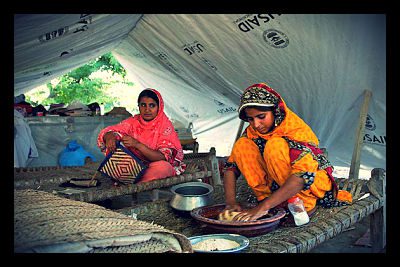
usaid_pakistan
The United States Agency for International Development (USAID) was created in 1961 by The Foreign Assistance Act, which established a separate administration for non-military foreign aid. This consolidated the many separate foreign aid organizations within the US government at the time into one effective agency.

USAID advocates for making international aid the focus of foreign policy.  Under President Truman, foreign policy had two goals:  creating new markets for U.S. exports by relieving global poverty and helping countries prosper through capitalism. Later, in the 1970s, USAID shifted its focus to basic human needs: food security, health, education, jobs and resource management.

Today, USAID focuses on creating sustainable markets, transitioning countries into democracies and rebuilding former areas of conflict. USAID works mainly through non-governmental organizations (NGOs) and diversified aid packages.  Food security, economic growth, education, environmental protection, gender equality, health, innovation, sanitation and conflict management are at the forefront of US foreign policy.  All these factors go into creating sustainable trade partners and positive political relations.

USAID’s $20.4 billion funding comes directly from the U.S. government.  Of this, only about $1.35 billion is spent on operating costs.  The rest of the funding goes to “bilateral assistance” provided to countries and regions in need.  Afghanistan is the largest recipient of US economic assistance at $2.24 billion, followed by Pakistan with $970 million.

Past successes include family planning, immunization programs, improved farming techniques and booming energy sectors in developing countries.  Life expectancy in the developing world has increased by 33 percent, immunizations have eliminated smallpox, and infant and child death rates have decreased by 50 percent in the developing world.  HIV/AIDS education and prevention has been a major focus of USAID, with programs set up in 32 countries.  Meanwhile, 1.3 billion people have access to safe drinking water thanks to USAID-led UN Drinking Water Supply and Sanitation Decade.

– Stephanie Lamm

Sources: USAID History, USAID Sites
Photo: Business Week

October 23, 2013
https://borgenproject.org/wp-content/uploads/borgen-project-logo.svg 0 0 Borgen Project https://borgenproject.org/wp-content/uploads/borgen-project-logo.svg Borgen Project2013-10-23 15:14:362024-05-25 00:30:10An Overview of USAID
Activism, Gender Equality, Global Poverty, Health, Human Trafficking, United Nations, Women and Female Empowerment

UN Women and the Fight for Equality

UN Women is an organization that was created in July 2010 by the United Nations General Assembly. The organization’s full name is the United Nations Entity for Gender Equality and the Empowerment of Women; its mission is to promote gender equality throughout the world and champion women from all walks of life.

Many women in the world face discrimination in the workplace, and receive fewer opportunities when it comes to career and educational advancement. UN Women sees this kind of gender discrimination happening all over the world, and makes it a part of its agenda to ensure that women have basic and equal human rights. Women are often denied access to health care, and even worse, they lack the political voice to change such conditions because of their stark under-representation in governmental decision making.

One of the major issues on the UN Women’s agenda is the end to violence against women. In a 2013 global review, published by the World Health Organization, it was reported that 35 percent of women in the world have experienced some kind of violence from an intimate partner. UN Women also focuses on the different aspects that are associated with violence against women: sex trafficking, child brides, rape, and sexual harassment in the work or education place.

Partnering with government agencies is an effective way that UN Women is able to take action against the various forms of discrimination against women. UN Women channels its efforts on implementing laws that will help protect women against threats like violence. It also advocates for policies that will open up more economic opportunities for women.

The wage gap between men and women is something that UN Women takes very seriously and seeks to bring to a close by implementing policies that argue for fairness in the workplace. A large part of the organization’s mission to empower women comes from its dedication to spread awareness in response to the AIDS epidemic. Women make up 54 percent of all people living in the world with HIV. UN Women has made it a job to spread awareness on the factors connected to the spread of HIV/AIDS. With the help of its partners, and resources UN Women has been able to broadcast the voice of women living with AIDS and it takes steps to help prevent the spread of the disease.

UN Women is gaining momentum and acquiring more support. Actress, Nicole Kidman, showed her support for the organization during an acceptance speech at the Variety Magazine Power of Women Awards event. Kidman encouraged her audience to see the desperate need for women’s equality in the world.

– Chante Owens

Sources: UN Women, Daily Mail

October 23, 2013
https://borgenproject.org/wp-content/uploads/borgen-project-logo.svg 0 0 Borgen Project https://borgenproject.org/wp-content/uploads/borgen-project-logo.svg Borgen Project2013-10-23 04:00:172024-05-25 00:29:29UN Women and the Fight for Equality
Activism, Food & Hunger, Global Poverty

Global Food Brands Commemorating World Food Day

World Food Day, celebrated on October 16, was established by the Food and Agriculture Organization of the United Nations (FAO) in 1979 to encourage activism and campaigns to end world hunger. For the first 30 years of the commemoration of World Food Day, the United States hosted an annual World Food Day Teleconference. This event included renowned experts in a wide range of fields including agriculture, economics, environmental science and human rights, and a global hunger-related theme. This year, the chosen theme is “Sustainable Food Systems for Food Security and Nutrition,” and many prominent food and packaging brands, including Dow Chemical Company, Unilever, Beaulieu Vineyard and Nouri, have taken initiative to help ameliorate world hunger.

Dow Chemical Company, the world’s second-largest chemical manufacturer, is investing in packaging practices and materials that allow food to survive its journey better. Diego Donoso, business president of Dow Packaging and Specialty Plastics, stated that his company is “committed to creating innovative technologies in packaging and collaborating with industry partners to minimize food waste and ensure that more food reaches more kitchen tables around the globe.” Dow has also used its website and social media profiles in order to educate the public about sustainable food packaging.

Unilever, a company that owns Ben & Jerry’s Ice Cream, Hellman’s mayonnaise, Lipton tea and Vaseline lotion, is motivating its employees to partake in the fight against world hunger. Unilever’s CEO, Paul Poman, has worked with other companies to raise awareness about sustainable food supply and global hunger. In addition to this effort, Unilever has created a “meal for meal” program that requires Unilever to donate the cost of a meal to the United Nation’s World Food Programme every time an employee buys lunch.

Beaulieu Vineyard, a Napa Valley wine producer, is using its influence to educate poor families about how to maintain a balance between affordable and nutritious food. Beaulieu Vineyard is hosting a “Give & Give Back Chef Challenge” in which renowned chefs compete to create nutritious and affordable meals with basic ingredients. This contest aims to raise awareness about world hunger and teach needy families how to best use the resources they have. Beaulieu has also partnered with food donation organizations to donate food to families in need.

The efforts made by these food packaging and producing companies give everyday individuals an alternative opportunity to get involved in the fight against global poverty. Companies like Unilever and Dow also educated individuals about the importance of food sustainability. Without methods of maintaining the freshness of donated food, many poor families will become susceptible to food-borne illnesses.

– Lienna Feleke-Eshete

Sources: Food Production Daily, Dow Chemical Company

October 22, 2013
https://borgenproject.org/wp-content/uploads/borgen-project-logo.svg 0 0 Borgen Project https://borgenproject.org/wp-content/uploads/borgen-project-logo.svg Borgen Project2013-10-22 14:52:302024-05-25 00:28:32Global Food Brands Commemorating World Food Day
Activism, Global Poverty

Germany’s 4 Policy Priorities to Reduce Global Poverty

German_Development_Cooperation
The German Development Cooperation is focused on reducing global poverty, ensuring peace and human security, and preserving the environment in an international framework. Its work is guided by four priority areas in the health sector:

1. Health as a Human Right
The German Development Cooperation’s efforts are guided by the Universal Declaration of Human Rights adopted by the United Nations in 1948:

“Everyone has the right to a standard of living adequate for the health and well-being of himself and of his family, including food, clothing, housing and medical care and necessary social services (…).”

Germany focuses on global poverty reduction through healthcare treatment as a means to ensuring human rights are upheld. This is pursued through strengthening health systems, investing in prevention and treatment of infectious diseases, mainly HIV/AIDS, and by working towards gender equality as a way of addressing maternity and child issues.

2.Working to Respond to HIV/AIDS
Germany is one of the largest donors to HIV response. Its efforts are concentrated on the prevention and further spreading of HIV. Currently, there are an estimated 34 million people with HIV. Most of these people live in sub-Saharan Africa.

Germany is following the internationally agreed upon goal formed through the United Nations to reverse the spread of HIV/AIDS by 2015.

3. Promoting Sexual Health and Making the Most of Population Dynamics
Through various programs, Germany addresses overpopulation concerns by facilitating activities that focus on sex education and HIV prevention, family planning, prenatal and perinatal care, prevention and treatment of sexually transmitted diseases, prevention of gender-specific violence, and action to eradicate female genital mutilation.

Furthermore, Germany pledged an additional 400 million euros towards maternal and child health at the G8 summit in Muskoka in 2010.

4. Strengthening Health Systems
The priorities of the German Development Cooperation in regard to establishing health systems involves health policy strategies, trainings, and personnel management. It includes public opinion in decision-making and establishing social protection systems such as health insurance.

Through the persistent work guided by these four goals, Germany continues to combat global poverty with its healthcare measures.

– Caressa Kruth

Sources: Healthy Developments, United Nations
Photo: Wikipedia

October 22, 2013
https://borgenproject.org/wp-content/uploads/borgen-project-logo.svg 0 0 Borgen Project https://borgenproject.org/wp-content/uploads/borgen-project-logo.svg Borgen Project2013-10-22 06:00:232024-05-25 00:27:06Germany’s 4 Policy Priorities to Reduce Global Poverty
Activism, Global Poverty

EU Condemns Caste-Based Discrimination

india_caste_system
On October 1, the European Union (EU) passed a resolution ending caste-based discrimination. Calling for action at multiple levels, the resolution demanded that the governments of the affected countries work to end discrimination towards people in lower castes, as well as limit the dangerous workloads often given to lower-caste employees.

Castes differentiate members of the population into different social groups, so that those in lower castes are often looked upon as “unclean,” and forced to work in unpleasant and dangerous conditions that activists say resemble slavery.

The EU’s statement helps to define caste systems as an issue that affects not only South Asian countries, but the international community as well.  The initiative has the European community, as well as South Asian human rights activists, hoping that talks on the issue of caste will proceed between the EU and caste-based nations such as Nepal, India and Sri Lanka.

According to the International Labor Organization, most of the people put under situations of forced labor in South Asia belong to lower castes. This kind of treacherous work occurs in many different sectors including agriculture, mining and retail production. The companies who subject their employees to this kind of work often supply products to multinational corporations, making caste discrimination an international problem.

Some South Asian nations have taken steps to solve the human rights issues inherent in current caste systems. For example, India has affirmative action initiatives to support Dalits, Indian citizens who belong to the lowest castes and who are subject to bonded labor.

Unfortunately, caste systems are still prevalent throughout Asia. Experts estimate that about 260 million people are affected worldwide.

Despite the EU’s recent attempt to tackle the issue, many government officials do not think the organization is doing enough, citing the high numbers of people still affected by caste discrimination as an indication of the EU’s failure. These officials stress the importance of specifically briefing the European Parliament on caste-based discrimination, so that the EU can take appropriate steps. Such measures would also aid the effectiveness of parliament members visiting South Asian countries on business, economic and development trips.

– Elisha-Kim Desmangles
Feature Writer

Sources: The New York Times, The Guardian
Photo: Live Science

October 22, 2013
https://borgenproject.org/wp-content/uploads/borgen-project-logo.svg 0 0 Borgen Project https://borgenproject.org/wp-content/uploads/borgen-project-logo.svg Borgen Project2013-10-22 04:00:232020-07-09 20:51:32EU Condemns Caste-Based Discrimination
Activism, Advocacy, Charity, Global Poverty, Human Rights, Nonprofit Organizations and NGOs

What is an NPO?

NPO
A nonprofit organization is an organization that, pursuant to Section 501(c) of the United States Internal Revenue Code, does not retain its surplus revenue as profit. Instead, any surplus money is used to sustain the organization in its execution of a specific goal or set of goals, as designated by its bylaws and charter. In contrast to for-profit organizations, NPOs are largely project-driven ventures as opposed to product-driven ventures.

Before applying to be a 501(c) organization, a board of trustees must be assembled. The board will be committed to governing the execution of the organization’s goals. Once assembled, the board is responsible for drafting a clear and precise set of bylaws outlining the organization’s goals and the ways in which those goals will be pursued.

The bylaws must be recorded and, along with some necessary accounting paperwork (which varies according to different concessions granted by Section 501(c)), submitted to the IRS and the department of the secretary of state where the organization plans to operate in.

Once this paperwork is filed with the state, it may take up to a year for an organization to get approved as a 501(c). Most NPOs use this interim to prepare for launch immediately upon receipt of approval. Much of this time is spent identifying and communicating with potential donors, writing grants and taking other measures to secure funds for when the organization is approved.

Following state approval, a 501(c) organization must adhere to the bylaws it established in order to maintain its tax-exempt status. Its operation is limited by the bylaws it imposed on itself, and its tax-exempt status is contingent upon adherence to those bylaws. If an organization is not working effectively to accomplish its outlined mission, its tax-exemption will be revoked.

Under 501(c) of the Internal Revenue Code, an NPO may receive one of 29 different designations according to its mission. These designations determine what kind of tax exemptions the NPO will receive, as well as the kind of economic activity it is permitted to engage in. These designations are determined by an organization’s goals, the parties it engages with economically, and the recipients of any aid the organization is providing.

Most NPOs involved in the fight against poverty are designated as 501(c)(3)s. By law, a 501(c)(3) falls under one of the following categories: religious, scientific, charitable, educational, literary, public safety, the fostering of international or national amateur sports or the prevention of cruelty to children and animals. Organizations that actively fight against poverty can fall under any number of these categories. As well as tax-exemption, 501(c)(3)s receive reduced postage rates, and are permitted to generate receipts to provide donors with tax write-offs. They are, however, prohibited from participating in any political campaigns.

For an  NPO engaged in the campaign against poverty, transparency is of utmost importance. Strict adherence to bylaws and charter are necessary. If the secretary of state perceives that an organization is straying from its mission, its tax-exempt status will be lost. This renders the organization far less effective in the abolition of poverty. Not only does this cost an organization financially, it costs the world’s poor.

– Matt Berg

Sources: 501c3, Cornell Law, IRS, IRS
Photo: GuideStar,

October 21, 2013
https://borgenproject.org/wp-content/uploads/borgen-project-logo.svg 0 0 Borgen Project https://borgenproject.org/wp-content/uploads/borgen-project-logo.svg Borgen Project2013-10-21 10:45:302024-05-25 00:29:44What is an NPO?
Activism, Charity, Global Poverty

Hugh Jackman: the Humanitarian

hugh_jackman_global_poverty_project
Hugh Jackman is perhaps best known for his role as Wolverine in Marvel’s X-Men series. Outside of acting, though, the Australian actor is also well-known for his efforts as a great humanitarian. His involvement with the Global Poverty Project and various other charity programs, ranging from AIDS prevention to Children’s Hospitals, show that is he is someone who uses his status to bring awareness to the various problems in our society and help those in need.

Global Poverty Project is an organization that combats extreme poverty through various campaigns of awareness and government action.  One of their campaigns is 1.4 Billion Reasons—one for each person living in extreme poverty all over the world (extreme poverty is defined as living on less than $1.25/day). The campaign is one of awareness: the presentation introduces the viewers to the persistence of poverty, and the many possible solutions to it.

Hugh Jackman is associated with another campaign of the Global Poverty Project: Live Below the Line. For five days, the participants of this campaign live below the poverty line, spending only $1.25 a day on food. This takes a great deal of commitment and helps to develop sympathy for those for whom this is an everyday reality.

In addition to supporting such campaigns, Hugh Jackman also recently did some fundraising for charity. He charged all the guests to attend his birthday party, and after performing a musical number, dancing, and telling stories the whole night, sent all the proceeds to the Motion Picture and Television Fund, which gives services such as healthcare to those who work in and have retired from the entertainment industry.

Clearly, Hugh Jackman understands the importance of helping those both near and far—those with whom he works, and those who he will probably never meet in his life. He brings awareness to serious issues and is a great role model to people everywhere. He feels the need to help those all over the world, and that shows he’s a true humanitarian.

– Aalekhya Malladi

Sources: Newsday, Look to the Stars
Photo: Zimbio

October 20, 2013
https://borgenproject.org/wp-content/uploads/borgen-project-logo.svg 0 0 Borgen Project https://borgenproject.org/wp-content/uploads/borgen-project-logo.svg Borgen Project2013-10-20 17:18:182024-06-05 01:53:40Hugh Jackman: the Humanitarian
Activism, Global Poverty, Water

Bridging the Gap by Giving: Pedaling for Clean Water

There are many ways to raise awareness about clean water. Fundraisers, educational  programs, non-governmental organizations are all great ways to expose the issue on a global scale. However, 70-year old Chico, California native, Shirley Adams, created an innovative way to raise awareness. She decided to pedal cross-country for her organization, Bridging the Gap by Giving, which provides clean water to African countries.

Adams’s interest in water stemmed from her work as a swimming instructor. Today, she works year round to provide her organization with enough funds for new clean water projects in developing nations. Today, Shirley and her husband raise awareness and money through long distance cycling.

According to World Mag, her project began in 2005. Over the past seven years she has raised over $500,000 for her cause. As a result, around 14,000 have gained access to clean water in developing countries.

According to Adams, the project took off after she rode her bike cross-country wearing a shirt that read “everyone needs clean water.” The shirt included a link to the organization’s website. Amazingly, on that trip alone she raised more than $30,000. Her trip was so successful that even big corporations such as the Hilton foundation “matched it dollar for dollar.”

Most recently, Adams and her husband have set out on another cross-country venture. They rode on the 2,300 mile stretch that covers every state from Maine to Florida. In their time off, they focus on their family and church.

Adams has stated that they hope to beat their $30,000 mark, which was the highest amount the organization has ever raised via cross-country biking. The Adams family also hopes to publicize the cause by selling shirts, jackets, and caps along the way. They also plan to wear their shirts throughout the trip.

– Stephanie Olaya

Sources: World Mag, Bridging The Gap By Giving
Photo: NH Outdoors

October 18, 2013
https://borgenproject.org/wp-content/uploads/borgen-project-logo.svg 0 0 Borgen Project https://borgenproject.org/wp-content/uploads/borgen-project-logo.svg Borgen Project2013-10-18 14:47:592024-06-04 03:15:21Bridging the Gap by Giving: Pedaling for Clean Water
Activism, Global Poverty

Five Celebrity Partners of the World Food Program

Rachel_Weisz_World_Food_Program
The World Food Program has been using food donations to improve the lives of the world’s poorest people since 1961. As the food aid arm of the United Nations, WFP has been consistent in giving food to support the social and economic development of those most in need. In more recent years, a large number of celebrities have stood up in support of the WFP’s cause. Here are five of the brightest stars that are dedicated to helping WFP end world hunger:

5. Christina Aguilera
The singer-songwriter sensation found success in 1999, and ten years later, decided to give back in a big way. In 2009, she became the spokesperson for World Hunger Relief and helped generate over $148 million in funding for WFP. In 2010, she visited Haiti where WFP set up school lunch programs.

4. Penelope Cruz
After achieving fame in Spanish cinema, Cruz spent two months in Nicaragua volunteering before becoming an international success. She joined WFP in 2005 and recorded a PSA, speaking out for over 800 million living on the edge of starvation daily.

3. Rachel Weisz
While working on her Oscar-winning role in “The Constant Gardner” in Kenya, Weisz witnessed WFP aid in action. She visited the slums where thousands of children go hungry every day and shortly after agreed to appear in a short trailer that ran in cinemas prior to screenings of the film. In 2007, she made a special Mothers Day appeal on behalf of WFP, asking that no child “inherit hunger.”

2. Drew Barrymore
Actress, director, producer, this one-woman powerhouse has been an Ambassador Against Hunger for WFP since 2007. In 2005 she made a trip to Kenya, where WFP fed nearly 500 children living in Nairobi’s Kibera Slum and returned in 2007 before being named an official Ambassador. “Feeding a child at school is such a simple thing,” Barrymore said, “but you can tell it works miracles.” In 2008, she personally donated $1 million to support WFP’s efforts in Kenya.

1. Sir Sean Connery
Legendary actor, the original James Bond, and constant contender for the title of “Most Interesting Man in the World,” Connery added WFP Partner to his long list of accolades in 2003, becoming the first film star to do so. Connery also advocates for a number of other causes, including wildlife conservation and HIV/AIDS awareness and prevention.

– David Smith

Sources: World Food Program, Look to the Stars
Photo: Theiapolis

October 18, 2013
https://borgenproject.org/wp-content/uploads/borgen-project-logo.svg 0 0 Borgen Project https://borgenproject.org/wp-content/uploads/borgen-project-logo.svg Borgen Project2013-10-18 13:07:522024-12-13 17:49:44Five Celebrity Partners of the World Food Program
Page 51 of 56«‹4950515253›»

Get Smarter

  • Global Poverty 101
  • Global Poverty… The Good News
  • Global Poverty & U.S. Jobs
  • Global Poverty and National Security
  • Innovative Solutions to Poverty
  • Global Poverty & Aid FAQ’s
Search Search

Take Action

  • Call Congress
  • Email Congress
  • Donate
  • 30 Ways to Help
  • Volunteer Ops
  • Internships
  • Courses & Certificates
  • The Podcast
Borgen Project

“The Borgen Project is an incredible nonprofit organization that is addressing poverty and hunger and working towards ending them.”

-The Huffington Post

Inside The Borgen Project

  • Contact
  • About
  • Financials
  • President
  • Board of Directors
  • Board of Advisors

International Links

  • UK Email Parliament
  • UK Donate
  • Canada Email Parliament

Get Smarter

  • Global Poverty 101
  • Global Poverty… The Good News
  • Global Poverty & U.S. Jobs
  • Global Poverty and National Security
  • Innovative Solutions to Poverty
  • Global Poverty & Aid FAQ’s

Ways to Help

  • Call Congress
  • Email Congress
  • Donate
  • 30 Ways to Help
  • Volunteer Ops
  • Internships
  • Courses & Certificates
  • The Podcast
Scroll to top Scroll to top Scroll to top