• Link to X
  • Link to Facebook
  • Link to Instagram
  • Link to TikTok
  • Link to Youtube
  • About
    • About Us
      • President
      • Board of Directors
      • Board of Advisors
      • Financials
      • Our Methodology
      • Success Tracker
      • Contact
  • Act Now
    • 30 Ways to Help
      • Email Congress
      • Call Congress
      • Volunteer
      • Courses & Certificates
      • Be a Donor
    • Internships
      • In-Office Internships
      • Remote Internships
    • Legislation
      • Politics 101
  • The Blog
  • The Podcast
  • Magazine
  • Donate
  • Click to open the search input field Click to open the search input field Search
  • Menu Menu

Archive for category: Activism

Information and stories on social activism.

Activism, Disease, Global Poverty, Health

Health Leads & Clinton Global Initiative

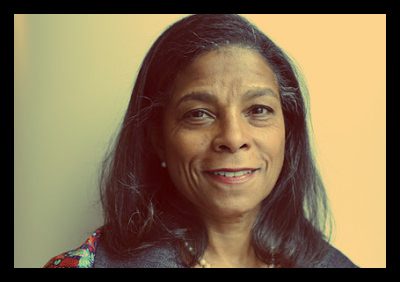
Risa_Lavizzo_Mourey_Clinton_Global_Initiative
Risa Lavizzo-Mourey, President and CEO of the Robert Wood Johnson Foundation, spoke about Health Leads during a panel discussion on non-communicable diseases (NCD) at the Clinton Global Initiative on 24 September. Ms. Lavizzo-Mourey noted that important preventative measures for NCDs should include analyzing the living environments outside hospital walls in order to improve the quality of overall care people receive, which is what Health Leads specifically advocates and executes.

Health Leads’s mission statement reads, “to catalyze this health care system by connecting patients with the basic resources they need to be healthy…to champion quality care for all patients.” An example of this model is enabling doctors to prescribe basic resources like food and heat to their patients the same way the doctors would prescribe medicine or provide referrals. This whole-patient approach requires healthcare professionals to learn about the community environment and the living conditions of their patients when they leave their doctors’ offices.

The results of these inquiries enter the patient’s electronic record, which partner-hospitals can use to refer patients who lack basic resources to Health Leads. Through a systematic set of steps, the patient can carry the prescription to a Health Leads desk at the partner-hospital.

A Health Leads Advocate then works with the patient to connect her to the necessary community services that will help provide the basic resources the patient requires. Aid programs for basic resources may include additional health insurance coverage, access to food pantries and food assistance programs, discounts on gas and electric costs, job training, and childcare subsidies.

The last two steps require a follow-up from the Health Leads Advocate and updates to the clinic team from the patient. This symbiotic relationship is necessary to navigate any further challenges that may arise as a result of the previous steps. These challenges may include tracking down phone numbers, creating maps, finding transportation, and completing applications. Health Leads launched in 2010 and has since served over 23,000 patients.

In 2012, the program identified the top seven patient needs: education, utilities, housing, food, employment, income and benefits, and legal. To address these needs Health Leads trains a dedicated staff of program managers and Advocates whose sole design is to connect patients with the basic resources they require to get healthy.

– Yuliya Shokh

Sources: Health Leads, CGI 2013 Annual Meeting
Photo: Bloomberg

October 2, 2013
https://borgenproject.org/wp-content/uploads/borgen-project-logo.svg 0 0 Borgen Project https://borgenproject.org/wp-content/uploads/borgen-project-logo.svg Borgen Project2013-10-02 21:14:032024-05-25 00:22:02Health Leads & Clinton Global Initiative
Activism, Advocacy, Global Poverty, Philanthropy, Poverty Reduction

State Street Foundation: Providing Sustainability in Poor Communities

State_Street_Foundation
The State Street Foundation is a unique organization that focuses on providing grants to deserving groups that offer services to the poor. By “actively engaging in our global communities,” State Street is able to empower impoverished people through education, affordable housing and small business programs. The company also assists businesses by offering financial guidance in investment, research and trading.

State Street mainly operates 25 countries; most of its programs are in Australia, China, Hong Kong, India, Japan, Singapore, South Korea and Taiwan. The organization’s vast number of volunteers and supporters work in low-income communities to create sustainable poverty alleviation projects. These volunteers worked 78,000 hours and completed 4,900 projects in 2010. Since its formation in 2001, State Street employees and alumni have contributed 430,000 hours and 15,600 service projects.

These projects vary based on the needs of local communities, but all have the goal of improving quality of life in these areas. State Street’s Supplier Diversity Program works with businesses owned by minorities and women to ensure that these small businesses have the same opportunities as other larger companies. Providing grants to these businesses helps them financially thrive, thus creating jobs and increasing economic growth for the entire community.

In addition to distributing local grants, State Street Foundation sponsors community fundraising events for charities the organization supports. In 2010, State Street donated $3.2 million to these charities. For these reasons, the company has won copious awards for its philanthropy, including the Custody Risk’s Mutual Fund Administrator of the Year and Transfer Agent of the Year (2013), Best Securities Financing House in Asia Asset Management’s Best of the Best Awards (2013), European Transfer Agent of the Year (with IFDS) in the 2012 Funds Europe Awards (November 2012) and numerous other awards since its founding.

State Street is a foundation devoted to helping impoverished businesses and communities and hopes to contribute to poverty alleviation, one region at a time.

– Mary Penn

Sources: State Street, AVPN
Photo: Time

October 2, 2013
https://borgenproject.org/wp-content/uploads/borgen-project-logo.svg 0 0 Borgen Project https://borgenproject.org/wp-content/uploads/borgen-project-logo.svg Borgen Project2013-10-02 21:07:012024-06-04 01:17:32State Street Foundation: Providing Sustainability in Poor Communities
Activism

Hermione Granger and the Fight for Equality

hermione_granger
Emma Watson has accomplished more than the average twenty-three year old woman. Watson has starred in the widely successful Harry Potter series, and has gone on to play leading roles in other film productions. Her portrayal of Hermione Granger, the lead heroine character in the Harry Potter series, was magnificent, and she has received many accolades for her acting. Hermione Granger is the epitome of standing up for beliefs, fighting for the better cause and improving the livelihood of all beings in the wizarding world of Harry Potter. The character of Hermione Granger was embraced by wizard fans worldwide, and her ways of seeking the greater good are well revered.

Hermione Granger stood out in a peculiar way. Whereas her fictional partners in crime, Harry Potter and Ron Weasley, were more laid back, Hermione routinely took charge. She was constantly fighting for the greater cause, and pushing her fellow classmates to join her in the quest for brilliance.

Hermione always had the lookout for those less fortunate than her, and throughout the Harry Potter series she was consistently helping others. Hermione’s shining moments came in her fight to free the house-elves, a group of mythical creatures destined to clean and cook for richer families and organizations. The house-elves were a race that accepted their fate; they were content with the life they lived. However, Hermione pursued their freedom because many of them had never understood the concept of freedom.

Hermione faced much criticism during her quest to enlighten the house-elves about freedom. Many students attempted to dissuade her, yet she persisted because she believed in the fight for the greater good. She constantly reminded others that they accepted their life because they had never had freedom before. Whereas her attempts to free the elves fell on many deaf ears, she continued to fight for what she knew was the right cause.

The way Hermione refused to adhere to the criticism of her peers is an important lesson. Hermione stood out because of her beliefs that life could be equal for all. This same mindset can be used to fight worldwide poverty. Many Americans turn a blind eye to these struggling third-world nations, too timid to speak out or take actions. However, characters such as Hermione do exist in the real world, and they are the people who strive to make a difference for those less fortunate then themselves.

Should more people face the issue of poverty in a manner similar to Hermione’s stand against house-elf inequality, the results could be momentous. Her drive and perseverance to accept nothing but civil rights equality is admirable. The potential for poverty diminishment could expand exponentially if more individuals take a “Hermione Granger” stand against it.

– Zachary Wright

Sources: Accio Quotes, Goodreads
Photo: MTV

October 2, 2013
https://borgenproject.org/wp-content/uploads/borgen-project-logo.svg 0 0 Borgen Project https://borgenproject.org/wp-content/uploads/borgen-project-logo.svg Borgen Project2013-10-02 20:40:592017-03-20 13:06:21Hermione Granger and the Fight for Equality
Activism, Charity, Global Poverty

Serengetee Shirts: Fighting Poverty in Style

Serengetee Shirts Fighting Poverty Style Fashion Africa
What happens when activism and fashion unite? Serengetee, an apparel company with a good-humored name, was created last year by five college students with an innovative goal in mind.

The company’s tagline, “Wear the world,” certainly rings true. Serengetee currently has 32 partners to whom it donates 13 percent of its proceeds for every shirt or pair of shorts sold. Each piece of clothing comes with a unique pattern representative of the country it benefits, juxtaposing the clothings’ all-American style.

For instance, sales of “Azul Calavera,” which feature smiling decorative skulls amid a floral backdrop, go toward Soles4Souls, which collects and distributes shoes to impoverished people around the world.

“Kruger,” meanwhile, showcases sunset hues and adorable sketches of elephants, tribal warriors, and gazelles, and benefits the TLC Children’s Home—an organization that provides free care and support to abandoned South African children.

Other buyers can purchase “Managua,” a popular rainbow-striped pattern inspired by the natural scenery in Nicaragua, which benefits Pencils of Promise, a non-profit group dedicated to improving access to worldwide education.


The Future of Serengetee


Since its recent beginnings, the company has donated over $30,000 to causes in over 28 developing countries. The company has even been briefly overwhelmed from the support it has received – following immense social media buzz,  orders were backlogged earlier this spring.

Serengetee founders are now prepared for future surges in sales as their public profile continues to rise. They have reached back to their undergraduate roots by employing college representatives from campuses nationwide to promote the Serengentee vision.

With a plethora of trend-setting designs and charitable causes to choose from, it is hard not be charmed by the idea of making the fight against global poverty a primary fashion statement.

– Melrose Huang
Sources: Serengetee, Forbes, Yahoo
Photo: Serengetee

October 1, 2013
https://borgenproject.org/wp-content/uploads/borgen-project-logo.svg 0 0 Borgen Project https://borgenproject.org/wp-content/uploads/borgen-project-logo.svg Borgen Project2013-10-01 09:54:122024-06-05 01:53:38Serengetee Shirts: Fighting Poverty in Style
Activism, Food & Hunger

40 Hour Famine at Hennessey Catholic College

40_hour_famine
Hennessey Catholic College Students have decided to experience what world hunger and poverty is truly like in their own, unique way. The school has formed the 40-hour famine team with the goal of raising both money and awareness for those suffering from extreme poverty and international conflicts in Malawi, Ethiopia, East Timor, Nepal, Tanzania and Ugandav. The students are given the opportunity to experience the tribulations of those living in developing areas, sacrificing basic human needs such as sleep and food to fully immerse themselves in the struggle of living on less than a dollar a day.

The conflicts in Malawi are worsening. Nearly two million people in southern Malawi are starving and almost half of Malawians live on less than a dollar a day. With a population of almost 16 million people, that means nearly eight million citizens live below the poverty line. For Hennessey students, these statistics are troubling.

Starting at eight PM on the 16th of August and ending at noon on the 18th, 35 students will make multiple sacrifices for the cause. Below are some of the sacrifices individuals are contributing to the 40-hour famine campaign.

  • A Year 7 student trading in comfort of bed to sleep on floor, a reality many Malawians face every day.
  • A Year 10 student remaining awake for 40 hours, something children living in fear must do often.
  • A Year 12 student is giving up the Internet for 40 hours, something many children have never even used before.
  • A Year 8 student will rely on juice, tea, water and sugars, cutting out the luxury food and drinks that developing countries don’t have.

The students plan to raise $1500 dollars for the cause in hopes of helping those in need. Hennessey teacher and 40-hour famine leader Leonie Green said she is impressed with the student’s dedication to raising awareness, all the while learning very valuable lessons.

“It’s good to get people educated and not taking for granted what we have so much of,” she said.

– William Norris
Sources: The Young Witness, World Bank
Photo: World Vision

August 28, 2013
https://borgenproject.org/wp-content/uploads/borgen-project-logo.svg 0 0 Borgen Project https://borgenproject.org/wp-content/uploads/borgen-project-logo.svg Borgen Project2013-08-28 11:30:552024-12-13 17:49:3940 Hour Famine at Hennessey Catholic College
Activism, Advocacy, Global Poverty, Health, Nonprofit Organizations and NGOs, Volunteer

5 Ways to Make Your Workout Fight Poverty

Workout_Fight_Poverty
We all know working out is good for us. It makes you feel good and improves your health. But what if your workout could fight poverty as well? Sound too good to be true? It’s not! Here are 5 ways that you can help end poverty with your workout:

1) Charity Miles: This free app will track how many miles you run, walk, or bike and sponsor your efforts. For every mile you run or walk, they’ll donate a quarter, while a mile biking translates to a dime for charity. When you’re done with your workout, you share your success on a social media site and they send the money to a charity of your choice!

2) Run For Charity: This website will help you find a charity to run for. Charity runners use their training and hard work to raise money for the charity of their choice. Charities are extremely supportive of their runners, providing help with registration, training, and fundraising. Some will even have race day events for their runners. This is a great opportunity for runners to put all those miles to good use.

3) Plus 3 Network: This network was created by four guys who wanted to encourage people to get out and ride their bikes more. It has since grown to include all forms of exercise, which you can log on their website. You earn money for charity by logging your activity, so you feel even better about that yoga class or walk around the block.

4) Eco-Friendly Workout Gear: You show yourself some love by working out and staying healthy. Show the earth some love, too, by purchasing eco-friendly workout gear. Be sure to buy your shoes, socks, and clothing from eco-friendly companies like Montrail (shoes), Teko (socks), or Patagonia (clothing). Using reusable water bottles will keep plastic ones out of landfills and save you money. You can also look for secondhand fitness supplies, like weights, treadmills, and exercise balls to cut down on waste.

5) Donate Your Old Workout Gear: That fitness equipment that you just don’t use anymore could help someone else lead a healthier life. You can donate old sports balls, shoes, cleats, and the like to Sports Gifts, which redistributes old workout gear to underprivileged kids. Old tennis balls can go to Rebounces, which restores them and resells them as practice balls, saving space in our landfills. Your old orthotics that helped you get back to the activities you love can be given to Rebounces’ philanthropic organization, Joni and Friends. The nonprofit will give the equipment to disabled or injured people in the developing world.

– Katie Fullerton

Sources: Charity Miles, Plus 3 Network, SparkPeople, Oprah
Photo: DX Foundation

August 27, 2013
https://borgenproject.org/wp-content/uploads/borgen-project-logo.svg 0 0 Borgen Project https://borgenproject.org/wp-content/uploads/borgen-project-logo.svg Borgen Project2013-08-27 10:35:512024-05-25 00:19:415 Ways to Make Your Workout Fight Poverty
Activism, Advocacy, Philanthropy, Volunteer

What is Venture Philanthropy?

What_is_venture_capitalism
Venture philanthropy originated in the mid-1990s in the United States and began spreading through Europe around 2002. It is largely modeled after venture capitalism, in which professional investors use third-party funds to help startup businesses get off their feet.

In a similar way, venture philanthropists use their influence and skills to provide charities or socially minded enterprises with financial and non-financial aid. Venture philanthropy is often undertaken by organizations, which lend support to anywhere from 3 to 15 charities or socially conscious businesses. Individuals, families, and institutions usually provide the organizations’ funds.

The venture philanthropy movement originally began as an alternative to traditional philanthropy, in which high-quality nonprofits are given capital and room to work as they see fit.

Meanwhile, venture philanthropists are much more highly involved. Beyond just donating significant amounts of money, they may hold positions as board members or offer skills-based donations, such as business planning or executive coaching.

According to a 2004 report by Venture Philanthropy Partners, small and local nonprofits often lack the support they need. They can, therefore, be significantly helped by venture philanthropy, which provides long-term financial support, strategic advice, and helpful professional connections.

Depending on the goal of the philanthropy, and the types of organizations supported, venture philanthropists often choose to give in different ways. While some organizations dole out non-returnable grants seen as investments with only social returns, others use various types of loans to help charities or social enterprises get started and continually grow. Once these loans are repaid, the money is reinvested in another organization or startup company.

Venture philanthropists also generally commit to multi-year support at a substantial level, with the goal of financial independence once funding ceases. Additionally, venture philanthropists aim to improve the long-term viability of their investees by funding core operating expenses, rather than individual projects or programs.

Finally, venture philanthropists highly emphasize results and good business practices. They generally hold their recipients to high accountability and management standards, and expect goals to be achieved. This highlighting of measurable outcomes is one of the more obvious similarities between venture philanthropy and venture capitalism.

Venture philanthropy allows donors to become highly invested while working with charities and social entrepreneurs. It also provides many organizations, especially small and local ones, with the long-term and varied assistance they need.

By providing an alternative to hands-off donations, venture philanthropy encourages people to actively change the world around them. It has possibly even substantially widened the range of people becoming philanthropists by appealing to a field of entrepreneurs whose experience and expertise can be valuable assets to charities and socially conscious startup businesses.

Venture philanthropy offers a unique and very often successful approach to improving our society and the world, and should therefore enjoy continued support.

– Katie Fullerton
Sources: Social Innovations Europe, Forbes, Slate, Venture Philanthropy Partners
Photo: Francis Moran

August 23, 2013
https://borgenproject.org/wp-content/uploads/borgen-project-logo.svg 0 0 Borgen Project https://borgenproject.org/wp-content/uploads/borgen-project-logo.svg Borgen Project2013-08-23 05:37:072024-05-25 00:18:44What is Venture Philanthropy?
Activism, Philanthropy

Philanthropy and Adult Entertainment

phil harvey_opt
Phil Harvey is the founder and president of DKT International, a D.C.-based charity organization that supports family planning and HIV/AIDS prevention programs in 19 different countries. Phil Harvey is also president of Adam & Eve, one of the world’s largest purveyors of “adult entertainment.” His company, Adam & Eve, provides major revenue for DKT International’s benevolent works. In this regard, Harvey is using what seems taboo and untouchable for a charitable cause.

Harvey worked for CARE International for five years during the 1960s. There he became convinced that the best way to improve the lives of the poor was to provide family planning, contraception and fertility control. Eventually Harvey would go on to study family planning at the University of North Carolina where he met Tim Black. Black and Harvey were both extremely passionate about the topic of family planning. Realizing that rural areas often lacked the right medical infrastructure to provide the proper tools for family planning, Black and Harvey focused on social marketing techniques. They sought to place low-cost contraceptives in market places so that anybody could afford them. To do so they would have to advertise heavily to subsidize the cost and brand them carefully. Black and Harvey decided to test their ideas by selling condoms by mail order. At the time, mailing of condoms was considered illegal, as “obscene” materials could not be mailed.

Along the way, Harvey and Black’s mail order condom business would grow into the organization DKT International. Additionally, the company Adam & Eve would rise from mail order as well. DKT International branched out into developing nations while Adam & Eve grew to sell over $70 million worth of films and goods a year. However the two companies were linked together because Harvey’s Adam & Eve now provides 10% of DKT’s funding. Furthermore, Adam & Eve donates about 25% of its revenue from adult entertainment to charity.

Few customers of Adam & Eve know that much of their purchases are going toward charities. The company once attempted to inform customers of its philanthropic activities, but there was little difference in sales. Today, Adam & Eve is facing challenges to its business. One challenge is the rise of new competitors. Phil Harvey has been known for being very libertarian and has fiercely defended freedom of speech. He has also defended Adam & Eve against a variety of accusations about its obscenity. However, unwittingly, by defending his adult entertainment company, Harvey has opened doors for other sexual entertainment groups claiming the same right to free speech and expression.

Furthermore, there is also the entire issue of whether or not adult entertainment should be used to promote anything related to public health. Even though it is paying for millions of contraceptives for those in poverty, is pornography an appropriate means to do so? The adult entertainment industry, while seemingly innocuous, is also filled with a variety of its own flaws. Thus pornography and charity seem highly at odds with one another. Yet the truth is that sex sells and that money can be used for charitable purposes. For some, the idea may seem preposterous even disgusting, but Phil Harvey is certainly donating a lot more funds than many others.

– Grace Zhao

Sources: The Economist, How To Make a Difference
Photo: How to Make a Difference

August 23, 2013
https://borgenproject.org/wp-content/uploads/borgen-project-logo.svg 0 0 Borgen Project https://borgenproject.org/wp-content/uploads/borgen-project-logo.svg Borgen Project2013-08-23 04:00:502014-02-11 11:55:11Philanthropy and Adult Entertainment
Activism, Human Rights

Remembering Kosovo Genocide

Kosova

Ermira Babamusta, Ph.D is a guest writer and a Regional Director for The Borgen Project.

World Humanitarian Day is an opportunity to recognize those people around the world often in dangerous and difficult circumstances. This year I would like to pause and remember the tragic events in Kosovo and the humanitarian catastrophe of ethnic Albanians being killed, expelled and persecuted in their own land. The ethnic cleaning campaigns led by Slobodan Milosevic and the Yugoslav and Serb forces against Albanian civilians shall forever be recorded as dark years in the history of Albania and Kosova.

This August 19, 2013 as the world commemorates the fight against genocide, it is important to reflect on the historical aspects of genocide against ethnic Albanians. I dedicate this day to the Families of those who were harmed during the Kosovo Genocide.

As I witnessed the injustice being inflicted on the Kosovar refugees in 2007 and on the genocide survivors in 2012, I was reminded of their struggle to hang on and lead a normal life despite the horrible trauma they experienced. Today, I think about those who are still missing and their families who have no answers.

We have a great opportunity to learn from the past, become united and encourage leaders to build a better future. It is essential to peace, diplomacy and prosperity to ground our efforts on the four pillars of democracy: justice, good governance, economic development and social welfare.

I applaud America for leading the way in this effort of peace and democracy building. I had the chance to visit and meet with great leaders and US Congress members like Senator Harry Reid, Senator Tom Harkin, former US Secretary Colin Powel, UN Secretary General Kofi Annan, all of who share my commitment to peace, human rights and democracy. I applaud the brave actions and the extraordinary efforts of President Bill Clinton, former US Secretary Hillary Clinton, President Obama, Vice President Joe Biden, US Secretary of State John Kerry, Dr. Jill Biden and First Lady Michelle Obama for staying at the forefront of building and strengthening democracy in US and around the world and promoting human rights.

As J. F. Kennedy stated, “the world is very different now, for man holds in his mortal hands the power to abolish all forms of human poverty, and all forms of human life.” This is the time to start the movement for global equality, promote human rights, improve governance and deliver justice around the world. I am proud that Albania and Kosovo are great successful models of such moral and democratic principles.

Ermira Babamusta, Ph.D

August 19, 2013
https://borgenproject.org/wp-content/uploads/borgen-project-logo.svg 0 0 Borgen Project https://borgenproject.org/wp-content/uploads/borgen-project-logo.svg Borgen Project2013-08-19 04:17:082019-12-17 15:19:04Remembering Kosovo Genocide
Activism, Education, Women and Female Empowerment

Malala Day: July 12, 2013

Malala_Day
Perhaps no adolescent in the world is regarded with more widespread veneration than sixteen-year-old Malala Yousafzai, the well-known Pakistani advocate for female education who was shot by the Taliban for her convictions in October 2012. Seriously injured from the shooting, Malala was immediately flown to the United Kingdom to undergo a series of emergency operations. Miraculously, she recovered.

Just over a year later, Malala is back in school. However, her life is far from blithe—the urgency for access to education for all girls is ever present. Thus, Malala continues to ceaselessly advocate for girl’s rights, disseminating her message on the global stage.

In order to honor her prodigious efforts in the name of girls everywhere, the United Nations hosted Malala Day on July 12, 2013, her sixteenth birthday. The event—which evolved to be known as “Malala Day”—included a speech by Malala herself, pushing for female education everywhere.

Standing amongst the most powerful leaders in the world, Malala spoke confidently. She beseeched courage from the world’s women: “Let us pick up our books and pens. They are our most powerful weapons. One child, one teacher, one pen and one book can change the world. Education is the only solution.”

She then addressed the personal, demonstrating the unwavering nature of her principles: “The terrorists thought that they would change my aims and stop my ambitions but nothing changed in my life, except this: weakness, fear and hopelessness died. Strength, power and courage were born.”

In a world where 115 schools were attacked last year in Mali, 165 in Yemen, 321 in occupied Palestine, and 167 in Afghanistan, Malala’s struggle has never been more pressing.

– Anna Purcell

Sources: AlJazeera, The Guardian
Photo: National Secular Society

August 12, 2013
https://borgenproject.org/wp-content/uploads/borgen-project-logo.svg 0 0 Borgen Project https://borgenproject.org/wp-content/uploads/borgen-project-logo.svg Borgen Project2013-08-12 16:27:132017-10-04 12:35:10Malala Day: July 12, 2013
Page 53 of 56«‹5152535455›»

Get Smarter

  • Global Poverty 101
  • Global Poverty… The Good News
  • Global Poverty & U.S. Jobs
  • Global Poverty and National Security
  • Innovative Solutions to Poverty
  • Global Poverty & Aid FAQ’s
Search Search

Take Action

  • Call Congress
  • Email Congress
  • Donate
  • 30 Ways to Help
  • Volunteer Ops
  • Internships
  • Courses & Certificates
  • The Podcast
Borgen Project

“The Borgen Project is an incredible nonprofit organization that is addressing poverty and hunger and working towards ending them.”

-The Huffington Post

Inside The Borgen Project

  • Contact
  • About
  • Financials
  • President
  • Board of Directors
  • Board of Advisors

International Links

  • UK Email Parliament
  • UK Donate
  • Canada Email Parliament

Get Smarter

  • Global Poverty 101
  • Global Poverty… The Good News
  • Global Poverty & U.S. Jobs
  • Global Poverty and National Security
  • Innovative Solutions to Poverty
  • Global Poverty & Aid FAQ’s

Ways to Help

  • Call Congress
  • Email Congress
  • Donate
  • 30 Ways to Help
  • Volunteer Ops
  • Internships
  • Courses & Certificates
  • The Podcast
Scroll to top Scroll to top Scroll to top