• Link to X
  • Link to Facebook
  • Link to Instagram
  • Link to TikTok
  • Link to Youtube
  • About
    • About Us
      • President
      • Board of Directors
      • Board of Advisors
      • Financials
      • Our Methodology
      • Success Tracker
      • Contact
  • Act Now
    • 30 Ways to Help
      • Email Congress
      • Call Congress
      • Volunteer
      • Courses & Certificates
      • Be a Donor
    • Internships
      • In-Office Internships
      • Remote Internships
    • Legislation
      • Politics 101
  • The Blog
  • The Podcast
  • Magazine
  • Donate
  • Click to open the search input field Click to open the search input field Search
  • Menu Menu

Archive for category: Activism

Information and stories on social activism.

Activism, Global Poverty, Philanthropy

The Legacy of Margaret A. Cargill

margaret_cargill
When Margaret A. Cargill, a low-profile philanthropist in California, died in 2006, she left behind a fortune that she hoped would help alleviate some of the world’s greatest problems. Thus was born the Margaret A. Cargill Philanthropies, which houses three grant-making entities: the Margaret A. Cargill Foundation (MACF), the Anne Ray Charitable Trust, and the Akaloa Resource Foundation.

Ms. Cargill envisioned her money helping the environment, the arts, families, children, and the elderly, as well as promoting tolerance and conflict resolution.

Before she died, Ms. Cargill asked her trustees “to support programs that address unmet needs; that give individuals and communities the tools to become self-sufficient; that will be sustainable after our support ends; and that build on and strengthen strong relationships within communities.” Ms. Cargill hoped to create lasting results through direct programs and continued financial support.

To this end, in its first full year of operation, the MACF awarded $136 million in grants, some of which went to environmental projects. In 2011, the Foundation awarded grants to assist flood victims in Pakistan, as well as children affected by a tornado in north Minneapolis. The Foundation’s future plans include launching additional programs to aid aging services and support Native arts in the Pacific Northwest.

– Yuliya Shokh

Sources: Margaret A. Cargill Philanthropies, Minnesota Council on Foundations, Philanthropy News Digest, Star Tribune
Photo: List 25

October 18, 2013
https://borgenproject.org/wp-content/uploads/borgen-project-logo.svg 0 0 Borgen Project https://borgenproject.org/wp-content/uploads/borgen-project-logo.svg Borgen Project2013-10-18 04:00:322024-05-25 00:26:28The Legacy of Margaret A. Cargill
Activism, Advocacy, Human Rights

Paper Art Company “People Too” Depicts Human Rights Abuses

Fan_the_Flame_People_Too
Russian artists Aleksey Lyapunov and Lena Erlikh are the talent behind the paper-craft agency, People Too, which has quickly become known for its intricate and miniaturized portrayals of lifelike scenes. The dynamic duo produce three-dimensional images entirely out of paper, depicting scenes of office spaces, factory work, holiday parties, rock concerts and, most recently, human rights violations.

In coordination with human rights organization Amnesty International, People Too has created an advertising campaign called Fan the Flame, which highlights several major, well-known abuses. These images show the harshness of human rights violations, by depicting police brutality, stoning, water-boarding and military executions, all in unsettling detail.

Each image in the campaign depicts a violent scene of aggressors attacking their victim. The sculptures and backgrounds are all white, with the exception of a small orange flame on the bottom of each image. The flames are lit by Amnesty’s iconic candle logo, metaphorically linking Amnesty’s burning of the paper oppressors to their work in combating real-life human rights violations.

Using a range of knives, scissors, tweezers and wire cutters, People Too spent a total of four weeks crafting their intricate sculptures for Amnesty’s Fan the Flame campaign. Well worth the effort, this campaign brings to life the cruelty that afflicts many around the world and the work that Amnesty does to end it.

– Tara Young

Sources: Digital Journal, Design Boom, Behance
Photo: Design You Trust

October 18, 2013
https://borgenproject.org/wp-content/uploads/borgen-project-logo.svg 0 0 Borgen Project https://borgenproject.org/wp-content/uploads/borgen-project-logo.svg Borgen Project2013-10-18 04:00:112024-05-25 00:25:28Paper Art Company “People Too” Depicts Human Rights Abuses
Activism, Advocacy, Charity, Global Poverty

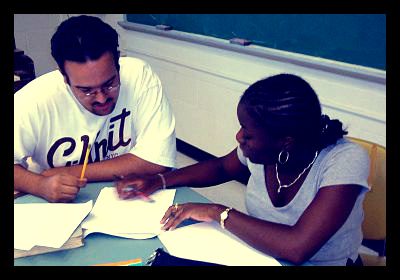
5 Benefits to Giving Back to the Community

tutoring
There are a variety of ways in which giving back to the community, both local and global, are beneficial:

1. Giving back can foster growth in a company or for an entrepreneur by providing an opportunity to listen and learn from the community (what it wants, and what it needs, and what it means to give). The act of giving back doesn’t have to proceed without thought of what the company needs or even what the company desires to give. Developing a standard policy about the causes you’re willing to donate to and support will allow the charities and organizations that approach you to be in support of your commitment.

The conversation can grow beyond guilt and into one of support. When it comes to listening to the community your business or organization might serve (be it a specific location or a certain demographic) you become more informed by the goals and needs of the community you’re attempting to serve and can tailor future projects towards these goals and needs.

2. An obvious benefit of giving back is that it helps the community, whether the help is on a global scale (foreign aid donations, clothing/food/etc. donations in the wake of natural disasters, or volunteer work) or a local one (donating food to a food bank, volunteering to help students after school, or aiding in cleaning up local waterways), the community improves.

Especially when aid involves helping others make progress beyond the limits of economic, educational, or social blockades. While the changes may be more difficult to grasp on a global level, at the local level the progress made is also visible. Which leads to…

3. Giving back, especially on an individual level (such as tutoring, mentoring a child or volunteering in a soup kitchen), is good for your health. Depending on the work one is doing: physical health can be improved by increased activity, regulated sleep schedules, and better sleep in general, stress relief, and can help reduce the risk of certain health problems, like heart attacks and strokes.

There are studies that show volunteer work can make people happier by boosting not only physical health but also by promoting social interactions and of course the good vibes that come from contributing to the community. This potentially happier and healthier mindset promotes a desire to give back more.

4. Maybe you’re looking for a career change or a career boost, a volunteer opportunity would be a great and beneficial way to begin. Whether you’re writing grants in your spare time or building houses, volunteering is work.

It takes and builds skills and understanding and provides the professional or someone just starting out with a network of people just as invested as they are in the progress of whatever project is in the works. In similar fashion, volunteer work provides a foothold into and gives one a stake in the community

5. Having a stake in the community means coming in contact with community members who may often be overlooked, ignored, or outright scorned depending on their situations. This works both on a local and global scale.

It’s easier to see why more needs to be done on a legislative level if one can see that even with aid programs there are still limits to what someone working full-time or someone on disability or someone without running water, electricity, the list goes on, is capable of doing when the law ignores, fails to protect, or actively works against them.

Meeting other members of your community may also be as simple as visiting a retirement community with your dog or helping out in the community garden. Whatever you end up doing you’re getting a better understanding of the community of which you are a part and its needs.

– The Borgen Project

Sources: Huffington Post, Southern Alpha 
Photo: NCHS
October 17, 2013
https://borgenproject.org/wp-content/uploads/borgen-project-logo.svg 0 0 Borgen Project https://borgenproject.org/wp-content/uploads/borgen-project-logo.svg Borgen Project2013-10-17 13:29:202020-07-02 20:57:195 Benefits to Giving Back to the Community
Activism, Advocacy, Charity, Global Poverty, Nonprofit Organizations and NGOs

Can One Person Change the World?

BuildOn_EducationVenture into a forest, and the trees are a hard thing to miss. Trees come in all shapes and sizes, but even the giant sequoia tree had a small beginning. All trees are grown from minuscule seeds. How does something so expansive and enormous come from such an insignificant beginning? Just like any other great wonder, all things start from small beginnings. Trees had to grow, buildings had to be constructed, and people are grown from swaddling babes. Everybody and everything had a small beginning; it’s the decisions made and actions done that determine what grows from it.
Jim Ziolkowski is the founder, president, and CEO of buildOn, a non-profit organization established to build schools in developing countries while also running after-school programs for America’s toughest inner-city environments. The seeds for buildOn were planted on an after-college excursion into the Himalayan Mountains. Ziolkowski came across a village in Nepal that was celebrating the opening of a new school. During his trip, Ziolkowski gained first-hand experience of poverty-stricken areas and the conditions that lay therein. But in this village, Ziolkowski saw something that forever changed him. He saw a community that was hanging its hopes on the power of education.

Ziolkowski returned to the United States, and began his job in corporate finance at GE. However, the memories of his cross-country hiking could not be forgotten. 15 months into his job, Ziolkowski walked out forever, pursuing a life that would enlighten the lives of others throughout the world by founding buildOn.

In 1992, Ziolkowski traveled to Misolami, a village located in Malawi. Ziolkowski planned to build his organization’s first school here, but he soon succumbed to malaria. Ziolkowski barely escaped with his life, and had another life-changing moment in the process; barely anybody in the area diagnosed with malaria escapes with their life. Ziolkowski only survived because he was not entrenched in extreme poverty, unlike most of the people in the area. Ziolkowski saw education as a way to escape extreme poverty, and his fire to change the world’s education for the less fortunate was strengthened.

Ziolkowski returned to the U.S knowing he also had to impact the lives of the urban youth in a positive way. Ziolkowski was unable to connect with these kids on a deeper level because he had been raised in a stable small town in Michigan. To solve this problem, Ziolkowski moved into a rough neighborhood in Harlem, so he could experience the difference in person. He lived there for three years, and he learned the urban youth did not want to participate in the dangerous style of life, they wanted to change it. Ziolkowski wanted to assist this mindset to the best of his ability.

Twenty years later, the results from Ziolkowski’s experiences have helped launch buildOn into a successful program. On Ziolkowski’s return to Misolami in 2012, the village had constructed four other schools thanks to support from buildOn. Instead of 150 kids attending school, now well over 1,000 were enrolled. Ziolkowski’s success can be seen on the forefront of this village, and in neighborhoods throughout urban America. The tree (buildOn) started out as a small idea, but Ziolkowski’s drive and determination turned it from a seed into a giant sequoia.

Ziolkowski’s success has been printed in his book, Walk in Their Shoes, available on Amazon.

– Zachary Wright

Sources: Amazon, buildON, NC State University
Photo: WorldOz

October 17, 2013
https://borgenproject.org/wp-content/uploads/borgen-project-logo.svg 0 0 Borgen Project https://borgenproject.org/wp-content/uploads/borgen-project-logo.svg Borgen Project2013-10-17 04:00:292024-05-25 00:24:54Can One Person Change the World?
Activism

Industrial Revolution II: Employee Welfare

Although it goes against the conventional wisdom of globalized business, a new business model looks to spend more money, not less, on its employees. Fostered by celebrity activist Matt Damon and led by Rob Broggi, a hedge fund analyst, Industrial Revolution II (IRII) sets its sights on evolving the clothing world into an industry with a conscience.

Previously working for Raptor Capital and Tudor Investment Corporation (one of the top hedge funds in the world), Broggi vaulted himself into an industry that combines garment manufacturing with humanitarian mindfulness.

Creating its first garment factory in Haiti, Industrial Revolution II plans to improve workers’ standard of living in a variety of ways. First, IRII pledges to invest 50% of its profits into health and education programs within the local community. On top of that, IRII will treat its workers humanely and provide safe work conditions.

Opposed to the current model of manufacturers focused on the cheapest labor possible to increase production at the most profitable rate, IRII sees both a niche and room for improvement.

What makes Broggi’s endeavor revolutionary in comparison to clothing competitors is his attention to his employees’ wellness.

IRII believes this improvement in health and working conditions will increase workers’ capabilities and production. When it’s all said and done, IRII anticipates its sales to be as competitive, in both price and quality, with other major brands.

What makes Broggi and Damon confident in IRII’s model is their focus on social purpose. With humane conditions, they believe that if they attain competitiveness their benevolent work will tip them over the edge in shoppers’ eyes. “If you can offer the same quality product at the same price you are going to win a tie-breaker nine out of 10 times” IRII’s CEO said.

That’s assuming it can compete with the businesses now dependent on child workers, cheap labor, and terrible conditions to continue their cost effectiveness.

According to Broggi, increased quality of life and improvements to health and education programs will enhance his workers’ productivity and lower turnover rates. With lower turnover rates, IRII can invest more in training its workforce, which promotes greater quality clothing.

Damon and Broggi believe that  healthy and better trained workers with an incentive in the company’s profits will jump-start productivity and increase the quality of products, giving the major labels, quite literally, a run for their money.

With history and ethics on their side, Damon, Broggi, and their new founded workers hope to lead the garment industry as a new model to reduce poverty and increase profits. If successful, they may pull millions out of severe poverty.

– Michael Carney

Sources: Boston Common, Industrial Revolution II
Photo: Heritage Daily

October 15, 2013
https://borgenproject.org/wp-content/uploads/borgen-project-logo.svg 0 0 Borgen Project https://borgenproject.org/wp-content/uploads/borgen-project-logo.svg Borgen Project2013-10-15 04:00:032024-06-05 01:53:39Industrial Revolution II: Employee Welfare
Activism, Advocacy, Charity, Global Poverty

Birmingham Partnership Walk Raises Money to Fight Global Poverty

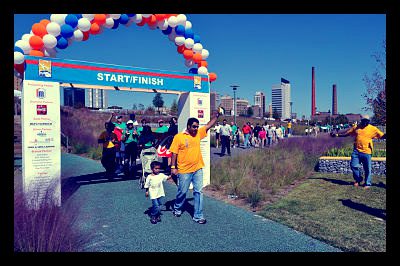
birmingham_partnership_walk
On September 22, 2013, over 2,200 people participated in the Birmingham Partnership Walk in order to raise awareness and money for those around the world living in poverty as well as the organizations that are pledged to help them.

The partnership walk was held at the city’s Railroad Park, and hosted a 5K run, a 1K youth run, a 100-yard dash, and a 3K family walk. Attendees could partake in these events while various groups, such as local marching bands and choirs, entertained the participants. Last year, 1,950 people participated in the partnership walk, raising $300,000. This year’s walk matched that goal.

The annual paternship walk is an event conducted by Aga Khan Foundation USA (AKF USA), which conducts similar Partnership Walks in 10 other cities around the United States. Aga Khan Foundation USA is a nonprofit humanitarian organization that focuses on agriculture, education, healthcare and other forms of development in Africa and Central Asia. All of the money raised at the walks organized by AKF USA goes to fund projects that directly battle global poverty.

Volunteer organizer Salima Mulji remarked that people should consider themselves part of a single global community, and, as such, it is the responsibility of everyone to help those in need. As a native resident of Southeast Asia, Mulji knows the advantages of growing up in the United States. Volunteering with AKF during the partnership walk is her way of giving back.

– Rahul Shah

Sources: ALL Alabama, Partnerships in Action, Alabama 13
Photo: Aga Khan Foundation USA

October 12, 2013
https://borgenproject.org/wp-content/uploads/borgen-project-logo.svg 0 0 Borgen Project https://borgenproject.org/wp-content/uploads/borgen-project-logo.svg Borgen Project2013-10-12 04:00:352020-06-25 08:15:02Birmingham Partnership Walk Raises Money to Fight Global Poverty
Activism, Technology

Mobile Devices in Africa Becoming a Basic Necessity

Africa Mobile Technology Essential Development
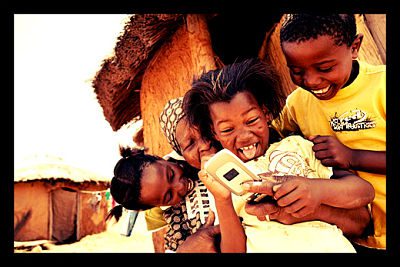
The number of wireless devices in the U.S. outnumbers the population. With a population of 315 million in 2011, there were approximately 328 million mobile devices in the U.S. Americans enjoy mobile devices, as do an increasing number of the African population. Paul Kagame, current president of Rwanda, captured the growth of mobile devices in Africa by stating, “In 10 short years, what was once an object of luxury and privilege, the mobile phone, has become a basic necessity in Africa.”

Let’s look at some examples:

  • Nigeria: A decade ago, landlines dominated in Nigeria, with about 100,000 phone lines. Today, Nigeria has close to 100 million mobile phone lines and the landline company is no longer in operation.
  • Kenya: In the last decade, mobile phone subscribers have increased 500-fold. Additionally, in 2009, mobile phone sales increased by more than 200 percent when the 16 percent general sales tax was removed. The sales continue to rise.
  • Rwanda: In 2010, mobile phone users grew by 50 percent. Doubled in one year!
  • South Africa: 72 percent of those between the ages of 15 and 24 have cell phones.
  • Africa as a whole: 650 million Africans, particularly the youth, use mobile phones for both social and functional purposes. This by far surpasses the number in the U.S. and Europe.

Although mobile phones across Africa generally consist of low-end Nokia phones used for the Short Messaging Service (SMS), smartphones with Internet capability are on the rise throughout the continent. In some African countries, mobile phones are more common than clean water, bank accounts and electricity, according to the World Bank and African Development Bank.

Why has there been an explosion in mobile phones? The main cause is the increasing reliance on mobile phones by youth. The youth, ages 15 to 24, depend on their mobile device not only for communication, but also for listening to the radio, transferring money, shopping, using social media and more. With some Africans only making $2 a day, many will occasionally skip their meals in order to pay the $5 and $8 monthly cell phone expenses.

Mobile devices are also used as a way of combating many social issues in Africa:

  • Activism: Mobile devices have offered communication, transparency, organization, openness, and empowerment to the electoral process.
  • Education: As mobile devices are more common and more affordable than PC’s, they are used as tools to deliver teaching content. As more than half of the parents in Africa are illiterate, there is hope that these teaching tools will have a positive impact on the education status of African children. In South Africa, MoMath, a mathematical teaching tool, has been launched.
  • Disaster management: With constant wars and genocide occurring throughout Africa, displaced persons are commonplace. Through mobile devices, displaced persons are able to reconnect with their families.
  • Agriculture: Agriculture is one of the largest employers throughout Africa. Through mobile phones, farmers are now able to make better decisions, resulting in more profit. Farmers use mobile phones to research weather information, market prices, and micro-insurance schemes.
  • Health: According to the World Health Organization, nearly 30 percent of drugs supplied in developing countries are fake. Through SMS, buyers can send the code found within a scratch card on the medicine packaging to find out if the drug is fake or not. This is a life saving resource, as in Nigeria, nearly 100 babies died due to ingesting a solvent usually found in antifreeze through their teething medication.

By 2016, there will be an estimated billion mobile phones on the continent of Africa. This has a huge impact for potential investors. In Kenya alone, the use of mobile devices has had a big economic impact. The mobile device industry contributed about $3.6 billion to the country’s GDP and has provided numerous employment opportunities.

– Caressa Kruth

Sources: CNN, The African Report, Washington Post
Photo: Evidence4Action

October 9, 2013
https://borgenproject.org/wp-content/uploads/borgen-project-logo.svg 0 0 Borgen Project https://borgenproject.org/wp-content/uploads/borgen-project-logo.svg Borgen Project2013-10-09 16:11:362024-12-13 17:49:42Mobile Devices in Africa Becoming a Basic Necessity
Activism, Advocacy, Charity

5 Cool Things Leonardo DiCaprio Has Done for Humanity

Leonardo DiCaprio Humanitarian SOS Childrens Villages
Leonardo DiCaprio is a 38-year-old American actor and film producer. He has received three nominations for Academy Awards, as well as nine Golden Globe Awards. DiCaprio has not only received praise regarding his acting career, but also for his efforts in philanthropy.

First and foremost, Leonardo DiCaprio has a strong passion for environmental activism. His longing to protect the environment is one that heavily influences his everyday life. He owns electric and hybrid cars and has even installed solar panels on his home. His personal life is filled with environmentally friendly alternatives to products that would normally cause harm to the earth. His passion also extends into his career – many humanitarian causes can be seen in the movies he’s been in like Blood Diamond and The 11th Hour, for example.

With that being said, here are five things DiCaprio has done for humanity:

  • The Leonardo DiCaprio Foundation – DiCaprio has founded the Leonardo DiCaprio Foundation. This foundation works to “protect Earth’s last wild places” while also “fostering a harmonious relationship between humanity and the natural world.” Established in 1998, LDF has worked on several significant environmental and humanitarian issues through grant making, campaigning, and media projects.
  • Wildlife preservation – World Wildlife Fund led a tiger habitat conservation effort in Nepal along with DiCaprio’s foundation that turned out to be quite successful. Prior to the event, DiCaprio held an auction which raised $39 million for this effort. This money fueled the effort even more so and allowed WWF to increase the number of tigers in Nepal by 63 percent. Other wildlife conservation efforts focus on endangered shark species and the preservation of rainforest habitats.
  • Ocean Health – Partnering with international funders, the collaborative Oceans 5 marked another great effort in humanitarianism and environmental improvement. Oceans 5 tackles the two highest ecological priorities: stopping overfishing and establishing marine reserves. Thanks to a generous grant, the organization was able to more easily combat these issues.
  • Providing Access to Clean Water – The Leonardo DiCaprio Foundation’s grant to Concern Worldwide provided 430,000 people in Tanzania, Mozambique, Sierra Leone, and Darfur with access to clean water.
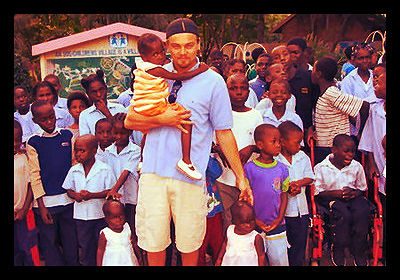
  • SOS Children’s Villages – Aside from working with the foundation, DiCaprio also takes interest in humanitarian work in film. In fact, while filming the movie Blood Diamond, DiCaprio worked with 24 orphaned children from SOS Children’s Villages. This independent organization provides family-based care for children with deceased or missing parents. They also support those deemed “vulnerable” through family strengthening programs, which focus on ensuring access to education, healthcare, and psycho-social support. In addition, SOS Children’s Villages offers emergency relief programs.

– Samantha Davis

Sources: Leonardo DiCaprio, Look To The Stars, CCF
Photo: SOS Children’s Villages

October 7, 2013
https://borgenproject.org/wp-content/uploads/borgen-project-logo.svg 0 0 Borgen Project https://borgenproject.org/wp-content/uploads/borgen-project-logo.svg Borgen Project2013-10-07 18:09:532024-06-05 01:53:395 Cool Things Leonardo DiCaprio Has Done for Humanity
Activism, Children

5 Inspiring Things Brad Pitt has done for Humankind

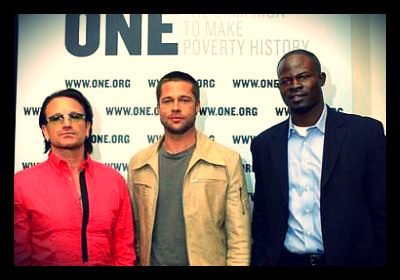
brad_pitt_bono
Most well-known for his performances on the big screen, Brad Pitt is showing the world that he has much more to offer than just cinematic entertainment value. Pitt has been involved in a number of projects and activist campaigns to help those in need around the world.

Below is a list of five remarkable and inspiring things that Brad Pitt has done for the world:

1. In 2004, Pitt joined the One Campaign as a spokesman alongside Bono to help advocate for an additional 1 percent of the U.S. budget to go towards supplying Africa with basic needs such as clean water, education, medicine, and food. Pitt has made frequent trips to Africa using his celebrity status to successfully draw media attention and support for the campaign.

2. Pitt traveled to Haiti in 2006 to visit a school supported by the Haitian foundation, Yéle Haiti Foundation. There, he assisted the charity by aiding projects focused on bettering health, community development, environment and education in Haiti through media, sports, and music.

3. In 2007, following the devastation of Hurricane Katrina, Pitt started a project in New Orleans to help build environmental friendly housing in the Ninth Ward. He and Angelina Jolie bought a mansion in the French Quarter of New Orleans to ensure that the project would be a part of their daily life. Pitt also teamed up with Global Green USA as a sponsor of a competition to design and build energy-efficient housing in the Ninth Ward that was both environmental friendly and affordable.

4. In addition to physically joining the ranks of advocacy campaigns and organizations, Pitt and Jolie continually show their support for global issues by donating to various foundations. In 2006 alone, the couple is reported to have donated more than $8 million to charity.

5. Last on the list of inspiring things, but certainly not the least, is Pitt’s history of adopting children with Jolie. The couple currently has six children, three of whom were adopted from different countries. The celebrity couple has certainly shown the world that adoption is a powerful way to make a big difference in a child’s life.

– Chante Owens

Sources: Today News, Look to the Stars, About.com
Photo: U2 Station

October 4, 2013
https://borgenproject.org/wp-content/uploads/borgen-project-logo.svg 0 0 Borgen Project https://borgenproject.org/wp-content/uploads/borgen-project-logo.svg Borgen Project2013-10-04 15:32:382017-11-30 11:11:155 Inspiring Things Brad Pitt has done for Humankind
Activism, Charity, Global Poverty, Nonprofit Organizations and NGOs

Sandy River Foundation Aids Nonprofit Efforts

Sandy_River_Foundation
The Sandy River Foundation, founded in 2008, works to bring physical and spiritual wholesomeness to all nations. It achieves this by providing nonprofit organizations with funding in order to focus on their initiatives rather than on fundraising to keep the organization going.

Nonprofits that wish to receive this funding must meet the guidelines of the Sandy River Foundation and complete an application process, but only after being invited by the foundation itself. Some of the organizations that have accepted funding include Heifer International, the Long Island Community Foundation, Oxfam America, and Acción International.

The mission of Heifer International is to end both hunger and poverty by providing families with a cow. This provides a source of food to families from the milk the animal provides. The families can also sell the excess products to gain a reliable source of income, and after saving this income, can start a small business or even join an agricultural cooperative with other families nearby.

By providing small businesses with microfinancing, Acción International hopes to strengthen businesses with both financial and managerial support. Once those microfinance institutions have grown and become financially independent of donors, the economy of the surrounding area will increase and the jobs of those working at the company will be secured. Acción International has provided its support to countries across the globe including India, China, Nigeria, Tanzania, and Colombia.

The Sandy River Foundation donates

to nonprofits in order to create a positive impact across the globe.

– Alessandra Wike

Sources: Accion, Heifer International, Sandy River Foundation

October 2, 2013
https://borgenproject.org/wp-content/uploads/borgen-project-logo.svg 0 0 Borgen Project https://borgenproject.org/wp-content/uploads/borgen-project-logo.svg Borgen Project2013-10-02 21:24:582016-02-06 08:44:40Sandy River Foundation Aids Nonprofit Efforts
Page 52 of 56«‹5051525354›»

Get Smarter

  • Global Poverty 101
  • Global Poverty… The Good News
  • Global Poverty & U.S. Jobs
  • Global Poverty and National Security
  • Innovative Solutions to Poverty
  • Global Poverty & Aid FAQ’s
Search Search

Take Action

  • Call Congress
  • Email Congress
  • Donate
  • 30 Ways to Help
  • Volunteer Ops
  • Internships
  • Courses & Certificates
  • The Podcast
Borgen Project

“The Borgen Project is an incredible nonprofit organization that is addressing poverty and hunger and working towards ending them.”

-The Huffington Post

Inside The Borgen Project

  • Contact
  • About
  • Financials
  • President
  • Board of Directors
  • Board of Advisors

International Links

  • UK Email Parliament
  • UK Donate
  • Canada Email Parliament

Get Smarter

  • Global Poverty 101
  • Global Poverty… The Good News
  • Global Poverty & U.S. Jobs
  • Global Poverty and National Security
  • Innovative Solutions to Poverty
  • Global Poverty & Aid FAQ’s

Ways to Help

  • Call Congress
  • Email Congress
  • Donate
  • 30 Ways to Help
  • Volunteer Ops
  • Internships
  • Courses & Certificates
  • The Podcast
Scroll to top Scroll to top Scroll to top