• Link to X
  • Link to Facebook
  • Link to Instagram
  • Link to TikTok
  • Link to Youtube
  • About
    • About Us
      • President
      • Board of Directors
      • Board of Advisors
      • Financials
      • Our Methodology
      • Success Tracker
      • Contact
  • Act Now
    • 30 Ways to Help
      • Email Congress
      • Call Congress
      • Volunteer
      • Courses & Certificates
      • Be a Donor
    • Internships
      • In-Office Internships
      • Remote Internships
    • Legislation
      • Politics 101
  • The Blog
  • The Podcast
  • Magazine
  • Donate
  • Click to open the search input field Click to open the search input field Search
  • Menu Menu

Archive for category: Activism

Information and stories on social activism.

Activism, Children, Education, Global Poverty

Children’s Books on Poverty

In America, we often tend to live inside of a bubble, a comfortable space in which we utilize blissful ignorance to the outside world and its problems.

But this bubble has a negative impact on what’s beyond it – the rest of the world. By choosing to live in ignorance, people who need help are unable to receive it. Where that problem begins is in the home – with children.

Being privileged to a comfortable lifestyle as a child, I grew up typically getting what I wanted for Christmas and birthdays. My sister was given an iPod when they first came out, while I eventually came to be the owner of a Gameboy Color, a Nintendo 64 and a GameCube. Then again, sometimes there were disappointments – things I had asked for that were not wrapped up in brightly colored packages under the tree.

It was important to my parents to make sure that my sister and I got gifts we would actually use, but even more important was the lesson that we wouldn’t always get what we want.

That lesson applies in a large scale to the problem of global poverty, and authors are now tackling it. Not only do these lessons come in large, adult books, but they are now being offered in the pages of children’s books.

The following books educate and reinforce principles regarding economic differences, while also validating the emotions of the poor readers. The refreshing part is that these books do not intend to preach; they teach the values of resourcefulness and gratefulness.

  • The Can Man by Laura E. Williams, illustrated by Craig Orback: Tim’s parents can’t afford the skateboard he dreams of for his birthday, so he puts on rubber gloves and starts collecting cans in a quest for cash. Soon he finds himself racing a homeless can collector to the best spots in the neighborhood for cans. As he gets to know “The Can Man,” Tim learns there are things in life more valuable than any object.
  • Lucky Beans by Becky Birtha, illustrated by Nicole Tadgell: Marshall Loman is sick of beans because he has had to eat them every night since his father lost his job. In this Depression-era story, a bean counting contest at a local shop and one boy’s math-savvy help a family get back on their feet again.
  • The Hundred Dresses by Eleanor Estes, is a classic story about a Polish immigrant girl who is teased for saying she has one hundred dresses, when she wears the same faded old dress every day. It is told from the perspective of the teaser’s friend. I read this story aloud over the course of a week, engaging the children during and after each reading in a philosophical discussion about the ethical dilemma of being a silent bystander.
  • Si, Se Puede! by Diana Cohn, is a bilingual story about the Service Employees International Union organizing drive and janitors’ strike in Los Angeles. It is useful to discuss why and how workers form unions, what a strike is, the importance of community support, and connections between the story of the janitors’ organizing drive and local labor struggles.
  • The Streets Are Free by Karusa, is a bilingual story about children in a Venezuelan barrio who organize and protest about the lack of a playground in their neighborhood and the eventual community action which builds it. Children can retell and then make captioned drawings to illustrate a story of community organizing told by a “guest activist” visitor to the classroom. These can be displayed, then bound into a class book.
  • Shingebiss by Nancy Van Lann, is an Ojibwe legend about a merganser duck who demonstrates the values of persistence, conservation and resourcefulness in order to survive the northern winter. This is a favorite of my students and my own children. Shingebiss is an excellent role model to refer to when the going gets rough. I am often impressed by hearing my students exhort each other to be persistent or praise each other for being resourceful in their problem solving. I start to proudly think, “Wow! Did I teach them that vocabulary?” and then humbly remind myself, “no, they learned it from a duck.”
  • Tight Times by Barbara Shook Hazen, is about a boy in a financially stressed family who really wants a pet dog. Told from the child’s perspective, it describes the boy’s spontaneous adoption of a stray kitten against the backdrop of the father’s anger at his sudden job loss. Children can easily make text-to-self connections with the story as they discuss how a sudden change of circumstances can affect everyone in a family.
  • The Lady in the Box by Ann McGovern, is about two children who notice and then befriend a homeless woman living in their neighborhood.
  • Fly Away Home by Eve Bunting, is about a homeless boy and his father who live at an airport. I use both this book and The Lady in the Box to help children see beyond the “shopping bag lady” stereotype of homelessness, to recognize that people of all ages and circumstances can become homeless for a brief or longer period of time, for a variety of reasons, and that shelters are not solutions in themselves.

– Samantha Davis

Sources: Huffington Post, Scholastic
Photo: Georgina Public Libraries
December 2, 2013
https://borgenproject.org/wp-content/uploads/borgen-project-logo.svg 0 0 Borgen Project https://borgenproject.org/wp-content/uploads/borgen-project-logo.svg Borgen Project2013-12-02 04:29:512024-05-25 00:33:02Children’s Books on Poverty
Activism, War and Violence

Ryan Gosling as an Advocate

The famous female-favorite movie star Ryan Gosling – notably known for films such as Drive and The Ides of March – is much more than just the typical Hollywood hunk. Over the past few years Gosling has proven to be quite a proactive and admirable advocate.

Gosling’s main advocacy passion is for animal rights: he has on numerous occasions spoken for maltreated farm animals. In the spring of this year, for instance, he learned of an atrocious practice about which he wrote a letter to People for the Ethical Treatment of Animals (PETA), urging them for immediate action. Apparently, farms across the nation would engage in extremely painful dehorning methods of cows. Using dangerous chemicals or simply amputating the appendages would leave a three-month healing time; only about a tenth of all farms use any kind of pain reliever for their animals. Ryan Gosling advocates that the simple solution here would be to breed hornless cows. The letter was publicized in its fullness on PETA’s website and quickly spread across the internet.

In 2011, Gosling appeared on the Jimmy Kimmel show raising another important issue: the war in Congo and how we are fueling it by buying products – everyday electronics – which contain minerals obtained there. Advocating for human rights, Gosling states, “We want our products conflict free.” The star personally visited Congo prior to his appearance on the show, meeting with various organizations and actively advocating against the war. He urges viewers of Jimmy Kimmel to do the same by supporting Raise Hope for Congo – a campaign geared against the ongoing conflict in eastern Congo.

In a separate letter to the Globe and Mail, Ryan Gosling advocates for maltreated pigs by drawing a parallel between them and his beloved dog, George. Intelligent and curiously close to humans in plentiful ways, pigs are being kept in solitary confinement for weeks by the pork industry, leading to the deterioration of both mind and muscle. Gosling means that he could never imagine doing that to his four-legged companion; actually, could any Canadian (or sensible person in general)?

Ryan Gosling as an advocate is a true knight in shining armor for the world of the weak and the voiceless. The characters he portrays in his films are often troubled yet highly likable. Using that same charisma outside of the big screen is Gosling’s advocacy wild card. Decidedly down-to-earth and concerned with making the world a better place, he manages to seamlessly intertwine his career with his passion for aiding those in need. Instead of putting on glamorous events or the likes, he often chooses the more subtle, yet efficient approach of going straight to the source. As individuals stumble upon these letters he’s taken the time to personally write, they may stop and think for an extra moment, and feel more motivated to act themselves. Because, let’s be frank: few can resist the inspiring, mysterious, yet heartwarming appeal of Ryan Gosling.

– Natalia Isaeva

Sources: IMDB, PETA, Ecorazzi, Raise Hope for Congo, Buzzfeed, The Globe and Mail
Photo: Mirror UK

December 2, 2013
https://borgenproject.org/wp-content/uploads/borgen-project-logo.svg 0 0 Borgen Project https://borgenproject.org/wp-content/uploads/borgen-project-logo.svg Borgen Project2013-12-02 04:23:102024-05-25 00:34:39Ryan Gosling as an Advocate
Activism

DJ David Guetta: a Humanitarian Campaign for Love

David Guetta is a Grammy Award winning international DJ who is best known for his electro-house dance club hits and has worked with the likes of acts such as Akon, Usher, Lady Gaga, Tegan and Sara, and Jay-Z. Recently, the 46-year-old French producer teamed up with the United Nations for “The World Needs More” campaign which integrates social media messaging and sponsored humanitarian campaign donations. Launched in support of World Humanitarian Day, “The World Needs More” campaign encourages fans to hashtag a Sponsored word on Twitter or Facebook which will unlock a $1 donation of that sponsors choosing. Fans are also allowed to donate via text message.

Whether that word is #Empowerment supported by Intel or #Strength promoted by Gucci, all sponsored words that are sent in with in company of the hashtag #TheWorldNeedsMore, will be turned into aid which will go towards specific humanitarian efforts around the world. Considering Guetta included the term Love in the title of his debut album, “Just a Little More Love,” and one of his most popular singles, “When Love Takes Over,” it comes as no surprise which word he’s sponsoring. “There’s been a lot of my songs about love and that’s the kind of person that I am, the biggest energy in the world. Universal love. Have a little bit of compassion and love for each other.”

Joining Guetta’s campaign are various countries and organizations including the UN Foundation, the UN Development Programme (UNDP), the UN Office for the Coordination of Humanitarian Affairs (OCHA), the International Council of Volunatry Agencies (ICVA), and advertising agency Leo Burnett New York. The campaign was initially launched in August, though it was recently rebuffed at the knowledge of the costly devastations occurring in the Philippines at the hands of Typhoon Haiyan. Additionally money raised by Guetta will provide much needed food relief to those suffering from shortages in all parts of the world.

Guetta was also inspired to create an exclusive song to go along with his #Love campaign which he titled, “One Voice” featuring Mikky Ekko. His recent interest in global matters spurned his decision to create a song with a deeper meaning, “I’ve never had songs that are like this kind of subject, so I’m really excited about this. It’s a big change lyrically, but also sonically. Just, you know, growing up, trying to do something bigger than myself. It’s a big stretch from Sexy Chick.”

The visuals for the song were projected onto the face of the United Nations Secretariat Building in New York on November 22, 2013. Succeeding the broadcast of “One Voice,” the building was used as a backdrop for an interactive twitter wall which displayed tweets from across the world. This event was the first promotion of its kind and was hosted by United Nations Secretary-General Ban Ki-moon who began his week with a visit to an Auschwitz concentration camp in Poland. Mr. Ban praised Guetta for his “courage to change and create a new future for us all.”

– Jeffrey Scott Haley
Feature Writer

Sources: Rolling Stone, Lubbock Online, UN, World Humanitarian Day
Photo: Radio

December 2, 2013
https://borgenproject.org/wp-content/uploads/borgen-project-logo.svg 0 0 Borgen Project https://borgenproject.org/wp-content/uploads/borgen-project-logo.svg Borgen Project2013-12-02 04:13:072024-06-11 02:12:01DJ David Guetta: a Humanitarian Campaign for Love
Activism, Global Poverty

Charity Miles: Miles to Meals

Happen to be in training for that 5K fun run or a marathon for breast cancer research this fall? Running, jogging, power walking and biking are all meaningful activities that strengthen the body and the mind, and helps in the quest to look exceedingly fit in the cocktail dress come Friday night. What if there was a way to convert such health-conscious weekly toils into global humanitarianism?

With the Charity Miles iPhone application, running, biking or walking for charity is easier than ever. The app has the gestalt of physical training apps such as MapMyRun and Nike+ but with the added function of raising money for charity via remote sponsorships.

The mechanics are simple and instantaneous: download the app from the Apple Store, lace up your running shoes, launch the app, pick a charity to support, burn some asphalt and watch as your miles convert to dollars towards humanitarian efforts. Runners and walkers earn 25 cents per mile, while bikers earn 10 centers per mile for their chosen charities. The sponsorship pool for Charity Miles is up to $1,000,000.

The World Food Program (WFP) is one of the many charities taking part in this unique and universally accessible initiative. The non-profit organization works in tandem with United Nations agencies as well as other NGOs to provide food security to those marginalized peoples in refugee camps around the globe. Their mission statement involves food security as an essential organ for the body of global development.

The World Food Program reports that 66 million primary school-age children in impoverished areas attend classes hungry, but with a mere $3.2 billion the entirety of these children’s hunger could be ameliorated.

While we in the first world are running for fitness, millions of our fellow humans across the developing world are on the run for survival, whether it be for a safe haven from military shrapnel or in the desperation for food and clean water.

In response to the Syrian crisis, the WFP’s mission for October is to feed 4 million refugees despite the international community’s more urgent occupation with war. Projects of this nature are funded entirely through donations, such as those that come from crowd-funding efforts of Charity Miles.

Charity Miles marks an optimistic innovation in humanitarian efforts, smartly combining contemporary fitness technologies that instantaneously calculate the results of physical training with instantaneous funding organizations striving to better the lives of the hungry.

So get running. The two miles you run today ultimately puts food on the table for an entire refugee family in Syria.

– Malika Gumpangkum

Sources: Huffington Post1, Huffington Post2, Charity Miles, World Food Program
Photo: The Telegraph

October 25, 2013
https://borgenproject.org/wp-content/uploads/borgen-project-logo.svg 0 0 Borgen Project https://borgenproject.org/wp-content/uploads/borgen-project-logo.svg Borgen Project2013-10-25 14:31:052024-06-05 01:53:41Charity Miles: Miles to Meals
Activism, Global Poverty

How to Join the Peace Corps

If you’re one of the people in the world who wants to live, learn, and work with a community overseas, here’s what you need to know: some basic facts about the Peace Corps, as well as a (simplified) application process.

The Peace Corps sends volunteers to over 70 countries in the world. Traditionally, the length of this volunteer service is 27 months. It is unlikely you will be placed on a shorter assignment, unless you are a seasoned professional with 10 or more years of proven work experience. The typical 27 month volunteer will be placed in one of six program areas: education, youth and community development, health, business information and communications technology, agriculture, and environment.

To be eligible for service, you must be a U.S. citizen who is at least 18 years old. Additionally, 90 percent of Peace Corps volunteers have a college undergraduate degree. That being said, there is no maximum age limit, but the average age of Peace Corps volunteers is 28.

Here’s how you join the Peace Corps:

Step One:

Begin your application. Most applications take more than one session to complete, so be thorough; this application requires “two essays, three references, employment history, resume, a list of community and volunteer activities, educational background, and practical skills information.” It will also ask for college transcripts, “outstanding student loan, mortgage, or other financial obligation information,” documents about possible legal obligations, and a completed health history form.

Step Two:

You should be called for an interview within two weeks after an initial review of your application. At the interview, a recruiter will ask you questions about your work experience, skills, interests, as well as your personal feelings toward things like flexibility, cultural awareness and motivation. The recruiter will want to know about your commitment to the Peace Corps, and this offers you an opportunity to ask questions you may have as well.

Step Three:

If the recruiter thinks you are a good fit for the Peace Corps and there are open positions, then you will be nominated. At this time, you are considered recommended to move to the more legal stage of things such as medical clearance and fingerprinting.

Step Four:

This is the legal review stage. The documentation of things like financial obligations, marital status, criminal records and medical history will be examined.  You may be contacted for follow up information, but if everything turns out and all dates line up properly, you will be matched with an open position.

Step Five:

A formal invitation with a specific job description will be sent to you. This will include your leave date and a welcome packet that provides details of the country you will serve, in addition to a detailed job description. You must accept this invitation, and then the Peace Corps will provide you with information about orientation, training, and departure.

Step Six:

After accepting your invitation, you need to receive a complete physical and dental exam. This exam must take place sixty days prior to your departure. The majority of Peace Corps applicants are medically cleared.

Step Seven:

Prepare for departure! The Peace Corps travel office will issue you an electronic ticket that will send you to your pre-service orientation site. A short time after this, you will fly to your final destination and begin your Peace Corps experience.

While on a Peace Corps service, you will come face to face with real poverty, uncomfortable conditions, and a local culture unlike anything in America. Be honest with yourself, be prepared to change, and allow yourself time to adjust. It’s said that joining the Peace Corps is the toughest job you’ll ever love.

– Alycia Rock

Sources: Peace Corps, Peace Corps Apply, Peace Corps FAQ, Matador Network
Photo: Penn State

October 25, 2013
https://borgenproject.org/wp-content/uploads/borgen-project-logo.svg 0 0 Borgen Project https://borgenproject.org/wp-content/uploads/borgen-project-logo.svg Borgen Project2013-10-25 09:44:472024-06-11 02:05:43How to Join the Peace Corps
Activism, Global Poverty

November 20 Marks Universal Children’s Day

universal_childrens_day
Universal Children’s Day, celebrated on November 20, promotes the well-being of children everywhere. Nations worldwide celebrate the day to support children’s rights and interests. Universal Children’s Day is celebrated upon principles put forth by the General Assembly on December 14, 1954, by Resolution 836(IX). Since then, the day is used to promote objectives the General Assembly puts in place to enhance the welfare of children around the world.

November 20 was chosen as the day because of two other historical adoptions the General Assembly declared on this day. First, in 1959, the Assembly adopted the Declaration of the Rights of the Child. Secondly, the Assembly adopted the Convention on the Rights of a Child in 1989.

In more recent times, world leaders drew out the Millennium Development Goals (MDGs) in the year 2000, designed to reduce poverty dramatically. These goals are directly related to children in multiple ways. In 2012, The Secretary General launched a new program called Education First, which will raise awareness about education, as well as produce additional funds through advocacy work.

Several officials commend Universal Children’s Day and its purpose. According to David Anthony, co-author of UNICEF’s study, Generation 2025 and beyond: The critical importance of understanding demographic trends for children of the 21st century, “ the world needs to be prepared for the post-2015 agenda and take account of this fundamental and unprecedented shift.” He also states, “we must do everything possible, so these children get an equal chance to survive, develop and reach their full potential.”

Overall, by spreading awareness and boosting advocacy efforts regarding children’s well-being in the world and by incorporating the UN standard into national legal frameworks, we can ensure the rights of the world’s children. Wrapping up the vision of Universal Children’s day is this statement by the Report of the Secretary General in 2001, “We were all children once. And we all share the desire for the well-being of our children, which has always been and will continue to be the most universally cherished aspiration of humankind.”

– Laura Reinacher

Sources: United Nations, UNICEF

October 25, 2013
https://borgenproject.org/wp-content/uploads/borgen-project-logo.svg 0 0 Borgen Project https://borgenproject.org/wp-content/uploads/borgen-project-logo.svg Borgen Project2013-10-25 07:32:312024-05-25 00:29:48November 20 Marks Universal Children’s Day
Activism, Advocacy, Education, Food & Hunger, Global Poverty

10 Ways to End Hunger

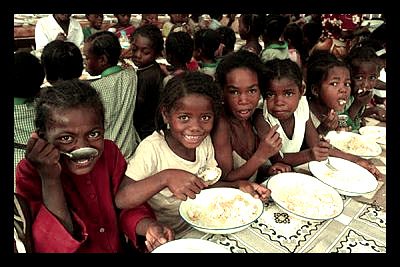
madagascar_children
There are an estimated 852 million hungry people in the world – an astounding number. However, with some simple ideas, the number of hungry people in the world can easily be reduced.

1. Education

Even if hunger was eradicated right now, it would only be temporarily so if education is not a priority. Educated children are prepared children. A good education equips children to provide for themselves, as well as their communities, in the future. Education ensures that the steps taken in the fight against hunger are sustainable.

2. School meals 

School meal programs are one of the easiest ways to feed lots of children, since the children are all gathered in one place. It is also very cost-effective. For 25 cents per meal, the World Food Program feeds 24 million school children annually.

3. Food security programs

The World Food Program defines food security as “when all people, at all times, have physical, social and economic access to sufficient, safe and nutritious food which meets their dietary needs and food preferences for an active and healthy life.” Food security programs aim to meet these needs by training farmers in developing nations through agricultural methods that will provide their communities with food – both now and long-term. The World Food Program reports that it has provided 200,000 farmers with agricultural training since the beginning of its food security programs.

4. Focus on women

It is estimated that women account for 60 percent of the hungry worldwide. If a mother is not able to provide for herself, she will most likely not be able to provide for her children either. This means that hunger is continuously being inherited by children. When women are helped, entire communities are helped.

5. Raise awareness

The simple act of bringing attention to the problem of hunger goes a long way in fighting it. People can’t contribute to a cause they aren’t informed of, and as more people become aware of how hunger affects the poor around the world, more people will engage in the fight against it. It’s that simple.

6. Donate

This is one that tends to be taken for granted. Many people talk about the importance of monetary donations, but relatively few actually donate. This is unfortunate, because donations of any amount can go a long way. There are billions of people in the world that do not suffer from chronic hunger. If all of these people contribute even the tiniest amount that they can afford, hunger will be exponentially closer to being eradicated.

7. Live simply

People in developed nations put so much money towards things they don’t need, while people in the developing world struggle just to get by on a daily basis. Practicing some restraint in spending would free up money that could then be used towards eradicating hunger. This could be as simple as forgoing a cup of coffee each day.

8. Reduce food waste

Excess waste ties up resources that could be used elsewhere in the fight against hunger. It is important for people in developed countries to be mindful of those in developing nations by doing their best to consume only what they need.

9. Be involved in government

Exercise the privileges that come with living in a democratic society in the fight against hunger. Elected officials are in place to represent the voice of the people. If enough people express their concern about global hunger to elected officials, the collective voice cannot be ignored, and action must be taken.

10. Fight for livable wages

It is not enough to simply provide the world’s hungry with food. They must be equipped to provide for themselves. Otherwise, the problem of hunger is not actually solved. Many workers in developing nations are exploited by employers and are not paid nearly enough to provide food for themselves, much less their families. If global hunger is to be defeated, all people must be provided with opportunity to earn livable wages.

– Matt Berg

Sources: YSA, WFPUSA, Huffington Post, World Hunger

Photo: World Food Programme

October 25, 2013
https://borgenproject.org/wp-content/uploads/borgen-project-logo.svg 0 0 Borgen Project https://borgenproject.org/wp-content/uploads/borgen-project-logo.svg Borgen Project2013-10-25 07:32:032024-05-25 00:30:0310 Ways to End Hunger
Activism, Education, Global Poverty

3 Things That Will Help End Poverty

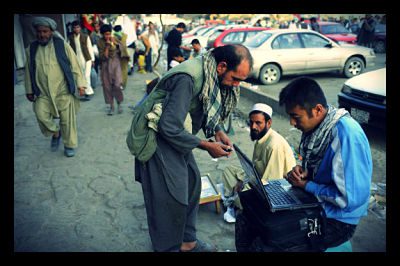
technology_global_poverty
When on the search for a solution to global poverty, activists and politicians come up with various elaborate plans, incentives and government legislations. Often these solutions are built with three very simple ideas that create substantial change to those living in poverty:

1. Education

Constant and good education can change lives. While those in the developing world take it for granted, there are people who live in poverty due to their lack of education. This lack of education is normally a result of the lack of the opportunity or circumstances that require them to work rather than study. The cycle of poverty is such that living in poverty requires the next generation to work to help support the family. The younger children are rarely given a chance to complete their education. The connection between education and poverty, or rather the ability to rise out of poverty, is extremely evident. An education guarantees a job that is better paying, allowing the next generation to continue to be educated instead of working. This breaks the cycle of poverty that rears its ugly head in so many parts of the world.

2. Small Local Businesses

Opportunities for jobs increase with the support and growth of small local businesses. Local businesses don’t only create opportunities; they also bring supplies and resources into a community that would greatly benefit from it. These small businesses range from medical supplies or care facilities to agricultural and technological support. Additionally, such businesses continue to beget more businesses, making the economy flourish and the citizens of the community thrive and follow by example.

3. Technology

Technology can substantially help improve the conditions of the poor. For those working in agrarian communities, advanced technology can yield better crops; technology can help improve education. Internet access can change the face of communications, and mobile phones greatly reduce the damages of natural disasters due to the immediate news they can provide. Access to electricity or any kind of power, would also help bring amenities to those living in poverty that many people take for granted. Finally, technology will significantly improve health care standards in places where it is scarce. The Posner Center for International Development does just this: various organizations come together, come up with ideas that will benefit developing areas in the world, and help bring about these additions that will significantly improve living conditions.

– Aalekhya Malladi

Sources: NY Times, Denver Post
Photo: Foreign Policy

October 24, 2013
https://borgenproject.org/wp-content/uploads/borgen-project-logo.svg 0 0 Borgen Project https://borgenproject.org/wp-content/uploads/borgen-project-logo.svg Borgen Project2013-10-24 17:47:512024-05-25 00:30:283 Things That Will Help End Poverty
Activism, Global Poverty

Google Search Terms Reveal Today’s Sexism

With the advent of the Internet, education, science, and advanced technologies never before-imagined by the forefathers of the contemporary world, one issue remains devastatingly current–women are still viewed as the inferior species in society.

UN Women, one of the branches of the United Nations, teamed up with artist Christopher Hunt of Oglivy & Mather to produce an ad campaign to address the pervasiveness and current predominance of the deprecating attitudes towards women.

The graphics feature bleakly lit photographic portraits of women of different races and backgrounds. Superimposed over their mouths like a tied gag is the iconic Google search bar with a drop-down of popular search terms about women. The highly searched queries, done in September 2013, echo archaic sentiments from far beyond the Victorian ages: “women shouldn’t vote,” “women need to be controlled,” and “women need to be disciplined.”

The popular queries reveal the Internet age’s view on sexism in the stark black text, while corrective and forward-thinking sentiments such as “women cannot accept the way things are” are printed almost illegibly in white beneath each woman’s chin. The black, inhibiting text easily overweighs the white restorative text printed on the ads.

The Google search ads reveal a disturbing and bleak truth about the world’s progress in attitude, or lack thereof. In terms of global development, especially with the empowerment of women as one of the MDGs, the question begs to be asked: is enough being done by today’s leading international institutions to advocate the importance of women in the common interest of pluralism and peace?

– Malika Gumpangkum

Sources: Adweek, Design Taxi, Newsfeed
Photo: Times

October 24, 2013
https://borgenproject.org/wp-content/uploads/borgen-project-logo.svg 0 0 Borgen Project https://borgenproject.org/wp-content/uploads/borgen-project-logo.svg Borgen Project2013-10-24 15:27:542024-05-25 00:30:21Google Search Terms Reveal Today’s Sexism
Activism, Global Poverty, Volunteer

5 Best Humanitarian Jobs

volunteer_abroad
For those individuals interested in the humanitarian work force, there are endless career possibilities. With over thousands of nonprofits and organizations to work with in virtually all countries across the globe, a wide variety of jobs are in abundance. But which jobs are the best? While everyone has their own preferences, these are the positions that seem to be most predominantly agreed upon as the best humanitarian jobs.

1. Volunteer

The most versatile and perhaps the most rewarding humanitarian job out there goes by the simple title of volunteer. Volunteers rarely make any money, but most all workers start at this position and are content with the opportunity to change lives.

2. Intern

A large number of nonprofits now offer internship programs, some paid and some unpaid. Depending on the organization, intern jobs can range from anything such as office work to traveling and even manual labor. Internships are a great starting place for people seeking careers in humanitarian work, as many internships feed directly into job opportunities.

3. Consultant

Nearly all humanitarian organizations are made up of several consultants—those who keep communication with important contacts and other outside individuals while answering any questions or concerns that the public might have. These positions are often paid.

4. Program Coordinator

Program coordinators play a vital role in nonprofits, as they are directly responsible for planning and executing specialized tasks for sub-organizations, events, etc. Depending on the organization at hand, these can be paid or unpaid positions.

5. Communications Specialist/Journalist

These jobs are often paid and include a number of important tasks ranging from making contact with other organizations to writing press releases for special functions, providing public relations tactics, and even publishing news as a journalist. This position typically allows for travel opportunities, as well.

– Meagan Hurley

Sources: Devex, Aid Worker Daily, Workforce Humanity
Photo: Cross-Cultural Solutions

October 24, 2013
https://borgenproject.org/wp-content/uploads/borgen-project-logo.svg 0 0 Borgen Project https://borgenproject.org/wp-content/uploads/borgen-project-logo.svg Borgen Project2013-10-24 15:17:572013-10-24 15:17:575 Best Humanitarian Jobs
Page 50 of 56«‹4849505152›»

Get Smarter

  • Global Poverty 101
  • Global Poverty… The Good News
  • Global Poverty & U.S. Jobs
  • Global Poverty and National Security
  • Innovative Solutions to Poverty
  • Global Poverty & Aid FAQ’s
Search Search

Take Action

  • Call Congress
  • Email Congress
  • Donate
  • 30 Ways to Help
  • Volunteer Ops
  • Internships
  • Courses & Certificates
  • The Podcast
Borgen Project

“The Borgen Project is an incredible nonprofit organization that is addressing poverty and hunger and working towards ending them.”

-The Huffington Post

Inside The Borgen Project

  • Contact
  • About
  • Financials
  • President
  • Board of Directors
  • Board of Advisors

International Links

  • UK Email Parliament
  • UK Donate
  • Canada Email Parliament

Get Smarter

  • Global Poverty 101
  • Global Poverty… The Good News
  • Global Poverty & U.S. Jobs
  • Global Poverty and National Security
  • Innovative Solutions to Poverty
  • Global Poverty & Aid FAQ’s

Ways to Help

  • Call Congress
  • Email Congress
  • Donate
  • 30 Ways to Help
  • Volunteer Ops
  • Internships
  • Courses & Certificates
  • The Podcast
Scroll to top Scroll to top Scroll to top