• Link to X
  • Link to Facebook
  • Link to Instagram
  • Link to TikTok
  • Link to Youtube
  • About
    • About Us
      • President
      • Board of Directors
      • Board of Advisors
      • Financials
      • Our Methodology
      • Success Tracker
      • Contact
  • Act Now
    • 30 Ways to Help
      • Email Congress
      • Call Congress
      • Volunteer
      • Courses & Certificates
      • Be a Donor
    • Internships
      • In-Office Internships
      • Remote Internships
    • Legislation
      • Politics 101
  • The Blog
  • The Podcast
  • Magazine
  • Donate
  • Click to open the search input field Click to open the search input field Search
  • Menu Menu

Archive for category: Activism

Information and stories on social activism.

Activism, Global Poverty

10 Quotes From People That Changed the World

quotes from people that changed the world
What do a French priest, Spanish poet, U.S. President, Scottish philosopher and self-freed African American all have in common?

They all think it’s time to end world poverty. Famous and brilliant men and women have been saying for years that at last we have the ability to make lasting change in the war on hunger.  Below are ten quotes from people that changed the world.

1. “Where justice is denied, where poverty is enforced, where ignorance prevails, and where any one class is made to feel that society is an organized conspiracy to oppress, rob and degrade them, neither persons nor property will be safe.” – Frederick Douglass, escaped slave, abolitionist leader and supporter of woman’s rights.

2. “The war against hunger is truly mankind’s war of liberation.” – John F. Kennedy, former U.S. President

3. “The real tragedy of the poor is the poverty of their aspirations.” – Adam Smith, Scottish philosopher

4. “Hunger is not an issue of charity. It is an issue of justice.” – Jacques Diouf, Food and Agricultural Organization Director-general

5. “This is the first generation in all of recorded history that can do something about the scourge of poverty. We have the means to do it. We can banish hunger from the face of the earth.” – Hubert H. Humphrey, former U.S. Vice President

6. “[P]eace does not mean just putting an end to violence or to war, but to all other factors that threaten peace, such as discrimination, such as inequality, poverty.”– Aung San Suu Kyi, Burmese opposition politician and chairperson of the National League for Democracy in Burma

7. “What I would say to the young men and women who are beset by hopelessness and doubt is that they should go and see what is being done on the ground to fight poverty, not like going to the zoo but to take action, to open their hearts and their consciences.” – Abbé Pierre, French priest and member of the Resistance in WWII

8. “Poverty is everyone’s problem. It cuts across any line you can name: age, race, social, geographic or religious. Whether you are black or white; rich, middle-class or poor, we are ALL touched by poverty.” – Kathleen Blanco, former Governor of Louisiana

9. “The day that hunger is eradicated from the earth there will be the greatest spiritual explosion the world has ever known. Humanity cannot imagine the joy that will burst into the world.” – Federico Garcia Lorca, Spanish poet

10. “Hunger is not a problem. It is an obscenity. How wonderful it is that nobody need wait a single moment before starting to improve the world.” – Anne Frank, Holocaust victim

Change isn’t just needed, it’s also possible. It’s time to join the movement that’s fighting back against the greatest killer of people the world has ever seen – hunger. If any of these people inspire you, it’s because they accomplished something in the face of great opposition.

People are what change the world. Join us.

– Lydia Caswell

Sources: Do One Thing, Brainy Quote, Do Something Now
Photo: PBS

March 5, 2014
https://borgenproject.org/wp-content/uploads/borgen-project-logo.svg 0 0 Borgen Project https://borgenproject.org/wp-content/uploads/borgen-project-logo.svg Borgen Project2014-03-05 10:49:312024-06-05 01:57:1410 Quotes From People That Changed the World
Activism, Global Poverty

Global Citizen Nights: Promoting Poverty Awareness

global citizen nights
Ever since the great success of “We Are the World,” the music industry has been known for being a big part of poverty awareness, as many artists use their notoriety to make a difference.

The Global Poverty Project (GPP), started in 2008 by Hugh Evans, is best known for its once-per-year event, the Global Citizen Festival. Due to all the success the festivals have had in the past few years, the GPP has started a new concert series to help work toward its goal to end global poverty by 2030: Global Citizen Nights.

Billboard announced on February 26, 2014 that The Fray will be the headliner for the very first Global Citizen Night, taking place at Emo’s East in Austin, Texas on March 10. In addition to The Fray, Allen Stone and Saints of Valory will also be playing the event.

The lead singer of The Fray, Isaac Slade, said to Billboard recently, “It’s almost unimaginable how many people live in extreme poverty today. With all the technology and connectivity in our so-called modern global landscape, you’d think we’d have this figured out by now. We hope the Global Citizen Nights concerts will help bring attention to this important issue.”

The GPP is planning for additional Global Citizen Nights in Nashville, Chicago and St. Louis. Those performers and the venues they will be playing will be announced soon.

The process to earn tickets for Global Citizen Nights will be in the same vein as earning tickets for the Global Citizen Festival. Anyone can take action online by visiting Globalcitizen.org and entering a prize draw for whichever event he or she chooses. Any person can put his or her name in the draw up to three times. These tickets that are earned are completely free of charge. In addition, there are a small number of VIP tickets available that guarantee a ticket to the show and better seating.

One of the trademarks of the GPP is that it works tirelessly to get everyday citizens involved and to educate them about the extreme poverty that exists in our world. Partnering with musicians has further allowed the GPP to connect with the “Global Citizens” that it tries to create and unite, because it provides both incentive and inspiration to make a difference.

Evans hopes that this new venture will continue to attract a young crowd, as these individuals can become some of the most involved Global Citizens. Evans has said, “The Global Citizen Nights concert series lets us bring major artists to small venues as a reward to young, energetic, and socially-conscious Global Citizens who are engaging with us online.”

Evans is taking a unique approach to demonstrate the progress that has been made in alleviating poverty and emphasizing what still needs to be done to end poverty as a whole. By encouraging activism and spreading awareness, Evans’ goal is get increased United States government funding to provide a wide range of aid.

The focus of Global Citizen Nights, in addition to spreading awareness, is to guarantee that every single child has access to food, clean water, an education and basic healthcare. By partnering with the music industry and using free concerts as rewards, the GPP is targeting a younger audience and uniting Global Citizens to successfully end poverty by 2030.

– Julie Guacci

Sources: Global Citizen, Billboard
Photo: Global Citizen

March 5, 2014
https://borgenproject.org/wp-content/uploads/borgen-project-logo.svg 0 0 Borgen Project https://borgenproject.org/wp-content/uploads/borgen-project-logo.svg Borgen Project2014-03-05 10:05:202018-03-28 02:37:56Global Citizen Nights: Promoting Poverty Awareness
Activism, Global Poverty, Human Rights

3 Key Qualities of Human Rights Activists

In our constantly changing world, we are seeing more and more everyday people taking a stance against poverty and becoming human rights activists. These individuals have demonstrated that with the right qualities and the commitment to bringing about change, anyone can make a difference.

Be a dreamer.

When Kakenya Ntaiya, founder of the Kakenya Center for Excellence in Kenya, was growing up she dreamed of being a teacher. However, the social and cultural norms of the Maasai population in Kenya expected young girls like Ntaiya to be married at a young age and learn skills to be a wife, not to go to school.

In a Massai right of passage, young girls suffer genital mutilation and are usually married not long after this ceremony. Ntaiya made a deal with her father that would allow her to finish high school after the ceremony, and she ultimately received a college scholarship in the United States and earned a doctorate in education.

Ntaiya made her childhood dream a reality when she opened the Kakenya Center for Excellence in 2009, the first primary school in her village. Since then, she has helped over 150 girls receive a proper education without having to endure what she did.

Persevere against all odds.

In light of Nelson Mandela’s death in December 2013, we are reminded of the legacy he left behind to inspire future human rights activists and leaders. Mandela spent over 25 years in prison after being convicted of sabotage and conspiracy to overthrow the government because of his anti-apartheid efforts. During his time in prison, Mandela was unable to attend the funerals of his mother and his eldest son.

While in prison, Mandela secretly began negotiations with the current apartheid state, specifically with South African President F.W. de Klerk. Mandela was released in 1990 and worked even harder to change conditions in South Africa. In 1994, Mandela became the nation’s first black president.

In his autobiography Long Walk to Freedom, Mandela wrote, “It would be very hard, if not impossible for one man alone to resist. But the authorities’ greatest mistake was to keep us together, for together our determination was reinforced.” Despite all he had gone through, Mandela never gave up on his beliefs and the perseverance that he shared with all anti-apartheid activists.

When tragedy strikes, come back strong.

After being shot in the head by the Taliban in October 2012, then-15 year old Malala Yousafzai not only recovered, but became more committed to fighting for the right of education for young girls. Yousafzai was targeted because of her strong voice, but the injury she suffered was extremely serious and required a risky surgery. After a medically induced coma and a stay in intensive care, she made an incredible recovery.

Nine months after being shot, she spoke at the United Nations headquarters in New York. The day also marked her 16th birthday. In her speech she said, “One child, one teacher, one book, one pen can change the world.”

Since then, Yousafzai has been nominated for the Nobel Peace Price and has been more determined than ever. In response to a question about what the Taliban members who shot her thought they achieved, she said, “I think they may be regretting that they shot Malala. Now she is heard in every corner of the world.”

– Julie Guacci

Sources: CNN, BBC News, The Wall Street Journal
Photo: Amandine Van Ray

March 3, 2014
https://borgenproject.org/wp-content/uploads/borgen-project-logo.svg 0 0 Borgen Project https://borgenproject.org/wp-content/uploads/borgen-project-logo.svg Borgen Project2014-03-03 15:49:422024-06-05 01:57:133 Key Qualities of Human Rights Activists
Activism, Child Soldiers, Children, Global Poverty

China’s Soldiers Have Grown, PLA Reports

china's soldiers
China’s People’s Liberation Army (PLA), the largest army in the world, recently released a report on the physical well-being of its troops. The study, published in the PLA’s official newspaper, reported that China’s soldiers have gotten physically bigger in recent years, growing .8 inches taller and two inches larger around the waist in the last 20 years.

While this increase in size has caused some problems with army equipment, experts are celebrating the news and attributing better nutrition in China for the growth.

Malnutrition has long been a problem in China, especially in rural areas. Poor Chinese soldiers were traditionally more likely to be malnourished and underweight. As China modernized, so did its military, which was forced to design its own military technology due to trade sanctions.

The equipment created during this period, however, is based on a now-outdated body type. Rifle butts are proving too short for soldier’s arms; tanks are becoming more crowded by the bigger average bodies of soldiers.

The United States military is experiencing similar problems, but it is largely due to higher obesity rates.

The size increase in both the U.S. and China is related to development. As China has modernized and become a wealthier nation, the Chinese population, including China’s soldiers, have become more nourished. In the case of the U.S., as nations move from middle-income to high-income status, obesity rates tend to increase.

Experts warn that as the nation continues to develop, China may be headed on the path towards an obesity problem.

According to the World Health Organization, only 5 percent of Chinese people are obese, but that figure can jump to 20 percent in certain parts of the country. Furthermore, 45 percent of Chinese men and 32 percent of women are overweight.

Youth in urban areas are those particularly represented in the increased obesity rates, with wealthier people having higher obesity rates than those with less money. This economic link to obesity is the opposite of many nations such as the U.S.

Along with greater wealth, access to fast food and better nutrition, placing less emphasis on physical activities starting in childhood is contributing to the average size increase of Chinese people.

Athena Foong of University of Southern California’s Institute for Global Health explains, “The only way people look at the way you advance in life [in China] is getting a better education so you can get a better job, and sports is not considered a job.”

Despite rising obesity rates, many Chinese people are also still going hungry. In China, there are roughly 12.7 million children with stunted physical growth caused by chronic nutritional deficiency in the first 1,000 days of life. In low-income, rural parts of the country, 10 percent of children under the age of 5 have stunted growth.

While these figures are concerning, they have also been steadily declining in recent decades. In 1987, 22 percent of Chinese people were underweight. This number decreased to 12 percent by 1992.

Improvements in the health of Chinese people have many causes including economic advances, better access to clean water, increased distribution of food and better health facilities and resources.

China’s rapid development has brought better health and nutrition to its populace, but as long as childhood malnutrition and obesity rates persist and rise, the nation will be combating development-related public health issues.

– Kaylie Cordingley

Sources: The Washington Post, Telegraph, UNICEF, Food and Agriculture Organization of the United Nations, World Health Organization, US-China Today, National Geographic, Financial Times
Photo: Growing Taller

March 1, 2014
https://borgenproject.org/wp-content/uploads/borgen-project-logo.svg 0 0 Borgen Project https://borgenproject.org/wp-content/uploads/borgen-project-logo.svg Borgen Project2014-03-01 04:00:122024-12-13 17:50:07China’s Soldiers Have Grown, PLA Reports
Activism, Advocacy, Global Poverty, Philanthropy, Poverty Reduction

6 Gates Foundation End of Poverty Quotes

end of poverty
At the beginning of this year, there was a huge reaction to the 2014 Annual Gates Foundation letter as Bill Gates predicted the end of poverty by focusing on three myths about poverty. With that in mind, here is a look back at six end of poverty quotes from the foundation. Each quote demonstrates the hope and passion the Gates Foundation has in their mission to make the world a better place and demonstrates how tirelessly they will continue to work for the cause in the future.

1. In 2009, Gates states the observations he has made regarding the world’s economic crisis and his opinion about the wealth gap. In light of Oxfam’s recent report about the inequity between the rich and poor, it is clear that Gates believes the wealthy have a responsibility to help those who are less fortunate.

“I am impressed by individuals who continue to give generously even in these difficult times. I believe that the wealthy have a responsibility to invest in addressing inequity. This is especially true when the constraints on others are so great. Otherwise, we will come out of the economic downturn in a world that is even more unequal, with greater inequities in health and education. There is no reason to accept that, when we know how to make huge gains over the long term.”

2. In 2010, Gates highlights the importance of innovation as a way to help people out of poverty. He discusses the “bleak” outcomes that can be avoided when innovation becomes a priority and when people choose to believe in innovation as a solution.

“With vaccines, drugs and other improvements, health in poor countries will continue to get better, and people will choose to have smaller families. With better training, and access to markets, farmers in poor countries will be able to grow more food. The world will find clean ways to produce electricity at a lower cost, and more people will lift themselves out of poverty.”

3. In 2011, Gates made a compelling argument for the importance of foreign aid and the responsibility of society as a whole to take care of its people, as this will produce a more stable, healthier and better world. During the year, Gates focused on providing vaccines by working with pharmaceutical companies, like GAVI, who raised over $3 billion and saved millions of lives.

“I believe it is the rich world’s enlightened self-interest to continue investing in foreign aid. If societies can’t provide for people’s basic health, if they can’t feed and educate people, then their populations and problems will grow and the world will be a less stable place. Whether you believe it a moral imperative or in the rich world’s enlightened self-image, securing the conditions that will lead to a healthy, prosperous future for everyone is a goal I believe we all share.”

4. In 2012, Gates showed his dedication to helping the poor become self-sufficient, especially in terms of the foundation’s global development and global health programs.

“The world faces a clear choice. If we invest relatively modest amounts, many more poor farmers will be able to feed their families. If we don’t, one in seven people will continue living needlessly on the edge of starvation. My annual letter this year is an argument for making the choice to keep on helping extremely poor people build self-sufficiency.”

5. In 2013, Gates looked forward to the continued innovation and success in making the lives of the poor even better.

“The lives of the poorest have improved more rapidly in the last 15 years than ever before, yet I am optimistic that we will do even better in the next 15 years. After all, human knowledge is increasing.”

6. And finally in 2014, Gates calls all who want to join him in changing the world. He, furthermore, predicts that there will not be any more poor nations by 2035, the year that Gates will turn 80.

“We all have the chance to create a world where extreme poverty is the exception rather than the rule, and where all children have the same chance to thrive, no matter where they’re born. For those of us who believe in the value of every human life, there isn’t any more inspiring work under way in the world today.”

– Julie Guacci

Sources: Gates Foundation: Annual Letter 2009, Forbes: Gates’ Life’s Goal, Gates Foundation: Conclusion, Forbes: Gates’ Second Coming, Gates Foundation: Annual Letter 2013, Gates Foundation: Annual Letter 2012, Gates Foundation: Annual Letter 2011, Gates Foundation: Annual Letter 2010
Photo: Gates Foundation

February 26, 2014
https://borgenproject.org/wp-content/uploads/borgen-project-logo.svg 0 0 Borgen Project https://borgenproject.org/wp-content/uploads/borgen-project-logo.svg Borgen Project2014-02-26 16:37:562019-12-11 12:29:286 Gates Foundation End of Poverty Quotes
Activism, Advocacy, Global Poverty

Dr. King’s Poor Peoples’ Campaign

Poor peoples' campaign
There are few people in history that are recognized to the degree of Dr. Martin Luther King Jr. His monumental work in activism defined the civil rights movement and was integral to establishing social equality.

King’s activism came in a time of extensive social unrest within the prime of the civil rights movement addressing racial segregation. Although he widely famous for his work in establishing racial justice and equality, King was also known as a strong advocate for the poor and an avid critic of capitalist society.

King was integral in planning a campaign for the impoverished to take place in the spring of 1968 in Washington, D.C. The campaign aimed to be a peaceful gathering of low-income individuals from across the United States, congregating with the goal of having anti-poverty legislation passed.

The Poor Peoples’ Campaign (PPC) advocated for prioritizing the impoverished by introducing “a $30 billion anti-poverty package that included a commitment to full employment, a guaranteed annual income measure and more low-income housing.”

To the shock and dismay of the world, King was assassinated weeks before the PPC was expected to take place. Although he was unable to be there for the campaign, the movement continued to pick up where King had left off.

On March 12, 1968, thousands of people came together in Washington, D.C. to protest American poverty and income inequality. The protesters camped out on the National Mall for six weeks and failed to make any substantial political or legislative accomplishments.

However, the Poor Peoples’ Campaign was ultimately considered far from failure and was even able to be very successful in some regards. On the day of action, 50,000 people showed up to march against the perpetuation of low-income society. The movement opened America’s eyes to its rapidly increasing impoverished population. After the campaign, the awareness also led to then-President Lyndon Johnson’s proclamation of waging war on poverty in 1964.

Although not much progress has been made to address poverty in the U.S. since the PPC, a movement towards income equality has sparked not only in America, but across the globe. Calls for minimum wage increases and lowering the gap between lower and upper socio-economic classes are now ringing as loudly as they were during King’s time.

In remembrance of King’s PPC and Johnson’s war on poverty, 2014 is shaping up to be a landmark year in addressing the expanding income inequality and the impoverished population of the world.

– Jugal Patel

Sources: American Friends Service Committee, NPR, The Huffington Post
Photo: Black Youth Project

February 26, 2014
https://borgenproject.org/wp-content/uploads/borgen-project-logo.svg 0 0 Borgen Project https://borgenproject.org/wp-content/uploads/borgen-project-logo.svg Borgen Project2014-02-26 12:25:062024-05-26 23:15:02Dr. King’s Poor Peoples’ Campaign
Activism, Advocacy, Global Poverty, Nonprofit Organizations and NGOs, Technology

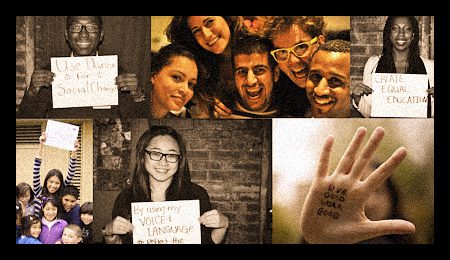
What is Social Change?

Social_Change
Social change is defined as “the alteration of mechanisms within the social structure, characterized by changes in cultural symbols, rules of behavior, social organizations or value systems.”  Such changes affect our way of life on both a macro and micro level, with the former involving major social institutions, and the latter our value and belief systems.

Collaborative efforts between groups or organizations are becoming major sources of social change by establishing social solidarity, pooling of resources and empowering larger scale and more long-term efforts for reaching specific goals.

A multitude of factors can cause social change, including:

  • technological and economic changes
  • social structure/modernization/urbanization
  • bureaucratization and institutions
  • conflict and competition
  • political and legal power
  • ideas/ideologies/attitudes/values
  • physical environment
  • population changes
  • isolation/contact

Activists for social change are no longer relegated to traditional outlets such as television, radio and newspaper.

Some use direct grassroots avenues such as “state and local ballot initiatives, electoral politics, lobbying and advocacy, direct action, media events and litigation.”  Others are achieving previously impossible endeavors by reaching millions of people globally through online and social media activism.

For example, Breakthrough, a United States and India-based non-profit human rights organization, uses “media, arts, pop culture and technology to reach mass audiences, challenge norms and make human rights real and relevant.”  Among its unique projects for social change was the launch of “America 2049” via Facebook games.

The game pits the player into the role of a special agent tasked with capturing a fugitive.

The player then faces a series of events forcing him or her to make tough decisions about pressing international issues.  The fugitive is played by Harold Perrineau, an American actor most known for his role in the television series “Lost.”  Perrineau talks about the importance of America 2049’s message, stating, “I hope that through playing America 2049, young people in particular will be inspired to help stop institutionalized hatred and intolerance – today.”

Alternately, there are those who are bringing social change by “injecting market principles into funding” and utilizing the strength of the business and economic sectors.

Toby Eccles, founder and development director of Social Finance, has pioneered such business models for change.  Social Finance is a United Kingdom-based non-profit organization that operates under the belief that “if social problems are to be tackled successfully, organizations seeking to solve them need sustainable revenues and investment to innovate and grow.”

Eccles developed innovative outcomes-based contracts known as Social Impact Bonds and, more recently, Development Impact Bonds.  In a talk he gave at Technology Entertainment Development Global in June 2013, Eccles said, “If you make the economic case, then the value of doing something would be completely compelling.”

Social Impact Bonds (SIBs) “aim to improve the social outcomes of public services by making payment for those services conditional on achieving independently measurable outcomes.”

The bonds allow for private investments to provide upfront funds for prevention and early intervention services to be delivered by seasoned service providers; the public sector only pays back if the intervention is successful.  Development Impact Bonds are the newest SIB spinoffs, where instead of governments being responsible for paying back investors, the onus is placed on international donors or development agencies.

– Rifk Ebeid

Sources: TED Talks, Encyclopedia Britannica, Sociology Guide, Social Finance, Salon
Photo: Be Social Change

February 25, 2014
https://borgenproject.org/wp-content/uploads/borgen-project-logo.svg 0 0 Borgen Project https://borgenproject.org/wp-content/uploads/borgen-project-logo.svg Borgen Project2014-02-25 04:00:502024-05-26 23:12:55What is Social Change?
Activism, Advocacy, Aid Effectiveness & Reform, Charity, Global Poverty

IKEA Brighter Lives for Refugees Campaign

IKEA_Syria_refugees
The devastating Syrian refugee crisis has brought to the forefront the plight of millions of refugees around the world.  It is estimated that today there are 10.5 million refugees globally, nearly half of whom are children. United Nations High Commissioner for Refugees (UNHCR) Antonio Guterres has noted that in 2013 alone, over two million refugees were registered, a record number not seen in 20 years.

In response to the dire conditions faced in refugee camps, the Swedish megastore IKEA, most popular for its range of modern and ready-to-assemble furniture and home accessories, recently launched their ‘Brighter Lives for Refugees’ Campaign, where they will donate one euro (roughly $1.38) to UNHCR for each LED light bulb sold in IKEA stores between February 3 and March 29, 2014.

Funds raised through the Brighter Lives for Refugees Campaign will provide a variety of renewable energy technologies to hundreds of thousands of refugees in Jordan, Chad, Sudan and Ethiopia.  Such technologies include solar streetlights, indoor solar lanterns, and fuel-efficient cooking stoves.

It is estimated that a refugee family will spend, on average, 12 years in a camp. This would make it more like a home rather than a temporary refuge.  Life in a camp usually stops when the sun goes down, making even the simplest activities a dangerous endeavor.  The goal of providing lighting and renewable energy technologies is to make camp life more humane, where using the toilet, collecting water or working inside the home is no longer an impossible feat.

It is important to take note of the IKEA campaign because it does not simply seek to provide temporary assistance to refugees.  The idea behind providing sustainable lighting is to transform the refugees’ quality of life, thereby allowing them to be active forces, rather than passive receivers, in improving their lives.  The Brighter Lives for Refugees Campaign website lists a number of positive effects that access to lighting will have on quality of life for refugees:

  • Improving safety by reducing the risk of crime
  • Improving results in school by allowing children more time to study after sundown
  • Enhancing camaraderie by enabling community gatherings and social activities
  • Allowing for the continuation of income-generating activities after sundown
  • Allowing refugees to keep their small shops open after sundown and earn a sustainable income

The IKEA Foundation has been partnering with UNHCR since 2010 to address the fundamental needs of children, including shelter, care, and education.  While the Foundation has committed 73 million euros ($100.448 million) to support UNHCR activities, it has also supported dozens of other organizations, donating 82 million euros ($112.832 million) in 2012 alone.

– Rifk Ebeid

Sources: IKEA Foundation, UNHCR, IKEA, AbuDhabi Week, IKEA Family Live Magazine
Photo: Humanosphere

February 24, 2014
https://borgenproject.org/wp-content/uploads/borgen-project-logo.svg 0 0 Borgen Project https://borgenproject.org/wp-content/uploads/borgen-project-logo.svg Borgen Project2014-02-24 12:49:502024-06-05 01:57:10IKEA Brighter Lives for Refugees Campaign
Activism, Human Rights

Quotes about Strength for Social Justice Advocates

social_justice
True strength can be found beyond the confines of its traditional definition, which focuses primarily on the physical. Strength of mind, instead, is the crucial virtue for any successful activist.

In the fight for social justice, activists are pitched into a wide array of situations that require them to serve as leaders, amplifying the voices of those most in need.  Activists must be prepared to take on a variety of roles that require a mix of strong leadership, writing, and organizing skills.

They must also have strong communication skills and be prepared to gracefully face the gamut of reactions and opponents that accompany the plethora of people they will meet along their journey to justice.

The skills required for a life of activism all thrive on one’s mental strength.  Such strength is developed through the way we allow our minds to perceive the world around us. In order to strengthen your mind, you must consciously change and adapt your thought process in a positive manner.

Research abounds correlating positive psychological principles with behaviors that lead to success and the strength to pursue one’s goals.  It has been discovered that positivity is associated with “increased success, better relationships, better jobs, more altruism, improved health, being more open-minded, and many other personality traits and behaviors that help us to achieve goals and meet the kind of people that are positive and influential in our lives.”

People often turn to quotes for motivation or inspiration to influence their mindset and gain the strength to pursue a certain path. Below is a list of ten quotes about strength and success, which both rest upon the underlying principle of having a positive attitude:

  1. “People become really quite remarkable when they start thinking that they can do things. When they believe in themselves, they have the first secret of success.” – Norman Vincent Peale
  2. “I have not failed. I’ve just found 10,000 ways that won’t work.”- Thomas A. Edison
  3. “Don’t let the fear of losing be greater than the excitement of winning.” – Robert Kiyosaki
  4. “Pessimists may be right in the end, but an optimist has a much better time getting there.” – Samuel R Allen, CEO of Deere
  5. “Whether you think you can, or you think you can’t – you’re right.” – Henry Ford
  6. “You don’t have to hold a position in order to be a leader.” – Henry Ford
  7. “A successful man is one who can lay a firm foundation with the bricks others have thrown at him.” – David Brinkley
  8. “It’s not what you look at that matters, it’s what you see.” – Anonymous
  9. “Most of the important things in the world have been accomplished by people who have kept on trying when there seemed to be no help at all.” – Dale Carnegie
  10. “Go out on a limb. That’s where the fruit is.” – Jimmy Carter

Becoming an advocate for social justice rests upon a strong conviction in the cause you are fighting for.  Such conviction is transformed into successful action through maintaining a positive outlook, which is the foundation of mental strength.  The fight against world poverty, in particular, takes enormous mental strength to work through the difficult economic, social, and political factors that all play a role in perpetuating the problem.

It is easy for activists to get discouraged by the many uphill battles they will face along their journey, but the above quotes about strength should help to serve as inspiration and a reminder that maintaining strength of mind and a positive outlook are the keys to success.

– Rifk Ebeid

Sources: Epreneur TV, Addicted2Success, Forbes, HuffPost “100 Motivational Quotes”, HuffPost “GPS Guide”, HuffPost “50 Awesome Quotes on Risk Taking”, Psychology Today
Photo: Chattablogs

February 24, 2014
https://borgenproject.org/wp-content/uploads/borgen-project-logo.svg 0 0 Borgen Project https://borgenproject.org/wp-content/uploads/borgen-project-logo.svg Borgen Project2014-02-24 12:41:152020-07-31 11:39:39Quotes about Strength for Social Justice Advocates
Activism, Advocacy, Global Poverty, Philanthropy, Poverty Reduction, Volunteer

Peace Corps Preparation

peace corps
Since it was established by J.F.K in 1961, the Peace Corps has been fighting first-hand the systematic effects of global poverty. Beginning as a small handful of good samaritans in only six participating countries, it has since then extended its humanitarian influence to 139 countries with the help of more than 210,000 volunteers. If you’ve ever been curious about joining the Peace Corps yourself, here is some information you must read.

How to Apply for the Peace Corps:

The process of becoming an advocate against global poverty is not as daunting as it might seem. The first step is the online application, which asks for basic information and some statements regarding one’s motivation to volunteer abroad. This is then followed by a personal interview with a local recruiter, to see if the Peace Corps seems like a good fit. If all goes well, this could lead to a formal invitation, complete with destination, departure date and project assignment information.

Then comes the fun part – preparing for departure. In the weeks prior to leaving, the Peace Corps will request the volunteer receive comprehensive dental and medical exams, as well as an array of immunizations, to make sure they are good to go. On the day of departure, volunteers head to training at an orientation site within the United States. The training continues in the volunteer’s assigned country, where they will train for three months while also living with a host family to establish skills for their cultural and linguistic adaption.

What the Peace Corps Looks for:

It is true that the demands of being a Peace Corps volunteer require a specific type of person, and thus the application process is very selective. Living and working in another region of the world, often in extremely dire situations, is a job for those with an abundance of determination, adaptability, independence, social sensitivity and emotional maturity. Those who already have some experience with volunteer work usually make the best candidates, as they have probably developed the previously mentioned qualities within themselves. The Peace Corps, furthermore, has many partner organizations such as City Year and the Special Olympics which interested volunteers can explore.

There are also some logistical pre-requisites, concerning the volunteer’s education, skills and ability to deliver aid to a community. While it is still possible to join without one, 90% of Peace Corps jobs require a minimum of a bachelor’s degree. Many jobs require pre-existing skills, such as special education, engineering and urban planning as well as agroforestry. Others can be developed on site, such as a teaching English, youth development and health education. The Peace Corps looks comprehensively at every applicant, however, and there are opportunities for non-degree volunteers who have experience working in construction, agriculture and with other non-profit organizations. By and large, the most promising candidates are those with some understanding of another language.

The Life of a Volunteer:

There is not one, quintessential Peace Corps experience, as the regions and types of work are all so diverse. The Peace Corps works in many countries and continents worldwide, in both rural and urban areas, and volunteers are expected to immerse themselves entirely so as to best serve their assigned communities. Although it is possible to have a preference for a location, flexibility helps during the application process. Regional availability also varies quickly based on need. For example, the Philippines are asking for significantly more volunteers than usual, due to the effects of typhoon Haiyan. Once there, a volunteer will be assigned to one of six main areas of specialized aid, which are: education, youth in development, health, agriculture, environment and community economic development. The commitment is 24 months, plus three months of training, thus totaling 27 months. Living accommodations are provided by the Peace Corps, and also vary greatly depending on the norm for that region.

Why Volunteer:

Helping a community build a more sustainable future for itself is an incredibly rewarding experience, as many veteran volunteers can attest to. All countries where the Peace Corps works have requested the presence of volunteers and aid programs, thus proving that the need is strong.

The benefits of joining the Peace Corps extends after service, as well. Upon return, volunteers receive $7,425 as an “adjustment” allowance, to help re-establish their lives in the United States after over two years abroad. Eligibility for student loan deferral is also provided, as well as a number of scholarships and financial aid packages to graduate degree programs. Over 70 graduate schools are partnered with the Peace Corps, and seek out returning volunteers who wish to incorporate their development experiences into their course work, such as the Paul D. Coverdell Fellow Program. For those wishing to enter directly into a career at home, the Peace Corps is invaluable for its professional connections in fields like federal employment and other non-profit organizations.

– Stefanie Doucette

Sources: Peace Corps, Time, National Archives
Photo: Salon

February 21, 2014
https://borgenproject.org/wp-content/uploads/borgen-project-logo.svg 0 0 Borgen Project https://borgenproject.org/wp-content/uploads/borgen-project-logo.svg Borgen Project2014-02-21 21:11:262014-02-23 23:29:39Peace Corps Preparation
Page 42 of 56«‹4041424344›»

Get Smarter

  • Global Poverty 101
  • Global Poverty… The Good News
  • Global Poverty & U.S. Jobs
  • Global Poverty and National Security
  • Innovative Solutions to Poverty
  • Global Poverty & Aid FAQ’s
Search Search

Take Action

  • Call Congress
  • Email Congress
  • Donate
  • 30 Ways to Help
  • Volunteer Ops
  • Internships
  • Courses & Certificates
  • The Podcast
Borgen Project

“The Borgen Project is an incredible nonprofit organization that is addressing poverty and hunger and working towards ending them.”

-The Huffington Post

Inside The Borgen Project

  • Contact
  • About
  • Financials
  • President
  • Board of Directors
  • Board of Advisors

International Links

  • UK Email Parliament
  • UK Donate
  • Canada Email Parliament

Get Smarter

  • Global Poverty 101
  • Global Poverty… The Good News
  • Global Poverty & U.S. Jobs
  • Global Poverty and National Security
  • Innovative Solutions to Poverty
  • Global Poverty & Aid FAQ’s

Ways to Help

  • Call Congress
  • Email Congress
  • Donate
  • 30 Ways to Help
  • Volunteer Ops
  • Internships
  • Courses & Certificates
  • The Podcast
Scroll to top Scroll to top Scroll to top