• Link to X
  • Link to Facebook
  • Link to Instagram
  • Link to TikTok
  • Link to Youtube
  • About
    • About Us
      • President
      • Board of Directors
      • Board of Advisors
      • Financials
      • Our Methodology
      • Success Tracker
      • Contact
  • Act Now
    • 30 Ways to Help
      • Email Congress
      • Call Congress
      • Volunteer
      • Courses & Certificates
      • Be a Donor
    • Internships
      • In-Office Internships
      • Remote Internships
    • Legislation
      • Politics 101
  • The Blog
  • The Podcast
  • Magazine
  • Donate
  • Click to open the search input field Click to open the search input field Search
  • Menu Menu

Archive for category: Activism

Information and stories on social activism.

Activism, Global Poverty

The Vow of Poverty and the Vow of Devotion

vow_of_poverty
In an age where the acquisition of wealth and all of its shiny, glossy and overpriced accompaniments dominates the American dream, groups of individuals around the world elect to relinquish their worldly possessions, embracing a life of material destitution. Individuals who take the formal vow of poverty typically belong to a religious order, specifically, the Catholic faith.

The vow of poverty is often accompanied by the vow of chastity and the vow of obedience. Together, these three vows comprise the evangelical counsels. When an individual takes the vow of poverty, he or she chooses to renounce personal worldly possessions and instead engage in communal sharing of resources.

However, there is variation in the vow of poverty. For instance, the vow may abide by the vow for an extended or a limited amount of time. The vow may also apply to different classes of property rather than property as a whole. Additionally, the vow may apply to goods available in the present or goods expected in the future. Oftentimes, the vow entails the loss of rights over one’s personal industry. For instance, in certain cases, the vow of poverty rebukes the acceptance of any personal material profit, such as profits from labor.

In the Catholic faith, men and women have attempted to devote their lives to God through partaking in the evangelical counsels. In doing so, these individuals follow in the path of Jesus, whose life was defined by detachment from earthly possessions and earthly pleasures. Symbolically, the evangelical counsels represent an individual’s determination to resist, what religious organizations often view as, the temptations and perils of modern society.

Although individuals who take the vow of poverty renounce their non-sacred material possessions, they elect to secure spiritual, reputational, and humanitarian wealth instead. Furthermore, these individuals profess that God is the source of all wealth and therefore materialism distracts people from focusing on God.

Furthermore, another perspective motivating people to take the vow of poverty is the sheer inequality in the world. Rather than simply acknowledging the existence of poverty, individuals who take the vow gain first-hand experience, an experience that may better equip them to aid the poor in the future.

– Phoebe Pradhan

Sources: Children of Priests, Holy Cross Vocations, New Advent
Photo: Breaking in the Habit

February 5, 2014
https://borgenproject.org/wp-content/uploads/borgen-project-logo.svg 0 0 Borgen Project https://borgenproject.org/wp-content/uploads/borgen-project-logo.svg Borgen Project2014-02-05 05:00:522016-02-25 09:34:36The Vow of Poverty and the Vow of Devotion
Activism, Education, Global Poverty, Women and Female Empowerment

New Programs in Tanzania Support Women’s Cricket

Tanzania_Women_Cricket_Africa_sport_female
Historically, cricket in Tanzania has not been a sport played by the nation’s indigenous population. Those with backgrounds from countries with strong cricket programs, such as India and the United Kingdom, traditionally dominated the sport. That demographic has been changing, however, ever since 1999 when Zully Rehemtulla, chairman of the Tanzania Cricket Association, and former player Kazim Nasser became set on bringing cricket to all Tanzanians.

In the initial stages, Rehemtulla estimates that only about 150 people in Tanzania played cricket. He and Nasser decided that it was unacceptable for the sport to not permeate the majority of the country and started to focus their attention on bringing the sport to schools in Dar es Salaam, the capital.

Since then, and after about a century of non-indigenous participation in cricket, the sport has taken off, with Rehemtulla estimating that roughly 15,000 people now play in Tanzania. In August 2013, the International Cricket Council ranked the men’s Tanzanian team at 30th in the world.

Women in Tanzania have joined the game too. Though the Tanzanian women’s cricket team was eliminated from the last two World Cups early into qualification rounds, women’s participation has increased significantly.

Rehemtulla and Nasser state that they run into many barriers, due to Tanzania being one of the most impoverished nations in the world, when attempting to boost the participation of adolescent girls in cricket.

Moreover, they state that when girls become teenagers in Tanzania, their families put pressure on them to get jobs and contribute to family income. In order to offset this hurdle, the pair began offering services to girls who wanted to start playing cricket. They offered housing, HIV and malaria awareness classes, as well as, of course, cricket coaching to make them better players and in the future, effective coaches themselves.

The results of this program were very successful, with women not only continuing to play cricket, but also with many attending universities and maintaining lucrative jobs. Nasser and Rehemtulla report that many of the girls in the program are now financially comfortable and can make up to five times as much as low-wage workers in Tanzania.

Nasser explains that he and Rehemtulla have gotten to know the girls in the program and can serve as mentors and aid in their future development.

“We have spent five years with them so we try to do what is best for them. We train them so they get employment instead of going to work as house maids.” Furthermore, he states, “We as an association tried to give them classes and pay the school fees. We tried our best to help them to ensure they have better lives in the future.”

Cricket is also growing in other African nations. There has, for instance, been increased financial investment in cricket programs, including plans to build a new cricket stadium in Rwanda, largely to support the development of its new women’s team. Cricket has already become the second most popular sport in South Africa, whose men’s team, the Proteas, is globally competitive and whose amateur women’s team is gaining recognition.

Though the Tanzanian women’s team has not made it to the cricket World Cup, Tanzania has participated in a World Cup event. In 1975, Tanzanian athletes competed as a part of an East Africa team that included Uganda, Zambia and Kenya.

Tanzania is still far from achieving its goal of having premier, globally-recognized cricket teams, but with programs supporting female athletes and an increased investment in cricket and cricketers, one day Tanzania could prove its athletic prowess.

– Kaylie Cordingley

Sources: BBC Sport, AllAfrica
Photo: BBC News

February 4, 2014
https://borgenproject.org/wp-content/uploads/borgen-project-logo.svg 0 0 Borgen Project https://borgenproject.org/wp-content/uploads/borgen-project-logo.svg Borgen Project2014-02-04 04:00:082016-02-16 12:05:13New Programs in Tanzania Support Women’s Cricket
Activism, Global Poverty

The Choir that Empowers Orphans

Watoto_Choir
Ugandan orphans sing their stories and hope for a brighter future.

The worshipers in Kent’s Hextable Church last Sunday were dazzled by the performance of the Watoto Children’s Choir. The Choir comprises of Ugandan children who have all lost their parents through war or disease and have been taken in by the Watoto Child Care Ministries.

The program was started in 1994 by Gary Skinner and his family, who had moved to Uganda 14 years earlier to build a church in Kampala, the country’s capitol. After meeting a 79-year-old widow who had lost her husband, lost six of her children to AIDS and who was now watching her last daughter die of the same disease, Skinner was compelled to start a program that would not only harbor orphans, but educate and support them as future leaders.

The Watoto model for raising these children includes physical care, medical intervention including HIV/AIDS treatment and trauma counseling, both a formal and technical education and spiritual guidance: “We exist to raise the next generation of African leaders, by pursuing excellence in academic and practical skills, integrity in conduct and moral values, so that each one becomes a responsible Christian and a productive citizen.”

The choir is comprised of 18 children and young adults who sing, dance and tell the audience about themselves and their experiences traveling with the choir. The group has been all over the world, performing in Uganda, Kenya, South Africa, Australasia, Germany, France, the United Kingdom and the United States, South America, Hong Kong, China and Japan. With four CDs out and a growing fan base, the group spreads awareness and generates funding for their fellows back in Uganda.

Jerry McQuay, a U.S. pastor who sponsored a performance from the group wrote, “The choir itself will steal your heart with their music, dance and stories, and when you hear the holistic approach that Gary and Marilyn Skinner are using, you’ll see how you can be a part of truly changing a nation.”

– Lydia Caswell

Sources: Watoto, This is Local London
Photo: Watoto

February 3, 2014
https://borgenproject.org/wp-content/uploads/borgen-project-logo.svg 0 0 Borgen Project https://borgenproject.org/wp-content/uploads/borgen-project-logo.svg Borgen Project2014-02-03 04:00:352017-03-20 13:19:47The Choir that Empowers Orphans
Activism, Advocacy, Global Poverty

#GlobalPOV

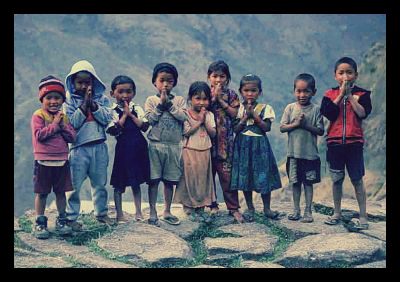
global_poverty_nepal #GlobalPOV
Everyone can help end global poverty, even Twitter. #GlobalPOV was created by the Blum Center for Developing Economies at University of California, Berkeley. The Global Poverty Project started by students working with the Blum Center thought of using a hashtag to trend topics surrounding global poverty. The students wanted to get people thinking, reading, and writing about concepts related to global poverty and what causes it as well as how it can be resolved.

Some hashtags are just fact or comments about the world’s poor. Some topics are news headlines about natural disasters and relief efforts across the globe. They include links to charities and organizations that are providing aid to victims of the disaster, and ways everyone can contribute.

#GlobalPOV can follow a post about an article detailing events in other countries related to politics and foreign aid. One tweet talks about social entrepreneurship ending global poverty with a link to Forbes Magazine cover photo of Bono and Bill Gates, two high profile charity donors. Another tweet links a YouTube video that describes how people become dependent on welfare in different societies.

The great thing about Twitter is that using the #GlobalPov phrase in the search bar connects audiences to a wealth of links and information that they can browse on their own time.

The best part of the Global Poverty Project, besides the impact it makes on the lives of poverty victims, is the convenience of spreading the word. One button can share the tweet with potential hundreds of followers. No one has to tediously search through different websites for the information since it is directly accessed via the link.

Richard C. Blum is the founder of the Blum Center at Berkeley. He is also the founder of the American Himalayan Foundation that helps provide food and education to people living in the Himalayas. Mister Bloom serves as a board member today and as the Honorary Consul of Nepal. His dream to help people has touched people all across the world. Starting the Blum Center at Berkeley University was intended as a place to bring together people of all different experiences and backgrounds to help those struggling with poverty.

Brainstorming, education, business, technology, and more are subjects that students working at the Blum Center use to help solve poverty across the globe. Their Global Poverty Project continues to grow with the hashtag #GlobalPOV, which can also be read as Global Point-of-View. This project challenges readers to act against widespread misconception and become educated about the issues facing people today.

Anyone can log onto Twitter.com right now and tweet about global poverty, or search for the hashtag and start reading.

– Kaitlin Sutherby

Photo: AIIA
Sources:
Himalayan Foundation, Wall Street Journal

February 2, 2014
https://borgenproject.org/wp-content/uploads/borgen-project-logo.svg 0 0 Borgen Project https://borgenproject.org/wp-content/uploads/borgen-project-logo.svg Borgen Project2014-02-02 21:47:592014-12-17 09:56:48#GlobalPOV
Activism, Global Poverty, Violence Against Women, Women and Female Empowerment

Afghani Asylum

Former member of Afghani Parliament Noorzia Atmar was banned under strict refugee laws from applying for asylum from within Afghanistan’s borders forcing her to flee.

According to The Guardian, the United States embassy did respond to her cry for help, but it was not able to assist her with asylum or a visa unless she applied from another country. Atmar mentions, “I love my country and even though I was under threat in some way I tried to get work, not to be lazy or rely on anyone else.”

More importantly, she stated, “The situation pushed me to leave.  No one respects women in our country. It is really difficult to find a space just to live.”

Previously an affluent and powerful politician, Atmar now lives in a single run down room in extreme poverty outside of her original borders. Her current location is not being released for fear of herself and her family she now does not in contact.

Despite her horrendous situation she is still passionate about women’s rights and hopes to begin working again.  Like Atmar, the Revolutionary Association of the Women of Afghanistan (RAWA) is working for women as the oldest political/social organization of Afghan women struggling for peace, freedom, democracy and women’s rights in fundamentalism-blighted Afghanistan since 1977, according to its website.

Even though she was lucky enough to escape her situation, Atmar knows there are many other women still suffering.  One main issue is the fact that a refugee cannot apply for asylum while in their home country. In a male-dominated Afghanistan, it is extremely difficult for a woman to be able to have the job, money or status to pass rigorous western visa requirements.

RAWA’s work inside of Afghanistan mainly consists of support for female victims of war and other aggressive groups much like Atmar’s situation. The government they are after is one of democratic values that ensure freedom of thought, religion and political expression while protecting women’s rights.

Policy and research manager at Asylum Aid said, “Our overall sense is that the asylum system here is that it’s not sensitive to the needs of women fleeing countries like Afghanistan and doesn’t respond as it should to their cases.” This is part of the motivating cause behind RAWA and the work it is doing to fight for women.

– Lindsey Lerner

Sources: The Guardian, RAWA
Photo: Kompas

February 1, 2014
https://borgenproject.org/wp-content/uploads/borgen-project-logo.svg 0 0 Borgen Project https://borgenproject.org/wp-content/uploads/borgen-project-logo.svg Borgen Project2014-02-01 04:00:392024-05-26 23:06:47Afghani Asylum
Activism, Global Poverty, Philanthropy, Poverty Reduction, USAID

Clean Streets: Road to Entrepreneurship in Haiti

Throughout the developing world, infrastructure insufficiencies often create barriers for aspiring entrepreneurs. However, these shortcomings can also provide the platform for innovative and sustainable business opportunities.

Such is the case for entrepreneurs like Edouard Carrie, who started his company Environmental Cleaning Solutions S.A. (ECSSA) as a way to clean up Haiti’s streets and generate income. Founded in 2010, the company’s mission is simple yet profound: “to change a nation through recycling.” Via its material recovery facility in Port-au-Prince, ECSSA aims to collect over 80 tons of recyclable products per day.

Not only does it positively impact the environment, increased waste management also helps Haiti’s lowest income citizens.

For example, individuals can increase their income by collecting recyclable materials and thus afford schooling for their children, healthcare or other necessities. In addition, the various collection centers create jobs around the region.

The start-up has had great success in the three years since its conception. According to USAID, “ECSSA has grown to provide extra cash to over 6,000 Haitians who deposit bags of discarded bottles at 65 collection points throughout the Port-au-Prince region.” Furthermore, the company has shipped nearly 300 million plastic bottles to other countries for additional processing to create other products.

ECSSA’s growth would not have been possible without the support of both USAID and the Pan American Development Foundation (PADF).

PADF sponsors the Leveraging Effective Application of Direct Investments (LEAD) Business Plan Competition, a grant program that assists small and medium enterprises in finances, business development and access to capital. LEAD operates in Cap-Haitien, Saint-Marc and Port-au-Prince with a targeted focus on “industries and businesses with the greatest potential to create jobs, including construction, tourism, agribusiness and alternative energy.”

Outside assistance – such as that from LEAD and USAID – has allowed ECSSA to thrive and transform the landscape in Port-au-Prince.

“My company now has the capacity to increase its individual collectors from 6,000 people to up to 20,000,” Carrie said. “Additionally, the increase in collection points and processing capacity provide entrepreneurs the opportunity to grow their own businesses by serving as intermediary plastic collectors and suppliers for ECSSA.”

Not only cleaning the streets, ECSSA is clearing the way for sustainable environmental and business development throughout Haiti’s capital city.

– Mallory Thayer

Sources: USAID, Leveraging Effective Application of Direct Investments, Environmental Cleaning Solutions S.A.
Photo: United Nations Photo

January 31, 2014
https://borgenproject.org/wp-content/uploads/borgen-project-logo.svg 0 0 Borgen Project https://borgenproject.org/wp-content/uploads/borgen-project-logo.svg Borgen Project2014-01-31 04:00:332024-05-26 23:05:27Clean Streets: Road to Entrepreneurship in Haiti
Activism, Advocacy, Global Poverty, Philanthropy

10 Quotes from Business Executives on Poverty

Business_Executives_On Poverty
Too often there is a disconnect between the business world and those around the globe suffering from poverty.  These two worlds are perceived as either completely unrelated, or to a certain extent, antagonistic.  However, funding global development and combating poverty are smart business choices.

When business promotes development in ailing communities, healthy and prosperous people create new markets.  As stated by current Secretary of Defense Chuck Hagel, “We need to stop viewing it as aid.  It’s an investment.”

Viewing global aid in that vein, it becomes much easier to see how the determination it takes to create a successful business is quite similar to the dedication necessary to fight global poverty.

Here, then, are ten quotes from business executives that you should apply in your daily fight to end poverty worldwide.

1. “When your values are clear to you, making decisions becomes easier.” – Roy Disney

2. “Education’s purpose is to replace an empty mind with an open one.” – Malcolm Forbes

3. “Think P.I.G. – that’s my motto.  P stands for persistence, I stands for integrity, and G stands for guts.  These are the ingredients for a successful business and a successful life.” – Linda Chandler

4. “We’re here to put a dent in the universe.  Otherwise, why even be here?” – Steve Jobs

5. “Good business leaders create a vision, articulate the vision, passionately own the vision and relentlessly drive it to completion.” – Jack Welch

6. “Nothing so conclusively proves a man’s ability to lead others as what he does from day to day to lead himself.” – Thomas J. Watson, Sr.

7. “Apply yourself.  Get all the education you can, but then, by God, do something.  Don’t just stand there, make it happen.” – Lee Iacocca

8. “Someone is sitting in the shade today because someone planted a tree long before.” – Warren Buffet

9. “I believe if you show people the problems and you show people the solutions, they will be moved to act.” – Bill Gates

10. “Creativity often consists of merely turning up what is already there” – Bernice Fitz-Gibbon

– Taylor Diamond

Sources: ThinkExist, Thought Catalog, BrainyQuote
Photo: HEC

January 30, 2014
https://borgenproject.org/wp-content/uploads/borgen-project-logo.svg 0 0 Borgen Project https://borgenproject.org/wp-content/uploads/borgen-project-logo.svg Borgen Project2014-01-30 04:00:542024-05-26 23:08:1110 Quotes from Business Executives on Poverty
Activism, Advocacy, Global Poverty, Nonprofit Organizations and NGOs, Philanthropy

5 Groups in the U.S. Addressing Climate Change

Climate_Change
A growing movement is spreading throughout the international community in regards to addressing the prevalence of climate change. Accordingly, thousands of organizations on a global scale have mobilized to spread awareness, understand key issues and articulate solutions.

In the United States alone, there are a plethora of organizations that have been able to make strides in addressing the issue. Here is a list of 5 prominent environmental organizations that are fighting climate change and reaching success.

1. 350.org: The influential global movement headed by author Bill McKibben works across nearly 200 countries. Much of their work specifically targets carbon emissions as the number 350 itself refers to the amount of atmospheric carbon (in parts per million) needed for a stable climate.

Currently, the number is nearly at 400 parts per million, which is quite overwhelming. In order to reduce the number on an international scale, 350 works on campaigns widely ranging from stopping the Keystone XL pipeline in the United States to fighting the development of coal power plants in India.

2. Chesapeake Climate Action Network: Focusing specifically on the Atlantic coast of the United States, the Chesapeake Climate Action (CCAN) is the first organization to address climate change impacts in the Maryland/Virginia region. The area is highly vulnerable as it is home to dozens of defense facilities, while also being low-lying and densely populated.

CCAN works at the grassroots level to spread awareness, introduce the general public into the political process and influence environmental legislation. More recently, their work has been focusing on making use of Virginia’s vast renewable energy potential in offshore wind and solar energy.

3. Sierra Club: As one of the oldest, largest and influential environmental organizations in the United States, the Sierra Club has been focusing on various environmental issues for the past century. They now have 64 local chapters nationwide, a network of 2.1 million supporters and an extremely dedicated team of individuals.

In the past, The Sierra Club was influential in the implementation of the Clean Air Act, Clean Water Act and Endangered Species Act. Currently, they are focused on leading the world towards a clean energy economy and away from the heavy reliance on the fossil fuel industry.

4. Climate Reality Project: Both founded and chaired by Al Gore, the former Vice President and Nobel Laureate has led a growing global network of over 5 million individuals. The Climate Reality Project focuses heavily on spreading awareness by introducing the international scientific consensus on climate change to the general public.

Some of their promising initiatives are centered on revealing the truth behind the climate denial movement, providing information on the costs of carbon pollution and training climate reality leaders to have the skills to mobilize communities for action.

5. Energy Action Coalition: With student activism on the steep rise, organizations form and collaborate to be as effective as possible. The Energy Action Coalition is a group of 30 youth led organizations that address current environmental issues. With their level of diversity and broad organizational inclusion, the Energy Action Coalition is able to reach success in mobilizing campus communities.

The combined efforts of students across America have been successful in organizing national Power Shift Summits and campaigns to stop the development of the Keystone XL pipeline.

However, one of their prominent successes is embedded within their commitment to establishing carbon neutral college campuses. Ultimately, the Energy Action Coalition has been able to solidify almost 700 campus commitments to carbon neutrality up to 2012.

– Jugal Patel

Sources: 350.org, Chesapeake Climate Action Network, Sierra Club, The Climate Reality Project, Sierra Club, Energy Action Coalition
Photo: Scientific American

January 30, 2014
https://borgenproject.org/wp-content/uploads/borgen-project-logo.svg 0 0 Borgen Project https://borgenproject.org/wp-content/uploads/borgen-project-logo.svg Borgen Project2014-01-30 04:00:542020-07-02 12:31:155 Groups in the U.S. Addressing Climate Change
Activism, Advocacy, Global Poverty, Philanthropy

5 Motivational Bill Gates Quotes

Bill_Gates
As one of the richest men on the planet, a philanthropist extraordinaire with his own multi-million dollar fund and a proponent for the human race, billionaire Bill Gates shouldn’t only be perceived as the father of Microsoft — he’s a prominent source of inspiration and hope.

Following are five advocative quotes by the legendary man, certain to motivate and incite toward action:

1. “I believe that if you show people the problems and you show them the solutions they will be moved to act.”

2. “I’m a great believer that any tool that enhances communication has profound effects in terms of how people can learn from each other, and how they can achieve the kind of freedoms that they’re interested in.”

3. “People always fear change. People feared electricity when it was invented, didn’t they? People feared coal, they feared gas-powered engines… There will always be ignorance, and ignorance leads to fear. But with time, people will come to accept their silicon masters.”

4. “At Microsoft there are lots of brilliant ideas but the image is that they all come from the top – I’m afraid that’s not quite right.”

5. “The general idea of the rich helping the poor, I think, is important.”

What’s truly important to keep in mind here is that Mr. Gates, no matter how successful, is only human—much like everyone else. Due to his accomplishments, there probably isn’t a single person unfamiliar with his name in the modern day world.

However, Bill Gates himself pays attention to those in need; he donates money and funds research that is helping to alleviate global poverty.

These hand-picked quotes are only a sample of the reflective thoughts he produces; the encouraging simple truths they present should function as incentives for hard work.

– Natalia Isaeva

Sources: BrainyQuote, The Gates Notes
Photo: CNN

January 30, 2014
https://borgenproject.org/wp-content/uploads/borgen-project-logo.svg 0 0 Borgen Project https://borgenproject.org/wp-content/uploads/borgen-project-logo.svg Borgen Project2014-01-30 04:00:362020-07-02 12:31:325 Motivational Bill Gates Quotes
Activism, Advocacy, Global Poverty, Nonprofit Organizations and NGOs, Philanthropy, Volunteer

Nonprofit Careers

L_africa_children_doctors_smile
For many people the nonprofit sector, also known as the “third sector,” can offer an exciting and rewarding career. With the exception of where the funding comes from, nonprofit organizations often are run very similarly to for-profit organizations. They also have to adhere to the same policies and may even hire similarly qualified people. This article will provide an overview of the types of jobs available in the nonprofit sector as well as some of the things to consider when looking for a non-profit job.

Development

The development department is one of the largest and highest paying job categories in the nonprofit sector. Development professionals work on gathering the resources that fund the programs and initiatives run by the organization. These jobs are needed in order for the organization to stay alive thus affording the position to pay well and stay in the position of not likely to be cut. Jobs in development also tend to be less competitive than jobs in other departments. Such jobs here can include:

– Director of Development
– Fundraiser
– Proposal Writer
– Communication Professional

Program

Being part of the program department is exciting and rewarding, especially since those who work in this department get to put their organization’s mission into action. These are the people who will be developing and implementing disaster relief plans in developing countries, or providing services to people with mental health challenges. Unfortunately program careers are very competitive and have a high burn out. These jobs include:

– Program Manager
– Program Assistant
– Policy Analyst
– Technical Advisor

Administrative

Just like private sector companies, nonprofit sectors also need an administrative team to help organizations keep on their feet and run smoothly. These jobs are also good stepping-stones into programs careers or management level jobs.

– Human Resources
– Office Manager
– Receptionist

Important Things to Consider About Careers in the Nonprofit Sector

1. You’ll have to wear many hats – Nonprofits don’t always have the funds to hire a large staff, this means you may have to be the graphic designer, the social media coordinator and the grant writer.

2. You need to be passionate about the cause – Employers aren’t just looking for talented qualified workers, they are also looking for people who are passionate about the cause and will work hard to achieve the organization’s goals.

3. You’ll probably make less money – Nonprofits have less resources, this means your office may be less plush and your salary smaller.

4. Volunteer first – It’s important to volunteer or intern at a nonprofit to see if you like the culture and are actually passionate about the job. This also proves your commitment to an employer and can open up job opportunities.

5. Nonprofits are run like any other business – Managing finances and being cost effective are just as important to nonprofits as they are to businesses.

– Elizabeth Brown

Sources: Miami University, US News, Forbes
Gif: Borgen Project

January 29, 2014
https://borgenproject.org/wp-content/uploads/borgen-project-logo.svg 0 0 Borgen Project https://borgenproject.org/wp-content/uploads/borgen-project-logo.svg Borgen Project2014-01-29 04:00:222024-12-13 17:53:48Nonprofit Careers
Page 44 of 56«‹4243444546›»

Get Smarter

  • Global Poverty 101
  • Global Poverty… The Good News
  • Global Poverty & U.S. Jobs
  • Global Poverty and National Security
  • Innovative Solutions to Poverty
  • Global Poverty & Aid FAQ’s
Search Search

Take Action

  • Call Congress
  • Email Congress
  • Donate
  • 30 Ways to Help
  • Volunteer Ops
  • Internships
  • Courses & Certificates
  • The Podcast
Borgen Project

“The Borgen Project is an incredible nonprofit organization that is addressing poverty and hunger and working towards ending them.”

-The Huffington Post

Inside The Borgen Project

  • Contact
  • About
  • Financials
  • President
  • Board of Directors
  • Board of Advisors

International Links

  • UK Email Parliament
  • UK Donate
  • Canada Email Parliament

Get Smarter

  • Global Poverty 101
  • Global Poverty… The Good News
  • Global Poverty & U.S. Jobs
  • Global Poverty and National Security
  • Innovative Solutions to Poverty
  • Global Poverty & Aid FAQ’s

Ways to Help

  • Call Congress
  • Email Congress
  • Donate
  • 30 Ways to Help
  • Volunteer Ops
  • Internships
  • Courses & Certificates
  • The Podcast
Scroll to top Scroll to top Scroll to top