• Link to X
  • Link to Facebook
  • Link to Instagram
  • Link to TikTok
  • Link to Youtube
  • About
    • About Us
      • President
      • Board of Directors
      • Board of Advisors
      • Financials
      • Our Methodology
      • Success Tracker
      • Contact
  • Act Now
    • 30 Ways to Help
      • Email Congress
      • Call Congress
      • Volunteer
      • Courses & Certificates
      • Be a Donor
    • Internships
      • In-Office Internships
      • Remote Internships
    • Legislation
      • Politics 101
  • The Blog
  • The Podcast
  • Magazine
  • Donate
  • Click to open the search input field Click to open the search input field Search
  • Menu Menu

Archive for category: Activism

Information and stories on social activism.

Activism, Advocacy, Global Poverty

Twittersphere: International Women’s Day

The month of March, along with the end of winter, is a time to reflect and appreciate all the women in our lives and throughout the world. Women’s History Month began in 1987 after the National Women’s History Project petitioned Congress and it has been reauthorized or designated every year since.

It is critical to recognize the importance of women throughout the world. They are the keystone to every healthy family, often taking on both the roles of mother and caregiver while also contributing to the household income base. They are teachers, CEOs, mothers, sisters, aunts, military personnel, athletes and just about every other job under the sun.

March 8 was International Women’s Day and people from all over the globe took to Twitter to voice their support and raise awareness for women’s issues. Here are some of the top tweets:

@OneCampaign: Happy International Women’s Day! Find out why women are the secret weapon in ending poverty https://ow.ly/iyrZ5

@Oxfam: Women perform 66 (percent) of the work, produce 50 (percent) of the food, but earn only 10 (percent) of the income & own 1 (percent) of the property #IWD pic.twitter.com/r9M4ShlUjf

@stephRWolf: International Women’s Day 2014: What kind of world do YOU want to build? https://cnn.it/1jZBHvy via @cnni #CNNwomen

@JuxDotCom: Happy International Women’s Day from Jux. Because without women who would we be, what would we become, when would we eat, why would we live?

@PREVNet: Happy International Women’s Day! Let’s reflect on how we treat the girls & women in our lives. Are we acting with kindness? We can do better

@YWCA_Canada: Happy International Women’s Day! Let’s celebrate how far we’ve come, but advocate for women’s rights every day. #IWD pic.twitter.com/aEnthxbs8K

@NadhieraYoung: Happy International Women’s Day! Be yourself, bcs you are already beautiful just the way you are :)

@AJLucaci: “There is only one known cure for poverty, known colloquially as ‘The Empowerment of Women'” Happy International Women’s Day, everyone!

@kassiehernandez: Happy International Women’s Day, Ladies! Let’s continue empowering women and eliminate gender inequality https://3bl.me/kde948 #IWD

@ECA_AS: Meet the 10 extraordinary recipients of the 2014 Int’l Women of Courage Awards: https://owl.li/ucTfL #IWOC #IWD

Studies have shown that women are vital to the health of a society. Increases in women’s education help the entire family make better choices and lead healthier lives. We cannot thank them enough for all that they give and we as a society must stay vigilant of the continued struggle women face throughout the world.

– Sunny Bhatt

Sources: Twitter, Women History Month
Photo: Presse Box

March 14, 2014
https://borgenproject.org/wp-content/uploads/borgen-project-logo.svg 0 0 Borgen Project https://borgenproject.org/wp-content/uploads/borgen-project-logo.svg Borgen Project2014-03-14 08:24:292024-05-26 23:19:17Twittersphere: International Women’s Day
Activism, Development, Global Poverty, Volunteer

5 Reasons To Go Volunteer

Volunteers are a major part of many different organizations. In some cases, they are what keep an organizations running. Volunteering can be a very rewarding way to use your spare time or it can be used to strengthen your resume. If you are on the fence about volunteering, here are five reasons to get out and help make a difference.

1. Volunteers help save resources – Those who donate their time allow organizations to use the resources they save and apply them elsewhere. Volunteering can be a great way to help out an organization you support.

2. Connect with the community– Volunteering allows you to meet other people who share the same interests and passions as you. Volunteering can also help you help your community. Volunteering with mentoring, tutoring or elderly care programs allows you the opportunity to give back and can improve the overall quality of resources and facilities where you live.

3. An opportunity to gain professional experience– If you are looking to gain relevant work experience, volunteering is a good way to improve your resume. Volunteering is also a way to help you decide where you want to take your career. Volunteering in different places in high school and college can help you narrow down your interests while gaining valuable life skills and work experience.

4. You will be surprised by what you learn– You may go in with expectations when you start volunteering, but often times you will be surprised about what you will learn about where you work and even yourself. Depending on where you volunteer, you can learn a lot about how that particular place works. Maybe you work as a receptionist answering phones at a nonprofit, but by the end, you will have an inside look at how nonprofits generally work.

5. You can make a difference– Volunteering is one of the best ways to make a difference in an area you are passionate about. One of the most important things to know is that every person counts, so get up, donate your time, and help change the world.

– Colleen Eckvahl

Sources: UCSD, The Lean Green Been, Volunteer Match
Photo: Wallpaperseek

March 13, 2014
https://borgenproject.org/wp-content/uploads/borgen-project-logo.svg 0 0 Borgen Project https://borgenproject.org/wp-content/uploads/borgen-project-logo.svg Borgen Project2014-03-13 16:07:552024-05-26 23:19:285 Reasons To Go Volunteer
Activism, Advocacy, Global Poverty, Nonprofit Organizations and NGOs

Seattle Foundations

The city of Seattle is the headquarters of many great philanthropic organizations and nonprofits. With Seattle foundations like the Bill and Melinda Gates Foundation to our very own The Borgen Project, the city offers countless ways to get involved in the community or make an impact on a state, national or global level.

To help you in your quest to become an active citizen of the world around you, here are some Seattle foundations and non-governmental organizations to consider:

Bill and Melinda Gates Foundation

Led by Bill Gates and his wife, Melinda, the Foundation’s mission is to help people live healthy, productive lives and uplift those in battling extreme poverty and hunger. With an endowment of $40.2 billion, the Foundation is in the best position to provide dozens of grants to for initiatives such as childhood immunization, polio eradication and agricultural technologies.

Alliance for Education

Alliance for Education works to provide all children in the Seattle area with the tools they need to be successful in college while building a good career and happy life. The organization has a three-pronged attack focusing on fundraising, advocacy and community engagement. Raising $131 million since 1995, Alliance for Education invests in effective public school system-wide leadership, teacher effectiveness and academic rigor.

PATH

PATH has its headquarters in Seattle. However, it has offices in over 40 cities in 22 countries. Its goal is to ensure every person leads a healthy life by advancing technologies, improving health systems and promoting healthy behaviors. PATH takes on challenges in areas like maternal and child health, reproductive health, vaccines and immunization and emerging and epidemic diseases. PATH engages communities by speaking their language, going to where they live to spread information to promote healthy living.

Agros International

Agros targets areas dealing with significant poverty to provide them with the facilities they need to build a hard-working fulfilled life. Argos purchases land to support up to 200 families, dividing the land between them so they can build homes, establish a garden and cultivate cash groups. They establish a community with a democratically elected governing structure and provide them with financial tools to build and sustain their businesses. To promote proper nutrition, hygiene, basic healthcare and female empowerment, Argos provides educational programs to all families in the community.

These Seattle foundations offer many career and volunteer opportunities for those seeking to get involved in the non-profit sector. Alternatively, if you are just seeking to donate, you can be sure that your money will go to a great organization that helps people around the globe climb out the depths of poverty and poor health. To serve, visit their respective websites.

– Sunny Bhatt

Sources: Bill and Melinda Gates Foundation, Alliance for Education, PATH, Agros International
Photo: Cospick

March 12, 2014
https://borgenproject.org/wp-content/uploads/borgen-project-logo.svg 0 0 Borgen Project https://borgenproject.org/wp-content/uploads/borgen-project-logo.svg Borgen Project2014-03-12 07:40:532024-12-13 17:50:10Seattle Foundations
Activism, Advocacy, Aid Effectiveness & Reform, Charity, Children, Developing Countries, Development, Global Poverty

Orphanage Tourism

orphanage tourism
The number of orphanages in Cambodia has nearly doubled since 2007, yet the United Nations Children’s Fund (UNICEF) reports that there are now fewer orphans in Cambodia than ever before. The reason for this discrepancy? Orphanage tourism.

Volunteering at a local orphanage has become a bucket-list item for many tourists and the preferred feel-good end to a trip full of festivals, massages, cooking classes, and guided tours. Regardless of skill-sets or language barriers, most orphanages throw open their doors to well-meaning travelers, but for a price.

UNICEF’s statistics show that of the estimated 12,000 children living in Cambodian orphanages today, only 28 percent have lost both their parents. Most of the children in these establishments are serving as — for lack of a kinder expression — tourist attractions.

The inflation of orphanages has come an explosive 250 percent increase of travelers into the country.

Parents who cannot afford to feed or educate their children have started sending them to one of the newly sprung-up orphanages in the hopes that they will find a better life through the pocket change of tourists. But while a few orphanages deliver on their promises to desperate parents that their children will be educated, most do not.

Tuk tuk drivers are often commissioned by orphanages to deliver optimistic tourists, and again by market vendors if the tourists are brought to them first to purchase school supplies.

Smart travelers are able to find the few genuine orphanages, but it takes determination, and a willingness to accept their own limitations; trained child workers and long-standing volunteers are almost always more qualified to care for orphans, and the quick turn-around time of visitors often just deepens a child’s feelings of abandonment.

It’s common for unwieldy volunteers to pamper their own conscience more than those they are aiming to help, because while this sometimes leads to a life of humanitarian work, most times it just leads to cool Facebook pictures. Travelers wishing to spend some of their vacation doing volunteer work must be careful to put their money in the hands of people with similar motives.

– Lydia Caswell

Sources: The Telegraph, Forbes
Photo: Mangine

March 12, 2014
https://borgenproject.org/wp-content/uploads/borgen-project-logo.svg 0 0 Borgen Project https://borgenproject.org/wp-content/uploads/borgen-project-logo.svg Borgen Project2014-03-12 04:00:542024-12-13 17:50:09Orphanage Tourism
Activism, Development, Economy, Global Poverty

Famous, Rich and Hungry: BBC’s Latest Foray Into Poverty

The BBC is one of the more respected production companies in the world.

It produces such shows as Top Gear, which is an extremely popular show. It also produces a variety of news programs and also many sports programs as well. However, the BBC has, in the past few years, been straying from its normal programming and delving into the area of reality television and poverty. The BBC has aired Famous, Rich and Jobless, Famous, Rich and Homeless, and, most recently, Famous, Rich and Hungry.

The shows are designed to expose the lives of those who live on the fringes of England’s society and air them to the entire nation. In the latest show, Famous, Rich and Hungry, various celebrities in England are sent to live with poor families for a week in order to experience what food poverty really feels like. The show will have such celebrities as Rachel Johnson, the sister of the Mayor of London Boris Johnson.

It will also have Teo Paphitis an extremely successful businessman who is estimated to be worth over 200 million British pounds (roughly $332.26 million.)

The show is produced by Love Productions, who was also behind the production of the other Famous and Rich series. The show’s executive producer, Richard McKerrow, spoke in an interview recently and said, “I am sure there will be the same media storm, because my God, there is a political bun fight about whether people in Britain are currently going hungry.”

There is a plethora of evidence from both scientific and scholarly sources that there is indeed a crises occurring in Europe. The situation in Europe right now calls for a united effort to pass laws and bills that aid in both the economic recovery and aid of getting Europe citizens out from the ever present shadow of poverty.

The austerity measure that are being used by many European counties at the moment in order to lift their economies out from the rubble. The BBC has an opportunity as one of the world’s largest television producers and acclaimed sources of information really to aid those in need.

The BBC should focus on producing quality television that can educate, enrich, and inform its viewers rather than sensationalizing someone’s misfortune by showcasing it as a spectacle to the world. The poor need informed and educated people fighting for them, rather than having their lives made a mockery of.

– Arthur Fuller

Sources: The Guardian TV-Radio Blog, The Guardian Media, The Guardian, Daily Mail
Photo: Daily Mail

March 11, 2014
https://borgenproject.org/wp-content/uploads/borgen-project-logo.svg 0 0 Borgen Project https://borgenproject.org/wp-content/uploads/borgen-project-logo.svg Borgen Project2014-03-11 16:40:362024-05-26 23:19:18Famous, Rich and Hungry: BBC’s Latest Foray Into Poverty
Activism, Global Poverty, Poverty Reduction

Summer Internships in Seattle

summer internships
As the winter season starts to wind down, students from across the country are beginning their search of summer internships. Summer internships are a great way to gain new experiences, travel to places you’ve always wanted to visit, and meet new people—all while gaining valuable skills that will give you the edge in securing employment in the future.

Landing a summer internship can seem like a daunting task. What am I interested in? How do I apply? If you have arrived at these questions, you are already on the right path! Most companies offer students the chance to play a role in their daily functions and learn about their work environment. For those interested in global poverty reduction, human rights activism, and other service based careers, here are potential summer internship opportunities for you

Political Affairs Internship, The Borgen Project

  • Meet with members of Congress and/or Congressional staffers in your State and District to discuss global poverty issues
  • Represent The Borgen Project and various business, political, and community events
  • Mobilize individuals to contact their members of Congress in support of anti-poverty legislation and assist with fundraising
  • For more information on how to apply please visit Telecommute Internships.

Summer Internship Program, American Red Cross

  • Get introduced to the mission of the American Red Cross with real-world work experience in a non-profit
  • Assist with day-to-day functions building reports, presentations, guides etc.
  • Choose from a diverse selection of positions including human resources, government relations, humanitarian services, public health & safety, biomedical services, disaster services, finance, marketing and more!
  • For more information on how to apply, visit Red Cross.

Community Engagement Intern Program, Feeding Children Everywhere

  • Get hands on experience battling on the front lines of the fight against hunger. Recruit volunteers nationwide for various “Hunger Projects”
  • Build and lead programs while performing community outreach
  • Travel to different “Hunger Projects” and network with various volunteers while preparing and packaging meals to feed hungry children
  • Please visit their Intern Program for more information and locations.

Intern, ONE Campaign

  • ONE offers students a diverse experience working in grassroots mobilization, field organizing, digital projects, communications, ans global operations
  • Interns will have to perform research and fact-checking, trips and events preparation, collection of press clips, database management, and administrative tasks
  • For more information please visit ONE.org.

Student Internship Program, U.S. Agency for International Development (USAID)

  • USAID offers a variety of summer internship positions in the Bureau for Legislative and Public Affairs, the Office of the General Counsel, the Office of Transition Initiatives, the Bureau of Africa and more.
  • Interns will be required to conduct research, draft program memoranda and other documents
  • Facilitate meetings and special events, attend program discussions in various government agencies and communicate with stakeholders and public
  • Work in fields like agriculture, education, health, environment, democracy, conflict prevention, and humanitarian assistance

These summer internships offer students from diverse backgrounds with various interests a chance to develop new skills and gain valuable experience working to alleviate social problems of today.

View telecommuting internships at The Borgen Project.

– Sunny Bhatt

Sources: The Borgen Project, Red Cross, Feeding Children Everywhere, Idealist.org
Photo: Wdet

March 9, 2014
https://borgenproject.org/wp-content/uploads/borgen-project-logo.svg 0 0 Borgen Project https://borgenproject.org/wp-content/uploads/borgen-project-logo.svg Borgen Project2014-03-09 04:00:352015-01-28 09:08:17Summer Internships in Seattle
Activism, Advocacy, Global Poverty

Top 5 Most Viral Humanitarians

Whether they’re lifelong philanthropists or newcomers, the following public figures have all captured the media spotlight at one point or another, drawing attention to humanitarian causes in unique and exceptional ways. Here are the top five most viral humanitarians.

1. Casey Neistat

Despite being one of the newest faces in advocacy, filmmaker Casey Neistat has a well-established fan base of YouTube followers. He also has an eclectic filmography including work for HBO, The New York Times, Nike and Mercedes. Casey’s most recent hit was a December 2013 viral video titled “What Would You Do with $25,000?”

Twentieth Century Fox offered Neistat $25,000 to produce a promotional video for The Secret Life of Walter Mitty, but instead he used the funds for a typhoon relief mission in the Philippines. In the short six minute video, he documented his trip every single step of the way—from his arrival, to buying provisions, to renting a bus to transport goods to typhoon victims. The relief effort and the video were a huge success, garnering close to three million views.

2. Romeo Dallaire

Romeo Dallaire is a retired Lieutenant-General of the Canadian Army and current Senator from Quebec who was at the frontline of the Rwandan Genocide in the early 1990s. As the Force Commander for the UNAMIR peacekeeping operation in Rwanda, Dallaire saw the nation descend into genocide between the Tutsi and Hutu ethnic groups. Accompanied by a minimal peacekeeping group with few resources (as well as direct orders to stay put and not to engage) Dallaire’s reports of the escalating violence were lost amidst the bureaucracy of United Nations leaders and U.S. government officials.

His 2003 memoir, Shake Hands with the Devil: The Failure of Humanity in Rwanda, brought the issue to light for the whole world and was later accompanied by both a documentary in 2004 and a feature drama in 2007 of the same name. Since then, Dallaire has developed the Will to Intervene (W2I) Project for the Montreal Institute for Genocide and Human Rights Studies at Concordia University.

The project provides governments, journalists and NGOs with policy recommendations for dealing with future potential crises. Dallaire has kept up appearances through annual university tours across Canada. He was played by Nick Nolte in Terry George’s Hotel Rwanda, which deals with the genocide from the perspective of local hotel owner Paul Rusesabagina.

3. Bill Nye

Most of us know William Sanford Nye as “Bill Nye the Science Guy,” the adorably goofy yet informative character from Disney and PBS’s television show. The show, which aired for five seasons from 1993-1998, is still viewed today in grade school classrooms throughout the country. Essentially, Bill Nye is like the Mr. Rogers of science, and perhaps the only celebrity to hold both a list of Emmy Awards and Honorary PhDs.

Bill Nye’s 2005 project The Eyes of New targeted an older audience and went beyond the actuarial sciences to tackle issues such as population growth, nuclear energy, race, and climate change. His wide range of media appearances include stints on “Dancing with the Stars,” “Larry King Live,” “N3mbers,” and a highly anticipated debate with Ken Ham—not to mention last year’s very viral death hoax, and this year’s presidential selfie.

Recently, he brought his brand of “edutainment” to the Bill and Melinda Gates Foundation with a short video dispelling popular poverty myths as part of the #StopTheMyth movement. Nye’s mix of fact-based research and humor has made him one of the most talked about scientists of today and a true viral humanitarian.

4. Jason Russell

Jason Russell’s Kony 2012 campaign is what happens when a video goes too viral too fast—as well as how easily a personal incident can bring scrutiny upon a humanitarian effort. Invisible Children is an organization founded by Jason Russell in 2004 to raise awareness about Joseph Kony, the leader of the Lord’s Resistance Army in Uganda, a group that has since become synonymous with child soldiers and war crimes.

The Kony 2012 short film, dedicated to bringing Joseph Kony to the International Criminal Court, was met with widespread, unprecedented support from social media networks and young people across the globe.

First posted on March 5, 2012, the video currently holds almost a 100 million views. But amidst all the criticism, financial scrutiny, stone-throwing, and lampooning, what few people realize is that Russell’s efforts were overwhelmingly successful at bringing Joseph Kony to the forefront of media attention.

Senators Chris Coons (D-Del.), Roy Blunt (R-Mo.), and Lindsey Graham (R-S.C.) all participated in a bipartisan resolution to place a bounty on Kony just weeks after the video’s release. A year later, the U.S. put up an additional $5 million bounty as part of the War Crimes Rewards Program, just as the AU and Uganda called off their own search efforts. Moreover, the film brought a surge of interest into U.S. foreign policy toward Africa and the workings of the International Criminal Court.

5. Bill and Melinda Gates

Bill and Melinda Gates are very savvy with the internet—which shouldn’t be surprising considering Gates’ Microsoft helped make online culture into what it is today. The Bill & Melinda Gates Foundation, founded in 1997, is an expansive organization that focuses on global health, agricultural development, family planning, vaccines and disease.

Recently, the philanthrocapitalist duo released their annual letter addressing “3 Myths That Block Progress for the Poor”. A summarized version of the letter was published by BuzzFeed last month as “9 Reasons The World is Better Than Ever”. From their #StopTheMyth hash-tagging project to their clever GIF demonstrations, the two show impressive diligence in informing the millennial internet culture.

What’s important to note is how the above figures draw attention to causes in very new and unconventional ways. The philanthropists of yesterday used the power of Hollywood and the prestige of the music industry to advocate their causes. Today, they fight for the support of internet communities and social media users rather than viewers and listeners. Whether it’s Jason Russell’s aggressive viral sharing, Gates’ Reddit AMA’s, or Neistat’s hands-on charity work, they’ve reached new crowds with new media, making significant change along the way.

– Dmitriy Synkov

Sources: Casey Neistat, Parliament of Canada, W2I, Bill Nye CV, Invisible Children, Politico, Gates Foundation
Photo: Glass Door
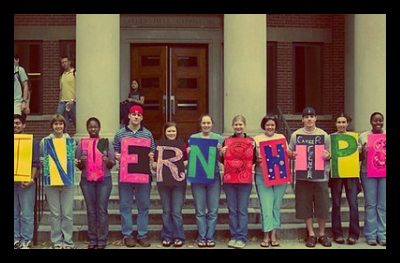
March 7, 2014
https://borgenproject.org/wp-content/uploads/borgen-project-logo.svg 0 0 Borgen Project https://borgenproject.org/wp-content/uploads/borgen-project-logo.svg Borgen Project2014-03-07 10:30:532024-12-13 17:53:50Top 5 Most Viral Humanitarians
Activism, Advocacy, Global Poverty, Philanthropy

Ben Affleck Testifies to the US Senate on DRC

ben_affleck_DRC
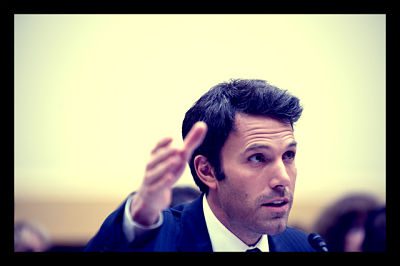
Ben Affleck may be famous for his role in movies such as Argo, The Town and Good Will Hunting, but nowadays he’s making an impact in a new role. Because of his philanthropic involvement in eastern Congo, Affleck went before the Senate Foreign Relations Committee to testify about the Congolese people and the need for U.S. involvement in the region. The hearing provided an opportunity for Affleck to draw increased media attention to the precarious human rights situation in the Democratic Republic of Congo and pressure lawmakers to do more to help.

Affleck first became involved in the Congo through his grant-making and advocacy organization, the East Congo Initiative (ECI). This organization seeks to increase investments in Congolese-led programs that create safe and sustainable communities. Additionally, ECI advocates for increased U.S. involvement in Congo while working against key problems such as rape and sexual violence as well as inadequate education and health resources for children. The East Congo Initiative also seeks to reintegrate former child soldiers back into their homes while leading community-level peace and reconciliation programs.

During his testimony, Affleck highlighted many of the struggles the Congolese people are enduring every day. For instance, Affleck cited UN reports that not only indicate that 2.9 million Congolese had been displaced internally, but also that 428,000 others have become refugees in neighboring countries. These people are being scattered throughout the region by the armed militia known as M23 that had previously taken over the capital of a northern Congolese province. A UN peacekeeping force recently coerced the M23 to surrender and sign a peace agreement. Affleck cited the UN group as evidence that “when the international community acts, and the Congolese government rises to the moment, these challenges are in fact solvable.”

Affleck finished his testimony by sharing a story about one of ECI’s partners, Theo Chocolate. An organic, fair-trade chocolate company, Theo imports more than 50% of its Chocolate from the DRC. Theo Chocolate’s business was connected to small folder farmers in the DRC by ECI and has helped support many of these small Congolese business operations. Through professionally directed investments, ECI was able to help spur economic development in the Congo and improve the lives of several Congolese people.

Through his charitable initiatives with ECI, Affleck is an example of how ordinary Americans can make a difference in influencing Congress and bring attention to the issues they care about. Affleck acknowledged, “I am, to state the obvious, not a Congo expert. I am an American working to do my part for a country and a people I believe in and care deeply about.” Through his actions, Affleck not only successfully drew the attention of the United States Senate to the plight of the Democratic Republic of the Congo, but he also gives hope for a better life to many impoverished people.

– Martin Levy

US Senate Committee on Foreign Relations, East Congo Initiative
Photo: Heritage

March 6, 2014
https://borgenproject.org/wp-content/uploads/borgen-project-logo.svg 0 0 Borgen Project https://borgenproject.org/wp-content/uploads/borgen-project-logo.svg Borgen Project2014-03-06 04:00:202018-01-30 13:14:11Ben Affleck Testifies to the US Senate on DRC
Activism, Education, Global Poverty

Katharine McPhee and BuildOn Help Burkina Faso

buildon
When Burkina Faso gained independence from France in 1960, the school attendance rate was 6%. Now up to 66%, the country still has a long way to go if it plans to achieve the Millenium Development Goal of attaining universal access for children to primary education.

Why do Boys Have a Higher Literacy Rate?

A girl in Burkina Faso is more likely to be married and give birth before the age of 18 than she is to graduate secondary school. Before she received a scholarship, Burkinabe 15-year-old Lucie walked more than 10 miles to school each day. With her new bicycle, she has an easier time getting to school and fetching water for her family. Boys have a higher literacy rate than girls in Burkina Faso because they are given preference in schooling.

A project called Burkina Response to Increasing the Development of Girls’ Education sponsors school-aged children in Burkina Faso’s two regions with the highest dropout rates by building new secondary schools, adding more classrooms and girls’ dormitories to existing schools, providing scholarships for needy girls and working with community leaders, teachers and parents to build a supportive framework for girls’ education and development.

Primary Education: The First Step

Elementary education in Burkina Faso is required for children between the ages of 7 years old and 14 years old, but it is not strictly enforced. The elementary education system in Burkina Faso is based on the French model; thus, classes are taught in French. Only 29% of children finish primary school, according to UNICEF data. Burkina Faso has one of the world’s highest dropout rates, second to Niger.

Secondary Education Has a Price

Burkina Faso is the third-poorest country in the world as ranked by the United Nations. Some families hardly have enough money to buy necessities like food, much less pay for secondary education. While some countries in Africa are implementing a free secondary school system, Burkina Faso charges the equivalent of $166 per year for secondary school education, a mandatory fee that many Burkinabe families cannot afford.

Currently the free, public and compulsory education takes children through age 16. From age of 13 to 16 years old, children attend a “post-primary” school, which is intended to prepare the students for secondary school. When a fee is involved, as it is for secondary education, the government does not make schooling mandatory because many families do not have the means to pay for it.

A Pop-Star’s Dedication to Help

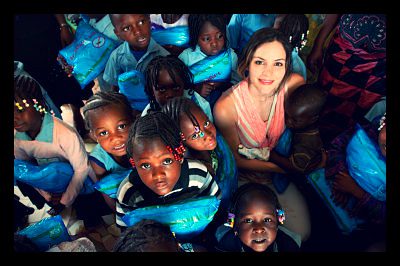
Burkina Faso is the seventh country to benefit from a BuildOn Project. Katharine McPhee, star of the NBC hit TV show SMASH and runner-up of the 2006 American Idol, and her husband, Nick Cokas, are partnering with BuildOn to expand access to schools in Burkina Faso. The couple provided mosquito nets to the country through Malaria No More and funded the construction of a school in the country’s capital, Oagadougou. Their dedication to Burkina Faso continues as they fund BuildOn’s first two schools in the country.

“Investing in education and opportunity for young people is a major priority in our lives, and we are thrilled that with the help of BuildOn, we can maintain our ongoing commitment to improving education for the children of Burkina Faso,” McPhee said.

– Haley Sklut

Sources: Looking to the Stars, UNICEF, Burkina Faso Embassy, Plan USA, Classbase, Intervida
Photo: Build On

March 5, 2014
https://borgenproject.org/wp-content/uploads/borgen-project-logo.svg 0 0 Borgen Project https://borgenproject.org/wp-content/uploads/borgen-project-logo.svg Borgen Project2014-03-05 12:19:312024-05-26 23:17:50Katharine McPhee and BuildOn Help Burkina Faso
Activism, Advocacy, Global Poverty

NGO Profile: CARE

CARE
Care about what? Care about ending global poverty. CARE is an organization that works with other businesses, schools, communities, and more to help extract people from the condition of poverty. They have main office headquarters in Atlanta, as well as an office in each of the 84 countries in which they work.

The U.S. government, European Union and United Nations help support CARE financially as well as individual donations from over 100,000 people each year. CARE works to help young girls and women become self sufficient, sustain business opportunities and escape a life of severe poverty.

All of the financial records of CARE’s use of donations and resources are available online for public viewing. A huge reason why CARE is such a great organization in terms of aid and effectiveness is that they enhance local economies whenever possible.

Instead of accepting clothes or tangible items from donors, they attempt to buy these supplies locally to help the countries they are working with. When recruiting people to help execute programs and fundraising events, the CARE staff also tries to hire locally from residents of the nations in which they are currently holding the events.

The focus on women and girls stems from the impact that gender inequality has on the cycle of poverty. More often than not, men are afforded jobs and opportunities for education and a better future through manual labor or schooling that women are not. Denying females career options and land ownership as well as many other civil rights only serves to perpetuate the timeline of poverty. A population cannot be pulled from such bleak conditions if the men are the only ones with the ability to break free.

The CARE website is designed with excellence and provides tons of information on how the organization works, as well as how and when people can participate. One section brings viewers to learn more about the history, founders, and partnership network of CARE, while other sections promote newsworthy stories of people whose lives have been changed for the better. Links are provided to financial records, success stories, and the CARE Twitter feed.

The most recent twitter campaign was called #IamCourage and encouraged people to tweet their personally courageous photos to the CARE Twitter feed, @Care. Another recent campaign involves getting supplies to the south of Sudan before aid is blocked by the rain season and planes can no longer deliver food, clothes, or medicine due to the poor visibility conditions.

The country is in desperate need of help and the UN has been trying to generate contributions because they are concerned about a possible severe food shortage in Sudan next year. CARE helps not only the residents of nations in need, but other organizations who are also trying to help. They work to inspire others to not only care about saving people from global poverty but to actually take action and do something about it.

– Kaitlin Sutherby

Sources: CARE, Twitter, UN South Sudan, UN in South Sudan
Photo: Primary Care UK

March 5, 2014
https://borgenproject.org/wp-content/uploads/borgen-project-logo.svg 0 0 Borgen Project https://borgenproject.org/wp-content/uploads/borgen-project-logo.svg Borgen Project2014-03-05 11:49:312024-06-04 03:01:16NGO Profile: CARE
Page 41 of 56«‹3940414243›»

Get Smarter

  • Global Poverty 101
  • Global Poverty… The Good News
  • Global Poverty & U.S. Jobs
  • Global Poverty and National Security
  • Innovative Solutions to Poverty
  • Global Poverty & Aid FAQ’s
Search Search

Take Action

  • Call Congress
  • Email Congress
  • Donate
  • 30 Ways to Help
  • Volunteer Ops
  • Internships
  • Courses & Certificates
  • The Podcast
Borgen Project

“The Borgen Project is an incredible nonprofit organization that is addressing poverty and hunger and working towards ending them.”

-The Huffington Post

Inside The Borgen Project

  • Contact
  • About
  • Financials
  • President
  • Board of Directors
  • Board of Advisors

International Links

  • UK Email Parliament
  • UK Donate
  • Canada Email Parliament

Get Smarter

  • Global Poverty 101
  • Global Poverty… The Good News
  • Global Poverty & U.S. Jobs
  • Global Poverty and National Security
  • Innovative Solutions to Poverty
  • Global Poverty & Aid FAQ’s

Ways to Help

  • Call Congress
  • Email Congress
  • Donate
  • 30 Ways to Help
  • Volunteer Ops
  • Internships
  • Courses & Certificates
  • The Podcast
Scroll to top Scroll to top Scroll to top