Fleeing Crises: Nine Facts About Venezuelan Refugees
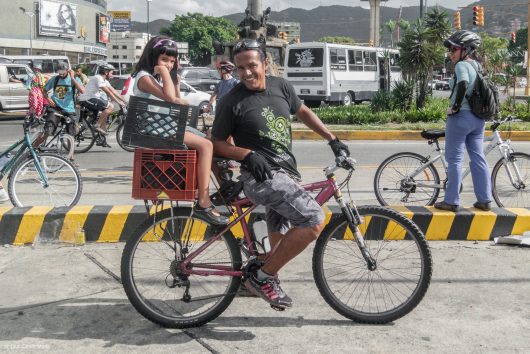
The South American country of Venezuela is facing a political and economic storm that has unraveled into a humanitarian crisis. It’s becoming increasingly difficult for Venezuelans to leave and live in the country, but those that do manage to escape are in search of living a better life. Here are nine facts about Venezuelan refugees:
- Due to the economic and political crisis faced by Venezuela, the amount of people fleeing the country toward a life of a refugee has increased greatly. According to the U.N.’s Population Division from 1990 to 2015, the number of Venezuelans living abroad more than tripled from 185,282 to 606,344. There are currently 345,783 Venezuelans residing in the U.S. Many of these Venezuelan refugees are undocumented and only have the few goods they were able to take along with them in order to escape Venezuela.
- On July 17, 2016 more than 100,000 Venezuelans crossed the Simon Bolivar Bridge to Cúcuta, Colombia, through a border that has long been closed off, in search of food and medicine. This is a result of many factors including the fact that food in Venezuela has a price set by the government, which is lower than the cost to make the product. This alone has caused a humanitarian crisis.
- The crisis is not only affecting food shortages but it is playing a role in population growth. It is now a growing trend that women opt for sterilization procedures because traditional birth control methods have disappeared from stores that are increasingly empty. Government officials announced that the nation had run out of birth control in July 2015. Doctors state they have seen an increase in number of appointments as well as a change in demographics. Women with one or two children instead of four or more are opting in for sterilization.
- According to the Pew Research Center, U.S. asylum applications filed by Venezuelans have risen 168 percent this year versus 2015. Many Venezuelans are looking to escape the economic turmoil in the country but are having difficulties obtaining documentation to live in surrounding countries.
- According to the International Organization for Migration (IOM), Colombia is currently the country that hosts the most Venezuelans with 46,614 Venezuelans currently residing in Colombia. Both countries have agreed to gradually open its borders in order to help with the refugee crisis and help those who continue to reside in Venezuela.
- Legal status is one reason the influx of Venezuelans into Colombia goes largely unnoticed. All Venezuelans that don’t have a Colombian relative or a visa, while in Colombia are considered illegal economic migrants.
- Representative Carlos Curbelo of Florida introduced the Venezuelan Refugee Assistance Act in October 2015. The legislation would provide for the adjustment to permanent resident status of Venezuelan nationals who: were physically present in the U.S. on January 1, 2013, have been physically present in the U.S. for at least one year, are physically present in the U.S. on the date the status adjustment application is filed, have not been convicted of certain specified crimes and were never involved in the persecution of others and apply for adjustment before January 1, 2019. However, this act does not protect refugees currently fleeing from crises in Venezuela.
- According to a 2014 study by the Central University of Venezuela more than 1.5 million Venezuelans fled the country since the reign of Hugo Chavez in 1999. Those who left have become immigrants and refugees in neighboring countries and across the globe.
- Like the U.S., the neighboring country of Colombia has also received many more applications for asylum status from Venezuelans. These Venezuelans are aware that they might be succumbing to refugee status but it also provides food and safety for these families.
The current situation in Venezuela is abysmal and many Venezuelans continue to suffer within its borders. Life does not get any easier for those who try to leave that have difficulties finding jobs and sustaining themselves.
The solution to this is in the referendum that could possibly take current president, Nicolás Maduro, out of power in order to make Venezuela the home that people once knew. Countries that have worked along with Venezuela like Brazil, Argentina, Paraguay and Uruguay should now be offering asylum for Venezuelan refugees and assistance to the wounded country.
– Mariana Camacho
Photo: Flickr
