• Link to X
  • Link to Facebook
  • Link to Instagram
  • Link to TikTok
  • Link to Youtube
  • About
    • About Us
      • President
      • Board of Directors
      • Board of Advisors
      • Financials
      • Our Methodology
      • Success Tracker
      • Contact
  • Act Now
    • 30 Ways to Help
      • Email Congress
      • Call Congress
      • Volunteer
      • Courses & Certificates
      • Be a Donor
    • Internships
      • In-Office Internships
      • Remote Internships
    • Legislation
      • Politics 101
  • The Blog
  • The Podcast
  • Magazine
  • Donate
  • Click to open the search input field Click to open the search input field Search
  • Menu Menu

Archive for category: Refugees

Global Poverty, Refugees

Ten Facts about Chilean Refugees Seeking Asylum

Chilean Refugees
In 1973, Augusto Pinochet successfully led a military coup in Chile, removing Allende and his Socialist government from power. For many years, Pinochet ruled as a military dictator over the South American country, which forced many citizens to become Chilean refugees. Many Chileans sought asylum in countries such as Britain, Sweden and Canada.

10 facts about Chilean Refugees

  1. Repression forced Chileans to flee. Pinochet replaced the liberal government with a right-wing dictatorship. His vicious regime kidnapped, tortured and killed nearly 13,000 citizens, which forced many Chileans to flee.
  2. Canada initially did not want to accept Chilean Refugees. Pressure from churches and local organizations, however, forced the government to change its aid policies. This approach differed from that of the Swedish ambassador who accepted refugees without hesitation.
  3. Chileans entered Canada soon after the violent coup in 1973. After three months of lobbying, Canada accepted nearly 7,000 refugees, all of whom left due to political instability.
  4. There was a large reduction in the second wave of refugees. Between 1979 and 1982, significantly fewer refugees were entering Canada. Only about 1,000 Chileans entered, many of whom were following family and friends. They reunited with separated family members and sought jobs.
  5. The third wave, ending in the 1980s, was reduced even further. Less than 700 refugees entered Canada between 1982-1986. From this point onward, the number of refugees greatly declined.
  6. Canadians accommodated the Chileans. Although Chilean refugees settled in different regions, Canadian institutions helped Chileans create schools, news sources, churches and political organizations. These systems provided Chileans with a community in their new country, allowing them to cope and address anger toward the new Chilean regime.
  7. Britain established World University Service (WUS) scholarships for Chileans. These scholarships, funded by the Labor Government, enabled 900 Chileans, domestic and international, to complete their education.
  8. Over 1 million Chileans were displaced. Although the dictatorship ended in 1990, there are still nearly 1 million displaced Chileans.
    Out of the 1 million Chileans abroad, 12.1% have not returned to their native country due to concerns regarding instability.
  9. There are still 40,000 people of Chilean descent living in Canada. These Chileans are part of the labor force contributing to Canada’s flourishing economy.
  10. The Chilean government has stabilized. Since Pinochet, the Chilean government has created policies, such as the Electoral Reform, which ensures equal representation in the government as well as an economic law mandating, “structural surplus equal to 1 percent of the gross domestic product.”

A country that once violated its citizens’ human rights now welcomes Syrian refugees, who are suffering similar injustices. While Chilean refugees constituted a large part of the Canadian population, they are no longer one of the top five groups entering the country.

Some Chileans returned to their native country while others stayed in their new home. As Katherine Knox and Tony Kushner stated in their book, ‘Refugees in an Age of Genocide,’ “Such work at a local level enabled refugees to start rebuilding lives which had been so brutally damaged in their homeland.”

– Kristen Guyler

Photo: Flickr

November 11, 2016
https://borgenproject.org/wp-content/uploads/borgen-project-logo.svg 0 0 Borgen Project https://borgenproject.org/wp-content/uploads/borgen-project-logo.svg Borgen Project2016-11-11 01:30:212024-05-27 23:53:40Ten Facts about Chilean Refugees Seeking Asylum
Refugees

German Health Care: A Broken System for Asylum-Seekers?

German Health Care: A Broken System for Asylum-seekers?
German health care, geared to caring for a population of 80 million, is dealing with an unexpected and intimidating challenge by the continuous influx of about 1.1 million refugees in 2015 alone. Escaping poverty, war and repression, as well as family reunification are among the main reasons people attempt to enter Germany both legally and illegally.

Despite having opened its doors to more refugees than any other European country since 2013, Germany restricts asylum-seekers’ health care access to emergency care, treatment for acute diseases and pain, maternity care and vaccinations. Additional care can be provided, however, patients must file various petitions and jump through multiple hoops before getting approval for the same.

The aim of restricting asylum-seekers’ access to German health care dates back to the 1990s when rising numbers of asylum-seekers from former Yugoslavia created a need to reduce Germany’s pull factor. However, it is evident from various studies that this policy has done nothing to bring down the number of people seeking asylum in the country.

In spite of limiting access to health care, the sociomedical system is crumbling with news reports about vaccines not being available for German citizens till 2017 in the normal quantities. Doctors are having to undergo courses in screening and treating diseases like tuberculosis, scabies and psychological trauma.

In addition, there is the cost of material resources like medicines and hospital beds, diagnostic and surgeries that have spiraling economic repercussions. The siphoning of medical services, even in their most basic form, to asylum-seekers, is resented by many German citizens.

However, despite this backlash, there are many reasons for the country to consider providing full access to German health care, both for asylum seekers and undocumented immigrants. The most obvious of these is that any communicable disease can skyrocket the economic cost to the country by a loss of productivity.

In addition, according to experts such as Dr. David Ingleby from the University of Amsterdam, research has shown that, “denying easy and early access to healthcare not only ignores the right to health but actually increases costs: a new study estimated that since their introduction, these restrictive policies have increased the cost of healthcare by 376 euros per year for each asylum seeker.” Clearly, restrictive policies benefit neither immigrants nor state.

Some states like Bremen and Hamburg have been providing their asylum-seekers with health insurance cards like those used by the general population. These enable direct access to doctors and hospitals without having to apply for a certificate of entitlement.

Officially, the restriction on acute and emergency services remains, but the decision is now moved to the doctor’s medical discretion and no longer made by a municipal administrator. An innovative solution, this could be extended to the legal system, resting the decision of what warrants medical attention to the hands of those in the know.

Another solution being considered is granting anonymous insurance certificates that allow refugees without proof of citizenship to seek medical help without legal repercussions. In Berlin alone, up to 250,000 people live without any personal identity documents which are essential to get full medical treatment, making this idea almost a necessity.

In order to provide funding for these and other such policies for less restrictive health care, the European Union Health Program released a statement pledging fund actions supporting the Member States under particular migratory pressure in January this year. Hopefully, with this positive impetus, the German health care system will move to a more inclusive model for both asylum-seekers and undocumented immigrants.

– Mallika Khanna

Photo: Flickr

November 10, 2016
https://borgenproject.org/wp-content/uploads/borgen-project-logo.svg 0 0 Borgen Project https://borgenproject.org/wp-content/uploads/borgen-project-logo.svg Borgen Project2016-11-10 07:28:462024-12-13 17:55:57German Health Care: A Broken System for Asylum-Seekers?
Global Poverty, Refugees

Eight Facts About Refugees in Jordan

Refugees In Jordan
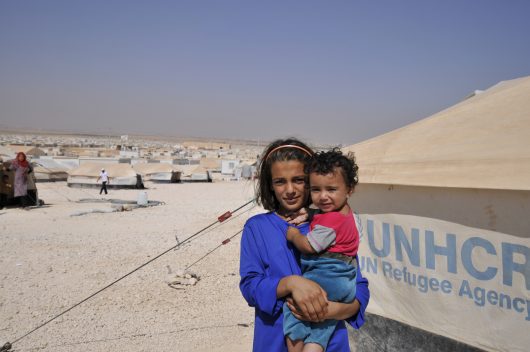
In the past five years, the Syrian Civil War has turned into one of the biggest humanitarian crises of the 21st century. Millions of civilians have been displaced from their homes and forced to flee to other countries. This has created a refugee crisis the likes of which hasn’t been seen since World War II. Few countries have borne a greater brunt of this crisis then Jordan. Here are eight facts about refugees in Jordan.

  1. There was a massive flow of Syrian refugees into Jordan. According to the United Nations Refugee Agency, there were over 620,000 Syrians living in Jordan as of June 2015.
  2. According to the United Nations Refugee Agency, 80 percent of refugees in the country have adequate housing/shelter.
  3. A majority of Syrian refugees are being hosted by some of Jordan’s poorest communities with Amman, Irbid and Mafraq taking on over 76 percent of all Syrian refugees in Jordan. This is causing strain on public services and infrastructure and is creating tension between Jordanians and refugees.
  4. Many Syrian refugees lack basic services. Only 22 percent of refugee households have their basic domestic and hygiene needs meet. Additionally, 20 percent of refugee households do not have access to primary health care and 30 percent do not have access to tertiary health care.
  5. A large number of Syrian refugee children in Jordan are not receiving a proper education. Over 80,000 out of 226,000 children did not receive a formal education last year.
  6. Human Rights Watch explains that most of the barriers to children receiving education stem from unnecessary restrictions placed by the Jordanian government. These include unattainable registration requirements, bans on enrollment for children who haven’t been to school in three or more years and sanctions for refugees working without proper permits. By easing these restrictions, more children will be able to attend school.
  7. Syrian refugees are legally banned from participating in the formal Jordanian economy. Despite this, hundreds of thousands of refugees participate in informal jobs often in the construction or agricultural sectors.
  8. Despite the focus on the negative aspects of Syrian refugees in Jordan, there are a number of positive aspects as well. The influx of refugees has led to an increase in public investment in addition to a growth in the communication, manufacturing and construction sectors; all of which has led to a real GDP growth rate increase of 2.7 percent according to the World Bank.

While the situation in Jordan is problematic, it is by no means hopeless. The Carnegie Endowment for International Peace outlines a number of measures that can be taken to help improve the lives of both Syrian refugees and Jordanian citizens. Increased humanitarian and developmental aid can be implemented to help meet the basic needs of refugees.

Allowing refugees access to formal employment will help create a more sustainable situation by allowing refugees to become more self-sufficient. Greater governmental aid can be provided to the Jordanian government to improve their capacity to manage the situation.

– James Long

Photo: Flickr

November 10, 2016
https://borgenproject.org/wp-content/uploads/borgen-project-logo.svg 0 0 Borgen Project https://borgenproject.org/wp-content/uploads/borgen-project-logo.svg Borgen Project2016-11-10 06:49:402024-12-13 17:56:03Eight Facts About Refugees in Jordan
Global Poverty, Human Rights, Refugees, Refugees and Displaced Persons

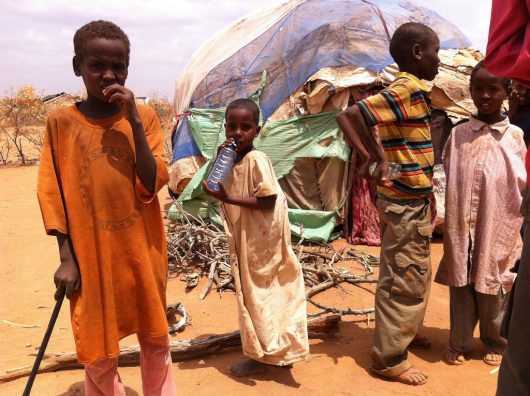
Ten Facts About Refugees in Kenya Forced to Return to Somalia

During the early 1990s, Kenya formed a repatriation program, the Dadaab refugee camp, for thousands of displaced Somalians escaping rebel attacks, drought, continuous violence and abuse.

  1. Islamic extremists displaced thousands of Kenyans housed in the Dadaab refugee camp. Now the country is requesting that more than 260,000 refugees in Kenya return to Somalia for concern of Somalia-based al-Shabab Islamic extremists launching attacks within the Kenyan camp. After numerous deadly attacks from 2011-2015, the government announced in May the closure of Dadaab for immediate national security interests.
  2. World leaders don’t agree with deporting refugees back to Somalia. Kenyan officials are tentatively closing Dadaab at the end of 2016. However, the Human Rights Watch says sending refugees back to Somalia doesn’t meet international standards of a voluntary return.
  3. They have Somalian blood, but are Kenyan-bred. On average, refugees are in exile for about 20 years, according to the U.N. refugee agency. In Northeastern Kenya, nestled in close proximity to Somalia’s border, the Dabaab camp has been home to residents for a quarter of a century. Some have never stepped foot on Somalian soil.
  4. Refugees are being lured with a cash advance to return. Many Somalian refugees were told they would be deprived of a $400 U.N. cash grant because of forced extradition, according to the Human Rights Watch. Dadaab refugees have been given inadequate information about potential dangers during their forced exit.
  5. Resources in Somalia don’t exist for the influx of Kenyan refugees to return. Some Somalian refugees who returned to their home country have fled back to Kenya again due to continuous violence and nonexistent resources and services. The deported refugees seeking asylum were unable to reestablish themselves in Somalia, and now they are denied access to refugee registration, or asylum procedures in Dadaab. This leaves a large percentage of displaced peoples without legal status or access to food.
  6. Force and coercion used on refugees are not tolerated by world leaders. While the Kenyan President Uhuru Kenyatta claims the process of repatriation will be voluntary and humane, countries internationally say they will reprimand evictions using force. However, many refugees inhabiting Kenya agree to the return for fear of coercion and force if they stay in Kenya, but they will face danger, persecution and hunger in Somalia.
  7. Refugees are involuntarily returning to insecure conditions and poverty. “The Kenyan authorities are not giving Somali refugees a real choice between staying and leaving, and the UN refugee agency isn’t giving people accurate information about security conditions in Somalia,” said Bill Frelick, refugee rights director at Human Rights Watch. “There is no way these returns can be considered voluntary.”
  8. Kenyan refugees have no choice but to leave. Dadaab’s refugees reported feeling trapped by the government’s decision to shut down the camp. Many are afraid of returning to Somalia, but simultaneously fear the handcuffs and deportation of staying in Dadaab until the end of the year.
  9. The Dadaab refugee camp is a city full of resources and services. The refugee camp is the largest safe haven worldwide, and was initially created to host roughly 90,000 refugees searching for relief from rebels fighting the Somalian government in 1991. Now it spans five camps with makeshift cinemas, soccer leagues, bustling businesses, schools, hospitals and a graveyard.
  10. Refugees are forced into danger and left without community support. In mid-August, roughly 24,000 Somalian refugees had left Dadaab and gone back to their country of origin since the beginning of the repatriation process in December 2014. Kenya’s government reported to Human Rights Watch that in mid-August they were aiding the return of 1,000 refugees per day. Negotiations of repatriations are ongoing because refugees aren’t being sufficiently assisted upon their return to Somalia.

– Rachel Williams

Photo: Flickr

November 10, 2016
https://borgenproject.org/wp-content/uploads/borgen-project-logo.svg 0 0 Borgen Project https://borgenproject.org/wp-content/uploads/borgen-project-logo.svg Borgen Project2016-11-10 01:30:142024-05-27 23:53:59Ten Facts About Refugees in Kenya Forced to Return to Somalia
Food & Hunger, Global Poverty, Refugees

10 Important Facts About Refugees in Lebanon

Refugees in Lebanon
Lebanon hosts an ever-increasing refugee population, largely the result of an ongoing five-year civil war in Syria. Though Syrians comprise the majority of the approximately 1.5 million refugees in Lebanon, Palestinians and a small number of Iraqis have also sought refuge in the country.

Here are 10 important facts about refugees in Lebanon:

  1. There are over 1.5 million refugees in Lebanon, principally from Syria, Palestine and Iraq. The European Commission’s Humanitarian Aid and Civil Protection Department (ECHO), reports that there are currently over 1.1 million Syrian refugees seeking protection in the host country.
  2. According to the U.N. Refugee Agency (UNHCR), 1.02 million Syrian refugees as of Sept. 30 are officially registered with the Lebanese government.
  3. Lebanon, according to the CIA World Factbook July 2015, estimates the population of Lebanon to be 6.1 million. Consequently, they host the largest refugee population per capita in the world, with close to 25 percent of the population having sought refuge in the country.
  4. Lebanon is not a signatory of the 1951 Refugee Convention nor the 1967 Protocol, which elucidates the international community’s responsibility to protect refugees. In addition, there is no national legislation regarding refugees, but in 2003 a Memorandum of Understanding (MOA) was signed between the UNHCR and the Lebanese government. The MOA gives those in need of asylum a temporary residence permit as their refugee status is decided and a permanent solution is obtained. Since there are no official refugee camps, Syrian refugees are in some of the neediest and most at-risk neighborhoods in the country.
  5. In 2016, the European Commission has promised a total of 87 million euros to Lebanon in humanitarian assistance for refugees. Fifteen million euros specifically for Palestinian refugees from Syria were allocated by the European Commission to assist the U.N.’s Relief and Works Agency for Palestine Refugees in the Near East (UNRWA), in their effort to supply much-needed cash assistance and educational services.
  6. The UNCHR is doing an extensive amount of work with the help of partners to develop educational prospects for thousands of young Syrian refugees. The UNCHR recently reported that in Lebanon almost 158,000 children, up from 62,664 a year earlier, were enrolled in school.
  7. According to the EU, its humanitarian response to Syrian refugees in Lebanon has for the most part been in cash assistance to help people with basic necessities; and providing health care, shelter, water and sanitation support.
  8. The UNHCR has had much success with the launch of a Facebook group in 2014. The “I am Syrian in Lebanon” group has 30,000 members and it assists people on many things including school enrollment and reporting abuse.
  9. The World Bank Group (WBG) has, with the help of partners, introduced several projects to assist Lebanese communities hosting Syrian refugees. The Municipal Services Emergency Project assists local governments to address crisis issues more in terms of development rather than strictly humanitarian focused.
  10. The WBG project is assisting in the delivery of supplies, such as garbage compactors, service vehicles, water filters, water supply systems, sewage systems and the revitalization of public infrastructure.

The results of WBG projects have had an immensely positive impact on the Lebanese communities where its efforts have been directed.

– Heidi Grossman

Photo: Flickr

November 8, 2016
https://borgenproject.org/wp-content/uploads/borgen-project-logo.svg 0 0 Borgen Project https://borgenproject.org/wp-content/uploads/borgen-project-logo.svg Borgen Project2016-11-08 01:30:092024-12-13 17:54:0310 Important Facts About Refugees in Lebanon
Global Poverty, Refugees

Seattle Nonprofit Offers Training for Refugee Women

Training for Refugee Women
The struggles that face the increasing refugee population in the greater Seattle area continue to persevere. As these new residents search for employment, they are presented with language barriers, cultural differences and non-transferable professional degrees or certificates. Nonprofits like Muses are offering culpable training for refugee women.

Women from Afghanistan are often accustomed to contributing to their family’s well-being by the small-scale production of textiles, soap, furniture, jewelry and other handmade goods.

When these women arrive in the U.S., it is often difficult to translate their skills successfully into the job market.

Oftentimes, refugee families are in a financial position where both adult members of the household need to work. For many women, this is the first time they are faced with entering an official work environment, let alone one that follows the Western standard of living.

Sandrine Espie and Esther Hong realized back in 2012 the potential that refugees and low-income immigrants, women, in particular, had to contribute to the workforce.

They were inspired by the talents of these women and out of this inspiration came Muses. Muses is a Seattle-based nonprofit that aims to educate and provide these women with the skills necessary to enter the workforce.

Through research and interviewing, Espie and Hong found that there is a high demand for local, high-quality apparel manufacturing services. Their services aim to provide training for refugee women, enhancing their existing skills to aid them in finding a job.

Muses has also inspired other organizations in the area to pursue similar training programs.

World Relief Seattle, a non-profit that partners with the local church and focuses on refugee resettlement, has recently taken steps to begin a project specifically geared toward employment for Afghan women.

The program will ideally feature extensive orientation for women about work environments in the U.S. as well as instruction on using sewing skills to contribute to the financial security of their families.

In 1996, when the Taliban banned women in Afghanistan from working or attending school, the idea that women are less capable than men was ingrained into the eyes and minds of many people.

Through training programs for refugee women like Muses, women are gaining economic and personal empowerment and are learning to contribute to the sustainable market for handmade goods in Seattle.

– Peyton Jacobsen

Photo: Flickr

November 6, 2016
https://borgenproject.org/wp-content/uploads/borgen-project-logo.svg 0 0 Borgen Project https://borgenproject.org/wp-content/uploads/borgen-project-logo.svg Borgen Project2016-11-06 01:30:592024-06-11 23:17:48Seattle Nonprofit Offers Training for Refugee Women
Global Poverty, Refugees

Five Top Documentaries to Stream on Netflix

Five Top Documentaries to Stream on Netflix
Here are five top documentaries to consider adding to your watch list.

5. How to Change the World (2015)
This documentary discusses the creation of the modern environmental groups and the rise of Greenpeace. 1971–the Nixon Administration orders the third underground nuclear test on Alaska’s Amchitka Island, site a WWII U.S. Naval air facility. The remote island, once home to the world’s largest runway, was an ideal location for the U.S. government to conduct underground nuclear testing. The film follows Bob Hunter, “a hippy journalist from Vancouver” and Greenpeace founding member, during a sailing voyage to Amchitka Island to protest the atomic testing.

4. The True Cost (2015)
Number 4 of the top documentaries to stream on Netflix, The True Cost features a “behind the curtain” story revealing hard truths about the fashion industry’s production system. John Hilary, the executive director of the “War on Want” captures the essence of the film: “When everything is concentrated on making profits, what you see is that human rights, the environment, workers rights get lost.” Organizations like Clean Clothes Campaign, BRAC, Fashion Revolution and Greenpeace continue to advocate for reform in the fashion industry. The film seeks to educate the public in order to stir support for campaigns like Fashion Revolution’s mission to reform the fashion industry “which values people, the environment, creativity and profits in equal measure.”

3. The Square (2013)
Tahrir Square certainly has its place going back long into history; however, five years ago it was the site of protests and an Egyptian revolution. Protesters like Khalid Abdalla, the British-Egyptian actor and star of The Kite Runner, occupied the heart of Cairo to protest the current government regime. The documentary features footage shot by protesters that capture the intimacy of their struggle. It’s a story about a people yearning for their rights to be heard and to “create a society of conscience.” The Square received a 2014 Oscar Nomination for ‘Best Documentary’.

2. The White Helmets (2016)
The White Helmets features a story about hope in the war-torn nation of Syria. In a nation wrought with death and destruction, the White Helmets claim to have saved 62,000 lives. The film offers firsthand perspectives into the civil war in Syria, exposing its horrors but also sending a message that the altruism of the human spirit will never fail. Though a bid for the Nobel Peace Prize was unsuccessful, supporters are actively campaigning to raise the $1 million that would have been awarded to the White Helmet rescue workers. The money will go to “treat wounded volunteers and replace rescue equipment and ambulances that have been bombed.”

1. Poverty, Inc. (2014)
At number 1, Poverty, Inc. tells the story of the multi-billion dollar business of charitable giving. Through well-intentioned donations, the charity industry generates enormous profits for certain businesses but does not develop recipient nations to become self-reliant. Instead, the preponderance of aid leads to dependency. The documentary encourages “empowerment” in order to eliminate the mindset of dependency on foreign aid. Winner of 30 film festival honors, Poverty, Inc. tells an incredible story of hope and charts a general path toward finally eradicating extreme global poverty.

– Tim Devine

Photo: Flickr

November 6, 2016
https://borgenproject.org/wp-content/uploads/borgen-project-logo.svg 0 0 Borgen Project https://borgenproject.org/wp-content/uploads/borgen-project-logo.svg Borgen Project2016-11-06 01:30:432020-05-15 17:35:57Five Top Documentaries to Stream on Netflix
Refugees

Violence Fuels Honduran Refugees to Seek Asylum in the US

Violence Fuels Honduran Refugees
While many in the U.S. have begun focusing on the Syrian refugee crisis and the horrors committed by the Islamic State (IS) and the Assad regime, the U.S. still has a major refugee crisis along its southern border.

For decades, millions of migrants have traveled from South and Central America to the U.S. in search of better work opportunities and social benefits for themselves and their families. Recently, however, the migrant crisis has transformed into a refugee crisis, with many also traveling to the U.S. to escape the dangers of their home countries.

With the U.S. as the world’s biggest customer, a thriving drug market worth more than $300 billion has fueled the violence between gangs, each fighting for territory and the rights to sell drugs. In countries dictated by drug trades, government corruption also becomes inevitable, with police sometimes working hand in hand with gangs.

Especially in Honduras, these drug wars have displaced thousands, destroying neighborhoods and forcing their inhabitants to move north. Thousands of Honduran refugees have traveled to the U.S. in search of new lives.

In the past few years, however, U.S. investment in countries like Honduras has helped reduce violence. The American government has put money and resources into programs that dissuade youth from joining gangs and replenish impoverished neighborhoods.

Here are 10 facts about Honduras and Honduran refugees:

  1. One hundred and seventy-four thousand people, four percent of the country’s households, have been displaced because of violence.
  2. In 2011, Honduras was the murder capital of the world, with 91.6 murders per 100,000 people. In 2014, that number dropped to 66.
  3. In 2014, 18,000 unaccompanied Honduran children arrived at the U.S. border.
  4. This year, the U.S. has sent between $95 and $110 million in violence prevention funding to Honduras.
  5. In one pilot program, participants were deemed 77 percent less likely to commit crimes or abuse drugs and alcohol after a year of counseling, according to Creative Associates International.
  6. Because of fear and corruption, 96 percent of homicides do not end in a conviction in Honduras.
  7. There are about 23,000 gang members involved in police shootouts and turf wars daily.
  8. About 15,000 Hondurans applied for refugee status in 2015, double that of 2014.
  9. In 2014, 64.7 percent of unaccompanied minors received the asylum they applied for.
  10. For 2016, the U.S. has 3,000 refugee slots for applicants from Latin America and the Caribbean even though 9,000 people may be eligible.

While there is a lot of potential in the U.S. funded pilot programs, more money is necessary to enact change on a large scale. Although many may criticize the foreign aid the U.S. already gives as being too charitable, they must keep in mind the costs of receiving these refugees illegally and the cost of them making the journey north. By fixing the roots of the problem, the U.S. can prevent the symptoms from reaching its borders.

Because Honduras is filled with human rights violations, many would see the funding completely cut. This summer, government officials tried to pass a bill in Congress that would do so.

However, responding to the human rights issue by cutting funding to violence prevention may be most impractical and harmful. Although expensive, the best solution may be to continue funding violence prevention programs while beginning separate programs that address government abuse and corruption.

– Henry Gao

Photo: Flickr

November 4, 2016
https://borgenproject.org/wp-content/uploads/borgen-project-logo.svg 0 0 Borgen Project https://borgenproject.org/wp-content/uploads/borgen-project-logo.svg Borgen Project2016-11-04 09:28:162020-05-22 16:52:32Violence Fuels Honduran Refugees to Seek Asylum in the US
Global Poverty, Refugees, Refugees and Displaced Persons

Ten Facts About Refugees in Egypt

Refugees in Egypt
Here are 10 quick facts about refugees in Egypt:

  1. In 2015, over 180,000 individuals were registered as refugees in Egypt with the United Nations Refugee Agency, over 117,000 of which were from Syria.
  2. In 2015, the United Nations Refugee Agency had a total budget of over $80 million dedicated to helping refugees meet their basic needs, receive health care and gain access to education.
  3. The large majority of refugees in Egypt reside in urban areas. About 60 percent live in the greater Cairo area.
  4. Only 18.1 percent of refugees have access to basic hygienic and domestic household items. Only 27 percent of refugee women have sanitary supplies.
  5. About 20 percent of refugees don’t receive primary health care services and 40 percent don’t receive secondary and tertiary health care services.
  6. Approximately 40 percent of refugee children have access to national child protection services and in 2015 there were 149 cases of child abuse.
  7. Between 75 and 80 percent of children are enrolled in either primary or secondary school.
  8. Only 31 percent of working age refugees receive at least minimum wage for more than six months out of the year.
  9. Around 85 percent of refugees are either severely or highly vulnerable socioeconomically.
  10. In 2015, over 3,000 refugees were arrested attempting to illegally cross into Europe by sea.

Egypt is not a final destination for many of these refugees, instead it’s a transit stop to other places such as Europe.

The challenging economic conditions in the country and increasingly anti-refugee policies of the government are pushing more and more refugees toward potentially dangerous and illegal smuggling trips into Europe. Improving the conditions of these refugees in Egypt is of paramount importance.

– James Long

Photo: Flickr

November 2, 2016
https://borgenproject.org/wp-content/uploads/borgen-project-logo.svg 0 0 Borgen Project https://borgenproject.org/wp-content/uploads/borgen-project-logo.svg Borgen Project2016-11-02 01:30:462024-05-27 23:54:11Ten Facts About Refugees in Egypt
Global Poverty, Refugees

Child Refugee Labor in Turkey: How Education Can Help

Refugee Labor in Turkey
In a recent investigation conducted by BBC Panorama and Reuters, thousands of Syrian children have been found working illegally in clothing factories such as ASOS and Mark & Spencer throughout Turkey.

As Turkey has served as the main entry point for refugees fleeing from the ongoing conflict in Syria, there has been an influx of approximately 3 million refugees to Turkey, 665,000 of whom are children.

Yet, a majority of the child refugees in Turkey have not been attending school. In many cases, children are not attending school due to the family’s immediate need for extra income.

According to Turkey’s Disaster and Emergency Management Authority, fewer than 15 percent of children between the age of six and 11 are currently in school.

Moreover, according to a study by the Migration and Politics Research Center at Hacettepe University in Ankara, a Syrian refugee working in Turkey is more likely to be a child than an adult.

Although adult Syrian refugees claim they earn between half or even a third of the hourly rate for the same work completed by Turks, Syrian children, in particular, have always been a cheaper labor source for employers.

Yet, it is difficult to estimate how many children are currently working illegally. According to a survey conducted in Istanbul by the Turkish charity, Support to Life, one in four households with children said at least one child was not in school because the family needed their earnings.

While the ongoing crisis of child refugee labor in Turkey has hindered providing a more stable education for displaced children, education is also the way to eliminate cases of child labor in the first place.

According to the International Labor Organization, it is a combination of economic growth, respect for labor standards, universal education and social protection that can significantly reduce cases of child refugee labor in Turkey.

The U.S. Department of Labor has also suggested that refugees with no access to education leave significant numbers at risk of exploitation of child labor.

Unfortunately, education has remained underfunded. In 2015, only 23% of the education category of the Syria Humanitarian Response Plan was funded. In addition, the U.N. Commissioner for Refugees (UNHCR) Regional Refugee Response Plan for Syrian refugees was funded at 46%.

A representative of the Migration and Politics Research Center said, “Most Syrian children have been out of school for four to five years, since the beginning of the conflict. This is a very long time for a child’s life. Its effects are irreversible. A lost generation is a risk society cannot afford.”

Especially in times of displacement, not only does education reduce child labor statistics but it serves as a crucial safe haven for children in their most vulnerable years.

Education fosters a sense of normalcy, social cohesion and addresses psychosocial needs of the children that the economy depends upon to thrive in the near future.

– Priscilla Son
Photo: Flickr

November 2, 2016
https://borgenproject.org/wp-content/uploads/borgen-project-logo.svg 0 0 Borgen Project https://borgenproject.org/wp-content/uploads/borgen-project-logo.svg Borgen Project2016-11-02 01:30:332024-05-25 00:18:25Child Refugee Labor in Turkey: How Education Can Help
Page 49 of 53«‹4748495051›»

Get Smarter

  • Global Poverty 101
  • Global Poverty… The Good News
  • Global Poverty & U.S. Jobs
  • Global Poverty and National Security
  • Innovative Solutions to Poverty
  • Global Poverty & Aid FAQ’s
Search Search

Take Action

  • Call Congress
  • Email Congress
  • Donate
  • 30 Ways to Help
  • Volunteer Ops
  • Internships
  • Courses & Certificates
  • The Podcast
Borgen Project

“The Borgen Project is an incredible nonprofit organization that is addressing poverty and hunger and working towards ending them.”

-The Huffington Post

Inside The Borgen Project

  • Contact
  • About
  • Financials
  • President
  • Board of Directors
  • Board of Advisors

International Links

  • UK Email Parliament
  • UK Donate
  • Canada Email Parliament

Get Smarter

  • Global Poverty 101
  • Global Poverty… The Good News
  • Global Poverty & U.S. Jobs
  • Global Poverty and National Security
  • Innovative Solutions to Poverty
  • Global Poverty & Aid FAQ’s

Ways to Help

  • Call Congress
  • Email Congress
  • Donate
  • 30 Ways to Help
  • Volunteer Ops
  • Internships
  • Courses & Certificates
  • The Podcast
Scroll to top Scroll to top Scroll to top