• Link to X
  • Link to Facebook
  • Link to Instagram
  • Link to TikTok
  • Link to Youtube
  • About
    • About Us
      • President
      • Board of Directors
      • Board of Advisors
      • Financials
      • Our Methodology
      • Success Tracker
      • Contact
  • Act Now
    • 30 Ways to Help
      • Email Congress
      • Call Congress
      • Volunteer
      • Courses & Certificates
      • Be a Donor
    • Internships
      • In-Office Internships
      • Remote Internships
    • Legislation
      • Politics 101
  • The Blog
  • The Podcast
  • Magazine
  • Donate
  • Click to open the search input field Click to open the search input field Search
  • Menu Menu

Archive for category: Refugees

Education, Global Poverty, Refugees

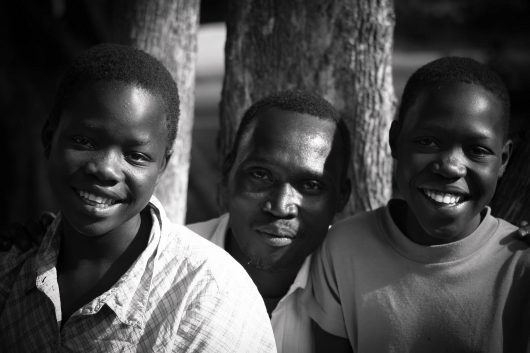
Seven Facts About Refugees from Sudan

Refugees from Sudan
For decades Sudan has faced prolonged civil war, violence between ethnic and political factions, droughts and famine as well as an inefficient distribution of international aid. This has resulted in the displacement of significant portions of the population. Here are seven facts about refugees from Sudan that highlight current hindrances and initiatives to improve their quality of life.

  1. According to a 2016 report from the U.N. High Commissioner for Refugees (UNHCR), approximately 3.2 million Sudanese are classified as internally displaced persons (IDP). There are 78,000 people who are in IDP-like situations while 355,000 are considered refugees, asylum-seekers and others of concern. Sudan also hosts an estimated 350,000 Southern Sudanese individuals due to the separation of South Sudan from Sudan in 2012.
  2. Of the nations with significant populations of Sudanese refugees, most flee to Chad, which currently hosts nearly 305,000 refugees. Egypt currently hosts 30,000 Sudanese refugees, Ethiopia hosts 38,000 and Kenya hosts 3,500.
  3. While earlier waves of Sudanese refugees first found asylum in neighboring countries, refugees from Sudan have recently begun using these border nations as a medium for resettlement in a third country. Some refugees move between different countries in the region to increase chances for resettlement.
  4. Fleeing civil unrest and food insecurity in their home country, many refugees turn to bordering host countries with varying degrees of success. Egypt, for example, allows refugees to seek employment but requires employers to prove that no Egyptian national is available to work before issuing a work permit to a refugee.
  5. In contrast, Seeds for Solutions, a Chad-based agricultural program developed by UNHCR and the Lutheran World Federation, provides Sudanese refugees with resources to live sustainably while growing and selling their own crops.
  6. Sudanese refugee women are rarely literate, rarely take on community leadership roles and are more likely to become mothers at an early age. Although equal numbers of girls and boys attend primary schools in eastern Chad refugee camps, the pass rate for girls taking public exams at the end of grade eight is 25%, compared to 75% for boys.
  7. In response to gender inequities, the international Catholic organization Jesuit Refugee Service offers literacy classes to young Sudanese women in eastern Chad refugee camps. This organization also offers leadership training and support classes for young mothers and survivors of sexual violence.

Although the displacement of vulnerable populations has been a persistent issue in Sudanese history for decades, international initiatives and foreign aid are working to improve the lives of refugees from Sudan.

– Casie Wilson

Photo: Flickr

February 25, 2017
https://borgenproject.org/wp-content/uploads/borgen-project-logo.svg 0 0 Borgen Project https://borgenproject.org/wp-content/uploads/borgen-project-logo.svg Borgen Project2017-02-25 01:30:042024-06-05 04:37:51Seven Facts About Refugees from Sudan
Global Poverty, Refugees

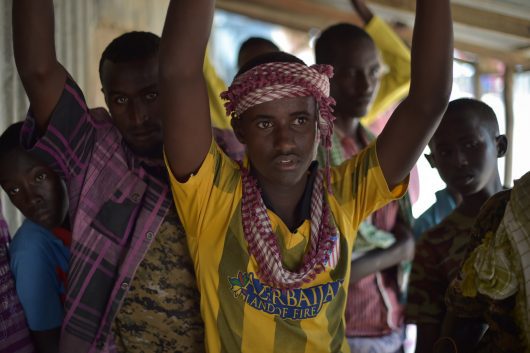
Ten Facts About Somali Refugees

Somali Refugees
According to the United Nations High Commissioner for Refugees (UNHCR), Somalia “remains the epicenter of one of the world’s largest displacement crises.” Of the approximately 11 million people living in Somalia, well over one million are internally displaced while another one million Somalis are registered as refugees in the Horn of Africa and Yemen. Somali refugees have suffered the consequences of a “failed state,” enduring decades of political turmoil, severe drought and the presence of extremist groups.

Because Somalia is one of the countries specified in President Trump’s executive order regarding the immigration ban, it’s important to understand the implications of the country’s situation. Here are 10 facts about Somali refugees:

  1. Since 1991, when President Mohammed Siad Barre fled the country to make way for a power struggle between two warring clans, Somalia has lacked a stable government. Fighting among warlords and rebel groups has made it extremely difficult to restore peace in the country.
  2. It has been difficult to provide Somalia with the international aid that it needs. The country became so dangerous that the U.N. pulled its international aid workers from Somalia in 2001. In 2005, the U.N. World Food Program shipments to Somalia were stopped because they were being seized by rebel forces. Today, it is still difficult to ensure that aid shipments do not fall into the wrong hands.
  3. The total number of native-born Somalis living outside their country more than doubled between 1990 and 2015. The number increased from approximately 850,000 to two million.
  4. Today, there are close to 150,000 Somali immigrants and refugees living in the U.S., and under the Obama administration, nearly 43,000 Somali refugees came to the U.S.
  5. This decade, more than 260,000 people have died in Somalia as the result of severe drought, which has contributed to a lack of clean water and the disintegration of agriculture across the country. The U.N. Office for the Coordination of Humanitarian Affairs stated in a 2016 report that one in 12 Somalis struggles to meet their needs regarding food and water. The report also stated that approximately 305,000 children under the age of five were suffering from malnutrition.
  6. Somalia’s neighboring countries host the largest number of its refugees. According to data collected by the UNHCR, there are just under 330,000 Somali refugees registered in Kenya, 241,000 in Ethiopia and 255,000 in Yemen. Thousands more have found temporary living situations in Tanzania, Uganda, Djibouti and Eritrea.
  7. Dadaab, the largest refugee camp in the world, was home to more than half a million Somalis in 2015. The camp is located in northeastern Kenya and was initially set up as a temporary living situation for refugees fleeing conflict in Somalia and Sudan. Unfortunately for many, the camp has become more permanent. Refugees are often stuck in camps for several decades, unable to emigrate to another country or return to their own. Kenya now plans to close the camp as it has become a breeding ground for extremist groups.
  8. Islamist group Al-Shabaab has a strong presence in Somalia, initially gaining support by promising safety and security to citizens. Al-Shabaab’s credibility quickly declined due to violence and the denial of Western aid. Al-Shabaab’s presence in Somalia has contributed heavily to the refugee crisis, committing senseless acts of violence that contribute further to the chaos.
  9. According to the U.S. federal budget proposal for 2017, Somalia will receive $116.8 million in funding for security assistance and even less in humanitarian aid.
  10. Somali refugees around the world have been resettled and have succeeded in creating productive and successful lives in Western countries. Apart from the many Somalis living in the U.S., around 280,000 Somali immigrants live in European countries.

Somalia continues to be one of the most prominent sources of the world’s refugees, as it has been for several decades. The call for humanitarian assistance and the need for development in the country is at an all-time high, especially considering the possibility that, under the new administration, Somali refugees may not be allowed to enter the United States.

– Peyton Jacobsen

Photo: Flickr

February 22, 2017
https://borgenproject.org/wp-content/uploads/borgen-project-logo.svg 0 0 Borgen Project https://borgenproject.org/wp-content/uploads/borgen-project-logo.svg Borgen Project2017-02-22 01:30:512024-12-13 17:56:39Ten Facts About Somali Refugees
Refugees

Ikea Has Already Created Employment for Syrian Refugees

IKEA_Syrian Refugees
In the wake of President Trump’s recent immigration ban, Howard Schultz has responded by committing Starbucks to create employment for Syrian refugees — 10,000 jobs specifically. One particular company, however, predates not only Schultz’s call but also Trump’s ban.

In 2019, Ikea plans to release a line of rugs and textiles handmade by Syrian refugees.

The Ikea branch in Jordan, which has significantly focused its employment on Syrian refugee women, will currently create an estimated 200 jobs. In large part, this is due to a notorious low employment rate among refugee women. While Jordan has taken in over 650,000 refugees since 2011, only 37,000 work permits have been issued — and most have gone to men. Ikea has guaranteed to be flexible in their working hours with the hired women, as many of them still act as caretakers for their children.

The corporation plans to sell these products in Jordan and neighboring countries that carry free trade agreements. This line will currently run as a limited design.

While their employment for Syrian refugees began before Trump’s executive order, Ikea released a statement on Tuesday saying, “We support the fundamental rights of all people, and do not accept any form of discrimination.”

And indeed, Ikea has held true to this. Last year, the corporation won the 2016 Beazley Design of the Year award from the Design Museum in London for developing a “flat-pack refugee shelter” with the U.N. The flat-pack refugee shelter is made of an insulated steel frame, a solar-paneled roof that provides four hours of electricity and flooring anchored sturdily to the ground. Compared to the cloth tents used by most refugees, this is luxury.

Ikea has also donated $33.3 million to renewable energy projects and electricity for refugees living in Asia, Africa and the Middle East.

And still yet, the company is not done: Lars Petersson, Ikea’s U.S. country manager, has also promised “free legal advice to any employee affected by [Trump’s] controversial order.”

Currently, rugs crafted by Syrian refugees will not be sold in North America.

– Brenna Yowell

Photo: Flickr

February 22, 2017
https://borgenproject.org/wp-content/uploads/borgen-project-logo.svg 0 0 Borgen Project https://borgenproject.org/wp-content/uploads/borgen-project-logo.svg Borgen Project2017-02-22 01:30:252024-12-13 17:56:39Ikea Has Already Created Employment for Syrian Refugees
Education, Global Poverty, Refugees

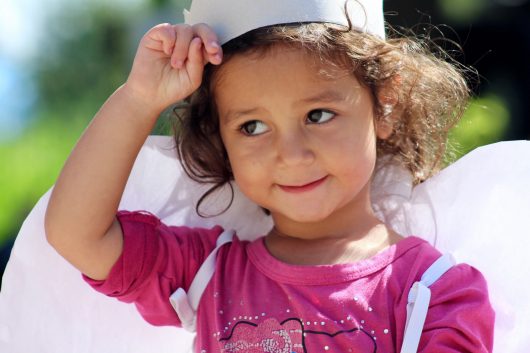
UNESCO Rebuilds Refugee Girls Confidence with Education

Girls Through Education
While 91% of children around the world go to primary school, only 50% of refugee children are as lucky. These odds are startling, especially considering that 69 million girls remain out of school worldwide and that this number is expected to increase due to the refugee crisis. UNESCO plans to change that.

“Changing the World of Refugee Girls Through Education” is the aim of UNESCO’s new partnership with Procter & Gamble (P&G) and Save the Children, showcased in late January. Its main goal is to raise awareness of the extreme vulnerability of refugee girls and to secure solutions for their future through education and skills development.

The project is geared toward Syrian and Jordanian women who struggle to continue basic education or pursue work opportunities. The partners are working to help develop the life, business and vocational skills of these women, all while encouraging them to share their experiences.

The program, which is based in Jordan, offers refugee girls innovative job search techniques and helps them develop skills required to gain employment. In addition to all this, UNESCO helps them find opportunities in today’s global marketplace. If needed, one-on-one psychological counseling is also provided.

Schools also play an important role in identifying refugee children at risk of abuse, sexual and gender-based violence as well as forced recruitment. Even more so, they can help connect them with appropriate services, according to a recent UNESCO report.

Classrooms can also act as a place of transformation for many kids. Becoming educated can help one become a well-rounded person and gain a foundation of learning, which is a big step in helping one stand on his or her own feet.

This is even more important for refugee girls. Educating these girls empowers them and reduces the number of girls getting married at a very young age. This is a massive problem for girls in developing countries, where one in three girls is married before the age of 18.

Solving such a problem requires commitment, time and effort. This is just what the UNESCO partnership is hoping to accomplish by supporting refugee girls, raising their confidence and shaping their future.

– Mayan Derhy

Photo: Flickr

February 21, 2017
https://borgenproject.org/wp-content/uploads/borgen-project-logo.svg 0 0 Borgen Project https://borgenproject.org/wp-content/uploads/borgen-project-logo.svg Borgen Project2017-02-21 01:30:002020-05-28 13:46:30UNESCO Rebuilds Refugee Girls Confidence with Education
Global Poverty, Refugees, Technology

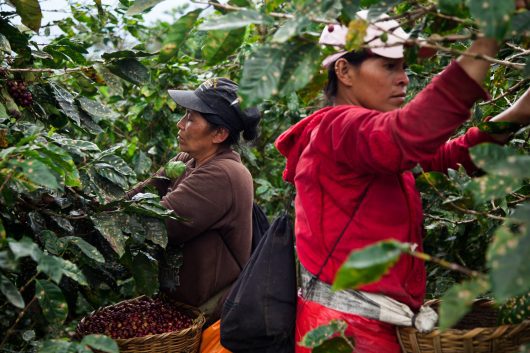
Students Turn Coffee Grounds into Fuel for Refugees

Coffee Grounds into Fuel for RefugeesDozens of student teams at the University of Toronto (UoT) recently participated in the Clinton Global Initiative’s 2017 Hult Prize competition. Given today’s global context, the theme of this year’s competition was “Refugees – Reawakening Human Potential and Restoring the Dignity of 10 Million People by 2022.” Several students from UoT impressed the judges with their initiative to turn coffee grounds into fuel that can be easily implemented in refugee camps across the world.

The Hult Prize is one of the largest and most competitive student contests in the world. The competition focuses on improving social good, specifically reinstating the rights and dignity of communities affected by social injustice, politics, economic, climate change and war. The winners of the contest receive $1 million in start-up funds and mentorship from international business and humanitarian leaders.

The competition is run by the Hult Prize Foundation. The foundation has stated that it believes the number of refugees worldwide far exceeds the number estimated by the United Nations, which is partially what inspired this year’s theme. “Rather than focus on aid and charitable approaches to refugee migration, we focus this challenge on the reawakening of human aid,” says the foundation’s website.

In Canada, the government resettled more than 25,000 Syrian refugees between November 2015 and February 2016, so the theme of the competition is relevant for UoT students. Canada’s private sponsorship program continues to facilitate the relocation of even more refugee families from Syria.

Five students from UoT, Lucy Yang, Matthew Frehlich, Gotham Rakmachandran, Sam Bennett and Lucas Siow, have advanced to the regional semi-finals of the competition. They have designed a substitute for firewood, called Moto, made from coffee grounds, sugar and paraffin wax. The mixture is put into a loaf pan and baked. The product is easily produced and gets rid of waste from used coffee grounds.

A 2014 survey from the United Nations High Commissioner for Refugees found that 90 percent of refugees in Chad, Ethiopia, Kenya and Uganda rely on firewood to cook and keep themselves warm. Moto will prevent the dangers that come along with searching for firewood outside of the camps.

The creators of Moto have used the log substitute to boil water and cook lentils, successfully turning the coffee grounds into fuel. The log can burn for up to 90 minutes.

The goal for Moto is to connect the idea with businesses in Africa and refugees living in Toronto in order to tweak the design to best meet the needs of refugees living in camps across the world.

The design is simple so that people living in developing countries can eventually learn to utilize the technique themselves. The idea of turning coffee grounds into fuel is a revolutionary one that has the potential to make lives easier for refugees all over the world.

– Peyton Jacobsen

Photo: Flickr

February 13, 2017
https://borgenproject.org/wp-content/uploads/borgen-project-logo.svg 0 0 Borgen Project https://borgenproject.org/wp-content/uploads/borgen-project-logo.svg Borgen Project2017-02-13 01:30:072024-12-13 17:56:38Students Turn Coffee Grounds into Fuel for Refugees
Education, Global Poverty, Refugees

Education for Syrian Refugees in Jordan

Refugees in JordanThere were 655,833 Syrian refugees registered with the United Nations refugee agency in Jordan in November 2016. Of these immigrants, 87 percent live below the national poverty line, which is equivalent to $95 per person each month. The average debt for Syrian households living outside refugee camps rose to $1,000 each by the end of 2016. In addition, 26 percent reported financial dependence on family members holding exploitative, high-risk or illegal jobs in order to meet basic needs. Education for Syrian refugees in Jordan is a failing system that needs adjustment.

The Syrian refugee crisis remains the most prominent humanitarian disaster in recent history. According to UNICEF, the most fundamental act for reconstructing a stable community is providing equal access to education for Syrian refugees.

Approximately 265,000 out of the nearly 660,000 Syrians registered in Jordan are under the age of 18. The U.N. reports that 97 percent of these children are at risk of not attending school due to financial hardship.

Jordan spends more than 12 percent of its GDP on education, yet the school system is still in need of financial support. The system struggled even before the influx of refugees from Syria.

Regarding access to education for Syrian refugees, the Ministry of Education has opened a number of additional school spaces and relaxed barriers to registration. Consequently, there are now approximately 170,000 refugee children enrolled in the current school year.

The Ministry of Education also created an action plan to open 102 additional double-shift public schools. Thus, the plan will accommodate 50,000 new enrollment spaces. The plan initiated a “catch-up program” administered through public schools. In addition, the plan will operate in conjunction with education ministry teachers and will offer informal education to 25,000 children between the ages of eight and 12. One thousand of these children have already enrolled.

The primary issues regarding access to education for Syrian refugees surround legal status and documentation, restrictions on business ownership and school dropout rates among migrant populations. The Ministry of Education seeks to address each of these issues through its reformed action plan.

To provide some support, UNICEF’s 2017–2018 No Lost Generation initiative promises to promote equal access to integrated child protection, education, youth engagement and livelihood programs. The initiative is meant to strengthen the quality of education for Syrian refugees.

Still, almost 91,000 Syrian children registered with the U.N. High Commissioner for Refugees remain without access to formal education. A 2016 UNICEF survey conducted within Amman, Irbid and Mafraq found that 10 percent of Syrian refugee families removed their children from school to save educational expenses. Six percent had sent their children to work, and three percent had their daughters married in childhood. Childhood marriages are a common occurrence because they help bear the economic burden and safety concerns associated with refugee status.

Without continuous interest and more equitable support from the international community, the educational situation for refugees will not improve. From healthcare and legal status to job opportunities and education for Syrian refugees, millions, including the internally displaced and host communities, face an uncertain future.

– Jaime Viens

Photo: Flickr

February 10, 2017
https://borgenproject.org/wp-content/uploads/borgen-project-logo.svg 0 0 Borgen Project https://borgenproject.org/wp-content/uploads/borgen-project-logo.svg Borgen Project2017-02-10 01:30:082024-12-13 17:56:37Education for Syrian Refugees in Jordan
Economy, Global Poverty, Refugees

The Effect of Refugees on the Economy

Refugees on the EconomyThere has been considerable debate regarding the effect of refugees on the economy. Although refugees often do require assistance establishing their lives in new countries, there are countless stories of refugees who have succeeded through determination and innovation.

With a net worth of about $38 billion, Sergey Brin, the Google co-founder, is arguably the greatest refugee success story. Brin’s family fled from Russia to the United States when he was six years old to escape anti-Semitism. Google is now the most popular search engine in the world. In 2015, Google’s search and advertising tools helped generate $165 billion in economic activity; nearly 1.5 million businesses and nonprofits benefit from Google’s ad tools. It is a shining example of the positive effect of refugees on the economy.

Similar to Brin, George Soros endured strong anti-Semitism while growing up in Europe. After the Communist takeover of Hungary, Soros moved to London then eventually to the United States. He is now one of the most successful hedge fund managers, with an estimated net worth of $25 billion. He has leveraged much of that wealth to help refugees and migrants. Last year, he committed to investing $500 million in companies founded by refugees and migrants.

Andrew and Peggy Cherng have likewise channeled some of their success to help the less fortunate. Andrew emigrated from China after the Communist takeover and Peggy is originally from Burma. The couple opened their first restaurant in 1983 and have since grown a fast food empire that generates $2.5 billion in annual sales. In 1999, they established Panda Cares, a charity dedicated to serving disadvantaged children the world over.

Although these individuals may be outliers and more successful than the average refugee, studies indicate that many immigrants share a propensity for entrepreneurship. According to the Kauffman Institute, immigrants are twice as likely to start businesses as native-born Americans. These new businesses can help to provide employment opportunities for both native and foreign-born Americans. Immigrant-owned businesses employ a full ten percent of American workers and generate $775 billion in revenue. With such statistics, there is little question as to whether the effect of refugees on the economy is positive or negative.

– Rebecca Yu

Photo: Flickr

February 9, 2017
https://borgenproject.org/wp-content/uploads/borgen-project-logo.svg 0 0 Borgen Project https://borgenproject.org/wp-content/uploads/borgen-project-logo.svg Borgen Project2017-02-09 01:30:362024-06-04 01:17:45The Effect of Refugees on the Economy
Global Poverty, Refugees

Ten Facts About Rwanda Refugees

 Rwanda RefugeesRwanda refugees will not be able to keep their refugee status on Dec. 31, 2017, the United Nations High Commission for Refugees declared. This was an agreement between Rwanda and refugee host countries. Refugees will either have to return to their home country or stay in their country of residence as permanent residents or official citizens. Here are 10 facts about Rwanda refugees to know before they are no longer considered refugees.

    1. The majority of Rwanda refugees became refugees during the 1994 genocide. Extremist Hutis killed about 800,000 Tutsis and moderate Hutus over the span of about 100 days in April 1994. The genocide was sparked by a plane crash that killed Burundi President Cyprien Ntaymari. The majority Hutus and minority Tutsis had been in conflict since Rwanda’s founding.
    2. There were warning signs before the genocide. According to a March 1994 unclassified document from the Department of State, there were almost 300,000 Hutu refugees from Burundi, over 500,000 Tutsi refugees who were exiled from Rwanda and 350,000 Rwandans who were internally displaced due to the conflict between the Rwandan Patriotic Front and the government.
    3. The Rwandan government said that 3.4 million Rwandan refugees have returned home since 1994. More than 5,000 Rwandan refugees returned home in 2016.
    4. Rwandan refugees have fled to nearby countries such as Tanzania, Zambia and Uganda. Refugees have faced physical attacks in Zambia and forced deportations in Tanzania and Uganda.
    5. There have been many pop culture references to the Rwandan genocide. “Hotel Rwanda” is a 2004 film based on a true story about a hotel owner who housed thousands of Tutsi refugees. Kanye West controversially incorporated a Rwandan refugee camp theme into his Yeezy Season 3 show.
    6. Rwanda has been holding refugees from Burundi – 81,540 to be exact. The two countries accused one another of trying to destabilize each other’s governments.
    7. Between 100,000 and 250,000 women were raped or sexually assaulted during the genocide. The International Criminal Tribunal for Rwanda “declared rape to be a war crime and crime against humanity” in 1994, according to the United Nations.
  1. The Rwandan government has tried almost two million genocide criminals through a process called Gacaca. This process involves allowing local community leaders to judge genocide criminals. They were organized to bring efficiency to Rwanda’s overcrowded court system after the genocide. It is debated whether this helps the communities stay involved, or allows non-professionals to serve justice.
  2. Refugees who return to Rwanda by the December deadline will receive compensation. Adults will receive a $250 resettlement package and children will receive a $150 resettlement package from the UNHCR and the Rwandan government.
  3. The Millennium Challenge Corporation, a U.S. foreign aid agency, has sought to help promote democracy and civic participation in Rwanda. They have done this through the Rwanda Threshold Program, which trained journalists, police officers, and other public officials from 2008-2011. The United States government has aided Rwanda in many other areas as well, such as healthcare, economics, and education.

These 10 facts about Rwanda refugees are important to remember as you consider 2017 being their last year to keep their refugee status. Rwandan refugees can reapply to get new refugee status in their host countries, but it is up to the host countries to decide whether to readmit them or not.

– Jennifer Taggart

Photo: Flickr

February 7, 2017
https://borgenproject.org/wp-content/uploads/borgen-project-logo.svg 0 0 Borgen Project https://borgenproject.org/wp-content/uploads/borgen-project-logo.svg Borgen Project2017-02-07 01:30:592024-12-13 17:56:36Ten Facts About Rwanda Refugees
Children, Refugees, War and Violence

Three Reasons to Welcome Refugees

Welcome RefugeesThe current refugee situation has been called the worst humanitarian crisis of our time. In 2015, the United Nations High Commissioner for Refugees (UNHCR) estimated that there were more than 65 million forcibly displaced people worldwide. More than half of all refugees come from three countries: Syria, Afghanistan and Somalia. For the countries to which these refugees have fled, the massive influx of displaced persons is often viewed as a burden. However, with the right policies and integration services, host countries can benefit from them. Here are three reasons to welcome refugees:

  1. Successful integration can lead to significant economic benefits. Economic growth is strongly correlated with the available workforce. Over the past decade, immigrants have constituted 47 percent and 70 percent of the workforce increase in the United States and Europe, respectively. According to a study by McKinsey Global Institute, the refugee population has the potential to increase the GDP of European countries by more than 60 billion euros annually (USD$65 billion). As productive members of their new communities, refugees would place less of a burden on social welfare programs.
  2. Successful integration decreases the risk of social conflict and radicalization. Approximately half of the 21.3 million refugees worldwide are children. Coordinated efforts should be made to incorporate these children into education systems, as education boosts their future economic prospects and decreases the risk of radicalization. Language programs for adults and children would help refugees build relationships with native speakers in their communities.
  3. It’s a moral imperative. Though this is the least tangible of the three reasons to welcome refugees, it is perhaps the most compelling. A refugee is defined as “someone who is unable or unwilling to return to their country of origin owing to a well-founded fear of being persecuted for reasons of race, religion, nationality, membership of a particular social group, or political opinion.” According to the 1951 Convention Relating to the Status of Refugees, refugees are entitled to access to courts, education, work, and documentation as part of their basic rights. As such, refugees are not threats– they are fellow human beings seeking life, liberty, and the pursuit of happiness.

– Rebecca Yu

Photo: Flickr

February 3, 2017
https://borgenproject.org/wp-content/uploads/borgen-project-logo.svg 0 0 Borgen Project https://borgenproject.org/wp-content/uploads/borgen-project-logo.svg Borgen Project2017-02-03 01:30:332020-05-28 08:43:23Three Reasons to Welcome Refugees
Activism, Foreign Policy, Refugees, Refugees and Displaced Persons

U.S. Must Reverse President Trump’s Refugee Ban

U.S. Must Reverse President Trump's Refugee BanIn the continuing fight for the rights of refugees, The Borgen Project is committed to working to reverse President Trump’s refugee ban. The executive order signed on Friday afternoon barred all refugees from entering the U.S. for 120 days, barred nationals from Iran, Iraq, Libya, Somalia, Sudan, Syria and Yemen for 90 days, and put a permanent ban on Syrian refugees.

President Trump’s refugee ban came as a surprise to diplomatic and airport staff in the U.S. and overseas, and many scrambled to respond with various interpretations. The executive order has caused protests and lawsuits and has drawn condemnation from dozens of diplomats and former President Barack Obama.

The current refugee crisis is unprecedented. The number of people displaced by conflict in 2016 was the highest since the end of the Second World War, at almost 60 million. Only joint solutions will credibly and effectively lessen the increasing suffering and social and political turmoil.

Therefore, labeling refugees fleeing conflict zones like Syria and other countries as terrorists has only made matters worse for these vulnerable individuals. A refugee is a person seeking shelter, a life of dignity, freedom and safety for themselves and their families. There is no excuse for treating other human beings who have come to the U.S. seeking these things with hostility, suspicion and intolerance.

About 30,000 Syrians have been evacuated from Aleppo, and 100,000 more are still fleeing violence in the area. Children continue to be massacred every day while the U.S., under this executive ban, is slamming its doors.

For all of the world’s refugees, do not look away. You can help change lives, not just for people in Syria, but for those in more than 90 countries who are fighting to overcome hunger, poverty and violence.

It is un-American to turn away those seeking safety and to discriminate against groups of people because of nationality and religion. Let us stand with refugees and not against them, in their hour of need. Remember that every refugee is someone’s mother, father, son, daughter, sister, brother or newborn baby.

You can call Congress and take action on this serious issue. Please stand with leaders from both parties to reverse President Trump’s refugee ban and welcome those in need of our help.


Photo: Geoff Livingston via photopin (license).

February 1, 2017
https://borgenproject.org/wp-content/uploads/borgen-project-logo.svg 0 0 Borgen Project https://borgenproject.org/wp-content/uploads/borgen-project-logo.svg Borgen Project2017-02-01 08:56:522020-05-28 09:00:05U.S. Must Reverse President Trump’s Refugee Ban
Page 46 of 53«‹4445464748›»

Get Smarter

  • Global Poverty 101
  • Global Poverty… The Good News
  • Global Poverty & U.S. Jobs
  • Global Poverty and National Security
  • Innovative Solutions to Poverty
  • Global Poverty & Aid FAQ’s
Search Search

Take Action

  • Call Congress
  • Email Congress
  • Donate
  • 30 Ways to Help
  • Volunteer Ops
  • Internships
  • Courses & Certificates
  • The Podcast
Borgen Project

“The Borgen Project is an incredible nonprofit organization that is addressing poverty and hunger and working towards ending them.”

-The Huffington Post

Inside The Borgen Project

  • Contact
  • About
  • Financials
  • President
  • Board of Directors
  • Board of Advisors

International Links

  • UK Email Parliament
  • UK Donate
  • Canada Email Parliament

Get Smarter

  • Global Poverty 101
  • Global Poverty… The Good News
  • Global Poverty & U.S. Jobs
  • Global Poverty and National Security
  • Innovative Solutions to Poverty
  • Global Poverty & Aid FAQ’s

Ways to Help

  • Call Congress
  • Email Congress
  • Donate
  • 30 Ways to Help
  • Volunteer Ops
  • Internships
  • Courses & Certificates
  • The Podcast
Scroll to top Scroll to top Scroll to top