• Link to X
  • Link to Facebook
  • Link to Instagram
  • Link to TikTok
  • Link to Youtube
  • About
    • About Us
      • President
      • Board of Directors
      • Board of Advisors
      • Financials
      • Our Methodology
      • Success Tracker
      • Contact
  • Act Now
    • 30 Ways to Help
      • Email Congress
      • Call Congress
      • Volunteer
      • Courses & Certificates
      • Be a Donor
    • Internships
      • In-Office Internships
      • Remote Internships
    • Legislation
      • Politics 101
  • The Blog
  • The Podcast
  • Magazine
  • Donate
  • Click to open the search input field Click to open the search input field Search
  • Menu Menu

Archive for category: Refugees

Children, Education, Refugees

Jordanian Education System Struggles to Educate Refugees

Over the past several years, thousands of Syrian refugees have been fleeing their homeland to escape war and heading to Jordan, where the refugee-friendly Za’atari camp resides.
Za’atari opened in 2012 and currently houses 80,000 Syrian refugees, including families in need of a proper education system for their children. Although Jordan implemented a provision in 2016 which provided 75,000 new schools specifically for Syrian refugee children, thousands of these children are missing out on the Jordanian education system.

Among these 75,000 new schools are 50,000 new public schools and 25,000 locations in non-formal school settings, all of which were meant to be designated learning spaces for Syrian refugee children living in Jordan.

Despite the significant number of schools available to Syrian refugees, there is a severe lack of teachers who are adequately trained and qualified to instruct these students. Additionally, Syrian refugee children who enroll in Jordanian schools face social restrictions due to bullying problems.

With nearly 27,000 students in need of education, Za’atari resources, including education, have become very limited, which has led many young people to child labor or early marriage to help their families’ financial situations. With so few of these kids in school, Save the Children has found that almost 50 percent of Jordan’s Syrian population rely on income provided by a child in the family.

However, Syrian refugee children who do not attend school are not the only ones who are facing problems. Those who do go to school are only attending for about three or four hours, as the morning hours get used for other children in Jordan.

Because Syrian refugee children have been missing out on education throughout their time living in Syria, they have much learning to be successful in the Jordanian education system. With such a limited number of school hours available to these children, catching up with the other kids of Jordan is nearly impossible.

As Syrian refugee students struggle to keep up with other kids in Jordan, some are dropping out of the Jordanian education system due to bullying and harassment issues. Girls specifically have been targeted and subjected to this abuse, which leads to these young girls dropping out and being forced into marriage at an early age.

Za’atari has recognized these issues and is working to solve them to make every Syrian refugee feel safe and included in the Jordanian education system. Parents and organizations throughout Za’atari have been seeking resources to better train teachers and obtain higher security in schools.

The efforts being made in Za’atari and other parts of Jordan have been met by an outpouring of support for Syrian refugees through Their World’s #YouPromised campaign.

Their World, a nonprofit working to provide education and necessary resources to children across the globe, started #YouPromised to ensure that the Syrian refugees in Jordan, Turkey and Lebanon receive the quality education that they were promised.

You can get involved with the #YouPromised project to amplify the voices of the Syrian refugee children struggling in the Jordanian education system by sending a message to world leaders.

With the work being done in Za’atari and the rest of Jordan as well as Their World’s #YouPromised campaign, Syrian refugee children are closer than ever to receive the quality education that they deserve.

– Kassidy Tarala

Photo: Flickr

August 16, 2017
https://borgenproject.org/wp-content/uploads/borgen-project-logo.svg 0 0 Kim Thelwell https://borgenproject.org/wp-content/uploads/borgen-project-logo.svg Kim Thelwell2017-08-16 07:30:102024-05-28 00:15:38Jordanian Education System Struggles to Educate Refugees
Global Poverty, Refugees

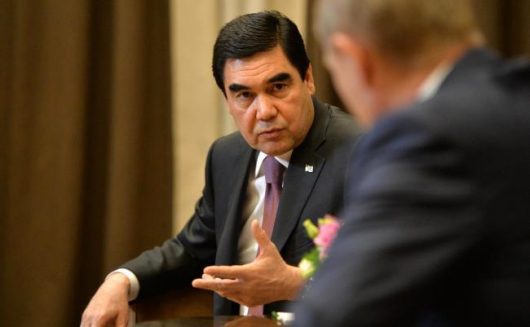
10 Facts About Refugees in Turkmenistan

Refugees in TurkmenistanTurkmenistan is a landlocked state in Central Asia with a population of 5,439,000 people. Turkmenistan was a constituent republic within the Soviet Union until 1991 when it gained independence. The following year, Turkmenistan joined the United Nations. Like most nations, Turkmenistan hosts a refugee population. Here are 10 critical facts about refugees in Turkmenistan:

  1. According to the World Bank, 26 refugees officially registered in Turkmenistan in 2015. This puts the number of refugees in Turkmenistan substantially lower than neighboring countries such as Afghanistan (257,554), Iran (979,437), Kazakhstan (708) and Uzbekistan (107) when it comes to official accounts of stateless persons.
  2. For a number of reasons, no one really knows how many refugees in Turkmenistan there are. However, it is likely greater than the official count of 26. The U.N. once estimated that there are at least 40,000 Afghan and Tajik refugees in Turkmenistan.
  3. International organizations criticize Turkmenistan for its many human rights abuses, with the Human Rights Watch characterizing Turkmenistan as “among the world’s most repressive and closed countries, where the president and his associates have total control over all aspects of public life.” Reports of torture, suppressed speech and forcefully disappeared persons makes Turkmenistan an undesired destination for refugees. Still, war and political violence in countries like Afghanistan and Tajikistan render Turkmenistan preferable–albeit less than ideal.
  4. One such human rights abuse–and a barrier to estimating the number of refugees in Turkmenistan–is Turkmenistan’s policies regarding nongovernmental organizations and human rights organizations. Nongovernmental organizations are illegal in Turkmenistan, and organizations such as the Human Rights Watch and Amnesty International are not allowed entry.
  5. The government of Turkmenistan has strategically driven refugees in Turkmenistan from neighboring countries such as Uzbekistan and Kazakhstan back across borders. Many Russians have endured deportation as well.
  6. A pretext for deporting refugees in Turkmenistan is marriage; if a non-Turkmen refugee marries an ethnically Turkmen person, they will likely not receive citizenship in Turkmenistan and face deportation.
  7. Though refugees in Turkmenistan often can’t marry someone with Turkmen heritage, the nation still expects them to adopt a traditional Turkmen way of life. Ethnic Uzbeks, Tajiks, Kazakhs and others must speak the Turkmen language and dress in traditional Turkmen clothing. Even the children of refugees must abide by these standards or face punishment like expulsion from school.
  8. Despite being an ethnically diverse nation, ethnic Turkmen people receive favor and hold virtually all public offices in the country. The purging of non-Turkmen government employees, unofficial banning of inter-ethnic marriage and mandating that refugees in Turkmenistan adopt the Turkmen way of life are all part of Turkmenistan’s strategy of “Turkmenization,” a set of official government policies started by former President Saparmyrat Niyazov in 1992 to emphasize Turkmen heritage over that of other ethnic groups. All stateless people and refugees in Turkmenistan must conform to “Turkmenization” if they wish to remain in the country. This is to the point that Uzbeks in Turkmenistan sustain punishment for non-Turkmen religious practices.
  9. In 1995, Turkmenistan allowed the U.N. Refugee Agency to open an office in Ashgabat–an unusual move, considering Turkmenistan’s policies on nongovernmental human rights organizations. Since then, the U.N. has invested millions of dollars in improving conditions in refugee-hosting areas, giving the refugees access to medicine and even helping to register them as Turkmen citizens.
  10. The government has done some good when it comes to helping refugees in Turkmenistan. President Gurbanguly Berdimuhamedov, while upholding most of Niyazov’s “Turkmenization” policies, has granted more than 3,000 refugees Turkmen citizenship since 2007. Previously, President Niyazov granted about 10,000 refugees in Turkmen citizenship. However, the criteria for granting citizenship was suspected as ethnically based; refugees fleeing the Tajikistan civil war gained citizenship, but the government often denied citizenship to Afghan and Azerbaijani refugees. Now holding Turkmen citizenship, these former refugees in Turkmenistan can take part in civil society and vote. The U.N. protection officer in Ashgabat, Batyr Sapbiyev, called Berdimuhamedov’s decree an “outstanding humanitarian act.”

While Turkmenistan has long been an ethnically diverse country, it has been considerably hostile towards non-Turkmen people living in the country, including refugees. Proponents of “Turkmenization,” an ideological set of public practices and laws, claim that they are preserving Turkmenistan’s cultural heritage. The cost is the shunning of the Tajik, Uzbek and other cultures existing in close proximity to Turkmenistan. Refugees in Turkmenistan do have some reasons to be optimistic, as more and more are granted citizenship. They are expected, however, to conform to the Turkmen way of living if they expect to stay in Turkmenistan.

– David Mclellan

Photo: Google

August 15, 2017
https://borgenproject.org/wp-content/uploads/borgen-project-logo.svg 0 0 Borgen Project https://borgenproject.org/wp-content/uploads/borgen-project-logo.svg Borgen Project2017-08-15 07:30:062024-05-28 00:03:3410 Facts About Refugees in Turkmenistan
Global Poverty, Refugees

10 Facts About Suriname Refugees

Suriname RefugeesSuriname is small country on the northeast coast of South America. The following 10 facts about Suriname refugees only begin to touch upon the country’s history of refugees who fled the country for reasons of civil war, and of people from other countries who sought asylum in Suriname in recent years. Now, the country is adopting new practices to reach an international level of refugee acceptance and security.

  1. In 1991, 4,300 Surinamese found safety in refugee camps in the neighboring country of French Guiana, amid a raging four-year domestic civil war led by guerrilla commander Ronny Brunswijk.
  2. The French offered the refugees some financial aid, and planned to close the camps, sending those inside back to Suriname.
  3. Between 2007 and 2014, Suriname saw the number of refugees and stateless persons significantly decrease to the lowest the country had since the civil war.
  4. In 2014, there were a reported 17 outgoing refugees and people in refugee-like situations in Suriname. Only two cases of concern were documented as incoming asylum-seekers.
  5. In 2016, Suriname received 40 applications from Cuban refugees seeking security in the country.
  6. In the same year, 13 Surinamese applied for asylum in the Netherlands and Belgium, with the most successful acceptance rate in the Netherlands.
  7. Asylum-seekers and migrants found Suriname an attractive place of refuge because of its better wages in agricultural work, ease of border crossing, a perception of an accepting population and the prospect of a promising life working in Suriname’s gold mining industry.
  8. The U.N. Refugee Agency (UNHCR) recognized many positive developments in Suriname. In July 2014, the country passed the Draft Law on Nationality and Residency. The new law gives gender equality to both men and women regarding conferring their nationality, and it also protects people by preventing statelessness from loss of nationality.
  9. UNHCR and the International Organization for Migration (IOM) saw active participation from Suriname in 2013 during the Regional Conference on the Protection of Vulnerable Persons in Mixed Migration Flows: Promoting Cooperation and Identification of Good Practices.
  10. In 2014, the government of Suriname participated in the thirtieth anniversary of the 1984 Cartagena Declaration on Refugees, and the Caribbean Sub-Regional Consultation on Mixed Migration and the Protection of Refugees and Stateless Persons.

Suriname has come a long way since the thousands of refugees seeking shelter elsewhere as the civil war continued. These 10 facts about Suriname refugees show that the country has reduced reason to house stateless persons, and that positive developments and achievements in refugee situations has strengthened its people.

– Olivia Cyr

Photo: Pixabay

August 14, 2017
https://borgenproject.org/wp-content/uploads/borgen-project-logo.svg 0 0 Borgen Project https://borgenproject.org/wp-content/uploads/borgen-project-logo.svg Borgen Project2017-08-14 01:30:362020-06-11 08:17:1410 Facts About Suriname Refugees
Refugees, Refugees and Displaced Persons, United Nations

Refugee Camps: The Elpida Home For Refugees

Elpida home for refugees
While the 2015 refugee crisis somewhat faded from the international media’s view, the flow of refugees and the vulnerability of their human rights remains a meaningful concern among the international community.

From the start of the year to July 2017, more than 100,000 asylum seekers arrived in Europe by sea and upward of 2,000 additional individuals did not survive the attempted crossing. Since the beginning of the crisis, asylum seekers who managed to reach Europe arrived to inadequate and sometimes even dangerous conditions.

At first, in 2015, this seemed to be a symptom of inadequate legislation. However, the fact that these inhumane conditions have persisted points to insufficient humanitarian funding and the deliberate neglect of refugees.

Emina Cerimovic, a researcher with Human Rights Watch, stated that “the mental impact of years of conflict, exacerbated by harsh conditions” and “the uncertainty of inhumane policies, may not be as visible as physical wounds, but is no less life-threatening.” This warning came at a crucial time, as Hungary continues to house asylum seekers in shipping containers despite protests from the United Nations, European Union and the greater international community. As time has gone on, conditions in refugee camps remained stagnant and residents became increasingly less independent. They are forced to rely on the entity running their center for more of their basic needs.

NPR reporter Soraya Nelson, who visited a camp on the Hungary-Serbia border, describes it as a detention camp with only one accessible exit, which enters Serbia, a country that also struggles to uphold just migration policies. According to Nelson, all other gates are heavily guarded. The idea is that “people will get so fed up, they might just decide to leave.”

The containers that make up the camp, while more sturdy than the tents provided in many E.U. refugee centers, are undeniably cramped and allow for little ventilation. Their structure provides no clear separation of families and also house unaccompanied minors, one of the most controversial groups within the asylum-seeking population.

Despite this failure, the Elpida Home for Refugees, located near the industrial Center of Thessaloniki, Greece, provides a model for the future. Elpida, which means “hope” in Greek, managed to bridge the gap between inhumane refugee policies and the humane treatment of refugees. The center was founded by American philanthropist Ahmed Khan in partnership with the Radcliffe Foundation and the Greek Ministry of the Interior as an experiment in refugee assistance.

The Ministry donated an abandoned textile factory to the cause when presented with the concept for Elpida: to provide refugees the independence and services they need to continue their lives. The 6,000 square-meter space was converted into 140 residential units, each for six people or less, with shared bathrooms and a communal kitchen, allowing residents to enjoy private space, prepare meals and participate in the community.

The Elpida Home for Refugees is based on the idea that refugees need assistance from the bottom-up instead of from the top-down as is provided elsewhere. Top-down assistance means asylum seekers receive a small designated space in an overcrowded, often outdoor facility, with limited access to proper nutrition, hygiene and medical care. In these scenarios, typical of most refugee camps, residents are entirely reliant on the government or NGO who operates the camp.

Alternatively, the bottom-up care provided by the Elpida Home for Refugees allows its residents to utilize the tools made available by the organization, such as access to medical care, education, and their own personal rooms, to reclaim their lives and become independent.

The cooperation between the Greek government and the Radcliffe foundation can easily be replicated by other countries and organizations and then even more asylum seekers may find Elpida’s “hope” when they are most vulnerable.

– Alena Zafonte

August 11, 2017
https://borgenproject.org/wp-content/uploads/borgen-project-logo.svg 0 0 Kim Thelwell https://borgenproject.org/wp-content/uploads/borgen-project-logo.svg Kim Thelwell2017-08-11 01:30:092020-07-22 09:16:13Refugee Camps: The Elpida Home For Refugees
Advocacy, Global Poverty, Refugees, Women & Children

Shay Mitchell Empowers Women and Children

Shay Mitchell Empowers Women and Children
Award-winning Pretty Little Liars Actress Shay Mitchell has been very active outside of her role as Emily Fields, continuing to do much more with her travel experiences than simply finding new foods or relaxing by the beach.

Mitchell empowers women and children who live in oppressive and poverty-ridden countries by interacting with them and learning what it is that these people face every day in order to survive.

One company that Mitchell supports is an ethical fashion and lifestyle brand called Raven + Lily. In her channel’s official YouTube video about her 2015 trip to India, Mitchell explains how Raven + Lily helps fight poverty by giving women a sustainable income.

Mitchell endorses the company by showing her viewers each product that Raven + Lily produces, how the employed women make them and how purchasing from these women will help give them a life that they deserve.

“Women in this Muslim community are not allowed to work outside their home,” Mitchell explains. She continues to state that Raven + Lily allows these women to work from inside their homes, respecting their culture yet giving them a stable and secure income.

Mitchell ended her trip by attending a festival of love and color, which is a local tradition where the citizens covered her in organic colors as they all danced together. This is one of the many ways that Shay Mitchell empowers women and children by participating in events that allow her to relate to everyday citizens on a fundamental level.

Mitchell told In Style magazine that the most difficult part of the trip for her was seeing the extreme poverty in India. She goes on to say that while it is overwhelming, the most important thing to do is to focus on helping these people one person at a time because every struggling citizen matters.

In July of this year, Mitchell posted a photo with children she met while in Syria in the Azraq Syrian Refugee Camp. “Kids should be kids,” she said in a recent Facebook post, talking about how resilient the children are and talking about how much that she missed them already.

During this time, Care.org posted a photo of Mitchell visiting with Syrian children whose dreams are to attend film school. This is in support of CARE’s refugee film school at the Azraq camp.

With Snapchat stories filled with smiling kids, a personal YouTube video showing support for Raven + Lily and verbal support for women and children living in oppression and poverty, Shay Mitchell empowers women and children by being an active advocate for better treatment of struggling citizens around the world.

– Noel McDavid
Photo: Flickr

August 9, 2017
https://borgenproject.org/wp-content/uploads/borgen-project-logo.svg 0 0 Kim Thelwell https://borgenproject.org/wp-content/uploads/borgen-project-logo.svg Kim Thelwell2017-08-09 07:30:112024-12-13 17:58:25Shay Mitchell Empowers Women and Children
Global Poverty, Refugees

10 Facts About Refugees in Liechtenstein

Refugees in Liechtenstein
Located in Central Europe, nestled between Switzerland and Austria, lies the Principality of Liechtenstein. With only 62 square miles of territory and fewer than 38,000 citizens, one might assume that the country would refuse refugees, but this is not the case. Liechtenstein has willingly taken part in helping those fleeing from war-torn and oppressive regions. Here is what you need to know about refugees in Liechtenstein:

  1. World Data has reported that, in 2016, refugees sent a total of 52 asylum applications to Liechtenstein. A total of 39 decisions were reached.
  2. In 2016, 28% of all decisions reached were positive.
  3. As of 2015, the principality already accepted six refugee families from Syria, a sum of 23 persons.
  4. In 2014, Liechtenstein spent roughly $25 million on International Refugee and Migration Assistance and Development Cooperation, as well as Emergency and Reconstruction Assistance. In 2015, such expenditures were expected to increase significantly.
  5. Lichtenstein declared a willingness to participate in the EU relocation programs, not out of obligation, but out of its humanitarian tradition.
  6. The crown prince of Liechtenstein stated that, although they are willing to accept refugees, the principality must also “protect its culture.”
  7. Ambassador Fritsche of Liechtenstein stated that its small municipality is probably not a target for refugees because the country is not well-known. He theorized that this might be because Liechtenstein is not a full EU member.
  8. In 2015, it was made clear that if the principality did not allow refugees in Liechtenstein, the state would be booted out of the Dublin agreement, a cornerstone of asylum laws in the EU.
  9. Liechtenstein acceded to the Geneva Convention of 1951 and the Protocol of 1967, the world’s more recognized laws on refugees.
  10. Liechtenstein’s government protects against the expulsion of refugees in cases where their “lives or freedom” might be threatened.

Although Liechtenstein is a relatively small principality, their willingness to host refugees sets a clear example for nations around the world. Today, refugees in Liechtenstein are adjusting to a new way of life in a foreign land. In the future, perhaps they will come to call the country home.

– Shannon Golden
Photo: Flickr

August 8, 2017
https://borgenproject.org/wp-content/uploads/borgen-project-logo.svg 0 0 Borgen Project https://borgenproject.org/wp-content/uploads/borgen-project-logo.svg Borgen Project2017-08-08 01:30:362020-07-16 07:07:1810 Facts About Refugees in Liechtenstein
Refugees

Leading by Example: Refugees in Monaco

Refugees in Monaco
Located between a small strip of the southern French border and the Mediterranean Sea is the Principality of Monaco, the second smallest state in the world. With such a small territory and just 30,581 citizens, one might assume that the principality would be reluctant to host refugees. However, Monaco has gladly accepted some refugees. Here are 10 facts about refugees in Monaco.

  1. Monaco will be accepting refugees in limited numbers due to their small size.
  2. Serge Telle, the Monegasque Minister of State, has said that such welcoming of refugees is largely symbolic.
  3. In June 2016, Monaco, in conjunction with the United Nations High Commissioner for Refugees (UNHCR), welcomed a family of Christian Syrian refugees. Christian populations are often heavily threatened in Syria.
  4. In March 2008, Prince Albert II of Monaco announced that Monaco would donate 100,000 euros to the UNHCR refugee program.
  5. Monaco has previously supported the UNHCR’s work by fundraising through Amitié Sans Frontières, which translates to “Friends Without Borders.”
  6. Currently, an immigrant must reside in Monaco for 10 years in order to acquire citizenship through naturalization.
  7. Monaco does not accept refugees unless those refugees meet French criteria. This has been established through bilateral agreements between the principality and France.
  8. The principality has acceded to the Geneva Convention of 1951 and the Protocol of 1967, which is the most recognized international law regarding refugees.
  9. An international NGO, based in Monaco, known as the International Emerging Film Talent Association (IEFTA), launched an all-day event called “Refugee Voices in Film” at the Cannes Music Festival.
  10. The film project was done in collaboration with the UNHCR.

In lieu of the Syrian refugee crisis, the Principality of Monaco has chosen to lead by example. Despite the principality’s small size, there are now refugees in Monaco, integrating and on their way to lead happy lives. Hopefully, the rest of the world will follow suit.

– Shannon Golden
Photo: Flickr

August 7, 2017
https://borgenproject.org/wp-content/uploads/borgen-project-logo.svg 0 0 Borgen Project https://borgenproject.org/wp-content/uploads/borgen-project-logo.svg Borgen Project2017-08-07 07:30:242024-05-28 00:15:05Leading by Example: Refugees in Monaco
Global Poverty, Refugees

Nine Important Facts to Know About Belarusian Refugees

10 Facts About Belarussian Refugees
World War I was a massive turning point in the history of Belarus. Affecting the local economy, the war caused massive migration and displacement. Throughout the almost-century since then, the collapse of the Russian Empire, revolutions, various occupations and wars, Belarus has struggled to establish itself as an independent state. Belarus’s independence has been recognized globally since 1991.

Today, the country’s population is 84% Belarusian, 8.3% Russian, 3% Polish and 1.7% Ukrainian. Other ethnic groups in Belarus include Tatars, Jews and Roma. Over three million Belarusians live outside the country, most of them in Russia, Ukraine, Canada and the United States.

Here are 9 facts about Belarusian refugees:

  1. There were several waves of Belarusian refugees into the U.S. The first was before the Russian Revolution, then between 1919 and 1939 from West Belarus, then from the late 1940 to the early 1950s (after World War II), with the most recent wave of refugees coming after the collapse of the USSR in the 1990s.
  2. On March 28, 1928, 104 families moved to Birobidzhan from Belarus. The city in Siberia, near the Chinese border, became an administrative center of the Jewish Autonomous Oblast by a decision of the Communist Party.
  3. In the post-World War II period, from 1948 to the early 1950s, about 50,000 Belarusians fled to the U.S. Most of them left states all over Europe for political reasons.
  4. The largest concentrations of Belarusian Americans are in the metropolitan New York area, New Jersey, Cleveland, Los Angeles and Detroit.
  5. More than 340 Belarusian refugees resettled in Minnesota during the years 2003-2015.
  6. According to data made available to the Office of the United Nations High Commissioner for Refugees (UNHCR) by asylum countries, the number of Belarusian refugees seeking asylum in 29 of the most industrialized countries in the world has increased dramatically since 2000. The number of cases of Belarusian refugees and asylum-seekers has grown from 3,291 in 2000 to 6,480 in 2010, peaking in 2006 at 11,062.
  7. Volha Charnysh, a Ph.D. candidate in Government at Harvard University and executive editor of the Belarus Digest, found that more people from Belarus seek asylum elsewhere than people from Kyrgyzstan or Russia when taking differences in population size into account.
  8. In her article “Belarus Produces More Refugees Than It Saves” published in 2014, Charnish explained that many Belarusians obtain refugees status or seek asylum for political and social reasons, as political activists are often encouraged to go into exile.
  9. The Chernobyl disaster changed Belarusian migration patterns in the 1980s. Following the accident, where a majority of the nuclear fallout landed in Belarus, many Belarusian natives resettled internationally.

Belarusian refugees are resettling in the EU, the U.S., Australia, Canada and Russia. The latest wave of refugees consists mostly of professionals – software and other engineers, scientists, students and athletes.

– Yana Emets

Photo: Flickr

August 6, 2017
https://borgenproject.org/wp-content/uploads/borgen-project-logo.svg 0 0 Borgen Project https://borgenproject.org/wp-content/uploads/borgen-project-logo.svg Borgen Project2017-08-06 07:30:582024-06-05 04:37:55Nine Important Facts to Know About Belarusian Refugees
Global Poverty, Refugees

Eight Important Facts About Micronesian Refugees


The Federated States of Micronesia (FSM) consists of 607 islands spread over one million square miles in the Pacific Ocean. Here are eight facts about Micronesian refugees you should know:

  1. The U.S. occupied and administered the FSM from 1947 to 1979. During this time, the FSM’s population grew significantly due to the introduction of modern medicine. The U.S. also developed a wage economy in the FSM, encouraging Micronesians to migrate to population centers in search of work.
  2. When the FSM declared independence in 1979, the U.S. dramatically reduced the funds it contributed to the Micronesian economy, which shrunk the FSM and forced many Micronesians to return to their home islands. However, there remained on the islands a large population of skilled, educated and mobile individuals.
  3. The majority of Micronesian refugees today come to the U.S., specifically to Hawaii. This immigration pattern began in 1986 when the FSM signed a Compact of Free Association with the U.S. This gave Micronesians the right to freely migrate to the U.S. and to significant economic aid in exchange for the use of Micronesia’s extensive territory as military testing grounds.
  4. The U.S. tested nuclear weapons in Micronesia before signing the Compact without the FSM’s consent. In 1946, the U.S. informed the inhabitants of Bikini Atoll that they would have to relocate. Over 12 years the U.S. detonated bombs on the Marshall Islands, leaving behind radiation equal in scale to 7,000 Hiroshima-sized bombs. The residents of Bikini Atoll were never able to re-inhabit their home.
  5. Some of the aid and protections given to Micronesians under the Compact have rolled back. In 1996, President Bill Clinton signed a bill that cut off Micronesians’ access to Medicaid and food stamps.
  6. This rollback has hit Micronesians hard, as a disproportionate number of refugees living in Hawaii are homeless and unsheltered; Hawaii has the highest cost of living of any state in the U.S. Additionally, the FSM has the highest rate of diabetes in the world. The reason many refugees come to the U.S. in the first place is for access to more comprehensive health care.
  7. Despite the fact that Micronesian refugees pay taxes to the U.S. and volunteer for the military at twice the rate of American citizens, they cannot vote. As a result, many Micronesians feel the government treats them unfairly.
  8. Currently, most of the Marshall Islands (part of Micronesia) are less than six feet above sea level. Rising sea levels will likely spur waves of refugees to immigrate to Hawaii and the U.S. mainland in the near future, making it essential that the U.S. government address present and future living conditions of Micronesian refugees in the U.S.

It is important to keep these eight facts about Micronesian refugees in mind in the face of an administration that has so far proven itself unsympathetic to the plights of refugees from Mexico and Syria. Micronesian refugees have not received as much media attention as those of refugees from the aforementioned countries, but aid is still needed for those who flee Micronesia.

– Caroline Meyers

Photo: Flickr

August 6, 2017
https://borgenproject.org/wp-content/uploads/borgen-project-logo.svg 0 0 Borgen Project https://borgenproject.org/wp-content/uploads/borgen-project-logo.svg Borgen Project2017-08-06 07:30:502024-05-28 00:15:02Eight Important Facts About Micronesian Refugees
Global Poverty, Refugees

10 Facts About Refugees in Namibia

Refugees in Namibia
Namibia is a country in southern Africa with a population of about 2,514,000. The country was formerly a German colony, and then it became a part of South Africa before gaining independence in 1990. Here are 10 facts about refugees in Namibia:

  1. According to the World Bank, 1,737 refugees officially registered in Namibia in 2015. The official number of refugees in Namibia is lower than neighboring countries; Angola, for example, has 15,555, and Zambia has 26,447. However, according to the Namibian government, the World Bank’s count of the number of these refugees is incorrect. Many asylum seekers have moved from designated refugee camps to other parts of Namibia. The government estimates that there were actually more than 6,000 refugees in 2015.
  2. From 1998 to 2001, the number of documented refugees in Namibia skyrocketed from 3,820 to 30,885. The majority of these refugees came across Namibia’s northern border from Angola, where fighting between the Angolan government and rebel group UNITA was taking place.
  3. The official number of refugees peaked at 30,885 in 2001. Since that time, that number has decreased drastically. Namibia saw a slight uptick in the number of officially stateless people from 2007 to 2010, and again in 2013.
  4. Namibia’s Minister of Home Affairs and Immigration Pendukeni Iivula-Ithana described the current state of refugees in Namibia to New Era, a government-owned media outlet in Namibia. “Roughly 80% of these refugees are Congolese. A few are from Rwanda, Burundi, Zimbabwe and other countries, with about 30 asylum seekers arriving at Namibian borders every month,” she said.
  5. The Congolese refugees in Namibia have left behind a state of constant war. In 1996, Rwanda invaded the DRC in pursuit of the perpetrators of the Rwandan Genocide. This initial conflict destabilized the eastern DRC, and over the last two decades, multiple paramilitaries have warred with each other and the Congolese government for control of the region and its resources. This conflict, sometimes dubbed “Africa’s World War,” is the main source of refugees.
  6. After 23 years, the United Nations High Commission for Refugees ended its campaign to serve refugees in Namibia in 2015. Despite the government’s claim that there were more than 6,000 refugees, the U.N. contends that the number has dropped below 5,000. This, as well as Namibia’s upgrade to a middle-income nation at the time, were the U.N.’s justifications for its pull-out.
  7. Many of the refugees in Namibia live at the Osire camp—a specifically designated area for them. However, there have been mixed accounts of the quality of conditions at the camp. In 2009, a local human rights organization smuggled 41 people out of the camp after they had received death threats. The refugees were denied access at the border of Botswana and remained in “no man’s land” between Botswana and Namibia.
  8. Although the U.N. stopped direct refugee operations, the international union continues to support refugees in Namibia by lending resources from its regional office in Pretoria, South Africa.
  9. Namibia has begun resettling its refugees in other countries that will take them, known as “third countries.” In 2016, Namibia resettled more than 200 refugees to other countries, citing a lack of ability to provide for them.
  10. The U.N. conducted research on refugees at the Osire camp to test for HIV; the organization also provided the refugees with information on how to avoid contracting the virus. The program was a moderate success, as it successfully educated refugees at the camp about HIV/AIDS. However, the data also shows that the percentage of refugees at the Osire camp with HIV/AIDS exceeds the percentage of those from the surrounding areas (38.3% compared to 30.2%).

These facts about refugees in Namibia demonstrate that despite a lack of statistical clarity, the nation is still working to accommodate those in need.

– David Mclellan

Photo: Flickr

August 4, 2017
https://borgenproject.org/wp-content/uploads/borgen-project-logo.svg 0 0 Borgen Project https://borgenproject.org/wp-content/uploads/borgen-project-logo.svg Borgen Project2017-08-04 01:30:552020-07-13 09:48:1710 Facts About Refugees in Namibia
Page 35 of 53«‹3334353637›»

Get Smarter

  • Global Poverty 101
  • Global Poverty… The Good News
  • Global Poverty & U.S. Jobs
  • Global Poverty and National Security
  • Innovative Solutions to Poverty
  • Global Poverty & Aid FAQ’s
Search Search

Take Action

  • Call Congress
  • Email Congress
  • Donate
  • 30 Ways to Help
  • Volunteer Ops
  • Internships
  • Courses & Certificates
  • The Podcast
Borgen Project

“The Borgen Project is an incredible nonprofit organization that is addressing poverty and hunger and working towards ending them.”

-The Huffington Post

Inside The Borgen Project

  • Contact
  • About
  • Financials
  • President
  • Board of Directors
  • Board of Advisors

International Links

  • UK Email Parliament
  • UK Donate
  • Canada Email Parliament

Get Smarter

  • Global Poverty 101
  • Global Poverty… The Good News
  • Global Poverty & U.S. Jobs
  • Global Poverty and National Security
  • Innovative Solutions to Poverty
  • Global Poverty & Aid FAQ’s

Ways to Help

  • Call Congress
  • Email Congress
  • Donate
  • 30 Ways to Help
  • Volunteer Ops
  • Internships
  • Courses & Certificates
  • The Podcast
Scroll to top Scroll to top Scroll to top