• Link to X
  • Link to Facebook
  • Link to Instagram
  • Link to TikTok
  • Link to Youtube
  • About
    • About Us
      • President
      • Board of Directors
      • Board of Advisors
      • Financials
      • Our Methodology
      • Success Tracker
      • Contact
  • Act Now
    • 30 Ways to Help
      • Email Congress
      • Call Congress
      • Volunteer
      • Courses & Certificates
      • Be a Donor
    • Internships
      • In-Office Internships
      • Remote Internships
    • Legislation
      • Politics 101
  • The Blog
  • The Podcast
  • Magazine
  • Donate
  • Click to open the search input field Click to open the search input field Search
  • Menu Menu

Archive for category: Refugees

Global Poverty, Refugees

Room for Hope Amid the Refugee Ban Rollout

Good News Amid the Refugee Ban Rollout
The number of refugees around the world is at an all-time high. There are currently 22.5 million people seeking refuge from their home countries. Fifty-five percent of these refugees hail from only three countries: Syria, Afghanistan and South Sudan. Most of these refugees are women and children. Children alone make up about half of all the world’s refugees. The Supreme Court’s approval of the refugee ban is bad news for these millions of people, but there is still good news in the way the ban is being rolled out.

Since his days on the campaign trail, President Trump has promised to make entry into the United States difficult for refugees. However, the road to a total blockade of all refugees has been a rocky one. President Trump originally signed Executive Order 13769 on January 27. The order initially intended to reduce the number of annual refugees from 100,000 to 50,000, suspend the U.S Refugee Admissions Program for 120 days and temporarily ban all Syrian refugees. The travel ban was met with mass protests at airports across the country and challenges from numerous judges. Amid this backlash, the Trump administration eased and then suspended the ban in March. It was not until June 26 that the Supreme Court finally approved Executive Order 13780, a revised version of the ban.

The revised travel ban is not as stringent as its predecessor, but it still suspends all refugee resettlement in the U.S. for 120 days. The good news amid the refugee ban is that only a week after it was approved, it already faces obstacles. The cut-off date for all refugee entry into the United States may be pushed back. Estimates project that it could take at least an extra week before the ban actually goes into effect.

The same legal challenges that initially plagued the first executive order persist in the face of the refugee ban. Immigrant, refugee and human rights groups are all pushing back against the ban. Federal judges have also issued challenges to the legality of the ban and the ambiguity of its interpretation. The guidelines allow for the entry of refugees with a “bona fide relationship” to “close family” in the U.S. The blurry lines of “close family” ties and “bona fide relationships” have complicated the implementation of the ban in U.S. embassies. All of these challenges offer points of hope for refugees.

The worldwide refugee crisis is dire and the refugee ban only threatens to worsen the situation. However, even as the order goes into effect, there is still hope for the many refugees who wish to resettle in the United States.

– Bret Anne Serbin

Photo: Flickr

July 21, 2017
https://borgenproject.org/wp-content/uploads/borgen-project-logo.svg 0 0 Borgen Project https://borgenproject.org/wp-content/uploads/borgen-project-logo.svg Borgen Project2017-07-21 07:30:252024-05-28 00:03:01Room for Hope Amid the Refugee Ban Rollout
Global Poverty, Refugees

10 Facts About Refugees in Singapore

Refugees in Singapore
In recent history, Singapore has had a complicated relationship with refugees. Having been burned once before, Singapore now routinely turns away refugees with the intention of turning the responsibility over to a third party. But should they be doing more to help? Here to help you decide are ten facts about refugees in Singapore:

  1. Following the Vietnam war, refugees known as “Vietnamese boat people” came flooding out of their country to Southeast Asia looking for a safe haven. With this refugee crisis in mind, the Singapore government and the Office of the United Nations High Commissioner for Refugees (UNHCR) agreed on a policy that would provide refugees with international protection. Singapore was to be a kind of limbo by temporarily housing refugees in a transit camp while the UNHCR planned for a more permanent resettlement.
  2. However, the number of refugees continuously arriving proved to be too great, and after a 1989 conference on Indochinese refugees in which committee members decided to enact a new policy called the Comprehensive Plan of Action, Singapore’s transit camp suffered greatly. With a new refugee screening policy in place, Singapore continued to accept new entrants, but the entrants were now not guaranteed resettlement, even temporarily.
  3. Singapore’s transit camp was now a place for rejected asylum seekers to gather, many of whom refused to leave voluntarily. The threat of repatriation caused many refugees to protest the UNHCR, go on hunger strike, or even attempt suicide. Singapore government officials, feeling betrayed by resettlement countries and embittered by the whole experience, closed the camp in 1996 and promised that refugees would no longer be allowed in Singapore, even if another country pledged to take them in.
  4. For many years, Singapore held firm to this policy, stopping refugees at coastlines and, instead of taking them in, providing them with food, water and fuel before sending them away.
  5. However, Singapore’s refugee policy has been slowly softening in recent years. In 2009, Singapore’s Prime Minister, Lee Hsien Loong, addressed the problem of Rohingyas searching for, and being unable to find, a haven after fleeing from Burma. A senior minister of state for foreign affairs clarified that Singapore could not accept asylum seekers, but would offer humanitarian aid so that they could depart for another country.
  6. Apart from Singapore’s unpleasant experience with refugees in the past, the government gives one other reason for refusing to accept new entrants into the country: space. Singapore is the second smallest country in Asia and also one of the most densely populated. Refugees would certainly put an extra strain on the country’s infrastructure.
  7. A lack of space cannot be reason alone to reject refugees, as Singapore actually plans to increase its population from approximately 5.5 million to up to 6.9 million by the year 2030. In 2013, Singapore’s Population White Paper projected this growth, arguing that the country’s land area has grown by 23 percent since 1965 and that increasingly stable investments into infrastructure facilities and land capacity make this population growth sustainable.
  8. As of right now, refugees in Singapore are completely unwelcome, joining one of many Southeast Asian countries that refuse to do so.
  9. It may be, though, that Singapore is finally healing from its past experiences with refugees. In 2016, the UNCHR launched a new campaign to appeal to governments around the world to join the fight to end statelessness, with a special chapter dedicated to Advocates for Refugees in Singapore (the AFR-SG).
  10. Singapore is still a long way away from changing its policy on accepting refugees, but with the continued efforts of the UNCHR, the AFR-SG and anybody who takes the time to help, it is possible to move toward finding a home for the millions of people still left stateless.

– Audrey Palzkill

Photo: Flickr

July 20, 2017
https://borgenproject.org/wp-content/uploads/borgen-project-logo.svg 0 0 Borgen Project https://borgenproject.org/wp-content/uploads/borgen-project-logo.svg Borgen Project2017-07-20 07:30:342024-12-13 17:58:2110 Facts About Refugees in Singapore
Developing Countries, Global Poverty, Refugees

10 Facts About Refugees in Romania

Romania Refugees
On the border of the Black Sea in southeastern Europe rests Romania, a country nestled between Ukraine and Bulgaria. With a population of roughly 21.6 million and one of the fastest-growing economies in the European Union, the nation has agreed to welcome refugees. The country has been willing to help refugees but is often left without the necessary resources to do so. Here are 10 facts about refugees in Romania:

  1. In November 2015, Romania agreed to welcome 6,205 refugees over the course of two years. Over 550 had entered the country by December 2016.
  2. In Romania, the government covers the expenses of individuals granted refugee status for six months to one year. After this period of time, those individuals are expected to be employed.
  3. Despite the six to 12 month grace period, refugees are required obtain an understanding of the Romanian language as well as some formal recognition of previous experience, academic degrees or other qualifications. Rarely are such documents easily available to refugees.
  4. Civil society organizations, rather than Romanian authorities, are often left with the task of offering refugees much-needed employment assistance.
  5. The Romanian Ministry of Labor does not assist refugees with their job searches; it only registers refugees in an unemployment database.
  6. Learning Romanian has been described by refugees as being a key factor to succeeding in the country. Unfortunately, Romania’s language courses have little structure and are often of low quality.
  7. Roughly 5,000 individuals have been granted Romanian refugee protection since 1991, yet only 2,584 individuals hold residency permits. Such numbers suggest that nearly half of Romania’s refugee population no longer reside in the country.
  8. Relocated persons in Romania can benefit from the Jesuit Refugee Service, which runs a project called “A New House.” The project aids refugees in finding affordable housing.
  9. Many refugees in Romania who arrived in 2016 were relocated by the European Union from Greece and Italy.
  10. Romania lacks resources for refugees, so the country is not receiving the waves of refugees that are entering other European countries. Therefore, Romania has relatively more time to plan exactly how to address the issue of refugee protection.

These facts about refugees in Romania may appear to be disheartening, but if the Romanian government can tackle the issue of resource allocation with thorough planning, the country may soon become a stable safe haven for refugees fleeing war-torn countries.

– Shannon Golden

Photo: Google

July 18, 2017
https://borgenproject.org/wp-content/uploads/borgen-project-logo.svg 0 0 Borgen Project https://borgenproject.org/wp-content/uploads/borgen-project-logo.svg Borgen Project2017-07-18 07:30:352024-05-28 00:03:0410 Facts About Refugees in Romania
Global Poverty, Refugees

Togo Refugees: 10 Important Facts Everyone Should Know

There are ten facts about Togo refugees that are important to know. It is important to establish a timeline of events so that we can understand the Togo refugee crisis fully.
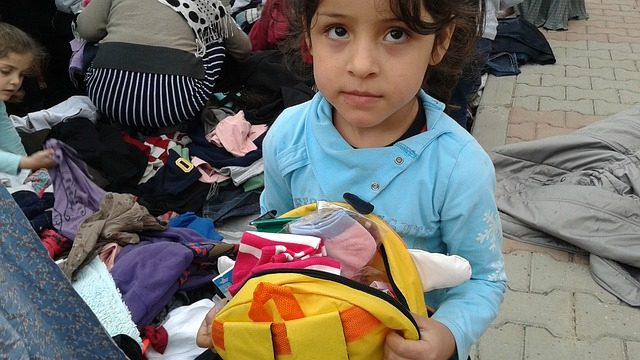
The first massive group of Togolese citizens to escape to refuge in neighboring countries were in 1993. Togo refugees relocated to Ghana and Benin because of the violent unrest in Togo. The violence that ensued during the fight for the new constitution, and its subsequent abolishment in 1993, led to enormous physical insecurities in Togo.

Here are ten facts about the conditions for Togo refugees since the flight for life in 1993:

  1. The fight between the government and opposition parties led to the displacement of over 15,000 people to neighboring countries in 1993. This number often included families that were separated, and children that were accompanied by strangers because their parents were either killed or lost during the scare to find more secure locations.
  2. The Volta region of Ghana hosts the most refugees from Togo. This region lies west of Togo’s capital Lomé. Citizens of Aflao, a district in the Volta region of Ghana, have welcomed the Togo refugees with an open embrace.
  3. The Volta region has been a major area of dispute between Togo and Ghana since British Togoland became a part of Ghana. It was a part of the split of British and French Togoland, after the defeat of Germany in 1918. After a U.N.-led referendum in 1956, British Togoland joined Ghana.
  4. The citizens of Togo who fled to Eastern Ghana are a part of the Ewe people of West Africa.
  5. Violent and indiscriminate killings after the 1998 elections caused more people to flee from Togo. Families were once again forced to run to safety in neighboring countries because of violent unrests and intimidation from supporters of both the winning and losing parties of the election.
  6. The military handed over power to Gnassingbe Eyadema’s son Faure Gnassingbe after Eyadema dies in 2005.
  7. There have been a series of violent protests and widespread killings, due to opposition to political corruption. This situation has worsened security concerns in Togo, as its citizens live in constant fear.
  8. Victims of the indiscriminate killings resulting from violent unrest are also foreign citizens accused of supporting the opposition or ruling party.
  9. Violent assaults and killings are committed by both supporters of the ruling party in efforts to suppress opposition and supporters of the opposition party in retribution to attacks from the ruling militia.
  10. In Ghana, the government made provisions by 2015 to integrate 2300 Togolese refugees into Ghanaian society. Under the Seeds for Solutions Project, efforts by the Ghanaian governments will be funded by the U.N. High Commission for Refugees (UNHCR). This provides social and economic aid to refugees for work-training and micro-finance loans to start businesses.

Togo refugees are hopeful that security conditions in Togo will improve so that they can return.

– Ebuka Okoye

Photo: Flickr

July 18, 2017
https://borgenproject.org/wp-content/uploads/borgen-project-logo.svg 0 0 Borgen Project https://borgenproject.org/wp-content/uploads/borgen-project-logo.svg Borgen Project2017-07-18 01:30:492020-06-04 09:10:52Togo Refugees: 10 Important Facts Everyone Should Know
Global Poverty, Refugees, United Nations

A Foreseeable Future: The Asylum for Andorra Refugees

Andorra Refugees
Home to roughly 79,300 people, Andorra is a tiny principality located in the mountainous region between France and Spain. Although the principality joined the Council of Europe and the United Nations, it is not an official member of the European Union. Despite this, Andorra maintains a special relationship with the European Union, and, today, supports the common policy for refugees that the European Union has established. Here are 10 facts about Andorra refugees:

  1. The principality works directly with the European Union in matters of solidarity.
  2. Andorran Foreign Minister Gilbert Saboya has stated that the principality works with representatives from the European Union to create a screening and security process which will accommodate only 40 refugees.
  3. Andorra agreed to assist refugees for strictly humanitarian reasons. However, the municipality stated that it guarantees no official protections.
  4. A political asylum plan is not a priority of the local government, and is by no mean, an “action plan.” Instead, Andorra plans to support the common policy of the European Union.
  5. Currently, an individual must reside in Andorra for 15 years before they may apply for citizenship.
  6. Current opposition parties are working on legislation which would allow an individual to apply for citizenship before a period of 15 years.
  7. In order for anyone to obtain Andorran citizenship, an exam must be taken in the national language of Catalan. Geography and history questions are included on the exam.
  8. According to the most recent World Data information, the Andorran government received zero asylum applications.
  9. The United Nations High Commissioner for Refugees recommended that Andorra “accede to the 1951 Convention relating to the status of refugees and its 1976 Protocol,” and “establish a refugee status determination procedure which is fully gender and age sensitive.”
  10. The United Nations High Commissioner for Refugees also recommends that Andorra “accede to the 1954 Convention relating to the Status of Stateless Persons and the 1961 Convention on the Reduction of Statelessness.”

Although Andorra is quite small, the reality for Andorra refugees reveals that the principality is representative of a number of countries who have yet to commit to providing asylum. Should the Andorran government continue to work directly with the European Union on this matter, refugee asylum may be in the foreseeable future.

– Shannon Golden

Photo: Pixabay

July 17, 2017
https://borgenproject.org/wp-content/uploads/borgen-project-logo.svg 0 0 Borgen Project https://borgenproject.org/wp-content/uploads/borgen-project-logo.svg Borgen Project2017-07-17 07:30:342024-05-28 00:03:02A Foreseeable Future: The Asylum for Andorra Refugees
Global Poverty, Refugees

Refugees in Norway: 10 Important Facts to Know

Norway RefugeesNorway is a country in Northern Europe that is home to about 5,196,000 people. It is not part of the European Union because of its strong economy. With the recent influx of refugees to Europe, Norway had to determine how to manage those coming into the country.

10 Facts About Refugees in Norway

  1. Out of all the countries that make up Scandinavia (Norway, Sweden, Denmark, Finland and Iceland), Norway has a stricter approach when it comes to accepting refugees. Norway attempted to pose limitations in several ways to thin the flow of refugees to the country.
  2. Some measures the government took to decrease the amount of refugees include deporting those who are deemed a threat to security, and building a steel fence to stop refugees from crossing the border.
  3. In 2015, Norway experienced a large increase in asylum-seekers. More than 30,000 refugees came to Norway, and more than half of them were Syrian. Norway refugees also consist of Iraqis, Afghans, Sudanese, Somalis and Eritreans. Currently, refugees represent 3.6 percent of the Norwegian population.
  4. Since 2016, Norway is building a steel fence at the Arctic border with Russia to keep out refugees. In 2015, 5,500 refugees used this border in order to cross over into Norway. The border fence will be 660 feet long and 11 feet high. The border fence was met with criticism from refugees’ rights groups, and it reflects the tension that exists between asylum-seekers and members of the Norwegian population.
  5. To get to Norway through the Arctic border, people seeking refuge used a legal loophole. Russian border police do not permit people to cross the border while walking, and Norwegian border police do not allow cars to come through unless the driver has proper paper identification. Therefore, refugees made the crossing by riding bicycles. Refugees who used this loophole are under threat of deportation.
  6. Norway refugees typically arrive through two methods: crossing the Mediterranean by boat or going through Russia.
  7. After the shocking amount of refugees that Norway received in 2015, it developed more stringent controls on their borders and ID checks. Norway also offered $2,300 to refugees who choose to return to their own countries. This made the number of asylum seekers in Norway drop by 95 percent.
  8. Refugees entering the country are required to take “culture coding classes.” If they do not attend these classes, their benefits are cut. These classes were set up after there were a number of rapes committed by refugees. The classes focus on topics like gender, consent, communicating with the opposite sex, boundaries, domestic violence and what to do if you witness a sexual assault. Although these classes were criticized for stigmatizing refugees, many refugees appear to react positively to the classes, seeing them as a way to ease their integration into Norwegian society and better understand the different cultural norms.
  9. Despite Norway’s restrictions on asylum seekers, the country is very generous with the aid it provides to the United Nations High Commissioner for Refugees (UNHCR). In fact, in 2016, it became the UNHCR’s largest donor per capita and the seventh largest donor among all countries. Norway also is the fourth largest donor of non-earmarked support.
  10. Norway strongly invests in UNHCR’s education programs for refugee children and in resettlement programs.

– Anna Gargiulo

Photo: Flickr

July 17, 2017
https://borgenproject.org/wp-content/uploads/borgen-project-logo.svg 0 0 Borgen Project https://borgenproject.org/wp-content/uploads/borgen-project-logo.svg Borgen Project2017-07-17 07:30:212020-06-19 10:18:58Refugees in Norway: 10 Important Facts to Know
Global Poverty, Refugees

10 Facts About Guinea Refugees

10 Facts About Guinea RefugeesGuinea is a West African country, located south of Guinea-Bissau. The nation has a long history of helping others escape persecution. For example, it has taken in thousands of refugees from Sierra Leone. However, Guinea refugees are both incoming and outgoing: the nation takes in thousands, but thousands are also leaving.

However, the inflow of people has burdened the economy. Poverty is a substantial reason for fleeing Guinea. The instability afflicting the country has consequently made life unbearable for many of their citizens. Here are 10 facts about Guinea refugees and an explanation of the relationship between refugees entering and leaving the country:

  1. During the 11-year civil war in Sierra Leone, Guinea hosted thousands of refugees. Approximately 300,000 asylum seekers from Sierra Leone entered Guinea. These refugees thus  put a strain on Guinea’s already struggling economy.
  2. Most of the refugees that flee to Guinea settle in the forest region. This created a decline in the region, and 40 percent of its inhabitants are now food-insecure. Consequently, with the influx of refugees and consequent depletion of resources, people are now starting to emigrate from Guinea.
  3. The total population of Guinea is 13,303,412. In 2016, 15,350 citizens fled. This number accounts for roughly 0.127 percent of the total population.
  4. Like many other African refugees, 81 percent of asylum applicants from Guinea were rejected.
  5. The most successful refugees were those going to the United States and Brazil.
  6. Germany is one of the more open European countries, and it is always at the top of the list for most accepted applicants. In fact, 3,458 Guinea refugees fled to Germany,  and 152 were accepted (22.75 percent).
  7. Experiments with socialism and a period under a junta government made life difficult for the people of Guinea. The junta forcefully took power in 2008, its leaders are responsible for mass murders and occurrences of rape.
  8. The instability in Guinea initiated violent ethnic tension. The different ethnicities entering Guinea from Sierra Leone and other war-torn countries made the possibility of a united, consolidated country difficult to achieve.
  9. Citizens of Guinea also endure poverty and high rates of malnutrition. In 1996, the poverty rate was 40 percent, and it rose to 49 percent in 2004. The share of the population living in extreme poverty grew from 18 percent to 27 percent.
  10. Consequently, poverty is a major reason for fleeing Guinea. In 2012, 35.3 percent of the population lived at or below $1.90 a day.

These 10 facts about Guinea refugees show that the country is struggling. However, improvements are happening. For example, food insecurity in the forest region has decreased. In 2007, 59.7 percent of the population was at or below the poverty line. In 2012, this was down to 35.3 percent.

Guinea’s population is growing, and the nation has made enormous strides in the past few years. If Guinea keeps moving in this direction, poverty will decline and the overall prosperity of the country will increase.

– Lucy Voegeli

Photo: Flickr

July 16, 2017
https://borgenproject.org/wp-content/uploads/borgen-project-logo.svg 0 0 Borgen Project https://borgenproject.org/wp-content/uploads/borgen-project-logo.svg Borgen Project2017-07-16 07:30:042020-06-03 08:46:0310 Facts About Guinea Refugees
Global Poverty, Refugees

10 Facts About Refugees in Montenegro

10 Facts About Montenegro Refugees
Located on the Adriatic Sea, Montenegro has long been a vacation destination for individuals from all over the world. With picturesque seaside villages and mountains all around, Montenegro is a haven for workers looking to escape a fast-paced life. But this holiday lifestyle has not always been the case for Montenegro.  The current refugee crisis affects the atmosphere of Montenegro. These 10 facts about refugees in Montenegro prove that the country is a key world player in providing aid for global conflict and refugees.

  1. The years 1998 and 1999 saw intense fighting for Kosovo. Although the conflict in Kosovo lasted only a year, nearly half of the population of Kosovo was either internally displaced or forced to leave the country to become refugees elsewhere. Montenegro was one of the countries they fled towards.
  2. The surge in refugees led to the closure of Montenegro’s border in September 1998. This came only seven months after the beginning of the conflict in Kosovo.
  3. In April 1999, NATO reported that 33,000 Kosovo natives fled to Montenegro. By the following month, that number soared to 64,000.
  4. NATO transported thousands of tons of food to refugees across the Western Balkans. The organization reported that by May 1999, NATO had shipped almost 5,000 tons of food to the war-torn areas filled with refugees.
  5. In one instance during the war, an entire village was packed into a truck and sent away at gunpoint. They traveled from Kosovo to Montenegro in search of safety.
  6. Although the conflict ended nearly two decades ago, the effects of the influx of refugees remain visible across the Balkan countries. In 2012, the European Union pledged 230 million euros to facilitate housing projects for refugees in the Balkans.
  7. With close proximity to entry countries such as Greece and Albania, many refugees have simply passed through the country since the start of the refugee crisis in 2015.
  8. Montenegro is currently not a member of the European Union because its borders are not secure enough to join the EU. Because of this, the country began to ramp up preparations for accession. As more border agents enter the force in preparation to join the Schengen Area, they have begun to monitor the border more tightly.
  9. At the height of the refugee crisis in 2015, only 1,611 asylum applications were received by Montenegro. Many refugees are choosing to take other routes.
  10. In April 2017, the unemployment rate reached a staggering 22.8%. This shows why many refugees choose to simply pass through Montenegro, as jobs are scarce.

The migrant crisis that began in 2015 has been nowhere near as profound in Montenegro as the refugee crisis during the war in Kosovo. These 10 facts about refugees in Montenegro show that even the smallest countries can have an overwhelming impact on world events.

– Sophie Casimes

Photo: Flickr

July 12, 2017
https://borgenproject.org/wp-content/uploads/borgen-project-logo.svg 0 0 Borgen Project https://borgenproject.org/wp-content/uploads/borgen-project-logo.svg Borgen Project2017-07-12 01:30:092020-06-10 10:04:1510 Facts About Refugees in Montenegro
Global Poverty, Refugees

10 Important Facts About Refugees in Panama

Panama Refugees
Panama is a country located on the isthmus between Central and South America which hosts thousands seeking asylum from nearby countries such as Nicaragua and Venezuela. However, the majority of refugees in Panama come from Colombia.

Over more than 50 years of drug-related conflict, 6.6 million Colombians have been forced to leave their homes. An estimated 370,000 Colombian refugees live in countries near their own, and Panama is a major hub. Below are ten facts about refugees in Panama and organizations working to improve their circumstances.

  1. Panama is a possible destination for refugees because of its relative safety and proximity to countries currently at war. As a result, many applications go unreviewed for years due to high volume. Of 893 requests for asylum in Panama from Colombia last year, just 28 went under review, of which 23 were accepted.
  2. Also, few Colombian refugees receive Refugee Status Determination (RSD), meaning deportation is a constant possibility. Without the direct support of a governing body, there is no guarantee of essential resources and safety.
  3. Due to a lack of documentation, Colombian refugees in Panama have little job security. Sometimes, refugee families cannot afford to stay.
  4. Fortunately, organizations identify these gaps and step in to help. The Norwegian Refugee Council (NRC) offers legal services and counseling to Colombian refugees in Panama, helping them to achieve official refugee standing and to defend their property rights.
  5. The NRC aims to empower refugees in the context of the law as a whole. The staff at a convenient Panama-based office train authorities to maximize their ability to help, escort new asylum seekers to refugee commissions and ensure a basic understanding of the law so refugees can avoid falling victim to crime.
  6. In 2016, the Office of the United Nations High Commissioner for Refugees (UNHCR) issued an initiative to improve resources and security for refugees in some Latin American countries, Panama included. The appeal calls for $18.1 million to ensure housing, child protection and related resources. So far the appeal has fulfilled nearly half of these requests.
  7. Closely following these efforts, the UNHCR supported the release of the San Jose Action Statement, in which nine countries across North and Central America agreed to protect those struggling to flee danger in their home countries.
  8. Participating countries will formulate solutions to keep refugees safe as they cross borders. Implementing the use of clear, abundant documentation and creating access to legal services are foundational elements of the plan.
  9. The process also includes training national officials according to the concerns of refugees, with a specific focus on law and policy. This step is already in motion in all nine participating countries.
  10. Protecting refugees in Panama and ensuring them basic resources will mean extensive data collection.  This plan is an endeavor that has presented a challenge already, as there is little existing protocol. Countries continue brainstorming to troubleshoot such issues.

Though technicalities pervade—and sometimes inhibit—the flow of refugees from places of conflict into Panama, the work of compassionate nations and organizations like NRC and the U.N. promise smoother transitions. With their continued efforts, the experiences of refugees in Panama are bound to keep improving.

– Madeline Forwerck

Photo: Flickr

July 11, 2017
https://borgenproject.org/wp-content/uploads/borgen-project-logo.svg 0 0 Borgen Project https://borgenproject.org/wp-content/uploads/borgen-project-logo.svg Borgen Project2017-07-11 07:30:292024-12-13 17:58:2010 Important Facts About Refugees in Panama
Global Poverty, Refugees

10 Facts About Refugees in Latvia


As of right now, there are more than 65 million people in the world who have been forced to leave their homes. Humanity is facing its largest refugee crisis yet. There are many countries that are involved with this critical situation, and each responds to it in different ways. Some provide assistance to refugees and some neglect them. Here are 10 facts about refugees in Latvia to further one’s comprehension on this matter and how Latvia handles it.

10 Facts About Refugees in Latvia

  1. Latvia is currently building a fence along the Russian border to prevent people from entering the country illegally, ensuring that refugees only come in accordance with the law. The fence’s purpose is to protect the European Union borders. It should be complete by 2019.
  2. As a part of the European Commission’s refugee relocation plan, Latvia agreed to accept 531 refugees within two years. This plan is supposed to focus on accepting refugees who are mostly from Italy and Greece. However, 50 accepted refugees must be from third world countries. Thus far, Latvia has accepted 318 people.
  3. There have been multiple cases where refugees who arrive in Latvia tend to leave shortly after. According to the Red Cross, refugees leave due to the difficulty of finding a job there. Although there are supposedly many job offerings, refugees might have a hard time because of a language barrier and the challenge of becoming accustomed to a new culture. In September 2016, 21 out of 23 refugees that came to Latvia ended up leaving for Germany. A month later, it was confirmed that none of the 23 refugees remained in Latvia.
  4. As a result of many people being unhappy with the way Latvia regards its refugees, the “Our people” campaign was created. The purpose of the campaign is to serve as a reminder that, despite cultural differences, people of the world should support one another and come together. The “Our people” campaign promotes the acceptance of refugees who come to live in Latvia.
  5. There is one asylum-seeker center in Mucenieki. People stay there while waiting to find out if they have received refugee or alternative status. While they live there, they are given the opportunity to receive some education and the chance to learn Latvian.
  6. Migrants who arrive in Latvia typically wait three months to find out whether they have been given either refugee or alternative status.
  7. When one is given the status of a refugee, they are provided with a permanent residence permit. When one is given alternative status, they are provided with a residence permit that is valid for a year.
  8. The main difference between the status of a refugee and an alternative is that asylum seekers are mainly accepted as refugees because they fear persecution for their beliefs and race. Asylum seekers that receive alternative status are accepted because they were threatened with punishment and violence and are thus in dire need of protection.
  9. In 2016, there was a large controversy over a campaign introduced by the United Nations High Commissioner for Refugees (UNHCR). With the tagline “We would do the same,” the campaign’s purpose was to bring attention to the fact that refugees need help and that in a situation like theirs, many would flee their homes. However, Latvia’s Defense Ministry found it to be offensive to the Latvian National Armed Forces because it suggested that Latvians wouldn’t fight for their country.
  10. Sixty-nine percent of Latvians stated in a 2015 public opinion survey that they did not like the idea of welcoming refugees from Northern Africa and Middle Eastern countries.

While these 10 facts about refugees in Latvia provide a better understanding of Latvia’s role in the refugee crisis, they do not represent the different roles that different countries are taking in this situation. The way Latvia treats its refugees does not depict the treatment of refugees throughout the entire world. With a multitude of organizations and people that want to help, refugees do have a global support system.

– Raven Rentas

Photo: Flickr

July 10, 2017
https://borgenproject.org/wp-content/uploads/borgen-project-logo.svg 0 0 Borgen Project https://borgenproject.org/wp-content/uploads/borgen-project-logo.svg Borgen Project2017-07-10 01:30:592024-05-28 00:02:4510 Facts About Refugees in Latvia
Page 37 of 53«‹3536373839›»

Get Smarter

  • Global Poverty 101
  • Global Poverty… The Good News
  • Global Poverty & U.S. Jobs
  • Global Poverty and National Security
  • Innovative Solutions to Poverty
  • Global Poverty & Aid FAQ’s
Search Search

Take Action

  • Call Congress
  • Email Congress
  • Donate
  • 30 Ways to Help
  • Volunteer Ops
  • Internships
  • Courses & Certificates
  • The Podcast
Borgen Project

“The Borgen Project is an incredible nonprofit organization that is addressing poverty and hunger and working towards ending them.”

-The Huffington Post

Inside The Borgen Project

  • Contact
  • About
  • Financials
  • President
  • Board of Directors
  • Board of Advisors

International Links

  • UK Email Parliament
  • UK Donate
  • Canada Email Parliament

Get Smarter

  • Global Poverty 101
  • Global Poverty… The Good News
  • Global Poverty & U.S. Jobs
  • Global Poverty and National Security
  • Innovative Solutions to Poverty
  • Global Poverty & Aid FAQ’s

Ways to Help

  • Call Congress
  • Email Congress
  • Donate
  • 30 Ways to Help
  • Volunteer Ops
  • Internships
  • Courses & Certificates
  • The Podcast
Scroll to top Scroll to top Scroll to top