• Link to X
  • Link to Facebook
  • Link to Instagram
  • Link to TikTok
  • Link to Youtube
  • About
    • About Us
      • President
      • Board of Directors
      • Board of Advisors
      • Financials
      • Our Methodology
      • Success Tracker
      • Contact
  • Act Now
    • 30 Ways to Help
      • Email Congress
      • Call Congress
      • Volunteer
      • Courses & Certificates
      • Be a Donor
    • Internships
      • In-Office Internships
      • Remote Internships
    • Legislation
      • Politics 101
  • The Blog
  • The Podcast
  • Magazine
  • Donate
  • Click to open the search input field Click to open the search input field Search
  • Menu Menu

Archive for category: Refugees

Global Poverty, Refugees

10 Important Facts to Know About Refugees in Swaziland

Swaziland Refugees
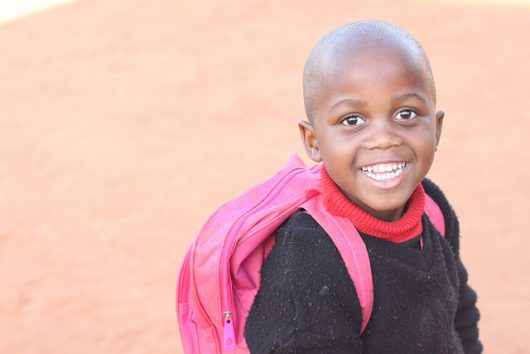
As attention turns to the world’s refugee population, it becomes evident that this is a problem area that needs help. Africa alone holds more than 15 million refugees and accounts for a fourth of the world’s displaced population. Swaziland is no different, as the country has seen its fair share of refugees over the past decade. Listed below are 10 facts about refugees in Swaziland:

  1. The Office of the United Nations High Commissioner for Refugees (UNHCR) established itself in Swaziland in 1978 to help with an influx of refugees who were fleeing apartheid in South Africa.
  2. In the 1980s, there were as many as 20,000 refugees in Swaziland. As many as 8,000 of these refugees were Mozambicans fleeing from their civil war.
  3. In 2005, the UNHCR handed over all of its refugee services to the Swaziland government, as the number of refugees had drastically decreased following the abolishment of apartheid. Refugees in Swaziland at the Malindza and Ndzevane refugee camps began to rely on the government for key services.
  4. The number of refugees in Swaziland decreased from 759 refugees in 2011 to 505 in 2012.  This change was perhaps due to a massive drought and food concerns in the region that began at that time.
  5. In 2015, a sample of data was collected by the UNHCR concerning refugees in Swaziland.  The data found that the number of refugees still had not reached pre-drought levels and was currently at 696 refugees.
  6. Refugees in Swaziland today come from surrounding countries which include Burundi, Angola, the Democratic Republic of the Congo, Rwanda and Somalia.
  7. New arrivals are held in the Malindza reception center and refugee camp that the UNHCR established. They are supplied with household items and blankets.
  8. Swaziland refugee children are enrolled in schools in order to integrate, and the Swaziland government applies to the UNHCR for funding in order for the children to attend for free.
  9. Malindza has health services for the refugees, including a primary care clinic that services the local community as well. The government understands that refugees come from difficult circumstances, so they also provide counseling services.
  10. In addition to providing household items, the opportunity to have gainful employment and medical assistance, Malindza and the Swaziland government have set up a food assistance program. This program was created to help new arrivals and the vulnerable which includes disabled persons and children. This program allows these people to receive food prepared in the communal kitchen.

Despite numerous hardships of their own, the people who call this small monarchy in Southern Africa home continue to provide their fellow people of Africa a safe place to escape from difficult circumstances. Although they no longer host thousands of refugees, the country still continues to treat those they do house with respect.

– Rachael Blandau

Photo: Flickr

August 3, 2017
https://borgenproject.org/wp-content/uploads/borgen-project-logo.svg 0 0 Borgen Project https://borgenproject.org/wp-content/uploads/borgen-project-logo.svg Borgen Project2017-08-03 01:30:412024-05-28 00:03:3410 Important Facts to Know About Refugees in Swaziland
Global Poverty, Refugees

10 Important Facts to Know About the Progress of Palau Refugees

Palau Refugees
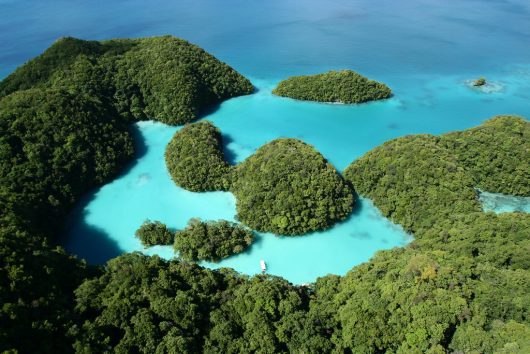
The Republic of Palau, a small island group in the Pacific, forms the far-western chain of the Caroline Islands in Micronesia. The country is doing surprisingly well in terms of its refugee population, which began decreasing rapidly in 2009. It is now at its lowest rate of refugees and asylum-seekers, according to the UNHCR. Here are 10 facts about Palau refugees and how the country handles those in need of sanctuary.

  1. Because of Palau’s small numbers of asylum-seekers, refugees, stateless persons, and internally displaced persons, Palau is not a participant of either the Status of Refugees 1951 Convention or the Status of Stateless Persons 1954 Convention. This means that Palau is not protected under this treaty.
  2. Despite not being a signatory of these conventions, Palau commendably took in 11 refugees from Myanmar, known as Uighurs, in 2009. These 10 men and 1 woman fled from Myanmar for fear of arrest after their political outcry. They moved from Malaysia to the Philippines, resting finally in Palau because of its openness and visa-free entry.
  3. While the refugees awaited their asylum acceptance, a local Roman Catholic church housed and fed them. During their stay, a spokeswoman for the refugees said that they finally felt free in Palau.
  4. Palau President Johnson Toribiong said upon the guests’ arrival, “It’s our age-old tradition to receive those in need whenever they somehow arrive on our shores.” The government and Palau locals selflessly gave the Uighurs hope of asylum and temporary relief from arrest.
  5. Palau made an official agreement with the U.S. in 2009 upon the arrival of the Uighurs that it would extend its small island to the refugees as home. A long-standing friendship with the U.S. aided President Toribiong’s acceptance of the Uighurs as part of both countries’ human rights system.
  6. Toribiong vehemently dismissed allegations upon the Uighurs’ arrival that the government of Palau accepted the 10 men and 1 woman as part of a reported pact between the U.S. and Palau, where the former would be paid $200 million. Toribiong claimed Palau’s goodwill was spurred only by its humanitarian nature.
  7. Palau’s reputation of accepting all displaced or endangered people is reflected in its population, which is comprised of 20,000 natives and some 6,000 foreign citizens, including 445 Bangladeshi Muslims.
  8. The UNHCR noted that Palau’s involvement with the Pacific Immigration Directors’ Conference will only increase the collective and national response to issues of refugee acceptance and protection.
  9. As a Pacific Island country, Palau remains under watch for its own displaced persons, due to climatic factors such as rising sea levels, frequent severe storms, and increased salinization. In the case of such an event, the population is protected by the IASC Pacific Humanitarian Protection Cluster, co-led by UNHCR and OHCHR to support the country in case of displacement.
  10. A recent 2016 Palau Human Rights Report states that Palau continues to respect the law of Freedom of Movement, Internally Displaced Persons, Protection of Refugees, and Stateless Persons. The law allows for internal movement, emigration, and foreign travel for all Palau residents.

It appears that Palau is doing well as it has low numbers of internal refugees, and welcomes others in need of assistance and asylum. The situation of Palau refugees shows that the country is progressing past the immigration turmoil of many other countries.

– Olivia Cyr
Photo: Flickr

August 1, 2017
https://borgenproject.org/wp-content/uploads/borgen-project-logo.svg 0 0 Borgen Project https://borgenproject.org/wp-content/uploads/borgen-project-logo.svg Borgen Project2017-08-01 01:30:492024-05-28 00:03:3110 Important Facts to Know About the Progress of Palau Refugees
Global Poverty, Refugees

10 Important Facts About Refugees in Djibouti

Refugees in Djibouti
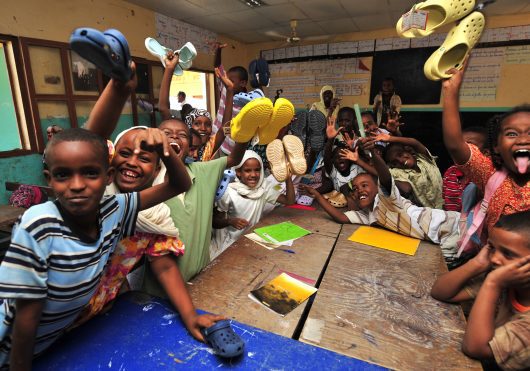
The plight of refugees is of interest currently both in political and humanitarian terms. Refugees suffer a great uprooting from their homes, from their lifestyles and often experience a cultural shock at refugee camps. At their most vulnerable point, refugees must depend on stop-gap solutions to see them through their temporary and difficult living situations.

Djibouti is temporary shelter to thousands of refugees, as they search for a home beyond Djibouti. A tiny country on the Eastern coast of Africa, Djibouti is at the point where three countries meet: Somalia, Ethiopia and Eritrea. A narrow part of the Red Sea separates Djibouti from Yemen. Here are ten facts about refugees in Djibouti:

  1. Annually, 100,000 people pass through Djibouti. Such a large number of refugees pass through Djibouti because of its location adjacent to three countries.
  2. The refugees predominantly arrive from several places: Yemen, Somalia, Eritrea and Ethiopia. Of these, 55 percent of those who arrive at Djibouti are Yemeni. Yemeni and Ethiopian refugees get usually placed in Markazi, a refugee camp located near Obock, a port in the northern part of Djibouti. Somalis and Eritreans get often put in Ali Addeh and Holl Holl, other refugee camps, in the south of Djibouti.
  3. Approximately 19,636 Yemeni refugees and 5,100 Ethiopian refugees have arrived or passed through Djibouti since 2015. Around 70 percent of the refugees, including Somalis and Eritreans, are women and children.
  4. Yemeni refugees are fleeing south because of war, while Ethiopian refugees are fleeing north because of drought. A militant group, Houthi Shia, overthrew the Yemeni government in 2015. Consequently, Saudi Arabia began a bombing campaign in Yemen. Ethiopians fleeing north towards Yemen are sometimes not aware of the conflict when they reach Djibouti and head towards Yemen.
  5. Refugees enter Djibouti via bus or boat as the most common mode of transport. Ethiopian refugees also travel to Djibouti on foot, though crossing the desert surrounding Djibouti is dangerous since temperatures may reach 130 degrees. After their journey on foot, Ethiopian refugees use smugglers’ boats to reach Djibouti.
  6. Djibouti has a population of about one million people. Around 400,000 permanent residents live in slums near the edge of the capital, Djibouti City, with little access to necessities such as food and water. The sudden influx of refugees has created difficulties in resource allocation between long-time residents and refugees.
  7. Approximately 5,963 children in the country are suffering from severe acute malnutrition (SAM).
  8. Refugees predominantly live in three camps: Ali Addeh, Holl Holl and Markazi. Markazi alone is a temporary home to over 1,400 refugees as of February 2017. The living conditions in the camps are arduous. For example, in Markazi, refugees live in tents and have thin sleeping mats. The camps are fenced in to protect the refugees from wild animals, but snakes and scorpions often enter the camps. Refugees in Markazi are also concerned about sandstorms: in the past, sandstorms have blown over their tents.
  9. Around 74 percent of the refugee population lives on less than $3 per day. Despite the poor living conditions, refugees still attempt to educate their children by sending them to temporary schools in the camps.
  10. The influx of refugees has helped expand business networks for permanent residents of Djibouti, boosting the local economy. The refugees and residents of Djibouti have developed strong, friendly connections. The government of Djibouti echoes the positive reception that refugees have received, calling the refugees “our brothers and sisters.”

These facts about the refugees in Djibouti show that they are suffering because of bloody conflicts and harsh environmental conditions, circumstances beyond their control. Fortunately, Djibouti’s welcoming of refugees underscores the importance of being open to those impoverished by their circumstances.

Through examining even 10 facts about the refugees in Djibouti, the realization of how refugees can positively contribute to business and social networks is emphasized. Ultimately, communities must fuse together to advocate for solutions to poverty.

– Smriti Krishnan

Photo: Google

July 27, 2017
https://borgenproject.org/wp-content/uploads/borgen-project-logo.svg 0 0 Borgen Project https://borgenproject.org/wp-content/uploads/borgen-project-logo.svg Borgen Project2017-07-27 07:30:182024-12-13 17:58:2410 Important Facts About Refugees in Djibouti
Global Poverty, Refugees

10 Facts About Refugees in Mongolia

Refugees in Mongolia

Mongolia is a landlocked country in Asia with a population of just over 3,000,000. This East Asian nation is home to a small, yet geopolitically significant refugee population. Here are 10 facts about those displaced refugees in Mongolia:

  1. The World Bank’s most current data shows that there were nine refugees in Mongolia in 2015. This obviously ranks Mongolia behind neighboring countries China and Russia, which both have around 300,000 documented refugees. However, this miniscule number does not reflect the reality of refugees in Mongolia.
  2. Refugees in Mongolia are mainly from North Korea. The North Korean defectors live there, often briefly, under a tenuous balance between Mongolia-U.S. diplomatic relations and Mongolia-North Korea diplomatic relations.
  3. Hundreds of North Korean refugees pass through Mongolia each month before being repatriated in South Korea. Refugees in Mongolia from North Korea choose one of two common paths to defect to South Korea. One option is to travel north from North Korea through China into Mongolia before flying to South Korea.  The other route they take is to go south through China and into Laos and Thailand before boarding a plane to South Korea. North Korea expert and head of the Institute of International Education’s Scholar Relief Fund Stephen Noerper once estimated that each month, 500 North Koreans pass through Mongolia.
  4. North Korean refugees must pass through China in secret before arriving in Mongolia. China’s alliance with North Korea means that North Korean defectors will be sent back to North Korea if caught in China. Defectors who are caught often face brutal treatment and forced labor in North Korean concentration camps.
  5. Their journey to Mongolia is treacherous. Besides having to sneak through China and past Chinese border patrol, refugees in Mongolia must pass through the Gobi Desert, a cold desert that stretches hundreds of miles.
  6. Mongolia has long said it will humanely treat North Korean refugees. Mongolian Prime Minister Nambaryn Enkhbayar has publicly sympathized with North Korean defectors.
  7. However, Mongolia’s position on North Korean defectors remains unclear. Mongolia has stepped up its border patrol in recent years and has several agreements with North Korea.  This includes accepting thousands of migrant workers from the one-party state.
  8. On the other hand, Mongolian border patrol agents have let North Koreans into the country, and Mongolia remains an ally of the U.S.
  9. Refugees in Mongolia from North Korea often make their way to the South Korean embassy. There, they are taken care of and able to book a flight from the Mongolian capital of Ulaanbaatar to the South Korean capital of Seoul.
  10. The number of refugees in Mongolia from North Korea is decreasing. According to the Korea Herald, stricter North Korean border patrol has caused the number of North Korean defectors to drop 21 percent already in 2017.

Though their numbers may seem small, Mongolia still plays a crucial role in aiding North Korean refugees and defectors. Mongolia’s situation reminds us that even helping a handful of individuals has an impact on both personal lives and international relations.

– David Mclellan

Photo: Flickr

July 27, 2017
https://borgenproject.org/wp-content/uploads/borgen-project-logo.svg 0 0 Borgen Project https://borgenproject.org/wp-content/uploads/borgen-project-logo.svg Borgen Project2017-07-27 01:30:522024-05-27 09:34:2010 Facts About Refugees in Mongolia
Global Poverty, Refugees

10 Facts About Uzbek Refugees

Uzbek Refugees
The Republic of Uzbekistan is a Central Asian country with a population of about 32 million. From 1924 to 1991, Uzbekistan was a constituent republic within the Soviet Union. Since gaining independence in 1991, the Uzbek people have been dominated by an authoritarian government. Here are 10 critical facts about Uzbek refugees from the former Soviet state:

  1. According to the World Bank’s most current released data, there were 4,205 Uzbek refugees spread out across the world in 2015. This fact makes Uzbekistan the largest source of refugees in Central Asia, ahead of Kazakhstan, Kyrgyzstan, Tajikistan and Turkmenistan.  These are all former Soviet republics as well.
  2. The number of Uzbek refugees is decreasing. Despite the world’s refugee population growing by millions annually since 2011, the Uzbek refugee population has declined each year in the same amount of time. The Uzbek refugee population is about a third of the size it was in 2011.
  3. Uzbek refugees often flee what the Human Rights Watch has described as an “abysmal” state of human rights in Uzbekistan. The country does not allow independent criticism and denies Uzbeks fundamental freedoms in regards to religion and expression.
    Torture is commonplace in the Uzbekistan justice system, and adults and children are subjected to forced labor. Collecting data on Uzbekistan, especially on its human rights violations is difficult.  This lack of information is due to Uzbekistan refusing to allow U.N. human rights experts access to the country since 2002.
  4. Some Uzbek refugees leave Uzbekistan because of their sexual orientation. Homosexual relations carry a maximum prison sentence of three years in Uzbekistan.
  5. Many Uzbek refugees left their country after the 2005 Andijan massacre. In June 2004, 23 businessmen from the city of Andijan were arrested on baseless charges of “religious extremism.” About 10,000 people eventually filled the streets in protest when the businessmen were subsequently found guilty. In a violent suppression of the protests, the Uzbekistan military opened fire on the crowd. Estimates of the number of people killed during the Andijan massacre start at 187. According to the Uzbekistan government’s official count, potentially nearly 2,000 people died.
  6. Some of the Uzbek refugees are whistleblowers and former government officials. For example, in 2008, Ikrom Yakubov sought asylum in London. Yakubov worked as a spy for ten years in the Uzbek National Security Service, including two years on the president’s National Security Council. When he arrived in London, he had already been hiding out in Europe for months, fearing for his life. Yakubov says that he no longer wanted to work for “the executioner,” and has accused the Uzbekistan government of routinely murdering its citizens for political reasons. His estimated death toll of the Andijan massacre is 1,500 people.
  7. The authorities often harass the families of Uzbek refugees who stay in Uzbekistan. If the refugees leave for political reasons, such as those that did following the Andijan massacre, their families are put under surveillance, interrogated and threatened with criminal charges. Children in these families even get publicly shamed at school.
  8. Uzbek refugees often find that their families will no longer talk to them after they leave Uzbekistan. Due to threats from the government, families are often too scared to receive phone calls or letters from their refugee relatives. The government threatens to take the families’ homes away or beat them. According to one Uzbek refugee, Nodir N., authorities detain his brother back in Uzbekistan for several days before each holiday to ensure he does not protest.
  9. Uzbekistan’s government does not acknowledge its refugees as such. Uzbek refugees are branded as “traitors,” “criminals” and, above all, “terrorists” after leaving their homeland.
  10. Uzbek refugees still struggle with the Uzbekistan government after fleeing the country. The Uzbekistan government has surveilled people in the country for a long time, but Amnesty International says they have received reports of Uzbek refugees being spied on outside of Uzbekistan, likely by government hackers.

Some Uzbek refugees have had to bounce from country to country until they feel safe from the Uzbekistan government. Furthermore, countries like neighboring Kyrgyzstan, close to Uzbekistan geographically and culturally, deport Uzbek refugees in compliance with the Uzbekistan government’s request. Kyrgyzstan has never granted the request of an Uzbek refugee.

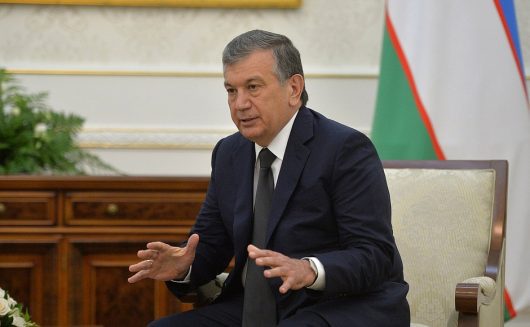
President Islam Karimov ruled Uzbekistan from its independence from the Soviet Union until his death in September 2016. The current president, Shavkat Mirziyaev, has vowed to bring human rights reforms to Uzbekistan. However, organizations like the Human Rights Watch say that there has been little to no progress thus far.

– David Mclellan

Photo: Google

July 27, 2017
https://borgenproject.org/wp-content/uploads/borgen-project-logo.svg 0 0 Borgen Project https://borgenproject.org/wp-content/uploads/borgen-project-logo.svg Borgen Project2017-07-27 01:30:112024-12-13 17:58:2410 Facts About Uzbek Refugees
Global Poverty, Refugees, War and Violence

10 Facts About Syrian Refugees

10 Facts About Syrian Refugees
It has been six years since the outbreak of civil war in Syria that has resulted in a reported 470,000 Syrian deaths. The war began with anti-government demonstrations and escalated into armed opposition groups fighting the government after a violent crackdown on the protests. The ongoing threat of the civil war has caused 11 million Syrians to flee so far. Here are 10 facts about Syrian refugees:

  1. Of the 11 million people displaced by the conflict in Syria, five million Syrians are refugees. This means that the other 6.3 million are displaced within Syria.
  2. Four out of five Syrian refugees are children.
  3. In just over a year after the civil uprising began, 500,000 Syrian refugees had left their homes.
  4. Many Syrian refugees remain in the Middle East. They reside in countries such as Turkey, Lebanon, Jordan, Iraq and Egypt, although an estimated 10% have relocated to Europe.
  5. Many Syrians who fled into Northern Iraq are now trapped inside Iraq’s internal conflict. Because of the pre-existing conflict, Iraq struggles to meet the needs of the Syrian refugees.
  6. In order to flee, many Syrian refugees attempt to cross the Mediterranean Sea. Not all of them make it across alive.
  7. In January 2016, a reported 2,647 refugees fled to the United States, amounting to roughly 0.06% of the total refugee population.
  8. Around 40,000 Syrian refugees have fled to Canada.
  9. Nearly the entire population of Syria lives in poverty, with about 70% lacking access to clean drinking water.
  10. In 2016, the U.N. declared that $4.5 billion was required in order to meet the urgent needs of Syrians, yet only $2.9 billion was actually received.

These 10 facts about Syrian refugees illustrate the always-escalating nature of the crisis, showing that aid is needed more than ever before.

– Danyel Harrigan

Photo: Flickr

July 25, 2017
https://borgenproject.org/wp-content/uploads/borgen-project-logo.svg 0 0 Borgen Project https://borgenproject.org/wp-content/uploads/borgen-project-logo.svg Borgen Project2017-07-25 07:30:022024-12-13 17:58:2310 Facts About Syrian Refugees
Global Poverty, Refugees

10 Facts About Refugees in Uruguay

Refugees in Uruguay
Prompted by the Syrian refugee crisis, many countries have implemented stricter immigration policies. However, some Latin American countries, specifically those with a higher proportion of Muslims or Syrians, responded to the refugee crisis with more sympathy. Uruguay is one such country. Nestled in between Brazil and Argentina, the territory of Uruguay is roughly the size of Washington state and is home to only 3.4 million individuals. Here are some essential facts about refugees in Uruguay:

  1. Uruguay was the first country in Latin America that showed a willingness to receive refugees.
  2. According to one political analyst, Uruguay’s economy will largely be unable to assimilate refugees into their workforce.
  3. Refugees publicly lamented the country’s limited economic opportunity.
  4. According to the most recent statistics, Uruguay accepted 117 immigrants up to September 2015.
  5. Refugees now appeal to other countries and even to the United Nations to help them leave the country.
  6. Some refugees tried leaving the country, but such efforts failed because most countries do not accept their Uruguay-issued documentation and the immigrants also lack their Syrian-issued passports.
  7. Amidst such social discord, public opinion toward Syrian refugees began to sour. Many citizens felt that the refugees in Uruguay are ungrateful.
  8. Due to such public backlash, President Vasquez temporarily suspended any further allocation of Syrian refugees.
  9. The country’s first group of Syrian refugees was to take Spanish classes to help them assimilate.
  10. Uruguay hoped that, with their initial open-door policy, they would have a type of contagion effect on surrounding countries.

The following information about refugees in Uruguay reveals that countries with already suffering economies are, in many cases, unfit to offer refuge to large numbers of displaced persons. Therefore, more prosperous nations ought to show Uruguay’s initial willingness to accept refugees.

– Shannon Golden

Photo: Flickr
July 25, 2017
https://borgenproject.org/wp-content/uploads/borgen-project-logo.svg 0 0 Borgen Project https://borgenproject.org/wp-content/uploads/borgen-project-logo.svg Borgen Project2017-07-25 07:30:022024-12-13 17:58:2310 Facts About Refugees in Uruguay
Global Poverty, Refugees

10 Facts About Portugal Refugees

Portugal Refugees
Far from the refugee camps of Eastern Europe, Portugal is rarely associated with the term “refugee.” Its location presented an obstacle for refugees fleeing countries such as Syria. But the Portuguese prime minister is determined to change the idea that Portugal is not a country welcoming refugees. With the help of the European Union, Portugal is increasing refugee quotas and welcoming unprecedented numbers. These 10 facts about Portugal refugees show the newfound commitment of the Portuguese to refugees.

  1. The European Union unveiled a new plan to relocate refugees from Italy and Greece to Portugal. This made Portugal third on the list of countries for the number of refugees it will welcome under the plan.
  2. In 2015, Portugal received 872 requests for asylum. Of these requests, 19 were from Syria, five were from Iraq, and four were from Afghanistan.
  3. Portugal is undeniably prepared to handle the increase in refugees as it was ranked second, behind Sweden, for its accomplishments for assimilating refugees into society.
  4. The World Health Organization (WHO) introduced a five-day course for medical professionals to educate them on refugee health. Portugal has sent representatives to the course in order to become prepared for the increase of refugees to which it has committed. The course will cover how to assist refugees in finding healthcare, why it is economically important to focus on the health of migrants and applicable strategies that focus on refugee populations.
  5. World Refugee Day ushered in opportunities all over the world for refugees. Starbucks announced its plan to hire 2,500 refugees all over the world, including in Portugal.
  6. Prime minister António Costa increased the number of refugees from 4,000 to 10,000 in an apparent effort to boost the economy. This has led to refugee relocation across Portugal in an attempt to increase job growth.
  7. Pão a Pão, a restaurant in Lisbon, gave refugees around the city a new start. The majority of its employees are refugees, cooking bread from their place of origin.
  8. Although Portugal became a rising star in terms of their commitment to refugees, some have criticized the move as simply a way to boost the population. The economic crisis sent many Portuguese citizens abroad in search of employment.
  9. Portugal is a widely Catholic country that listens intently to the words of the Pope, and thus takes his lead on various social issues. His recent interest in the refugee crisis contributed to Portugal’s willingness to accept more migrants.
  10. Portugal continually struggled to attract refugees as the location is distant from where they begin their journey. Many refugees aim for Central Europe because of the perceived wealth, with Portugal never appearing on their radar.

The experience of Portugal refugees shows that this Western European country could soon be center stage in terms of migrant numbers. Portugal is ramping up preparations to accept thousands of more immigrants and sees the refugee crisis as an opportunity to grow its population and economy. These facts about Portugal refugees prove that Portugal is a country refugees should be seeking.

– Sophie Casimes

Photo: Google

July 24, 2017
https://borgenproject.org/wp-content/uploads/borgen-project-logo.svg 0 0 Borgen Project https://borgenproject.org/wp-content/uploads/borgen-project-logo.svg Borgen Project2017-07-24 07:30:162020-06-18 08:37:5510 Facts About Portugal Refugees
Global Poverty, Refugees

10 Facts About Refugees in Paraguay

10 Facts About Paraguay Refugees
Refugees leave their countries in order to find safety, peace and other necessities not present in their homelands. In Paraguay, incoming refugees are guided through the process of adapting to the country’s practices, lifestyle and community. Here are 10 facts about refugees in Paraguay:

  1. In 2016, 49 refugees submitted asylum applications to Paraguay. Only 27 applications were approved, mostly for Syrians and Cubans. While this does not guarantee entry for all refugees, it shows that Paraguay is very welcoming to some.
  2. Some refugees use fake passports to enter Paraguay. The country’s criminal court convicted seven Syrian refugees of this crime in March 2015. One of the convicted refugees stated that Paraguay’s police “treated them with respect.” Paraguay’s criminal court granted the refugees freedom of movement at the first hearing.
  3. Many refugees seek lost family members. Some do not know if their parents are living outside of Paraguay or are even still alive. Two such refugees, Mahed Ibrahim and his younger brother, unnamed because he is a minor, fled to Paraguay in search of their parents.
  4. Paraguay’s government plans to build 4,000 homes for refugees of flood disasters. The refugees will also be given food supplies, housing materials and medical assistance. Paraguay’s government relief agency is also preparing for mosquito-borne diseases that may affect these refugees.
  5. Refugees in Paraguay are bound to a “resettlement policy.” This policy helps refugees become self-reliant and make positive contributions to their new country. The program provides refugees with housing, medical care and employment opportunities.
  6. When moving into their new homes, refugees in Paraguay are provided with basic amenities and have no rental expenses in their first year. After the first year, they can make arrangements to buy their homes by paying a specified quota for several years. Paraguay’s various programs and requirements determine the quota amount.
  7. Refugees in Paraguay can access free healthcare through the National Public Administration’s resources and services. In the first year, some medicines and expenses are not covered under the free plan. Once the first year passes, the restriction is lifted.
  8. Refugees in Paraguay have access to the same public education system as citizens. The Office of the United Nations High Commissioner for Refugees (UNHCR) pays for refugee children’s education expenses. The payments annually cover uniforms and materials in preschool, primary and secondary schools.
  9. Refugees are guided and educated on aspects of Paraguay’s labor market, helping them find employment almost immediately. Paraguay’s government gives refugees vocational training in baking, plumbing, computers and other work skills. The training sessions are free and relieve refugees of added expenses.
  10. From their arrival date, refugees in Paraguay are given a monthly stipend for one year. If managed properly, the stipend can cover utility, food and other expenses. The stipend also has a single allocation for clothing expenses.

These 10 facts about refugees in Paraguay reveal the country’s goal to help others but also the necessity for reform. Paraguay still declines some refugees depending on their country of origin, and changes will be needed in order to grant equality for all refugees. For refugees presently in Paraguay, a better quality of life may very well be in their future.

– Rhondjé Singh Tanwar

Photo: Flickr

July 24, 2017
https://borgenproject.org/wp-content/uploads/borgen-project-logo.svg 0 0 Borgen Project https://borgenproject.org/wp-content/uploads/borgen-project-logo.svg Borgen Project2017-07-24 01:30:572024-12-13 17:58:2310 Facts About Refugees in Paraguay
Global Poverty, Refugees

10 Facts About Refugees in Trinidad and Tobago

Refugees in Trinidad and Tobago
Due to foreign investment in tourism and an abundance of oil and natural gas resources, Trinidad and Tobago is one of the top destinations for Caribbean refugees. As a result, Trinidad and Tobago is facing a multitude of challenges. The country’s borders are vulnerable and human traffickers are active as the country struggles with being the active transit point for North American and European migration. Discussed below are leading facts about refugees in Trinidad and Tobago and the challenges they face.


Top 10 Facts about Refugees in Trinidad and Tobago


  1. Available data suggests that one-third of Caribbean refugees reside in Trinidad and Tobago.
  2. Before 2012, Trinidad and Tobago would only receive around 20 to 30 refugees from different countries annually.
  3. In January 2013, there was an easing of restrictions with Cuba and a change in migration laws, giving people more freedom of migration and movement. This is when Trinidad and Tobago began receiving an influx of Cuban refugees.
  4. By 2014, Trinidad and Tobago received 100 refugees, and, by 2016, that more than doubled to 209 refugees.
  5. In response to the growing number of asylum-seekers, the government adopted an official refugee policy in June 2014 and the U.N. Refugee Agency (UNHCR) established an office in January 2016.
  6. In 2016, about 50% of refugees in Trinidad and Tobago were from Syria, followed by Cuba with 36%.
  7. The UNHCR office in Trinidad and Tobago provides technical and capacity-building advice to authorities, supports the development of an effective asylum system that aligns with the government’s refugee policy, and provides direct assistance to refugees and asylum-seekers through and in coordination with its implementing partner Living Water Community.
  8. The adoption of specific legislation ensures that refugees enjoy all the rights given by the 1951 Refugee Convention. However, there are no current avenues for refugees to legally integrate into the country. This prevents them from positively contributing to the development and prosperity of the nation, including its ideas, culture and knowledge.
  9. In Trinidad and Tobago, more than 40% of the refugee population comes from outside the Americas.
  10. In 2017, the country expects to host more than 400 refugees from multiple countries.

These facts about refugees in Trinidad and Tobago provide awareness about their current situation. Trinidad and Tobago has gradually become a more popular destination for refugees as an active middle point between European and American migration.

– Tucker Hallowell

Photo: Google

July 21, 2017
https://borgenproject.org/wp-content/uploads/borgen-project-logo.svg 0 0 Borgen Project https://borgenproject.org/wp-content/uploads/borgen-project-logo.svg Borgen Project2017-07-21 07:30:392024-05-28 00:03:1010 Facts About Refugees in Trinidad and Tobago
Page 36 of 53«‹3435363738›»

Get Smarter

  • Global Poverty 101
  • Global Poverty… The Good News
  • Global Poverty & U.S. Jobs
  • Global Poverty and National Security
  • Innovative Solutions to Poverty
  • Global Poverty & Aid FAQ’s
Search Search

Take Action

  • Call Congress
  • Email Congress
  • Donate
  • 30 Ways to Help
  • Volunteer Ops
  • Internships
  • Courses & Certificates
  • The Podcast
Borgen Project

“The Borgen Project is an incredible nonprofit organization that is addressing poverty and hunger and working towards ending them.”

-The Huffington Post

Inside The Borgen Project

  • Contact
  • About
  • Financials
  • President
  • Board of Directors
  • Board of Advisors

International Links

  • UK Email Parliament
  • UK Donate
  • Canada Email Parliament

Get Smarter

  • Global Poverty 101
  • Global Poverty… The Good News
  • Global Poverty & U.S. Jobs
  • Global Poverty and National Security
  • Innovative Solutions to Poverty
  • Global Poverty & Aid FAQ’s

Ways to Help

  • Call Congress
  • Email Congress
  • Donate
  • 30 Ways to Help
  • Volunteer Ops
  • Internships
  • Courses & Certificates
  • The Podcast
Scroll to top Scroll to top Scroll to top