• Link to X
  • Link to Facebook
  • Link to Instagram
  • Link to TikTok
  • Link to Youtube
  • About
    • About Us
      • President
      • Board of Directors
      • Board of Advisors
      • Financials
      • Our Methodology
      • Success Tracker
      • Contact
  • Act Now
    • 30 Ways to Help
      • Email Congress
      • Call Congress
      • Volunteer
      • Courses & Certificates
      • Be a Donor
    • Internships
      • In-Office Internships
      • Remote Internships
    • Legislation
      • Politics 101
  • The Blog
  • The Podcast
  • Magazine
  • Donate
  • Click to open the search input field Click to open the search input field Search
  • Menu Menu

Archive for category: Migration

Aid, Foreign Aid, Migration

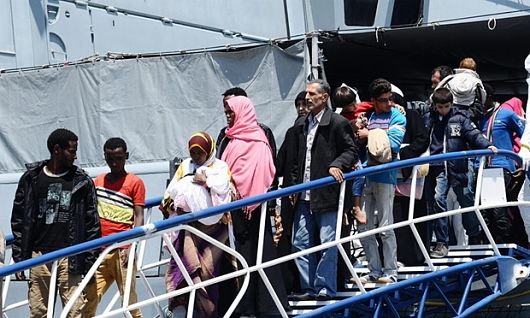
The Mediterranean Migrant Crisis

migrant_crisis
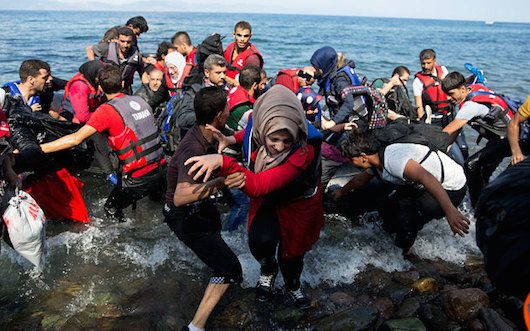
At the start of July 2015, plans were announced for Britain to spend more than 300 million pounds in international aid, which is targeted towards Syria and the Sahel Region of Africa and includes countries such as South Sudan, Sudan, the Central African Republic and Nigeria. The money is supposed to help stabilize the lives of people in those regions in order to relieve the Mediterranean migrant crisis by reducing the influx of migrants traveling to the European Union, especially to Italy and Greece.

As the Washington Post states, migrants flee from their home countries to Europe because of poverty, civil war, violence and political instability. The largest number of migrants by boats are Syrians, who are attempting to flee from a civil war which has left over 200,000 dead and more than 4 million displaced. The second greatest number of refugees comes from Eritrea, which is suffering from economic issues, a repressive government and forced conscription. A large number of migrants also come from Libya, Mali and Nigeria.

As of May 2015, the U.N. estimated that over 60,000 migrants crossed over the Mediterranean Sea since the start of 2015, and another 1,800 died during the crossing.

The journey across the Mediterranean by boat is very perilous, and migrants cross because they have no other choice. They normally pay a smuggler who forces them into an old and unreliable boat (sometimes at gunpoint) and often leaves the boat halfway across the Mediterranean, relying on rescue teams from Italy and other E.U. countries to get the migrants safely to shore.

Some blame the rescue teams for the influx of immigrants. While it is true that large numbers of people attempt the dangerous journey across the Mediterranean in order to migrate into Europe — there were 220,000 unauthorized immigrants in Europe in 2014 — the rescue teams are not to blame for the large numbers of people attempting the crossing. Since Italy shut down its Mare Nostrum rescue program last October, numbers of migrants trying to cross the Mediterranean remained about the same. However, the death toll jumped dramatically. From January to April 2014, only 96 died while crossing the Mediterranean, compared to 1,500 during the first four months of 2015.

Nevertheless, some are still convinced that rescue teams are responsible for the higher number of people attempting to cross the Mediterranean, and the situation has led to the rise of the far-right in Europe, especially in Italy and France, where levels of anti-immigrant rhetoric are high.

In reality, migrants only try to cross the Mediterranean because they do not have another choice. As one migrant put it, “We are between hell and the deep blue sea.”

Britain hopes that the money it is adding to the international aid budget will help lower the number of migrants by increasing political stability in regions that are suffering. However, even if Britain’s plan works, it is still unsure what will happen to those who have already migrated to Europe. There were plans to relocate 40,000 Italian and Greek refugees to other parts of Europe, but those plans appear to have stalled due to anti-immigrant sentiments.

– Ashrita Rau

Sources: Express, The Guardian, Washington Post, The Independent, The Atlantic
Photo: The Guardian

July 9, 2015
https://borgenproject.org/wp-content/uploads/borgen-project-logo.svg 0 0 Borgen Project https://borgenproject.org/wp-content/uploads/borgen-project-logo.svg Borgen Project2015-07-09 09:11:142024-12-13 17:51:50The Mediterranean Migrant Crisis
Migration

EU Proposes Quotas for Dealing with Migrants

EU_Proposes_Quotas_for_Dealing_with_Migrants
The European Union has proposed a new law to address Europe’s growing migration crisis after months of criticism and accusations of inaction. For several years, migrants have been making the dangerous journey from Africa, Asia and the Middle East across the Mediterranean into Europe. Thousands drown along the way.

The situation has become particularly bad this year as conflicts in Africa and the Middle East have sent more migrants seeking asylum. A record 1,800 people have died trying to make the crossing since the beginning of the year. Italy, Malta and Greece, the primary landing points, are struggling to cope with the influx of refugees.

The European Commission has proposed a new quota system to house the refugees across Europe. It requires EU members to accept a certain number of refugees based on their population, GDP, unemployment rate and current number of asylum applications. The Commission is also exploring ways to crack down on traffickers and assist migrants in making the crossing safely.

Under EU law, asylum seekers are legally entitled to remain in Europe. Economic migrants are not, but this rule has been loosely enforced and many are allowed to stay anyway. The European Commission is also working to improve cooperation with countries of origin to improve deportation procedures for those who do not qualify for asylum to avoid taking in too many people.

The new proposals have proven controversial, particularly the quota system. Critics say the EU is attempting to force countries already struggling with a large influx of immigrants to take in even more. There are fears the law could lead to an anti-immigrant backlash and boost public support for parties on the far-right.

Several EU governments have publicly voiced opposition to the law. The United Kingdom has been the most vocal opponent of the plan, but since it has an opt out clause as part of its agreement with the EU, the quota system will most likely not apply to it. Several eastern and central European countries have also voiced their opposition, including Estonia, the Czech Republic and Hungary.

The U.K. Tory government also opposes the measures aimed at tackling human trafficking and helping immigrants across the Mediterranean, saying it will just encourage more to make the journey.

But many other European governments are in favor, including Germany, Italy, Greece and Austria. France has sent mixed messages, with some high ranking officials expressing support and others expressing opposition, but most expect it to vote in favor of the law. Since most of the large EU members back it, the law is expected to pass. It remains to be seen how it will be implemented and whether it will adequately address the problem.

– Matt Lesso

Sources: BBC, France24, New York Times, BBC
Photo: Flickr

May 26, 2015
https://borgenproject.org/wp-content/uploads/borgen-project-logo.svg 0 0 Borgen Project https://borgenproject.org/wp-content/uploads/borgen-project-logo.svg Borgen Project2015-05-26 12:00:022024-05-27 09:23:57EU Proposes Quotas for Dealing with Migrants
Development, Economy, Global Poverty, Migration

Migrant Workers in Shanghai

Standing on a bustling street in Shanghai, it is hard to ignore the feeling of constant movement and intensity. The mantra seems to be: keep moving and keep progressing. And at both the individual and state level there is an insatiable desire to be the best.

But at what price? The pace of development in China is incredibly impressive and yet, despite the new and efficient subways, trains, and buildings, a contrast of wealth still exists.

As a whole, China has been on the forefront of poverty reduction in the last couple of decades, raising nearly 300 million people out of poverty. However, it is not hard to find the instances of impoverishment that still exist even in some of the most developed cities, like Shanghai.

The population of Shanghai in 2013 was 23.9 million, making it the largest and most populous city proper in the entire world.  Furthermore, it has experienced double digit growth nearly every year since 1992, falling below double digits only temporarily during the 2008-2009 recession.

According to the 2010 census, more than 39 percent of Shanghai’s residents are migrant workers who have flocked to the city from the nearby provinces of Anhui, Jiangsu, Sichuan, and Henan seeking better economic opportunities. These migrant workers in Shanghai, who have made up the largest percentage of the city’s growth in the past few years, often live in the poorest conditions.

As development has increased in China, upwards of 250 million people have left the countryside for the east coast in the hopes of finding more lucrative work. Migrant laborers often work in labor, construction, factories as well as the service sector. Their wages tend to be lower than those of Shanghai residents and their living conditions incredibly poor. Just down the street from the newest high apartments and office buildings, it is not unusual to see old neighborhoods crowded with huts full of migrant laborers.

It’s important to note that poverty for migrant laborers is relative. In China, poverty and inequality differ dramatically in different parts of the country. Many laborers, who migrate to Shanghai for work, come from even poorer rural villages. While their wages are low, the income is often still better than what could be made back home.

Despite this, without a Shanghai hukou, a registration card that is used to classify where individuals are from, migrants are unable to live in subsidized housing, access basic health care and unemployment benefits, or enroll their children in local schools.

Marginalized and discriminated against, the poorest of Shanghai struggle to find social acceptance as well as economic security in their new lives. Yet, these migrant workers are the drivers of China’s tremendous economic growth. If this growth continues, the people of Shanghai will have to find a way to better accommodate their ever-evolving workforce. One of the biggest obstacles Shanghai faces is housing. Real estate prices are extremely high, leaving many people with low wages unable to purchase or rent homes.

Addressing this issue, as well as reforming the hukou system to allow for migrant workers to access health, education and other public services, will help further reduce the poverty and inequality that persists in Shanghai and China as a whole. It is easy to let the gleaming towers and trendy streets distract from the reality that most of Shanghai’s current population is still very much struggling to move beyond impoverishment.

– Andrea Blinkhorn

Sources: Poverties, China Perspectives, World Population Review, Nyuzai Shanghai, WSWS
Photo: The Globe and Mail

August 18, 2014
https://borgenproject.org/wp-content/uploads/borgen-project-logo.svg 0 0 Borgen Project https://borgenproject.org/wp-content/uploads/borgen-project-logo.svg Borgen Project2014-08-18 12:24:302024-05-27 09:21:18Migrant Workers in Shanghai
Children, Global Poverty, Migration

U.S. to Close Emergency Shelters for Migrant Children

The U.S. government announced on August 4 that it would be closing three separate emergency shelters designed to house the rapid influx of unaccompanied migrant children arriving from Central America. The shelters, run by Health and Human Services (HHS) and located on military bases, are planning on closing due to waning numbers of children crossing the border and an increasing capacity at other, more permanent shelters.

One shelter at Fort Still in Oklahoma closed on August 8, with the other two shelters located at Joint Base San Antonio-Lackland, Texas and Naval Base Ventura County-Port Hueneme, California set to close in the next two to eight weeks.

The migrant children were being held at the bases thanks to a 2008 law dictating that any unaccompanied children from countries not bordering the U.S. must be handed over to HHS within 72 hours of being apprehended. It has been estimated that around 7,700 children had been housed at the three bases, with the average stay lasting 35 days.

Most of the children are originally from El Salvador, Guatemala and Honduras, but have come from other Central American countries. The majority of those living at the shelters have found themselves fleeing their home countries due to an increased instability in the region. This lack of safety is largely due to a combination of increased gang violence and deeply entrenched levels of extreme poverty. However, it is impossible to attribute one particular cause to the massive increase in children attempting to enter the U.S.

Unaccompanied migrant children crossing the U.S. border hit a peak during June when it was estimated that as many as 2,000 children were crossing per week, but the amount has since tapered off. The last estimate was around 500 per week in Mid-July. An estimate from the Obama administration say that a total amount of child immigrants could hit 90,000 by September.

– Andre Gobbo

Sources: New York Times, PBS, BBC
Photo: Raw Story

August 17, 2014
https://borgenproject.org/wp-content/uploads/borgen-project-logo.svg 0 0 Borgen Project https://borgenproject.org/wp-content/uploads/borgen-project-logo.svg Borgen Project2014-08-17 16:00:382024-05-27 09:20:57U.S. to Close Emergency Shelters for Migrant Children
Activism, Advocacy, Global Poverty, Migration, USAID

Importance of Citizenship in the Dominican Republic

citizenship_dominican_republic_protests
The Constitutional Court of the Dominican Republic has decided to strip thousands of Dominicans of Haitian descent of their citizenship, causing unruly behavior both inside and outside the country.

Latin American human rights groups are speaking out against the ruling and citing international and regional human rights models, believing the ruling to be fundamentally racist and inhuman, according to Al Jazeera.

Not only is the ruling causing issues in the Dominican Republic, but there have even been protests in New York City.  New Yorkers are, furthermore, not supportive of the annulment of citizenship of anyone born in the country to noncitizens after 1929. The New York Times reports that this decision is applicable to many as 200,000 people, mostly of Haitian decent.

Many have said that the ruling emphasized a history of racial prejudice in the country against not only Haitians, but their descendants as well.

Edward Paulino, assistant professor of history at John Jay College of Criminal Justice in Manhattan, who is Dominican-American, explains that, “Anything that’s seen as a criticism is seen as treasonous.”

Several years ago, two United Nations human rights experts described in a report a “profound and entrenched problem of racism and discrimination” against Haitians in particular, throughout the Dominican Republic.

The Dominican Republic has fought with criticism for its treatment of Haitian migrants and this ruling has brought shame upon people within the country as well as internationally. The residents are already struggling with poverty and social exclusion and it is not beneficial in any way for them to be denounced.

Throughout the ruling the United States has signed an agreement worth 184 million to improve citizen safety and promote economic growth according to Dominican Today. The agreement accompanies the new strategy by the U.S. Agency for International Development (USAID) that is working to provide assistance to support the growth of small Dominican business and get them out of extreme poverty.

The businesses are primarily in the rural sector and USAID assists them by identifying new market opportunities.  They are also providing training and technology transfers to help such businesses produce quality products and services.

Despite this assistance, people throughout the Dominican Republic are focused on the issue of citizenship. There are tens of thousands of lives hanging in the balance and inaction is no longer an option. They are working to get out of poverty and the issue surrounding citizenship is distracting from finding the correct solutions.

– Lindsey Lerner

Sources: Al Jazeera, New York Times, Dominican Today
Photo: Crowd Voice

January 26, 2014
https://borgenproject.org/wp-content/uploads/borgen-project-logo.svg 0 0 Borgen Project https://borgenproject.org/wp-content/uploads/borgen-project-logo.svg Borgen Project2014-01-26 04:00:592024-12-13 17:49:56Importance of Citizenship in the Dominican Republic
Activism, Advocacy, Food & Hunger, Food Aid, Foreign Aid, Global Poverty, Migration, Nonprofit Organizations and NGOs, Philanthropy, Poverty Reduction, Refugees and Displaced Persons

Heavyweight Helps Syrian Refugees

evander
Evander Holyfield, former world heavyweight boxing champion, is taking on an even greater role in helping displaced communities of the Syrian refugee crisis.

On November 13, Holyfield announced that he would be working to aid the alleviation cause for an estimated of 6,500 refugees fleeing from the war-torn Syrian nation, those of whom have settled in Bulgaria. During the announcement, Holyfield noted, “Somebody helped me and that gives me the opportunity to help someone else.”

The refugee crisis that has taken shape out of the Syrian civil war has become staggering. It’s estimated that 9 million Syrians have been displaced out of a population of 23 million.  Syrians are settling in nearby countries such as Jordan and Turkey, most of where large camps have drawn the majority of foreign assistance — muting attention for the relatively small amount that has ended up in Bulgaria.

Holyfield and the Global Village Champions Foundation, the organization where he works as a Goodwill Ambassador, hope to raise awareness and deliver support for these refugees. To future add to the impact of celebrities bridging successful traction to raise awareness, the head of the Global Village Champions Foundation is musician, Yank Barry, from the 1960s band “The Kingsmen.”

The pairing might seem odd, but they are united in their hope to make the lives of the Syrian refugees at least somewhat easier.  In an interview with CNN, Holyfield stated, “at some point in time, when you leave this earth… they’ll say: What did you do for the least of them?”

Yank Barry may not be as well known in modern pop culture, but he has been actively philanthropic in recent years.  Barry founded the Global Village with Mohammed Ali in 1995, and they worked together until Holyfield took Ali’s place within the organization in 2012.  Since the founding of the organization, it has sent out 900 million meals to the needy around the globe and, according to Barry, including “5,000 tons of food to (Syrian) camps” since last year.
https://www.youtube.com/watch?v=VEInSPRIVDY

During the 1990s, Holyfield’s biggest worries were Mike Tyson’s left hook and how he would retake a heavyweight championship belt that he ended up winning five separate times.  Now, he has taken it upon himself to help the world community that he once entertained.  While recent reports have claimed that Holyfield has not retained the fortune he accumulated over the course of his boxing career, his reputable standing as a celebrity can still help causes for those that never had the opportunities he did.

While the help from private foundations like the Global Village is welcomed and inspiring for others to emulate, the global community still has plenty of work to do.  The UN says that the number of Syrian refugees registered in various EU countries ranks over 62,000 with more likely to come.  With so many of them looking for ways to get by, the hungry continue to appreciate the influencers like those in the U.S. for the help that such refugee communities could barely survive without.

– Eric Gustafsson

Sources: Fox News, CNN, Huffington Post
Photo: Vintage 3D

January 19, 2014
https://borgenproject.org/wp-content/uploads/borgen-project-logo.svg 0 0 Borgen Project https://borgenproject.org/wp-content/uploads/borgen-project-logo.svg Borgen Project2014-01-19 01:41:142024-05-26 23:01:29Heavyweight Helps Syrian Refugees
Global Poverty, Human Rights, Migration, Politics and Political Attention, Refugees and Displaced Persons

Lack of Media Coverage For Syrian Refugees

media_coverage_syrian_refugees
Syrians have recently become the highest population of refugees on the planet at nearly 2.4 million people strong. The UN has, in fact, labeled the Syrian refugee crisis as “the greatest humanitarian crisis in modern history.” However, media throughout the world is strangely quiet about their monumental struggle.

In nearly every host country that Syrian refugees have been forced to flee into, they have been met with indifference, hatred or open hostility. Many have even chosen to go back to their Syrian homeland despite the overwhelming violence, deciding it best, if die they must, to die in their homeland. The international community has also been negligent to their needs while the aid that is being given lags far behind what the dire situation calls for.

This is only part of their plight, so why is there such silence in the media considering the scale of the issue? A simple reason may be reflective of the refugees’ inability to articulate for themselves; according to Nancy Baron, a UN psychologist who provides mental health to Syrian refugees in Egypt, “the Syrians don’t have a voice.”

Rattled by warfare and hostility in a foreign land, Syrian refugees are doing their best simply to stay alive. Most find it hard to talk about what they have been through, and even if they did want to talk, few (if any) are willing to listen. The international community seems to still be trying to figure out exactly what is going on in Syria. Most are eager for the peace talks scheduled for January 22 to begin both as a respite from the civil warfare as well as for a chance to hear both sides of the story and garner a better picture of the situation.

Furthermore, a great deal of the problem with attaining media coverage involves the lack of proper reportage. This dearth is caused by several issues, not least of which is the difficulty of finding a ‘fixer,’ a person who can provide interviewees, translations and safe passages to areas of interest. Due to this scarcity, many media outlets are forced to use the same fixers, and therefore have less to report, leading to empty and sometimes sensationalized news stories.

Moreover, if international media continues to be reticent in interceding on behalf of the Syrians, media outlets within host countries may become anxious to condemn the new Syrian presence. In Egypt, for example, TV presenters affiliated with the Muslim Brotherhood have accused Syrians of undermining their country’s well-being and have threatened violence upon the refugees.

Compelling stories have helped the United States and other countries rally on behalf of refugees in the past. There are stories waiting to be told, stories that need to be told. Hopefully, for the sake of millions of innocent lives, they will be.

– Jordan Schunk

Sources: FIDH, The Interpreter, Reuters
Photo: Religious Action Center

January 17, 2014
https://borgenproject.org/wp-content/uploads/borgen-project-logo.svg 0 0 Borgen Project https://borgenproject.org/wp-content/uploads/borgen-project-logo.svg Borgen Project2014-01-17 19:19:022024-05-26 23:06:03Lack of Media Coverage For Syrian Refugees
Foreign Policy, Global Poverty, Migration, Refugees and Displaced Persons

Syrian Refugee Camps in Demand

Overfull and varying widely in accommodation, Syrian refugee camps have become an international crisis. The United Nations has made the largest humanitarian appeal for aid ever at $5 billion to relieve the situation but has received less than $2 billion to date. Some 2.2 million refugees are currently scattered across Lebanon, Jordan, Turkey, Iraq and Egypt while more Syrians are fleeing war at an alarming pace. Estimates say more than 3 million refugees will be in those areas by January.

Such numbers are startling given the Syrian population before the onset of war was only  22.5 million. Lebanon, for example, has no official camps despite having more than a million refugees in its borders and does not allow the building of permanent refugee structures. Those who can afford it rent apartments or rooms in the cities at an exorbitant rate while others share the homes of sympathetic civilians or even inhabit abandoned buildings in depressed areas. In the northeast region, an average of 17 people per household are packed together according to a study conducted by Doctors Without Borders last year.

Water, food and healthcare are rationed out slowly and insufficiently, with less to go around as numbers rise. Employment for refugees was around 20% last year in Lebanon, and the economies of Iraq, Turkey and Jordan are in little better position to provide opportunities for such a rapid influx of labor.

Dependency on humanitarian aid is heightened and the desperation of the situation has many refugees working for extremely low wages in poor conditions and engaging in child labor. Economic and physical insecurity in Jordan’s Zataari camp has led parents to arrange hurried marriages for their teenage daughters as young as 14. Matchmakers recruit young girls for Saudi husbands but often end up as prostitutes or victims of “pleasure marriages” where the suitor divorces them after consummation.

Though some of Syria’s displaced persons find bourgeois  housing in Cairo or end up in one of Turkey’s refugee camps that consist of metal trailers with access to satellite T.V. and air conditioning, most see basic necessities and sanitation as luxuries. The Domiz camp in Iraq is made up primarily of tents and has 45,000 residents despite being designed for just 30,000. In just two weeks between August and September, more than 1,500 people were treated for upper respiratory infections there by the World Health Organization (WHO).

Security is also an issue in these camps with reports of rape, theft, kidnapping and murder being common. In the Zataari camp, Jordan security forces restrict entry but lack the manpower to adequately police the camp’s 120,000 residents. Other camps in Iraqi Kurdistan and Turkey reportedly funnel arms and recruits back into Syria. In Lebanon, crime has increased by 30% and increased tensions between Hezbollah and Sunni refugees may be behind the recent bombing of the Iranian embassy in Beirut.

Syria’s bordering nations are gradually increasing restrictions for entering refugees. Lebanon and Turkey are both planning to relocate some people to camps they wish to build within Syria’s insecure borders. Only about 25% of Syria’s refugees are actually in camps now, the rest are trying to survive by their own means. There are also an additional 3.8 million who are internally displaced.

Despite their faults, the refugee camps provide essential support and the need for more camps is evident, but where they can be built and how they will be funded is not so clear.

– Tyson Watkins

Sources: Medecins Sans Frontieres, World Health Organization, United Nations High Commissioner for Refugees: Syrian Arab Republic,
United Nations High Commissioner for Refugees: Moving Refugees, The Guardian, Integrated Regional Information Networks, BBC, United Nations High Commissioner for Refugees: Syrian Regional Response Plan, Aljazeera, The Daily Star United Nations High Commissioner for Refugees: Stories from Syrian Refugees, The New York Review of Books
Photo: NPR

December 25, 2013
https://borgenproject.org/wp-content/uploads/borgen-project-logo.svg 0 0 Borgen Project https://borgenproject.org/wp-content/uploads/borgen-project-logo.svg Borgen Project2013-12-25 04:00:442024-05-25 00:32:28Syrian Refugee Camps in Demand
Foreign Aid, Migration, Refugees and Displaced Persons

Kenya Plans To Close All Refugee Camps

kenyan_refugee_camps
Kenya in recent decades has become a place of refuge for people from all countries in Africa. Nonetheless, this past week, Asman Kamama, the Chairman of the Kenyan Administration and National Security Committee, stated that Kenya would attempt to close all its refugee camps within the next two years. This goal, however, depends upon the stability and improvements made within the countries where the refugees are coming from, particularly Somalia. Of Kenya’s 592, 219 refugees, 476,635 (80%) of these refugees are Somalis.

Groups from Ethiopia, Sudan, Congo, Rwanda, Eritrea, Burundi, South Sudan and Uganda also compromise the population of Kenyan refugee camps. As a result of the mass amount of refugees, the populations in refugee camps have swollen and strained the resources available. For example, Dadaab refugee camp, located in Kenya, is ranked the largest refugee camp in the world.

However, the United Nations has denied that an effort has been made to close the Somali refugee camps in Kenya. Kitty McKinsey, a spokeswoman for the U.N. Refugee Agency, stated that the United Nations does not believe “that there is any order for the refugee camps in Kenya to be closed.” McKinsey added, “The Kenyan government and the Kenyan people have been very generous to the refugees over the years, and we certainly have every reason to expect that will continue to be the case.”

The fate of refugees in Kenya is yet to be seen. If Kenya does close the refugee camps, Kamama explained that the return of these refugees will be peaceful and smooth.

– Lienna Feleke-Eshete

Sources: VOA News, All Africa

Photo: Womens News Network

December 23, 2013
https://borgenproject.org/wp-content/uploads/borgen-project-logo.svg 0 0 Borgen Project https://borgenproject.org/wp-content/uploads/borgen-project-logo.svg Borgen Project2013-12-23 04:00:362024-05-25 00:38:39Kenya Plans To Close All Refugee Camps
Page 14 of 14«‹121314

Get Smarter

  • Global Poverty 101
  • Global Poverty… The Good News
  • Global Poverty & U.S. Jobs
  • Global Poverty and National Security
  • Innovative Solutions to Poverty
  • Global Poverty & Aid FAQ’s
Search Search

Take Action

  • Call Congress
  • Email Congress
  • Donate
  • 30 Ways to Help
  • Volunteer Ops
  • Internships
  • Courses & Certificates
  • The Podcast
Borgen Project

“The Borgen Project is an incredible nonprofit organization that is addressing poverty and hunger and working towards ending them.”

-The Huffington Post

Inside The Borgen Project

  • Contact
  • About
  • Financials
  • President
  • Board of Directors
  • Board of Advisors

International Links

  • UK Email Parliament
  • UK Donate
  • Canada Email Parliament

Get Smarter

  • Global Poverty 101
  • Global Poverty… The Good News
  • Global Poverty & U.S. Jobs
  • Global Poverty and National Security
  • Innovative Solutions to Poverty
  • Global Poverty & Aid FAQ’s

Ways to Help

  • Call Congress
  • Email Congress
  • Donate
  • 30 Ways to Help
  • Volunteer Ops
  • Internships
  • Courses & Certificates
  • The Podcast
Scroll to top Scroll to top Scroll to top