• Link to X
  • Link to Facebook
  • Link to Instagram
  • Link to TikTok
  • Link to Youtube
  • About
    • About Us
      • President
      • Board of Directors
      • Board of Advisors
      • Financials
      • Our Methodology
      • Success Tracker
      • Contact
  • Act Now
    • 30 Ways to Help
      • Email Congress
      • Call Congress
      • Volunteer
      • Courses & Certificates
      • Be a Donor
    • Internships
      • In-Office Internships
      • Remote Internships
    • Legislation
      • Politics 101
  • The Blog
  • The Podcast
  • Magazine
  • Donate
  • Click to open the search input field Click to open the search input field Search
  • Menu Menu

Archive for category: Migration

Global Poverty, Migration

What is the Current State of Poverty in Haiti?

What is the Current State of Poverty in Haiti?

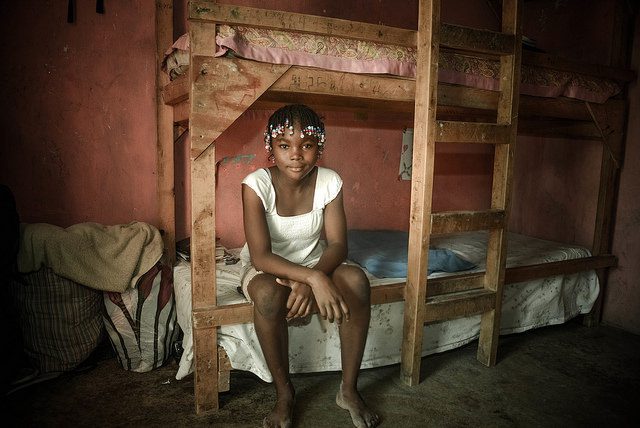
Haiti is the poorest country in the Western Hemisphere and one of the most poverty-stricken countries in the developing world. Despite this, the Trump Administration is abruptly ending the Temporary Protected Status for Haitians. The humanitarian program allowed about 59,000 Haitians to live and work in the U.S. since the 2010 earthquake which killed 150,000 people.

Haitians will be expected to leave the U.S. by July 2019 or face deportation. This is devastating news for Haitians who earn money in the U.S. to send to their families and for those receiving an education.

Poverty in Haiti

According to the World Bank, life expectancy for Haitians is only 57 years. Less than half of the population is literate and only about one child in five of secondary-school age actually attends secondary school.

Health conditions are poor and about one-fourth of the population has access to safe water. The population continues to grow at a high rate, estimated at almost 200,000 people per year, with the overwhelming majority living in extreme poverty.

Key factors of poverty in Haiti include political instability, inadequate growth in private investment, underinvestment in human capital, and poverty traps including environmental degradation, crime, systematic human rights violations, and outward migration.

Steps to be taken

  1. Strengthen essential public sector institutions, improve coordination and consultation within government, and re-establish and consolidate political stability.
  2. Strengthen macroeconomic stability and reduce distortions in order to encourage private sector investment and increase productivity.
  3. Improve the quality of government spending, invest in the provision of basic human needs, and raise the level of human capital.
  4. Ration the assistance provided by external donors.

There is clearly a lot of work to be done, but instead of abandoning Haitians when they need help the most, the U.S. needs to directly help with overturning their situation of dire poverty.

– Julia Lee

Photo: Flickr

March 19, 2018
https://borgenproject.org/wp-content/uploads/borgen-project-logo.svg 0 0 Borgen Project https://borgenproject.org/wp-content/uploads/borgen-project-logo.svg Borgen Project2018-03-19 09:29:572024-12-13 17:58:34What is the Current State of Poverty in Haiti?
Global Poverty, Migration, Refugees, Refugees and Displaced Persons

What is the Difference Between an Immigrant and a Refugee?

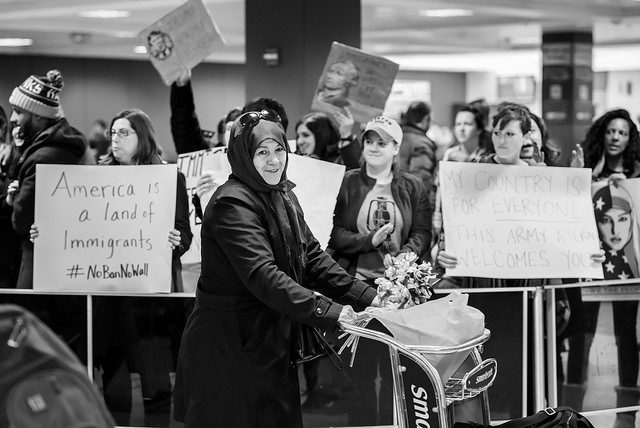
Difference Between an Immigrant and a RefugeeWhat is the difference between an immigrant and a refugee? The terms migrant and refugee are often used interchangeably despite the fact that there are definitive differences between the two.

A migrant is a person who consciously makes a choice to leave their homeland and seek a better life in another state. These individuals or families can take the time to learn about the country to which they intend on relocating and prepare themselves as much as possible for the journey. While the process varies from country to country, it usually involves screening, pre-departure training, and obtaining work permits. The process can take months, if not years, and migration has become more common in the last two centuries.

According to the 1951 Refugee Convention, a refugee is a person who “owing to a well-founded fear of being persecuted for reasons of race, religion, nationality, membership of a particular social group or political opinion, is outside the country of his nationality, and is unable to, or owing to such fear, unwilling to avail himself of the protection of that country.”

This definition falls under international law, and therefore a refugee that arrives on foreign soil looking for safety and claiming refugee status cannot be deported immediately. Their case will be reviewed before there is a chance they are sent back their homeland, as it must be considered whether their safety is in jeopardy. This is a United Nations convention that was ratified by 144 countries.

Not all migrants are refugees, but sometimes refugees can fall under the category of a migrant. Knowing the difference between an immigrant and a refugee is especially important for international law and domestic law. Immigration policies and requirements typically only apply to the country that established them. Basically, they are different from country to country and are categorized under domestic law. For example, the application process for migrating into the United States is a different application process than applying to Japan.

However, a refugee is protected by international law, therefore, while legal documentation can be lacking, countries have an obligation to abide by these laws. Even the countries that didn’t ratify the convention are still expected to respect it because it falls under the protection of basic human rights.

There are still similarities between the two, which is why people might confuse them. In both cases, each party will have to either assimilate or find some way to adapt to life in a new country. They will face a shock in culture, the workforce and language. Entering a new country, whether by choice or due to persecution, will always be a frightening process.

Either way, despite the difference between an immigrant and a refugee, both groups deserve a chance at feeling a sense of security within their lives.

– Caysi Simpson

Photo: Flickr

January 4, 2018
https://borgenproject.org/wp-content/uploads/borgen-project-logo.svg 0 0 Borgen Project https://borgenproject.org/wp-content/uploads/borgen-project-logo.svg Borgen Project2018-01-04 07:30:282019-12-06 13:25:27What is the Difference Between an Immigrant and a Refugee?
Food Security, Global Poverty, Migration

Migration and Poverty: An Overview

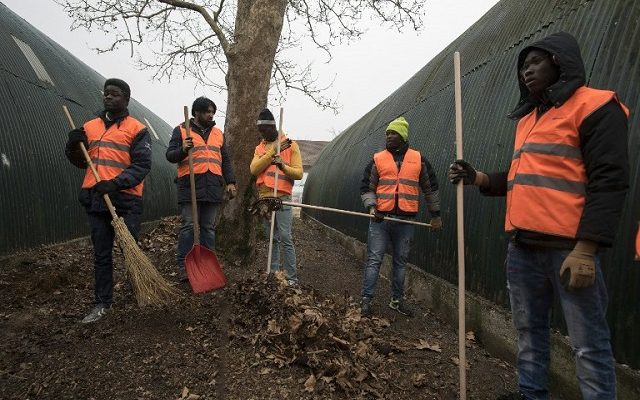
Migration and PovertyThe relationship between migration and poverty may seem a little far fetched. From a general perspective, the two ideas seem disparate. An immigration/emigration officer for deals with people moving from one country to another (sometimes across entire continents). Alternately, poverty (and the alleviation thereof) deals with providing food, water and shelter. However, the two are not just intertwined; poverty is often the causative agent for migration.
The history of human migration and poverty starts at the very dawn of humankind, when our ancestors have still lived in Africa. Back then, early humans did not have the technologies that we have today, such as a writing system or mathematics.

Why is this important? It’s important because back then, human tribes already knew (at some primitive level at least) that in order to find a location with better resources, they needed to move to somewhere else. Consequently, humans have spread (and adapted) to all corners of the planet.

Even today, people generally migrate in order to have better access to resources, be they food or work opportunities. For people living in poverty, such as migrants from Ireland during the potato crisis, it was food. For people who are not direly poor, such as academic migrants, they migrate in order to find academic or employment resources.

But then, one can ask: does migration benefit everyone? Surely, once all the land has been populated and with the academic job market being ferocious, there should be no migration? Well, unfortunately, the topic is infinitely more complex than that.

Thousands of years ago, the only useful resource was food. Nowadays, “wealth” is a complex term that encapsulates a variety of resources: food, money, familial relationships, job prospects, culture and so on.

Some people leave countries because they don’t like their culture, (Switzerland was once described as a prison) because of familial relationships, (U.S. Americans moving across the country to be with family) or for job prospects (Poles moving to the U.K.). Because these migrations have been going on for literally thousands of years, we now live in a world where everyone has traces of multiple ethnicities.

Immigration and emigration has provided individuals with the ability to gain important skills and responsibilities in different communities. Additionally, population movement can help thousands find safer homes. Consequently, mindlessly stopping migration from happening can prevent these individuals from not only rising up in life, but also from achieving basic safety and survival. In fact, MarketWatch recently posted an article explaining why the U.S. still needs immigrants.

This is why migration and poverty are connected closely to one another. Foreign policy should definitely consider this relationship when discussing poverty reduction. The problem of migration cannot be halted by scribbling a few laws in place. However, with the alleviation of poverty, fewer people will find the need to emigrate for reasons of survival and resource necessity.

– Michal Burgunder

Photo: Flickr

October 9, 2017
https://borgenproject.org/wp-content/uploads/borgen-project-logo.svg 0 0 Borgen Project https://borgenproject.org/wp-content/uploads/borgen-project-logo.svg Borgen Project2017-10-09 07:30:402024-12-13 17:58:29Migration and Poverty: An Overview
Migration

Accessible Housing for Migrants in India

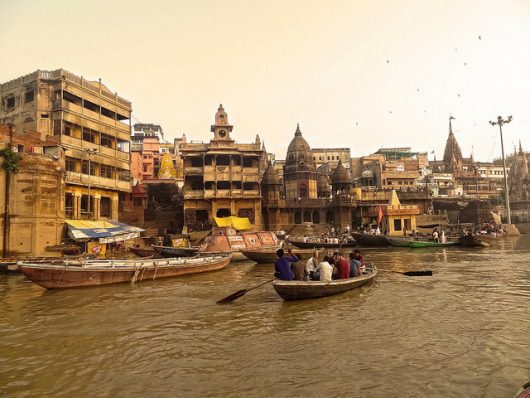
Accessible Housing for Migrants in IndiaIndia’s urbanization rate is rising, and with it comes an influx of migrant workers. In the last 20 years, there has been a 73 percent increase in India’s urban population, with a whopping 377.1 million residents living in urban centers in 2011 alone. Though more recent migration data has yet to be released, it is still significant to note that between 2007 and 2008, urban areas experienced a 35 percent migration rate – referring to the proportion of migrants in the population – meaning that over one third of India’s urban population was temporary. Migrants travel to urban centers primarily for two reasons: work and marriage, both of which are issues that are split along gender lines. About 70 percent of all internal female migrants travel for marriage and 56 percent of all male migrants travel for employment.

This special aspect about migrants – their temporary status – has led them to be one of the most underserved groups in the urban population. Their inherently transient nature has allowed them to be taken advantage of in multiple markets – the housing market in particular, as housing options are limited due to their incapacity to purchase homes. Such limitations ensure that these migrants are especially susceptible to exploitation, as they are consistently and completely dependent upon rental options.

Consequently, the issue of housing for migrants in India is increasingly significant, especially considering that a full 27.6 percent of urban residents were living in rental homes in 2011. Much of these rental accommodations manifest themselves in the form of slums, due to the necessity to quickly address the population influxes. As a result, 68 million Indians lived in slums in 2011, due to the inability to properly and swiftly accommodate the massive population fluctuations and due to a lack of options. If slums are the only available housing, a migrant often has no real choice – they must choose between a slum and the street.

In an effort to address this housing shortage, Aarusha Homes entered the scene in 2007. Aarusha operates low-cost, high-quality hostels in four different cities in India. The hostels provide food, security, utilities and cleanliness, with some locations being single-gender and some being split. In the effort to be low-cost, Aarusha’s prices fluctuate depending on the property locations and the demographics of its renters. Income and “sharing level” (how many individuals live within an apartment) are both taken into account when determining price. Further, payments occur in advance of stay in order to sustain a pay-as-you-go model that is supportive to the transitory status of migrants. Individuals can pay for their specific housing and time needs rather than for a blanket number of months, ensuring that migrants do not have to worry about obtaining subleases or paying for unused housing, if and when their time within the given city is finished.

As of now, Aarusha maintains 21 of these facilities and are projected to impact over 87,000 lives within the next five years. If Aarusha has been able to drastically impact the issue of housing for migrants in India in their short 10-year existence – simply by diversifying the housing options available to migrants – there is surely much hope for what other improvements can be made in the future.

– Kailee Nardi

Photo: Flickr

October 8, 2017
https://borgenproject.org/wp-content/uploads/borgen-project-logo.svg 0 0 Borgen Project https://borgenproject.org/wp-content/uploads/borgen-project-logo.svg Borgen Project2017-10-08 01:30:532017-10-08 13:23:43Accessible Housing for Migrants in India
Economy, Global Poverty, Migration

The Fallacy of the Brain Drain in India

Brain Drain in IndiaThere is a common joke in Silicon Valley that the most spoken languages are Hindi and Telugu. Like many common jokes, this one reveals a staggering truth: nearly 60 percent of the engineers in Silicon Valley are of Indian origin. Over the past two decades, high-skilled migration has brought dramatic innovations to the American Information Technology (IT) sector, while leading to what some commentators have called the brain drain in India and other developing countries.

In 1990, as the American IT sector began to boom, Congress passed the H-1B program, granting visas to thousands of foreign nationals in “specialty occupations.”

A recent article published in India’s The Quint claims, “[the brain drain in India] adversely affects the quality and quantity of human capital formation, which is the bedrock of modern economic development.”

Although this is a common contention, it is far from correct.

A recent study published by the Center for Global Development suggests, “better-paid jobs [in the U.S.] incentivize [Indian] students to choose certain majors and supply a highly-educated workforce to Indian firms.” Thus, at the same time as thousands of high-skilled Indians emigrate to the U.S. every year, thousands more acquire STEM degrees in India and never leave. As for those that do find higher-paying jobs abroad, many eventually return to India when their visas expire.

Because of this, between 1998 and 2012, the Indian IT sector grew from 1.2 percent of GDP to over 7.5 percent. By the mid-2000s, India had surpassed the U.S. as the largest exporter of software.

Far from producing a brain drain in India, Gaurav Khanna and Nicolas Morales’ study finds that the American H-1B program not only correlated with the birth of India’s IT sector but also caused a “reverse brain drain” in India.

While some have wrongly criticized the H-1B program for hurting developing economies, others have argued that free movement of labor has imposed downward pressure on American workers’ wages.

A recent article in the Huffington Post suggests that H-1B visas only benefit American tech companies that “want to hire cheap, immobile labor—i.e. foreign workers.”

Although high-skilled migration has certainly led to wage stagnation for certain occupations in the U.S., Khanna and Morales find that the influx of Indian workers has simultaneously motivated many American students to attain even more specialized degrees that lead to even higher paying jobs.

In the end, the new study released by the Center for Global development offers much-needed clarity about the complicated subject of labor migration. Overall, it finds that high-skilled migration is something to be encouraged rather than banned. Indeed, the free movement skilled labor has been proven to bring mutual benefits to both the American and Indian economies.

– Nathaniel Sher

Photo: Google

September 26, 2017
https://borgenproject.org/wp-content/uploads/borgen-project-logo.svg 0 0 Kim Thelwell https://borgenproject.org/wp-content/uploads/borgen-project-logo.svg Kim Thelwell2017-09-26 01:30:352020-07-16 21:13:18The Fallacy of the Brain Drain in India
Economy, Global Poverty, Migration

Poverty in Oman: Past, Present, and Future

poverty in oman

Oman is a country in the Arabian Peninsula bordering Saudi Arabia, Yemen and the United Arab Emirates, which places it in the southeastern coast of the region. The coastal regions of the country benefit from fertile soil and a beautiful landscape with impressive mountains. Despite the country’s strong agriculture and its oil, it has recently faced an economic downturn following its big investments in social welfare, causing oil prices to drop and the budget to decrease.

Economic Crisis

The aforementioned economic downturn of the country was due to a protest during the Arab Spring in 2011. The citizens demanded more employment opportunities, economic benefits, and a crackdown on the government’s corruption, which is an absolute monarchy led by the Sultan of Oman. While the government did respond to the protest by providing social welfare benefits, the result was an unmanageable budget that contributed to the poverty in Oman. The biggest concern on the economy of Oman is related to the shifting prices of oil, as the country is highly dependent on oil to generate revenue. In fact, oil can account for somewhere between 68% and 85% of the country’s entire revenue generated in a year. This is why Oman suffered a budget deficit of $13.8 billion in the year 2016, the same year global oil prices dropped.

Wages and Migrant Inequity

While the statistics don’t indicate a high rate of the country’s nationals being under the poverty line, poverty in Oman primarily affects migrant workers. Omani nationals benefit from a minimum wage at $592 a month in addition to a $263 allowance. Migrant workers in Oman do not have access to these benefits and are compensated with low wages.

Many countries in the Middle East, including Oman, employ female migrants to work in households. They are tasked with taking care of the children, cooking, and doing daily chores. Oman has at least 130,000 of these female migrant workers, and they face poor working conditions. This includes lower wages than initially promised, excessively long working hours and, according to interviews with about 59 of the workers, there are even cases of physical and sexual abuse from employers.

A Plan Forward

The state is at risk of major deficits in its budget in a case where oil prices drop, as was the case in the year 2016. To solve this, the sultan has been seeking alternative ways for generating revenue in order to reduce the risk of another economic downturn. The country has already made progress by making a development plan in 2016 to decrease its oil dependency. The plan seeks to open doors in industrialization and privatization, diversifying its sources of revenue.

According to the CIA, “The key components of the government’s diversification strategy are tourism, shipping and logistics, mining, manufacturing, and aquaculture.” Despite Omani nationals struggling to find employment opportunities due to migrant workers’ lower wages in earlier years, the country has seen an increasing number of citizens entering the job market recently. To highlight some of the progress Oman has made in previous years, its tourism industry has been opening up and contributing to the country’s GDP. 32 new hotels opened in 2018 to add over 3000 rooms to accommodate tourists, which put the country at an expected tourism growth rate of about 13% between 2018 and 2019.

COVID-19 Influence

Reports in recent months have shown a spike in Covid-19 cases among migrant workers in the Arabian Gulf countries, including Oman. Living conditions for these workers tend to be cramped and they lack access to necessary equipment and care for protection against the virus. Back in April, 16 NGOs sent letters to the gulf countries with recommendations to protect migrant workers amidst the pandemic. These recommendations include providing equal testing, medical access and continued wages for workers no longer able to work in these conditions.

While Oman has yet to respond to the letters, there has been a decline in Covid-19 daily cases over the past week. It peaked at an estimated 2164 new cases on July 13th but has been declining. In comparison, on July 15th, there were an estimated 1157 new cases.

Despite facing an economic downturn in 2016, the country has made strategic progress by diversifying its sources of revenue and decreasing its dependency on oil. These changes can greatly alleviate poverty in Oman.

– Fahad Saad
Photo: Flickr

April 26, 2017
https://borgenproject.org/wp-content/uploads/borgen-project-logo.svg 0 0 Borgen Project https://borgenproject.org/wp-content/uploads/borgen-project-logo.svg Borgen Project2017-04-26 01:30:062024-06-05 04:37:54Poverty in Oman: Past, Present, and Future
Migration, Refugees

Ten Facts About Kiribati Refugees

Kiribati Refugees
Climate change will drive migration on a massive scale in the coming years. Estimates of people fleeing natural disasters range from 25 million to 1 billion. The small island nation of Kiribati in the Pacific will be extinct by 2100. The government is trying to help the Kiribati refugees migrate with dignity, but their legal status is still in limbo.

    1. Most of the land of the Kiribati islands is less than two meters above sea level. It is therefore very vulnerable to rising sea levels due to climate change. Its residents may have to be the first climate change refugees.
    2. In 1999, two islands disappeared underwater. The nation is made up of 33 small islands, whose land is being swallowed by the ocean at a rate of almost 4 millimeters a year. According to the U.N., the entire nation will be submerged by 2100.
    3. Even before this drastic event occurs, changes in weather patterns are likely to produce Kiribati refugees. Droughts are becoming more severe, whilst rainfall is increasing, causing flooding. The oceans are acidifying, disturbing the delicate balance of coral reefs, whose marine ecosystems are the source of many people’s livelihoods.
    4. Freshwater supply is also problematic, as saltwater from high ocean tides is polluting wells and prolonged droughts are pushing water supplies to their limits. Many residents of South Tarawa, the island housing half of the country’s 100,000 people, are now completely reliant on rainwater.
  1. In 2003, the Kiribati government cooperated with the World Bank in the $17.7million Kiribati Adaptation Program. They built coastal sea walls, planted mangroves on the shores, developed water-management plans and invested in rainwater harvesting infrastructure, to postpone the effects of the rising ocean. The project has managed to protect one of 710 miles of Kiribati’s coastline.
  2. The former president, Anote Tong, started the “Migration with Dignity” program to ensure the Kiribati refugees will move to other states with dignity. The government has increased the level of qualifications available to citizens to those of Australia and New Zealand so that they are employable.
  3. The former president also bought 6,000 acres of land in Fiji, an island nation more than 1,000 miles away. This will act as a refuge for any Kiribati residents who will need to relocate.
  4. A Kiribati citizen applied for asylum in New Zealand in 2011. Four years later he was rejected and deported back to his sinking homeland.
  5. The 1951 Refugee Convention defines refugees as those “fleeing persecution at home.” As such, the Kiribati refugees are not protected by international law. “The truth is no one agency in the system because no one could have imagined this situation 60 years ago,” said José Riera, a senior advisor to the U.N. High Commission for Refugees.
  6. The Paris Agreement signed this past April does little to help climate change refugees. It didn’t resolve the issue of their legal status or mandate their protection.

It is hopeful that with the help of the government and international aid, each refugee, resident and the overall island will be preserved.

Eliza Gkritsi

Photo: Flickr

December 4, 2016
https://borgenproject.org/wp-content/uploads/borgen-project-logo.svg 0 0 Borgen Project https://borgenproject.org/wp-content/uploads/borgen-project-logo.svg Borgen Project2016-12-04 01:30:502024-12-13 17:56:13Ten Facts About Kiribati Refugees
Development, Education, Migration

Business and Government Leaders Fight Global Brain Drain

Brain Drain
Brain drain is a rampant epidemic detrimentally impacting developing nations across the earth. As a result, businesses and political figures are making fantastic efforts to reverse brain drains on both a national and global level.

What is Brain Drain and Why is it Happening?

According to Merriam-Webster, brain drain is defined as, “a situation in which many educated or professional people leave a particular place or profession and move to another one that gives them better pay or living conditions.”

The term brain drain was first coined around the 1960s when Great Britain experienced a high percentage of British scientists and intellectuals leaving the country to find better careers in the U.S.

Since then, many other countries such as Greece, Lithuania and a number of African nations have experienced brain drain at an alarming rate.

The Journal of the Royal Society of Medicine reports that brain drain stems from a wide range of economic, social and political conditions. Most of these conditions are observed in developing countries where the careers of citizens are stifled from issues such as poverty, political instability and lack of technology.

These conditions make developed countries more attractive to those with a degree or a specialized skill. Countries such as the U.S., Canada and the U.K. have been gaining a significant amount of doctors and nurses from abroad.

Migration Abroad

In 2006, the U.S. received roughly 213,331 doctors and 99,456 nurses from abroad. Research from the WHO estimated that brain drain resulted in a global shortage of 4.3 million healthcare workers. Countries experiencing brain drain lose educated working-class employees by anywhere from thousands to hundreds of thousands of workers.

In just 2011 alone, Lithuania reported 54,000 migrating to find work in the U.K. The continent of Africa loses one in nine university graduates to Western nations. In addition, Greece estimated that 160,000 to 180,000 college graduates have left the country for better opportunities.

Though developed countries can benefit from receiving these educated migrants, the sheer amount of incoming, educated people can overwhelmingly disadvantage various sectors within developing countries.

However, there is hope to reverse brain drain as seen from the efforts of nations such as Lithuania, the UAE and many African countries.

Lithuania

Business leaders and government officials in Lithuania are combating brain drain through a series of university mergers. University mergers are when multiple universities unify in order to foster stronger university brands. The plan is that these university mergers will attract current citizens and international students to study in Lithuania.

Marius Skuodis, a former citizen of Lithuania, has returned to his country because of the new opportunities provided within the university mergers. He plans on pursuing his PhD at Vilnius University, despite having to accept a lower salary.

Skuodis is quoted saying that, “Lithuania offered me career opportunities I could not expect in the UK.”

UAE

The UAE has also made gallant strides in turning brain drain into a brain gain. The UAE is a nation that suffered from brain drain as well as high levels of violence for numerous years.

Recently, businesses have made tremendous efforts in the UAE to improve the quality of life for workers and residents. These efforts have turned the UAE into a thriving nation with one of the highest standards of living for citizens in the world.

Africa

In Africa, reports indicate that brain drain has slowed substantially within the continent. A study in 2014 from South Africa’s Adcorp, stated that 359,000 highly skilled South African workers had returned to work in their countries of origin.

Economists have noted that this accomplishment was possible due to the policies that governments and businesses have put in place in order to encourage workers to come back home.

Finding a solution to reducing brain drain is no easy feat, as it requires both businesses and governments to coincide with one another to tackle the issue at hand. Businesses and corporate leaders need to implement solutions to create more job opportunities with quality benefits for those with desired skills.

Governments need to strive for policy changes that encourage workers to return to their countries. However, if governments and businesses can work together to make substantial legislation changes, many nations may follow suit and reverse their brain drain into a brain gain.

– Shannon Warren

Photo: Flickr

September 18, 2016
https://borgenproject.org/wp-content/uploads/borgen-project-logo.svg 0 0 Borgen Project https://borgenproject.org/wp-content/uploads/borgen-project-logo.svg Borgen Project2016-09-18 01:30:282024-12-13 17:55:41Business and Government Leaders Fight Global Brain Drain
Global Poverty, Migration

How People Become Refugees in Europe

Refugees in EuropeLast year, there was a record high of 220,000 refugees in Europe seeking asylum. According to The Guardian, more than 900,000 people have sought refuge by sea to Greece or Italy due to civil unrest.

Syrians made up the largest part of this group, having fled their home country because of the 4-and-a-half year civil war that has taken the lives of over 200,000 Syrians, according to the New York Times.

The reasons why people become refugees are not hard to conjure – war, religious or social conflict, violence – but how these refugees secure their safety can be a long, stressful process.

The first step in seeking refuge is often finding a place that allows one to be close to their families, but far enough away from any threat of violence. According to The Guardian, it is almost impossible for Syrians to be granted legal access into other Arab countries.

This leaves places like Jordan, Turkey and Lebanon as places to escape, though refugee families in the Middle East no longer receive financial assistance from the UN due to funding shortcomings. These countries do not offer secure legal statuses to refugees either, which can prevent them from having the right to work.

These stipulations explain why so many refugees are traveling to Europe for refugee or asylum status by boat. According to the Guardian, more and more Syrians who become refugees in Europe are using the Balkan route – traveling by sea from Turkey to Greece and then walking through Macedonia and Serbia to reach European Union (EU) territories.

https://www.youtube.com/watch?v=ZHQ88y-A6iw

Open Society Foundations, an American organization whose mission statement is to “build vibrant and tolerant democracies whose governments are accountable to their citizens” works with the Common European Asylum System (CEAS) that works to guarantee that international law protects the rights of refugees in its member states.

According to Open Society Foundations, if an asylum seeker or refugee is traveling through several EU countries, the CEAS allows one EU country to send that person to the first EU country they have reached, as long as that country maintains the rights of asylum seekers.

Unfortunately, only a small portion of asylum seekers are monitored this way, and the systems in Greece, Hungary and Italy have tried to block transfers of citizens with court orders. Some people who become refugees end up back in the south where their journey began.

Groups like Open Society Foundations are crucial in helping refugees and asylum seekers partake in legal movement for work and family without violating any human rights.

Because of the large influx of refugees in Europe, Open Society Foundations find it vital to develop effective policy proposals that will lead to a progressive and successful European asylum system.

Revisions under the European Agenda on Migration state that immediate action will be taken by the EU in order to prevent further deaths and improve conditions for those seeking refuge in Europe. This includes increased funding to Frontex and Europol, two organizations that focus on border control and defense of the EU, respectively.

– Kelsey Lay

Sources: European Commission, Open Society Foundations, The Guardian 1, The Guardian 2, The New York Times
Photo: The Telegraph

February 4, 2016
https://borgenproject.org/wp-content/uploads/borgen-project-logo.svg 0 0 Borgen Project https://borgenproject.org/wp-content/uploads/borgen-project-logo.svg Borgen Project2016-02-04 01:30:182024-12-13 18:05:35How People Become Refugees in Europe
Global Poverty, Migration

Middle Eastern Migrants Well-Received in Serbia

middle_eastern_migrants
As Middle Eastern migrants travel to Western Europe, many must make the voyage across the Balkan Peninsula. Hundreds of migrants, half of whom are from Syria and Afghanistan, stop in Belgrade, Serbia as a jumping-off point into Hungary. The majority of migrants claim to be headed to Germany, while some say they plan on arriving in Sweden.

Around 500-700 people take up temporary residence in Belgrade’s parks near the city’s central transportation lines. Here, they generally wait 2 days for transport into Hungary. As they wait, they battle temperatures nearing 100 degrees Fahrenheit and a lack of supplies.

A total of 60,000 migrants have entered Serbia through Macedonia and Bulgaria during the first six months of the year though it is speculated that the numbers could indeed be higher.

Fortunately, Serbian organizations, restaurants, and people have begun distributing aid. Mikes House, a cultural and designer house, has distributed water, food and clothes. Residents of the city have also begun to gift old clothing along with water. Many simply come to speak to migrants and share stories.

On April 12, Belgrade authorities began to park water tanks in the parks and have organized services to clean the parks and rid them of garbage.

Médecins Sans Frontières has also started providing general healthcare to the migrants as their journeys take a brief pause in the northern Balkans.

All of this comes at a time when Europe as a whole experiences major surges in migration due to one of history’s largest refugee crises. Germany, in particular, has had to raise its projected influx from 450,000 at the beginning of 2015 to a projected 800,000 by the end of the year.

As a contingency plan, on August 10 the European Commission approved 2.4 billion euros of aid for the next six-year period, in the hopes that it may help curb the strain many countries will be feeling as migrants begin to settle within state borders.

– Jaime Longoria

Sources: BBC, Reuters, Ukraine Today
Photo: BBC

September 5, 2015
https://borgenproject.org/wp-content/uploads/borgen-project-logo.svg 0 0 Borgen Project https://borgenproject.org/wp-content/uploads/borgen-project-logo.svg Borgen Project2015-09-05 07:12:522024-05-24 23:52:05Middle Eastern Migrants Well-Received in Serbia
Page 13 of 14«‹11121314›

Get Smarter

  • Global Poverty 101
  • Global Poverty… The Good News
  • Global Poverty & U.S. Jobs
  • Global Poverty and National Security
  • Innovative Solutions to Poverty
  • Global Poverty & Aid FAQ’s
Search Search

Take Action

  • Call Congress
  • Email Congress
  • Donate
  • 30 Ways to Help
  • Volunteer Ops
  • Internships
  • Courses & Certificates
  • The Podcast
Borgen Project

“The Borgen Project is an incredible nonprofit organization that is addressing poverty and hunger and working towards ending them.”

-The Huffington Post

Inside The Borgen Project

  • Contact
  • About
  • Financials
  • President
  • Board of Directors
  • Board of Advisors

International Links

  • UK Email Parliament
  • UK Donate
  • Canada Email Parliament

Get Smarter

  • Global Poverty 101
  • Global Poverty… The Good News
  • Global Poverty & U.S. Jobs
  • Global Poverty and National Security
  • Innovative Solutions to Poverty
  • Global Poverty & Aid FAQ’s

Ways to Help

  • Call Congress
  • Email Congress
  • Donate
  • 30 Ways to Help
  • Volunteer Ops
  • Internships
  • Courses & Certificates
  • The Podcast
Scroll to top Scroll to top Scroll to top