• Link to X
  • Link to Facebook
  • Link to Instagram
  • Link to TikTok
  • Link to Youtube
  • About
    • About Us
      • President
      • Board of Directors
      • Board of Advisors
      • Financials
      • Our Methodology
      • Success Tracker
      • Contact
  • Act Now
    • 30 Ways to Help
      • Email Congress
      • Call Congress
      • Volunteer
      • Courses & Certificates
      • Be a Donor
    • Internships
      • In-Office Internships
      • Remote Internships
    • Legislation
      • Politics 101
  • The Blog
  • The Podcast
  • Magazine
  • Donate
  • Click to open the search input field Click to open the search input field Search
  • Menu Menu

Archive for category: Migration

Global Poverty, Migration, Refugees and Displaced Persons

Organizations Helping Climate Refugees

Organizations Helping Climate Refugees
In 2017, nearly 18 million people were displaced due to natural disasters. This was roughly 7 million more than there were people displaced by violence or conflict. This number is also expected to grow to 143 million people by 2050 if actions are not taken against climate change.

All of these people represent climate refugees. They represent a growing phenomenon that lacks a formal definition.

There are several nongovernmental organizations that are working to help these people. In the text below, top organizations helping climate refugees are presented.

Climate Refugees

Climate Refugees is an organization that aims to raise awareness about climate refugees through field reports and social media. With the information that they have gathered, Climate Refugees meets with governments and the United Nations to prioritize policies that protect climate refugees.

In 2017, they released their first field report on the connection between climate change and displacement in the Lake Chad Basin.

The Environmental Justice Foundation

The Environmental Justice Foundation (EJF) is one of the many organizations helping climate refugees. It works to help create a more sustainable world through film and photography. The EJF started in 2000 and is based in eight countries around the world.

The EJF also provides activist training that helps the organization research and document human rights abuses. The EJF directs it work towards climate refugees in several ways and one of the most prominent is through video.

It released one video titled “Falling Through the Cracks,” that explains what climate refugees are, why they matter and how to help solve the growing problem of climate refugees.

The EJF also released an exhibition on climate refugees and their stories. Both of these projects aim to humanize the effects of climate change.

United Nations High Commissioner for Refugees

Founded in 1950, the United Nations High Commissioner for Refugees (UNHCR) works to protect and advocate for refugees around the world. The UNHCR works in 128 countries around the world and has helped 50 million refugees find a new life since its creation.

The UNHCR started its work with climate change and disaster displacement in the 1990s but expanded its scope in 2000s due to the growing need of working with climate refugees.

The organization’s work is broken down into four categories: operational practices, legal development, policy coherence and research.

Since 1999 the UNHCR was involved in 43 disasters that led to the displacement of people. The range of what UNHCR provided depended on the country and disaster.

International Organization for Migration

The International Organization for Migration (IOM) is an intergovernmental organization that works to ensure a process of migration that recognizes human rights around the world.

Since 1998, IOM worked on nearly 1,000 projects responding to migration due to environmental disasters. In 2015, the IOM founded the Migration, Environment and Climate Change Division (MECC), that specifically focuses on the connection between climate change and displacement.

MECC works in several countries around the world including Cameroon, Chad, Niger and Nigeria. In all of these countries, MECC is working on research that tracks climate-related migration.

This research will help the IOM support policy development, in order to directly address the needs of climate refugees.

Refugees International

Refugees International (RI) is an independent organization that works to advocate for refugees through reports and analyzes. The organization analyses work done by other nongovernmental organizations and governments.

It works in 14 countries and climate displacement is one of the two issues that RI dedicates itself to. One of the main efforts that RI does to help climate refugees is conducting fieldwork every year. The data that is collected from this work is then used to lobby policymakers and aid agencies that help climate refugees.

While the climate refugee still lack a formal definition and while their number is expected to expand in the next 40 years, there are still several organizations helping climate refugees and ensuring that their voices and needs are heard.

Among others, the most important organizations that tackle this issue are Climate Refugees, the Environmental Justice Foundation, the United Nations High Commissioner for Refugees, International Organization for Migration and Refugees International.

– Drew Garbe
Photo: Flickr

December 25, 2018
https://borgenproject.org/wp-content/uploads/borgen-project-logo.svg 0 0 Kim Thelwell https://borgenproject.org/wp-content/uploads/borgen-project-logo.svg Kim Thelwell2018-12-25 13:30:322024-05-29 22:57:39Organizations Helping Climate Refugees
Migration

Addressing the Root Causes of Emigration from Mexico

Addressing the Root Causes of Emigration from Mexico

Earlier this year, the United States encountered a humanitarian crisis at the border with Mexico that referred to the separation of immigrant parents and children. This is one of many tactics for deterring migrants from entering the country. However, this does not address the root causes of emigration from Mexico. People who live in danger and lack economic opportunity seek a better life outside their home country. Another motive for crossing the border is to participate in the United States’ drug trade. Tackling such issues can help alleviate poverty in Mexico and can benefit the United States, too.

The connection between criminal and migrations

Organized crime has been on the rise in Mexico. Since 2006, over 109,000 citizens have been victims to homicides. As instances of murders increase, so does the rate of migration.

Mexico is the top supplier of illegal substances to the United States. Methamphetamine-induced seizures more than tripled between 2010 and 2015 along the U.S. southern border. Given this strong tie between the two countries, efforts to minimize drug transport have only resulted in other types of criminal activities. Smugglers found new opportunities with human trafficking that encourages kidnapping other immigrants at the border.

Central American leaders meeting

Much can be learned from the 2014 meeting held between the presidents of El Salvador, Guatemala, Honduras and the United States. Actions that they proposed were similar to the Marshall Plan, which rebuilt Europe after the World War II. President of Guatemala, Otto Perez Molina, increased efforts to improve education and confiscate weapons used in the drug trade. He also bolstered the revenue for public services. President Juan Orlando Hernandez of Honduras worked to limit business conducted by drug sellers as well as improve the country’s judicial system.

They said the United States focused too much attention on its own national security rather than sending much-needed funds to Central America. At this meeting, they stressed the importance of economic reform and collaboration among countries. Such insight can also help address the root causes of emigration from Mexico.

The United States would benefit from providing aid to Mexico’s economic situation and tackling organized crime within their Government. Vocational training in Mexico can ensure that workers entering the U.S. have valuable skills to contribute to job markets. Plus, it helps immigrants find employment and adjust to living in a new country. Certain areas of the Government of Mexico have been corrupted by acts of violence toward journalists and human rights defenders. It would be in the United States’ best interest to encourage transparency and due justice in Mexico, especially since they share a border.

The United States investments in Mexico

In response to such conflict, the Merida Initiative gave $2.8 billion to improve Mexico’s criminal justice system. Secretary of State Rex Tillerson and Secretary of Homeland Security John Kelly met with representatives from Mexico to discuss plans for disrupting the businesses of criminal organizations. USAID gave $87 million so that judicial workers could be more qualified to handle court cases. Some of the states receiving those funds experienced a 25 percent reduction of pretrial detention. Since kidnappings are sadly a common occurrence, over $590 million was invested by the U.S. in aircraft that patrol the flow of emigration from Mexico. Part of that money also goes toward forensic equipment to lower Mexico’s impunity rate.

To discourage drug-related transactions between the countries, Mexico has imposed a limit on how many U.S. dollars can be transferred across the border. Additionally, more than 10,000 schools are teaching a lawful culture. They’re engaging youth in after-school activities to deter them from the drug industry and violence. Out of 9,000 surveyed youth who did these activities, 70 percent either remained in school or sought employment.

Some family members are sent to the U.S. for employment because of economic instability within Mexico. It provides different sources of income in case someone’s job can’t generate enough to support the family. For instance, if an entire family worked in the farming industry, there is no market stability. Increasing youth employment offers security and results in less migration.

Further research about how foreign aid benefits each sector can help the United States maximize their impact. That way, funding goes where needed most. But help from the U.S. isn’t about making people content to stay in Mexico. Reducing poverty can make sure immigrants enter the United States for reasons less dire than seeking asylum. Addressing the root causes of emigration from Mexico will return in the form of national security and economic opportunity.

– Sabrina Dubbert
Photo: Flickr

September 14, 2018
https://borgenproject.org/wp-content/uploads/borgen-project-logo.svg 0 0 Borgen Project https://borgenproject.org/wp-content/uploads/borgen-project-logo.svg Borgen Project2018-09-14 21:10:072019-12-17 15:44:09Addressing the Root Causes of Emigration from Mexico
Migration, Refugees

Ending Statelessness in India

statelessness in indiaThe Indian government recently published its National Register of Citizens (NRC) for the State of Assam, cataloging the names and personal information of its citizens. The list has brought about controversy in light of the omission of an estimated four million residents of Assam, a state known for being a haven for Bangladeshi migrants and refugees.
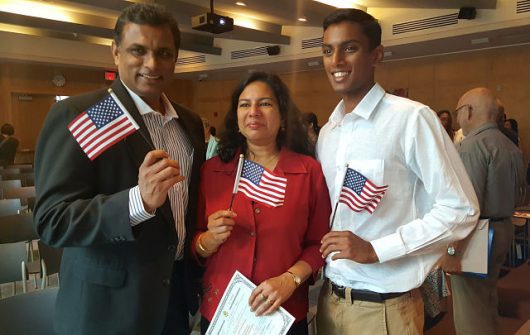

These four million people could soon become stateless, which is an issue that The U.N. Refugee Agency (UNHCR) must look to solve if it plans to meet its goal of ending statelessness in India and throughout the world at large.

Legal Status is Being Threatened in India

March 24, 1971 was the cutoff date that the Indian government chose for proving legal status in Assam. Those that could not prove that they came to the state before this date—the day before Bangladesh declared its independence from Pakistan—would not be granted legal status in India.

The origin of the register is rooted in fear of the state’s Hindu-majority being altered by Muslim migrants. Now, the updated register almost solely excludes Bangladeshi refugees of the Bangladesh Liberation War, the majority of whom are Muslims.

The NRC has granted some family members citizenship while omitting others, bringing into question the accuracy of the list and the thoroughness of the identification process. The Government of India has stated that the Registry is not final; although, many had already been detained and separated from their families even prior to the publication of this updated Registry.

Those that lose citizenship will be stripped of the right to legally own land, work and vote in India. It has been reported that Bangladesh will not accept deportees; therefore, many of those that are at risk will wind up stateless and could be held in detention camps in India.

The UN Refugee Agency is Working to End Statelessness

If these four million people are not granted legal status in any capacity, this would mark a step backward for The U.N. Refugee Agency since it aims to end statelessness by 2024. An additional four million stateless in India would represent a 40 percent increase in the number of stateless people in the world, according to Agency estimates.

There are still many intangibles to be considered before the Agency decides on a course of action. However, the formation of a sound, national, legal framework for asylum has long been needed, particularly in states like Assam. “The lack of a national refugee protections framework is an obstacle to providing effective refugee protection,” according to the Agency. Asylum legislation could be a vehicle of enfranchisement for those that otherwise would become stateless.

Previously, India had always respected The UNHCR’s mandates. Now, the Agency is considering performing refugee status determinations (RSDs) for those left off of the list as well as also looking to advocate for the individuals at risk by reaching out to civil society.

In the past, The UNHCR has looked to generate discussion and awareness about refugee issues among the common populous, Indian academics, the media, human rights organizations and other nongovernmental organizations. Changing the perceptions of and rhetoric around asylum seekers in India could prove to be the most vital intervention that the Agency could take.

The U.N. Refugee Agency relies heavily on the contributions of member states to carry out its functions. Further contributions will be needed to prevent statelessness in India and help the people of Assam and throughout the world find a stable and safe home. While the task ahead is daunting, The UNHCR has already helped an estimated 50 million refugees in the 65 years they have been operating. With the necessary resources and with the cooperation of the Indian government, their goal for 2024 is achievable.

– Julius Long
Photo: Unsplash

September 10, 2018
https://borgenproject.org/wp-content/uploads/borgen-project-logo.svg 0 0 Borgen Project https://borgenproject.org/wp-content/uploads/borgen-project-logo.svg Borgen Project2018-09-10 06:30:012019-08-02 19:34:44Ending Statelessness in India
Global Poverty, Migration, Refugees and Displaced Persons

Reasons Impoverished People Come to the United States

Reasons Impoverished People Come to the United States
Most Americans will never know what it is like to be forcibly displaced from their home country. Living in a place where there is no threat of violence is a luxury when compared to the hardships faced by many other people. For those who are not privileged, every day can seem like a struggle. The reasons for impoverished people coming to the United States are many. 

Asylum-Seeker and Refugee

What is the difference between an asylum-seeker and a refugee? Refugees are those who have to seek safety in neighboring counties during times of war or other perils and are recognized by the International Law. Asylum-seekers, however, are migrants whose identity as a refugee is not recognized by their home country. Their reason for fleeing may be related to personal threats of violence and they have not yet claimed refugee status. These two can fall under the term “migrant”.

In the current political climate, a pilgrimage to the United States is a great risk. Therefore, it is important for the natural born citizens of this nation to align themselves with the reasons impoverished people come to the United States. 

Top 10 Reasons Impoverished People Come to the United States

  1. Persecution: Impoverished people come to the United States to escape persecution, whether it is related to race, religion or political affiliation. Migration is the last option for safety and it is all many families can afford.
  2. Escape Violence: Many people coming to the southern border of the United States hail from the Northern Triangle of Central America, i.e. Guatemala, Honduras and El Salvador. The rate of targeted killings and gang-related violence has spiked in these countries in the past few years, causing many citizens to flee.
  3. Environmental Factors: Drastic changes in the natural environment is a prevalent reason for migration to the United States. After the devastation caused by Hurricane Maria, around 179,000 people living in Puerto Rico came to the continental U.S.
  4. Healthcare: The impoverished migrants coming into the United States often come from countries with unaffordable or extremely limited access to healthcare.
  5. Jobs: Searching for employment is a top priority for migrants at the southern border. It is nothing short of astounding that nearly two-thirds of adults are able to find work within five weeks of entering, often accepting low wages to provide for themselves and their families.
  6. Children’s Bright Future: In the hopes of offering a better life for their children, many families have sent them out alone. Since the beginning of this year, over 74,000 children have been met at the U.S. southern border without being accompanied by a parent.
  7. Family Reunification: For parents who often have to send their children away ahead of them, coming to the United States is their chance to live as a family free of poverty and persecution.
  8. Protection: In their search for a place that offers an obligation to protect its citizens, migrants come with the hope that they will be protected in the United States. Displacement is something no person would want to go through more than once in their lifetime, so these people are looking for permanence as well. About 60 percent of the undocumented immigrants living in the United States has been there for the past decade.  
  9. Education: Public education is a luxury many impoverished people do not have access to. Coming to the United States provides not only an immediate better life for their families but a long-term plan for their children’s education.
  10. Quality of Life: Overall, this was the promise made to immigrants going back almost 200 years, that a better life was waiting for them if they were willing to work for it.

The above reasons for impoverished people to come to the United States will not only help American citizens empathize with their struggle but possibly look for ways to help them out. Embracing migrants is something that has been an enormous struggle for centuries in the United States, and while every immigrant’s reasons for leaving their home country may be different, their desire to build new, bright future is what brings them here.

– Tresa Rentler
Photo: Flickr

August 20, 2018
https://borgenproject.org/wp-content/uploads/borgen-project-logo.svg 0 0 Borgen Project https://borgenproject.org/wp-content/uploads/borgen-project-logo.svg Borgen Project2018-08-20 16:15:102019-08-15 12:04:02Reasons Impoverished People Come to the United States
Migration

Ending the Stigma: How Immigrants Benefit Italy

Immigrants Benefit Italy

Immigrants, including refugees and asylum seekers, have been stigmatized across Europe, often labeled as benefit thieves and criminals. And in most situations, this population is never given the opportunity to prove otherwise.

These negative stereotypes have heavily impacted the way locals perceive immigrants; this perception occurs so much so that locals have been unable to detach the person from the stereotype, making it difficult to change public opinion. The first step in breaking these negative perceptions is to highlight the ways in which immigrants enrich our lives, communities and economy. Immigrants have been negatively stereotyped for too long, and it is time for this to change — immigrants benefit Italy in numerous ways.

Projects to integrate immigrants have been set up across Italy, many of which involve immigrants being given various jobs in their new communities. This has not only proven to benefit the communities, but it has also helped tremendously with the integration of the new arrivals and changing overall local perception. Below are some examples of how immigrants benefit Italy.

How Do Immigrants Benefit Italy?

Firstly, the jobs that migrants accept are often those in the marginalized and lower-paid job sector — a sector that many Italians refuse to work in because of the lower wages and associated stigmas. Immigrants, though, are accused of “stealing jobs” from hardworking Italians.

But in reality, this is not the case. Migrants are merely filling the gaps, leading to Italian social advancement. If it were not for migrants, this job sector may have never been filled, thereby leaving gaps in society.

Secondly, immigrants play a crucial role in Italian development. Italy has an old population — one in ten Italians are over the age of 75. On the other hand, migrants and refugees coming to Italy tend to be young, only one in a hundred are over the age of 75.

Immigrants Boost the Economy

This means that rather than immigrants taking from Italian pensions, they work to enhance them through economic contributions. Immigrants are thought to take from society rather than give, yet more than 600,000 Italian pensions have been received thanks to immigrants.

Thirdly, because of the large population of pensioners in Italy and its large number of citizens emigrating elsewhere, holes are being left in the economy. This is where migrants come to the rescue and have filled such need to help improve the Italian economy.

This is true for many European countries with aging populations. For example, in recent years non-EU-citizens contributed around €16.5 billion ($19 billion) to the Italian economy, compared to the €12.6 billion ($14.5 billion) they received. These figures further clarify how migrants benefit Italy.

Creating an Environment for Immigrants to Thrive

Integration is key to the success of migrants in Italy. As of now, it is mostly small towns taking on the task of integrating and housing immigrants; these communities accomplish such a feat in the face of adversity and negative perceptions. As a result, they truly are paving the way for immigrant integration.

With the rate at which Italians emigrate elsewhere, small Italian towns in the south of Italy have heavily relied on immigrants to breathe life back into increasingly stagnant areas. In turn, immigrants have begun to rebuild the sense of community and home in places they were once unwelcome.

In times where immigrant lives are being threatened, it is imperative to create safe spaces and communities where immigrants can integrate without the threat of persecution. It is time for the rest of Italy to do just these measures, and reap the benefits brought about by immigration.

– Trelawny Robinson
Photo: Google

August 14, 2018
https://borgenproject.org/wp-content/uploads/borgen-project-logo.svg 0 0 Borgen Project https://borgenproject.org/wp-content/uploads/borgen-project-logo.svg Borgen Project2018-08-14 05:21:072019-11-21 12:03:32Ending the Stigma: How Immigrants Benefit Italy
Migration, Refugees

9 Facts About the World’s Refugee Crisis

Refugee CrisisOn June 20, the world stood in solidarity with migrants and asylum seekers in observation of World Refugee Day, a time to consider the refugee crisis.

The occasion came at a pivotal time in the U.S, as public outcries about border practices separating families reached a high. This refugee crisis stems from the Trump administration’s use of separation as a deterrent for crossing the border in combination with the administration’s Zero Tolerance Policy, which requires immediate arrest for those crossing illegally. More than 2,300 kids have been separated from their families.

Nine facts about refugees

  1. More people have been forced to flee their homes due to conflict than at any other time since World War II. The world is facing the biggest refugee crisis to date.  At the end of 2017, 68.5 million people were forcibly displaced as a result of persecution on grounds of race, religion, political opinion and violence or conflict.
  1. Half of the refugees are under the age of 18. In some countries, including the U.S., migrant kids are even forced to represent themselves in a court of law.
  1. Under international law, refugees are not allowed to be forced back to their home countries. This law places an obligation for the state to not return a refugee to “the frontiers of territories where his life or freedom would be threatened on account of his race, religion, nationality or membership of a particular social group or political opinion.”
  1. Developing countries host 86 percent of the world’s refugees. The most popular host countries are Turkey, Pakistan, Lebanon, Iran and Ethiopia.
  1. More than half of the world’s refugees come from Syria, Afghanistan and Somalia. Approximately one in five displaced persons come from Syria, where conflict has created an intense refugee crisis.
  1. Saudi Arabia does not register migrants as international refugees. This may not seem like a big deal, but the policy forces migrants to go through the Saudi visa process, during which the government can deny visas and deport individuals. If the individuals were registered as refugees, it would be illegal for the Saudi government to deport them under international law.
  1. Australia’s military blocks refugees before they reach its shores. The practice is coined as Operation Sovereign Borders. Military officials patrol waters to intercept migrants and send them to India or Indonesia. If migrant boats make it to Australia, its passengers are not allowed to stay on the mainland while their asylum cases are processed. Instead, they are sent to processing centers on the island of Naura. Human Rights Watch has begun to shut down such facilities.
  1. In one French town, it is illegal to feed refugees. The northern regions of France used to be home to a refugee settlement called the Jungle, which served as a temporary camp for thousands of migrants seeking asylum across the English Channel in the U.K. In 2016, however, authorities closed the site due to health and terrorism concerns. To ensure the camp remain dismantled, the city’s mayor enacted decrees banning organizations from giving food to any migrants.
  1. Germany has welcomed asylum-seekers in a way to revitalize run-down towns. The German law guarantees the right to asylum for all persons who flee political persecution.  Additionally, any unaccompanied migrant under the age of 18 is provided with a legal guardian to act on his or her behalf and to help navigate the asylum process.

With numbers of refugees rising, the world is faced with a great task of amending practices and treating all persons with respect. Many point to dealing with the root issue of migration rather than adjusting policy and procedure. This view is misinformed, however, as intervention in the home country is often very difficult, controversial and unsuccessful. Instead, we ought to come together as cohabitants of the planet to bring about positive change surrounding this global refugee crisis.

– Jessie Serody
Photo: Flickr

July 11, 2018
https://borgenproject.org/wp-content/uploads/borgen-project-logo.svg 0 0 Borgen Project https://borgenproject.org/wp-content/uploads/borgen-project-logo.svg Borgen Project2018-07-11 01:30:412024-12-13 17:58:519 Facts About the World’s Refugee Crisis
Children, Global Poverty, Migration

Seven Important Facts About Migrant Children in China

Seven Facts About Migrant Children in China
The world’s largest migration, known as the ‘floating population,’ has not only affected China’s economic reform, but has shaped millions of children. In 2017, a
report stated that China has an “estimated 287 million rural migrant workers” to look for greater job opportunities. UNICEF has approximated that nearly 100 million children have been affected by this change, and many put in harm. Here are seven facts about migrant children in China.

7 Facts About Migrant Children in China

  1. According to the journal, “Chinese Education and Society,” 35.81 million children of those affected by the migration migrate to the city with their parents, while around 70 million were left behind in their rural hometowns.
  2. Migrant children who move to the cities often lack the same access to social services as other children such as: education, healthcare and support. This lack occurs due to the Hukou system, a system that registers one in the hometown that he or she was born, and prohibits those outside of the city to receive the same benefits as their urban-hukou-holding counterparts.
  3. Many children are left behind in the countryside and often have little to no family support; in fact, most are raised by their grandparents and have little contact with their parents. According to a 2013 survey in Shandong, “75 percent of [left-behind children’s] parents visited home just once a year during the Spring Festival.”
  4. There are around 36 million minors who will join the next generation of migrant workers. Many included in the new generation of migrant laborers — the children of current migrant workers — have a strong desire to assimilate to the city. However, many of their urban-hukou-holding counterparts do not view these populations as “one of them.”
  5. A study conducted in 2013 showed that of 300 Beijing public and migrant schools compared to that of rural schools in Shaanxi, rural schools had twice the amount of qualified teachers than migrant schools in Beijing.
  6. The Chinese government recognized that migration brought numerous negative consequences to many migrant children. Although the State Council passed the State Council’s Decision on Reforming and Developing Elementary Education, the State Council stated, “We should pay more attention to resolve the problems of migrant children to have compulsory education…We should adopt various ways to resolve the problems and protect migrant children’s right to have compulsory education in laws.”
  7. Numerous NGOs have worked with the government to improve conditions for migrant children. For example, UNICEF has began working on a pilot project targeted at improving migrant children’s access to education and healthcare in the city.

Room to Grow

These facts about migrant children in China represent migration’s profound impact on a country and its people. Although China has made leaps and strides to recognize the issue, there is still work to be done to ensure that the next generation receive the same benefits and opportunities as any other child.  

– Emma Martin
Photo: Flickr

June 27, 2018
https://borgenproject.org/wp-content/uploads/borgen-project-logo.svg 0 0 Borgen Project https://borgenproject.org/wp-content/uploads/borgen-project-logo.svg Borgen Project2018-06-27 01:30:282024-12-13 17:58:49Seven Important Facts About Migrant Children in China
Economy, Migration

A Journey to Stay: Migration and Industry in the South Pacific

A Journey to Stay: Migration and Industry in the South Pacific
Migration led to the population of the South Pacific Islands, along with innovation to sail against the wind. The islands developed a unique history, language, and culture and migration and industry built the South Pacific nations. There are challenges facing the islands, but people are rising up to face them. 

What are the South Pacific Islands?

The South Pacific includes about 10,000 islands located in the South Pacific Ocean that, based on their ethnic geographic history, can be further broken down into Melanesia, Micronesia and Polynesia. 

About 3,400 years ago, people left land and started sailing, and the wind brought these new settlers to many remote islands such as Tonga, Fiji and Samoa. Eventually, this exploration stopped for about 2,000 years due to a lack of technology to sail against the wind. Once the technology was developed, many continued their migration and industrialization in the South Pacific to explore and settle the rest of Oceania to Tahiti, Hawaii and New Zealand.

From the 16th to 18th Century, the Europeans began to make infrequent and accidental discoveries of the islands that helped add to the narrative of wealth in unknown lands. It was not until the 18th Century that Europeans began an organized colonization effort in the South Pacific Islands. By 1980, most of the South Pacific Islands had reached independence.

Recent Migration

The general consensus is that people are happy on the islands and few leave unless searching for work or education. However, due to an increase in dangerous weather and rising seas, many are faced with a possibility of being forced out. An estimated 10 tropical cyclones are predicted to hit the islands between November and April each year.

While, there is no international law that recognizes people leaving on account of weather changes, talk of a new refugee has begun. On Tuvalu, it is estimated that migration will increase 70 percent by 2055, and already about 23 percent of citizens on Kiribati have migrated due to climate stressors, 41 percent for work and about 40 percent may migrate if flooding or climate changes worsen.

Business

Many of the islands face similar challenges — islands possess limited natural resources, a distance from larger markets and a greater susceptibility to external factors such as natural disasters. Despite these challenges though, tourism and other businesses are becoming a strong reality for many.

Larger islands such as Fiji, Samoa and French Polynesia have already begun to build a strong tourism industry. Fiji, in particular, is partnering its tourism with oceanic sustainability — a priority for many. Some tourism operators engage tourists with local communities by bringing them to view the Shark Reef Marine Reserve or visit villages away from the popular resorts.

Leaders in the Pacific Islands encourage entrepreneurialism, but efforts in the past have had mixed results, often beginning with loans and ending with shut-downs due to lack of payment. Currently, a refocus on education and training has started to take place, and informal polling has pointed out the importance of community in building businesses and highlighted microfinance for the future.

Migration and Industry in the South Pacific

Migration and industry in the South Pacific work to change islanders’ lives for the better. Australia still looks at many Pacific Islands as recipients rather than providers, which often detracts from viewing these islands as loci for businesses. To combat this perception, the Australian government is challenging financial institutions to sign a memorandum that will promote private sector development through financial inclusion.

Migration and industry in the South Pacific are of key importance. The islands are faced with finding their innovative selves to develop businesses and new technologies to avoid migration.

– Natasha Komen
Photo: Flickr

June 26, 2018
https://borgenproject.org/wp-content/uploads/borgen-project-logo.svg 0 0 Borgen Project https://borgenproject.org/wp-content/uploads/borgen-project-logo.svg Borgen Project2018-06-26 01:30:442024-05-28 00:15:03A Journey to Stay: Migration and Industry in the South Pacific
Charity, Migration, Refugees

Rescuing Migrants Crossing the Mediterranean Sea

Rescuing Migrants Crossing the Mediterranean Sea
For thousands of years, the Mediterranean Sea has been a giver of life to those who settle near its shores. Today, the body of water is seen as a gateway to a better life for many migrants fleeing violence and poverty. But their journey does not end at the first sight of Mediterranean. It is estimated by The Mediterranean Situation, an organization which monitors migrant activity in the Mediterranean, that over 16,000 migrants have died or gone missing crossing the Mediterranean Sea between 2018 and 2014.

Migrants Crossing the Mediterranean Sea

Small overcrowded boats are often used by thugs and smugglers who charge over a thousand dollars per person for abusive transportation from Africa to Europe. These boats, piloted by unskilled captains, are not built for open water travel or to withstand the ever-changing weather of the Mediterranean Sea. This is why countries most affected by the smuggling activities are prioritizing the rescue of migrants crossing the Mediterranean Sea.

Rescuing migrants crossing the Mediterranean Sea is no easy task — especially if your nation is split by a power vacuum caused by a civil war. Libya is a popular starting point for many migrants who plan to cross over the sea to Italy. Aside from being geographically close to Italy, the Libyan government and its navy are underfunded and trained. This status makes it difficult to thoroughly patrol the north African nation’s coastline.

Italy has taken the brunt of migrants crossing the Mediterranean with nearly 120,000 migrants arriving to its borders in 2017, and almost 190,000 in 2016. The migrant crisis was one of the most important issues during the recent Italian election, which helped to bring a coalition government of two eurosceptic parties to power.

Governments and Charities

Rescuing migrants crossing the Mediterranean Sea is still important to Italy; in fact, $52 million has been pledged to increase Libya’s capacity to combat human smuggling through 2020.

State governments are not the only actors attempting to rescue migrants crossing the Mediterranean Sea. Charities, such as the Spanish Proactiva Open Arms, patrol the Mediterranean Sea searching for migrants in need of rescue. Indeed, Proactiva Open Arms’ mission in the  Mediterranean has saved over 26,000 lives. Due to the organization’s claims that migrants undergo human-rights abuses when returned to Libya, Proactiva Open Arms often brings rescued migrants to shore in Europe.

According to international maritime law, all vessels, private or otherwise, must rescue those in need. The vessel’s origin does not mean that the rescued people are now the responsibility of its national origin; but where the rescued people are put ashore does. This has put Proactiva Open Arms in conflict with the Italian government.

Rescue Efforts and Proactiva Open Arms

When Proactiva Open Arms volunteers and their boat brought migrants to Italy in April 2017, the volunteers were arrested and their boat impounded. The Italian government sought to press charges against the volunteers for bringing the migrants to Italy and not back to Libya, but a Sicilian judge disagreed. The judge agreed with the Proactiva Open Arms volunteers who claimed that Lyiba does not have the proper resources to help the migrants and that they would face abuse as a consequence.

Rescuing migrants in the Mediterranean is a messy business. Countries such as Italy do not want to see people die at sea at the hands of neglectful smugglers, but they also have trouble dealing with the influx of migrants at home. Charities want to help people who are taken advantage of and help them to a better life; but oftentimes these organizations are not always supported. This difficult task does not seem to let up any time soon, and could possibly get worse.

A combined effort is needed to protect people. More should be done to lessen the need for people to flee from their homes, and governments need to step up to protect the human rights of those in need — especially to save helpless children at sea.

– Nick DeMarco
Photo: Flickr

June 5, 2018
https://borgenproject.org/wp-content/uploads/borgen-project-logo.svg 0 0 Borgen Project https://borgenproject.org/wp-content/uploads/borgen-project-logo.svg Borgen Project2018-06-05 01:30:522019-10-13 17:51:58Rescuing Migrants Crossing the Mediterranean Sea
Global Poverty, Migration

Top 10 Facts About Poverty in Beijing

Poverty in Beijing
Where media centers around the progressive, global standpoints, over 43 million people who survive on less than 2,300 yuan ($350 a year), bustle their way through the busy streets of China. This eye-opening issue of poverty is especially troublesome (and prevalent) in the city of Beijing, and is not alone on the list of unsettling facts about poverty within the city. Unfortunately, poverty in Beijing is a fact of life for many residents.

10 Facts About Poverty in Beijing

  1. Five hundred million people — 40 percent of the population in China — get by on less than $5.50 a day. This is the cost of a single specialty coffee in many cities, including Beijing which is one of the more expensive cities in China.
  2. Premier Li Keqiang wishes to move 100 million rural residents into the cities by 2020. He claims that “urban life brings higher standards of living” and it “increases domestic consumption to rebalance China’s export-reliant economy.” Though the government did not want these residents to move into major cities such as Beijing, subsequent influx was difficult to control.
  3. The government of Beijing disliked this movement and capped its population, along with destroying entire city blocks in order to remove current migrants and other vulnerable people. Beijing is attempting to push these people to smaller cities like Liaocheng, Zhengzhou and Ankang.
  4. About 50 percent of immigrants struggle to find stable jobs in these small cities because of the unfamiliarity and absence of social networks. These people are incentivized to move based on the promises of expenses — such as housing — paid by the government.
  5. If land is seized by the government during this movement, owners will only receive a pay of about 5 to 10 percent of the land’s actual value, if any money at all. This tends to happen often, due to the limited property rights of the villagers.
  6. China’s government has spent the majority of its money on infrastructure, in order to incentivize voluntary moves of residents to Beijing rather than forcing constituents from their homes. However, this plan may drive China further into debt, rather than helping its economy in the country as a whole.
  7. Beijing’s government has a more committed approach to fighting poverty than Hong Kong. The leadership wishes to put an end to the extreme hardship by 2020 — a key fact about poverty in Beijing.
  8. Beijing adjusts its poverty line for inflation each year. As of 2017, 43 million of the 1.3 billion fell below the line. Beijing’s poverty line rests at 2,300 yuan ($350 a year), but the World Bank’s global standards for extreme poverty is set at $700 a year.
  9. China has been in the lead for the world’s poverty-reduction efforts for four decades. The population pulled over 700 million people out of poverty so far. This is great news, but the world should continue its optimism with caution — China is at risk of its efforts becoming lost due to corruption of poverty alleviation funds.
  10. China allocated over 140 billion yuan ($20.5 billion) toward poverty alleviation in 2017 alone. Beijing uses this money to develop industries (such as tourism and e-commerce), bring more education and occupational training to children and develop public health services in poor areas.

Strong Momentum

Though the city clearly has a few more hurdles to jump in the race to alleviate poverty by 2020, the key facts about poverty in Beijing prove that the city is well on its way to reaching its goals.

Through migration, dedication and funding, the government of Beijing has proved its commitment to helping those struggling to get back on their feet and find stable jobs in the ever-growing economy.

– Raven Patzke 

Photo: Flickr

May 29, 2018
https://borgenproject.org/wp-content/uploads/borgen-project-logo.svg 0 0 Borgen Project https://borgenproject.org/wp-content/uploads/borgen-project-logo.svg Borgen Project2018-05-29 01:30:052019-10-27 18:41:15Top 10 Facts About Poverty in Beijing
Page 12 of 14«‹1011121314›»

Get Smarter

  • Global Poverty 101
  • Global Poverty… The Good News
  • Global Poverty & U.S. Jobs
  • Global Poverty and National Security
  • Innovative Solutions to Poverty
  • Global Poverty & Aid FAQ’s
Search Search

Take Action

  • Call Congress
  • Email Congress
  • Donate
  • 30 Ways to Help
  • Volunteer Ops
  • Internships
  • Courses & Certificates
  • The Podcast
Borgen Project

“The Borgen Project is an incredible nonprofit organization that is addressing poverty and hunger and working towards ending them.”

-The Huffington Post

Inside The Borgen Project

  • Contact
  • About
  • Financials
  • President
  • Board of Directors
  • Board of Advisors

International Links

  • UK Email Parliament
  • UK Donate
  • Canada Email Parliament

Get Smarter

  • Global Poverty 101
  • Global Poverty… The Good News
  • Global Poverty & U.S. Jobs
  • Global Poverty and National Security
  • Innovative Solutions to Poverty
  • Global Poverty & Aid FAQ’s

Ways to Help

  • Call Congress
  • Email Congress
  • Donate
  • 30 Ways to Help
  • Volunteer Ops
  • Internships
  • Courses & Certificates
  • The Podcast
Scroll to top Scroll to top Scroll to top