• Link to X
  • Link to Facebook
  • Link to Instagram
  • Link to TikTok
  • Link to Youtube
  • About
    • About Us
      • President
      • Board of Directors
      • Board of Advisors
      • Financials
      • Our Methodology
      • Success Tracker
      • Contact
  • Act Now
    • 30 Ways to Help
      • Email Congress
      • Call Congress
      • Volunteer
      • Courses & Certificates
      • Be a Donor
    • Internships
      • In-Office Internships
      • Remote Internships
    • Legislation
      • Politics 101
  • The Blog
  • The Podcast
  • Magazine
  • Donate
  • Click to open the search input field Click to open the search input field Search
  • Menu Menu

Archive for category: Hunger

Global Poverty, Hunger, United Nations

6 Things to Know About Hunger in Guinea-Bissau

6 Things to Know About Hunger in Guinea-Bissau
Located on the Atlantic coast of West Africa, the Republic of Guinea-Bissau lies between Senegal and Guinea. Since establishing independence from Portugal in 1974, the fledgling nation has struggled to maintain a stable government, most recently experiencing a military coup in 2012. Constant infighting among the country’s leading political factions and the Civil War of 1998, have exacerbated issues of hunger in Guinea-Bissau.

6 Things to Know About Hunger in Guinea-Bissau

  1. Since Guinea-Bissau gained its independence more than 40 years ago, no elected leader has served a full term. Military coups and constant political upheaval have plagued the fragile democracy. Without a steady government, promises to eradicate poverty and hunger, like the one made by current President José Mário Vaz in a speech following his election win in 2014, have gone unfulfilled.
  2. Sixty-nine percent of Bissau-Guineans live below the poverty line used by the World Bank and over a quarter of the population suffers from chronic malnutrition. According to UNICEF, chronic malnutrition is a form of growth impediment that occurs over a long period of time, showing how persistent food insecurity and hunger in Guinea-Bissau has led to harmful long-term effects for its residents.
  3. In addition to subsistence farming in Guinea-Bissau, agriculture is the main source of income for approximately 85 percent of the population, with cashew nuts as the primary crop. Since many Bissau-Guineans depend on farming for income, irregular rainfall and volatility in the cashew market lead to periods of severe food insecurity.
  4. According to the World Food Programme, 11 percent of homes in Guinea-Bissau are food insecure, meaning they lack reliable access to proper nutrition. Issues of food insecurity in Guinea-Bissau are worsened by political instability, which disrupts governmental nutrition programs.
  5. In coordination with the government of Guinea-Bissau, the U.N. implemented a strategic five-year plan in 2015, aimed at promoting government and community collaboration in programs that improve nutrition and food security. The U.N. program is part of the Zero Hunger Challenge and the World Food Programme’s Regional Roadmap for West Africa.
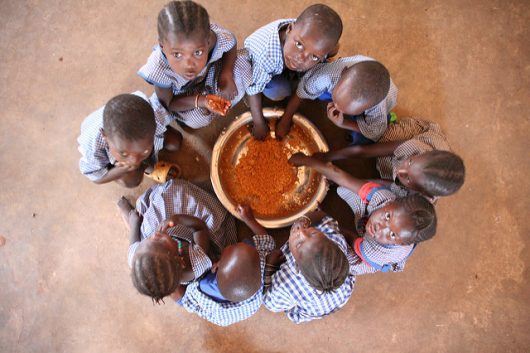
  6. To support local agriculture production, the World Food Programme subsidizes the production of fresh vegetables like spinach and okra, and purchases locally produced rice for school meals. This support makes farmers less vulnerable to volatile price changes.

In 2014, Guinea-Bissau held its first elections since the military coup in 2012, and former finance minister José Mário Vaz won easily. As long as he is leading the country, foreign aid will be vital in keeping President Vaz committed to his people and solving hunger in Guinea-Bissau.

– Yosef Gross

Photo: Flickr

June 12, 2017
https://borgenproject.org/wp-content/uploads/borgen-project-logo.svg 0 0 Borgen Project https://borgenproject.org/wp-content/uploads/borgen-project-logo.svg Borgen Project2017-06-12 01:30:522024-05-28 00:02:026 Things to Know About Hunger in Guinea-Bissau
Global Poverty, Hunger

Modern Balkans: Hunger in Macedonia is Moving Out


Macedonia is a relatively small country north of Greece with a population of just over two million people. Since gaining its independence from Yugoslavia in 1991, Macedonia has striven to improve its economic and democratic stability. As international aid and Macedonia’s own efforts to end food insecurity are at an all-time high, hunger in Macedonia has decreased drastically.

In accordance with the last set of Millennium Development Goals set by the United Nations, only between 1.3 percent and 2.1 percent of children under the age of five are malnourished. A new set of goals strives to eradicate hunger completely by 2030.

Although this percentage seems small, Macedonia’s history and present state of political unrest have made it difficult to resolve issues of hunger entirely. According to a study completed this year, one-third of the country’s population remains in poverty. This rate is even higher for families with children, an issue explainable by the country’s unemployment rate, which is the highest in Europe. To tackle the looming issue of unemployment and its effect on hunger in Macedonia, the Ministry of Education and Science has worked to improve children’s access to and the quality of education.

The United States Agency for International Development (USAID) has taken a firm stand behind this cause and worked during the past decade to institute programs that enrich student literacy and numerical competency, help disabled students and provide more opportunities for minority individuals. Furthermore, the Macedonian government is pushing its students to study abroad and also welcoming individuals from other countries to attend its universities.

Statistics at the end of 2016 indicate a strong response to this push for better education to eliminate unemployment and poverty in Macedonia. The country’s unemployment rate was reported to be 23.1 percent, compared to its high, in 2005, of 37.27 percent.

Programs put in place have already increased work readiness and lowered unemployment, which will cut off the cycle that has continued sustaining levels of hunger in Macedonia.

– Emily Trosclair

Photo: Flickr

June 10, 2017
https://borgenproject.org/wp-content/uploads/borgen-project-logo.svg 0 0 Borgen Project https://borgenproject.org/wp-content/uploads/borgen-project-logo.svg Borgen Project2017-06-10 07:30:192024-05-28 00:02:04Modern Balkans: Hunger in Macedonia is Moving Out
Global Poverty, Hunger

Focus on Domestic and International Hunger in the Netherlands

The Netherlands is one of the wealthiest countries in the world. The country’s gross domestic product is the 17th-highest in the world and it consistently ranks in the top 10 on the Human Development Index in the world. Hunger in the Netherlands is prevalent, even though the country contributes a very high percentage of its GDP to foreign aid. And as of recently, due to the economic crisis, more than one million of the country’s 17 million people have hit the marker for poverty.

There are many nonprofit organizations that aid in providing food to families who are in need. Foodbank Netherlands is one of these organizations that partners with food companies to donate food products to those who suffer from hunger in the Netherlands.
The government in the Netherlands has also developed a food security policy that addresses different concerns that bring about hunger in the Netherlands as well as the world. The Netherlands seeks to specifically address hunger worldwide and also focuses on the many people who suffer from hidden hunger.
While the economic downturn has seen the Netherlands own citizens experience hunger the country still focuses on foreign aid to other countries. Hunger in the Netherlands is being combated while the country still remains at the top of initiatives for its citizenry and policy reform for global hunger and poverty reduction. 
 
Hunger trends are very minute for the Dutch as unemployment is low and the country has generous social benefits that prevent the growth of poverty. The Netherlands has the lowest poverty rate in Europe next to Sweden due to government aid that subsides burden for the country’s citizenry.
The Netherlands continues to lead by example in its contributions to ending global hunger while it faces its own challenges domestically.

– Rochelle R. Dean

Photo: Flickr

June 7, 2017
https://borgenproject.org/wp-content/uploads/borgen-project-logo.svg 0 0 Borgen Project https://borgenproject.org/wp-content/uploads/borgen-project-logo.svg Borgen Project2017-06-07 01:30:272024-05-27 23:59:59Focus on Domestic and International Hunger in the Netherlands
Global Poverty, Hunger

10 Facts About Hunger in the Gambia


The Gambia, officially the Republic of the Gambia, is a country in West Africa almost entirely surrounded by Senegal. The Gambia is the smallest country in mainland Africa, home to just fewer than two million people, about half of whom live in poverty. Here are 10 facts about hunger in the Gambia.

10 Facts About Hunger in the Gambia

  1. Approximately one-tenth of the Gambia’s population is food-insecure, and nearly one in three Gambians are vulnerable to food insecurity.
  2. Food insecurity has led to high malnutrition rates. In 2015, 10.3 percent of the population was malnourished.
  3. Malnutrition in the Gambia has resulted in the stunting of growth in 24.9 percent of children.
  4. The country’s high poverty rate contributes to hunger. Nearly half — 48 percent of the population — live below the national poverty line.
  5. The population is growing exceptionally quickly. Since 2003, the population has grown by 36 percent, to almost two million people.
  6. The Gambia is classified as a food-deficit, low-income country. It ranked 175 out of 188 countries in the UNDP Human Development Index.
  7. Due to the Gambia’s climate, the country’s agriculture is particularly susceptible to damage from climate change, with extreme weather events and rising sea levels harming output.
  8. Food costs in the Gambia are increasing. Since domestic cereal production fulfills just 60 percent of demand, the population relies greatly on food imports. As a result, the retail price of imported rice has almost doubled within the past decade.
  9. Like many other impoverished countries, poverty in the Gambia is worse in rural areas. Approximately three-quarters of the rural population lives in poverty.
  10. Women in the country are also facing higher rates of poverty. Women in the Gambia make up more than 50 percent of the agricultural labor force and 70 percent of unskilled laborers. However, lack of access to new technology and land hurt their incomes.

Climate change and increasingly low agricultural output continue to worsen hunger in the country. However, providing the population with new technology to help them become more resilient to environmental changes could help reduce hunger in the Gambia.

– Alexi Worley

Photo: Flickr

June 6, 2017
https://borgenproject.org/wp-content/uploads/borgen-project-logo.svg 0 0 Borgen Project https://borgenproject.org/wp-content/uploads/borgen-project-logo.svg Borgen Project2017-06-06 07:30:452020-04-19 16:57:3810 Facts About Hunger in the Gambia
Global Poverty, Hunger

5 Facts About the State of Hunger in Guam


Guam is a U.S. island territory in Micronesia, with a small population of 162,742 as of 2016. Issues such as unemployment and the high cost of living contribute to hunger in Guam. However, with the aid of organizations like The Salvation Army in Guam and the U.S. Department of Agriculture’s distribution of food stamps, conditions are beginning to look up for citizens. The following are five facts on the state of hunger in Guam.

5 Facts About the State of Hunger in Guam

  1. As of 2013, the unemployment rate sits at 8.4 percent. The deep drop only contributes to the issue of hunger in Guam, making it difficult for individuals to work well-paying jobs and earn enough money to provide for their families.
  2. In 2015, the number of Guam residents on food stamp assistance rose 3.7 percent, with a total of 15,779 island households receiving food subsidies, according to the U.S. Department of Agriculture, which funds the national Supplemental Nutrition Assistance Program (SNAP).
  3. In 1994, one in every 8.4 Guam residents received food stamps. Today that number has dropped to one in every 3.4 residents.
  4. The Guam Department of Education wishes to expand the program to give more students free meals in Guam’s 41 public schools. This will cost the government of Guam an additional $3 million to $5 million a year to fund.
  5. The Salvation Army focuses efforts in Guam, providing millions of meals to face the threat of food security, cure hunger and overcome poverty. Donations and various means of volunteering through this outlet help kids in low-income communities thrive.

Ending hunger in Guam, particularly child hunger, is a high priority for Guam. Communities and schools have joined together in fighting the widespread problem. By ensuring that food programs extend to greater groups of people, hunger can hopefully be eliminated as a whole in the near future.

– Mikaela Frigillana

Photo: Flickr

June 6, 2017
https://borgenproject.org/wp-content/uploads/borgen-project-logo.svg 0 0 Borgen Project https://borgenproject.org/wp-content/uploads/borgen-project-logo.svg Borgen Project2017-06-06 07:30:322024-05-28 00:02:095 Facts About the State of Hunger in Guam
Global Poverty, Hunger

Hunger in Finland


Due to Finland’s high standard of living, based on the nation’s welfare system, poverty rates are low. In such a system, the Finnish enjoy an exceptional education system, strong health standards, and safe, connected communities, all of which combine to limit the presence of hunger in Finland.

Finland is one of the top-performing countries in education, measured in the fields of reading literacy, math and science by the Organisation for Economic Co-operation and Development (OECD). According to the National Center on Education and the Economy, education is made publicly available from the primary level through upper secondary level.

Naturally, education has been shown to reduce the likelihood of poverty, which remains especially true for Finland, where both the quality and availability of the system is widespread. The same is true for healthcare, where the standard of treatment in Finland ranks highly among other OECD nations.

The Finnish also live in safe communities, where 86 percent of respondents claim that they “feel safe walking alone at night,” compared to the OECD average of 68 percent. A low crime rate reflects the nation’s lack of poverty, due to the elements provided in Finland’s welfare system.

In more specific terms, Finland has the fourth lowest poverty rate among OECD nations, according to a 2016 report. It is unsurprising, then, that the issue of hunger is practically nonexistent within the country. As the organization Trading Economics reports, undernourishment affected only five percent of the Finnish population in 2008.

Moreover, Finland aims to end hunger worldwide, evident through the nation’s consistent donations to the United Nations World Food Programme (WFP). Such donations have contributed to hunger relief in countries such as Lebanon, South Sudan, Ethiopia, Afghanistan and the Central African Republic.

“Thanks to Finland’s flexible and predictable multi-year commitment of €29 million,” wrote the WFP in a 2014 report, “we are able to respond to the needs of vulnerable people using innovative tools that increase dignity and efficiency.”

Assuming Finland continues to meet the demands of its citizens, let alone providing assistance elsewhere, hunger in Finland will not be a concern anytime soon.

– Genevieve DeLorenzo

Photo: Flickr

June 6, 2017
https://borgenproject.org/wp-content/uploads/borgen-project-logo.svg 0 0 Borgen Project https://borgenproject.org/wp-content/uploads/borgen-project-logo.svg Borgen Project2017-06-06 07:30:072020-04-19 16:58:19Hunger in Finland
Global Poverty, Hunger, USAID

Poverty, Climate and Hunger in Mozambique


Mozambique is one of the poorest countries on a global scale. The government estimates that 54 percent of its population lives below the poverty line. Hunger in Mozambique is widespread, as 80 percent of the population cannot afford enough food for good health and 24 percent are chronically food insecure. At least 25 percent of Mozambicans are malnourished, due in part, to poor crop diversity. Almost half of children under age five are malnourished, and 42 percent have stunted growth.

Mozambique’s primary industry is agriculture: it brings in over 25 percent of the nation’s GDP and employs 80 percent of the workforce. Yet, Mozambique is also prone to severe weather such as droughts and floods. With the majority of the nation dependent on agriculture and at risk for severe weather, Mozambique is highly susceptible to chronic food insecurity and poverty.

While parts of Mozambique are prone to drought, these regions also have rivers, leaving them prone to flooding during cyclone season. In fact, two-third of Mozambicans live in regions at risk of flooding and cyclones. Mozambique experienced floods in 2000, 2001, 2007 and 2008. The country had droughts between 2002-2003, 2004-2005, 2006-2007 and 2007-2008.

Drought caused by the 2016 El Niño weather pattern reduced crop yields and left two million Mozambicans suffering food insecurity. Shortly after, in February 2017, the country experienced a cyclone which also destroyed crops.

Feed the Future, an initiative funded by USAID is working to reduce hunger in Mozambique. The USAID website notes that Mozambique also has geographical advantages and great potential to increase agriculture while reducing food insecurity. The country is a coastal country, making it ideal for growing food and supplying landlocked African countries. Furthermore, only 17 percent of the suitable land is being used for farming.

The Feed the Future Initiative is taking advantage of this potential. Research is underway to improve agriculture. More nutritious and resilient crop varieties are being developed, as are plants which produce higher yields. Ideal fertilizers are being used along with better farming practices to improve soil quality.

Of the 15 countries in Southern Africa, Mozambique is the second largest exporter of food. As such, better farming practices can allow the citizens of Mozambique to rise out of poverty. Crop production is impaired by changes in climate. Yet, if Mozambique can overcome this obstacle, it can help reduce famine throughout Southern Africa. The outlook is good. Mozambique cut hunger in half between 1997 and 2015.

If the Feed the Future Initiative and other organizations can end hunger in Mozambique, then it can possibly end hunger in Southern Africa.

– Mary Katherine Crowley

Photo: Flickr

June 3, 2017
https://borgenproject.org/wp-content/uploads/borgen-project-logo.svg 0 0 Borgen Project https://borgenproject.org/wp-content/uploads/borgen-project-logo.svg Borgen Project2017-06-03 01:30:262024-05-28 00:02:01Poverty, Climate and Hunger in Mozambique
Global Poverty, Hunger

6 Facts About Hunger in Timor-Leste


Since Timor-Leste gained independence in 2002, it has made significant improvements in economic and human development. At the same time, while hunger in Timor-Leste has decreased, rates of malnutrition and stunting are still the highest in Asia. The U.N. has provided assistance aimed at stabilizing the government since 2006.

  1. According to Oxfam Australia, 41 percent of people in Timor-Leste live on less than $1.25 a day. Timor-Leste ranks very poorly in GDP and GDP per capita, making it one of the poorest countries in the world. A weak economy and an unstable political environment have made it difficult for residents of Timor-Leste to escape extreme poverty and hunger.
  2. Timor-Leste is a small country with only 1.13 million inhabitants, of which 74 percent live in rural areas. Because residents often depend on local agriculture to supplement their diet, the high instances of drought, flooding and cyclones in Timor-Leste lead to food insecurity.
  3. Persistent food insecurity and hunger in Timor-Leste have resulted in high rates of malnutrition among Timorese youth and adults. In fact, UNICEF reports that 58.1 percent of the population suffers from moderate and severe stunting, affecting the growth of many children and young adults.
  4. Life expectancy for the Timorese population is about 69 years, up from about 61 years in 2002. This increase is largely attributable to reductions in poverty through foreign aid that has led to an increase in the availability of food.
  5. In 2014, Timor-Leste became the first country in the Asia-Pacific region to adopt the U.N.’s Zero Hunger Challenge. The program aims to eliminate food insecurity and childhood stunting by improving food infrastructure, increasing the productivity and income of small farm-owners, and lessening food waste.
  6.  Since 1999, the World Food Program has provided supplemental nutrition for the most vulnerable Timorese and worked to reduce maternal and infant mortality rates. Eventually, the U.N. hopes to turn the supplementary feeding program over to the government of Timor-Leste.

A recent report by the World Bank indicates that Timor-Leste has made significant strides in reducing poverty and projects that the economy will rebound with high growth rates in the coming years. As more Timorese escape poverty, continued foreign aid will be key to sustaining development and reducing hunger in Timor-Leste.

– Yosef Gross

Photo: Flickr

May 29, 2017
https://borgenproject.org/wp-content/uploads/borgen-project-logo.svg 0 0 Borgen Project https://borgenproject.org/wp-content/uploads/borgen-project-logo.svg Borgen Project2017-05-29 01:30:462024-06-11 02:48:286 Facts About Hunger in Timor-Leste
Global Poverty, Hunger

How Luxembourg Combats World Hunger

Hunger in Luxembourg
The combination of national wealth and low poverty rates have led to Luxembourg’s lack of hunger within its population base. As Trading Economics reports, only five percent of Luxembourg’s population was undernourished in 2011.

The country’s high standard of living limits hunger in Luxembourg, specifically its low poverty rates. As the Organization for Economic Co-operation and Development (OECD) reports, Luxembourg maintains one of the lowest rates of poverty. This can be credited in part to the country’s wealth; a 2016 Business Insider report ranked Luxembourg second worldwide in GDP per capita, at close to $102,000.

Furthermore, not only has Luxembourg limited hunger within its own borders but is taking measures to end hunger worldwide. Luxembourg strengthened its aid to the United Nations World Food Programme (WFP) since 2006, when the country funded school meals for approximately 100,000 students in the Sahel region of Africa.

In 2009, a report by ActionAid ranked Luxembourg first among developed nations in its contribution to ending world hunger. Since then, from 2012 to 2016 Luxembourg has donated approximately $9 million to $13 million to WFP, affecting mainly countries within the Middle East and Africa.

Most recently, Luxembourg signed an agreement with the WFP confirming its commitment to ending world hunger through continued funding. WFP executive director Ertharin Cousin said, “With this support from Luxembourg, WFP is providing life-saving food assistance to families in Africa and elsewhere around the world.”

Ideally, Luxembourg will aim to decrease the percentage of its own population facing undernourishment to zero. The nation clearly appears to have strong aims of limiting hunger in Luxembourg as well as worldwide, efforts that deserve serious recognition.

– Gigi DeLorenzo

Photo: Flickr

May 27, 2017
https://borgenproject.org/wp-content/uploads/borgen-project-logo.svg 0 0 Borgen Project https://borgenproject.org/wp-content/uploads/borgen-project-logo.svg Borgen Project2017-05-27 01:30:382024-05-28 00:02:01How Luxembourg Combats World Hunger
Global Poverty, Hunger, USAID

Combating Hunger in Kyrgyzstan in the Classroom

Hunger in Kyrgyzstan
Kyrgyzstan is a small, mountainous country, landlocked amongst countries that spent most of the 20th century under Soviet rule. Hunger in Kyrgyzstan is an issue that overshadows the progress the country is making.

Of Kyrgyzstan’s six million citizens, 30 percent live in poverty. Twelve percent of the population is food-insecure with 43 percent of children under five suffering from anemia. Thirteen percent of this under five population have stunted growth from malnutrition.

Two-thirds of Kyrgyzstan’s population lives in the countryside where agriculture is the main source of income. The fragmentation of the small family farms, however, inhibits overall production from reaching the scale necessary to meet the market demand.

Farmer-to-Farmer is a five-year program introduced in 2013 by USAID designed to bring technology transfer innovations to Kyrgyzstan’s agricultural sector through short-term technical assistance. The goal of the USAID program is to generate economic growth with person-to-person assignments. The farmers of Kyrgyzstan learn such things as new pruning techniques, ways to improve cold storage management or food safety standards. The volunteers who arrive in Kyrgyzstan gain a better understanding of U.S. foreign assistance outside their country.

A bright spot in Kyrgyzstan is its 99 percent literacy rate and the fact that gross primary school participation is 100 percent. One way to conquer hunger in Kyrgyzstan, as well as childhood malnutrition, is to improve school meals. The U.N. World Food Programme funded a pilot project called School Meals Optimization, which provides culinary training and kitchen equipment to schools. It also aids in renovating school cafeterias and helps schools establish vegetable gardens to source their fruit and vegetables. By 2015, more than 62,000 primary school students in 260 schools received a nutritious, hot meal during the school day, almost six times the number of students in the project’s first year. The program has since expanded to all schools across the country.

The focus on healthy, nutritious meals is gaining momentum in this former Soviet satellite. Recently, 20 school chefs from across the country were chosen to meet in Kyrgyzstan’s capital, Bishkek, for a competition and a master class with one of Kyrgyzstan’s top chefs. They spent one day cooking vegetables, pureeing soups and making chicken fricassee among other things, all using affordable local produce. On day two, all 20 chefs competed to make a three-course meal in 90 minutes using ingredients from a mystery basket. These competing chefs can attack the issue of hunger in Kyrgyzstan in a positive and productive manner.

The students of Kyrgyzstan also emulate the healthy, nutritious meals they enjoy when they graduate from the classroom into society. They are building a foundation to help decrease hunger in Kyrgyzstan for future generations. Through their efforts, the future for Kyrgyzstan’s food security looks bright.

– Jene Cates

Photo: Flickr

May 25, 2017
https://borgenproject.org/wp-content/uploads/borgen-project-logo.svg 0 0 Borgen Project https://borgenproject.org/wp-content/uploads/borgen-project-logo.svg Borgen Project2017-05-25 01:30:122024-05-28 00:00:26Combating Hunger in Kyrgyzstan in the Classroom
Page 52 of 71«‹5051525354›»

Get Smarter

  • Global Poverty 101
  • Global Poverty… The Good News
  • Global Poverty & U.S. Jobs
  • Global Poverty and National Security
  • Innovative Solutions to Poverty
  • Global Poverty & Aid FAQ’s
Search Search

Take Action

  • Call Congress
  • Email Congress
  • Donate
  • 30 Ways to Help
  • Volunteer Ops
  • Internships
  • Courses & Certificates
  • The Podcast
Borgen Project

“The Borgen Project is an incredible nonprofit organization that is addressing poverty and hunger and working towards ending them.”

-The Huffington Post

Inside The Borgen Project

  • Contact
  • About
  • Financials
  • President
  • Board of Directors
  • Board of Advisors

International Links

  • UK Email Parliament
  • UK Donate
  • Canada Email Parliament

Get Smarter

  • Global Poverty 101
  • Global Poverty… The Good News
  • Global Poverty & U.S. Jobs
  • Global Poverty and National Security
  • Innovative Solutions to Poverty
  • Global Poverty & Aid FAQ’s

Ways to Help

  • Call Congress
  • Email Congress
  • Donate
  • 30 Ways to Help
  • Volunteer Ops
  • Internships
  • Courses & Certificates
  • The Podcast
Scroll to top Scroll to top Scroll to top