• Link to X
  • Link to Facebook
  • Link to Instagram
  • Link to TikTok
  • Link to Youtube
  • About
    • About Us
      • President
      • Board of Directors
      • Board of Advisors
      • Financials
      • Our Methodology
      • Success Tracker
      • Contact
  • Act Now
    • 30 Ways to Help
      • Email Congress
      • Call Congress
      • Volunteer
      • Courses & Certificates
      • Be a Donor
    • Internships
      • In-Office Internships
      • Remote Internships
    • Legislation
      • Politics 101
  • The Blog
  • The Podcast
  • Magazine
  • Donate
  • Click to open the search input field Click to open the search input field Search
  • Menu Menu

Archive for category: Hunger

Development, Global Poverty, Hunger

Kuwaiti Leaders and their Attempts to End Hunger in Kuwait

Mohammad Al-Jabri, Minister of Municipal Affairs, announced that Kuwait is in full support of the United Nations’ Food and Agriculture Organization (FAO) as it seeks the elimination of international hunger and poverty.
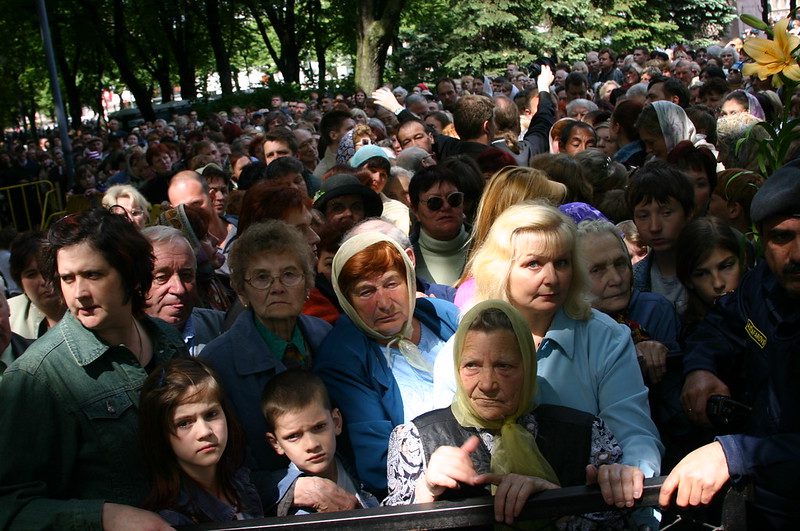
According to Kuwait Times, Jabri made this announcement in Rome during the 40th Session FAO Conference on July 3, 2017. Jabri solidified Kuwait’s efforts to cooperate with FAO by signing an agreement for the agricultural development, which will help enhance Kuwait’s food and nutrition security while developing human and natural resources to eliminate hunger in Kuwait.

Additionally, a representative of Kuwait announced Kuwait’s preliminary approval of two projects including the DNA project for agriculture and the project of agricultural waste recycling. The increasingly high temperatures of Kuwait’s regional waters and immense environmental pollution put the country, specifically fisheries, in danger of climate change, which has a notoriously negative impact on hunger in Kuwait.

Climate change imposes a number of threats on the people of Kuwait. Without proper modern technology to combat the rising temperatures, a large portion of the country’s food supply is being compromised. Additionally, potable water is diminishing at rapid rates due to the lack of proper technology necessary to clean local water.

The amount of potable water is diminishing as the water supply is getting smaller and smaller in a country that is getting hotter and hotter. With this destructive climate change comes the lack of water needed to cultivate crops. Thus, leaders of Kuwait are teaming with FAO in an attempt to save the scarce water supply via water harvesting, drip irrigation and wastewater treatment.

Rising temperatures make land that was once fertile incapable of producing the food that the people of Kuwait rely on. Only approximately 0.3 percent of the country is utilized for crop production. According to FAO, the land that is used for the cultivation of crops is frequently unreliable as it is very poor in the organic nutritional matter, so there are limited opportunities to alleviate hunger in Kuwait.

The Center of Kuwait is one of the few areas that possess rich, sandy soil that allows for the transfer of air and water, making crop production much more possible. However, this small area of the country is unable to produce enough food for the entire population of Kuwait. With the desert-like climate of Kuwait that is constantly increasing in temperature, this already limited farmable area is rapidly diminishing.

A country constantly battling poverty and hunger, Kuwait is pursuing joint Arab action to help people in Kuwait. By tackling economic, humanitarian, educational and media objectives, leaders of Kuwait are uniting to protect Arab societies and interests. And at the forefront of these is, as it long has been, hunger.

With massive economic issues, an outbreak of diseases, poverty and famine, Kuwait is struggling to fight the inevitable consequences of living in a world of immense poverty and hunger. Jabri and the rest of Kuwait are hopeful that by partnering with FAO, these issues can be stopped in their tracks and eventually hunger in Kuwait will be reversed entirely.

– Kassidy Tarala

Photo: Flickr

July 18, 2017
https://borgenproject.org/wp-content/uploads/borgen-project-logo.svg 0 0 Borgen Project https://borgenproject.org/wp-content/uploads/borgen-project-logo.svg Borgen Project2017-07-18 01:30:172020-06-04 09:37:52Kuwaiti Leaders and their Attempts to End Hunger in Kuwait
Development, Global Poverty, Hunger

Fighting Starvation Since 2008: Poverty and Hunger in Latvia

Hunger in Latvia
Formerly a part of the USSR, Latvia is a member of the EU for the past 13 years. The country is home to over two million people, and it is slightly larger than West Virginia. The recession of 2008 deeply affected the Latvian economy, and as a result, the country has a massive income gap. Additionally, as of 2013, Latvia gave less aid to the poor than any other members of the EU. These conditions leave ample room for the number of those living in poverty to increase, which makes hunger in Latvia an important issue.

Historically, Latvia lacks an adequate food supply. Children suffer most from hunger in Latvia, and malnutrition steadily weakened the population since the end of World War I.

As of 2014, almost 20 percent of Latvians were living under the poverty line. It is the third-poorest country in the EU. Of those in poverty, the average family lives on an average of 215 euros or less, not enough to feed the whole family. In 2012, 100,000 citizens had a monthly income of less than 65 euros.

While hunger in Latvia is still an issue, the country greatly improved in the past decade. Since 2000, Latvia decreased their Global Health Index rating by 59 percent. The Global Health Index gives countries a score from zero to 100 based on undernourishment, child mortality and other factors. The lower the score, the healthier the country is.

Many organizations contributed to the decrease in poverty and hunger in Latvia. The American Relief Administration worked to feed the hungry, especially children. Carelinks Ministry, a religious outreach organization, worked in Riga, Latvia, serving food to the poor, especially in the colder months. With people partnering to reduce hunger in Latvia, the country will continue to decrease their GHI rating.

– Julia Mccartney

Photo: Flickr

July 17, 2017
https://borgenproject.org/wp-content/uploads/borgen-project-logo.svg 0 0 Borgen Project https://borgenproject.org/wp-content/uploads/borgen-project-logo.svg Borgen Project2017-07-17 07:30:342020-06-17 18:22:27Fighting Starvation Since 2008: Poverty and Hunger in Latvia
Global Poverty, Hunger

10 Facts About Hunger in Serbia

The hunger and deprivation that plagued refugee camps during the Kosovo War inspired Clint Borgen to found The Borgen Project, and one of the countries that saw the largest influx of suffering refugees during that time was Serbia. Though conditions today are far better than they were in 1999, hunger in Serbia is still a problem. Here are 10 facts about the past and present conditions.

  1. In 1999, the U.N. World Food Program distributed 145,000 tons of food to Serbia, feeding approximately 890,000 undernourished people. At that time, the WFP compared conditions in Serbia, where 10 percent of the population faced a humanitarian crisis, to those in North Korea.
  2. In 2008, the Global Hunger Index (GHI) was 7.8 in Serbia and has since dropped to 7.1 in 2016. The GHI uses undernourishment, child wasting, child stunting and child mortality in their formula for determining hunger levels.
  3. The proportion of people experiencing hunger in Serbia, meaning they have insufficient caloric intake, was 6.9 percent in 2016, an improvement from 7.4 percent in 2008.
  4. The prevalence of wasting in children younger than five, which means their weight is low relative to their height, was 3.9 percent, down from four percent in 2008. Wasting is a measure of acute malnutrition.
  5. The prevalence of stunting in children younger than five, which means their height is low for their age, was six percent, down from 7.4 percent in 2008. Stunting is representative of chronic malnutrition.
  6. The mortality rate for children under the age of five is .7 percent, a small improvement from .8 percent in 2008.
  7. Of 113 index countries, the Global Food Security Index ranks Serbia 47th in affordability, 65th in availability and 52nd in quality and safety. Their overall rank for food security is 59.4, making them 52nd overall of the 113 countries.
  8. The Global Food Security Index also reports that hunger in Serbia leaves the average intensity of food deprivation at eight kilocalories per person per day. Each day, Serbia’s population lacks a total of 336,00,000 kilocalories.
  9. Because the nation has been a member of the U.N. since 2000, hunger in Serbia is a major factor in the 2030 Agenda for Sustainable Development. The agenda is comprised of 17 goals, the second of which is “zero hunger.”
  10. Because it is far cheaper, it was reported that Serbians ate three times more bread than the average EU citizen in 2014 (89 kilograms/year), and close to a third of the amount of meat, at 35 kilograms per year, compared to 90 in Germany, 91 in Italy and 102 in France.

Conditions have been steadily improving to help eliminate hunger in Serbia. Where the country faced a humanitarian crisis at the beginning of the century, it is now working with the U.N. to meet a goal of zero hunger by 2030. The statistics concerning Global Hunger and Global Food Security clearly illustrate the successes of aid programs and domestic growth in the country, while the presence of malnutrition and child mortality reiterates that until there is no hunger, there is always more to be done.

– Brooke Clayton

Photo: Flickr

July 15, 2017
https://borgenproject.org/wp-content/uploads/borgen-project-logo.svg 0 0 Borgen Project https://borgenproject.org/wp-content/uploads/borgen-project-logo.svg Borgen Project2017-07-15 07:30:282024-05-28 00:03:0010 Facts About Hunger in Serbia
Global Poverty, Hunger, United Nations

How to Help the Hungry

Help the Hungry

One of the U.N.’s sustainable development goals for ending poverty by 2030 is to end hunger, achieve food security, improved nutrition, and promote sustainable agriculture. The question raised from this information is how to help the hungry?  The answer is to support global works that engage in local communities and advocate for hunger-related issues.

Below are six ways to participate in the reduction of global hunger.

  1. Reduce food waste.
    Being more conscious of eating habits and not overbuying can ensure food does not go to waste.  Buying produce at a local farmer’s market that may be thrown out because of their size, shape, or color can also prevent food from going to waste.  One can also volunteer with a local gleaning group to pick up fruit and vegetables thrown away.
  2. Shop local.
    Shopping at local farmer’s markets can also improve an individual’s local economy. Many people earn their income by running local businesses, and by supporting them, one can help keep people employed and assist them in making a living.
  3. Support food banks.
    Since most food banks serve ready-to-eat foods, one can host a food drive in their local community.  After the drive is over, the donated food such as canned or shelf-stable foods then has the potential to feed the hungry. One can also give money to food banks and other nonprofits that fight hunger on top as being a volunteer.
  4. Elect officials who support alleviating starvation and contact Congress in support of bills that help the hungry.
    By electing officials who support ending hunger and contacting Congress, one can increase their country’s involvement in efforts fighting global hunger. Phone calls, sending emails, and letters to ones elected officials can also influence the national agenda. Once elected representatives begin to understand constituents care about ending global hunger, accomplishing this change is possible.
  5. Organize a meal packaging event with groups that one is involved with or join groups that support sustainable agriculture projects, clean water initiatives, or provide food aid.  Engaging in community-based efforts and advocacy has a substantial effect at fighting global hunger.
  6. Be an advocate.
    One can help the hungry by supporting hunger-related issues in their community and finding out how they can help. Through advocacy, one can create an informed public who will join the fight to end hunger.

According to the U.N., “A profound change of the global food and agriculture system is needed if we are to nourish today’s 795 million hungry and the additional 2 billion people expected by 2050.”

– Sarah Dunlap

Photo: Flickr

July 14, 2017
https://borgenproject.org/wp-content/uploads/borgen-project-logo.svg 0 0 Borgen Project https://borgenproject.org/wp-content/uploads/borgen-project-logo.svg Borgen Project2017-07-14 07:30:382024-05-28 00:02:38How to Help the Hungry
Aid, Developing Countries, Global Poverty, Hunger

What is Food Assistance for Assets and How Does it Work?


More than 10% of the world’s population does not have regular access to food and 50% of these families are farmers. The majority of hungry people live in Asian and African countries. Countries with higher natural disaster rates are not able to access food regularly, due to the destruction of their communities and farmlands. The World Food Programme began the Food Assistance for Assets (FFA) program and other programs like it to help combat this issue. FFA focuses on restoring land and rebuilding communities while assisting people in need, but many people have never heard of it.

Food Assistance for Assets is a program that feeds people and works through them to rehabilitate suffering communities. Through this program, people are given work, such as building and repairing bridges and roads. In return, they gain two things. First, they are paid so that they can buy food for themselves and their families. In addition, the work that they have done helps strengthen and develop their communities, many of which have fallen victim to natural disasters.

While this program may seem to only benefit individuals, it has helped larger communities as well. FFA programs exist in 52 countries, where 10.1 million people have received help from the program. Rehabilitation programs include building water wells and planting trees to restore forests.

These facts help shed light on the impact of the Food Assistance for Assets programs and emphasizes the work that this program does to provide food to people around the world. There is enough food produced in the world to feed everyone, but without programs like FFA, many people are unable to access or pay for enough food to feed their families. Several organizations, including the U.N., hope that through assistance programs such as the FFA and through the increased sustainability of food, world hunger will be eradicated by 2030.

– Helen Barker

Photo: Flickr

July 13, 2017
https://borgenproject.org/wp-content/uploads/borgen-project-logo.svg 0 0 Borgen Project https://borgenproject.org/wp-content/uploads/borgen-project-logo.svg Borgen Project2017-07-13 01:30:492024-05-28 00:02:34What is Food Assistance for Assets and How Does it Work?
Children, Global Poverty, Hunger

How Many People Die from Hunger Each Year


Hunger continues to be the world’s biggest health problem. Hunger is one of the most emblematic images of poverty: the picture of stunted, malnourished children tends to resonate empathetical feelings in almost anyone. Just thinking of an image like this shows how, in one way or another, society knows how much suffering world hunger causes. With this information, the real question is how many people die from hunger each year.

This year, 36 million people will die from starvation. Essentially, that equates to a person dying of hunger every second of the year. Of these 36 million inhabitants, children are especially vulnerable. Every minute, 12 children under the age of five will die of hunger. This fact represents a death every five seconds.

The question itself of hunger, not just hunger-related deaths, is just as equally an important issue. The Oxford English Dictionary defines hunger as the want or scarcity of food in a country. The current world population is more than seven billion, and 795 million people, or one in every nine people, suffer from hunger. Almost all of these people are living in developing countries. Countries in Asia suffer from this problem more than any other region, with 525 million people suffering. Sub-Saharan African countries follow with a combined 214 million.

These regions are the most susceptible to conflict and drought, and usually, these tragedies end in famine.  All of these factors are a direct relation to hunger. Consequently, 50 percent of all hungry people are families that depend on agriculture.

While there may have been an extreme spike in cases of hunger from 1995 to 2009 (an increase from sub-800 million hungry citizens to more than one billion in 2009), there has been a stark and continual decrease from 2009 to 2017. Currently, the world is seeing the lowest number of hungry people since 1995. There are 200 million fewer people suffering from hunger than there were 25 years ago.

With the understanding of how many people die from hunger each year and how many people still suffer from it, the question is how can this issue be addressed? One method to fight against global hunger is by supporting The Borgen Project. The Borgen Project places its focus on alleviating global poverty.  By ridding the world of poverty, there will directly influence those who are also suffering from hunger.

– James Hardison

Photo: Flickr

July 13, 2017
https://borgenproject.org/wp-content/uploads/borgen-project-logo.svg 0 0 Borgen Project https://borgenproject.org/wp-content/uploads/borgen-project-logo.svg Borgen Project2017-07-13 01:30:162020-06-08 09:18:36How Many People Die from Hunger Each Year
Aid, Global Poverty, Hunger

5 Organizations Fighting Famine in East Africa


According to U.N. Secretary-General for Humanitarian Affairs Stephen O’Brien, the world faces its worst humanitarian crisis since World War II in the current famine affecting certain African and Middle Eastern countries. More than 20 million people in Yemen, South Sudan, Somalia and Nigeria are facing severe starvation and malnutrition. In addition to the U.N.’s push to mobilize aid to these countries, smaller organizations have made a concentrated effort to fight famine in East Africa.

5 Organizations Fighting Famine in East Africa

  1. Feed My Starving Children (FMSC) is a nonprofit organization focused on fighting global starvation, annually producing more than a million meals that are shipped to impoverished countries. FMSC operates in several locations around the Twin Cities, hosting volunteer meal preparation shifts six days a week. The current East African crisis has prompted FMSC to increase its efforts. The organization now aims to produce an additional 10 million meals to reduce starvation in Somalia.
  2. The Léger Foundation has been combatting global poverty and social exclusion for over 65 years. In June 2017, it joined Canada’s growing Famine Relief Fund, which focuses on providing aid to the millions of Africans affected by the famine. While currently responding to humanitarian demand in Cameroon, The Léger Foundation is expanding outreach to other countries afflicted by the famine including Nigeria and South Sudan. As a new member of the Famine Relief Fund, the foundation will see its donations doubled by Canada’s government through the end of June to support famine relief.
  3. SOS Children’s Villages is another member of the Famine Relief Fund dedicated to fighting famine in East Africa. SOS traditionally operates as a nonprofit centered on providing homes for orphaned and abandoned children and has built more than 550 children’s villages. These provide children with food, shelter, education and a family life. The recent famine has prompted SOS Children’s Villages to shift its focus to East Africa. Fundraising efforts are now aimed at alleviating food shortages caused by drought and subsequent livestock loss.
  4. Caritas Australia is a Catholic charity working to end poverty and facilitate global development for people of all backgrounds. Recently Caritas launched a program called Africa Emergency Appeal to mobilize its humanitarian network of partners to respond to the famine in East Africa. Caritas and its partner agencies currently provide local assistance in delivering clean water, sanitation supplies and food such as sugar, beans and maize flour.
  5. Save the Children is a British charity that promotes children’s rights and seeks to improve conditions for children globally through healthcare and education. In response to the famine in East Africa, Save the Children aims to reach children under the age of five and provide aid to those most at risk for malnutrition and diseases such as malaria. With humanitarian infrastructure already in place in the affected countries, Save the Children can turn its focus to fighting famine in ways such as increasing malnutrition screenings in Nigeria or distributing vouchers for supplies in Somalia.

These are just a few of the many organizations that have responded swiftly to the growing humanitarian crisis in Africa. While there is still need for further funding in these countries, these organizations are doing all they can to bring immediate relief and save lives.

– Nicholas Dugan

Photo: Flickr

July 7, 2017
https://borgenproject.org/wp-content/uploads/borgen-project-logo.svg 0 0 Borgen Project https://borgenproject.org/wp-content/uploads/borgen-project-logo.svg Borgen Project2017-07-07 07:30:502020-05-15 20:31:505 Organizations Fighting Famine in East Africa
Global Poverty, Hunger, Malnourishment

Malnutrition and Hunger in Poland

Hunger Within Poland
One of the main challenges Poland faces today is malnutrition. Hunger in Poland is an issue every third child between the age of 7 and 15 suffers from, according to research done by Poland Human Resources.

In Warsaw, over 23,000 children suffer from malnutrition.

When diet fails to supply the body with the essential nutrients it requires, malnutrition results. This lack of nutrition exists predominantly in developing nations, but malnutrition is also an issue in developed nations. Protein-energy malnutrition, for instance, generally occurs in underweight children. In Poland, this type of malnutrition is seen in 1 percent of men, more than 3 percent of women and in 13 percent of children.

Poverty is the main cause of malnutrition and hunger in Poland. Nearly 7 percent of the Polish population lives below the poverty line. As a result, many of the poor have unhealthy diets, causing deficiencies in vitamin D, folate, vitamin C, calcium and iodine. Infants, teenaged girls and women are particularly vulnerable. Iron deficiency is also a problem in Poland, seen in about one-quarter of children and pregnant women.

The Polish Central Statistical Office recently released a report which reveals deteriorating living conditions for the working class. The report shows that more than half a million children suffer from hunger in Poland, as well as severe malnutrition. Other highlights from the report:

  • In 2009, 2.2 million Polish people lived in conditions of extreme poverty.
  • Over 170,000 Polish children suffer from malnutrition, which has slowed their growth and development.
  • More than 260,000 children start their days without breakfast. Additionally, more than 70,000 children only eat what they receive at school because they lack food at home.
  • One in five Polish children is malnourished.

These statistics are particularly relevant in small villages, where there are high rates of unemployment and social helplessness. Most of the children suffering from hunger and malnutrition have families that are at the edge of poverty.

The Polish government has focused on improving economic conditions for its people in recent years. It must do more to eliminate hunger and malnutrition for its children.

– Yana Emets

Photo: Flickr

July 3, 2017
https://borgenproject.org/wp-content/uploads/borgen-project-logo.svg 0 0 Borgen Project https://borgenproject.org/wp-content/uploads/borgen-project-logo.svg Borgen Project2017-07-03 07:30:332017-12-19 13:34:50Malnutrition and Hunger in Poland
Global Poverty, Hunger

10 Facts About Hunger in Benin

Hunger in Benin
Benin is a French-speaking nation in Western Africa that formed in 1960. The country has one of the most stable democracies in the entire continent of Africa. However, it is also one of the poorest and most severely undernourished nations both in Africa and in the world. To better understand the nation and how hunger impacts it, here are 10 facts about hunger in Benin.

10 Facts About Hunger in Benin

  1. In Benin, 11 percent of citizens do not have reliable access to nutritious food, while 34 percent have limited or poor food consumption.
  2. Out of the children in Benin aged six months to 59 months, 32 percent suffer from chronic malnutrition. Consequently, UNICEF states that “Undernutrition puts children at greater risk of dying from common infections, increases the frequency and severity of such infections and contributes to delayed recovery.” It can also lead to stunted growth and reduced performance in school.
  3. Benin ranks 21st out of 45 nations on the Hunger and Nutrition Commitment Index. This is an index that measures developing countries with alarming undernutrition rates on their commitment to addressing hunger through policy, spending and law.
  4. Nearly 10 million people in Benin survive on subsistence farming and are dependent on a stable climate to sustain their crops.
  5. The NGO Hunger Free World has begun leadership training called YEH in Benin. Thus, Benin citizens can learn about the importance of agriculture and how to engage with their communities.
  6. In 2011, Benin joined the Scaling Up Nutrition Movement. This is a movement designed to engage countries in the process of eradicating malnutrition and track their progress. Since then, substantial gains have been made towards reducing hunger in Benin. As of the end of 2016, Benin was halfway to meeting all of the SUN’s strategic goals.
  7. Benin’s former President, Thomas Boni Yayi, implemented The Strategic Plan for Food and Nutrition Development (PSDAN). The document aims to “[make] Benin a country where every individual has a satisfactory nutritional status.”
  8. Benin is part of the McGovern-Dole Food for Education Program. This program works to both reduce hunger and improve education by providing meals in Benin schools.
  9. In order to improve the agricultural outlook of Benin’s citizens and reduce the overall hunger in Benin, the Food and Agriculture Organization of the United Nations developed an Integrated Production and Pest Management Programme (IPPM Program). The IPPM is therefore working on “developing local farming capacity, improving food security and livelihoods and raising awareness.”
  10. The World Health Organization created an interactive tool to help visualize the strides Benin must take to continue improving nutrition.

The problems of malnutrition and hunger in Benin affect millions of its citizens every day. However, Benin is proving to be a resilient nation, as the country’s policymakers are committed to progress. They are also willing to work with international allies to step into a world of better nutrition for all.

– Adesuwa Agbonile

Photo: Flickr

June 30, 2017
https://borgenproject.org/wp-content/uploads/borgen-project-logo.svg 0 0 Borgen Project https://borgenproject.org/wp-content/uploads/borgen-project-logo.svg Borgen Project2017-06-30 07:30:352024-05-28 00:02:2310 Facts About Hunger in Benin
Food & Hunger, Global Poverty, Hunger

9 Facts About Hunger in Ireland

9 Facts About Food Poverty in Ireland
Food poverty is classified as the inability to afford an adequate and nutritious diet. The phrase has been used before to refer to hunger in Ireland, but resurfaced in 2012 with the global recession and continues to plague the country. Here are nine facts about hunger in Ireland.

9 Facts About Hunger in Ireland

  1. Despite an increase in median incomes since 2010, there were still almost 800,000 people living in poverty in Ireland in 2015, surviving on less than $13,354 per year.
  2. Due to these low incomes, many citizens have experienced a lack of basic needs. In particular, people are struggling to gain access to healthy foods. According to the Department of Social Protection, hunger in Ireland affected one in eight people in 2013.
  3. Safefood, an organization that focuses on informing citizens about food safety and nutrition, defines the three factors of food poverty in Ireland as follows: a person cannot afford a meal with meat or a vegetarian equivalent every second day; a person cannot afford a weekly roast dinner or vegetarian equivalent; or a person missed a meal in the last two weeks due to a lack of money.
  4. The average cost of a healthy bag of groceries ranges between 15 percent and 36 percent of a low-income person’s salary each week, and largely depends on the family composition. This cost went down slightly from 2014 to 2016.
  5. More than one million tons of food is wasted every year in Ireland, and 60 percent of this waste could be avoided. Annually, this equates to $783.72 per household.
  6. Research team Focus Ireland has suggestions for some policy frameworks that can play a key role in “tackling food poverty.” These include a national policy on social inclusion and anti-poverty, social welfare policy and provision, a national policy on health promotion and a planning and development policy.
  7. One in five Irish children goes to school or bed hungry. Fortunately, more than 500 breakfast clubs have opened in schools and communities to increase attendance and participation throughout the school day by making sure children are fed a nutritious meal.
  8. Safefood will be funding 13 “community food initiatives” between 2016 and 2018. The initiatives aim to work on a local level to teach families how to eat healthily on a budget, prepare food safely and inspire a healthy lifestyle.
  9. A nonprofit called FoodCloud helps supermarkets and other businesses reduce food waste through a new app. Businesses can connect with local charities and organizations to redistribute the food by sharing a description of items on FoodCloud’s app or website.

While food poverty in Ireland is improving, it is still not eradicated. Because food poverty involves many aspects and policies, an aligned front must be formed in order to continue to move in the right direction.

– Madeline Boeding

Photo: Flickr

June 29, 2017
https://borgenproject.org/wp-content/uploads/borgen-project-logo.svg 0 0 Borgen Project https://borgenproject.org/wp-content/uploads/borgen-project-logo.svg Borgen Project2017-06-29 01:30:582024-12-13 17:58:139 Facts About Hunger in Ireland
Page 50 of 71«‹4849505152›»

Get Smarter

  • Global Poverty 101
  • Global Poverty… The Good News
  • Global Poverty & U.S. Jobs
  • Global Poverty and National Security
  • Innovative Solutions to Poverty
  • Global Poverty & Aid FAQ’s
Search Search

Take Action

  • Call Congress
  • Email Congress
  • Donate
  • 30 Ways to Help
  • Volunteer Ops
  • Internships
  • Courses & Certificates
  • The Podcast
Borgen Project

“The Borgen Project is an incredible nonprofit organization that is addressing poverty and hunger and working towards ending them.”

-The Huffington Post

Inside The Borgen Project

  • Contact
  • About
  • Financials
  • President
  • Board of Directors
  • Board of Advisors

International Links

  • UK Email Parliament
  • UK Donate
  • Canada Email Parliament

Get Smarter

  • Global Poverty 101
  • Global Poverty… The Good News
  • Global Poverty & U.S. Jobs
  • Global Poverty and National Security
  • Innovative Solutions to Poverty
  • Global Poverty & Aid FAQ’s

Ways to Help

  • Call Congress
  • Email Congress
  • Donate
  • 30 Ways to Help
  • Volunteer Ops
  • Internships
  • Courses & Certificates
  • The Podcast
Scroll to top Scroll to top Scroll to top