• Link to X
  • Link to Facebook
  • Link to Instagram
  • Link to TikTok
  • Link to Youtube
  • About
    • About Us
      • President
      • Board of Directors
      • Board of Advisors
      • Financials
      • Our Methodology
      • Success Tracker
      • Contact
  • Act Now
    • 30 Ways to Help
      • Email Congress
      • Call Congress
      • Volunteer
      • Courses & Certificates
      • Be a Donor
    • Internships
      • In-Office Internships
      • Remote Internships
    • Legislation
      • Politics 101
  • The Blog
  • The Podcast
  • Magazine
  • Donate
  • Click to open the search input field Click to open the search input field Search
  • Menu Menu

Archive for category: Human Rights

Information and stories about human rights.

Global Poverty, Human Rights

Human Rights Crusader: International Justice Mission

Peace_love_world_happy_ending_violence_justice
In light of Bill Gates’ recent letter that predicted the end of poverty, many are in agreement, but  in order to see the end of poverty, we are required to see an end to violence.

International Justice Mission (IJM) is a global human rights agency whose mission is to protect the poor from any kind of violence, notably the kind that is not printed in newspapers or spread across the Internet.

Gary A. Haugen, the agency’s founder and president, recently published a new book titled, The Locust Effect, and writes, “The locusts of everyday violence have been allowed to swarm unabated in the developing world. And they are laying waste to the hope of the poor.”

Since 1997, Haugen and International Justice Mission have represented thousands of victims of violence in Africa and Latin America as well as South and Southeast Asia. The people they have helped are victims of rape, slavery, sex trafficking, police brutality, a lack of property rights, and other crimes.

Before founding International Justice Mission, Haugan worked as a lawyer at the United States Department of Justice and as the Investigator in Charge for the United Nations after the Rwandan genocide. He founded the organization to fulfill a need to provide healthcare, education, food and other necessary services to the world’s poor. Haugan realized that many of these individuals were victims of violence as well and that they were not receiving the proper resources and assistance to stop the perpetrators.

Today, International Justice Mission has over 500 lawyers, social workers, investigators and others who help to fulfill the need to protect the impoverished. It has made its duty to combat human violence, or “violence that strips widows and orphans of their property and livelihoods, violence that steals dignity and health from children trafficked into forced prostitution, violence that denies freedom and security to families trapped in slavery.”

This commitment to end violence, in forms of both oppression and injustice, is becoming even more important in regard to seeing an end to poverty. In many of the most impoverished areas of the world, the people who need the most help are not able to receive it because the justice systems in their areas are unable to protect them.

The atrocities that many would consider both tragic and heartbreaking are a common occurrence for those who live in the poorest areas of the world. It is estimated that the world’s poorest 4 billion people are unable to receive protection from their country’s justice system.

Without proper protection, it is even more difficult for those in poverty to have a better life, as they are still subject to violence that can take them out of their homes and forever negatively impact their lives.

This kind of abuse and gross injustice can no longer be ignored and International Justice Mission seeks four outcomes for these victims: victim relief, perpetrator accountability, survivor aftercare, and structural transformation.

In order to end the inequality and poverty around the world, we must first end the violence that has left so many to suffer injustices every day.

– Julie Guacci

Sources: Forbes, The Huffington Post
Photo: wbdcflblog

February 15, 2014
https://borgenproject.org/wp-content/uploads/borgen-project-logo.svg 0 0 Borgen Project https://borgenproject.org/wp-content/uploads/borgen-project-logo.svg Borgen Project2014-02-15 05:15:182016-02-16 12:05:53Human Rights Crusader: International Justice Mission
Developing Countries, Global Poverty, Human Rights, Inequality, War and Violence

Human Rights Abuses in Sri Lanka

human_rights_abuses_sri_lanka
After 25 years, the civil war that plagued Sri Lanka and claimed thousands of lives is finally finished. The war, between the Sri Lankan government forces and the Tamil Tigers separatist group, is estimated to have killed over 40,000 people in its final months.

The long war was between the Sri Lanka government and the Liberation Tigers of Tamil Eelam (LTTE,) or simply the Tamil Tigers. The LTTE desired an independent state for the Tamil minority in Sri Lanka.

The Tamils claim to have been victimized by the Sinhalese majority once the country became fully independent in 1948.

But, just because the war is finished, does not mean its opponents are any less quiet. In fact, many human rights groups are accusing the Sri Lankan government of destroying mass burial sites in order to cover its fingerprints on various human rights abuses.

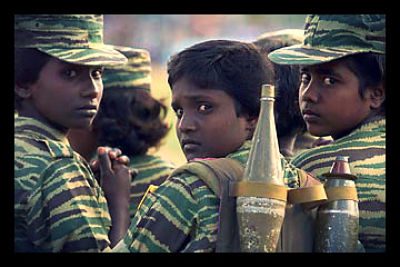
Australia’s Public Interest Advocacy Center detailed an in-depth report chronicling the various abuses perpetrated by both sides of the conflict. The Tamil Tigers have been accused of using civilians as human shields and recruiting child soldiers. While these violations are heinous, the report lays the majority of the blame at the feet of the Sri Lanka government forces.

A United Nations report shows the majority of those 40,000 killed in the war’s final months can mostly be attributed to government action.

The team of investigators highlight the years 2008 and 2009, where the Sri Lankan government is accused of mass civilian bombardment. For example, in 2009, civilians were blocked by rebel fighters from leaving the war zone; the government shelled the entire area.

U.N. satellite images show the area the government shelled was occupied by up to 50,000 noncombatants. The government forces are also accused of purposefully targeting hospitals as well as blocking food and medicine to civilians and miscounting the number of civilians located in the war zone.

The abuses have been noted by the United States Government, resulting in intensified relations between the two countries. Recently, the U.S. has floated the idea of a third U.N. resolution against Sri Lanka. It responded by denying a visa request for a State Department official.

The government remains obstinate in the face of international pressure. Its President Mahinda Rajapaksa stated that it would be a “great crime” to accuse the government of war crimes. He went as far as to say that those bringing these allegations against the Sri Lankan government shows they are “opposed to peace.”

It is uncertain where these U.N. resolutions will lead or if they will be effective at all in finding justice for the many thousands that were needlessly slaughtered by their own government.

– Zack Lindberg

Sources: Al Jazeera, CFR, ABC News
Photo: The Telegraph

February 13, 2014
https://borgenproject.org/wp-content/uploads/borgen-project-logo.svg 0 0 Borgen Project https://borgenproject.org/wp-content/uploads/borgen-project-logo.svg Borgen Project2014-02-13 16:42:142024-12-13 17:50:03Human Rights Abuses in Sri Lanka
Activism, Advocacy, Developing Countries, Development, Global Poverty, Government, Human Rights, Inequality

Human Rights Abuses in West Papua

west_papua_human_rights
The region of West Papua does not make the news often; in fact, it rarely merits a news blurb in most Western headlines. However, West Papua is arguably one of the most under-reported cases of exploitation an indigenous groups in the 21st century.

Since 1969, the people of West Papua have been in conflict with the government of Indonesia in one way or another. The University of Sydney’s Center for Peace and Conflict Studies put out a report stating that for the better part of 40 years, the people of West Papua have been under the boot heel of the Indonesian Security forces.

The report goes on to state that due to wide scale incursions by Indonesia’s armed forces, West Papua has seen over 100,000 of its citizens die and much of its national resources depleted.

A report by The Guardian also notes the devastating effect that Indonesian resource extraction is having on the people of West Papua. It notes the case of the Mooi people, who are one of the 250 indigenous tribes that are having their way of life destroyed due to the deforestation of their lands by timber and palm oil companies.

The oceans off the coasts of West Papua are also being devastated due to nickel mining in the area, which is flooding the bountiful coral reefs with polluted sediment.

It is not only the eco-system of West Papua that is being destroyed. Even though it has been close to 45 years, the Indonesian military is still cracking down severely on people who are part of the Free Western Papua Movement.

Last year, the Free Western Papua Movement’s Facebook published the photo of a dead Papuan named Edward Apaseray, who was reportedly tortured and killed by the Indonesian Special Police Forces for being a “separatist.” The Diplomat, a current affairs magazine for the Asian-Pacific region, published a report in which a recent study noted that in West Papua, an incident of torture occurred every six weeks for the past half-century.

The human rights organization Tapol that monitors human rights abuses in West Papua published the story of Yawan Wayeni. He was a tribal leader and formal political prisoner who was tortured and killed by Indonesian security forces in brutal fashion.

The media have long overlooked the plight of the people of West Papua. It has only recently begun to receive real traction in Western media. The International Parliamentarians for West Papua (IPWP) is a group of politicians around the world who support the right self-determination for the people of West Papua.

One of its members, Benny Wenda, an exile from West Papua, recently had an article published in which he decried the recent statement of Australian Prime Minister Tony Abbot, who stated that things in West Papua are “better and not worse.”

West Papua is one of the forgotten atrocities of the 21st century; the responsibility making sure that it does not continue to be rests with us and our elected officials. The Arab Spring occurred with the help of Facebook and a determined populace. The plight of West Papua needs the same type of support from those who have the ability to stand up to the Indonesian government.

– Arthur Fuller

Sources: Amnesty International, The Guardian, Tapol,  The Diplomat, The University Of Sydney, Tapol,  CNN, The Guardian, Tempo, Australia News Network
Photo: London Mining Network

February 13, 2014
https://borgenproject.org/wp-content/uploads/borgen-project-logo.svg 0 0 Borgen Project https://borgenproject.org/wp-content/uploads/borgen-project-logo.svg Borgen Project2014-02-13 16:33:352024-06-11 02:29:34Human Rights Abuses in West Papua
Children, Developing Countries, Development, Economy, Education, Global Poverty, Government, Human Rights, Inequality

Education in India Suffers from Income Inequality

education_india
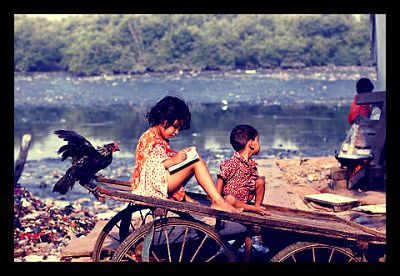
India is known for having one of the fastest growing economies in the world. Currently, the growth for GDP within India rests at 4.9 percent, but this is far below its potential.

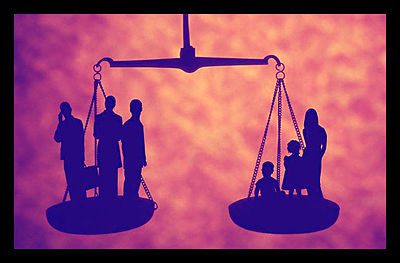
Similarly to the United States, India is another one of the world’s largest democracies. However, they both also have some of the worst cases of income inequality. In the past 15 years, the net worth of India’s top billionaires have increased 12 times, enough to eliminate poverty in India twice.

The public infrastructure of India is developing at a decent pace, but there are problems that are often left unaccounted for by the Indian government. For example, education in India is a system in dire need of improvement.

According to UNESCO’s Education For All global monitoring report, “At 287 million, India has 37 percent of the total population of illiterate adults across the world.” The report also asserts that the poorest of India will not expect to receive universal education until around the year 2080.

In regards to the specific problems that India faces with education, access and quality are two of the greatest concerns. Much of it is tied to the proper functioning and funding of Indian government, which may not be reliable in certain instances.

90% of people do not continue to college in India, 58% do not finish primary school and 4% never even have the opportunity to start.

The extensive lack of universal education in India also goes on to provide problems for India’s human capital in general. Out of 122 total countries released by the World Economic Forum’s Human Capital Index, India is ranked a measly 78.th The problems India faces may require the nation to make steps toward realizing more inclusive growth and development.

Income inequality ought to be addressed in India for their human capital to rise.

This means core public services including basic healthcare, education and power or water supply must be established by Indian government at multiple levels. Investment in people has proven a successful method to national development. In other words, India still has a ways to go in realizing its full potential.

– Jugal Patel

Sources: World Bank, India Times, Teach For India, Live Mint, Outlook India
Photo: The New York Times

February 13, 2014
https://borgenproject.org/wp-content/uploads/borgen-project-logo.svg 0 0 Borgen Project https://borgenproject.org/wp-content/uploads/borgen-project-logo.svg Borgen Project2014-02-13 16:33:072019-08-13 13:15:12Education in India Suffers from Income Inequality
Advocacy, Global Poverty, Human Rights

Buycott: App that Advocates Against Global Poverty

buycott_app
Human rights? There’s an application for that. Launched in May 2013, the free application called ‘Buycott’ is revolutionizing the way social justice is approached by providing consumers with a detailed background into company ethics before making a purchase. Now 10th in the App Store, advocacy is trending with the use of popular technology.

After one scans the barcode, Buycott will trace the product or brand’s owning company and crosscheck it for ethical injustices within a matter of seconds. To make it easier to organize the user’s philanthropic goals, the application enables searches around specific personal conflicts such as human trafficking, labor rights, genetically modified organism labeling, animal welfare and more.

Even more impressively, it encourages grassroots political activism. Users can freely create their own campaigns, which are then incorporated in searches throughout the application and available for others to join. By combining a goal with a problematic company to target, anyone with a Smartphone can inform the world of which products should be avoided.

Many of the popular campaigns today demand opposition to major companies such as Monsanto, Koch Industries, Coca-Cola or Johnson & Johnson. Buycott also has a large presence of positive campaigns, in support of socially conscious companies. For example, Starbucks Coffee Beans made an early appearance on the application for its political support of marriage equality and for its fair trade initiatives.

Sadly, today’s global economy often functions off inhumane sweatshop labor to put cheap products on the shelves of wealthy nations. Sweatshops are known for their poor working conditions, unfair wages, lack of benefits, unreasonable hours and physical abuse. It is estimated that several hundred millions individuals worldwide, mostly women and children, are currently working for wages as low as 13 cents per hour.

Although they are present everywhere, sweatshops are more prevalent in developing nations, such as those in Southeast Asia and Central America, due to an absence of unions and labor laws. Some items most commonly produced through the sweatshop abuses of human rights are shoes, clothing, toys, chocolate, coffee, rugs and bananas.

Sweatshop labor and economically unjust institutions make it next to impossible for surrounding communities to rise out of a state of poverty. They are not truthfully increasing the number of jobs available for local people because the wages earned are too minuscule to provide a family with financial stability. Additionally, they are contrary to more beneficial, sustainable development efforts, stalling any real economic advancement.

Boycotting, or ‘Buycotting’ products manufactured under these contexts supports the broader fight against global poverty, by confronting companies with the injustices they promote and the demand for changed business practices.

 – Stefanie Doucette

Sources: Forbes, ABC News, Institute for Global Labour and Human Rights, PBS, Buycott
Photo: Sydney Morning Herald

February 11, 2014
https://borgenproject.org/wp-content/uploads/borgen-project-logo.svg 0 0 Borgen Project https://borgenproject.org/wp-content/uploads/borgen-project-logo.svg Borgen Project2014-02-11 16:39:432017-11-30 10:53:16Buycott: App that Advocates Against Global Poverty
Children, Family Planning and Contraception, Global Poverty, Health, Human Rights, Violence Against Women, Women & Children

China Eases One-Child Policy

China_One_Child_Policy_Baby
In late December 2013, China’s Standing Committee of the National People’s Congress formally introduced measures to ease its notorious one-child policy.

The major tweak of the one-child policy now allows parents to conceive a second child if just one of the parents is an only child.

Previously, parents were allowed a second child only if each parent was an only child. Rural couples on the other hand, were allowed a second child only if the first born was female.

The new measures will be implemented in a phased process at the local level. Furthermore, provincial leaders now have the authority to introduce the changes in accordance with local demographic needs.

While modest, the change will hopefully reduce the number of human rights abuses perpetrated against Chinese women since the policy’s inception in 1979. In the New York Times, OP-ED contributor Ma Jian details some of the horrific experiences Chinese women endure when authorities become aware of a second conception.

She describes the staggering amount of personal invasion local officials engage in to enforce the one-child policy. Family planning officers vigorously chart data regarding menstrual cycles and pelvic exams of every female of child bearing age within every village.

Many of these women are subjected to forced abortions and sterilizations if they are found within violation of the policy.

Probably one of the most egregious injustices of the policy is its disproportionate enforcement. The policy frequently targets poor citizens while bypassing wealthy individuals.

In fact, all violators can avoid the consequences of having a second child if they pay a fine that falls within the range of three times to 10 times the annual household income. It goes without saying that poor citizens, unable to pay the steep fine, either flee their home to avoid the authorities or become victims of forced abortions.

Many see the easing of the policy as a response to the looming demographic crisis that China now faces after 30 years of steadily implementing the one-child policy.  Some say the change is too little, too late.

Nicholas Eberstadt reports in the Wall Street Journal, that even with the policy change, the Chinese government only expects one million extra births per year, resulting in only a six percent increase in the fertility rate.

He also discusses the lasting effect the one-child policy will have long after its easing. For instance, individuals born under the previous policy will be entering the workforce in 2030 and deciding to get married in 2035.

Demographers predict that at the end of the decade there will be over 24 million men incapable of finding a woman to marry. One can expect this number to increase by 2035.

The inability for many to reproduce will leave China with an aging population that will increasingly reduce the number of individuals who are able to work as well as government resources. By 2050, over one quarter of the Chinese population will be over the age of 65.

– Zachary Lindberg

Sources: BBC, The Wall Street Journal, The New Yorker
Photo:  Dailystormers


February 9, 2014
https://borgenproject.org/wp-content/uploads/borgen-project-logo.svg 0 0 Borgen Project https://borgenproject.org/wp-content/uploads/borgen-project-logo.svg Borgen Project2014-02-09 04:00:392016-12-15 08:15:57China Eases One-Child Policy
Human Rights

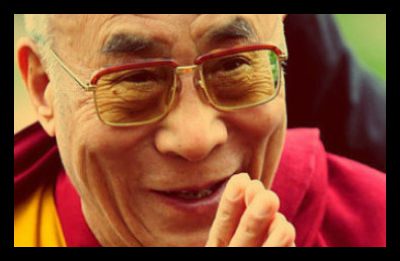
Top 5 Influential and Admirable Humanitarians

Harriet_Tubman_influential_people_slavery
Dr. Martin Luther King Jr.

King is arguably one of America’s most influential civil rights activists of all times.  He was able to achieve significant political change through his non-violent protests and demonstrations, which advocated for equality between all races.  In 1964, King was awarded the Nobel Peace Prize for his work towards social justice and he selflessly donated all of the prize money of $54,123 to the civil rights movement.  He is best known for his “I Have a Dream” speech, which has inspired humanitarians all over the world.

Harriet Tubman

Tubman was an African-American who overcame slavery just so that she could save others from the same fate.  Tubman was born into slavery in Maryland in 1822 and was often beaten by her master until she was able to escape to Philadelphia in 1849. Even after escaping such a difficult life, she risked it all to return to Maryland, as well as multiple other states, in order to rescue others.  Throughout her life, she led 13 different missions that rescued 70 slaves by using the Underground Railroad.  She also spied on the Confederacy during the Civil War for the Union.

Bill Gates

Gates, Chairman and CEO of Microsoft, is one of the richest men in the world and virtually has been since 1995, but many people do not realize his immense wealth is nearly $80 billion. Exactly how much Gates has pledged is not known, but he has donated at least $29 billion of his fortune to charitable causes. He donates to multiple causes, but is very devoted to eradicating malaria and as part of the Bill and Melinda Gates Foundation; multiple awards have been presented to him because of his humanitarian efforts.

Mother Teresa

Mother Teresa was a devout Catholic trained by the Sisters of Loreto who started her career of serving others by traveling to India.  There, she worked as a teacher, and having observed the extreme poverty existing in India, she started a new order called The Missionaries of Charity.  The main goal of this order was to look after the people that nobody else was looking after.  She spent 45 years of her life helping others and received the Nobel Peace Prize for actively helping the poor in every way possible.

Mahatma Gandhi

Gandhi moved from India to England to study law after the death of his father in 1888.  There, he studied not only law, but also two religious texts: the Hindu Bhagavad Gita and the Bible.  He remained committed to both scriptures for the entirety of his life because the Bhagavad Gita awakened a sense of pride for India in him and the teachings of humility and forgiveness from the Bible inspired him to lead India to independence from Great Britain.

For 30 years he advocated for peaceful protests and demonstrations to lead the British to relinquish India from their hold.  He was also a recipient of the Nobel Peace Prize owing to his efforts and philosophy that inspired movements for freedom and civil rights around the world.

– Kenneth W. Kliesner

Sources: Biography Online, ATI, Biography Online, Better Get a Website, Biography Online
Photo: q99.info

February 6, 2014
https://borgenproject.org/wp-content/uploads/borgen-project-logo.svg 0 0 Borgen Project https://borgenproject.org/wp-content/uploads/borgen-project-logo.svg Borgen Project2014-02-06 14:18:372017-11-30 10:53:16Top 5 Influential and Admirable Humanitarians
Advocacy, Charity, Children, Global Poverty, Human Rights

Lumos Foundation: J.K. Rowling’s Magical Venture

J.K. Rowling may be most famous for her adventurous and classic tales of witchcraft and wizardry, but the author of the Harry Potter franchise has much more up her sleeve. The Lumos Foundation, Rowling’s charitable organization, has bettered the lives of millions.

A well-known advocate for international human rights, Rowling spent time volunteering for Amnesty International prior to her breakout success.  Rowling cites her time with the organization for teaching her about the kind of impact she wishes to have for humanity.  In the wake of her celebrity status, Rowling became the 12th richest woman in the world.  With her wealth, Rowling decided to donate half of it to charitable causes, taking a pledge alongside other billionaires and initiated by Bill Gates.


The Lumos Foundation


Rowling’s shining charitable achievement, however, is the Lumos Foundation. The Lumos Foundation is an organization committed to providing basic human rights services for over eight million children living in institutions.  The organization seeks to provide community-based services such as primary education and healthcare as replacements for institutions that often neglect these basic needs.

While the Lumos Foundation is globally minded, it focuses most specifically on Eastern European nations.  Moldova, for example, has one of the highest institutionalization rates among children of any nation.  “Most of these vulnerable young people are not orphans and poverty has separated them from their parents,” says Lumos, concerning orphanages in Moldova.  Furthermore, many of these children are placed in institutions due to gaps in the education system.  Children with disabilities are especially at a disadvantage and have a high chance of being institutionalized.

“Lumos works on every level, with every actor, to transform an outdated and harmful system into one which supports and protects children and enables them to have a positive future.”  Founding the Lumos Foundation and supporting the development of the world’s most vulnerable citizens, children, shows how dedicated Rowling is to advocacy (even without Hogwart’s training.)

– Taylor Diamond

Sources: Lumos, The Borgen Project
Photo: Mirror

February 6, 2014
https://borgenproject.org/wp-content/uploads/borgen-project-logo.svg 0 0 Borgen Project https://borgenproject.org/wp-content/uploads/borgen-project-logo.svg Borgen Project2014-02-06 04:00:352024-05-26 23:09:23Lumos Foundation: J.K. Rowling’s Magical Venture
Global Poverty, Human Rights, Human Trafficking, Slavery

10 Statistics on Slavery Today

Slavery Today
“Elementary students across America are taught that slavery ended in the 19th Century. But, sadly, nearly 150 years later, the fight to end this global scourge is far from over.”

Hillary Clinton wrote these words in an op-ed she penned as Secretary of State. Her words were calling the world’s attention to the hideous prevalence of modern slavery. Slave owners often hide the practice behind words and phrases such as “bonded labor,” “human trafficking” and “forced labor,” yet nothing changes the fact that human beings are being enslaved.

Calling for people, organizations and governments to “redouble our efforts to fight modern slavery,” Secretary Clinton advocated for using “every available tool” to set the international community on a course toward the eradication of modern slavery.


Slavery Statistics


1. An estimated 29.8 million people live in modern slavery today

2. Slavery generates $32 billion for traffickers globally each year

3. Approximately 78% of victims are enslaved for labor, 22% of victims are enslaved for sex

4. 55% of slavery victims are women and girls

5. 26% of slaves today are children under the age of 18

6. An estimated 60,000 victims of slavery are enslaved in the United States.

  •  The 2013 Walk Free Global Slavery Index places U.S. at 134th out of 162 countries
  •  Rankings were determined based on three factors: a country’s estimated slavery prevalence by population, a measure of child marriage and a measure of human trafficking.

7. Iceland, Ireland and the United Kingdom tied for the ranking of 160 in the 2013 Global Slavery Index. However, even with the top ranking in the survey, these countries are not free from slavery. In the United Kingdom alone, there are an estimated 4,200 to 4,600 victims of slavery.

8. The country with the highest percentage of of its population in slavery is Mauritania with approximately 4% of the total population enslaved. This amounts to roughly 140,000 to 160,000 people enslaved — Mauritania’s total population is only a mere 3.8 million.

9. India has the largest number of slavery victims at a horrifying 14 million.

10. The top 10 per-capita slavery hot spots are:

Mauritania
Haiti
Pakistan
India
Nepal
Moldova
Benin
Cote d’Ivoire
Gambia
Gabon

– Kelley Calkins 

Sources: Free the Slaves, Walk Free Foundation, US State Department
Photo: Exposing the Truth

February 4, 2014
https://borgenproject.org/wp-content/uploads/borgen-project-logo.svg 0 0 Borgen Project https://borgenproject.org/wp-content/uploads/borgen-project-logo.svg Borgen Project2014-02-04 21:00:562024-12-13 17:49:5810 Statistics on Slavery Today
Human Rights, War and Violence

5 Genocides that Changed the World

holocaust_genocides
Throughout history, there has been a problem in classifying mass killings as genocides.  The term “genocide” carries a lot of weight because it implies that there was a deliberate extermination of a certain group of people.  Would natural disasters deliberately ignored by the government qualify as genocides?  Can colonization be considered a form of genocide?  Was the North Atlantic Slave Trade genocide?  Since the definition and characteristics of genocide are subjective, this post considers a broad definition of genocide, as in, organized mass murders that are politically, racially, religiously or ethnically fuelled.  The following list is by no means ranking the genocides in any terms, nor is this a comprehensive list of world genocides 

The Nazi Holocaust

Nazi Germany, led by Hitler in the 1930s and 1940s, sought to exterminate the Jewish population.  The Jews were used as a scapegoat for Germany’s economic crisis.  Over the course of WWII, close to 8 million Jewish people were slaughtered by the Nazi regime.  Close to 2/3 of all Jews living in Europe were killed, including 1.1 million children.  Furthermore, some 300,000 members of the Jewish population in Eastern Europe were displaced.

Trans-Atlantic Slave Trade

The slave trade to North America killed many Africans as they were uprooted and shipped across the Atlantic.  Over 12 million Africans were transported to the Americas and sold into slavery from the 16th to the 19th century.  The trans-Atlantic slave trade is considered one of history’s greatest tragedies in terms of scale and duration.

Holodomor (Soviet famine of 1932-1933)

Often called the “Terror-Famine” in Ukraine, this genocide was responsible for the deaths of 2.5 to 7.5 million Ukrainians.  From 1932 to 1933, Stalin withheld aid, restricted migration and confiscated food from Ukrainian peasants.  Holodomor, essentially means “extermination by hunger.”  Scholars believe that Stalin was attempting to quell the Ukrainian nationalism that threatened the USSR’s hold over the country.  Due to shoddy record-keeping and government corruption, the details concerning this genocide are largely unknown.

China’s Great Leap Forward and the Cultural Revolution

China’s movement towards a utopian communist society from the 1940s to the 1970s failed miserably. Some 40-70 million people died due to starvation as well as the targeted killing of “rightists” and elites by the Red Guard, a communist youth organization that led the Cultural Revolution.  The promotion of a “class struggle” prompted young people to fight against society’s elites, such as professors, landowners and businessmen.

Pol Pot’s Cambodia

From 1975 to 1979, Pol Pot’s regime targeted intellectuals, foreigners and elites in an attempt to create an agrarian utopia reminiscent of Mao Zedong’s Cultural Revolution.  Over 2 million people were killed in a period of 4 years.  Any foreign economic or medical aid was suspended, media was censored, outside contact was forbidden and the country’s currency was eliminated.  People were forced to work all day in the fields, but were forbidden from eating the food they produced.  Those who were not targeted by the government often died of starvation or disease.

– Stephanie Lamm

Photo: Alan Hart
Sources:
Union County College, About.com, SlaveVoyages.org, UNESCO, The History Place

February 4, 2014
https://borgenproject.org/wp-content/uploads/borgen-project-logo.svg 0 0 Borgen Project https://borgenproject.org/wp-content/uploads/borgen-project-logo.svg Borgen Project2014-02-04 20:36:452024-06-04 03:01:145 Genocides that Changed the World
Page 38 of 45«‹3637383940›»

Get Smarter

  • Global Poverty 101
  • Global Poverty… The Good News
  • Global Poverty & U.S. Jobs
  • Global Poverty and National Security
  • Innovative Solutions to Poverty
  • Global Poverty & Aid FAQ’s
Search Search

Take Action

  • Call Congress
  • Email Congress
  • Donate
  • 30 Ways to Help
  • Volunteer Ops
  • Internships
  • Courses & Certificates
  • The Podcast
Borgen Project

“The Borgen Project is an incredible nonprofit organization that is addressing poverty and hunger and working towards ending them.”

-The Huffington Post

Inside The Borgen Project

  • Contact
  • About
  • Financials
  • President
  • Board of Directors
  • Board of Advisors

International Links

  • UK Email Parliament
  • UK Donate
  • Canada Email Parliament

Get Smarter

  • Global Poverty 101
  • Global Poverty… The Good News
  • Global Poverty & U.S. Jobs
  • Global Poverty and National Security
  • Innovative Solutions to Poverty
  • Global Poverty & Aid FAQ’s

Ways to Help

  • Call Congress
  • Email Congress
  • Donate
  • 30 Ways to Help
  • Volunteer Ops
  • Internships
  • Courses & Certificates
  • The Podcast
Scroll to top Scroll to top Scroll to top