• Link to X
  • Link to Facebook
  • Link to Instagram
  • Link to TikTok
  • Link to Youtube
  • About
    • About Us
      • President
      • Board of Directors
      • Board of Advisors
      • Financials
      • Our Methodology
      • Success Tracker
      • Contact
  • Act Now
    • 30 Ways to Help
      • Email Congress
      • Call Congress
      • Volunteer
      • Courses & Certificates
      • Be a Donor
    • Internships
      • In-Office Internships
      • Remote Internships
    • Legislation
      • Politics 101
  • The Blog
  • The Podcast
  • Magazine
  • Donate
  • Click to open the search input field Click to open the search input field Search
  • Menu Menu

Archive for category: Human Rights

Information and stories about human rights.

Development, Global Poverty, Human Rights

Same-Sex Marriage Laws Around the World

same_sex_couples_marriage
Although recent gains have been made in advancing equality for same-sex couples, the majority of the world’s countries do not have any legislation permitting same-sex marriage. As of 2014, only 16 countries have laws allowing same-sex marriage.  The majority of those countries are in Europe and South America, while the rest of the world struggles to gain ground for this meaningful right.

It is important to note, however, that legal recognition of gay couples varies from country to country and even within countries. Some countries provide full recognition of gay marriage, while other provide for limited civil union status, to even countries that criminalize same-sex marriage such as Uganda.

France legalized gay marriage after much effort and debate in May 2013, becoming the 14th country to do so. Despite more than 60% of France approving of same-sex marriage, the approval of same-sex marriage provoked acts of violence and protests that drew in hundreds of thousands of people from all over the country.

A prior law, the Pacte civile de Soldarité, allowed for civil unions between couples but did not provide the full benefits that marriage brings. Namely, the law did not confer similar treatment under the law for same-sex couples over inheritance issues and parenting rights.

The Netherlands was the first country to grant full legal recognition of same-sex marriage under the law when it passed a bill in 2001. One major difference between the treatment of same-sex couples and heterosexual couples lies in the birth of children. In the Netherlands, the biological father of the child is considered the father while their partner needs to adopt the child in order to obtain a co-parenting status.

In May 2013, a legal body in Brazil, the National Council of Justice, handed down a ruling effectively legalizing gay marriage. The ruling explicitly prohibited government officials from discriminating against same-sex couples by denying them the right to marry. Before this ruling, Brazil allowed for same-sex civil unions through its constitution, which permits “stable unions.” Stable unions gave many same-sex couples the same rights as married heterosexual couples, from the right to joint declaration of income tax, pension, property sharing, and inheritance.

In 2006, South Africa became the only country on the African continent to legalize same-sex marriage when it passed the Civil Union Act. This approval had its roots in the 1997 constitution that was the first to recognize sexual orientation as a basic human right. Despite this progressive legislation, some say homophobia in South Africa continues to be rampant, with famous South African soccer star Eudy Simelane killed in a hate-crime due to her sexual orientation.

– Jeff Meyer

Sources: Council on Foreign Relations, The New York Times
Photo: Illinois Observer

March 12, 2014
https://borgenproject.org/wp-content/uploads/borgen-project-logo.svg 0 0 Borgen Project https://borgenproject.org/wp-content/uploads/borgen-project-logo.svg Borgen Project2014-03-12 04:00:372024-05-26 23:16:30Same-Sex Marriage Laws Around the World
Human Rights, Human Trafficking

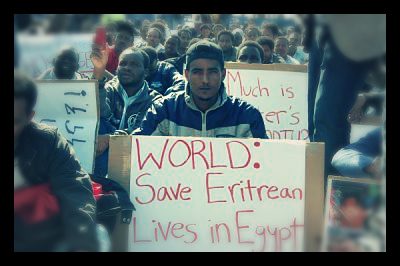
Eritrean Refugees Abused in the Middle East

Eritrean Refugees
Refugees are fleeing Sub-Saharan Africa’s poverty in search for job opportunities, political freedoms and basic human rights. The sad reality of this situation is many of these opportunities are few and far in-between, and their lives rarely improve above the dire situation they were leaving.

Eritrea is one of the nations many have been fleeing from. Isayais Aferwerki, the despotic dictator who’s ruled Eritrea since its 1994 independence from Ethiopia, is a main reason. The nation is home to rampant poverty, media repression and political oppression. Adult-aged males are regularly conscripted into military service with no definite end-date, and the President was quoted as saying the nation was not ready for free elections for at least another 20-30 years. The constitution has been suspended and Eritrea remains single-party state, with opposition political groups regularly rounded up and jailed.

Around 200,000 Eritreans have left the nation in search of freedom, but it has resulted in a human rights crisis. Eritreans regularly flee to Sudan, Egypt and Israel only to be subjected to discrimination, and in some cases, have fallen into human trafficking. Israel has prevented refugees from entering by building a fence, which has resulted in asylum seekers slowing “to a trickle” of their original amount.

Human Rights Watch published a report detailing the crisis in early February stating that “refugees are commonly kidnapped, and their families extorted to pay for their release.” Those who manage to avoid kidnapping are usually deported back. HRW has focused on the culpability of Egyptian and Sudanese officials in the kidnapping crisis. The allegation has been made that corrupt officials have been benefiting financially from the situation and are actively cooperating with kidnappers.

Physicians for Human Rights released a damning report on the conditions many Eritrean refugees face on the trek to asylum. The imprisonment rate of those interviewed was around 59%, while 52% claimed they were violently abused at some point on their way to the Sinai Peninsula. Slave camps are prevalent in Egypt. In El-Arish, there are camps reported throughout the area, populated with “slave traders” who “demand ransoms” for the release of African refugees.

The report detailed that many of these refugees were tricked through “promises of being led to Israel” but rather held against their will, while other’s detailed “severe abuse.” Twenty percent of those interviewed also described witnessing murders. Israel can be considered culpable in this situation. With the building of the fence, the average of 1,500 refugees gaining asylum each month decreased to only 25 entering “between January and April 2013.”

Israel has also mounted a political campaign to defend their actions, decrying the Eritrean refugees as a “threat to Israeli society.” The public response to these accusations helped allow the government to enact stricter immigration legislation, allowing for slave traders to flourish in the wake.

The Anti-Infiltration Law was passed in January of 2012 by the Israeli Legislature of Knesset, and allowed the Israeli Government to detain any people found crossing the border. The law even prevents many of these refugees from receiving a speedy trail, allowing the Israeli state to detain undocumented immigrants for “minimum of three years.” If a undocumented immigrant is from a state considered belligerent to Israel, such as Sudan, they can be “detained indefinitely.”

It was a crushing defeat for many Africans in search of a new life free of oppression. With no options, many still flee, but they may not find the salvation they are in search of.

– Joseph Abay

Sources: Turkish Weekly, US State Department, Haaretz, The Voice, Sudan Tribune, DW, Physicians for Human Rights, Haaretz

March 11, 2014
https://borgenproject.org/wp-content/uploads/borgen-project-logo.svg 0 0 Borgen Project https://borgenproject.org/wp-content/uploads/borgen-project-logo.svg Borgen Project2014-03-11 04:00:512024-06-05 01:57:14Eritrean Refugees Abused in the Middle East
Global Poverty, Human Rights

Uganda Signs Anti-Gay Bill

Anti-gay_bill
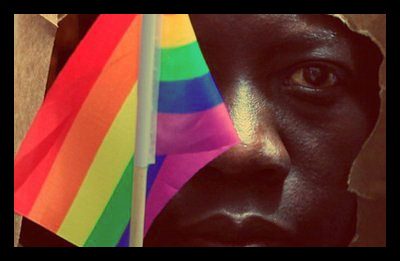
Uganda is under massive scrutiny for passing one of the world’s toughest anti-gay laws. The move comes after a similar bill was passed in Nigeria, which gives a 14 year sentence for being convicted of acts of homosexuality. The bill has come under fire from many Western countries as well as a great many activist organizations.

The anti-gay bill in Uganda comes with some of the most weighty punishments in the world. According to NPR, the punishments can include life in prison for some of the perceived harsher offenses. Simply renting an apartment to an lesbian, gay, bisexual or transgender (LGBT) person and not telling the authorities can result in five years in prison.  According to variety of sources a group of Evangelical Christians in the United States may be behind the background of the bill. As they see the anti-gay movement as lost in the United States, they are now trying to stem the tide in other countries.

There have been reports that Evangelical Christians have indeed been using money and influence in Uganda to promote anti-LGBT sentiment and get bills such as the one Uganda President Yoweri Museveni signed into law a more common part of African law. Museveni recently said, “ I…encourage the United States government to help us by working with our scientist to study whether indeed, there are people who are born homosexual.” This issue is still being debated.

Beyond the obvious human rights tie, there is a broader issue here: the age old intervening imperialist question. As soon as the bill was signed into law, Western powers and international organizations cut off funding as well as other economic sanctions upon Museveni’s signing of the bill. It is no secret that the majority of the countries in Africa do require foreign aid of some type; and African nations are not usually going to reject large injections of cash.

The stance of President Museveni and Uganda to the delay a $90 million dollar loan from the World Bank has been surprising. Ofwono Opondo, a government spokesman, said, “The West can keep their aid to Uganda over homos, we shall develop without it.” This is a surprising stance from one of the world’s poorest countries with a per capita income of only $170.

The anti-gay bill signed into law by Museveni is one of number of discouraging bills that are coming to fruition which are both extremely anti-development and anti-human rights. For one of the poorest countries in the world, making life even more difficult for some of its citizens is, in the words of Secretary of State John Kerry, “…just morally wrong…”

– Arthur Fuller

Sources: New York Times, NPR, CNN, New York Times, World Bank, The Independent, Business Day Live, BBC

March 10, 2014
https://borgenproject.org/wp-content/uploads/borgen-project-logo.svg 0 0 Borgen Project https://borgenproject.org/wp-content/uploads/borgen-project-logo.svg Borgen Project2014-03-10 04:00:402024-06-04 01:17:35Uganda Signs Anti-Gay Bill
Child Soldiers, Global Poverty, Human Rights

Human Rights Violations in Somalia for 23 Years

The history of human rights violations against Somali citizens by their government under the rule of Siad Barre contributed to an overthrow that forced him to flee in 1991. The subsequent power vacuum led to the Somali civil war that continues to rage on to this day. For over 23 years, Somalia has been ravaged by human rights abuses, war crimes and the lack of a developed justice system to deal with these issues.

The main players at this moment are the Islamic backed forces, al-Shabaab, and the pro-government forces, the Federal Republic of Somalia, Ethiopian troops and African Union troops operating under the African Union Mission to Somalia. While the faces have changed throughout the 23 year conflict, the main points of contention  remain the same.

The Islamic forces wish for the country to become an Islamic state ruled under Sharia law, while government forces aim for the country to follow through with the constitution that founded the federal republic in 2012. Major human rights violations are committed on both sides of the Civil War, limiting positive change in the country.

Human rights violations include indiscriminate attacks against civilians, displacement of persons, restrictions on humanitarian aid, rape, recruitment and use of child soldiers, unlawful killings and torture by armed groups and armed piracy off the Somali coast. Various treaties including the Geneva Convention and the Universal Declaration of Human Rights forbid the indiscriminate use of force against civilians. According to Amnesty International, “all parties to the conflict use mortars and heavy weapons in areas populated or frequented by civilians, killing and injuring thousands of people, many of which are women and children under the age of 14.”

The killings not only affect those being killed, but they also the education of the Somalis. A report by Amnesty International states that, “in Somalia’s capital, Mogadishu, many schools have closed down as students and teachers fear being injured and killed on their way to school.” These indiscriminate killings by forces on both sides will lead to the further destruction of the country and its future. The Somalis need to continue their education in order to push the country towards a better path.

The topic of child soldiers has gained popularity in the last few years due to campaigns such as “Kony 2012.” The use of child soldiers is not limited to Uganda, however, and Somalia is a prime example of the horrible atrocities that occur while using them. According to a January 2013 Human Rights Watch report, “al-Shabaab has increasingly targeted children for recruitment, forced marriage, and rape, and has attacked teachers and schools.”

However, government forces have also used child soldiers, as described later in the same article. “In July 2012, the TFG [Transitional Federal Government] signed a plan of action against child recruitment; yet the same month, 15 children were identified among a group of new recruits sent to a European Union-funded training in Uganda.” Abuses are occurring on on both sides of the conflict, and further action may need to be taken by outside parties.

The problems with human rights violations occurring in Somalia do not seem to be getting any better. Unfortunately, humanitarian access to those who need aid is limited at the moment because of restrictions from allies to the conflict, diversion of aid and insecurity. The few humanitarian workers still in the country are being targeted, further limiting access to much needed aid.

– Kenneth W. Kliesner

Sources: Amnesty International, Human Rights Watch, Human Rights Watch
Photo: Global Post

March 9, 2014
https://borgenproject.org/wp-content/uploads/borgen-project-logo.svg 0 0 Borgen Project https://borgenproject.org/wp-content/uploads/borgen-project-logo.svg Borgen Project2014-03-09 04:00:572024-05-26 23:17:43Human Rights Violations in Somalia for 23 Years
Global Poverty, Human Rights, Violence Against Women, Women and Female Empowerment

Hillary Clinton: Champion of Women’s Rights

hillary_clinton
In 1995, Hillary Clinton took the stage at the fourth annual United Nations Conference on Women in Beijing. She listed the atrocities and violations committed against women and girls around the world.

Although women comprise half of the human population, they are 70 percent of the world’s poor and two-thirds of women are illiterate. Women in the informal labor economy remain unprotected and at risk of exploitation. Girls around the world are at risk of sexual violence, rape, domestic abuse and child marriage.

Almost 20 years later, Clinton’s speech is still remembered for being a firm declaration of women’s rights on the international stage. Not only was it a message for the Chinese government, but a call to countries around the world to promote women’s rights as human rights.

As a United States Secretary of State, Hillary Clinton continued to promote women’s rights and empowerment both domestically and internationally. During her four-year tenure, she visited 112 countries, spreading awareness of human rights abuses.

Since leaving the State Department in 2013, she became involved with a new project: the Hillary & Chelsea Clinton Foundation. The Clinton Foundation has partnered with the Bill and Melinda Gates Foundation to further women’s rights.

Although there has been much progression in the 21th century, Clinton warns that there is little data to accurately measure the advancement made in women’s rights globally. This foundation seeks to record and analyze the progress of women by collecting data and figures from traditional and digital sources.

This concrete data will show world leaders how advancing women and human rights is linked with economic development. By empowering and including women in its economic and social life, communities and families are enhanced and can reach their full potential.

On February 25, 2014, Clinton spoke at Georgetown University’s annual Hillary Rodham Clinton Awards for Advancing Women in Peace and Security. The former Secretary of State held that men are also responsible for advancing and protecting women’s rights and that it is not purely a women’s issue. Men, boys, women and girls all suffer from violence and discrimination against females.

Hillary Clinton remains a strong and popular potential candidate for the 2016 Democratic Nomination for presidency. As a woman and potential nomination candidate, she is subjected to greater and unequal focus on her physical appearance, her age, and her hairstyles. And although Clinton has proved her strength, wisdom and determination for decades as a Senator, First Lady of the United States and U.S. Secretary of State, she is still affected by sexism and the widespread notion of what women should and should not aspire to be.

“If there is one message that echoes forth from this conference, let it be that human rights are women’s rights and women’s rights are human rights once and for all. Let us not forget that among those rights are the right to speak freely -and the right to be heard,” Clinton said in 1995.

– Sarah Yan

Sources: Eloquent Woman, MSNBC, Huffington Post
Photo: ABC

March 9, 2014
https://borgenproject.org/wp-content/uploads/borgen-project-logo.svg 0 0 Borgen Project https://borgenproject.org/wp-content/uploads/borgen-project-logo.svg Borgen Project2014-03-09 04:00:022024-12-13 17:50:08Hillary Clinton: Champion of Women’s Rights
Global Poverty, Health, Human Rights, Violence Against Women, Women and Female Empowerment

Ending the Practice of Female Genital Mutilation

female_genital_mutilation
Female genital mutilation (FGM) or female circumcision, has been occurring for hundreds of years in mostly sub-Saharan and northeast African regions. The term “female genital mutilation” encompasses every procedure where partial or total removal of the external female genitalia occurs, as well as any general injury to those organs without a distinct medical purpose.

The practice of FGM is internationally seen as a violation of human rights for women and young girls because it emulates the inequality between genders and represents extreme discrimination against women. On top of this, the following rights are also violated: the right to security, physical integrity, health, freedom from torture and from inhumane treatment–especially when the procedure can result in death.

There are four general classifications of FGM: clitoridectomy, excision, infibulation and an “other” category. Clitoridectomy entails the removal of part of or the entire clitoris and is one of the most common types. Excision is where they remove part of or the entire clitoris and labia minora, and this can be with or without cutting the labia majora. Infibulation includes the reduction of the vaginal opening by cutting and repositioning the labia majora to make a covering, with or without removing the clitoris. The “other” category classifies any other harmful procedures to a woman’s reproductive organs in a non-medical way.

FGM is in no way beneficial to a woman’s health, and in fact, it is harmful in several ways. Short-term effects include hemorrhage, severe pain, tetanus and urine retention. Long-term effects include cysts, recurrent urinary tract and bladder infections, infertility, childbirth complications and newborn deaths. This kind of procedure is mostly done to newborns or girls around 15 years of age that are going through puberty. Today, over 125 million women and girls in the Middle East and Northern Africa have been circumcised. By 2030, it is estimated that a further 86 million young women around the world will experience this procedure as well.

Many officials at UNICEF disagree with the practice of FGM and state it is not necessary in Islamic countries. They say it is a very old practice, traced back to the Egyptian pharaohs, and that the Koran says how humans were created in the perfect way, so changing them is not justified by religion.

Fahma Mohamed, a 17-year-old student that leads the Guardian’s campaign to end FGM, has acquired over 212,000 signatures in her petition against the issue. She has even gotten recognition from the United Nations Secretary General, Ban Ki-moon, who has made it a priority to end FGM because of how it threatens the empowerment of women.

There have been progressive signs in the worldwide campaign to end the practice of female genital mutilation with multiple countries like Kenya, Uganda and Guinea-Bissau adopting laws against it. The girls themselves understand the risks of being circumcised, and mothers who have dealt with the ordeal are fighting more and more to protect their daughters from the same fate. Schools can be directed to address the issue so that the people in these countries can learn about the issue and how to shield their young women from it.

– Kenneth W. Kliesner 

Sources: The Guardian (1), The Guardian (2), World Health Organization
Photo: Girls’ Globe

March 7, 2014
https://borgenproject.org/wp-content/uploads/borgen-project-logo.svg 0 0 Borgen Project https://borgenproject.org/wp-content/uploads/borgen-project-logo.svg Borgen Project2014-03-07 09:25:522024-12-13 17:50:08Ending the Practice of Female Genital Mutilation
Human Rights

Credibility and Integrity: What’s At Stake for the CBP

CBP
It is early September and Guillermo Arevalo Pedroza is taking his wife and two young girls on a picnic on the south side of the Rio Grande. A couple of shots fired later and Arevalo is dying in the arms of his 9-year-old daughter. These are the types of atrocities that are occurring with dismaying frequency at the hands of the U.S. Customs and Border Protection (CBP).

Juan Pablo Perez Santillan, Carlos Lamadrid, and Sergio Adrian Hernandez Guereca are some of the names of those who have lost their lives in similar incidents.

Questions continue to arise regarding the integrity of the CBP, especially in lieu of the recent shooting of 41-year-old Mexican native, Jesus Flores-Cruz.

The incident occurred on Tuesday, February 18th in Mission, Texas, when two agents on foot suspected multiple people of attempting to cross the border illegally from Mexico. One agent, whose identity remains undisclosed, fired two shots after being attacked by several rocks, killing Flores-Cruz. There were no witnesses.

In a statement following the incident, the Border Patrol claimed that the agent feared for his life at the time of the attack. Spokeswoman for the U.S. attorney’s office in San Diego, Kelly Thornton, said that prosecutors decided against charging the agent with a crime.

Amongst the responses to the shooting are many who are concerned about the continuing pattern of human rights abuses committed by the Border Patrol under their use-of-force policy.

Both the Inter-American Commission on Human Rights (IACHR), as well as the Southern Border Communities Coalition (SBCC), expressed their indignation following the event. In a statement on behalf of the SBCC, director Christian Ramirez said that the incident “is yet another reminder that the Border Patrol operates with impunity and on the fringes of the Constitution and international law.”

Although bold, this statement holds weight given the number of people killed with lethal force by the CBP. Since 2010, 21 Mexican citizens have been killed, and not one agent involved in the deaths has been prosecuted for their use of lethal force.

This continuing use of lethal weapons raises questions about the agency’s lack of both accountability and oversight. For example, agents are not required to carry non-lethal repellents, such as ‘pepper ball’ guns, which shoot pellets of pepper spray at long-range distances. However, those agents who have made use of such devices have been successful at repelling rock attacks such as that which occurred in the case of Flores-Cruz. 160 separate incidents have been resolved by using these non-lethal devices.

Given that this is the case, it is highly alarming that the CBP rejected a recommendation that they prohibit agents from using lethal weapons against rock throwers and assailants in vehicles.

So, what can be done?

Twenty members of Congress have recently asked to meet with ranking members of the CBP to discuss their growing concern. In addition, the Police Executive Research Forum an independent police review agency, has issued a report with recommendations for the CBP. Among the recommendations are ways for agents to de-escalate tense encounters by taking cover, moving out of range, and/or using non-lethal weapons.

Customs and Border Protection boasts of being the largest law enforcement agency in the United States, which carries with it the responsibility of being accountable to the American public. If attacks continue, it could have serious implications for the CBP’s credibility and integrity.

– Mollie O’Brien

Sources: Southern Borders Communities Coalition, Latin Times, Daily News, ACLU
Photo: Deviant Art

March 6, 2014
https://borgenproject.org/wp-content/uploads/borgen-project-logo.svg 0 0 Borgen Project https://borgenproject.org/wp-content/uploads/borgen-project-logo.svg Borgen Project2014-03-06 04:00:302024-06-04 01:08:02Credibility and Integrity: What’s At Stake for the CBP
Global Poverty, Human Rights

The Struggle of Circassians in Sochi

circassians in sochi
With the Winter Olympics now over, many are lamenting the failure of civil society and LGBT advocacy to impact the games, due in large part to the IOC’s unwavering apolitical stance. Yet what is more shocking is how little of Sochi coverage went to the Circassians, a North Caucasian ethnic group indigenous to the region.

In the 19th century, Circassians were the subject of a bizarre European and American fixation which arose in part from anthropologist Johan Friedrich Blumenbach’s claim that they were the origin of the white race. The image of the “Circassian Beauty” was extolled by authors from Pushkin to Dumas—all while the Arab-African slave trade imported Circassian women into Ottoman harems through the 18th and 19th centuries. Then in the early 1800’s, the Russian conquest into the Caucasus led to what many are calling the ethnic cleansing and genocide of Circassians.

During the years before the Winter Olympics, the Circassian Cultural Institute, among other organizations, united Circassians worldwide to raise awareness about the tragic history of the region and get recognition from the Russian government that the Russo-Circassian War was in fact a genocide—an allegation that Russian leaders, from Tsar Nicholas II to Vladimir Putin, have downplayed and denied. Roughly 700,000 Circassians live in Russia, with significant numbers in Turkey, Jordan, Syria and New Jersey in the U.S., where the Institute is based.

Delegations in Israel and Turkey have lobbied and protested both the IOC and the Russian embassies in their respective countries, with little response from either. Moreover, Circassian advocates and local community leaders were detained in the months prior to the Olympics. Many have also accused Putin of downplaying the ethnic heterogeneity in the region, and misleadingly portraying Sochi as an ethnically Russian region. While the struggle has been reported on by several reputable news outlets, discussions on Circassians in Sochi have failed to launch from the blogosphere into mainstream media.

Martin W. Lewis at Stanford University attributes the lack of reporting to confusion, uncertainty and overwhelming lack of awareness by Western audiences of the history and demographics of the Caucasus region.  Lewis suspects that the story, in the minds of reporters, may be too complicated for observers to bear, and furthermore distracts audiences from the “tunnel vision” of the Caucasian narrative—which has predominantly focused on Chechnya, not Circassia.

The disproportionate focus on LGBT rights and allegations of corruption in funding—not to mention the anecdotal and overdone coverage on Sochi hotel rooms and bathrooms—may have very well swayed attention away from the plight of Circassians in Sochi. And now that the Olympics are over, Ukraine and Crimea take center stage in Eastern European affairs. Looking back, Sochi seems like a lost opportunity for garnering the global awareness that only the Olympics can bring, especially for a region that has, until now, kept out of the spotlight.

– Dmitriy Synkov

Sources: Buzzfeed, The New Yorker, GeoCurrents, The Asahi Shimbun, Mirror of Race
Photo: The Nation

March 5, 2014
https://borgenproject.org/wp-content/uploads/borgen-project-logo.svg 0 0 Borgen Project https://borgenproject.org/wp-content/uploads/borgen-project-logo.svg Borgen Project2014-03-05 09:47:402017-03-20 13:21:49The Struggle of Circassians in Sochi
Activism, Global Poverty, Human Rights

3 Key Qualities of Human Rights Activists

In our constantly changing world, we are seeing more and more everyday people taking a stance against poverty and becoming human rights activists. These individuals have demonstrated that with the right qualities and the commitment to bringing about change, anyone can make a difference.

Be a dreamer.

When Kakenya Ntaiya, founder of the Kakenya Center for Excellence in Kenya, was growing up she dreamed of being a teacher. However, the social and cultural norms of the Maasai population in Kenya expected young girls like Ntaiya to be married at a young age and learn skills to be a wife, not to go to school.

In a Massai right of passage, young girls suffer genital mutilation and are usually married not long after this ceremony. Ntaiya made a deal with her father that would allow her to finish high school after the ceremony, and she ultimately received a college scholarship in the United States and earned a doctorate in education.

Ntaiya made her childhood dream a reality when she opened the Kakenya Center for Excellence in 2009, the first primary school in her village. Since then, she has helped over 150 girls receive a proper education without having to endure what she did.

Persevere against all odds.

In light of Nelson Mandela’s death in December 2013, we are reminded of the legacy he left behind to inspire future human rights activists and leaders. Mandela spent over 25 years in prison after being convicted of sabotage and conspiracy to overthrow the government because of his anti-apartheid efforts. During his time in prison, Mandela was unable to attend the funerals of his mother and his eldest son.

While in prison, Mandela secretly began negotiations with the current apartheid state, specifically with South African President F.W. de Klerk. Mandela was released in 1990 and worked even harder to change conditions in South Africa. In 1994, Mandela became the nation’s first black president.

In his autobiography Long Walk to Freedom, Mandela wrote, “It would be very hard, if not impossible for one man alone to resist. But the authorities’ greatest mistake was to keep us together, for together our determination was reinforced.” Despite all he had gone through, Mandela never gave up on his beliefs and the perseverance that he shared with all anti-apartheid activists.

When tragedy strikes, come back strong.

After being shot in the head by the Taliban in October 2012, then-15 year old Malala Yousafzai not only recovered, but became more committed to fighting for the right of education for young girls. Yousafzai was targeted because of her strong voice, but the injury she suffered was extremely serious and required a risky surgery. After a medically induced coma and a stay in intensive care, she made an incredible recovery.

Nine months after being shot, she spoke at the United Nations headquarters in New York. The day also marked her 16th birthday. In her speech she said, “One child, one teacher, one book, one pen can change the world.”

Since then, Yousafzai has been nominated for the Nobel Peace Price and has been more determined than ever. In response to a question about what the Taliban members who shot her thought they achieved, she said, “I think they may be regretting that they shot Malala. Now she is heard in every corner of the world.”

– Julie Guacci

Sources: CNN, BBC News, The Wall Street Journal
Photo: Amandine Van Ray

March 3, 2014
https://borgenproject.org/wp-content/uploads/borgen-project-logo.svg 0 0 Borgen Project https://borgenproject.org/wp-content/uploads/borgen-project-logo.svg Borgen Project2014-03-03 15:49:422024-06-05 01:57:133 Key Qualities of Human Rights Activists
Advocacy, Developing Countries, Development, Disease, Food & Hunger, Food Aid, Food Security, Global Health, Global Poverty, Health, Human Rights, Hunger, Inequality, Sanitation, Water

5 Facts About Hunger in Rwanda

hunger_rwanda
The Republic of Rwanda is a small sovereign state in the Eastern part of Central Africa. Rwanda ranked at 166 of 187 countries on the UNDP Human Development Index in 2011. Rwanda also has the highest population density in the region with 416 people per square kilometer.

Low income, limited natural resources, and food and water insecurity pose a problem for citizens in Rwanda every day. In the years following the Rwandan Genocide in 1994, international rebuilding efforts have been on the ground trying to make sustainable changes to alleviate some of the hunger and water issues.

Here are five facts that explain the state of hunger in Rwanda and how it may change in the coming years:

  1. The 1994 Rwandan Genocide marked the end of the ceasefire signed the year before that stopped the fighting of the Rwandan Civil War. The war began between two ethnic groups the Hutu and Tutsi. The Genocide began when the plane carrying the Hutu supported president Juvenal Habyarimana was shot down and he, along with several other members of the government, were killed. The genocide lasted 100 days and an estimated 800,000 to 1,000,000 people were killed. The fallout from the Rwandan Genocide is the cause for much of the instability in the region that lasts today.
  2. Secondary school attendance in Rwanda is one of the lowest in the world and the literacy rate is 55%.
  3. Approximately 65% of the population has access to safe, clean drinking water
  4. 45% of children under 5 years of age are malnourished.
  5. Over 67,000 refugees from neighboring countries currently reside in Rwanda.

Even though there is a lot of strain on the country today, organizations have been working with the government to address one of Rwanda’s major problems: food insecurity. Agriculture was the country’s main sector before the genocide, and since then, major efforts have been made to make it profitable one more.

Updating the agricultural practices is what the World Food Programme credits with directly reducing the number of food insecure people.

The country hopes that with the reliance on agricultural programs it will improve its GDP to US$900 by the year 2020, up US$380 from its current GDP. Rwanda was also the first country to sign the Comprehensive Africa Agriculture Development Programme (CAADP), meaning that addressing malnutrition and food insecurity is one of the government’s main priorities.

Even though Rwanda still has a long way to go, the government has been taking steps in the right direction that could provide a template for other countries in the region to follow.

– Colleen Eckvahl

Sources: World Food Programme, World Vision
Photo: Rising Continent

February 26, 2014
https://borgenproject.org/wp-content/uploads/borgen-project-logo.svg 0 0 Borgen Project https://borgenproject.org/wp-content/uploads/borgen-project-logo.svg Borgen Project2014-02-26 22:20:472024-05-24 23:56:425 Facts About Hunger in Rwanda
Page 36 of 45«‹3435363738›»

Get Smarter

  • Global Poverty 101
  • Global Poverty… The Good News
  • Global Poverty & U.S. Jobs
  • Global Poverty and National Security
  • Innovative Solutions to Poverty
  • Global Poverty & Aid FAQ’s
Search Search

Take Action

  • Call Congress
  • Email Congress
  • Donate
  • 30 Ways to Help
  • Volunteer Ops
  • Internships
  • Courses & Certificates
  • The Podcast
Borgen Project

“The Borgen Project is an incredible nonprofit organization that is addressing poverty and hunger and working towards ending them.”

-The Huffington Post

Inside The Borgen Project

  • Contact
  • About
  • Financials
  • President
  • Board of Directors
  • Board of Advisors

International Links

  • UK Email Parliament
  • UK Donate
  • Canada Email Parliament

Get Smarter

  • Global Poverty 101
  • Global Poverty… The Good News
  • Global Poverty & U.S. Jobs
  • Global Poverty and National Security
  • Innovative Solutions to Poverty
  • Global Poverty & Aid FAQ’s

Ways to Help

  • Call Congress
  • Email Congress
  • Donate
  • 30 Ways to Help
  • Volunteer Ops
  • Internships
  • Courses & Certificates
  • The Podcast
Scroll to top Scroll to top Scroll to top