• Link to X
  • Link to Facebook
  • Link to Instagram
  • Link to TikTok
  • Link to Youtube
  • About
    • About Us
      • President
      • Board of Directors
      • Board of Advisors
      • Financials
      • Our Methodology
      • Success Tracker
      • Contact
  • Act Now
    • 30 Ways to Help
      • Email Congress
      • Call Congress
      • Volunteer
      • Courses & Certificates
      • Be a Donor
    • Internships
      • In-Office Internships
      • Remote Internships
    • Legislation
      • Politics 101
  • The Blog
  • The Podcast
  • Magazine
  • Donate
  • Click to open the search input field Click to open the search input field Search
  • Menu Menu

Archive for category: Global Poverty

Key articles and information on global poverty.

Development, Global Poverty

Poverty Reduction in the Comoros

Poverty Reduction in the Comoros
The Comoros consists of four islands located in the Indian Ocean near Madagascar and Mozambique. Affectionately calling their country Masiwa, or “the islands”, the population totals to 1,080,000 citizens. The country, among several other small island states, is considered underdeveloped. Although the country gained independence in 1975, political and institutional crises created sustained instability.

In 2012, the Union of the Comoros, under the leadership of the newest president, Dr. Ikililou Dhoinine, drafted an official Poverty Reduction Strategy, highlighting six distinct goals to reducing their nation’s poverty.

1. Stabilize the economy by building a foundation for strong equity.

Although the external debt of the Comoros is said to remain unsustainable, the country’s external trade has increased from 47.8% in 2010 to 52% in 2011, increasing imports from 8.9% in 2010 to 9.1% in 2011.

2. Strengthen profitable sectors, including institution building and participation of private economic operators.

The Comorian government has set a priority to repair highly damaged roads including 17 km on Ngazidja, 17 km on Ndzouani, and 6.5 km on Mwali, among other main highway repairs.

3. Strengthen governance and social cohesion.

Studies on citizenship, prejudice, discrimination, the roles of women and youth in society, the establishment of 16 peace committees, introducing biometrics into the electoral process, and the institutionalization of a national commission to fight corruption.

4. Improve the health of citizens.

According to the recently drafted strategy, 300 households are currently benefiting from implemented sanitation programs, far surpassing the target set in 2011. A sanitary water network has reached 23 km, active in Djando on Mohéli, Domoni, and Sima on Anjouan.

Fighting against avoidable illnesses has also made significant progress. Through obtaining instruments and equipment, support for training programs, and the installation and management of vaccine distribution. Comorians were able to see high percentages of vaccination effectiveness per antigen.

5. Promote education and vocational training.

The main objective in education was to improve access to educational institutions per capita. Enrollment in professional and vocational roles reported an increase from 3% in 2010 to 8% in 2011. Although this rate is lower than the projected improvement of 15%, there has been a significant increase in admissions at the University of the Comoros.

6. Promote environmental sustainability and civil society.

Priority zones for biodiversity conservation resulted in the completion of five inventories of flora and fauna, exceeding the 2011 forecast. 1,531 citizens were educated in several areas of agricultural management, complying with government-instated goals for sustainable use of renewable resources.

Although one out of two people in the Comoros is considered poor, the Comorian government is taking active steps to reduce their poverty and improve the lives of their citizens.

– Kali Faulwetter

Sources: IMF, Every Culture, Maps of World

June 24, 2013
https://borgenproject.org/wp-content/uploads/borgen-project-logo.svg 0 0 Borgen Project https://borgenproject.org/wp-content/uploads/borgen-project-logo.svg Borgen Project2013-06-24 07:37:572024-06-04 02:43:53Poverty Reduction in the Comoros
Global Poverty

Good News for the Meningitis Belt

Good News for the Meningitis Belt
Meningitis is an infectious disease that causes the swelling of the protective membranes that surround the brain and spinal cord. The symptoms involve severe headache, stiffness of the neck and sensitivity to light. In 2009, 88,000 people in Sub-Saharan African were infected with meningitis and more than 5,000 died. To alleviate this problem, the Bill and Melinda Gates Foundation has helped develop MenAfriVac.

Paired with the Meningitis Vaccine Project, a nonprofit organization, the Bill and Melinda Gates Foundation has assisted in developing this new vaccine which costs less than 50 cents per dose. The vaccine is manufactured by the Serum Institute of India and has dramatically reduced deaths from the disease in many countries in the “meningitis belt” – a region of Sub-Saharan African where cases of meningitis are very high.

The most significant development in the MenAfriVac vaccine is the ability to store the drug. MenAfriVac can be stored at a temperature of 40 degrees Celsius for up to four days before use. This, paired with its low cost, has made the vaccine extremely effective in treating meningitis in the parts of the world that suffer the most from the disease.

In addition, the vaccine can be used to immunize infants. Immunizing children with MenAfriVac represents a huge development against the spread and contraction of meningitis in Sub-Saharan Africa.

– Pete Grapentien

Sources: News24,   WHO
Photo: Meningitis Vaccine Project

June 23, 2013
https://borgenproject.org/wp-content/uploads/borgen-project-logo.svg 0 0 Borgen Project https://borgenproject.org/wp-content/uploads/borgen-project-logo.svg Borgen Project2013-06-23 07:11:312024-05-24 23:55:45Good News for the Meningitis Belt
Aid Effectiveness & Reform, Development, Global Poverty

What is the Multi-Dimensional Poverty Index?

What is the Multi-Dimensional Poverty Index?
Measuring poverty can be tricky. Income is a good place to start, but it does not tell the whole story. A recent graduate can live comfortably on the same amount on which a family of four would struggle.

Researchers have begun to search for more comprehensive measures of poverty.  One such measure is the Multi-Dimensional Poverty Index (MPI), created by Sabina Alkire at the Oxford Poverty and Human Development Initiative. This index takes the answers to ten questions – two on education, two on health, and six on living standards – and combines them into a single index. Different questions are weighted differently. Whether your children are enrolled in primary education, for instance, counts three times more than whether you have electricity. Higher scores indicate higher levels of poverty. Households with composite scores over 33% are considered to be in poverty.

One problem with the MPI is that its weightings are arbitrary. Whether access to clean water or access to education matters more is up for debate. Yet despite its shortcomings, the Multi-Dimensional Poverty Index has drawn attention to specifics of poverty that income does not address.

– David Wilson

Source: The Economist
Photo: Inquirer Business

June 23, 2013
https://borgenproject.org/wp-content/uploads/borgen-project-logo.svg 0 0 Borgen Project https://borgenproject.org/wp-content/uploads/borgen-project-logo.svg Borgen Project2013-06-23 06:29:002020-07-03 00:33:05What is the Multi-Dimensional Poverty Index?
Global Poverty

How Will Uganda’s Gold Rush Affect Its Poorest Region?

How Will Uganda’s Gold Rush Affect Its Poorest Region?
The foothills of the Moroto Mountains in northeastern Uganda are marked by hundreds of holes dug by eager villagers in search of gold. Close by, mining machinery installed by the private mining company, Jan Mangle Company Ltd., crank noisily in search of the same.

The relatively recent discovery of gold in the Karamoja region holds the potential to change the fate of the region’s pastoral communities. But whether this change will be negative or positive remains to be seen. The poorest region of Uganda, Karamoja, has been damaged by decades of violent conflict, and many in the region feel they have been neglected by the central government.

In 1980, a fifth of the Karamojong population, including 60% of infants, perished in a widespread famine that resulted in the fall of dictator Idi Amin. Conflict ensued once Karamoja’s clans looted the Moroto armory and used the weapons to ransack cattle from villages in neighboring Kenya and what is now South Sudan.

Cattle are considered among most Karamojong people to be a person’s main representation of wealth. For this reason, many of those unfortunate enough to have their cattle stolen from them during the years of conflict were prompted to begin digging and panning for gold.

Today, the region is relatively free from conflict and has returned to a state of peace and security. This is mostly due to the controversial government disarmament programs in which villages were surrounded and searched for hidden weapons by troops in the Ugandan People’s Defense Force.

The return to security has opened the door for many corporations to poke their noses into Uganda’s mineral-rich lands. In Karamoja, the foreign presence of Jan Mangle Limited has prompted mistrust among locals. It is popularly assumed that the benefits will flow toward the wealthy, leaving the poor even poorer.

“We don’t know where the gold is going to,” said one young villager. “We hear the land is sold to investors and we are afraid we will not see any benefits from the gold. They have not told us anything.”

The government of Uganda has a strong history of forcibly displacing indigenous people in order to buy up land to sell to corporations. An example is the eviction of 392 families to make way for a German coffee company in 2001 or the nearly 20,000 people evicted in 2012 to clear land for a British forestry company. In various regions of northern and central Ugandan, hundreds of families are being paid peanuts for their land that is then sold to corporations such as the AUC Mining Company and Jan Mangle Company Ltd.

Years of manipulation and neglect from the central government have lead Karamojong residents to believe the worst, and it is nearly impossible to get information on government contracts from private corporations.

But government officials such as Moroto District Commissioner Nahaman Ojwe insist that the indigenous of Karamaja will actually see two benefits from the mineral extraction. First, current landowners will receive royalties from the mining companies. Second, the wealth collected from the gold by the central government could be redistributed to the indigenous of the region.

Whether these benefits will actually be felt by the people of Karamoja will be revealed in the coming years. But for now, the villagers keep digging while the machines keep drilling in Uganda’s poorest region.

– Kathryn Cassibry

Source: The Guardian, The Daily Monitor, The Observer
Photo: Foundation of Life

June 23, 2013
https://borgenproject.org/wp-content/uploads/borgen-project-logo.svg 0 0 Borgen Project https://borgenproject.org/wp-content/uploads/borgen-project-logo.svg Borgen Project2013-06-23 04:00:372024-12-13 17:49:24How Will Uganda’s Gold Rush Affect Its Poorest Region?
Global Poverty

Rural Poverty in Armenia

Rural Poverty in Armenia
When the Soviet Union collapsed in 1991, Armenia descended into poverty. Industries that were previously operated by the Soviet state, including agriculture, were discontinued, creating massive unemployment in this region of the Southern Caucasus. Today, nearly 50% of the population lives below the poverty line. Many of those affected by poverty either reside in rural areas along the nation’s borders or in isolated mountain villages.

In a 2012 article written for the Guardian, reporter Sigrid Rausing portrays a bleak portrait of Armenia. Rausing describes a polluted mountain landscape devastated by the fall of the communist regime. She says, “Every village we drove through was half abandoned – the falling-down houses haphazardly mended with metal sheets or planks of wood. Whole families move if they can, otherwise, women and children remain while the men join the migrant labor force in Russia, sending meagre remittances home.”

Over 30% of households in Armenia are headed by single women whose partners have traveled to other countries for work. The end of collectivized agriculture destroyed efficient food production because Armenian farmers were ill-equipped and undereducated in the business of farming. In addition to this, the rocky Armenian soil was a thorn in the side of former Soviet agricultural laborers who were not used to dealing with such challenges without the help of Soviet officials. It was this combination of factors that forced agricultural workers into migrant labor, leaving the women of rural Armenia to fend for themselves.

The situation in Armenia requires international attention. Armenia was assisted by several Western powers in the early 1990s when the threat of famine loomed over the fledgling nation, however, development in Armenia could be the chance to improve food production, reduce migration, and lift this struggling country out of poverty permanently.

– Josh Forgét

Source: Rural Poverty Portal,The Guardian
Photo: Care Armenia

June 22, 2013
https://borgenproject.org/wp-content/uploads/borgen-project-logo.svg 0 0 Borgen Project https://borgenproject.org/wp-content/uploads/borgen-project-logo.svg Borgen Project2013-06-22 08:44:552020-07-03 00:37:49Rural Poverty in Armenia
Developing Countries, Global Poverty

Five Myths About Global Slums

Global Slums
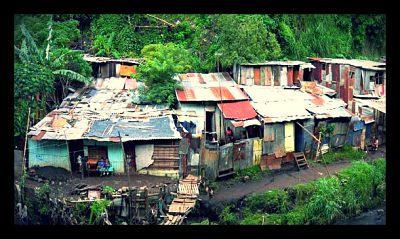
The word “slum” usually evokes images of filth, crime, chaos, and deprivation. People typically perceive slums as places to avoid or escape from, places where nothing good ever happens. As many people who live and work in slums know, however, the stereotypes fail to tell the whole story. A publication by the United Nations Settlements Programme, U.N. Habitat, helps to separate myth from fact.

Myth: “Slums serve no purpose.”

Fact: Slums often provide low-cost housing and services to urban populations. They also offer networks of much-needed social support to people migrating from rural to urban areas.

Myth: “All slum dwellers are poor.”

Fact: While it is true that poverty in slums is extremely visible, many people who are not the poorest of society choose to live in or near slums because they run businesses located in the same area.

Myth: “Slum dwellers are a burden on the economy.”

Fact: In many global cities, as much as 60% of employment lies in the ‘informal’ sector of the economy. Research in developed and developing countries proves that by providing opportunities for small-scale entrepreneurship, slums often serve as vital “incubators” for upward social and economic mobility.

Myth: “Slums are the fault of slum dwellers who do not want to help themselves.”

Fact: Failed, inadequate, or non-existent housing policies and laws are more to blame for the presence of slums than the people who inhabit them. In fact, most people move to slums from rural villages because they wish to find work and improve their lives.

Myth: “The poor contribute nothing to society and nothing good ever came out of slums.”

Fact: The largest producers of shelter in today’s global cities are poor people. Slums have also been vital contributors to culture by providing spaces to nurture art including music genres reggae, jazz, hip-hop, and funk.

– Délice Williams

Source: UN-Habitat

June 22, 2013
https://borgenproject.org/wp-content/uploads/borgen-project-logo.svg 0 0 Borgen Project https://borgenproject.org/wp-content/uploads/borgen-project-logo.svg Borgen Project2013-06-22 07:45:572021-12-14 01:50:44Five Myths About Global Slums
Advocacy, Children, Global Poverty

Protecting Our Future: Save the Children

Save the Children
The dedicated workers of Save the Children have been affecting positive, lasting change in children’s lives for the past 81 years with no signs of slowing down. They partner with local governments and organizations in vulnerable communities to offer children support and protection from neglect, exploitation, violence, poverty, malnutrition, inferior medical care and education, and much more.

With offices spread across 120 countries, the organization has helped millions of children in Africa, Asia, America, the Middle East, Europe, Latin America, and the Caribbean. In 2012 alone, they helped more than 125 million children overcome obstacles including poverty, illiteracy, obesity, and abuse.

Save the Children focuses on the following key areas:

  • Child protection – Save the Children fosters child protection programs such as child trafficking awareness campaigns, and advocates for policy and services improvement to protect children affected by disasters, conflict, or development setting.
  • Newborn and child survival – Each year, close to 7 million children die before their 5th birthday. Save the Children works to prevent senseless deaths by training health workers to deliver inexpensive medical interventions.
  • Education – the organization coaches educators in effective teaching techniques, offer opportunities to continue education beyond the classroom, and ensures learning continues in times of crisis.
  • Emergency response – In times of natural disaster or civil conflict, the organization provides food, medical care, education, and support throughout the recovery process.
  • Health and nutrition – Save the Children works to make quality maternal and reproductive healthcare, newborn and child healthcare, nutrition education, adolescent sexual and reproductive healthcare, and emergency healthcare available to impoverished communities.
  • HIV/AIDS – the organization offers prevention education programs to stop the spread of AIDS beyond the 3.4 million children currently living with the disease. They also offer protection programs to children orphaned by the disease.
  • Hunger and livelihoods – its hunger and livelihood programs focus on increasing food supply, educating farmers to produce higher yields, teaching parents the benefits of a varied diet, and teaching children how to manage money and find work.

The organization is recognized by regulatory services as a leader among nonprofit organizations; The American Institute of Philanthropy (AIP) awarded it an A+ rating. The BBB Wise Giving Alliance has determined that Save the Children meets all of the standards for charity accountability. Charity Navigator awarded Save the Children their 11th consecutive overall 4 out of 4 stars rating in 2012. The Forbes 200 Largest U.S. Charities List rated the organization’s fundraising efficiency at 92%, and their charitable commitment at 91%. Great Nonprofits named them the recipient of a 2012 Top-Rated Award. And America’s Greatest Brands featured Save the Children as one of the strongest and most trusted humanitarian relief and development philanthropies.

The amazing work being done by Save the Children can be multiplied even further by charitable contributions to their Global Action Fund. To make a donation, please visit the Global Action Fund webpage.

– Dana Johnson

Source: Save the Children, Global Action Fund

June 22, 2013
https://borgenproject.org/wp-content/uploads/borgen-project-logo.svg 0 0 Borgen Project https://borgenproject.org/wp-content/uploads/borgen-project-logo.svg Borgen Project2013-06-22 05:30:452024-06-05 01:53:31Protecting Our Future: Save the Children
Development, Global Poverty

Seychelles Poverty

Seychelles Poverty
The Republic of Seychelles (pronounced say-shells) is a small island nation located in the Western Indian Ocean. The country consists of a whopping 115 tropical islands, although only 10 are inhabited. Most of the populated dwell on the largest island, Mahé, located 1,800 km east of the African coast.

With a population of 86,000 and an upper-middle-income socioeconomic status, the country gains most of its capital through fisheries and tourism.

Unpredictable weather patterns due to climate change have adversely affected the country’s ability to sustain small-scale farms and farming productivity. Given the tropical nature of the islands, agricultural land is scarce, resulting in the need to outsource for most of Seychelles’ basic commodities.

Being so heavily reliant on imports for basic goods and services, Seychelles is particularly vulnerable to global financial crashes and increases in food and fuel prices. Having to pay high freight and insurance fees to receive these goods from far-away Asia, it isn’t hard to see why Seychelles is one of the poorest island nations.

High shipping fees are not only a result of distance traveled but also the danger ships encounter along the way. Seychelles is at heightened risk for piracy in the Indian Ocean, resulting in the loss of many fisheries and popular tourism sectors.

20% of the population is estimated to be living in poverty, with 7% living in extreme poverty. With a highly unequal distribution of income, consumer patterns show that the poor devote a much larger percentage of their wealth to basic needs like food than wealthier citizens.

The government has made relatively excellent strides in improving basic health and educational needs. Infant mortality is under 5% per 20,000 births and child malnutrition rates at 6%. The primary educational enrollment is at 107%.

Seychelles’ poverty reduction strategy is described as follows:

“Sustained labor-intensive growth would help to reduce poverty to less than 8 percent and propel the country to higher social and economic development levels, provided that economic and social programs are re-oriented. The government has already accepted the need to increase the role of the private sector in the economy and to make basic policy changes that would free up the economy. The growth strategy could be built on the following elements: (i) reducing the role of the state, which presently dominates all productive sectors; (ii) increasing competitiveness in terms of labor cost and labor quality and (iii) developing human resources, particularly marketable skills. Government regulations on economic activity should focus on preserving public safety and the country’s pristine natural environment. The government should increase investment in productivity-enhancing areas such as infrastructure and human resources development.”

There is still work to be done, though, in the beautiful land of Seychelles. Over the past 20 years, employment has dropped for people in rural parts of the country due to the conversion of farmlands into other uses.

Recognizing this, the government is promoting farming and the raising of livestock as a national pastime and considering it the most important part of its economic development strategy.

– Kali Faulwetter

Sources: World Bank, Rural Poverty Portal, iFad, Every Culture
Photo: Banff Centre

June 22, 2013
https://borgenproject.org/wp-content/uploads/borgen-project-logo.svg 0 0 Borgen Project https://borgenproject.org/wp-content/uploads/borgen-project-logo.svg Borgen Project2013-06-22 04:00:462020-07-03 00:02:28Seychelles Poverty
Global Poverty

UN Honors Victories in Combating Poverty

UN Honors Victories in Combating Poverty

In 1990, Thailand had a poverty rate of 27 percent. That means more than one of every four citizens suffered from hunger and oppression.

Thailand is now one of 38 countries honored by the United Nations at a ceremony in Rome Wednesday. The celebration? All 38 of these countries have cut their nation’s hunger in half.

This is a significant improvement in meeting the United Nations Millennium Development goals, which plan to eradicate global poverty by 2015. The 8 major goals are listed below:

1.    Eradicate extreme hunger

2.    Universal Education

3.    Gender Equality

4.    Reduction of Child Mortality

5.    Maternal health improvement

6.    HIV/ AIDS/ Disease reduction

7.    Environment sustainability

8.    Global Development

The United Nations set deadlines countries must meet as they work to achieve these eight goals. Halving national hunger is an approaching deadline.

Countries shared different goals of having either the proportion of their hunger levels cut in half or the exact hunger levels cut in half. Notable nations that achieved set goals include Brazil, Chile, Vietnam and Nigeria.

UN Food and Agriculture Organization Director-General Graziano da Silva said that this success stems from the commitment of each nation to ending world hunger and poverty. This commitment has resulted in many achievements in combating poverty.

“FAO is proud to work with all our member nations, developed and developing, to reach our common vision of a hunger-free and sustainable world,” Graziano da Silva said.

– William Norris

Sources: Ecumenical News, United Nations Development Programme
Photo: Ecumenical News

June 21, 2013
https://borgenproject.org/wp-content/uploads/borgen-project-logo.svg 0 0 Borgen Project https://borgenproject.org/wp-content/uploads/borgen-project-logo.svg Borgen Project2013-06-21 10:38:412020-07-03 00:07:47UN Honors Victories in Combating Poverty
Global Poverty

The Future for South Sudan

The Future for South Sudan
A year ago, Sudan and South Sudan were on the brink of war, but this month a deal between the two countries was finally implemented, allowing production in South Sudan’s main oil field to resume. This region, the Palouge oil field, accounts for 80% of the country’s oil production and has not been operational for 16 months due to disputes regarding the export of the oil.

This resumption of operations marks a significant moment in South Sudan’s brief history. Since its independence two years ago, the nation has suffered dramatic setbacks to its economy. The fledgling nation’s GDP contracted by 52% last year alone, while government revenues from oil-backed loans were cut by 98%. Now, however, with a pipeline deal in place with the north, South Sudan will be able to ramp up production to pre-independence levels.

After the drastic cuts in expenditure necessitated by the cessation of oil production during the last two years, this influx of revenue should significantly boost the country’s economy. South Sudan will have to diversify away from oil as the primary revenue generator over the next few years as reserves disappear, however, for now, the hope remains that oil profits will allow this nascent economy to establish itself. A stable economic platform marks the first steps in allowing the country and its people to grow.

– David Wilson

Sources: The Economist
Photo: Royal African Society

June 21, 2013
https://borgenproject.org/wp-content/uploads/borgen-project-logo.svg 0 0 Borgen Project https://borgenproject.org/wp-content/uploads/borgen-project-logo.svg Borgen Project2013-06-21 07:34:042024-06-08 03:56:36The Future for South Sudan
Page 2128 of 2161«‹21262127212821292130›»

Get Smarter

  • Global Poverty 101
  • Global Poverty… The Good News
  • Global Poverty & U.S. Jobs
  • Global Poverty and National Security
  • Innovative Solutions to Poverty
  • Global Poverty & Aid FAQ’s
Search Search

Take Action

  • Call Congress
  • Email Congress
  • Donate
  • 30 Ways to Help
  • Volunteer Ops
  • Internships
  • Courses & Certificates
  • The Podcast
Borgen Project

“The Borgen Project is an incredible nonprofit organization that is addressing poverty and hunger and working towards ending them.”

-The Huffington Post

Inside The Borgen Project

  • Contact
  • About
  • Financials
  • President
  • Board of Directors
  • Board of Advisors

International Links

  • UK Email Parliament
  • UK Donate
  • Canada Email Parliament

Get Smarter

  • Global Poverty 101
  • Global Poverty… The Good News
  • Global Poverty & U.S. Jobs
  • Global Poverty and National Security
  • Innovative Solutions to Poverty
  • Global Poverty & Aid FAQ’s

Ways to Help

  • Call Congress
  • Email Congress
  • Donate
  • 30 Ways to Help
  • Volunteer Ops
  • Internships
  • Courses & Certificates
  • The Podcast
Scroll to top Scroll to top Scroll to top