• Link to X
  • Link to Facebook
  • Link to Instagram
  • Link to TikTok
  • Link to Youtube
  • About
    • About Us
      • President
      • Board of Directors
      • Board of Advisors
      • Financials
      • Our Methodology
      • Success Tracker
      • Contact
  • Act Now
    • 30 Ways to Help
      • Email Congress
      • Call Congress
      • Volunteer
      • Courses & Certificates
      • Be a Donor
    • Internships
      • In-Office Internships
      • Remote Internships
    • Legislation
      • Politics 101
  • The Blog
  • The Podcast
  • Magazine
  • Donate
  • Click to open the search input field Click to open the search input field Search
  • Menu Menu

Archive for category: Global Poverty

Key articles and information on global poverty.

Global Poverty, Women & Children

Maternal Mortality in the Philippines

maternal mortalityIn 2000, the U.N. agreed on eight Millennium Development Goals that it hoped to reach by 2015. Included among these goals: promoting gender equality and empowering women, reducing child mortality and improving maternal health. For the Philippines, improving maternal health is an extremely important goal since the maternal mortality rate of the Philippines was high—209 deaths per 100,000 live births as of 1993. The target for the Philippines is the reduction of the MMR to 52 deaths per 100,000 live births by 2015. However, while maternal mortality has been decreasing in the Philippines, it has not been falling at a fast enough rate.

Maternal deaths are still a huge concern for the Philippines. By 2006, the maternal mortality rate decreased to a rate of 162 per 100,000 live births and currently, the MMR is 120 deaths per 100,000 live births—still nowhere near the target that the MDGs established.

Various factors are responsible for the high rate of maternal mortality that the Philippines face. According to the IRIN, some of the main causes of maternal deaths are hemorrhages, sepsis, obstructed labor, hypertensive disorders during pregnancy and complications associated with unsafe abortions. Having a physician, nurse or midwife who has had formal training present during the birth can decrease the maternal mortality rate, but currently, these skilled birthing attendants supervise only 60 percent of births in the Philippines. Others rely on traditional birthing attendants who do not have formal training and therefore are often unable to deal with complications.

Poor women and women in rural areas are at a disadvantage. Around 75 percent of the poorest quintile do not have a skilled birth attendant to help them through their pregnancy. Rural areas also have higher maternal mortality rates because many women in rural areas begin having children at a young age. Since adolescent women are normally not developed enough for childbirth, these young mothers face many complications during and after pregnancy and contribute to the high maternal mortality rate.

Another problem that adds to the high maternal mortality rate in the Philippines is the low level of contraceptive use. The Philippines is 80 percent Catholic, so birth control pills, condoms and other forms are contraceptive use are considered to be similar to abortion. This has led to limited access to contraceptives, since contraceptives were previously not widely available at health care clinics.

This limited access to contraceptives has negative effects. In 2006, there were three million pregnancies in the Philippines. Half of those pregnancies were unplanned, and one third of the unplanned pregnancies resulted in abortions. A higher rate of contraceptive use will prevent this from happening and will consequently decrease the maternal mortality rate.

While rates of contraceptive use have not risen much from 2006 to 2014, there is hope that contraceptive use will now increase dramatically due to a birth control law that the Philippine Supreme court approved in April 2014. The law requires the government’s health centers to have free condoms and contraceptive pills. It may be too soon to tell whether that law has a significant effect on maternal mortality. However, the law will hopefully help the Philippines to reach its MDG by the end of 2015. Other ways to help reduce maternal mortality are providing more antenatal care and more widespread access to health facilities.

– Ashrita Rau

Sources: UNDP, IRIN News, Philstar, WHO, Huffington Post, United Nations, BBC
Photo: Flickr

June 18, 2015
https://borgenproject.org/wp-content/uploads/borgen-project-logo.svg 0 0 Borgen Project https://borgenproject.org/wp-content/uploads/borgen-project-logo.svg Borgen Project2015-06-18 16:00:042020-07-15 17:40:25Maternal Mortality in the Philippines
Global Poverty

Indonesia’s Fight Against Stunted Growth

Indonesia's Fight Against Stunted GrowthThe Millennium Challenge Corporation is an independent, innovative foreign aid agency that is actively fighting global poverty. One of its projects, the Indonesia Compact, seeks to better the lives of those living below the poverty line in Indonesia, in particular the lives of the children.

Over the past decade, Indonesia’s economy has grown steadily and over 50 percent of the population is now living above the poverty line. However, the wealth gap has further widened. With most of the population living in rural areas and relying on agriculture as a main source of income, it is hard for Indonesians below the poverty line to have access to nutritious food and clean water. This has caused problems such as stunted growth in children.

According to the Millennium Challenge Corporation, “a lack in critical vitamins and minerals during early childhood puts children at higher risk for chronic disease [and] delayed cognitive development” which causes a reduction in academic success and future earnings. Because of the lack of vitamins and minerals, about one-third of all Indonesian children under the age of 5 experience stunted growth—that’s seven million infants and children.

The Indonesia Compact is a five-year, $600 million agreement. The goal is to increase household income in the project areas by increasing productivity, reducing energy costs and increasing provisions of goods and services.

Part of the Compact is the $135 million Community-Based Health and Nutrition to Reduce Stunting Project. This effort is two-sided: raise awareness about feeding practices and supply access to proper nutrition and health care services.

Through this project, the people of Indonesia are being educated on how the lack of essential nutrients, such as vitamin A, iron and zinc, can impact health and affect growth. The government of Indonesia is helping by training local governments on health and sanitation services as well as nutrition, in order to have a highly aware population.

The theory is that a healthier young generation will bring economic growth to the country. The next generation will be healthy and knowledgeable, which leads to a stronger working-class and eventually an improved economy. The Indonesia Compact still has a long way to go before any change can be seen, but Indonesia is headed in the right direction.

– Hannah Resnick

Sources: Millenium Challenge Corporation, Rural Poverty Portal
Photo: Flickr

June 18, 2015
https://borgenproject.org/wp-content/uploads/borgen-project-logo.svg 0 0 Borgen Project https://borgenproject.org/wp-content/uploads/borgen-project-logo.svg Borgen Project2015-06-18 16:00:012020-07-14 15:49:59Indonesia’s Fight Against Stunted Growth
Global Poverty

The Blockchain and Poverty

blockchain
Satoshi Nakamoto was the pseudonym under which a person or persons released the invention of the Bitcoin, and more importantly, the Blockchain. Bitcoin has proved to be influential and has a fervent user-base that believes it holds the keys to upending the banking and finance world through decentralized cryptocurrency. The power behind Bitcoin, however, lies with the Blockchain. And the power of the Blockchain has the potential to spawn new technologies and help the poor.

The Blockchain technology developed by “Satoshi Nakamoto” has been hailed as a practical solution to the “Byzantine General’s Problem.” It does not completely solve the Byzantine General’s Problem, but it does enough to bypass the issue to the extent that it should pose no issue in reality. The Byzantine General’s Problem proposes the flaw of sharing information between, say, two Generals. If one wants to tell the other to “attack point A,” he or she may send a message, but then he will never be sure if the other General got the message. The Blockchain is important because it solves the problem of “double spending” by providing a practical solution to the Byzantine General’s Problem. This means that there is no risk of a Bitcoin being spent twice, which would be similar to counterfeiting money. The Blockchain does this by creating a public ledger that records every transaction that ever took place with Bitcoin. Essentially, the Blockchain enables trust without the need for identity.

Blockchain technology could be used in wide-ranging applications. For example, NASDAQ recently announced that it will be testing Blockchain technology to record transactions of share trades for privately-held companies. Brian Singer explained in an interview with Forbes that he believes that Bitcoin and the Blockchain can substantially reduce poverty around the globe. Singer argues that the ability to have undeniable, transparent ownership of something that everyone can trust is imperative. Ownership of, say, a Bitcoin is ownership overvalue. This undeniable ownership of value that is recognized in a system no matter what anyone says is what causes Singer to believe that the Blockchain technology behind Bitcoin can have a profound impact on the poor. Bitcoin has already caused disruption in the remittance business; immigrants have been using Bitcoin to send money back home. Bitcoin does not demand costly extra fees like Western Union.

The Blockchain also removes the need for a third party, such as a computer server. One purpose of a bank is to store value safely and efficiently and also manage exchanges of value at high rates using credit card and debit card systems, which are centralized. The Blockchain can safely and effectively protect your value from “double spending” and digital theft – only by mistake of the user can it be stolen – and at the same time avoid the pesky fees and rules that banks impose.

Because of the Blockchain’s ability to essentially create trust without identity in a system, it lends itself to secondary innovations such as being used for other distributed systems that are without a central point, such as one server that contains all necessary information. Although distributed systems are not new, the Blockchain could help facilitate the creation of even more. These systems are in many ways more powerful than a centralized system. They rely on much less digital and physical infrastructure, such as a server run by a third party. These systems can run independently of authority. Distributed systems of all sorts have many advantages that lend themselves to the poor. By curtailing the need for a trusted authority or more infrastructures, it makes it easier for the poor to use and access these technologies from their respective countries and makes them more reliable.

It is possible that new innovations will emerge that are of particular use to the poor, as seen when people use the Blockchain and Bitcoin to bypass traditional remittance markets. The possibilities are endless; new companies are popping up and attempting to leverage this new technology. Like the Internet or other technologies, it can be difficult at first to see where the end of the tunnel leads, and the Blockchain may be no different. With smartphones becoming more and more common even amongst the poor, innovations on the Blockchain may hold hidden solutions.

– Martin Yim

Sources: Brookings, Marketplace, Forbes, The Guardian
Photo: The Cointelegraph

June 18, 2015
https://borgenproject.org/wp-content/uploads/borgen-project-logo.svg 0 0 Borgen Project https://borgenproject.org/wp-content/uploads/borgen-project-logo.svg Borgen Project2015-06-18 12:09:112020-07-14 15:41:52The Blockchain and Poverty
Children, Global Poverty

Children on the Streets of Bangkok

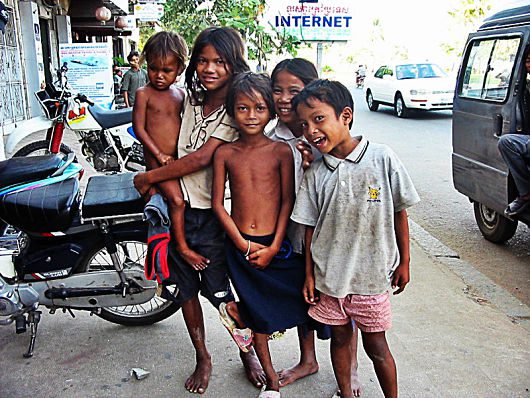
Bangkok's street childrenMost beggars in Bangkok are not from Thailand. They are migrants from neighboring countries, such as Cambodia or Burma, who are drawn to the city’s lucrative begging opportunities. These beggars must accept a high level of risk when they travel to Thailand; many are thrown in jail and then deported in a worse state than before. But the biggest issue arises when they bring their children with them. These children are often abandoned and left to work on the streets of Bangkok. They are at risk of being abused and exploited, are often unhealthy and are in danger of being hit by cars or motorcycles.

There are more than 20,000 street children in Thailand’s major urban areas. In a single day, a child can earn 300 baht ($10) to 1,000 baht ($30) – much more than the amount a Cambodian or Burmese living in poverty makes back home. In Phnom Penh, for instance, scavenging rubbish all day will only earn a child 16 baht ($0.50).

Cambodians make up around 80 percent of Thailand’s child beggars. Cambodia is one of the poorest countries in the world and half of its population is children.

Beggars who are from Thailand usually hail from the northeast Isan region, where 40 percent of the country’s poor comes from. Their parents come to Bangkok to find work, usually as motorcycle taxi drivers or construction workers. When they have children, they realize they cannot afford to take care of them. Distrustful of the government-run orphanages, many simply abandon their children in the hands of babysitters, hoping they will find a home there. However, these children are often made to work on the streets to earn some money for their upkeep, according to chairwoman Darat Pitaksit of the Young Women’s Christian Association (YMCA) in Bangkok, an organization that works with underprivileged children.

Because going to school is mandatory until the sixth grade, most Thai children manage to attend at least primary school. Secondary school attendance in Bangkok, however, drops by 20 percent. Despite it being the richest area of Thailand, rates of attendance are lower in Bangkok than anywhere else in the country because of the presence of migrant workers’ children and the lifestyles they are made to lead.

Contrary to common perception, street children, both from Thailand and neighboring countries, do not fall into crime, drugs, or other illicit activity. “Thai children are raised to respect their elders,” Pitaksit says. “In addition, the belief in karma helps them to be more accepting of their hardships in life.” Similarly, Cambodian children would often rather beg on the streets than go to school, says Chantana Sueprom, a staff member of the UNICEF supported NGO Friends International. They feel it is their duty to help their parents earn money.

– Radhika Singh

Sources: Reuters, UNICEF, Asian Development Bank
Photo: Jimmy Lam Photography

June 18, 2015
https://borgenproject.org/wp-content/uploads/borgen-project-logo.svg 0 0 Borgen Project https://borgenproject.org/wp-content/uploads/borgen-project-logo.svg Borgen Project2015-06-18 10:39:572024-12-13 17:51:31Children on the Streets of Bangkok
Global Poverty, Health

Leprosy Is Almost Eliminated

leprosy
According to the World Health Organization’s (WHO) reports, Leprosy still infects almost 200,000 people globally. The disease not only infects a person but also creates an environment where a person is shunned and forced to live away from his or her family. Even though the disease is highly treatable and not very common, it still creates an immediate social stigma whenever it is mentioned. Thankfully, the disease is on its way to being eliminated completely around the globe.

Leprosy, also known as Hansen’s Disease, affects a person’s nerves, skin and mucous membranes (CDC). Lesions appear on a person’s skin and loss of feeling can occur since the nerves are damaged. Because a person loses sensation in the affected areas, burns or other injuries can go unnoticed and lead to further health issues.

The disease spreads through human contact. It is not highly contagious but can be spread through coming into contact with fluid droplets from an infected person.

The United States and other developed countries rarely ever see cases of leprosy, but several developing countries still experience the disease. According to WHO, “the leprosy burden is now concentrated in the five most endemic countries (Brazil, India, Madagascar, Mozambique, and Nepal), which account for 83% of prevalence and 88% of detection worldwide.” Usually, it is the poorest of the poor who contract the disease because they are the farthest from medical care.

WHO supplies a multi-drug therapy (MDT) free of charge to those with the disease. If the patient takes the prescribed medicine as directed, the disease is curable in as quickly as six months, but it could take up to two years.

Eliminating the disease is of huge importance to global health, but it is also vital to a family unit that has a member suffering. People with the disease are often shunned and pushed out of their social circle. An infected person is made to live with other people who have leprosy regardless of whether the person is a child or an adult. This can cause further strain on a family’s psyche, financial situation and emotional well-being.

Leprosy is well on its way to being eliminated completely from the globe. In 2000, leprosy was considered eliminated because there was less than 1 case per 10,000 people globally. But that number has the potential to be reduced even further. WHO states the following to describe the effectiveness and potential of leprosy elimination:

– There is only one source of infection: untreated, infected human beings.

– Practical and simple diagnostic tools are available: leprosy can be diagnosed on
clinical signs alone.

– Under natural conditions, “incident’ cases” (new cases in which the disease has
recently developed) make up only a small fraction of the prevalence pool. Below a
certain level of prevalence, any resurgence of the disease is very unlikely.

WHO is calling for a “Final Push” to remove leprosy as a health issue around the globe. The biggest factor is the ability to bring the MDTs to every person who has leprosy. This requires the patient’s help in seeking out medical care, despite the stigma that is associated with the disease, as well as integrating leprosy detection into routine medical care in countries where cases are still seen. While this may be easily achievable in more urban areas, the rural areas still need to see higher availability of medical care.

Seeing the end of leprosy for good is an achievable goal. Already the case numbers are dwindling as people are being treated and healed until they are no longer able to pass the disease along. As the “Final Push” is implemented more often, the good news about eliminating leprosy should be heard.

– Megan Ivy

Sources: CDC, NLT, WHO 1, WHO 2, WHO 3
Photo: Asian Correspondent

June 18, 2015
https://borgenproject.org/wp-content/uploads/borgen-project-logo.svg 0 0 Borgen Project https://borgenproject.org/wp-content/uploads/borgen-project-logo.svg Borgen Project2015-06-18 09:57:592024-06-04 03:53:02Leprosy Is Almost Eliminated
Global Health, Global Poverty, Health, Women and Female Empowerment

Improving Women’s Health Leads to Sustainable Development

Improving Women's Health Leads to Sustainable DevelopmentThe Lancet Commission on Women and Health, a report discussing ways of improving women’s health. The report on women’s vital contributions to healthcare, economic welfare, environmental protection and societal stability, was recently published after three years of research. The Commission, headed by Dr. Ana T. Langer from the Harvard T. H. Chan School of Public Health and Afaf Meleis from the School of Nursing at the University of Pennsylvania and composed of public health experts, social scientists, policymakers and advocates, not only highlights the importance of women’s work in the success of nations, but also promotes recognizing and protecting these roles to increase sustainable development in nations around the world.

The Commission aimed to make policy recommendations in terms of economic, social and cultural factors that would make governments accountable for recognizing the need for improving women’s health and the welfare of them and their communities. Published at a critical point in which Millennium Development Goals are ending and the world is beginning to adopt new Sustainable Development Goals, the Commission aims to heighten women’s roles in national and international leadership and set developments in their health and social status as a measured requisite for completing each Development Goal.

The Commission’s work was primarily concerned with developing ideas about women’s health from a productive standpoint – how they contribute to societies economically, culturally and environmentally – rather than reproductive standpoint. Viewing women’s health solely in terms of reproduction allows gender inequity to prosper because it defines women solely based on their ability to have children. The report demonstrates that improvements in women’s healthcare from a comprehensive standpoint will expand their contributions in education, the economy and the environment.

Globalization, the Commission reports, has contributed to the improvement of women’s status globally but has worsened it in individual countries, threatening social stability. Thus, though globalization has led to more widespread recognition of gender inequality, it has not done anything to change it. The increasingly rapid transmission of communicable diseases, another outcome of globalization, has increased the importance of women in caring for family members and preserving the welfare of their communities.

As humanitarian crises and ecological degradation continue to grow and conditions for populations around the world worsen, the protection of women’s health and social status are increasingly vital to the well-being of societies. Thus, it is essential that nations adopt plans to improve women’s healthcare and equality.

According to the Commission, financing healthcare should take into account persistent health challenges that affect women, such as communicable diseases and violence against women and girls. They should also take on measures to promote women’s rights and recognize their invaluable roles in society. Doing so will improve not only gender equality and societal harmony but also economic stability, healthcare, education and environmental quality. Thus, in investing in the needs and welfare of women, policymakers will help achieve sustainable growth and development for their nations.

– Jenna Wheeler

Sources: The Lancet, Impatient Optimists, The Lancet
Sources: Flickr

June 18, 2015
https://borgenproject.org/wp-content/uploads/borgen-project-logo.svg 0 0 Borgen Project https://borgenproject.org/wp-content/uploads/borgen-project-logo.svg Borgen Project2015-06-18 08:15:292024-12-13 17:51:31Improving Women’s Health Leads to Sustainable Development
Aid Effectiveness & Reform, Development, Global Poverty, Women & Children

Poverty in Ahmedabad, India

Ahmedabad
With a population of around 8 million, the city of Ahmedabad is the largest in India’s western region of Gujarat. While India has long held a reputation for being one of the world’s least developed countries, it has steadily been shifting and is now one of the fastest growing developing countries. Poverty in India is starting to disappear; industry is thriving, literacy rates are increasing and the world community is beginning to see it as a real front-runner. There is no better example of this new shift in development than Ahmedabad.

Census information gathered in 2001 showed a literacy rate of around 79 percent. The next census, gathered in 2011, revealed a great increase, showing that around 85 percent of the population was literate. The first step in decreasing poverty is increasing education. For many years, India has faced issues with its large impoverished communities not allowing their children to attend school because they needed them to work in order to support the family. Now, with increased aid from various NGO’s and family structure organizations, Ahmedabad’s youth have been, for the most part, educated at least to an 8th grade level. This six percent gain is not the only leap that Ahmedabad has made.

When one imagines India, they might picture crowded streets, pollution, over-population, grand temples and the Taj Mahal, which would all suffice to describe it. However, recent census information has shown a 1.55 percent decrease in birthrates. While to some this may seem sad, it is quite the opposite. Many poor families will have upwards of 8 children in an attempt to have as many people working in order to support the family. Often, women are overwhelmed by the pressure to have kids, and with no safe methods of birth control available, many have more than ten in their lifetimes. While supporting 10 kids is hard enough, this amount of children can also be very detrimental to a woman’s health. Many women to die during childbirth. In the past few years, many women’s health organizations have gone to the slums of India to introduce birth control packs and condoms to the people. This decrease in birthrate is also accompanied by a 6 percent decrease in death rates of women during childbirth, as the amount of institutionalized deliveries has increased by 13 percent. While this may seem small, it marks a big change for the city of Ahmedabad and India as a whole.

As India continues to grow, poverty rates in Ahmedabad are decreasing. Occupying a large strip of the coastline, Gujarat is one of the best areas for businesses seeking to work overseas to take root. The business models in Gujarat and Ahmedabad have been described by UNICEF as “being a highly effective growth and private sector-driven model. In fact, the average growth rate of GDP in Gujarat over the past two decades has been higher than the national average, and more balanced than the other high growth-rate states.” This positive increase in GDP is primarily due to the agricultural and business sectors.

For now it looks like poverty is out and development is in for the great city of Ahmedabad, and this is a trend that the global community hopes to see a lot more of in the future.

— Sumita Tellakat

Sources: UNICEF India, Journal of Health Population and Nutrition, Ahmedabad Census 2011
Photo: Flickr

June 18, 2015
https://borgenproject.org/wp-content/uploads/borgen-project-logo.svg 0 0 Borgen Project https://borgenproject.org/wp-content/uploads/borgen-project-logo.svg Borgen Project2015-06-18 02:16:212024-05-27 09:24:15Poverty in Ahmedabad, India
Global Poverty

What’s ‘Musicogenic’ Got to Do with It?

What's 'Musicogenic' Got to Do with It?Countless amounts of people have probably been either uninformed or misinformed of the still-developing musicogenic epilepsy. One may think: what is this ‘musicogenic,’ and what does it have to do with poverty and world issues?

Musicogenic epilepsy is defined as a rare neurological disorder retaining seizures that are triggered by the onsets of different sounds layered in musical pieces.

Initially considered “reflex epilepsy” that stemmed from the right temporal lobe according to a 1989 study, it would be later proven in further research that the disorder stemmed from multiple temporal lobe foci, alongside holding ties with certain emotional reactions and additionally breaking loose from categorization as a “reflex” disorder.

As early as 1937, researcher MacDonald Critchley recorded three cases that attained a then unknown phenomenon that would become the ‘musicogenic’ disorder. Critchley noted that the disorder was “too rare,” but did assure that the seizures could not occur without the inclusion of music, also adding that certain types of music contributed to the cause.

Take note of Mariah Carey’s 1993 up-tempo classic, “Dreamlover,” for example.

The angelic recording would live up to its critical title as an “infectious tune,” when in 1998, a Japanese native woman alleged that three minutes into the piece triggered a seizure episode, resulting in a lengthy hospital visit accompanied by a series of medical tests. It would then be found that certain elements—allegedly the sound of the production’s bells—would play a role in the attack.

What soon followed was not only an alleged lawsuit launched against Ms. Carey’s recording label, but also a more redefined look into the mysteries concerning the neurological disorder.

In 2003, during infantile epileptic testing, the 6-month-old subject’s right-sided focal seizures were triggered by loud music performed by The Beatles. Researchers formulated that personal musicality and sensory response served as potential results for the causes of the attacks.

However, in a recent study conducted in 2014, it was reinstated that emotion served as a driving response when testing the playback of Russian music to a 32-year-old epileptic-sufferer. Further findings indicated that the dysregulation process of “musically-induced emotions” played a role in musicogenic seizures, rather than the musical stimulus itself.

More results from the testing theorized that the newfound discovery of cognitive dysregulation could hold potential links to other forms of epilepsy, such as reading epilepsy.

Though it is still a developing mystery, several forms of epilepsy still account as a large suffering and mortality rate in impoverished settings; two-times the amount when compared to high-income settings.

In lower-income regions, where high mortality rates are often associated with the lack of treatment in epilepsy, medical supplies to aid epileptic-sufferers have been scarce. This results in the growth of risk factors.

As developments continue to be designated, inexpensive interventions are at the forefront of ultimate factors in minimizing epileptic rates. Other solutions presented include risk factor prevention, improved access to biomedical treatment and continuous supply of high-quality antiepileptic drugs.

Medical analysts are determined and confident that progressive testing and newly discovered results will yield the musicogenic disorder into the right direction for the betterment of studying, and moreover, for the potential solution to accompanying epilepsy cases in poverty-stricken areas.

– Jeff Varner

Sources: NCBI 1, The Lancet, NCBI 2, Editors Choice Archive, NCBI 3, Brain, NCBI 4, NCBI 5
Photo: Wikipedia

June 18, 2015
https://borgenproject.org/wp-content/uploads/borgen-project-logo.svg 0 0 Borgen Project https://borgenproject.org/wp-content/uploads/borgen-project-logo.svg Borgen Project2015-06-18 01:09:242024-12-13 17:51:30What’s ‘Musicogenic’ Got to Do with It?
Education, Global Poverty

Afghanistan’s Rule of Law and Future Can Flourish

Afghanistan

Afghanistan is one of the most dangerous and impoverished nations in the world. What can be done to help to turn it around?

One of the biggest problems Afghanistan faces is its history of a weak rule of law. The rule of law has to do with the strength of legal institutions, as well as laws themselves. It also applies to how laws are carried out—equally or unequally.

When the rule of law is strong, it provides a basis for a society’s economic development, security, infrastructure and an accountable government. A strong rule of law also improves public health, alleviates poverty and improves education.

Weak rule of law leads to crime, corruption and the unequal application of laws across a society. Afghanistan has struggled with all these things, and improving and solidifying the rule of law is important to secure its future. For a country to flourish, a strong rule of law is needed.

It is a generally accepted idea, that for some, education is a pathway out of poverty. However, without a strong rule of law, which limits the Taliban preventing girls from going to school or corruption from impacting learner’s education, this pathway is fraught with difficulties. Corruption is a massive problem in Afghanistan—the country ranked last for the absence of corruption in the World Justice Project’s 2014 Rule of Law Index.

Sadly, the problem runs deeper than merely educating Afghan girls and boys with hopes that they will escape poverty. For Afghanistan to improve its rule of law and therefore it’s future, it’s legal education system must continue to be developed.

Because of Afghanistan’s five constitutions since 1964 along with Soviet occupation and the Taliban government, the country’s legal system been decimated and fallen behind the rest of the world. The legal education system has failed to produce a capable body of legal experts, instead a group of jurists who have made their best effort in recent times but are woefully unprepared.

Since U.S. military intervention and the fall of the Taliban in 2001, much has been done to try and improve both the university and legal education systems in the county. Strengthening these institutions can lead to fewer instances of land disputes—the main cause of conflict in Afghanistan. They are common because both informal and formal devices used to resolve the conflicts are fragile and weak.

Land disputes are also a perfect example of a weak rule of law because they illustrate an instance where a law says one thing, but in practice, it is not relevant, enforced or practical. The current land ownership law states the need for documents proving ownership of land, however, only 20 percent of land actually has these documents.

The U.S. State Department has played a role in developing the legal system in Afghanistan by bringing young lawyers to the U.S. to study, who have then gone back to their home country to set up legal practices. This is a good step, but improvement in the rule of law via more development of the legal education system in Afghanistan itself could go even further to improve its future as a safer, less impoverished country.

– Greg Baker

Sources: The Hague Institute for Global Justice, The New York Times, United States Institute for Peace, The World Justice Project, U.S. Department of State
Photo: Clarksville Online

June 17, 2015
https://borgenproject.org/wp-content/uploads/borgen-project-logo.svg 0 0 Borgen Project https://borgenproject.org/wp-content/uploads/borgen-project-logo.svg Borgen Project2015-06-17 21:21:272024-12-13 17:51:30Afghanistan’s Rule of Law and Future Can Flourish
Global Poverty, Health, Malnourishment

Malnutrition in Burundi

Malnutrition in BurundiPopulated with over 10 million people, Burundi is a densely packed, landlocked East African country with the worst rates of malnutrition in the world.

Burundi was rated the world’s leading nation affected by hunger, according to the 2014 Global Hunger Index (GHI), a score calculated annually by the International Food Policy Research Institute. Plagued with political turmoil and prone to natural disasters, Burundi has seen rates of malnutrition increase in recent years. Despite global strides in combating malnutrition in recent history, Burundi is one of only four nations that has seen an increase in GHI from 1990 to 2014, indicating a worsening situation in the country. With 67.3 percent of the overall population undernourished, it is one of two countries with a hunger situation labeled “extremely alarming” in the study.

As the vast majority of Burundi’s population relies on agriculture, many of the country’s inhabitants combat food insecurity and malnutrition due to climate hazards, limited land access and limited crop diversity. Despite a constantly growing population, food production has stagnated at pre-1993 levels, according to the World Food Programme. Additionally, due to the rising costs of food — the price of beans increased by nearly 50 percent in recent years — the average household now spends over 70 percent of its income on food. While the nation’s government has programs in place to assist in the fight against malnutrition, it is growing increasingly costly for the country to deal with the worsening problem.

Common causes of malnutrition in the country include kwashiorkor and marasmus, both of which can stunt development and can be life-threatening if not treated. Although women and young children are most at risk for diseases caused by malnutrition, many men are also affected.

Additionally, many children and women suffer from a lack of micronutrients in their diets. In the first two years of life, it is especially crucial for children to get sufficient amounts of micronutrients such as iron, Vitamin A, iodine and zinc. Such nutrients are critical for physical growth and intellectual development.

Anemia is one of the biggest deficiency problems currently faced in Burundi, with 56 percent of children under the age of 5, and 47 percent of pregnant women anemic, according to the World Bank. Additionally, nearly half of the population as a whole is at risk for insufficient zinc intake, and a quarter of the country’s children under 5 and 12 percent of women are Vitamin A deficient. Although the effects of these deficiencies are less dire in the short term, they contribute to life-threatening illnesses and issues.

In order to address the problems of malnutrition in Burundi, the World Bank recommends extensive vitamin A supplementation and deworming in children under 5-years-old and increased iron supplementation for pregnant women. While about 96 percent of households are already consuming iodized salt, the World Bank recommends “universal salt iodization” in order to control iodine deficiency and avoid IQ loss in young children. Working to increase market and infrastructure development to promote dietary diversity can also combat issues with malnourishment.

Education and counseling services can also serve to improve feeding habits for children under five years old. While Burundi sees a lack of gender equality in most sects of life, women are still seen to have a strong maternal role in the family. UNICEF found that children of mothers with at least a primary level of education have 94 percent of fewer risks of growth stunting from malnutrition than children of mothers with no education. The study showed that mothers with some level of education had been proactive in managing malnutrition than other mothers, recognizing the importance of good breastfeeding habits, clean living and staggering pregnancies.

Since 2005, the Ministry of Health has emphasized building community-based infrastructure to screen for and treat acute malnutrition. Many organizations are also working with the Burundi government to increase education programs for mothers in order to deal with the country’s chronic malnutrition. In 2012, Burundi signed on to the Scaling up Nutrition initiative, which works with the United Nations, civil society, donors, businesses and researchers to work with communities on this issue. The initiative involves an interdisciplinary approach to combating malnutrition. Burundi’s approach, as established through the initiative, involves working to protect maternity leave, create legislation on the marketing of breast milk substitute, establish national directives on food, diversify and increase its food production, and increase nutrition education. The established goal in 2012 was to reduce malnutrition rates by 10 percent by 2016. No information has been released by Scaling up Nutrition or by the Burundian government on the progress of this goal.

– Arin Kerstein

Sources: International Food Policy Research Institute, International Food Policy Research Institute, Iwacu-Burundi, Scaling Up Nutrition, World Bank, Wolrd Food Programme, UNICEF
Photo: The Guardian

June 17, 2015
https://borgenproject.org/wp-content/uploads/borgen-project-logo.svg 0 0 Borgen Project https://borgenproject.org/wp-content/uploads/borgen-project-logo.svg Borgen Project2015-06-17 13:21:342024-12-13 17:51:23Malnutrition in Burundi
Page 1934 of 2162«‹19321933193419351936›»

Get Smarter

  • Global Poverty 101
  • Global Poverty… The Good News
  • Global Poverty & U.S. Jobs
  • Global Poverty and National Security
  • Innovative Solutions to Poverty
  • Global Poverty & Aid FAQ’s
Search Search

Take Action

  • Call Congress
  • Email Congress
  • Donate
  • 30 Ways to Help
  • Volunteer Ops
  • Internships
  • Courses & Certificates
  • The Podcast
Borgen Project

“The Borgen Project is an incredible nonprofit organization that is addressing poverty and hunger and working towards ending them.”

-The Huffington Post

Inside The Borgen Project

  • Contact
  • About
  • Financials
  • President
  • Board of Directors
  • Board of Advisors

International Links

  • UK Email Parliament
  • UK Donate
  • Canada Email Parliament

Get Smarter

  • Global Poverty 101
  • Global Poverty… The Good News
  • Global Poverty & U.S. Jobs
  • Global Poverty and National Security
  • Innovative Solutions to Poverty
  • Global Poverty & Aid FAQ’s

Ways to Help

  • Call Congress
  • Email Congress
  • Donate
  • 30 Ways to Help
  • Volunteer Ops
  • Internships
  • Courses & Certificates
  • The Podcast
Scroll to top Scroll to top Scroll to top