• Link to X
  • Link to Facebook
  • Link to Instagram
  • Link to TikTok
  • Link to Youtube
  • About
    • About Us
      • President
      • Board of Directors
      • Board of Advisors
      • Financials
      • Our Methodology
      • Success Tracker
      • Contact
  • Act Now
    • 30 Ways to Help
      • Email Congress
      • Call Congress
      • Volunteer
      • Courses & Certificates
      • Be a Donor
    • Internships
      • In-Office Internships
      • Remote Internships
    • Legislation
      • Politics 101
  • The Blog
  • The Podcast
  • Magazine
  • Donate
  • Click to open the search input field Click to open the search input field Search
  • Menu Menu

Archive for category: Global Poverty

Key articles and information on global poverty.

Development, Global Poverty, Technology

How Mobile Phones Help the Poor

How Mobile Phones Help the Poor
Mobile technology has been shown to have a tremendous effect in helping alleviate global poverty. Over six billion of the approximately seven billion people in the world have access to mobile phones, as shown in a 2014 UNESCO report. By 2016, it is estimated that there will be one billion mobile phones in Africa. Such widespread access opens up a window of opportunity to utilize mobile technology as an instrument in improving the lives of users in developing countries.

According to UN Millennium Project Director Jeffrey Sachs, cell phones are the key instrument in transforming poverty-stricken lives.

“Poverty is almost equated with isolation in many places of the world,” he said, as quoted in a CNN article. “Poverty results from the lack of access to markets, to emergency health services, access to education, the ability to take advantage of government services and so on. What the mobile phone — and more generally IT technology — is ending is that kind of isolation in all its different varieties.”

From the educational sphere to the economy, access to mobile technology has already significantly improved the lives of many across various aspects of life.


4 Ways Mobile Phones Help the Poor

Literacy and education
Where there are no books, there are still mobile phones. Utilizing mobile technology is one of the easiest ways to increase literacy rates simply because phones are already in the hands of members of developing nations. Mobile reading provides a much cheaper and more convenient alternative to reading from books. While cell phones cannot teach users how to read, they are shown to significantly increase literacy retention rates. Several mobile applications and programs exist to increase access to mobile reading in the developing world. Programs such as MobiLiteracy Uganda provide parents with daily reading activities to complete with their children via audio SMS so that illiterate parents can still work to improve their children’s literacy. It is not necessary for users to own smartphones because even the cheapest mobile models allow access to mobile reading.

Agriculture
Mobile technology has completely transformed the lives of farmers in developing nations, as it allows them access to market prices without the timely concession of long-distance traveling to faraway markets. Additionally, access to weather information can help farmers prepare for in-climate conditions that may affect their crops. Several mobile applications exist to provide farmers with information about nearby markets and prices, mapping to potential clients, feeding schedules for cattle and local veterinary information.

Banking
Millions of Africans utilize mobile technology as a banking instrument. Since 2007, Safaricom and Vodafone’s M-PESA application has allowed users to store funds on their mobile decides in order to transfer funds to other users, pay bills, or make other purchases. In 2009, a 10th of Kenya’s GDP was being circulated via M-PESA. Former Safaricom CEO Michael Joseph noted that mobile technology has been transformative for the informal business sector, which comprises about 70 percent of jobs in Kenya. This increase has been instrumental in helping surge GDP rates throughout the developing world.

Health
Mobile phones allow endless distribution of health resources, which has led to the development of mHealth, or mobile health, programs. Field workers can use their mobile devices to work with experts to determine what conditions are treatable at a local level and what patients need to be transported to a hospital. This increased communication saves time and money and also helps to ensure appropriate treatment. Text messages have also shown to be vital in communicating stock levels of medications and resources in remote locations. Additionally, public health organizations have organized text message campaigns to increase preventative habits against fatal diseases.

– Arin Kerstein

Sources: CNN, Fortune, National Geographic, UNESCO, USAID,
Photo: Sustainable Brands

June 22, 2015
https://borgenproject.org/wp-content/uploads/borgen-project-logo.svg 0 0 Borgen Project https://borgenproject.org/wp-content/uploads/borgen-project-logo.svg Borgen Project2015-06-22 11:58:432024-05-30 22:22:56How Mobile Phones Help the Poor
Global Poverty, Sanitation, Water

India’s Sanitation Solutions

India's Sanitation Solutions Poor Sanitation
Build toilets, not temples. This is the message from India’s Prime Minister, Narendra Modi, reflecting on India’s sanitation solutions.


A Need for Solutions to Poor Sanitation


The goal is to end defecation in public places by 2019. About 130 million households do not have toilets – 53 percent of India’s population. The number jumps to 70 percent when villages are singled out, where most people simply relieve themselves in fields, on the side of roads or behind bushes.

The issues that come with this are massive. Health is impacted in numerous ways. The spread of disease is pervasive when open defecation is common: “because India’s population is huge, growing rapidly and densely settled, it is impossible even in rural areas to keep human feces from crops, wells, food and children’s hands. Ingested bacteria and worms spread diseases, especially of the intestine.”

Poor sanitation is the reason for 80 percent of illnesses in India, as well as the leading cause of death for children under 5-years-old. Malnutrition is also a huge problem, despite some children’s diets improving and others getting more than enough to eat. When bacteria gets into children’s intestines, it causes something called enteropathy, which prevents bodies from absorbing nutrients and calories. Because of this, half of India’s children are still considered malnourished.

Hundreds upon hundreds die each year from diseases related to poor sanitation, but politicians have been slow to face up to the problem, and locals have been known to actually prefer “going” in a field instead of a government-built toilet. Culture comes into play here: in the Hindu tradition, it is sometimes encouraged to relieve oneself far away from the home to preserve its purity.

There is a safety aspect to the issue, as well as the issue that people have to leave their homes at night to relieve themselves. There have been instances of young women being raped and murdered while venturing out to take care of business.


Innovative Aid at the Heart of India’s Sanitation Solutions


What is being done to help solve India’s waste problems? The government’s toilet building campaign is a good start, despite the usage issues that they face. Convincing the public to forget old ways is never easy. Even more worrisome is the fact that while many toilets have been built – around 77 percent of households under the poverty line have toilets – countless numbers of them are out of order.

While toilets are certainly needed, safe water is also key. The Bill and Melinda Gates Foundation is investing in a machine called the Omni Processor which is capable of turning sewage into drinking water while powering itself independently.

Bill Gates even tried out the water it produces. One machine can produce enough clean water for 100,000 people. Construction is already underway for a machine in Senegal, and Gates says that there is one in India’s near future as well.

A simple Google search provides a multitude of water-filtering devices similar to searching for solar-powered flashlights. However, the problem runs deeper than simply purifying water in India. There simply is not enough of it. The country is home to 16 percent of the world’s population, but it only has four percent of the world’s freshwater. The groundwater for many of India’s major cities is quickly disappearing, with levels so low in places like Mumbai and Delhi that they could be depleted entirely within a few years. Machines like the Omni Processor could be the answer to this water depletion catastrophe.

– Greg Baker

Sources: Economist, The Guardian, The Washington Post, Clean Leap, New York Times, India Sanitation Solutions,
Photo: Acumen

June 22, 2015
https://borgenproject.org/wp-content/uploads/borgen-project-logo.svg 0 0 Borgen Project https://borgenproject.org/wp-content/uploads/borgen-project-logo.svg Borgen Project2015-06-22 11:50:292024-12-13 17:51:33India’s Sanitation Solutions
Development, Global Poverty, USAID

U.S. Support for Mozambican Farmers

mozambican_farmers
In order to help improve access opportunities between smallholder farmers and private sector distributors in Mozambique, the United States Agency For International Development (USAID) initiated four public-private partnerships amounting to $30 million in 2014. On June 3, USAID signed four memorandums of understanding to further propel the partnerships into action. The memorandums were signed in the presence of Deputy Minister of Agriculture Luisa Meque, and U.S. Ambassador Douglas Griffiths.

USAID launched the partnerships as a part of Feed the Future Partnering for Innovation, a program that creates partnerships for development between USAID missions and the private sector. The partnerships in Mozambique are predicted to increase opportunities for 50,000 smallholder farmers in the provinces of Manica, Nampula, Tete and Zambezia.

The project has partnered the U.S.’s National Cooperative Business Association CLUSA International with farmer-owned company IKURU and start-up seed-provider Phoenix Seeds to facilitate better distribution of services and inputs. Various representatives from IKURU and Phoenix Seeds will also be trained to better serve small communities. This partnership is expected to assist 10,000 smallholder farmers within three years.

Export Marketing Company Limited, Agro Tractors and Techno Brain have also partnered to create 23 retail hubs comprised of agro-input retailers, equipment suppliers and storage facilities to benefit 23,000 smallholder farmers. Rental services and training workshops will be available for farmers, along with new market opportunities.

Additionally, 10,000 Mozambican farmers in Zambezia and Nampula will receive access to imported seeds and inputs through the new partnership between Portuguese supplier Lusosem Mocambique, Lda., Colorado-based International Development Enterprises and HUB Assistancia Technica e Formacao. The partnership will involve guidance in agro-dealer expansion and training for agribusiness development in rural communities.

Through the final partnership, Illinois-based Opportunity International will provide financial training to Banco Oportunidade de Mozambique in order to provide banking services for 5,000 sesame and soybean farmers.

These partnerships are part of a larger 10-year strategic agricultural development plan developed by USAID with the Mozambican government. According to USAID, Mozambique’s agricultural sector provides employment for the vast majority of the nation’s labor force and has the potential to boost the country’s economic growth significantly. Additionally, USAID in Mozambique focuses on agricultural development in order to create sustainable systems, which can ultimately decrease malnutrition and poverty rates throughout the country.

– Arin Kerstein

Sources: All Africa, Feed the Future, Partnering For Innovation, Star Africa, USAID
Photo: Feed the Future

June 22, 2015
https://borgenproject.org/wp-content/uploads/borgen-project-logo.svg 0 0 Borgen Project https://borgenproject.org/wp-content/uploads/borgen-project-logo.svg Borgen Project2015-06-22 10:45:462024-05-27 09:25:13U.S. Support for Mozambican Farmers
Global Poverty, Hunger

Hunger in Macedonia Declining

Hunger-in-Macedonia-Declining
Macedonia FYR (Former Yugoslav Republic) is a country in the crossroads: it is an emerging middle-class country, yet it has a hungry population in many areas. But great strides have been made over the last few years to decrease the number of people who are hungry, especially malnourished children.

The United Nations created the Millennium Development Goals where one goal would be to cut worldwide hunger in half by 2015. For the three years that indicators were completed for Macedonia FYR, the percentage of children under five moderately to severely underweight has dropped from 1.9 in 1999 to 1.8 in 2005 to 1.3 in 2011.

While these numbers do not seem particularly large or dramatic, they are only the percentages of children who are greatly malnourished. The numbers do not indicate the other children that might be slightly malnourished or food insecure. However, those children and their families still suffer from the effects of poverty and hunger.

Hunger in Macedonia FYR is tied to the historic economic instability of the region. According to the World Food Programme (WFP), “when prices [of food] rise, consumers often shift to cheaper, less nutritious foods, heightening the risks of micronutrient deficiencies and other forms of malnutrition.” Even though malnutrition and hunger in Macedonia FYR are less than many other developing countries, in 2006 UNICEF still reported 17 deaths out of 1000 children under five.

There is no delineation in the study between what caused those deaths, yet most can be tied to malnutrition or diseases caused by poor nutrition. Hunger is inherited; an undernourished woman will give birth to an undernourished child. Yet the opposite is also true. According to the WFP, “well-nourished women have healthier, heavier babies whose immune systems are stronger for life. A healthy, well-fed child is also more likely to attend school.”

Malnourished children are more likely to have life-long health problems and not attend school, which creates a state where the economy sees a downturn and hunger rises again. When hunger is reduced, an individual can live longer and more productively, strengthening the economy. This very trend can be seen in Macedonia FYR.

The World Bank has assisted in boosting the nation’s economy, therefore helping to reduce hunger in Macedonia FYR. The country “has been a member of the World Bank Group since 1994 and currently receives funding from the International Bank for Reconstruction and Development.” The World Bank also says that Macedonia FYR “is an upper-middle-income country that has made great strides in reforming its economy over the last decade.”

How does a “middle-income country” still have hunger and malnutrition at levels high enough to be part of the Millennium Development Goals program?

UNICEF says that “disparities in access to health and education between rural and urban areas are obstacles towards achieving the low mortality rate of Western European countries.” The rural areas still need much more help before hunger in Macedonia FYR can be completely eradicated.

Great achievements have been made in helping those who are hungry in Macedonia FYR, but the number of children suffering from malnutrition has not been cut in half yet like the goal states. With the country’s economy becoming stronger and more children receiving good food and an education, it is conceivable that hunger in Macedonia FYR will be eradicated in the near future.

– Megan Ivy

Sources: UNICEF, World Bank, UNICEF, UN, World Food Programme
Photo: Jstor Daily

June 22, 2015
https://borgenproject.org/wp-content/uploads/borgen-project-logo.svg 0 0 Borgen Project https://borgenproject.org/wp-content/uploads/borgen-project-logo.svg Borgen Project2015-06-22 01:51:292024-05-27 09:24:17Hunger in Macedonia Declining
Global Poverty

BRAC Graduation Model: Success in Fight Against Poverty

BRAC
Complex issues call for comprehensive solutions. The significance of this logic cannot be overstated when tackling the most multifaceted issues worldwide, such as extreme poverty. BRAC, a large Bangladeshi nonprofit organization working to support the rural poor, has recently actualized the benefits of such all-inclusive problem-solving.

In recent years, BRAC has implemented a new “graduation” program worldwide, in an effort to fight extreme poverty. BRAC’s carefully crafted approach targets the poorest households within smaller communities. Over a fixed period of time, the program provides these households with the wide-ranging set of services they need.

Beneficiaries of the program first choose from a list of productive assets, such as livestock or goods needed to start a small business. Then, the program provides appropriate training and support, life skills coaching, weekly consumption support, access to savings accounts, as well as health and information services.

The thinking behind this approach is that the most extreme cases warrant the most all-encompassing forms of aid. Providing the ultra-poor with a set of such complementary services lays the groundwork for self-employment activities. In this way, the program can additionally achieve its primary goal: increased consumption.

An MIT study analyzing the implementation of the graduation model in six different countries has evidenced the wide-ranging success of BRAC’s strategy. Randomized control trials conducted on more than 21,000 participants in Ethiopia, Ghana, Honduras, India, Pakistan, and Peru reveal the program’s long-term impact.

Results of the study showed that, across the board, increased consumption was not only achieved but also typically maintained one year after the program’s end. In some cases, gains in areas like food security and household assets remained for as long as three years after “graduation”.

Although BRAC’s graduation approach is criticized for being relatively expensive; however, positive returns were seen in five out of the six countries. In short, the program benefits outweigh the costs. In all six countries, experimenters witnessed the program bringing dramatic improvements to the lives of the ultra-poor.

BRAC prides itself in creating a program that is not only comprehensive, but also “codified, scalable, and replicable”. The study’s results certainly serve as a testament to the model’s versatile workability. In fact, groups like Heifer International, Trickle Up, and Fonkoze are currently implementing the graduation model.

By following BRAC’s lead, such organizations have taken a major step in the worldwide fight against poverty. They have followed suit in combating a deeply complex issue with an astutely comprehensive perspective.

The world’s poorest people commonly lack more than just income. Typically, the ultra-poor face challenges that have to do with health, education, and, perhaps most importantly, morale. The most effective way of breaking the poverty cycle is to acknowledge each of these moving parts by attacking from all sides.

The study’s success story helps to show policy-makers what works. The wide-ranging needs of the world’s poorest people necessitate an extensive set of tools. With time, extreme poverty could very well become a thing of the past. With this goal in mind, however, we must remember to always look at the bigger picture.

– Sarah Bernard

Sources: Humanosphere, World Bank, MIT
Photo: Erol Foundation

June 22, 2015
https://borgenproject.org/wp-content/uploads/borgen-project-logo.svg 0 0 Borgen Project https://borgenproject.org/wp-content/uploads/borgen-project-logo.svg Borgen Project2015-06-22 01:13:412024-05-27 09:24:12BRAC Graduation Model: Success in Fight Against Poverty
Global Poverty

What’s Driving People to Terrorist Groups?

Driving-People-Toward-Terrorist-Groups
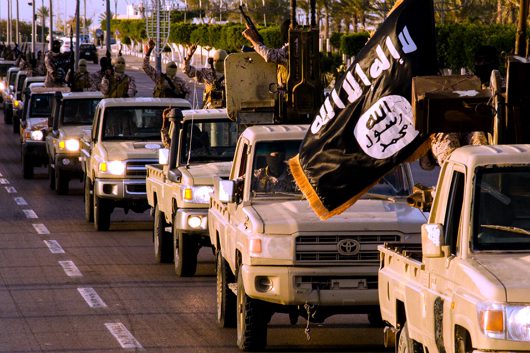
Instability, lack of resources and political corruption are driving everyday people into the “security” of terrorist groups. Most people have a specific understanding of a certain classification of terrorists. These are people in the third world or corrupt countries clinging to radical ideas and concepts of violence and revolution. These individuals are often unable to participate politically in their countries and therefore turn to drastic means in order to have their opinions voiced, which eventually leads to violence.

However, many people are unaware of the influx of people in western countries that are continuing to join such organizations. These include affluent European and American men and women, seeking acceptance in radical terrorist organizations around the world.

In recent years, there has been a particular increase in European women joining terrorist organizations that are established in the Middle East, such as ISIS. What could possibly motivate someone from the western world to join such groups?

In the last year, there have been a number of instances in which Americans were found to be supporting ISIS, both financially and otherwise. While this in itself is frightening, the biggest concern here is that of national security, especially in the United States. What is it that draws people into the group?

What people want is a sense of identity and purpose. As is the case with terrorist recruits in developing nations, individuals in the United States and other Western nations join groups like ISIS as a means for significance and a political voice.

Issues of unemployment and economic insecurity contribute to these motives. As people feel the brunt of economic tensions, they blame the government and often feel helpless when it comes to making a difference politically. Thus, joining a radical group, whose name is seen throughout various modes of information and social media, seems to be a surefire way to be heard.

It is the struggle and disparity that draws people to radical means for change. As examples of Americans and Europeans showing interest in terrorist groups such as ISIS have shown, radicalization can happen under any type of government or societal structure, and in any country. To protect national and international security, and to prevent individuals from radicalizing and seeking a voice elsewhere, it seems that people need a voice that is going to be heard in their home country.

– Alexandrea Jacinto

Sources: CNN, BBC
Photo: The Dark Room

June 21, 2015
https://borgenproject.org/wp-content/uploads/borgen-project-logo.svg 0 0 Borgen Project https://borgenproject.org/wp-content/uploads/borgen-project-logo.svg Borgen Project2015-06-21 01:37:092020-07-15 08:21:42What’s Driving People to Terrorist Groups?
Global Poverty

Scientists’ Crucial Role in Poverty Reduction in South Africa

Scientists' Crucial Role in Poverty Reduction in South Africa
The President of the Academy of Science in South Africa, Daya Reddy, claims that scientists play a key role in global poverty reduction. The problem is that the number of scientists in Africa is significantly less than anywhere else in the world. In other parts of the world, for every 1 million people, there are 1,000 scientists. In Africa, this number is 80. The second problem is what Reddy calls “the brain drain,” where one-third of Africa’s scientists leave the continent to practice their research.

Because of this, Africa’s success in poverty reduction is significantly lower than elsewhere. While worldwide poverty has been reduced by 50 percent, in Africa it has only been reduced by 8 percent.

Scientists hold the key to unlocking great mysteries, which is why Reddy teamed up with the Association of Commonwealth Universities and the South African Research and Innovation Management Association at the Research and Innovation for Global Challenge conference in May to encourage students to pursue their interests in science. In his speech, he highlights the importance of interdisciplinary studies, encouraging a “healthy collaboration”.

Reddy encourages scientists to use their knowledge of research and apply it to the world at large. “Complex problems require broad transdisciplinary approaches for their solution,” said Reddy, explaining later that this is the business of bringing together scientists with the movers and shakers of the world—the decision-makers and policy-creators, the educators and the innovators.

Scientific advancements can help in many ways, from improving the daily lives of individuals to large-scale changes. From medicine to sanitation, to agriculture and transportation, science is a unifying factor with the potential to make big changes in the world.

Great advancements have already been made, thanks to interdisciplinary work. Since the Millennium Development Goals established in 2000, now 90 percent of children globally are going to primary school, more girls are getting an education than ever before, and the odds of a child dying before the age of 5 has been cut in half. Worldwide, poverty has improved since the goals were established.

Reddy spoke at a conference in May to inspire students to pursue science. He encouraged the next generation to collaborate and create an interdisciplinary culture in order to end global poverty.

– Hannah Resnick

Sources: African Business Review, United Nations Development Programme University World News
Photo: Flickr

June 19, 2015
https://borgenproject.org/wp-content/uploads/borgen-project-logo.svg 0 0 Borgen Project https://borgenproject.org/wp-content/uploads/borgen-project-logo.svg Borgen Project2015-06-19 02:38:362024-05-27 09:24:11Scientists’ Crucial Role in Poverty Reduction in South Africa
Economy, Global Poverty

Expansion of Carbon Pricing Promises to Alleviate Poverty

Expansion of Carbon Pricing Promises to Alleviate PovertyWith an estimated value of between $16 and $54 trillion, the services provided by natural resources are an asset worth protecting. It is widely recognized that carbon dioxide from fossil fuel emissions threatens the environment and that reducing carbon emissions is a global necessity. A dominant strategy to reduce carbon is to make it more expensive which incentivizes individuals, companies and nations to use it more efficiently or switch to alternatives. Roughly 40 countries and over 20 subnational governments are either doing or planning to do so through legal mechanisms that increase carbon pricing. A recent analysis by the World Bank estimates that the value of these initiatives grew to nearly $50 billion this year.

There are two ways in which these efforts will be working to lighten the burden of poverty across the globe.

The first focuses on the role that a stable climate and healthy ecosystems have in providing a solid footing for economic development. Clean air and water, fire, flood and erosion control, mitigation from tsunamis and prevention of landslides are all services that intact ecosystems provide. These protect human populations and provide the foundation of productive agricultural systems.

Excessive use of carbon is leading to rising sea levels, increased desertification, stronger storms and less predictable weather, which will subvert the progress made on ending poverty and may create large groups of climate refugees, up to 200 million by 2050. In short, robust ecosystems offer goods and services and climate change undermines the provision of these goods and endangers massive economic, social and political costs.

The second way in which the expanding carbon market may reduce poverty depends on the design of the regulation. Currently, the two main strategies that reign supreme are cap and trade schemes and carbon taxes. The first sets a limit, the cap, on the amount of carbon that can be emitted and allows firms to trade permits to pollute. If one firm does not need to pollute, they may sell their permit to a polluter. Over time the cap is lowered and so are the emissions. Carbon taxes simply add a tax to carbon to make it more expensive and less attractive to use, though how the tax is applied and what is to be done with the revenue is flexible.

While both forms work to end poverty through protecting the environment, the cap and trade scheme contains an added component, termed carbon offsetting, which funds emissions-reduction projects in the developing world. Rather than buying permits to pollute, a firm can invest in an emissions-reduction project that otherwise would not have been financially feasible. These projects introduce clean technology and increase the level of investment in the developing world while protecting the environment.

Examples of U.N. certified emissions-reduction projects range from a soil conservation project in Moldova to reforestation of degraded croplands in Paraguay and generating power from rice husks in India. In 2013, total investment from certified projects was estimated to be over $315 billion. As carbon pricing expands, poverty reduction and sustainable development will follow.

– John Wachter

Sources: National Geographic, Oakridge National Laboratory, The Nature Conservancy, United Nations Framework Convention on Climate Change, United Nations Framework Convention on Climate Change, United Nations Framework Convention on Climate Change, World Bank
Photo: Eco Talk

June 19, 2015
https://borgenproject.org/wp-content/uploads/borgen-project-logo.svg 0 0 Borgen Project https://borgenproject.org/wp-content/uploads/borgen-project-logo.svg Borgen Project2015-06-19 01:28:492024-12-13 17:51:31Expansion of Carbon Pricing Promises to Alleviate Poverty
Global Poverty, Malnourishment

Malnutrition in Samoa

Malnutrition in Samoa
Malnutrition has widespread impacts and widespread consequences. As a worldwide problem, malnutrition impacts one in five children. Within Samoa, the problem is a growing health concern, particularly for children.

Malnutrition in Samoa occurs in a variety of forms. In Samoa, the most common form of malnutrition is Protein-Energy Malnutrition or P.E.M. Because P.E.M. is caused by inadequate protein intake, it has its greatest impact on children, due to the low intake of protein in their diet. In 2013, Samoa also saw 72 hospital admissions for acute, severe malnutrition. Two children died of these cases.

As it does in the rest of the world, malnutrition leads to many health problems in Samoa. In 2014, four children died and 19 were hospitalized as a result of diarrhea outbreaks. A ministry of health report connected poor dietary practices, and the use of Devondale milk as a substitute for both adequate baby formula and poor nutritional practices, to pediatric ward visits during the outbreak.

A lack of proper breastfeeding is a major contributing factor to malnutrition. A study in the city of Apia found that 17 percent of bottle-fed infants were malnourished, compared to only five percent of breastfed infants. Perhaps this is why a ministry of health report, in response to the diarrhea outbreak, listed advocating for proper breastfeeding as a “priority area of concern,” and listed giving pregnant mothers food supplements such as folic acid and iron tablets as an “area for vigilance.”

Diarrhea caused by malnutrition is also difficult for health professionals in that diarrhea leads malnourished patients to become further malnourished.

The impact of malnutrition on Samoa, and particularly on the children of Samoa, is shocking. The reality of facing the situation is challenging, as the issue also connects with dietary changes in the region that have occurred over the past few decades, along with urbanization. That being said, supporting education on these issues for all along with supplemental nutrition problems will be highly important in preparing for the challenges of the present, while building a better future.

 – Andrew Michaels

Sources: Samoa Observer, Radio New Zealand International, Radio New Zealand International, UN University, Samoa News
Photo:Flickr

June 19, 2015
https://borgenproject.org/wp-content/uploads/borgen-project-logo.svg 0 0 Borgen Project https://borgenproject.org/wp-content/uploads/borgen-project-logo.svg Borgen Project2015-06-19 01:19:522020-07-15 08:53:40Malnutrition in Samoa
Disease, Food & Hunger, Global Poverty

Ten Poverty Statistics You Should Know

Ten Poverty Statistics You Should KnowThe following are ten poverty statistics that any advocate should know and be able to share with others. They describe the global poverty situation:

1. Globally, there are over 1 billion children living in poverty.

2. 1/4 of all humans live without electricity — approximately 1.6 billion people.

3. The World Food Programme says, “The poor are hungry and their hunger traps them in poverty.” Hunger is the number one cause of death in the world, killing more than HIV/AIDS, malaria, and tuberculosis combined.

4. Gender discrimination is widely recognized as a major contributor to children living in poverty and creating disparities in how resources are earned, valued and distributed based on power relationships between men and women. These poverty-induced relationships lead to tens of millions of children becoming victims of exploitation, violence and abuse.

5. Global poverty leads to global hunger, as people living in poverty cannot afford nutritious food for themselves and their families. This creates a vicious cycle where a lack of food makes people weaker and less able to earn money, preventing them from escaping poverty and hunger.

6. Poverty is closely linked to the inability to access clean water and proper sanitation. More than 750 million people lack adequate access to clean drinking water.

7. The disadvantages of poverty are closely linked to an increased risk of disease. For example, diarrhea, which is caused by inadequate drinking water, sanitation and hand hygiene, kills an estimated 842,000 people every year globally, or approximately 2,300 people per day. With the increased risk of disease, those under the poverty line have little access to basic medical attention, causing preventable diseases like diarrhea and pneumonia to take the lives of 2-3 million people a year.

8. 80 percent of the world’s population lives on less than $10 a day, well below the standard of the Quality of Life Index.

9. A quarter of all people live without electricity — approximately 1.6 billion people.

10. The cost of eradicating world poverty is estimated at 1 percent of global income, whereas other financial endeavors such as military spending in the U.S. alone can reach over $691.22 billion.

– Alysha Biemolt

Sources: 11 Facts About Global Poverty, Global Issues, UNICEF, United Nations World Food Programme
Photo: Flickr

June 19, 2015
https://borgenproject.org/wp-content/uploads/borgen-project-logo.svg 0 0 Borgen Project https://borgenproject.org/wp-content/uploads/borgen-project-logo.svg Borgen Project2015-06-19 01:01:522024-05-27 09:24:11Ten Poverty Statistics You Should Know
Page 1933 of 2162«‹19311932193319341935›»

Get Smarter

  • Global Poverty 101
  • Global Poverty… The Good News
  • Global Poverty & U.S. Jobs
  • Global Poverty and National Security
  • Innovative Solutions to Poverty
  • Global Poverty & Aid FAQ’s
Search Search

Take Action

  • Call Congress
  • Email Congress
  • Donate
  • 30 Ways to Help
  • Volunteer Ops
  • Internships
  • Courses & Certificates
  • The Podcast
Borgen Project

“The Borgen Project is an incredible nonprofit organization that is addressing poverty and hunger and working towards ending them.”

-The Huffington Post

Inside The Borgen Project

  • Contact
  • About
  • Financials
  • President
  • Board of Directors
  • Board of Advisors

International Links

  • UK Email Parliament
  • UK Donate
  • Canada Email Parliament

Get Smarter

  • Global Poverty 101
  • Global Poverty… The Good News
  • Global Poverty & U.S. Jobs
  • Global Poverty and National Security
  • Innovative Solutions to Poverty
  • Global Poverty & Aid FAQ’s

Ways to Help

  • Call Congress
  • Email Congress
  • Donate
  • 30 Ways to Help
  • Volunteer Ops
  • Internships
  • Courses & Certificates
  • The Podcast
Scroll to top Scroll to top Scroll to top