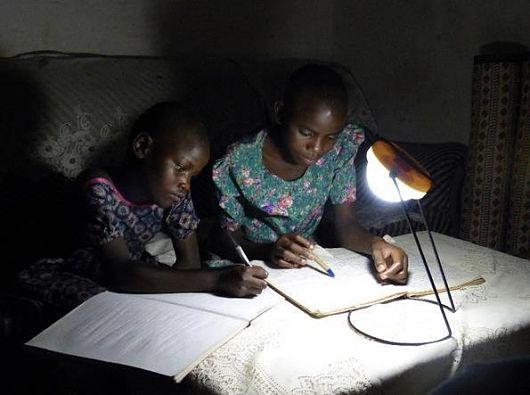
The number of children across the globe attending primary school at the beginning of the 1800s: 2.3 million. This number has surged to 700 million today. But despite this gigantic increase, primary school children across the developing world still face one major problem: a global education gap between developed and developing countries.
A new Brookings Institution report details just what this problem is: a 100-year gap in the quality of education between developed and developing regions of the world. This means that the average level of education in many poor countries today is the same as the levels of education in places like Europe and North America were in 1900.
Not only is there a 100-year gap between global education in the developed world and the developing world, but the developing world also lags 85 years behind when it comes to educational attainment. It will take average-scoring students in the developing world six generations to catch up to the same scoring students in the developed world today.
Ninety percent of primary school-aged children are enrolled in school around the world – that success should not go unnoticed or without applause. At the end of World War II, only 1 million children attended primary school. In 65 years, this has increased to 7 million. This “going to scale” of education across the world is incredible. The next step, however, is catching the developing world up to the education levels the developed world enjoys today.
How did it get behind in the first place? The idea of mass schooling is available to all young people and not only those with the resources to access it became a mainstream idea in the middle of the 1800s in areas like North America and Europe. Only in 1948, almost 100 years later, with the Universal Declaration of Human Rights did this become a concept applied to children across the whole world.
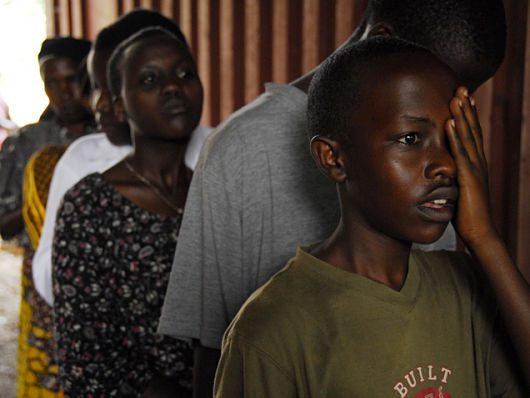
Even with the large enrollment number victory, if the data is broken down in specific regions, the picture is not as pretty. In Sub-Saharan Africa, less than 80 percent of school-aged children attend school.
Another way to examine the gap is by looking at the average number of years of schooling adults have. In 1870, adults in the developed world completed an average of 2.8 years of schooling, while adults in the developing world completed under half that time – 0.5 years.
The average lagged behind, usually with adults in the developing world completing under half the years of education that their counterparts in the developing world did until 2010. For every 12 years that adults in the developed world completed on average, adults in the developing world complete an average of 6.5 years – just over half.
It is imperative that this gap is reduced and eventually banished for good. Besides the idea that morally all children deserve the opportunity to develop in order to thrive in the modern age, there are a couple of other reasons why action should be taken immediately. First, ending the 100-year gap holds the possibility for reform and improved global education. New ways of thinking about education in the developing world have the potential to be helpful to education systems in the developed world and benefit all young people.
Second, there is a skills deficit that has already started – between 2010 and 2030, 360 million people over the age of 55 will retire. At the same time, a 60 percent increase in the global labor force will come from places like Africa, India and other South Asian countries, all places in the developing world. These young people should not be affected by the global education gap, so they can seize their place in the world economy left by the well-educated retirees that came before them. If nothing is done, the 100-year gap will continue into eternity. Changes must be made to ensure this does not happen, for the sake of the world’s children and perhaps the world’s economy as well.
– Greg Baker
Sources: Brookings, BBC MG Africa
Photo: Africa Business Conference

Urbanization is creating a new face for poverty. People migrate to cities for the convenience of resources, proximity to jobs, and the chance to live amidst affluence. This migration, however, is not the case for those living in poverty that are pushed out of their lands in the countryside and made to urbanize. It could be for numerous reasons: a shift from agricultural to industrial sectors, a way to develop local economies by bringing more workforce into the cities or to occupy the rural lands in order to make space for more economic development.
A new potential Anti-Poverty Model has emerged out of sustained economic reform in the Philippines. Over the past two years, local growth has significantly reduced poverty in the country. Looking ahead, continued reform measures could bring the number of poor Filipinos down to just 18-20 percent of the population by 2016.
Thousands of Bangladeshi refugees are escaping impoverished conditions and ethnic Rohingya are fleeing religious persecution. Human traffickers masquerading as smugglers promised them safe passage to Malaysia, but then held them for ransom on the border between Thailand and Malaysia until their families paid up huge sums of money.
Eradicating global poverty is an undeniably massive and difficult task. From lack of food and shelter to ineffective medications and governments, it seems almost entirely impossible for an ordinary person to provide any help for developing countries with such circumstances. Bring in a group of ordinary people, however, and a solution is attainable.
While this may come as a shock,
During the 2008 Summer Olympics held in Beijing, China’s notoriously polluted capital, a controversial interview surfaced on the website of Tsinghua University. Alleged to have the support of university president Binglin Gu, the interview condemned the Chinese higher education system as teeming with “serious academic corruption dry and irrelevant to society curriculum, and rote memorization teaching methods.” It continued on to say, “The old-fashioned methods of teaching and teaching material caused our society to lose many Da Vinci’s and Bill Gates … up to now,
While most members of developing nations have access to the Internet in their homes, in their workplaces and in various public locations, many Africans struggle to access the Internet. Here are 10 facts about the progress and struggles regarding Internet in Africa:
Revolutions spin nations into a whirlwind of anxiousness, confusion and often economic changes. The changes that ensued after the 1979 Iranian Revolution sent the nation into economic troubles for a multitude of reasons.