• Link to X
  • Link to Facebook
  • Link to Instagram
  • Link to TikTok
  • Link to Youtube
  • About
    • About Us
      • President
      • Board of Directors
      • Board of Advisors
      • Financials
      • Our Methodology
      • Success Tracker
      • Contact
  • Act Now
    • 30 Ways to Help
      • Email Congress
      • Call Congress
      • Volunteer
      • Courses & Certificates
      • Be a Donor
    • Internships
      • In-Office Internships
      • Remote Internships
    • Legislation
      • Politics 101
  • The Blog
  • The Podcast
  • Magazine
  • Donate
  • Click to open the search input field Click to open the search input field Search
  • Menu Menu

Archive for category: Food & Hunger

Information and stories on food.

Food & Hunger, Food Aid, Nonprofit Organizations and NGOs

Feed My Starving Children

Feed My Starving Children is a Christian nonprofit organization that aims to feed the hungry. The organization uses volunteers to hand-pack cost effective and easily shippable meals to malnourished children. These packages are then sent to 70 countries around the world.

Feed My Starving Children was first established in 1987 after businessman Richard Proudfit went on a mission trip to Honduras. There he was challenged by the hunger he saw and felt compelled to aid the starving. From then on, Proudfit and many others would work to create the perfect meal plan for the hungry.

By 1993, Cargill food scientist Dr. Richard Fulmer partnered with other scientists from Pillsbury and General Mills to develop “Fortified Rice Soy Casserole” for starving children. For the Feed My Starving Children organization, this nutritious mixture would be known as MannaPack, named after the miraculous food in the Bible. Next in the process would be the hunt for the ideal packaging. In 1994, 1 million plastic bags were donated by Green Giant. Soon, the first shipments of meals were sent off to Rwanda, Haiti, Belarus, and Paraguay.

The finalized product is made up of four primary parts: rice, extruded soy nuggets for protein, vitamins and minerals and vegetarian flavoring, and dehydrated vegetables. The bag of food is simple to prepare and provides a many life-saving calories and nutrition to starving children.

Since its early days, Feed My Starving Children has also developed other packaged meals such as its MannaPack Potato-W formula for weaning children and MannaPack Potato-D, the first and only food developed to help people recover from diarrhea. Furthermore, in 2012 alone, the organization has sent out 153,000,000 meals to countries around the world. One bag of food, which contains meals for 6 children, costs only $1.32 to produce.

Today Feed My Starving Children is one of the nation’s most trustworthy charities. It has earned Charity Navigator’s highest rating for eight straight years.

– Grace Zhao

Sources: Feed My Starving Children, Charity Navigator
Photo: Pitch Engine

July 20, 2013
https://borgenproject.org/wp-content/uploads/borgen-project-logo.svg 0 0 Borgen Project https://borgenproject.org/wp-content/uploads/borgen-project-logo.svg Borgen Project2013-07-20 08:20:002017-02-28 11:53:10Feed My Starving Children
Food Aid, Nonprofit Organizations and NGOs

What is Mercy USA?

mercy-usa
As nearly 1 billion people in the world live on less than $1 a day, Mercy-USA for Aid and Development (Mercy-USA) is a non-profit organization dedicated to improving health and nutrition, as well as pushing for educational and economic development internationally. With a motto of, “Helping people help themselves,” Mercy-USA has been providing aid and helping individuals and their communities become more self-sufficient since 1988, thereby alleviating human suffering worldwide.

Headquartered in Plymouth, Michigan, with overseas offices in countries including Albania, Indonesia, and Lebanon, Mercy-USA is registered with the United States Agency for International Development (USAID). As a result, Mercy-USA receives grants from the United States government for international development. For example, in 2010, Mercy-USA received a grant worth over 1.26 million dollars to help provide freshwater and improve health, sanitation, and nutrition to 118,000 individuals in need in Somalia. This money has gone to support many feedings centers, water wells, and sanitary latrines. Most recently, USAID has provided more than $290,000 to Mercy-USA to combat waterborne diseases by improving hygiene practices in Garissa County, Kenya.

Supported by USAID, agencies of the United Nations, and other partner organizations dedicated to international humanitarian affairs, Mercy-USA works in countries like Bangladesh, Kenya, Bosnia, and many others. Mercy-USA has improved the nutrition of many by providing daily lunches to school children in Gaza and by distributing monthly food baskets to internally displaced and vulnerable families in northern Syria.

In addition to distributing food and supplies to aid in sanitation and hunger relief, Mercy-USA trains individuals to become self-sufficient so that development becomes sustainable, a necessity in effectively battling world poverty and disaster. Mercy-USA has been training farmers in countries like Indonesia and providing computer training to youth in Bosnia. Mercy-USA is an important player in international humanitarian endeavors, having improved the lives of hundreds of thousands of people, from helping to improve nutrition and sanitation to providing agricultural and vocational training.

– Rahul Shah

Source: Mercy USA, USAID
Photo: Mercy USA

July 20, 2013
https://borgenproject.org/wp-content/uploads/borgen-project-logo.svg 0 0 Borgen Project https://borgenproject.org/wp-content/uploads/borgen-project-logo.svg Borgen Project2013-07-20 05:43:202018-08-14 12:18:38What is Mercy USA?
Food & Hunger, Global Poverty, Health

Four Focuses of Hunger Prevention

four-ways-hunger-prevention-borgen-project-global-poverty_opt
Millions of people worldwide live with the absence of available food sources. From our Western perspective, this is often difficult to understand as well as painful to imagine. However, the world without food is not without hope. Here, we focus on 5 ways to not only stop hunger in its current state, but also prevent it from happening in the first place.

1. Look to the Future.
Breaking the cycle of hunger is not possible without future-mindedness. So many countries go hungry due to lack of investment—no one sends aid because the hungry population is not prospering, the population is not prospering because they don’t have enough food to function…and the nightmare goes on. Investing in the future and electing smart leaders who have a plan to fight this epidemic is crucial to ending current and preventing future starvation.

2. Focus On Women.
Women make up 60% of the world’s hungry. Starving women means malnourished babies or failed pregnancies, and even those pregnancies that do come to term often lead to another hunger-stricken life.

Women tend to go hungry more often than men, because women are more likely to have unequal access to resources, education, and income—all because they tend to participate less in decision-making. Healthy women will bear healthy babies, raise them into healthy children, and create healthy adults.

3. Invest in Livestock and Agriculture.
Think of the famous saying,  “Catch a man a fish, and feed him for a night. Teach a man to fish, feed him for a lifetime.” Sustainable production of food is essential for starvation prevention, and healthy communities. Most starving countries have poor agricultural systems due to drought or lack of water sanitation.

However, it is not the drought itself that erodes food security in a population. The real issue here is an areas vulnerability to drought because of chronic underinvestment in their lands and livestock.

A population’s land may be infertile so no one invests in improving it for fear of little return, but the land is infertile because the people don’t have the resources to cultivate it; the people don’t have the resources to cultivate the land because no one is investing in it. A modest investment can break this cycle.

4. Find Out How You Can Help.
Hunger won’t end without all of our help. All of us—every human being on the planet—need to commit to fighting starvation in order for it to end. Something as simple as volunteering at a food back, or something as radical as campaigning on Capitol Hill will move our world toward an age where no one dies of starvation.

– Kali Faulwetter

Source: Ready Nutrition, Revolution Hunger, Trust, World Food Programme
Photo: ICNA Relief

July 19, 2013
https://borgenproject.org/wp-content/uploads/borgen-project-logo.svg 0 0 Borgen Project https://borgenproject.org/wp-content/uploads/borgen-project-logo.svg Borgen Project2013-07-19 05:00:192024-05-25 00:00:09Four Focuses of Hunger Prevention
Food Security

Nigerian Grain Trade Threatens Food Security

nigerian wheat_opt
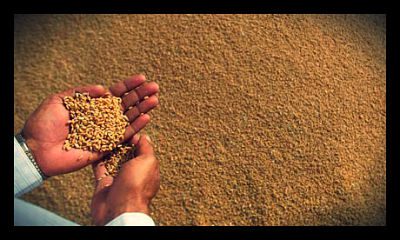
The recent slowdown in Nigeria’s grain trade holds tremendous implications for food security in the Sahel. Nigeria supplies almost half of the region’s cereal and is the most important market for farmers, herders, and traders from surrounding areas.

The communities most at risk from the rise in food insecurity are located in southeastern and central Niger, northern Nigeria, and northern Benin. Chad is usually highly dependent on the grain supplies from Nigeria, but a very strong 2012 harvest has somewhat insulated the country from the current crisis.

In the hardest-hit areas, staple grains like maize and millet, are selling at prices even higher than those seen during the 2012 regional food crisis. For example, a 100kg bag of maize now sells for $9 more than at the same time last year.  This trend is particularly worrisome as prices are only expected to increase during Ramadan in the month of July.

The increase in food prices are devastating in a region where many of the poorest families will spend up to 80% of their household income on market food. Nigeria’s production is so critical to these markets that despite the fact most Sahelian countries saw an increase in maize and millet, the decrease in Nigerian supply offset three-quarters of the regional gain.

The factors behind the current grain shortage are complex, but three major facets can be distinguished. The first is last year’s widespread flooding. Many of the farmers have not been able to recover their fields and crops from the damage.

The second major factor is the popularity of cash crops. Many farmers are switching from staple crops to cash crops, not generally sold in the regional food markets. In fact, the production of millet, a major staple grain, has decreased by 13% from the five-year average.

In addition to the previous two factors, the rise of Boko Haram has greatly disrupted Nigerian agriculture. The violent extremist group has forced an estimated 65% of farmers in northeastern Nigeria to flee their homes and fields. The violence has also discouraged traders from engaging in traditional trade routes and markets.

Experts say aid to Nigeria must be increased to combat the growing food security crisis. Nigeria receives millions of dollars in aid every year, but the amounts are far less than what is received by its neighbors. Given Nigeria’s key position within the food market of the region, aid priorities should be reassessed to insure the current agricultural slowdown does not worsen to a widespread food crisis.

– Lauren Brown

Sources: ISN, World Bank
Photo: Kansas Agricultural Network

July 19, 2013
https://borgenproject.org/wp-content/uploads/borgen-project-logo.svg 0 0 Borgen Project https://borgenproject.org/wp-content/uploads/borgen-project-logo.svg Borgen Project2013-07-19 04:54:302024-05-25 00:00:50Nigerian Grain Trade Threatens Food Security
Food & Hunger

Where Does the ‘Ugly’ Food Go?

tristram stuart_opt
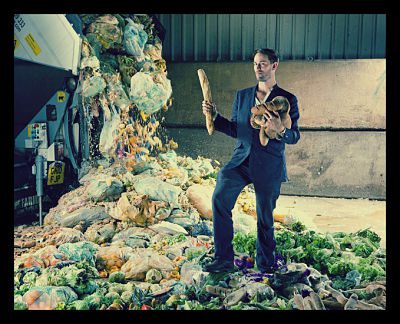
With hopes to change the global opinion about the waste of “unwanted” food, Tristram Stuart, author of Waste: Uncovering the Global Food Scandal and founder of Feeding the 500, prepared a meal for global ministers and diplomats February 19, 2012 in Nairobi. The meal was
prepared with only “ugly” ingredients, Stuart claims.

The five course meal consisted of yellow lentil, grilled sweet corn, French Beans and pleothra of other vegetables. Although well- presented, the dinner ingredients likely would have been rejected by various UK supermarkets for their appearance. Through his meal, Stuart hoped to uncover the truth about unwanted fruit and vegetables.

“The waste of perfectly edible ‘ugly’ vegetables is epidemic in our food production systems and symbolizes our negligence,” Stuart tells.

In addition to cost and environmental impact, food waste increases pressure on the already fragile global food system. In a country with millions of hungry people, it is a scandal that UK supermarkets waste so much food, adds Stuart. The expected amount of vegetables wasted every week is 40 tons, 40 percent of what the farmer grows.

A study by the Food and Agriculture Organization (FAO) reported that one third of all food produced worldwide is either wasted or lost, resulting in 1.3 billion tons annually.  Combined data from the FAO and Unep estimates the annual cost at approximately $1 trillion.

Half of all consumable food in industrialized countries is wasted, the FAO claims. In retrospect that is 300 million tons of usable food, more than the total amount of food production of Sub-Saharan Africa sufficiently feeding 900 million hungry.

With these figures as evidence, use of wasted food can benefit farmers and the global hungry alike. Instead of simply asking to reduce food waste, it would more beneficial to utilize the food wasted, Stuart claims.

In his TED talk about global food waste, Stuart reflected on personal application of food waste utilization as a teen raising livestock. By utilizing scraps from his school, local bakers and other farmers “throwing out potatoes because they are the wrong shape and size”, Stuart was able to provide plump, healthy and profitable pigs. Not only was this method environmentally friendly, it was the most economically sufficient, Stuarts exclaims.

Farmers have learned to use “leftovers” to feed their livestock.  Because livestock serve as a source of livelihood and supplement for farmer family diets, the use of food waste helps famers both health-wise and economically, Stuart adds.  If applied by all farmers and non-farmers alike, quality of life would increase while global hunger would decrease.

Reflecting on yet another example from his pig-raising days, Stuart told his TED talk listeners of yet another applicable story. One day when he was feeding his pigs, Stuart saw a rather consumable tomato loaf. Stuart washed it off, sat down and ate it. For Stuart this was the first application of what he would later term Freeganism, an exhibition of the injustice of food waste and the provision of the solution. The solution to food waste and global hunger is simple:  to sit down and eat the food than throw it away, Stuart concludes.

– Danielle Doedens

Sources: TED Talk, The Nation
Sources: The Guardian

July 18, 2013
https://borgenproject.org/wp-content/uploads/borgen-project-logo.svg 0 0 Borgen Project https://borgenproject.org/wp-content/uploads/borgen-project-logo.svg Borgen Project2013-07-18 05:08:332024-12-13 17:53:46Where Does the ‘Ugly’ Food Go?
Developing Countries, Food & Hunger

The Benefits of Volunteering Abroad

Volunteering Abroad
Volunteering abroad is a great way to make a difference while also exploring new places. The exposure to other cultures, languages, and ways of life creates mind-opening experiences. Waking up day-to-day in an area of need, one begins to appreciate the gifts of his/her own culture as well as appreciate the benefits of a new culture. The friendships made with other volunteers and community members are an added bonus. Here are just some benefits of volunteering abroad:

Utility Maximization and Altruism:

People, by nature, are utility maximizers who engage in certain behaviors in order to derive happiness and satisfaction. In this case, the certain behavior is volunteering. Volunteering instills a sense of “giving back,” or rather giving ones own resources (time, money, services, etc.) to help those less fortunate. Overseas volunteering is truly meaningful in this area. Leaving one’s comfort zone to venture to another country to help out makes this act of giving even more poignant. According to GoAbroad.com, anyone who decides to volunteer abroad must meet only one important qualification: the urge to make a positive change in the world.

Learn New Languages:

While volunteering abroad, every day is an opportunity to learn the native language. A stroll by a fruit stand is an opportunity to engage the attendant in conversation and learn new vocabulary, even if it is just learning the names of different fruits. Often times English speakers are asked to teach English as a second language which requires relearning grammar rules and usage. What could be so terrible about relearning subject-verb agreement? These better English skills can prove useful in the long run.

Eat Something Different for a Change:

Americans are accustomed to the usual selection of food that is inspected, regulated, processed and enhanced for flavor. Many foreign countries do not face these government expectations with their foods. Volunteers may try fruits, veggies, herbs and meats they never experienced before. Some meals are served fresher and are much cheaper than what most Americans are use to. Some foods are an unexpected treat, and others may be frightening—a fresh fruit with maggots, anyone? Nevertheless, a new menu can yield new favorites, new ways of cooking, and an appreciation for food in its simplest form.

The Cure and Better Manners:

Overseas volunteering is an excellent cure for the “ugly American” syndrome. Volunteers typically receive thorough education about gestures, body language, and conversation to avoid offensiveness. The lessons are a humbling experience and can make a volunteer think twice about how their behavior appears to others in their own culture.

– Scarlet Shelton

Sources: USA Today, GoAbroad.com

July 16, 2013
https://borgenproject.org/wp-content/uploads/borgen-project-logo.svg 0 0 Borgen Project https://borgenproject.org/wp-content/uploads/borgen-project-logo.svg Borgen Project2013-07-16 07:57:092024-05-25 00:02:12The Benefits of Volunteering Abroad
Food & Hunger

How Africa Can End Hunger by 2025

Africa Hunger 2025
Africa can end hunger completely by 2025, according to Jose Graniano da Silva, Director-General of the Food and Agriculture Organization of the United Nations. Graniano da Silva bases his prediction on the great progress that has been made in Africa since the establishment of the Millennium Development Goals in 2000.

Since then, eleven countries in Africa have reduced the number of hungry people within their borders by 50%, and several others are on track to do the same by the end of 2015. With the strong momentum that is behind African efforts to combat malnutrition, Graniano da Silva believes that complete elimination of hunger is attainable in the continent by the year 2025.

The Director-General states that the biggest obstacle to eliminating hunger in Africa is accessibility to food. Africa has the second-highest level of economic growth in the world and a multitude of resources throughout the continent, yet 17 of the 20 countries in the world “suffering from prolonged food shortages” are in Africa and “one in four Africans still suffer from chronic hunger.”

The key to reducing hunger, according to Graniano da Silva, is not necessarily by just increasing food production, but rather by making food more available throughout the continent. Increased access to food can be achieved by increasing access to land for growing food and reducing food price volatility.

Other factors that will help contribute to the eradication of hunger in Africa are increasing national budgets on agriculture and providing women with enhanced access to land and credit. Nearly “70% of Africa’s agriculture workforce is female,” making women’s rights and involvement in development essential to reducing hunger.

Jose Graniano da Silva is a former president of Brazil who headed the nation’s Fome Zero program, which successfully lifted 28 million Brazilians out of poverty. The Director-General hopes that similar strategies to the ones that he helped implement in Brazil will help lift millions of Africans out of poverty in the next decade.

– Jordan Kline

Sources: The Guardian, Inter Press Service

July 16, 2013
https://borgenproject.org/wp-content/uploads/borgen-project-logo.svg 0 0 Borgen Project https://borgenproject.org/wp-content/uploads/borgen-project-logo.svg Borgen Project2013-07-16 04:03:552020-07-02 12:07:17How Africa Can End Hunger by 2025
Food & Hunger, Nonprofit Organizations and NGOs

Righting the Wrongs of Malnutrition

Think of one child. This child could be your brother, sister, son, or daughter. This person is someone you love and care for dearly. Now imagine watching this child go through the stages of acute malnutrition. As lack of food and nutrients wear on their body, their metabolism begins to slow. Their body slowly eats away at their muscle tissue and their kidneys begin to fail. The suffering of this loved one is something you can’t stop, as there is no food to give them. Their body is just shutting down.

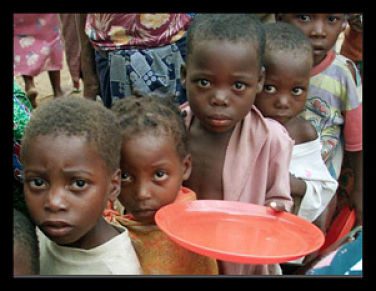
This may sound like a foreign scenario to those able to provide daily meals to their loved ones, but 55 million children in the world today suffer from these serious consequences of malnutrition. These children are susceptible to disease, mental and physical impairments, and possibly death.

For 30 years, Action Against Hunger/ACF International has fought to help these children. An international non-profit organization, ACF has 4,600 health professionals in over 40 countries working to provide nourishment, clean drinking water, and sustainable living conditions to those suffering from malnutrition.

ACF International works to provide both an immediate and long-term impact. Children suffering from malnutrition need assistance now; however, ACF strives to not only get these children healthy but to keep them healthy for good. Accordingly, ACF accepts donations and sends supplies to affected areas, while working to create a long-term presence in international communities through programs and leadership.

The support for this cause remains strong. Sponsor partners, such as Weight Watchers, Pentair, and North American Power, offer unique and relevant ways in which they contribute to eradicating malnutrition. For example, Weight Watchers and Pentair have dedicated over two million dollars each to the cause, while North American Power donates a dollar for every electric bill paid.

With help from these partners and others, Action Against Hunger/ACF International continues to change the world. In 2012, 157,000 children were saved from deadly hunger. Additionally, 550,000 farmers were equipped with the tools necessary to provide their communities with food and economic growth. Progress is being made, but too many children remain hungry.

For more information on how you can become involved with Action Against Hunger and ACF International, visit www.actionagainsthunger.org. Put yourself in their shoes. Make a difference.

– William Norris

Sources: Action against Hunger, World Food Programme
Photo: African Starving Children

July 15, 2013
https://borgenproject.org/wp-content/uploads/borgen-project-logo.svg 0 0 Borgen Project https://borgenproject.org/wp-content/uploads/borgen-project-logo.svg Borgen Project2013-07-15 09:50:492024-05-25 00:02:45Righting the Wrongs of Malnutrition
Food & Hunger, Food Aid, Global Poverty, Health

“Nutrition for Growth” and Hunger Alleviation

Nutrition for Growth
With last month’s G8 Summit, and the ‘Nutrition for Growth’ summit hosted in London before that, a lot of the focus has been on large amounts of international aid earmarked to combat global hunger and malnutrition.

Small-scale, localized projects play just as large a role as international aid efforts, and possibly more beneficial. The original Green Revolution increased crop yields dramatically, but at no small environmental cost. If this large-scale intervention played its role, multiple small-scale projects could produce the same results.

One such project fighting food insecurity is the Soil, Food, and Healthy Communities (SFHC) program in Malawi. This program began ten years ago with efforts to educate local farmers and diversify their crops. The original aim of the project was to improve the health, food security, and soil fertility of poor households in Northern Malawi. This goal was additionally tied into participatory research, testing legume systems and looking at more sustainable approaches to achieving greater food security.

By introducing a variety of different legume options, as well as agricultural techniques, the quality and quantity of food can both be increased, as well as improving soil quality through organic input. This Ecohealth approach, focusing on the health of the entire system and humans’ interaction with it, can be simultaneously beneficial to the communities’ short-term needs, as well as allowing for longer-term sustainability.

Ten years on from the initiation of the project there have been many encouraging signs of success. The introduction of semi-perennial rotation systems, and the diversification of crops, led in some cases to annual return yields double that of the previous system. In addition to these straightforward agricultural benefits, a further goal of SFHC was to educate the local populace regarding nutrition.

The introduction of diverse legumes into the crop rotation system improves soil quality and yield, and also diversifies the local diet. This additional food production can then directly influence the health of the children of the community. As a result of this project, child malnutrition has been reduced by two-thirds over the past ten years in a hospital catchment area serving about 70,000 people and covering 600-square kilometers. This is largely due to farmers now producing soybeans, groundnuts, and other legumes, and incorporating them into the local diet.

– David Wilson

Sources: The Guardian, Winnipeg Free Press

July 15, 2013
https://borgenproject.org/wp-content/uploads/borgen-project-logo.svg 0 0 Borgen Project https://borgenproject.org/wp-content/uploads/borgen-project-logo.svg Borgen Project2013-07-15 05:16:442020-06-26 14:34:18“Nutrition for Growth” and Hunger Alleviation
Food & Hunger, United Nations

Importance of Small-Scale Farmers

Small-Scale Farmers
With a rising population and a high demand on food production, our world is looking for solutions to increase food production. Small-scale farmers play an important role in the dilemma of feeding our world. Currently small-scale farmers produce the majority of food for the developing world.

There are millions of success stories about these farmers reaching out and sustaining whole communities. For example, in Brazil there is a food security policy known as Zero Hunger. In this program the government buys products directly from small-scale farmers and distributes the products to day-care centers, hospitals and community associations.

However, the UN and FAO in a report, Smallholder Integration in Changing Food Markets, highlight the challenges still ahead for small-scale farmers. The report calls attention to the importance of policymakers in the growth of small-scale farmers. The report focuses on the fact that most of these farmers are removed from the market. It calls for policymakers to create greater market integration and more inclusive value chains. The report concludes that by doing these things, these farmers will be more inclined to adopt new technologies to grow productivity.

The report stresses the two main ways to link small-scale farmers to the market are to provide better access to credit and insurance, and to strengthen the links between farmers and buyers. The report discusses the fact that, in many countries, transportation is too costly, infrastructure is inadequate, and the cost of storage is too high. These farmers are unlikely to risk producing a surplus of products if they think that their products would go to waste.

“High levels of price, production risks and uncertainty, and limited access to tools to manage them deter investment in more productive new technologies that would enable smallholders to produce surpluses for sale in markets,” according to the report.

Policymakers must focus on the inclusion of small-scale farmers into the market. They are important to the future of our world and must be supported.

– Catherine Ulrich

Sources: FAO, International Institute for Environment and Development, UN News

July 15, 2013
https://borgenproject.org/wp-content/uploads/borgen-project-logo.svg 0 0 Borgen Project https://borgenproject.org/wp-content/uploads/borgen-project-logo.svg Borgen Project2013-07-15 04:44:302024-06-11 01:36:17Importance of Small-Scale Farmers
Page 71 of 78«‹6970717273›»

Get Smarter

  • Global Poverty 101
  • Global Poverty… The Good News
  • Global Poverty & U.S. Jobs
  • Global Poverty and National Security
  • Innovative Solutions to Poverty
  • Global Poverty & Aid FAQ’s
Search Search

Take Action

  • Call Congress
  • Email Congress
  • Donate
  • 30 Ways to Help
  • Volunteer Ops
  • Internships
  • Courses & Certificates
  • The Podcast
Borgen Project

“The Borgen Project is an incredible nonprofit organization that is addressing poverty and hunger and working towards ending them.”

-The Huffington Post

Inside The Borgen Project

  • Contact
  • About
  • Financials
  • President
  • Board of Directors
  • Board of Advisors

International Links

  • UK Email Parliament
  • UK Donate
  • Canada Email Parliament

Get Smarter

  • Global Poverty 101
  • Global Poverty… The Good News
  • Global Poverty & U.S. Jobs
  • Global Poverty and National Security
  • Innovative Solutions to Poverty
  • Global Poverty & Aid FAQ’s

Ways to Help

  • Call Congress
  • Email Congress
  • Donate
  • 30 Ways to Help
  • Volunteer Ops
  • Internships
  • Courses & Certificates
  • The Podcast
Scroll to top Scroll to top Scroll to top