• Link to X
  • Link to Facebook
  • Link to Instagram
  • Link to TikTok
  • Link to Youtube
  • About
    • About Us
      • President
      • Board of Directors
      • Board of Advisors
      • Financials
      • Our Methodology
      • Success Tracker
      • Contact
  • Act Now
    • 30 Ways to Help
      • Email Congress
      • Call Congress
      • Volunteer
      • Courses & Certificates
      • Be a Donor
    • Internships
      • In-Office Internships
      • Remote Internships
    • Legislation
      • Politics 101
  • The Blog
  • The Podcast
  • Magazine
  • Donate
  • Click to open the search input field Click to open the search input field Search
  • Menu Menu

Archive for category: Development

Information and stories on development news.

Development, Foreign Policy, Global Poverty, Poverty Reduction

5 Military Quotes About Global Poverty

Military_quotes_poverty
Though the United States devotes roughly $660 billion a year to the military to protect the U.S. from its enemies, influential military leaders have spoken out about the efficacy of foreign aid and diplomacy, rather than military action, for improving national security. Military action is unavoidable in some circumstances, but a rising number of high-ranking military officials are beginning to back an increased budget for foreign aid. Listed below are 5 quotes from military and intelligence officials about the power of aid in relieving global poverty.

  1. “In many respects, USAID’s efforts can do as much over the long term to prevent conflict as the deterrent effect of a carrier strike group or a marine expeditionary force.” – Lieutenant General John Allen, Commander of U.S. Forces in Afghanistan
  2. “Development is a lot cheaper than sending soldiers.” – Robert Gates, Former Secretary of Defense
  3. “To truly end the threat from al-Qaeda, military force aimed at killing our enemy alone will never be enough. The United States must stay involved and invested through diplomacy, through development, through education, through trade in those regions of the world where violent extremism has flourished.”- Leon Panetta, Former Secretary of Defense
  4. “Robust resourcing for the State Department’s mission is one of the best investments for reducing the need for military forces to be employed. Together, our military leaders and our diplomats not only represent a symbol of America’s enduring commitment to the region, but they also build trust through partnerships that have an important stabilizing effect when trouble looms.” – General James N. Mattis, Commander, U.S. Central Command
  5. “Our enemies today are not as cut and dry as they were in the Cold War. Conditions in the world such as grinding poverty, pandemic disease and severe food insecurity serve as seeds from which extremism and instability can grow. By addressing these issues, we diffuse many of today’s national security threats and keep our troops out of harm’s way.” – General Michael Hagee, Retired Commandant of U.S. Marine Corps and Admiral James Loy, Retired Commandant of U.S. Coast Guard

– Katie Bandera

Sources: USGLC, The Borgen Project, Politico
Photo: Free republic, Politico, Washington Independent, Algemeiner


Read Humanitarian Quotes.

August 6, 2013
https://borgenproject.org/wp-content/uploads/borgen-project-logo.svg 0 0 Borgen Project https://borgenproject.org/wp-content/uploads/borgen-project-logo.svg Borgen Project2013-08-06 05:43:172016-12-05 16:14:415 Military Quotes About Global Poverty
Children, Developing Countries, Development, Nonprofit Organizations and NGOs

Spotlight on INMED Partnerships For Children

children_opt
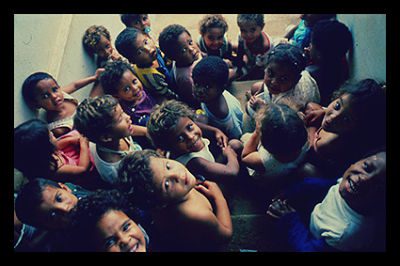
Youth around the world, primarily in Latin America, Southern Africa and the United States, have an ally with INMED Partnerships for Children. This organization is dedicated to helping children who have been devastated by “disease, hunger, abuse, neglect, violence or instability” and works with them to build a healthy and successful future. Rather than simply focusing on curing immediate threats to children, although INMED does that too, the group is adamant about treating the root causes of their struggles.

INMED transforms the lives of children in harmful environments by developing programs to target the specific needs of villages, regions, or entire countries. These programs include Health and Nutrition, Education and Skills Building, Adaptive Agriculture and Aquaponics, Youth Development, and Family Services. All of these programs create an opportunity for youth to change their lives for the better.

Children are not the only ones affected by INMED’s development programs. As children begin to change many aspects of their lives, these changes carry over to their families and communities. As these changes become dominant in communities, more and more people are lifted out of poverty and have the opportunity to create a better life. INMED calls for “sustainable change that crosses generations,” not just helping a few children for a brief amount of time.

The numerous success stories of INMED Partnership for Children show that this organization is making a difference in the world. By focusing on “long-term opportunities for children’s success in life” and community outreach, INMED is doing what all similar organizations should be striving towards: improving the future of impoverished children. INMED’s programs will likely be implemented in communities long after the organization leaves, which is the key to true progress.

– Mary Penn

Sources: Guide Star, INMED Partnerships for Children
Photo: Hands for Latin America

August 6, 2013
https://borgenproject.org/wp-content/uploads/borgen-project-logo.svg 0 0 Borgen Project https://borgenproject.org/wp-content/uploads/borgen-project-logo.svg Borgen Project2013-08-06 05:23:152024-06-05 01:53:35Spotlight on INMED Partnerships For Children
Development, Education, USAID

USAID Summer Start in Liberia to Educate 480 Students

liberia_opt
In Liberia, adults have received an average of only 2.5 years of schooling in their lifetime. According to the CIA World Factbook, approximately 85% of Liberian citizens are unemployed, and 80% live below the poverty line. In 2012, GDP per capita was only $700, making Liberia ranked 224 of 229 nations for GDP. But since the country held peaceful elections in 2005 the economic situation has been slowly improving with the help of private overseas investors in the mining and agriculture industries. More than ever, Liberia needs successful students who can run these industries to help pull the nation out of its extreme poverty. That’s why the USAID Excellence in Higher Education for Liberian Development Project (EHELD) was created in 2011.

The project aims specifically at helping faculty at Cuttington University and the University of Liberia to develop high quality agriculture and engineering programs for its students, attracting students to the programs, and working with local business leaders to create employer linkages for the students.

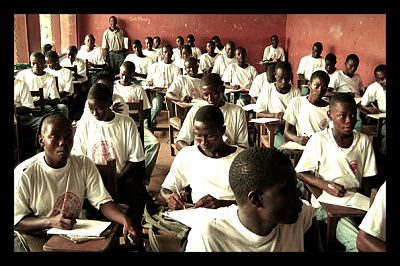
Currently the EHELD team is holding its yearly USAID Summer Start program for high school students that runs from July 15 – 26. The programs, which will focus on experiential learning, are being held at 6 different high schools, accommodating 80 students each. The programs, which will be taught by a team from the University of Michigan, Peace Corps Volunteers, and faculty of Cuttington University and the University of Liberia, will teach important life skills such as computer science and math, while also providing career counseling in agriculture and engineering.

In addition, the EHELD summer programs are partnering with the Cuttington University Upward Bound program to run at the same time under the same leadership. The Upward Bound program will specifically focus on educating 10th -12th graders, while the summer start program will focus on incoming engineering and agriculture students at Cuttington University and the University of Liberia and returning summer start students.

Superintendent of Bomi County (where the high schools are located) Samuel Browne spoke during the camps opening ceremonies, urging the students to appreciate the opportunity and take full advantage of it and telling them the “sky is the limit” when it comes to education.

USAID-EHELD is also currently providing scholarships for over 100 talented engineering and agriculture students at the two universities.

– Emma McKay

Sources: Nation Master, All Africa, Nation Master
Photo: Harvard News

July 30, 2013
https://borgenproject.org/wp-content/uploads/borgen-project-logo.svg 0 0 Borgen Project https://borgenproject.org/wp-content/uploads/borgen-project-logo.svg Borgen Project2013-07-30 06:23:352017-03-20 13:03:37USAID Summer Start in Liberia to Educate 480 Students
Developing Countries, Development, Nonprofit Organizations and NGOs

Helping Hand for Relief and Development

Helping_Hand_Relief_Development
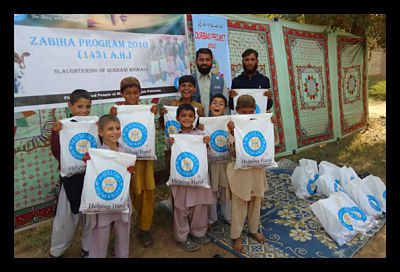
There are few organizations with as many different programs dedicated to helping impoverished people around the world as Helping Hand for Relief and Development (HHRD). Although this group is relatively young (founded in 2005), its staff and volunteers have wasted no time making a huge impact on the world. This Islamic organization sticks to its vision of “strengthening the bond of humanity” by providing humanitarian relief and development assistance to all types of people, no matter their ethnicity or background.

One of the ways HHRD provides aid is through its program “Islamic Interest Free Microfinance,” a microenterprise development concept, which is an interest-free loan that helps alleviate poverty. Someone participating in this program could use it to purchase something like seeds or fertilizer.

Other ways HHRD provides sustainable growth in poverty-ridden communities is through programs like Orphan Support Program (sponsor a child for $1 a day), Education Support (student scholarships), Health Care, Infrastructure Development (rebuilding homes and schools), Physical Rehabilitation (provides new limbs for those hurt in disasters), Skill Development (focuses on empowering women), Youth Empowerment (internships) and Public Advocacy and Social Justice (raising awareness of global issues, like climate change and social injustices).

Water for Life and Emergency Appeals are two other important programs the Helping Hand for Relief and Development organizations provides. Water sanitation is a major issue for many people in developing countries. HHRD sets up wells, hand pumps and devices for filtering water so that people can finally have access to clean drinking water. The Emergency Appeals program works is also vital for those in the third world who do not have access to basic medicines, food, mosquito nets, tools for rebuilding shelters or even clothes. This program provides these necessities and more for those living in disaster areas.

Different areas of the world have different needs and Helping Hand for Relief and Development has a program for each of these issues. By focuses on a wide range of problems, HHRD is able to reach out and help more and more impoverished people.

– Mary Penn

Sources: Helping Hand Relief and Development Charity Navigator Rating
Photo: Blogspot

July 29, 2013
https://borgenproject.org/wp-content/uploads/borgen-project-logo.svg 0 0 Borgen Project https://borgenproject.org/wp-content/uploads/borgen-project-logo.svg Borgen Project2013-07-29 04:28:212014-03-24 12:40:07Helping Hand for Relief and Development
Development

Is a High-rise Africa Realistic?

Africa_High_Rise
Popular visions of an agriculturally-centered and unmodernized Africa may now be a thing of the past. In recent years, international property developers and real estate moguls have shown interest in developing sizable urbanized settlements and satellite cities in African nations creating a possible high-rise Africa. These plans would include skyscrapers and boardwalks — the common American “white-picket-fence” ideal transplanted into major African metropolises.

However, many experts on city planning are critical of these planned satellite cities, which would largely be built near already established metropolises. Vanessa Watson, a professor of city planning, dismisses urban projects like Konza Techno City in Kenya and Eko Atlantic in Nigeria as “urban fantasies.” Critics cite the example of Kilamba, an urban project in Angola that is similar to those currently being developed in other African nations, which became a “ghost town” due to the unsustainable nature of the project. The town simply failed to deliver on its promise of affordable housing.

In spite of the fears that these urban developments would geographically widen the gap between the rich elite and the poor masses in Africa, many of the projects are well underway. Alfred Mutua, the governor of the county in which Konza City will be built, stated that he “doesn’t want bad politics to slow down this project and we are not going to allow people with vested interests to undermine the construction of Konza”. 1.3 billion Kenyan shillings have already been allocated for the development of Konza this year, which is seen as the flagship of the country’s beloved development program called “Kenya Vision 2030”.

Although the developers of projects like Konza are patiently aware of the criticism launched against their programs, they are steadfast in their belief that the satellite cities will only be a boon to Africa. Marketed as the “Silicon Savannah,” Konza is adamantly described as a “sustainable, world-class technology hub and a major economic driver for the nation” on the official website.

– Sagar Desai
Sources: CNN Konza City
Photo: International Business Times

July 28, 2013
https://borgenproject.org/wp-content/uploads/borgen-project-logo.svg 0 0 Borgen Project https://borgenproject.org/wp-content/uploads/borgen-project-logo.svg Borgen Project2013-07-28 05:18:322020-08-28 15:49:25Is a High-rise Africa Realistic?
Development

Top 5 Global Development Indicators

Global Development Indicators
There are many global development indicators that are worth mentioning, however the five apex indicators are discussed below.


Top 5 Global Development Indicators


  1. Hunger and Nutrition: The Food and Agriculture Organization (FAO) has estimated that between the years of 2010-2012, 870 million people were undernourished. To many, 870 million is a difficult number to grasp, so in more relatable terms, imagine the population of the United States going hungry about three times over. While starvation is certainly a form of malnutrition, the term also represents any diet severely lacking in essential vitamins. The lack of certain vitamins can lead to a smorgasbord of life long mental and physical health issues. Although the overall number of malnourished people has declined in recent years, there is still much to be done to prevent developmentally stunted children and persistent illnesses plaguing entire populations. While this number is high, to be sure, over the past 20 years, the figure has been effectively halved. Primarily through domestic development, individuals have greater access to higher value foodstuffs.
  2. Poverty Rate: The Global Poverty Rate has effectively been cut in half in the last 20 years. On the whole, governments and NGOs have set the threshold for global poverty at $1.25 a day, which is far less than the American poverty threshold of $30. While this level of purchasing power is painfully low, from the years of 1990 to 2010, global poverty has declined from 43 percent to 21 percent, respectively. While support from NGOs, non-profits, and to some degree foreign assistance certainly play a role, the decline in global poverty can almost be almost entirely attributed to domestic economic development. The Economist reports that between 1981 and 2001, approximately 680 million Chinese were lifted out of poverty due to domestic economic development.
  3. Population Growth: Population Growth is highest in Sub-Saharan Africa and Lowest in Developed Europe. According to the World Bank, the world population grew by about 1.2 percent each year between 2000 and 2010. Globally, at about 2.5 percent, a year, the Sub-Saharan countries of Africa represented the highest population growth rate. The lowest, on the other hand, were European and Central Asian countries, which averaged around 0.2 percent growth per year. While it almost seems irrational, where there is economic prosperity, birthrates tend to decline. In poorer countries, parents are inclined to have more children in order to ensure survival of at least one or two. In a self perpetuating manner, with more children and less food, poverty rates and hunger skyrocket.
  4. Health: HIV/AIDS disproportionately affects poorer regions. According to World Bank statistics, in 2009, 31-33 million people were living with HIV/AIDS globally. This equates to approximately the entire population of California. In Sub-Saharan Africa, 14.8 million children have lost one or both parents to the disease. Despite intensive care campaigns, the World Health Organization estimates that only 5.25 (36 percent) of those suffering from the disease are receiving treatment.
  5. Child Mortality: Child Mortality Rates are Steadily Declining. On a global scale, a tell-tale sign of a countries development is their infant mortality rate. A welcome statistic the world over is that this rate is falling in all areas of the globe. In developing nations, the World Bank has found, infant mortality rates per 1,000 births has dropped from 98 in 1990 to 63 in 2010. With greater access to care, more abundant resources, and fewer unplanned pregnancies, developing nations are able to keep more and more of their young alive into adolescence. While matters seem to be improving, underdeveloped nations still exhibit shocking infant mortality rates. In Sub-Saharan Africa, a newborn stands only a one in eight chance to see their fifth birthday.

– Thomas van der List
Sources: FAO, The Economist, World Bank
Photo: The Guardian

July 28, 2013
https://borgenproject.org/wp-content/uploads/borgen-project-logo.svg 0 0 Borgen Project https://borgenproject.org/wp-content/uploads/borgen-project-logo.svg Borgen Project2013-07-28 04:18:082024-05-25 00:09:14Top 5 Global Development Indicators
Development

Top 5 Martin Luther King, Jr. Quotes

Martin_Luther_King_Jr._Quotes
On April 4, 1968, the world lost one of the greatest advocates for social change in history. Dr. Martin Luther King, Jr., as the face of the Southern Christian Leadership Conference–one of the most influential civil rights organizations of the era, ushered in a new age of race relations in America. His pacifist demonstrations against racial segregation–from the Montgomery Bus Boycott to his famous March to Selma–caught the attention of journalists, the public and elected officials alike. By demonstrating compassion for all, regardless of color, Dr. King was able to stir the heart of the American people–thereby forming a successful biracial coalition behind the enactment of groundbreaking civil rights legislation that permanently changed millions of lives.

Just as Dr. King’s story continues to inspire progressive social change through political advocacy, grassroots organization and mobilization of the masses today, his words remain relevant to the current sociopolitical context. Although he dedicated his life to addressing domestic injustices, Dr. King was keenly aware of the importance of individual responsibility and collective conscience in an increasingly interconnected world. –His top five offerings of wisdom below:

  1. “I believe that unarmed truth and unconditional love will have the final word in reality. This is why right temporarily defeated is stronger than evil triumphant.” Nobel Peace Prize Acceptance Address, 1964
  2. “Somehow this madness must cease. We must stop now. I speak as a child of God and brother to the suffering poor of Vietnam. I speak for those whose land is being laid waste, whose homes are being destroyed, whose culture is being subverted. I speak for the poor in America who are paying the double price of smashed hopes at home and death and corruption in Vietnam. I speak as a citizen of the world, for the world as it stands aghast at the path we have taken. I speak as an American to the leaders of my own nation. The great initiative in this war is ours. The initiative to stop it must be ours.” The Trumpet of Conscience, 1967
  3. “I am coming to feel that the people of ill will have used time much more effectively than the people of goodwill. We will have to repent in this generation not merely for the vitriolic words and actions of the bad people, but for the appalling silence of the good people. We must come to see that human progress never rolls in on wheels of inevitability. It comes through the tireless efforts and persistent work of men willing to be co-workers with God, and without this hard work time itself becomes an ally of the forces of social stagnation. We must use time creatively, and forever realize that the time is always ripe to do right.” Letter From Birmingham Jail, 1963
  4. “A nation that continues year after year to spend more money on military defense than on programs of social uplift is approaching spiritual death.” Where Do We Go from Here: Chaos or Community?, 1967
  5. “On some positions, cowardice asks the question, is it expedient? And then expedience comes along and asks the question, is it politic? Vanity asks the question, is it popular? Conscience asks the question, is it right? There comes a time when one must take a position that is neither safe, nor politic, nor popular, but he must take it because conscience tells him it is right.” A Proper Sense of Priorities, 1968

– Melrose Huang


Sources: The Huffington Post Nobel Prize Goodreads The King Center
Photo: Russell Moore


Read Humanitarian Quotes.

July 28, 2013
https://borgenproject.org/wp-content/uploads/borgen-project-logo.svg 0 0 Borgen Project https://borgenproject.org/wp-content/uploads/borgen-project-logo.svg Borgen Project2013-07-28 04:09:312024-05-25 00:09:52Top 5 Martin Luther King, Jr. Quotes
Development, Global Poverty

Poverty in Belize

Belize_Poverty
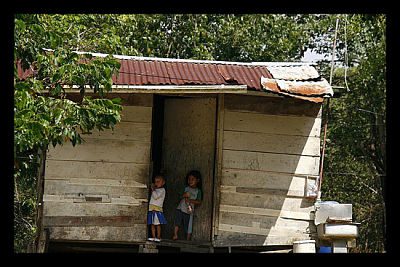
Belize has experienced a peaceful transition to a democratic government since gaining independence from the United Kingdom in 1981. The country’s global comparative advantage is derived from its natural resources, which supports the tourism and agriculture sectors, as well as its close geographical proximity to major markets. Challenges like poverty in Belize are due to high vulnerability to external shocks, including natural hazards, impacts of climate change, and terms of trade. The government’s ability to face these challenges is limited due to high debt levels and limited fiscal space.

As a lower middle-income country, Belize experienced a slowdown in growth and an increase in poverty after the global economic crisis, which accompanied increases in the prices of food and fuel price in 2008.  The most recent Country Poverty Assessment indicates that between 2002 and 2009, the overall poverty rate increased from 34% to 41%, while extreme poverty increased from 11% to 16%. In 2010, the country resumed growth, with GDP growth reaching 2.9%. Although Belize’s economy has traditionally relied on agriculture, the services sector grew in importance during the 1990s. According to the World Bank, it is now the country’s largest contributor, accounting for 60% of GDP.

Data indicates that the overall economic growth experienced by the country might have failed to translate into an equal distribution of wealth and well-being. The Country Poverty Assessment states that, “inequality is therefore the manifestation of the central structural problem, which development policy in Belize must address”. The government of Belize continues to put the primary focus of its strategies on the fight against poverty.

Recently, the State Department through the U.S. Mission to Belize made plans to spend $500,000 to create jobs for youth and reduce poverty in Belize. The grant announcement said, “Marginalized youth are empowered when given a voice and opportunities. Equipping marginalized youth and their communities with economic opportunities and/or business training can help them reach their true potential as entrepreneurs and improve citizen security.”

The purpose of the grant proposal is to “confront the root causes of violence and crime in a creative and effective way and seek to create positive cultural and social conditions.” The U.S. Embassy may award up to 10 grants, which do not exceed a total of $500,000 USD. Eligible applicants are non-governmental organizations (NGOs), non-profit organizations (NPOs), International Government Organizations (IGOs), educational institutions, and individuals.

– Ali Warlich

Sources: World Bank, CNS News, Grants.gov
Photo: WordPress

July 26, 2013
https://borgenproject.org/wp-content/uploads/borgen-project-logo.svg 0 0 Borgen Project https://borgenproject.org/wp-content/uploads/borgen-project-logo.svg Borgen Project2013-07-26 07:00:262017-11-30 10:50:13Poverty in Belize
Development

LDS Charities Help Blind Child

The charity division of the Church of Jesus Christ of Latter Day Saints (LDS) works to provide sustainable solutions to global poverty. In doing so, the Utah-based religious organization has invested a significant amount of time and money in global programs to alleviate conditions for communities facing food, water, and medical supply shortages. For one father, LDS donations represent the difference between a child’s health and cancer.

John Rey Alegro is a two-year old child in the Patag District, Catbalogan City, Samar. Until recently, John Rey suffered from a congenital anomaly in his eyes. The anomaly, or retinoblastoma, plagued the young child since birth. Because he and his family live in a rural community in the Philippines, the condition had gone untreated.

Just recently, John Rey received an operation on the tumor in his eyes that, if successful, will free the child from all future complications. Though his sight will not return, LDS Charities made it possible for the family to sigh a breath of relief in knowing that their child has a strong chance of leading a somewhat normal life, albeit in visual darkness. Had the operation been performed at birth, John Rey would likely still have his sight.

The heartwarming story of John Rey is only one example of the highly valued work being done by LDS Charities in places like Samar. Rural communities often lack sufficient facilities to perform these complicated surgeries, which leave patients to deal with debilitating conditions on their own. This specific surgery, part of the LDS mission to provide sustainable solutions to poverty, was also a hands-on lecture given to local surgeons by the LDS medical representative.

The idea behind the hands-on lecture program is to not only provide much-needed medical care to the poor, but also educate medical staff in poor and rural communities. At least theoretically, local doctors are now able to address complications of this particular kind. Eventually, the program will reach a point at which local medical staff are capable of operating on their own and meeting the basic needs of the community.

– Herman Watson

Sources: Manila Channel LDS Charities Mormon Newsroom
Photo: LDS

July 26, 2013
https://borgenproject.org/wp-content/uploads/borgen-project-logo.svg 0 0 Borgen Project https://borgenproject.org/wp-content/uploads/borgen-project-logo.svg Borgen Project2013-07-26 06:57:092024-06-04 02:43:57LDS Charities Help Blind Child
Children, Development, Family Planning and Contraception

MDG 5: Improve Maternal Health

MDG 5: Improve Maternal Health
This is the fifth in a series of posts focusing on the UN’s Millennium Development Goals. There are eight interconnected MDGs that were agreed upon by over 180 countries worldwide. These goals are to be achieved by 2015 and are based on a shared pledge to improve the social, economic, and political lives of all people. Two years out from the goal date, it’s time to consider how far we have come, as well as how much work we have left to do.

The fifth MDG is to improve maternal health. This goal comes in two parts:

  • Cut the maternal mortality ratio by two-thirds between 1990 and 2015
  • Achieve universal access to reproductive health

Significant progress has been made on both fronts. In 2010, the maternal mortality ratio was 47% of the 1990 figure. Three regions (Eastern Asia, Northern Africa, and Southern Asia) have already reached the two-thirds reduction goal, and progress has been made in every region. However, women in sub-Saharan Africa still have a 1 in 39 chance of dying from pregnancy complications, and improvements in many regions will need to accelerate substantially if the MDG is to be met by 2015.

Work towards universal access to reproductive health has made encouraging headway as well. Health care for pregnant women in developing countries is on the rise, with antenatal care increasing by almost 20% between 1990 and 2011. This reflects an admirable commitment to women’s health care in developing regions. In a reflection of changing cultural norms, the number of teenage mothers is decreasing in most developing regions, though progress on this front has slowed in recent years.

Despite the progress that has been made thus far, maternal mortality still bears the highest disparity between developed and developing countries, with 99% of maternal deaths occurring in poorer nations. The maternal mortality ratio in developing areas remains 15 times higher than in developed regions. This severe inequality points to the undeniable connection between poverty and maternal health.

The primary cause of maternal deaths in the world today is the lack of skilled health care before, during, and after delivery. Women in developing areas are seeking maternal care at an increasing rate. It is therefore absolutely vital that the care they receive is of excellent quality. Doctors must be trained, facilities must be built, and supplies must be provided in order to save the lives of these women and their children.

Women and their partners are also seeking family planning services in higher volumes. Meanwhile, the supply of these services is increasing only minimally. Family planning must be prioritized in order to meet this need. It has been estimated that fulfilling the unmet demand for family planning could cause the number of maternal mortalities to plummet by one third. Impressive progress in this area was made in the 1990s when contraceptive use in developing countries increased by almost 10%. However, this level of progress was not matched in the 2000s.

Improvements in contraceptive use, especially in developing areas, would reduce one of the leading causes of pregnancy-related death: unsafe abortions. Approximately 13% of pregnancy-related deaths can be attributed to unsafe abortions, which kill 68,000 women annually. In another example of the disparity between developed and developing nations, 97% of unsafe abortions occur in poorer countries. Preventing unsafe abortions, both by increasing knowledge and use of contraceptives and by providing adequate health care in developing countries, is absolutely necessary as we work towards improving maternal health.

The quality of maternal health care will also rise when women are more empowered. Women worldwide are often constrained by cultural norms that leave them disenfranchised. They suffer physical and sexual violence at alarmingly high rates and are often unable to hold positions of power in society. The appalling state of maternal health in many countries can largely be attributed to societal injustices against women. When such countries work towards gender equality, they will also improve maternal health.

It is important, however, to remember that maternal health isn’t just a women’s issue. Poor sexual and reproductive health is a significant contributing cause to poverty worldwide and can prevent victims and their families from fully participating in society. Furthermore, improving maternal health entails more than just providing skilled birthing assistance. Women are less likely to have pregnancy complications if they do not have sexually transmitted infections (STIs) and if they have not undergone female genital mutilation. Therefore, improving maternal health necessitates the enhancements of society as a whole. These include increasing the general public’s knowledge of and access to sexual and reproductive health care, including contraceptives and treatment for STIs.

There are copious reasons to improve developing nations’ maternal health. Poor maternal health is a human rights violation, killing roughly 250,000 women each year. It harms countries’ economies and social fabric by preventing people from fully participating in society. It contributes significantly to poverty. It contributes to the perpetuation of gender inequality. And, as we have seen, improvements can clearly be made. The world has made so much progress when it comes to maternal health. These achievements should be used as a springboard, inspiring us to keep working towards the fifth MDG up to and beyond 2015.

– Katie Fullerton

Sources: UN UN Economic and Social Affairs WHO MDG5
Photo: Flickr

July 26, 2013
https://borgenproject.org/wp-content/uploads/borgen-project-logo.svg 0 0 Borgen Project https://borgenproject.org/wp-content/uploads/borgen-project-logo.svg Borgen Project2013-07-26 04:00:202024-05-25 00:04:25MDG 5: Improve Maternal Health
Page 152 of 163«‹150151152153154›»

Get Smarter

  • Global Poverty 101
  • Global Poverty… The Good News
  • Global Poverty & U.S. Jobs
  • Global Poverty and National Security
  • Innovative Solutions to Poverty
  • Global Poverty & Aid FAQ’s
Search Search

Take Action

  • Call Congress
  • Email Congress
  • Donate
  • 30 Ways to Help
  • Volunteer Ops
  • Internships
  • Courses & Certificates
  • The Podcast
Borgen Project

“The Borgen Project is an incredible nonprofit organization that is addressing poverty and hunger and working towards ending them.”

-The Huffington Post

Inside The Borgen Project

  • Contact
  • About
  • Financials
  • President
  • Board of Directors
  • Board of Advisors

International Links

  • UK Email Parliament
  • UK Donate
  • Canada Email Parliament

Get Smarter

  • Global Poverty 101
  • Global Poverty… The Good News
  • Global Poverty & U.S. Jobs
  • Global Poverty and National Security
  • Innovative Solutions to Poverty
  • Global Poverty & Aid FAQ’s

Ways to Help

  • Call Congress
  • Email Congress
  • Donate
  • 30 Ways to Help
  • Volunteer Ops
  • Internships
  • Courses & Certificates
  • The Podcast
Scroll to top Scroll to top Scroll to top