• Link to X
  • Link to Facebook
  • Link to Instagram
  • Link to TikTok
  • Link to Youtube
  • About
    • About Us
      • President
      • Board of Directors
      • Board of Advisors
      • Financials
      • Our Methodology
      • Success Tracker
      • Contact
  • Act Now
    • 30 Ways to Help
      • Email Congress
      • Call Congress
      • Volunteer
      • Courses & Certificates
      • Be a Donor
    • Internships
      • In-Office Internships
      • Remote Internships
    • Legislation
      • Politics 101
  • The Blog
  • The Podcast
  • Magazine
  • Donate
  • Click to open the search input field Click to open the search input field Search
  • Menu Menu

Archive for category: Development

Information and stories on development news.

Development

MDG 8: Global partnership for development

MDG 8: Global partnership for development
This is the eighth, and last, in a series of posts focusing on the UN’s Millennium Development Goals. The MDGs are a set of eight goals agreed upon by almost every country in the world, based on a shared commitment to improving the lives of all people. These targets are to be achieved by 2015 and, two years out from this goal, it is important to recognize how much progress we’ve made and how much we have left to do.

The final MDG is made up of six criteria that aim to establish a global partnership for development. Progress with regard to these targets has been uneven and gradual. The criteria are:

  1. Develop further an open, rule-based, predictable, non-discriminatory trading and financial system
  2. Address the special needs of least developed countries
  3. Address the special needs of landlocked developing countries and small island developing States
  4. Deal comprehensively with the debt problem of developing countries
  5. In cooperation with pharmaceutical companies, provide access to affordable essential drugs in developing countries
  6. In cooperation with the private sector, make available benefits of new technologies, especially information and communications

The first of these targets, to more fully establish a fair and effective trading and financial system, has been stagnated by protectionist policies put in place by developed countries. Such measures became more prevalent following the economic downturn in 2009, and they continue to affect an estimated 3% of global trade. This trend exists even among G20 countries that pledged to resist such measures.

The special needs of least developed countries have been minimally addressed, as measured by the criteria laid out in the MDGs. With the important exception of agricultural products, tariffs imposed by developed countries on developing countries have remained mostly unchanged since 2004. Aid to sub-Saharan Africa fell by almost one percent in 2011. In contrast, during that same year, aid to Northern African countries increased after springtime revolutions. These figures resulted in an overall increase in aid to the African continent. Debt relief initiatives have been fairly effective for some poor countries plagued with debt. However, 20 developing countries are still at high risk of debt distress.

In regards to the third criterion, there is still a lot of progress to be made. Aid designated for landlocked developing countries actually decreased in 2010, representing stagnation in the goal of meeting the specific needs of such countries. On the other hand, aid to small island developing States increased significantly. These countries are especially vulnerable to rising sea levels due to climate change and turbulence in international economic interactions. This means that, although some of them could be classified as middle-income countries, they are often highly indebted and in need of assistance.

Developing countries often have significant debt problems. MDG 8 aims to address this by encouraging developed countries to provide aid to highly indebted countries. As previously mentioned, 20 developing countries are at high risk of debt distress. However, the developing world handles the economic troubles of 2009 fairly well and in 2011, the debt to GDP ratio dropped for many developing countries. Caution prevails though, with growth expected to slow in the coming years.

Many deaths in the developing world could be easily prevented with essential drugs. MDG 8 aims to provide such drugs to developing nations at affordable prices with the help of pharmaceutical companies. This initiative has proven fairly effective. Despite the economic downturn, resources aimed at providing necessary medicines through global health funds focused on specific diseases increased in 2011. Work still needs to be done in order to translate this increase in funding into improved affordability and availability of these medicines in developing countries.

In order to rise out of poverty, developing countries will need improved access to technological advances, especially when it comes to information and communications. MDG 8 aspires to provide this access by working with private sector companies. Efforts on this front have yielded significant improvements. The use of mobile phones is on the rise, with 6 billion phones in use as of 2011. Although a wide disparity between the developed and developing world in regards to internet use remains, it is decreasing rapidly. The proportion of internet users residing in the developing world increased from 44% in 2006 to 63% in 2011. However, progress has varied greatly between regions. For example, less than 15% of people in sub-Saharan Africa have reliable access to the internet.

The eighth MDG is ambitious and far-reaching. It aims to establish a global partnership for development covers a wide variety of topics, from trade policies to pharmaceutical innovations in developing countries. Although progress has been made in these areas, there is still important work to be done. Trade policies must be modified to better serve the world’s poor. Essential drugs need to be available and affordable for people in developing countries. Donors and support groups must meet the specific needs of the least developed nations, landlocked developing countries, and small island developing countries. Working towards all the criteria in MDG 8 will create and strengthen a global partnership that will aid in the development and help people rise out of poverty.

– Katie Fullerton

Sources: UN MDG Report, UN News Centre, UN
Photo: Romano Prodi

July 25, 2013
https://borgenproject.org/wp-content/uploads/borgen-project-logo.svg 0 0 Borgen Project https://borgenproject.org/wp-content/uploads/borgen-project-logo.svg Borgen Project2013-07-25 07:18:062024-06-11 01:40:46MDG 8: Global partnership for development
Developing Countries, Development

5 Steps to Increased Economic Development in Africa

5 Steps to Increased Economic Development in Africa
Recently, Nigeria’s Finance Minister Ngozi Okonjo-Iweala gave a speech at the International Institute for Strategic Studies outlining the steps that need to be taken to improve economic development in Africa by creating jobs and reducing unemployment. Here are the five steps Okonjo-Iweala outlined for creating economic growth in Africa and developing jobs for young people across the continent.

    1. Develop a critical infrastructure. The lack of modern infrastructure in Africa costs the continent “at least 2% in GDP growth annually.” Among the systems that Africa needs to develop are an expansive electrical grid, roads, railways, and communications. These systems allow for more efficient production and transportation of goods, allowing for increased economic output. Additionally, the continent needs to work on establishing clean water and sanitation systems, which will result in improved public health.
    2. Develop human capital. Africa must invest in the skills of its people in order to advance their standard of living. Currently, “33 million primary school-aged children in Sub Saharan Africa do not go to school,” and “40% of Africans over the age of 15 and 50% of women above the age of 25 are illiterate.” Africans need improved access to education in order to work in skilled trades and earn higher wages.
    3. Build safety nets. Throughout Africa, there are few systems that are established to help citizens who are living in poverty or have been negatively impacted by natural disasters. Okonio-Iweala states that Africa must work to establish tax systems to collect revenue for providing assistance to those in need throughout the continent.
    4. Address a growing population. In 2010, Africa was home to more than 1 billion people. The population of Africa is expected to double to 2 billion people by the year 2050. In order to help alleviate poverty in the continent, a focus should be placed on family planning. By reducing the number of births per woman in Africa, the overall GDP per capita will increase, resulting in a higher standard of living for Africans.
    5. Embrace Africa’s youthful population. Africa’s youth represents the future of the continent. By establishing programs that focus on the intellectual development and health improvement of young Africans, the continent will make an investment in its future. Africa has true potential for future economic growth if the continent’s nations invest in its young population, providing them with the tools they need to be successful in a global economy.

– Jordan Kline

Sources: Visualizing, The Guardian, Achieve in Africa
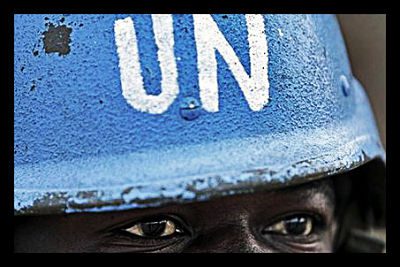
Photo: UN

July 24, 2013
https://borgenproject.org/wp-content/uploads/borgen-project-logo.svg 0 0 Borgen Project https://borgenproject.org/wp-content/uploads/borgen-project-logo.svg Borgen Project2013-07-24 07:25:122020-07-19 22:05:495 Steps to Increased Economic Development in Africa
Activism, Development

3 Outstanding Instances of Aid by AmeriCares

Every non-profit has an honorable start to their missions, but Robert C. Macauley, founder of AmeriCares, has a particular focus. On April 4, 1975, a United States jet carrying 243 Vietnamese orphans crashed in the jungle outside of Tan Son Nhut. The U.S. was unable to reach them within 10 days, and when Macauley heard this news, he did what any good-hearted American would dream of doing. He chartered a plane and brought them to the U.S. within 48 hours.

Macauley was a paper broker in Connecticut at the time, he and his wife took out a mortgage on their house to pay for the $10,000 down payment for the Boeing 747. His dislike of bureaucratic red tape cost him his home, but gave him a calling.

Macauley’s calling gave rise to one of the largest non-profits in the world, AmeriCares. Currently, the organization works in over 90 countries and has supplied over $10 billion in aid, both foreign and domestic. Here are just three examples of their impact:

1. Relief Aid in Poland – 1981

Before AmeriCares, official conception, Robert Macauley had donated his time and money to a number of causes, but his action in Vietnam brought good media. News spread quickly of Macauley’s actions and in 1981, Pope John Paul II asked for his assistance. At the time, Poland was under martial law and in desperate need of medical supplies. By 1982, Macauley had gently wrestled $1.5 million in medical supplies from over a dozen companies. March of that year, he was able to airlift the supplies to Poland. This was the first official act of AmeriCares and an impressive one at that.

2. The Darfur/Sudan Conflict – 2011

In 2004, AmeriCares began a long-term relief effort in Sudan by delivering medical aid in order to support health services for the survivors on the Sudan conflict. With South Sudan’s independence in 2011 came a rush of refugees and native South Sudanese returning to their homes. Most were in need of shelter and medical assistance.

AmeriCares began supporting the efforts of Relief International in their health outposts and camps. In Renk, funds were used to rehabilitate three health clinics and installations of emergency medical modules. This helped with treatment of diarrheal diseases, medical waste management, sanitation and health education. The health clinics also saw installations of exam tables and benches in waiting rooms. These clinics served 14,000 survivors at Renk and another 13,000 in the Gendrassa camp. AmeriCares replenished low stocks of first aid supplies in Gendrassa.

3. Hurricane Sandy Relief – 2012

The most recent natural disaster seen in the United States was Hurricane Sandy in October of 2012. More than 80,000 residences were damaged and 8.5 million people were left without shelter or power. AmeriCares has provided over $6 million in aid that has benefited more than 465,000 people. Skilled in crisis relief, AmeriCares has supplied medicine, insulin and vaccines, enough bottled water for $75,000 people, diapers for 17,000 and much more for those in need. $2.5 million went to fund programs that provide displaced citizens with emergency warmth, disaster clean up and mental health counseling in Staten Island, Brooklyn, and New Jersey.

Currently, AmeriCares is looking for grant proposals from groups who are starting projects to help with the health needs of Sandy survivors. On July 14, New Jersey was awarded $200,000 in grants to help the elderly, disabled and low-income residents recover.

– Jordan Bradley

Sources: AmeriCares, The NY Times, Darien News, Queens Chronicle
Photo: Forbes

July 22, 2013
https://borgenproject.org/wp-content/uploads/borgen-project-logo.svg 0 0 Borgen Project https://borgenproject.org/wp-content/uploads/borgen-project-logo.svg Borgen Project2013-07-22 14:08:342024-12-13 17:49:313 Outstanding Instances of Aid by AmeriCares
Activism, Development

Top Three Charities in the World

direct_relief_charity
Ever wonder how large charities can get and how much they can impact the world we live in? Charity Navigator has provided a glimpse into the top ten enormous charitable organizations that operate today. The ranking scale they use is out of 70. Here is a look at the top three.

  1. United Nations Foundation: UNF comes in at 69.04 on the overall charity scale. Working to connect citizens around the world to the United Nations, UNF provides fiscal services for the programs that the United Nations offers. It is also the main advocacy and support system for the United Nation’s ideas and beliefs. The total revenue of the charity comes in at $192,737,803.
  2. The Conservation Fund: The Conservation Fund comes in at 69.32 on the overall charity scale. Dedicated to protecting important pieces of American land, such as historical landmarks, parks, and reservations, CF has saved more than 7 million acres of land across the nation. The total revenue of the charity comes in at $242,376,138.
  3. Direct Relief: The highest rated charity on Charity Navigator comes in at 69.91, a nearly perfect score. Direct Relief works to improve health worldwide through programs, emergency preparations, disease awareness, and the improvement of health systems. The total revenue of the charity comes in at $405,035,176.

It is interesting to view just how large the top three charities are and the immense impact that these charities have. Without the amount of money they raise and the support they provide, it would be a very different world we live in today.

– William Norris

Sources: Charity Navigator United Nations Foundation The Conservation Fund Direct Relief
Photo: Direct Relief

July 22, 2013
https://borgenproject.org/wp-content/uploads/borgen-project-logo.svg 0 0 Borgen Project https://borgenproject.org/wp-content/uploads/borgen-project-logo.svg Borgen Project2013-07-22 12:11:142024-05-25 00:02:23Top Three Charities in the World
Development, Global Poverty, Nonprofit Organizations and NGOs

What Does BRAC USA Do?

What Does BRAC USA Do?
BRAC USA is part of the largest international development program in the world, BRAC, which aids the world’s extreme poor through sustainable solutions to poverty. Though the program focuses on an American audience, its effect is felt globally. By raising awareness in the United States and other developed nations, BRAC USA allows Americans and others to invest in their own future, as well as the futures of those in extreme poverty.

BRAC is an international development organization that focuses on alleviating poverty and issues related to poverty in 11 developing nations across the globe. Their organization model concentrates on empowerment of the poor through local, community-based programs, such as “barefoot lawyers,” a project that increases awareness legal rights and delivers services to the doorsteps of the poor. This program helps impoverished individuals recognize and defend their legal rights, including vital property rights.

Most important to its continued success, the international organization takes an approach mindful of establishing self-sustainable programs to better equip target communities, both women and farmers, to continue to address the causes and symptoms of extreme poverty and take matters into their own hands. The organization’s micro-financing program offers micro-loans to women to promote economic entrepreneurship in local communities and revitalize local economies, while also addressing issues related to gender inequality.

BRAC USA, a sub-group of BRAC, reaches out to Americans to encourage support for the global program in three ways: public education, strategic and program services, and grant-making. In the context of public education, the United States-based BRAC branch employs social and traditional media, as well as speaking engagements and word of mouth initiatives to increase American awareness of global poverty and the organization’s work. Some of the strategic and program services supported by BRAC USA include assistance with design and implementation of international development projects in developing nations, alongside enabling access to financing that makes these projects feasible. This assistance also takes the form of grants, made possible by the American program.

Programs like BRAC USA that encourage sustainable development in developing nations actually give back to developed nations, like the United States. By promoting development abroad, the program increases the likelihood that target nations will foster a market for developed-world goods. That is, by creating sustainable markets, we also create sustainable consumers that are historically proven to direct their newly-acquired purchasing power toward the nation providing initial development aid. To encourage investment in our own economy, we have all the more reason to encourage market development and a sustainable economy in developing nations abroad.

– Herman Watson

Sources: BRAC USA, The Borgen Project

July 21, 2013
https://borgenproject.org/wp-content/uploads/borgen-project-logo.svg 0 0 Borgen Project https://borgenproject.org/wp-content/uploads/borgen-project-logo.svg Borgen Project2013-07-21 05:32:382024-05-25 00:00:57What Does BRAC USA Do?
Developing Countries, Development, Technology

How Build Change is Building Life-Saving Houses

build-change-building-life-saving-houses-borgen-project-poverty-global_opt
In 2010, a 7.0 magnitude earthquake struck the country of Haiti, claiming tens of thousands of lives and costing $7.8 billion in damages. Build Change, a non-profit international organization, is fortifying impoverished nations to prevent another disaster of this scale.

Working in Haiti, China, and Indonesia, Build Change provides earthquake-resilient house designs to be implemented by local homeowners and carpenters. Instead of proposing revolutionary design choices, Build Change analyzes the architecture of affected areas and makes specific modifications to improve stability. This allows local workers to quickly learn the new designs and eventually become able to build safer housing without outside help.

After an impoverished country endures an earthquake, houses built as replacements can either be culturally inappropriate or suffer from the same instability that caused the original houses to collapse. By intervening after a time of disaster, Build Change enables home owners to be involved in the building of secure housing. This in turn sparks the creation of new jobs for local workers. In a country like Haiti, with 70% of the population either unemployed or underemployed, this is a huge boom for the economy.

With 18,701 houses built, success stories have been numerous. Haitian Mirlande Joseph recounts her experience working with Build Change after her house was leveled by the devastating earthquake. Although they could not offer her financial support, they were able to walk her through the process of building a new house by engineering the design and providing onsite training of the workers tasked with the physical labor. Although this required more monetary investment than Joseph anticipated, the experience was so positive that she considered taking up construction as a profession.

Build Change was founded in 2004 by Dr. Elizabeth Hausler, who started the organization in response to the tragic number of lives lost following earthquakes. Hausler realized the insurmountable amounts of damage could be avoided if those in poverty had access to better housing. Finding immediate solutions to this issue helps prevent millions of dollars in repairs that would be spent following a national disaster. To Hausler, it’s imperative to provide these designs to those in struggling countries, regardless of whether their respective economies have fully recovered or not.

This sentiment is encapsulated in the Build Change site’s timeline: “Earthquakes don’t kill people… poorly built buildings do.”

In 2011, Hausler received the $100,000 Lemelson-MIT reward for sustainability in recognition of the work model utilized by Build Change. By winning the award, Hausler hopes to inspire governments and building agencies to create affordable building codes that are sustainable and efficient. She hopes more young inventors will take time to work with the locals of struggling countries to conceive practical and economic solutions with their products and methods.

– Timothy Monbleau

Source: BBC News, Build Change, Economic Impact of Haiti Earthquake, MIT Press Release
Photo: Build Change Universal Giving

July 20, 2013
https://borgenproject.org/wp-content/uploads/borgen-project-logo.svg 0 0 Borgen Project https://borgenproject.org/wp-content/uploads/borgen-project-logo.svg Borgen Project2013-07-20 05:00:252024-05-25 00:00:52How Build Change is Building Life-Saving Houses
Developing Countries, Development

Do Corporate Tax Breaks Cost Poor Nations?

Do Corporate Tax Breaks Cost Poor Nations
Developing countries are struggling to provide basic public services to their citizens. Citizens complain of crowded classrooms, shortages of nurses, crumbling roads, inadequate health care and governments point to their empty budgets. There is a solution to this shortage of money in poor nations. Poor nations must stop giving investors and corporations tax breaks. The money lost to corporation tax breaks could meet all the country’s health-needs, feed all the starving children, send every child to school and reach all the MDGs.

It is estimated that developing countries lose more than $138 billion a year to corporate tax breaks and tax exemptions alone.

“Big companies are doing deals to avoid paying tax on their massive profits. They’re playing developing countries off against each other to get good tax deals for them, but bad deals for the world’s poor,” ActionAid’s advocacy manager Soren Ambrose said.

Tax breaks are not even a large factor when corporations decide to invest in a country. According to an Investor Motivation Survey conducted by the World Bank, tax incentives ranked seventeenth, behind factors such as exchange rates, labor costs and transport infrastructure.

Corporations rely on public services such as infrastructure and raw material. They also rely on healthy and educated workers. It is only right that these corporations pay their contribution for the public services they rely on.

“Governments aren’t collecting the tax which is rightfully theirs. They’re openly letting big companies pay less tax. Some countries are even offering completely tax-free deals – a lose-lose for all involved, especially poor people in urgent need of services like schools and hospitals, “ said Ambrose. “In the long run, governments and companies are sabotaging the development of the skilled and healthy workforces that could lift their countries out of poverty.”

– Catherine Ulrich

Sources: Alertnet, ActionAid

July 19, 2013
https://borgenproject.org/wp-content/uploads/borgen-project-logo.svg 0 0 Borgen Project https://borgenproject.org/wp-content/uploads/borgen-project-logo.svg Borgen Project2013-07-19 09:09:422024-05-25 00:02:18Do Corporate Tax Breaks Cost Poor Nations?
Development

Ethiopian Community Development Council

Ethiopian_Community_development_council
Founded in 1983, the Ethiopian Community Development Council is a nonprofit organization based in Washington, D.C. whose mission is to empower Ethiopian refugees and immigrants in the United States. The main function of the ECDC is to resettle Ethiopian refugees displaced by drought, famine, and internal conflict in their home country. It should be noted that the organization is not limited to Ethiopian refugees, as it also serves immigrants from other African nations. The nonprofit receives support from US federal, state, and local governments along with the charitable contributions of private individuals, businesses, and foundations.

One of the most effective programs offered through ECDC is the Match Grant Program. This innovative program is funded by the Office of Refugee Resettlement and has allowed over 8,000 refugees from around the world to obtain employment quickly and easily. The program also provides a stipend for rent and transportation for the grant recipient.

Altogether, the Ethiopian Community Development Council is bettering the lives of refugees who have resettled in the United States from poverty-stricken African countries. In the ECDC, we see an organization that is successfully confronting a tangible need, the need for a fresh start in the life of a refugee, and delivering a set of solutions to meet that need. The ECDC is surely on the front lines of humanitarianism in America, and its influence can only spread. Currently, the ECDC is operating in Washington D.C., Denver, and Las Vegas.

– Josh Forget

Sources: The Ethiopian Development Council, USAID
Photo: The Ethiopian Development Council

July 18, 2013
https://borgenproject.org/wp-content/uploads/borgen-project-logo.svg 0 0 Borgen Project https://borgenproject.org/wp-content/uploads/borgen-project-logo.svg Borgen Project2013-07-18 05:58:232024-05-25 00:01:20Ethiopian Community Development Council
Development, Education, Nonprofit Organizations and NGOs

Immersion: World Learning

Cultures, developed and developing, unite through immersion and connection. Dr. Donald Watt, a Syracuse University Professor, first came upon this idea during the Great Depression. It was his belief that the cultures and the people on Earth would thrive with a better understanding of each other, eradicating preconceived judgments and categorical placement of social status.

Watt knew this goal could only be achieved through cultural integration of young students. That is why he formed World Learning. A non-profit organization, WL focuses on the development of connections between cultures through three types of programs.

1.    Education

Offering study abroad programs to high school and college students, WL emphasizes full immersion into foreign cultures. WL offers summer programs that allow students to do field research abroad, while taking in foreign languages and all that the countries have to offer. An example of one of these educational programs is the SIT Study Abroad program. Students enrolled in this program often are assigned a critical issue of a culture, one that they must study to fully understand. They then address the issue through community projects and global service. SIT Study Abroad hosts over 70 programs in Asia, Africa, Latin America and the Middle East.

2.    Exchange

WL has developed connections with leaders across the globe, bringing them to the United States to communicate with young students. The insight and experiences of these leaders are beneficial to students in the program.

3.    Development

The programs WL have to offer to young students focus on the critical issues our world faces today. These include poverty, government accountability, the spread of disease and the malnutrition of women and children. Once the needs of cultures are identified, WL expects students to immerse themselves and help make a difference through the leadership skills they are taught.

World Learning has made a difference in 60 countries and changed the lives of over 100,000 people. This difference has been due to the engagement of the youth, whose immersion into developing countries has created important lifelong international bonds.

–  William Norris

Sources: World Learning, SIT Study Abroad
Photo: Flikr

July 16, 2013
https://borgenproject.org/wp-content/uploads/borgen-project-logo.svg 0 0 Borgen Project https://borgenproject.org/wp-content/uploads/borgen-project-logo.svg Borgen Project2013-07-16 09:00:052024-05-25 00:02:31Immersion: World Learning
Developing Countries, Development, Extreme Poverty, Foreign Aid, Foreign Policy, Technology

Obama Pledges $6.5 Billion for Electricity in Africa

Obama Electrify Africa
According to the International Energy Agency, all developing nations lack adequate access to electricity. This amounts to 1.3 billion people living in the dark worldwide. According to the same source, an investment of $1 trillion USD would be needed to remedy this. Currently, poverty and hunger take center stage. Food is of more use to a starving child than is a night light, but Westerners often take for granted how valuable the power of light can be to a community in poverty.

Not only does electricity make lives easier on a personal level, it helps to mechanize farming operations, which can be a great boost to a company’s agricultural productivity. Natural disasters often become less deadly when people are warned about them ahead of time, which can be accomplished with electric monitoring systems. Socially, populations are less marginalized with improved means of communication and information.

President Barack Obama said during his recent trip to South Africa, “Access to electricity is fundamental to opportunity in this age. It’s the light that children study by, the energy that allows an idea to be transformed into a real business. It’s the lifeline for families to meet their most basic needs, and it’s the connection that’s needed to plug Africa into the grid of the global economy.” President Obama then pledged almost $7 billion USD to help provide electricity for Africa.

The White House stated that The Export-Import Bank will carry most of the financial weight of the program, donating $5 billion, and the U.S. Oversees Private Investment Corporation will provide another $1.5 billion.

The funds will go toward preventing the frequent blackouts that plague the Sub-Saharan part of the continent, as well as helping the 85% percent of people in the region without electricity gain access to it. Kenya, Uganda, Ethiopia, Liberia, Nigeria, Tanzania and Mozambique will be the first countries to benefit from the program as it is developed at preliminary stages.

The investment is a great step toward solving the problem, but in all, Africa alone will need $300 billion to achieve universal electricity by 2030. The Alliance for Rural Electrification, a non-government organization, is another ally in combating this issue. As champions of universal electrification, ARE focuses on renewable energy such as solar, which much of Africa is a strong candidate for. This is especially relevant for areas that are geographically isolated where extending the reach of an existing power grid is not feasible.

– Samantha Mauney

Source: ARE, Scientific American, CNN
Photo: Business Insider

July 16, 2013
https://borgenproject.org/wp-content/uploads/borgen-project-logo.svg 0 0 Borgen Project https://borgenproject.org/wp-content/uploads/borgen-project-logo.svg Borgen Project2013-07-16 04:48:452020-07-02 12:07:03Obama Pledges $6.5 Billion for Electricity in Africa
Page 153 of 163«‹151152153154155›»

Get Smarter

  • Global Poverty 101
  • Global Poverty… The Good News
  • Global Poverty & U.S. Jobs
  • Global Poverty and National Security
  • Innovative Solutions to Poverty
  • Global Poverty & Aid FAQ’s
Search Search

Take Action

  • Call Congress
  • Email Congress
  • Donate
  • 30 Ways to Help
  • Volunteer Ops
  • Internships
  • Courses & Certificates
  • The Podcast
Borgen Project

“The Borgen Project is an incredible nonprofit organization that is addressing poverty and hunger and working towards ending them.”

-The Huffington Post

Inside The Borgen Project

  • Contact
  • About
  • Financials
  • President
  • Board of Directors
  • Board of Advisors

International Links

  • UK Email Parliament
  • UK Donate
  • Canada Email Parliament

Get Smarter

  • Global Poverty 101
  • Global Poverty… The Good News
  • Global Poverty & U.S. Jobs
  • Global Poverty and National Security
  • Innovative Solutions to Poverty
  • Global Poverty & Aid FAQ’s

Ways to Help

  • Call Congress
  • Email Congress
  • Donate
  • 30 Ways to Help
  • Volunteer Ops
  • Internships
  • Courses & Certificates
  • The Podcast
Scroll to top Scroll to top Scroll to top