• Link to X
  • Link to Facebook
  • Link to Instagram
  • Link to TikTok
  • Link to Youtube
  • About
    • About Us
      • President
      • Board of Directors
      • Board of Advisors
      • Financials
      • Our Methodology
      • Success Tracker
      • Contact
  • Act Now
    • 30 Ways to Help
      • Email Congress
      • Call Congress
      • Volunteer
      • Courses & Certificates
      • Be a Donor
    • Internships
      • In-Office Internships
      • Remote Internships
    • Legislation
      • Politics 101
  • The Blog
  • The Podcast
  • Magazine
  • Donate
  • Click to open the search input field Click to open the search input field Search
  • Menu Menu

Archive for category: Development

Information and stories on development news.

Development, Global Poverty, United Nations, Women and Female Empowerment

UN Sustainable Development Summit Highlights Women’s Rights

 Sustainable_Development_Summit
Global economics, health and sustainability are some of the usual discussion points at the United Nations. However, at the recently held U.N. Sustainable Development Summit, Ban Ki-moon, the U.N.’s secretary-general, put the spotlight on women’s empowerment.

“We cannot achieve our 2030 Agenda for Sustainable Development without full and equal rights for half of the world’s population, in law and in practice. We cannot effectively respond to humanitarian emergencies without ensuring women and girls are protected and their needs prioritized,” said Ban Ki-moon during an event hosted by U.N. Women and China.

The Sustainable Development Summit discussed the Sustainable Development Goals, which are a follow-up to the Millennium Development goals created in 2000. These Sustainable Development Goals include the goal to “achieve gender equality and empower all women and girls.”

To this end, Ban Ki-moon asked leaders to commit to ending gender inequality, pointing to “This means urgently addressing structural barriers, such as unequal pay.” He also discussed other gender inequalities, such as the importance of women’s bodily autonomy, gender violence and the encouragement of women’s participation in the workforce.

The United Nations, founded in 1945, began addressing gender inequalities prior to this summit. In 2010, The United Nations Entity for Gender Equality and the Empowerment of Women, or U.N. Women, began. U.N. Women helps to streamline the U.N.’s efforts in advancing gender equality in all member states.

This past summer, the United Nations Security Council condemned the use of sexual violence during wartime, in reference to Syria and Iraq.

To help encourage gender equality to reality by 2030, businesses pledged millions of dollars At the Business and Philanthropy Leader’s Forum, co-hosted by U.N. Women, The Bill and Melinda Gates Foundation and the Alibaba Group.

Now global citizens wait to see how many of the 17 Sustainable Development Goals will become a reality. With the recent attention to women’s rights, the United Nations starts the journey to make gender equality a reality within member states.

– Rachelle Kredentser

Sources: UN 1, UN 2, UN 3, UN Women, UN 4, UN 5
Photo: Pixabay

October 3, 2015
https://borgenproject.org/wp-content/uploads/borgen-project-logo.svg 0 0 Borgen Project https://borgenproject.org/wp-content/uploads/borgen-project-logo.svg Borgen Project2015-10-03 11:17:182024-12-13 18:05:12UN Sustainable Development Summit Highlights Women’s Rights
Development, Global Poverty, Nonprofit Organizations and NGOs, Technology

The Role of XPRIZE in Ending Poverty

Ending_Poverty
Lack of access to sanitation and agriculture; the inability to maintain infrastructure or attend school—these are just some of the issues addressed by non-profit organizations aiming to combat global poverty. XPRIZE, one such non-profit, comes at the problem from a different angle by focusing on what the organization believes to be a need for ending poverty and spurring development: competition.

According to the organization’s website, “an XPRIZE is a highly leveraged, incentivized prize competition that pushes the limits of what’s possible to change the world for the better.” This group believes that innovation can solve the world’s problems, and competition created by the website and sponsors will foster this innovation.

There are eleven highlighted prize competitions listed on the website: Adult Literacy, Global Learning, Qualcomm Tricorder, Google Lunar, Wendy Schmidt Ocean Health, Nokia Sensing XCHALLENGE, Ansari, Northrop Grumman Lunar Lander XCHALLENGE, Progressive Insurance Automotive, Archon Genomics and Wendy Schmidt Oil Cleanup XCHALLENGE.

Some of these have already had winners selected, some are just beginning and some have finalist teams chosen. These competitions each fall within one of the “grand challenge” categories, which are Energy and Environment, Exploration, Global Development and Learning and Life Sciences.

A number of competitions involve using technology to improve access to education or healthcare. The Ansari XPRIZE was the first competition in 1996 and was awarded in 2004 to Mojave Aerospace Ventures for the creation of an aircraft capable of private space flight.

This competition relies on public participation, as well. People around the world can go online to see the current competitions and the guidelines for each and can vote for which competitions they would like to see in the future. Furthermore, anyone can join or create a team, with the idea being to have experts and amateurs in fields working creatively to produce solutions to global issues.

Through this unique approach, according to its website, XPRIZE is “spurring innovation and accelerating the rate of positive change.” By creating competition, problems caused by poverty are being and continue to be solved and brought to public attention.

– Rachelle Kredentser

Sources: Forbes, Philanthropy, XPRIZE 1, XPRIZE 2, XPRIZE 3
Sources: Global Learning XPRIZE

October 2, 2015
https://borgenproject.org/wp-content/uploads/borgen-project-logo.svg 0 0 Borgen Project https://borgenproject.org/wp-content/uploads/borgen-project-logo.svg Borgen Project2015-10-02 08:18:262024-12-13 18:04:45The Role of XPRIZE in Ending Poverty
Development, Global Poverty

Clean Energy Improves Health in Bangladesh


Each year, over a million diesel pumps consume approximately $900 million worth of diesel in Bangladesh, according to the World Bank. Like other gas-operated engines, the diesel pumps kick out the exhaust. Diesel emissions have been found to contain more than 40 hazardous pollutants, including nitrogen oxide along with heavy metals, such as arsenic, according to the Office of Environmental Health Hazards Assessment (OEHHA).

These emissions have both immediate and long-term health risks for the farmers operating the pumps. On contact, exhaust can cause irritation to the eyes, nose and throat. But more serious damage can occur over time. The Union of Concerned Scientists (UCS) reports that 80-95 percent of diesel soot contains “ultrafine particulates, which are small enough to penetrate the cells of the lungs.” These particulates and toxic gasses increase the risk of cellular mutation leading to cancer, respiratory and cardiovascular disease in those with long-term exposure to the emissions, according to the OEHHA.

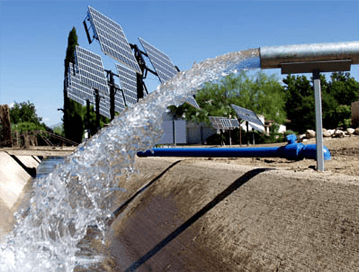
To combat the problems associated with the lack of electical grid access and prevalent use of diesel powered engines, the World Bank has created the Rural Electrification and Renewable Energy Development II (RERED II) Project. With a yearly average of more than 200 sunny days, studies have shown that Bangladesh is a prime candidate to use solar power as an alternative to the expensive and health threatening diesel, according to the Climate and Development Knowledge Network.

The program is straightforward. RERED II is designed to give farmers access to clean energy irrigation while saving them money at the same time. The solar pumps, funded in combination by the World Bank, the Bangladesh Climate Change Resilience Funds (BCCRF) and the United States Agency for International Development (USAID), produce water that serves multiple farms. With this arrangement, the farmers only pay for what they need during the irrigation season, according to World Bank.

At this point, the program is still a pilot and serves a limited number of communities. However, since the Infrastructure Development Company (IDCOL) has implemented the pilot, farmers in the selected areas have chosen the solar pumps over their diesel counterparts.

With the installation of solar pumps showing positive results across the board thus far, the Bangladesh government intends to install more solar panels throughout the nation. As reported by The World Factbook, in 2013 Bangladesh produced 97 percent of the country’s electricity through the combustion of fossil fuels. By making steps toward switching to clean solar energy, the Bangladesh government will be able to drastically lower carbon dioxide and other emissions in future years, improving air quality and the health of Bangladeshis throughout the nation.

– Claire Colby

Sources: CDKN, OEHHA, Science Direct, Union of Concerned Scientists, World Bank, The World Factbook

Photo: providencetrade

October 2, 2015
https://borgenproject.org/wp-content/uploads/borgen-project-logo.svg 0 0 Borgen Project https://borgenproject.org/wp-content/uploads/borgen-project-logo.svg Borgen Project2015-10-02 03:00:552024-12-13 18:05:08Clean Energy Improves Health in Bangladesh
Development, Global Poverty

Loans in the Philippines? Download an App

Loans_in_the_Philippines
As less than a quarter of the Philippines‘ 101 million people have bank accounts, establishing credit remains impossible for many. Traditionally, in the Philippines there are two ways to borrow money if you can’t get a loan from a bank.

First, the legal option involves selling goods at any of the country’s ubiquitous pawn shops (as of 2013, the central bank tallied more than 17,000 pawn shops nationwide). The second, illegal option is to borrow from a loan shark.

Enter smartphones.

Three-quarters of Filipinos who use the internet, access it primarily through their smartphones. The increasing popularity of using smartphones now offers a safer alternatives for securing loans in the Philippines.

PawnHero, a Manila-based startup, wants to give Filipinos an accessible, less expensive alternative to the traditional pawn shop. On PawnHero, users upload photos and descriptions of items they want to pawn to the website where an appraisal team decides upon a fair estimate.

If both sides agree, PawnHero picks up the item where it is stored until the loan is repaid. As opposed to traditional pawn shops, PawnHero offers up to half of the typical monthly interest rates found in physical shops.

Another company, Lenddo, creates virtual credit scores for Filipinos who have no bank account or credit history. According to their website, Lenddo’s credit score and verification services “use over 12,000 data points to manage risk and make better decisions.”

These data points stem from users social media accounts, such as Facebook, Twitter, and LinkedIn and serve as methods to prove the identity and creditworthiness of the user.

While Lenddo was created in 2011 in the Philippines, their assistive reach now extends to Mexico and Colombia with plans for further expansion into other emerging markets.

Loans from Lenddo typically average around $450 with interest rates at 2-4 percent monthly. With membership at over 500,000, Lenddo’s effectiveness as a supplement to emerging middle-class families is evident.

With the middle class on the rise, the country is finding new ways to empower its impoverished through technology. Smartphones are just the beginning.

– Bailey Wenzler

Sources: WSJ, Pawn Hero, Lenddo, The Guardian

October 2, 2015
https://borgenproject.org/wp-content/uploads/borgen-project-logo.svg 0 0 Borgen Project https://borgenproject.org/wp-content/uploads/borgen-project-logo.svg Borgen Project2015-10-02 01:04:112020-06-26 14:33:14Loans in the Philippines? Download an App
Development, Global Poverty, Health

Improving Global Health Opportunities: India’s Tremendous Progress

global health
The Bill and Melinda Gates Foundation has helped save millions of lives among the world’s poor. Through their work, they are helping to find a way to stop the spread of global health diseases such as polio and malaria and support initiatives for proper sanitation.

Recently, there has been a great deal of success with projects like these in India. The country has been certified polio-free for over a year. To meet the requirements, the country had to go four years without a case of wild poliovirus. “This is a giant achievement in the global effort to eradicate polio,” according to an article on the Gates Foundation blog called Impatient Optimists. “As recently as 2009, India was home to nearly half the world’s cases and considered the hardest place on earth to stop the disease.”

To stay polio-free, India must maintain its high levels of immunity. In partnership with the government, the World Health Organization (WHO) and UNICEF conduct two nationwide, as well as three sub-national, vaccination campaigns annually.

Where malaria is concerned, India is also making progress; having halved the number of its cases from two million in 2000 to 882,000 in 2013, according to WHO. The country is working towards the eradication of malaria through powerful campaign tactics and ensuring that rapid response diagnostic tests are available and easily accessible.

India is hoping to reach a pre-elimination phase of malaria in 2017 and to then move forward to total elimination by 2030.

In addition to eradicating these infectious diseases, efforts are being made to improve sanitation conditions to reduce illness and death. For example, in some parts of the country as many as 80 percent of the population do not own a toilet, which can be expensive to purchase and install. However open defecation can lead to diarrheal disease. More than 450,000 children died from the disease in 2014. Women and girls are also put in danger of being raped when they go off to find a private place to use the restroom.

Thanks to microfinance loans through the Centre for Development Orientation and Training (CDOT), families are able to purchase a toilet and improve their living conditions.

Through organizations like WHO, UNICEF, and the Bill and Melinda Gates Foundation, incredible feats for global health are being reached in India and all around the world.

– Drusilla Gibbs

Sources: Impatient Optimists 1, Impatient Optimists 2, Impatient Optimists 3, WHO
Photo: hydratelife

October 2, 2015
https://borgenproject.org/wp-content/uploads/borgen-project-logo.svg 0 0 Borgen Project https://borgenproject.org/wp-content/uploads/borgen-project-logo.svg Borgen Project2015-10-02 01:00:292024-05-27 09:26:17Improving Global Health Opportunities: India’s Tremendous Progress
Advocacy, Development, Global Poverty, Women and Female Empowerment

World Bank Grants $11.6 Million for Sahel Women

Sahel_Women
On April 23, 2015, The World Bank Group granted the Sahel Women’s Empowerment and Demographic Dividend Project (SWEDD) $11.6 million, and an additional $23.2 million credit, to include Burkina Faso into the program.

Due to the political instability in Burkina Faso late October 2014, negotiations to add Burkina Faso to the SWEDD project were delayed. Currently, Burkina Faso is the sixth Sahelian country to be added to the project; others include: Chad, Cote d’Ivoire, Mali, Mauritania and Niger.

The Sahel region would gain a great economic boost from a demographic dividend through a rapid decline in fertility and infant mortality rates; the addition of Burkina Faso expands the effectiveness of SWEDD.

The program aims to increase access to reproductive, child and maternal health services for women and adolescent girls in participating countries in the Sahel region of Africa. SWEDD also intends to educate women on gender and their own reproductive health.

In Burkina Faso, the Total Fertility Rate (TFR) is 5.8. With only 15 percent of married women aged 15-49 using contraception the maternal mortality ratio, per 100,000 live births, is 300. Moreover, the under-5 mortality rate, per 1,000 live births, is 108.

The high fertility rate, which worsens population pressure, coupled with poor health services are preventing Burkina Faso from garnering the benefits from a demographic dividend.

Burkina Faso’s involvement in the Sahel Women’s Empowerment promises great outcomes. The issue of child marriage in Burkina Faso is linked to poverty, the tradition of gender inequality and lack of education.

Involving women in the working age population will accelerate Burkina Faso’s demographic dividend because comparably the number of dependents would be lower.

SWEDD will empower women in Burkina Faso through promoting their academic education, and involving more women in life-skills programs, making women more independent.

This will consequently decrease the child marriage rates, which are at an 86 percent prevalence in the Sahel region of Burkina Faso, and 76 percent in the East region.

World Bank Country Manager for Burkina Faso commented on the addition of Burkina Faso to the Sahel Women’s Empowerment Project saying: “Educating adolescent girls and improving health services for women will certainly reduce poverty and boost shared prosperity in Burkina Faso.”

– Marie Helene Ngom

Sources: The World Bank 1, The World Bank 2, Sahel Women Empowerment Outline, Burkina Faso Child Marriage
Photo: Wikimedia

October 1, 2015
https://borgenproject.org/wp-content/uploads/borgen-project-logo.svg 0 0 Borgen Project https://borgenproject.org/wp-content/uploads/borgen-project-logo.svg Borgen Project2015-10-01 12:46:592024-05-27 09:28:07World Bank Grants $11.6 Million for Sahel Women
Development, Education, Global Poverty

World Vision’s Literacy Boost Program

Literacy Boost Program
Since 2000, many victories have been made in the educational area, from increasing primary school enrollment by 8 percent in developing regions to the global literacy rate rising to more than 80 percent. But there is still a lot that can be accomplished in terms of improving literacy.

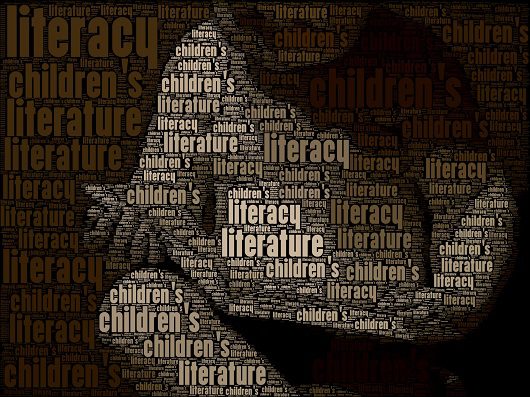
Through World Vision’s Literacy Boost program, educators, parents and community members are incorporated into children’s reading and writing education. The program is split into three categories: reading assessment, teacher training and community action.

The reading assessment is meant to establish a baseline of learning for students, giving teachers a better grasp of where their students are and giving them the ability to tailor curriculum to be the most effective.

In the classroom, Literacy Boost provides teacher training that ensures all teachers are fully literate and have a firm understanding of good teaching practices, and it stresses the value of teachers making learning fun for students. Studies have shown that children learn more effectively when they’re invested in course material and enjoying what they’re learning.

The Literacy Boost program also stresses the importance of continuing learning outside of the classroom. To do this, the program gives parents the tools necessary for helping their children read and write at home. Parents are also encouraged to use whatever is available to make reading a daily focus.

In Burundi, where only 64 percent of the population is literate, Literacy Boost volunteers have created necklaces with a piece of cardboard attached to the end with vowels written on it. The necklace is meant to help children whose parents are illiterate to practice their reading skills in the community with their literate neighbors.

This is where the community gets in on the action. From volunteering to create storybooks that are from the region of the children reading them to facilitating after-school activities, such as book clubs, the third pillar of community action ties everything together. In India, these book clubs have produced increased literacy levels among its members.

Since its start back in 2014, World Vision India has reported that the program has helped nearly 600 children in the program’s city of Lalitpur, with nearly 500 of them participating regularly in the book clubs.

Part of the success of the Indian book clubs is due to their 21 Book Banks, allowing children to borrow books to take home, teaching children to view reading as a fun pastime rather than a difficult school activity.

Linda Hiebert, senior director of Education and Life Skills at World Vision, emphasized the importance of reaching children early on in their education, establishing a solid foundation of literacy.

To do this, Literacy Boost has created a pre-primary school reading camp to give children a jump-start on their studies before they even step foot in a classroom. At the camp, children learn letters and vowels, preparing them to study a variety of subjects.

Thus far, the overall results have been promising. After a single year of the program, Bangladesh has achieved an improvement rate of reading comprehension of 40 percent, with other countries experiencing doubling and tripling of reading comprehension.

Through World Vision and Save the Children’s Partnership for Literacy campaign, the organizations are hoping to impact 1.5 million children in 15 sub-Saharan and South Asian countries by 2016, improving the lives of children today and future generations.

– Claire Colby

Sources: Canada News Wire, Our World in Data, World Vision 1, World Vision 2

Photo: Flickr

October 1, 2015
https://borgenproject.org/wp-content/uploads/borgen-project-logo.svg 0 0 Borgen Project https://borgenproject.org/wp-content/uploads/borgen-project-logo.svg Borgen Project2015-10-01 10:09:272024-12-13 18:05:10World Vision’s Literacy Boost Program
Development, Education, Global Poverty

Tackling Income Inequality in Asia-Pacific Region

School
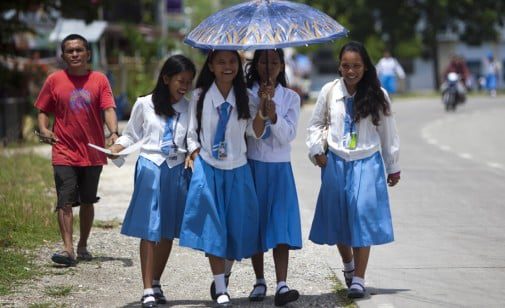
Policies that support quality education and provide social protection are investments that can help stem rising income inequality in the Asia Pacific, according to Axel Van Trotsenburg, the World Bank Vice President for East Asia and the Pacific who spoke recently at a meeting of the Asia Pacific Economic Cooperation (APEC) finance ministers in Cebu, Phillippines during a session called “Global Economic and Financial Outlook, Growing Inequality and Regional Connectivity.”

For poverty-stricken households, labor is often the sole asset they depend on. However, Van Trotsenburg said that if labor were to be made more productive through quality education and the addition of skills training, inclusive growth could begin to happen.

Van Trotsenburg suggested focusing education policies on quality teaching and better learning outcomes. The goal would be to reach youth in their primary and secondary school years.

Education initiatives alone could produce significant improvements for the livelihoods of the poor and reduce income inequality. But additional social protection measures can greatly support and enhance these efforts, significantly improving people’s lives, he said.

For example, conditional cash transfer (CCT) programs can raise school attendance, preventive health care and nutrition among the poor and vulnerable. CCT programs have been successful in places like the Philippines, Mexico, Peru and Chile.

In 2010, The Economist magazine praised CCT programs for their effectiveness. “The programs have spread because they work. They cut poverty. They improve income distribution. And they do so cheaply.”

Despite growth in middle-income East Asian households, poverty and class divide are still very present throughout the region. Van Trotsenburg describes the complexities of the situation:

“In middle-income East Asia, rapid, inclusive growth enabled hundreds of millions to lift themselves out of poverty. Yet, there are still challenges. The bottom 40 percent of the region’s population – almost 800 million people – still live on less than $3 a day in terms of purchasing power parity. These people might fall right back into poverty if the global economy takes a turn for the worse, or if they face health, food-price and other shocks.”

He urged APEC members to continue or accelerate economic reforms to sustain growth that will increase the living standard of those at the bottom of the income distribution.

In particular, he advocated for physical infrastructure investments. “In this region, 142 million households still have no access to electricity while 600 million people lack access to adequate sanitation,” he said. “It will be very important for greater investment to be accompanied by increases in efficiency of such expenditure. And this points in turn to the importance of strengthening institutions, including through public financial management reforms.”

– Nikki Schaffer

Sources: World Bank, Economist
Photo: jonahkessel

October 1, 2015
https://borgenproject.org/wp-content/uploads/borgen-project-logo.svg 0 0 Borgen Project https://borgenproject.org/wp-content/uploads/borgen-project-logo.svg Borgen Project2015-10-01 02:34:192020-06-29 11:43:49Tackling Income Inequality in Asia-Pacific Region
Development, Global Poverty

Improving Land Management for Economic Growth In Uganda

Land Management
According to a recent World Bank report, economic growth in Uganda may continue to develop if the country institutes better land management strategies. “A more effective system of land governance, including for registering land, strengthening institutions for resolving disputes and urban planning, will boost productivity and transform livelihoods in Uganda,” the report states.

The World Bank released the sixth edition of the Uganda Economic Update, entitled “Searching for the Grail – Can Uganda’s Land Support its Prosperity Drive?” It points out that improving land management will help Uganda to achieve commercialization of agriculture and urbanization.

In Uganda, around 20 percent of the total land is registered, which is higher than the average level of 10 percent for sub-Saharan African countries. However, the current system of land tenure makes it difficult to transform land uses to spur higher levels of productivity.

For starters, unclear property rights lead to difficulty in transferring ownership as well as a large number of disputes and conflicts. Due to the unclear land rights, 37 percent of individually owned land cannot be sold; 34 percent cannot be rented and 44 percent cannot be used as security for a loan.

Another problem is that current land policies and systems are too weak to efficiently implement urban planning and reduce the cost of infrastructure development in the country. The report states that compared with most major cities worldwide, which derive revenue from land to finance their infrastructure development, Uganda hasn’t fully applied land value capture tools, such as development fees, land auctions and property taxation, into its system of land management.

According to the World Bank report, Uganda’s population is expected to increase from 35 million to over 70 million by 2040, and there will be about 388 more people increased on every square kilometer of arable land. Uganda’s rapidly expanding population is putting pressure on land usage, especially in urban areas.

“With the fast-growing urban population, Uganda needs to enforce the existing policies to promote better urban land management that will allow them to build livable cities.” Said Christina Malmberg Calvo, World Bank Country Manager. “For Uganda, key among these would include land value capture to finance urban infrastructure.”

The report states that the Ugandan government can promote more efficient land use to support the healthy transformation of the agricultural sector and a shift towards higher-value economic activities located in urban areas by taking the following four actions:

  • Strengthening institutions for land administration management
  • Accelerating the process of registration of land, including that owned communally, by religious and cultural institutions, and by government
  • Redesigning the Land Fund to enhance its efficiency and equity in supporting a resolution of overlapping rights
  • Reviewing and prioritizing policy commitments to identify and close critical gaps such as in restrictions on rental markets, disincentives such as taxation for speculative holding of land, urban land use, and expropriation and compensation to promote equity and fairness in land transactions

According to Calvo, the Ugandan government has begun the process of systematically registering land and improving land information management. By accelerating these activities and the overall reform programs, she says the country would raise the share of land that has secure rights and ease the process of transferring land. These measures to improve land management will contribute to spurring long-term economic growth and transformation in Uganda.

– Shengyu Wang

Sources: Daily Monitor, World Bank
Photo: Flickr

October 1, 2015
https://borgenproject.org/wp-content/uploads/borgen-project-logo.svg 0 0 Borgen Project https://borgenproject.org/wp-content/uploads/borgen-project-logo.svg Borgen Project2015-10-01 01:38:252024-05-27 09:27:57Improving Land Management for Economic Growth In Uganda
Development, Global Poverty, Technology

Cheapest Smartphone: Productivity and Connectivity for All

Cheapest_Smartphone

Global mobile carrier, Orange, has just launched the world’s cheapest smartphone. By doing so, they have opened up countless potential opportunities for low-income individuals and their families.

The new device is called Klif and runs on Mozilla’s Firefox 2.0 mobile operating system. Retail has been set at $34, or the equivalent exchange rate in countries where American dollars are not used. Features of Klif include a two megapixel camera, Firefox web browser, an FM radio and full Wi-Fi, GPS and Bluetooth integration.

While smartphones are readily available to Africa’s upper and middle classes, those in lower income brackets are typically unable to afford the devices, let alone the sky-high data plans required to run them. Klif includes a data, text and voice plan, and can be run immediately after activation.

Klif marks a key milestone in the greater tech revolution already occurring across Africa. The device allows for thousands to afford Internet access, and increased connectivity has been shown to increase economic income and output. It also allows for thousands to now contact friends and family in a moment’s notice.

With smartphones and certain apps, farmers can check the weather, nurses and doctors can receive patient updates and students can supplement their learning. As Orange expands its network, even more people will be able to reap the benefits of increased data access.

Orange has released Klif in 13 countries across Africa and the Middle East, with the hopes to enter more markets in the near future.

Executive Vice President of Connected Objects and Partnerships for Orange, Yves Maitre, said of Klif, “By scooping up all the costs into one, incredibly priced digital offer, we hope that critical access to the mobile internet and all the opportunities that that opens up, will be within reach of many more people.”

With Klif and increased mobile access in general, developing countries have more potential to catch up with the top nations of the world.

— Joe Kitaj

Sources: CNET, It News Africa
Photo: Wired

September 30, 2015
https://borgenproject.org/wp-content/uploads/borgen-project-logo.svg 0 0 Borgen Project https://borgenproject.org/wp-content/uploads/borgen-project-logo.svg Borgen Project2015-09-30 12:19:282024-06-05 03:46:43Cheapest Smartphone: Productivity and Connectivity for All
Page 123 of 163«‹121122123124125›»

Get Smarter

  • Global Poverty 101
  • Global Poverty… The Good News
  • Global Poverty & U.S. Jobs
  • Global Poverty and National Security
  • Innovative Solutions to Poverty
  • Global Poverty & Aid FAQ’s
Search Search

Take Action

  • Call Congress
  • Email Congress
  • Donate
  • 30 Ways to Help
  • Volunteer Ops
  • Internships
  • Courses & Certificates
  • The Podcast
Borgen Project

“The Borgen Project is an incredible nonprofit organization that is addressing poverty and hunger and working towards ending them.”

-The Huffington Post

Inside The Borgen Project

  • Contact
  • About
  • Financials
  • President
  • Board of Directors
  • Board of Advisors

International Links

  • UK Email Parliament
  • UK Donate
  • Canada Email Parliament

Get Smarter

  • Global Poverty 101
  • Global Poverty… The Good News
  • Global Poverty & U.S. Jobs
  • Global Poverty and National Security
  • Innovative Solutions to Poverty
  • Global Poverty & Aid FAQ’s

Ways to Help

  • Call Congress
  • Email Congress
  • Donate
  • 30 Ways to Help
  • Volunteer Ops
  • Internships
  • Courses & Certificates
  • The Podcast
Scroll to top Scroll to top Scroll to top