• Link to X
  • Link to Facebook
  • Link to Instagram
  • Link to TikTok
  • Link to Youtube
  • About
    • About Us
      • President
      • Board of Directors
      • Board of Advisors
      • Financials
      • Our Methodology
      • Success Tracker
      • Contact
  • Act Now
    • 30 Ways to Help
      • Email Congress
      • Call Congress
      • Volunteer
      • Courses & Certificates
      • Be a Donor
    • Internships
      • In-Office Internships
      • Remote Internships
    • Legislation
      • Politics 101
  • The Blog
  • The Podcast
  • Magazine
  • Donate
  • Click to open the search input field Click to open the search input field Search
  • Menu Menu

Archive for category: Development

Information and stories on development news.

Advocacy, Development, Global Poverty, Technology

Top 50 Technologies Fighting Poverty


There is no question that the technology revolution of the past 40 years has had an immense effect on human health and development, but many have wondered if there is a single, specific innovation that has proven to be the most impactful.

The answer ends up being that there are many necessary technologies and innovations crucial to human development: 50 to be exact.

The Institute for Globally Transformative Technologies at the Lawrence Berkeley National Research Laboratory (LIGTT) has recently published a report called, “50 Breakthroughs: Critical scientific and technological advances needed for sustainable global development.”

The Berkeley Lab, as it’s commonly known, was founded in 1931 at UC Berkeley, and is now owned and operated by the U.S. Department of Energy. A subdivision of the lab, the LIGTT’s mission is to “identify, develop, and deploy, the next generation of breakthrough technologies for sustainable global development.”

The report ob 50 technologies fighting poverty comes after two years of intense analysis and research. The project was funded in part by USAID’s Global Development Lab.

USAID’s Dave Ferguson, who serves as the Director of the Center for Development Innovation, said “We believe science, technology, and innovation can deliver transformational results, and the 50 Breakthroughs study is an extremely valuable contribution in this endeavor.”

The study is divided into nine different categories and aims to give aid organizations and agencies a map of where to invest their time, funds and resources so as to have the greatest impact.

The categories are global health, food security and agricultural development, human rights, digital inclusion, water, access to electricity, gender equality and resilience against climate change and environmental degradation.

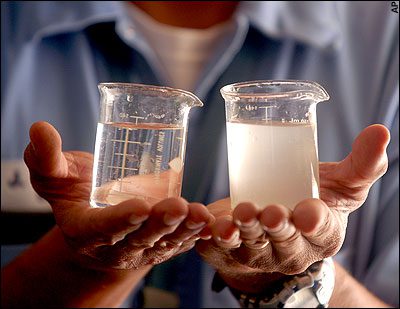
The report finds that water is the most important and needed breakthrough. Director of the study, Shashi Buluswar, said, “Water will be the defining problem of the next 50 years. It’s probably the single most important thing that needs to be solved.”

Other breakthroughs include greater access to vaccines, improved and highly efficient fertilizer and increased water filtration capacity.

Buluswar states that the Berkeley Lab is capable of working to implement many of the breakthroughs but encourages organizations both domestically and around the globe to contribute to their further development. You can read the report here.

– Joe Kitaj

Sources: Berkeley Lab 1, Berkeley Lab 2, LIGTT
Photo: desalinate4kids

September 30, 2015
https://borgenproject.org/wp-content/uploads/borgen-project-logo.svg 0 0 Borgen Project https://borgenproject.org/wp-content/uploads/borgen-project-logo.svg Borgen Project2015-09-30 10:16:212020-06-29 11:44:41Top 50 Technologies Fighting Poverty
Activism, Advocacy, Development, Global Poverty

Startups Ending Poverty

Startups
As successful businesses began springing out of Silicon Valley like a garden first introduced to fertilizer, entrepreneurs started to wonder how they could profit from filling the holes in market demands.

According to Business Dictionary, a startup is the “early stage in the life cycle of an enterprise where the entrepreneur moves from the idea stage to securing financing, laying down the basic structure of the business, and initiating operations or trading.”

But what do startups have to do with global poverty? While many businesses, including most startups, are looking to meet the demand of customers who will shell out enough cash to generate their owners and employees increasing incomes, some ventures are looking to fulfill a different demand.

Below are three for-profit startups that are using their business plans in one way or another to help alleviate poverty. These companies differ from nonprofits because they function as a business instead of an organization. While both work towards bettering the lives of others, they do so in distinctly different ways.

Nuru

Nuru provides training-based poverty solutions for local leaders in poor communities. Their leadership programs are intended to create profitable businesses owned and run by local entrepreneurs.

Nuru staff train and equip their counterpart local teams and in return part of that business’s profit is returned to Nuru where it is distributed to shareholders and reinvested in other development projects.

Instead of reaching into markets with foreign goods or services, Nuru allows locals to provide their own communities with desired and necessary products in a self-sustaining manner. Once Nuru implements their programs they withdraw their staff and allow local leaders to become self-reliant and continue making their own difference.

BioLite

BioLite was created by two camping enthusiasts and sells portable, clean energy stoves, kettles and LED lights. The profits made from their western markets help offset the costs required to make their other product. In addition to camping equipment, BioLite produces a cheaper stove to sell in developing nations.

Since most people living in poverty use open fires for cooking and heating purposes, the demand for inexpensive and safe stoves is high.

This company offers a desired product to untapped markets in developing countries for an affordable price due to their other successful profit earning products. Their business plan is sustainable because they do not rely on donations to continue their work.

Good Cloth

An online clothing store that sells exclusively ethically crafted goods. They’ve divided their products into several categories including recycled, sustainable, organic, made in the U.S. and one titled “Trade Not Aid.”

Good Cloth helps companies who design and create goods without exploiting workers, sell their products. Good Cloth and the brands they sell work to eradicate poverty by pushing against the norm of cheap labor.

They want to help companies who treat their employees fairly and pay them a just wage be successful.

Nuru, BioLite and Good Cloth are only three examples of for-profit business models that are working towards alleviating poverty. While nonprofits play an undeniably imperative role in the fight on global poverty, there is also a place for solutions that include profits.

Businesses have a high interest and investment in their success; in order to eradicate global poverty there needs to be a high interest and investment in finding successful solutions. If incorporating business models and profit as a motivation will lead to poverty reduction, why would we not use it?

– Brittney Dimond

Sources: Business Dictionary, The Good Trade, MIC, Nuru International

Photo: Pixabay

September 30, 2015
https://borgenproject.org/wp-content/uploads/borgen-project-logo.svg 0 0 Borgen Project https://borgenproject.org/wp-content/uploads/borgen-project-logo.svg Borgen Project2015-09-30 10:09:172024-12-13 18:05:09Startups Ending Poverty
Development, Global Poverty

The Secret of Sari Cloth


Water filtration is no doubt important; clean water is a basic necessity of human life used for drinking, cooking and cleaning. Many diseases are directly caused by unclean water. One such disease is cholera, which researchers have estimated is responsible for up to 142,000 deaths every year.

However, an unexpected water filtration technique has been shown to reduce the incidence of cholera in parts of Bangladesh by up to 48%. Also, the technique does not require expensive technology or devices, but actually uses an already available and widely popular material.

Saris are the traditional garments that are worn by many females in much of South-East Asia, including India. The sari cloth, when folded several times, acts as a filtration system that catches impurities and bacilli, making even water collected from streams or canals safe to consume.

The technique was introduced in several Indian villages by researchers from the University of Maryland in 2003. They noticed that many women in Indian villages would filter water in their homes with a thin, single layer of cloth. While this would strain out larger, visible particles, the material’s pores were not thick enough to remove unseen particles or plankton.

https://www.youtube.com/watch?v=NB_HQBgIP0Y

Five years after the initial study, researchers returned to investigate how effective the method was and if people were still using it. What they found was fairly surprising. Out of the more than 7,000 village women from the original trail, only 31% of them continued to filter their water in some way. Of this 31%, 60% used the sari method.

Considering the low percentage of villagers who continued to use the practice, the reduction of cholera incidences by 25% was still impressive. However, they could have been higher if more people chose to filter their drinking water.

Furthermore, the researchers found that 25% of neighboring households that did not receive the filtering instruction during the first study had begun using it, demonstrating that community members shared the knowledge they received and trickled down the benefits of this simple, yet effective technique.

While the sari filtration method is not perfect, it does make water considerably safer for consumption rather than leaving it entirely unfiltered. With this cost effective, reasonably successful solution known and available, it seems that the final obstacle is spreading, encouraging and maintaining the practice within communities.

– Brittney Dimond

Sources: The Hummingbird Project, mBio, NY Times, WHO
Photo: Wikimedia

September 30, 2015
https://borgenproject.org/wp-content/uploads/borgen-project-logo.svg 0 0 Borgen Project https://borgenproject.org/wp-content/uploads/borgen-project-logo.svg Borgen Project2015-09-30 01:30:502024-12-13 18:05:10The Secret of Sari Cloth
Development, Global Poverty

New Horticultural System Improves Harvests in Balkh Province

New Horticultural System Improves Harvests in Balkh
As Afghanistan struggles to build a secure economic infrastructure after decades of war, producers of agricultural products are among those gaining traction. A program called the National Horticulture and Livestock Project (NHLP) has successfully promoted the adoption of improved production practices among farmers growing produce in the Balkh Province.

“We have built the capacity of local farmers to enable them to use the modern horticulture system even without our assistance in the future,” said Mohammad Ghaos Langary, NHLP provincial project coordinator in the Balkh Province. NHLP is supported by the Afghanistan Reconstruction Trust Fund (ARTF), which is financed by 34 donors and administered by the World Bank.

Agriculture is essential to the growth and prosperity of developing countries and is the main source of income for people in living in poverty worldwide. In Balkh Province, NHLP introduced a new horticultural trellis system to help solve the problem of insufficient space for vines and to improve harvests.

The new system factors in the local natural conditions, such as the type of soil, local area climate, regular irrigation system and other crucial conditions for agriculture. Under the new system, farmers are learning to use fertilizers, prune, weed and irrigate their orchards appropriately, which improves their harvests.

“For the first time, our grapevines have grown so well. It makes me very happy to see that our hard work is paying off,” said Allah Mohammad, a 45-year-old farmer who has worked in horticulture and agriculture for 20 years. “In the past, our vineyard was not producing higher and quality yield because of the traditional systems we would apply. Those problems are gone now, thanks to the new trellis system.”

NHLP has been operating in northern Balkh since 2008 and with the help of local farmers has turned around 1,290 hectares of land into orchards there. Besides grapevines, the orchards also grow various trees, such as apple, pomegranate, pear, cherry, almond, plum, and apricot. With the goals of increased production of horticultural products and improved animal production and health, NHLP currently has activities in 120 districts in 23 target provinces.

“With NHLP support, farmers can now easily sell their products in the market,” says Ahmad Fahim Jabbari, NHLP coordinator in northern Afghanistan. “Many farmers who were not interested in horticulture before are now applying to enroll for support so that they can modify their orchards based on the standards and guidelines provided by NHLP.”

- Shengyu Wang

Sources: The World Bank, ResearchGate
Photo: borgenproject

September 29, 2015
https://borgenproject.org/wp-content/uploads/borgen-project-logo.svg 0 0 Borgen Project https://borgenproject.org/wp-content/uploads/borgen-project-logo.svg Borgen Project2015-09-29 13:33:152024-12-13 18:05:09New Horticultural System Improves Harvests in Balkh Province
Advocacy, Development, Global Health, Global Poverty, Health

How a New Program Could Reconnect the Supply Chain

When Communication Really is Key; How a New Program Could Reconnect the Supply Chain and Keep Health Care Clinics Stocked
According to the World Health Organization (WHO), out of the close to the 1 million health centers in the developing world 40 percent of them are stocked out of essential supplies or medications.

In some countries, people walk three days to reach the nearest health clinic only to learn that they are out of stock of their medication. At the same time, health workers admit that they have life saving medications gathering dust and expiring on their shelves because their patients do not need them.

Reliefwatch is a platform for heath care organizations in the developing world to track the supplies in clinics and pharmacies. All clinics need to partake in Reliefwatch is a basic cellphone, which most clinic workers already own. The program involves no new hardware or installations and because all it requires is workers to punch in their inventory numbers into the cellphone, the training process is fast and simple.

Reliefwatch’s method is simple. An automatic call is sent to participating clinics whose staff enter their supply and medication inventories when prompted (Reliefwatch uses multilingual support systems). All the collected data is stored in their cloud system making it available in real-time anywhere in the world.

The information collected through Reliefwatch allows suppliers and NGOs to more accurately distribute medical supplies and medications. So instead of blindly shipping out supplies to clinics every three weeks, suppliers can effectively re-stock clinics based on their needs.

Daniel Yu, the founder of Reliefwatch, says his nonprofit has reduced stock-outs to 10 percent of current levels. Suppliers are more aware of which clinics need which drugs and facilities that have excess items can give them to clinics in need of them.

Reconnecting the supply-chain has a powerful effect. Suppliers can feel confident that their provisions are reaching places that need them, clinics and health care workers can adequately serve their patients and patients can depend on their medication being available when they need it.

– Brittney Dimond


Sources: Next City, Relief Watch
Photo: Flickr

September 27, 2015
https://borgenproject.org/wp-content/uploads/borgen-project-logo.svg 0 0 Borgen Project https://borgenproject.org/wp-content/uploads/borgen-project-logo.svg Borgen Project2015-09-27 14:50:372024-06-05 02:36:34How a New Program Could Reconnect the Supply Chain
Development, Education, Global Poverty

Kenyan Student Wins Student of the Year

Kenyan Student Wins ‘Outstanding BTEC International Student of the Year 2015’ in London
In 2014 George Benson Lyimo was just a student trying to earn his Business Technology and Education Council (BTEC) degree in business. Now in 2015 he is BTEC’s ‘Outstanding International Student of the Year.’

In 2012 Lyimo left his home in Tanzania to go to Braeside High School in Nairobi, Kenya. Braeside—a school which uses the British system of education—provides a safe place for eager students all over Africa to pursue their goals. Whereas many African youth are deterred by violence and warfare from going to school—Braeside provides a bus system to safely transport students to and from campus.

At Braeside Lyimo flew under the radar. One teacher recalls him being—“quite a shy character.” Nevertheless his potential shone in and out of the classroom.

Despite his humility Lyimo has accomplished much to be proud of. Self-taught in the language of computers—Lyimo launched his own website called Texeer which is now a worldwide social networking platform. He also volunteers in Braeside’s IT department even though he has no formal training and was able to provide internet for the student body when the school’s connectivity failed.

In July 2015 Lyimo was formally recognized for his accomplishments at the fifth annual BTEC Awards. The ceremony took place in London in front of an audience that included teachers, employers and even Members of Parliament.

The BTEC Awards acknowledge students, teachers and apprentices for outstanding performance in their particular vocational field. Recipients are nominated by their teachers and colleagues. This year BTEC received more than 800 nominations.

The judges picked Lyimo because of his passion and devotion to education and helping others. “Winning this award means a lot to me.” He says. “Firstly it kind of builds up my confidence and my belief system that I can build something great that other people can use in their daily life. I want to give back to the world. I want to make the world a better place.”

In addition to all of his technological hobbies Lyimo organizes annual charity events which raise funds to send Kenyan children to school. This is especially significant in Kenya where enrollment rates are extremely low.

Enrollment for boys and girls in secondary school in Kenya is 51 and 48 percent respectively—but attendance drops down to 39 and 41 percent. Compare this to the U.S. where enrollment among boys and girls in secondary school is 88 and 90 percent respectively. It is also important to take into account when comparing these numbers that unlike the U.S.—education is universally free in Kenya.

This is why young students like Lyimo are truly making the world a better place. Not only does he help other children achieve their dreams by providing access to education but perhaps more importantly by being a role model for those who need motivation in the face of adversity.

Lyimo graduated Braeside with triple star distinction—the highest accolade in the BTEC degree program. Like past recipients of BTEC ‘Outstanding Student’ Awards Lyimo will continue on his career path pursuing an advanced degree in Business and Computing at Huddersfield University in England.

– Celestina Radogno

Sources: Braeside School, BTEC 1, BTEC 2, Standard Digital News, UNICEF 1, UNICEF 2
Photo: Flickr

September 27, 2015
https://borgenproject.org/wp-content/uploads/borgen-project-logo.svg 0 0 Borgen Project https://borgenproject.org/wp-content/uploads/borgen-project-logo.svg Borgen Project2015-09-27 09:34:302024-05-27 09:27:41Kenyan Student Wins Student of the Year
Activism, Development, Global Poverty

Richest Man in Africa Combats Poverty Through Agriculture

Richest_Man_in_Africa
Aliko Dangote, a Nigerian billionaire, is nominated as Africa’s richest man on the FORBES World’s Billionaires list. He takes advantage of the advanced natural condition in Nigeria, such as plenty of agricultural land to develop the economy of commercial agriculture in Nigeria.

Aliko Dangote created the Dangote Group, a conglomerate mainly offering agricultural products, such as cement, sugar, salt and flour. Commercial agriculture has become one of the most important branches of Africa’s economy.

In recent years, Dangote keep investing in the land in Africa to expand his agricultural business and to create profits in Nigeria.

“I can remember that when I was in primary school, I would go and buy cartons of sweets (sugar boxes) and I would start selling them just to make money. I was so interested in business, even at that time,” said Dangote.

From 1997 to 2015, Dangote developed the Dangote Group from a small trading firm into a multi-trillion Naira conglomerate with international operations located in Benin, Ghana, Nigeria, and Togo.

Agricultural commodities are the main products in the Dangote Group. It has covered food processing, cement manufacturing and freight. Moreover, it dominates the sugar market in Nigeria and becomes the major supplier to domestic soft drink companies, breweries and confectioners.

In addition, Dangote Group also owns salt factories and flour mills; it imports rice, fish, pasta, cement and fertilizer and exports cotton, cashew nuts, cocoa, sesame seed and ginger to several countries.

With the current achievement, Dangote is still expanding his Agricultural business in Africa lands. Recently, Dangote invested $500 million in cement plants in Ethiopia and is building other plants in Kenya, Niger and Congo.

Moreover, Dangote intends to invest in Malawi, one of the poorest countries in the world. The majority of people in Malawi earn less than $1 per day. Foreign donors and Tobacco exports constitute the main national income. Before this investment, he has built a South African cement manufacturer, Sephaku Cement, and a cement plant in Zambia.

“His visit to Malawi will inspire both private and public sectors on how he has succeeded in his businesses”, said Joseph Mwanamvekha, Malawi’s Minister of Industry and Trade.

Facing the success of an agricultural business, Dangote said that, “Let me tell you this and I want to really emphasize it … nothing is going to help Nigeria like Nigerians bringing back their money. If you give me $5 billion today, I will invest everything here in Nigeria. Let us put our heads together and work.”

As the richest man in Africa, Dangote combats poverty in Nigeria by developing the economy of commercial agriculture.

– Shengyu Wang

Sources: Forbes, Forbes 2
Photo: Google Images

September 27, 2015
https://borgenproject.org/wp-content/uploads/borgen-project-logo.svg 0 0 Borgen Project https://borgenproject.org/wp-content/uploads/borgen-project-logo.svg Borgen Project2015-09-27 01:30:172020-06-29 17:50:53Richest Man in Africa Combats Poverty Through Agriculture
Development, Economy, Global Poverty

Colombian Farmers Expand Their Markets

Colombian Small-holder Farmers Expand their Markets
Whoever uttered the phrase “it’s not what you know, it’s who you know” wasn’t kidding. In today’s times, connections are key, and for Colombians trying to make a living in farm-based agriculture, the size of your market makes a significant impact on your income.

In fact, many challenges exist for small-holder farmers in Colombia. Hindrances such as low productivity, distorted information about pricing and selling prospects, and limited marketing access all remain obstacles for this group of farmers who end up selling their goods at open-air markets where there is more competition.

This automatically decreases a seller’s profits, furthering a cycle that seems inescapable.

Being a small-holder farmer can prove to be a difficult existence, at times feeling closed off from the evolving international markets of the world.

Other setbacks faced by farmers include selling through intermediaries, steep transaction costs to reach distant markets, and finally, a lack of means to produce the “volume, quality, and timely delivery” which large agricultural producers are able to generate.

Ultimately, the inability to expand and grow has contributed to poverty in this rural sector.

However, significant strides have been taken for those who fall under this title. An article from the World Bank addresses the solutions underway to improve the livelihoods of these farmers.

“In an effort to support Colombia’s smallholder producers to build entrepreneurship and compete more effectively, the Rural Productive Partnerships Project has been addressing the above-mentioned challenges by establishing, strengthening, and promoting productive alliances between rural producer organizations and private agribusinesses.”

Since the Rural Productive Partnership Project’s launch in 2002, many groups have received support through a process where partnerships are formed by competitive bidding partnered with an independent evaluation procedure. Today, this program continues to flourish and build from where it started.

The World Bank describes the program’s goal as one which involves keeping “production, sales and productivity” up through “investment grants, technical assistance and business development training.”

Aside from financial assistance, this project also seeks to dispel inequality however it can by reaching people who may have been neglected within the system, such as women, indigenous people and Afro-Colombians.

Colombia’s Ministry of Agriculture and Rural Development (MADR) reports that between 2002-2014 more than 820 successful partnerships have been formed helping 55,000 households, with 72 percent of the productive partnerships continuing to work together after the conclusion of the program.

With the second phase of the program ending in June 2015, targets have been reached within the project with more than 9,900 female-headed households benefiting in the first phase, and more than 9,250 indigenous peoples and Afro-Colombian households receiving assistance.

These successes have not only helped one small sector of farmers—but have reached far-away consumers and provided support for the vulnerable who live in Colombia, ultimately endeavoring to keep both their community and the world’s economy thriving.

– Nikki Schaffer

Sources: World Bank, YouTube
Photo: Google Images

September 27, 2015
https://borgenproject.org/wp-content/uploads/borgen-project-logo.svg 0 0 Borgen Project https://borgenproject.org/wp-content/uploads/borgen-project-logo.svg Borgen Project2015-09-27 01:30:002024-12-13 17:54:09Colombian Farmers Expand Their Markets
Development, Global Poverty

Botswana Unveils Prepaid Electricity App

Botswana Unveils Electricity Payment App
Access to reliable electricity is necessary for life in the modern world, and countless studies have shown that increased availability of electricity leads to economic increases, longer life expectancies, and in general, a higher quality of life. While many developing countries are increasing their electrical infrastructures, millions across the world are still energy deficient.

Even with access to electrical grids, many do not have the funds to pay for power or are in such remote locations that payment becomes a burden. The African nation of Botswana faces these issues but has recently rolled out a solution.

A payment company called Botswana Post has just launched an electricity app for Android users that allows them to buy prepaid amounts of electricity for low costs and to pay existing balances. Eighty percent of mobile customers in Botswana use the Android mobile operating system.

The electricity app also allows for direct user contact with the Botswana Power Corporation for the purpose of repairs and electrical installment. Botswana Post also provides similar services for many of the major banks across the country, Western Union, Botswana Telecommunications, and hopes to add gas and broadband payment services soon.

The app is yet another marker of Africa’s rapid modernization and potential for progress. It comes at a time when energy is not only becoming more and more available, but is now easier to maintain, and cheaper to acquire.

The simplicity of obtaining and keeping electricity that the app presents will surely have a positive impact across the country and should correlate to greater economic output and incomes for citizens who had, in the past, been quite literally in the dark.

– Joe Kitaj

Sources: Botswana Post, Footprint to Africa
Photo: Google Images

September 26, 2015
https://borgenproject.org/wp-content/uploads/borgen-project-logo.svg 0 0 Borgen Project https://borgenproject.org/wp-content/uploads/borgen-project-logo.svg Borgen Project2015-09-26 01:30:352020-06-29 17:56:32Botswana Unveils Prepaid Electricity App
Development

Meet a Thriving Cultural District in South Africa

Maboneng Precinct: A Thriving Cultural District in South Africa
In South Africa’s city of Johannesburg, entrepreneurs are reviving once neglected and deteriorating neighborhoods and turning them into vibrant, urban mixed-use communities. Forbes magazine named Jonathan Liebmann one of Africa’s best young entrepreneurs for his transformation of the Maboneng Precinct in the eastside of the city.

Liebmann is the Founder and CEO of Propertuity, a development company in South Africa. He created Maboneng without municipal resources with the idea of developing a place for young people to live, work and socialize.

In 2008 Liebmann purchased warehouses and old construction offices dating from the 1900s and then worked with the architect Enrico Daffonchio in transforming the industrial spaces.

The residential spaces in Maboneng are designed to meet a variety of people’s needs with different sized apartments. Other features of the neighborhood include artist studios and galleries, stores, coffee shops and advertising agencies.

The creative elements and artistic presence make Maboneng attractive to young people. “Why do we love Johannesburg? The answer to this is very simple. We love Johannesburg simply because it is the place of innovation,” said Lizi Brink, a student. “Maboneng Precinct is a neighborhood that has contributed greatly to this change.”

In Sotho, the word Maboneng means, “place of light,” which exactly fits the role of Maboneng as a center of creative energy for artists in Johannesburg.

– Shengyu Wang

Sources: Gauteng, Forbes, Mafadi
Photo: Between 10 And 5

September 25, 2015
https://borgenproject.org/wp-content/uploads/borgen-project-logo.svg 0 0 Borgen Project https://borgenproject.org/wp-content/uploads/borgen-project-logo.svg Borgen Project2015-09-25 01:30:572024-05-27 09:27:27Meet a Thriving Cultural District in South Africa
Page 124 of 163«‹122123124125126›»

Get Smarter

  • Global Poverty 101
  • Global Poverty… The Good News
  • Global Poverty & U.S. Jobs
  • Global Poverty and National Security
  • Innovative Solutions to Poverty
  • Global Poverty & Aid FAQ’s
Search Search

Take Action

  • Call Congress
  • Email Congress
  • Donate
  • 30 Ways to Help
  • Volunteer Ops
  • Internships
  • Courses & Certificates
  • The Podcast
Borgen Project

“The Borgen Project is an incredible nonprofit organization that is addressing poverty and hunger and working towards ending them.”

-The Huffington Post

Inside The Borgen Project

  • Contact
  • About
  • Financials
  • President
  • Board of Directors
  • Board of Advisors

International Links

  • UK Email Parliament
  • UK Donate
  • Canada Email Parliament

Get Smarter

  • Global Poverty 101
  • Global Poverty… The Good News
  • Global Poverty & U.S. Jobs
  • Global Poverty and National Security
  • Innovative Solutions to Poverty
  • Global Poverty & Aid FAQ’s

Ways to Help

  • Call Congress
  • Email Congress
  • Donate
  • 30 Ways to Help
  • Volunteer Ops
  • Internships
  • Courses & Certificates
  • The Podcast
Scroll to top Scroll to top Scroll to top