• Link to X
  • Link to Facebook
  • Link to Instagram
  • Link to TikTok
  • Link to Youtube
  • About
    • About Us
      • President
      • Board of Directors
      • Board of Advisors
      • Financials
      • Our Methodology
      • Success Tracker
      • Contact
  • Act Now
    • 30 Ways to Help
      • Email Congress
      • Call Congress
      • Volunteer
      • Courses & Certificates
      • Be a Donor
    • Internships
      • In-Office Internships
      • Remote Internships
    • Legislation
      • Politics 101
  • The Blog
  • The Podcast
  • Magazine
  • Donate
  • Click to open the search input field Click to open the search input field Search
  • Menu Menu

Archive for category: Development

Information and stories on development news.

Development, Global Poverty, Technology

Digital Tech Saving People from Natural Disasters

Digital-Tech-Saving-People-from-Digital TechIn multiple developing countries, more families now have access to digital tech, such as cellphones, than to purified water or electricity. There is still a massive digital separation, however, between the poor and wealthier areas of the world in terms of Internet access.
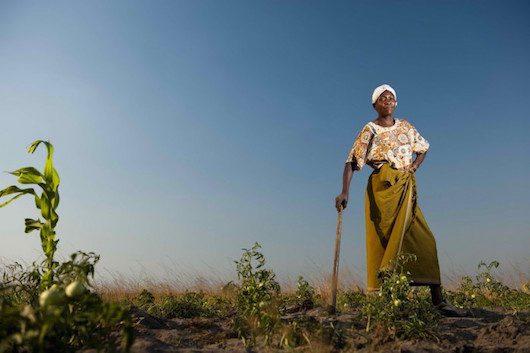
According to “Digital Dividends,” an annual development report put out by the World Bank, greater strides must be made to connect more individuals to the Internet and to create a space that unchains the benefits of digital technologies for all.

Access to the Internet is crucial in vulnerable regions before, during and after a disaster occurs. Organizations like the Global Facility for Disaster Reduction and Recovery (GFDRR) have begun to create a wide range of tools that will deal with disaster risk management — but the tools rely heavily on the Internet’s unlimited potential.

Natural disasters can cause terrible damage, especially to the poorest parts of the world. As efforts step up to improve the Internet’s reach across the world, the GFDRR has helped over 160 million people in 60 countries gain improved access to risk information. Using its Open Data for Resilience Initiative (OpenDRI), the GFDRR also helps countries to establish open disaster information platforms.

Innovative approaches to disaster risk, such as crowdsourcing and social data mining, also expand the information base quickly and cheaply. OpenDRI’s community mapping projects deploy local citizens to collect and maintain data about the environment and how it changes during the different stages of a disaster.

By allowing more people to have access to digital tech, not only will they have access to better jobs and opportunities, they will have first-hand knowledge and awareness of impending disasters heading their way. Digital technology also encourages tighter-knit collaboration with the different parts of a region’s government and the private sector.

A prime example of using crowdsourcing to save lives, the FloodTags project is developing a tool to utilize data via Twitter for eye-witness flood observations. Concepts like this provide a constantly updated understanding of the situation, hopefully saving lives that would otherwise be lost in disasters.

After floods hit Jakarta, Indonesia in February 2015, tweets peaked at about 900 per minute, with a major number including information about location and water depth. FloodTags then utilized this information to devise a method for creating real-time maps based on the messages and regional statistics.

While digital tech like FloodTags and GFDRR’s OpenDRI system have steadily improved and saved lives over the last few years, they fall short in areas that do not have access to the Internet. For digital tech to aid everyone everywhere in the world, the remaining countries need to eventually close the gap in Internet access.

– John Gilmore

Sources: GFDRR, Reuters, WE Forum
Picture: Google Images

February 17, 2016
https://borgenproject.org/wp-content/uploads/borgen-project-logo.svg 0 0 Borgen Project https://borgenproject.org/wp-content/uploads/borgen-project-logo.svg Borgen Project2016-02-17 01:30:142024-12-13 18:05:39Digital Tech Saving People from Natural Disasters
Development, Global Poverty, Women, Women & Children, Women and Female Empowerment

5 Ways Addressing Women’s Rights Reduces Poverty

Addressing Women's Rights
Since the 1970s, women have had a key role in addressing women’s rights in terms of ending global poverty.

There are several reasons for this phenomenon, whether laws in certain countries stimulating this repression or customs in a society. Laws protecting women often remain unimplemented at the national and local levels.

The U.N. Commission for Africa states that women, in particular, suffer from inequality, both socially and economically. It is important to recognize women’s rights implications for the declination of global poverty.

1. It Increases Education Enrollment

Young girls are among the largest of demographics not receiving an education. It is a known fact that women with equal rights become more educated. These women are more likely to participate in the job field. Education results in gaining the skills necessary to obtain work and consequently gain financial resources to rise above the poverty line.

2. It Increases Enrollment in the Job Sector

As women acquire education and skills, they may gain the aspirations of entrepreneurship. The right to education for women also creates future options for labor. Furthermore, as women become educated, their role is expanded beyond child-rearing. Women are then able to obtain a presence in the working field.

3. Women Are More Likely to Participate in Decision Making

Women with legal rights are more likely to own land and therefore to access finance. The U.N. claims that rural women with the right of control over their land increase social and political status. Addressing women’s rights in controlling land boosts bargaining power domestically and empowers their public voice.

4. It Diminishes Dependence

Many women who are impoverished are widows, single-headed households or those who did not have an income to begin with. Addressing women’s rights to education and ownership enables them to earn a living regardless of challenging situations. When women have rights to land ownership and to education, it ensures their ability to provide for their families’ daily needs. Land ownership also decreases the prospects of women being evicted and subsequently sliding into poverty.

5. It Reduces Unpaid Work

Many women spend a lot of time doing household work such as caring for children. Additionally, many women spend a great portion of their day preparing meals and gathering water, during which they resort to paying for childcare. Greater equality in the household would allow women the opportunity to spend time carrying out paid work.

The U.N. states that with access to resources such as financial credit, technical assistance, training and land ownership, the feminization of poverty will diminish.

– Mayra Vega

Sources: U.N.E.C.A., UNDP 1, UNDP 2, UNDP 3, UNDP 4, U.N. 1, Sachs, Jeffrey, U.N. 2
Photo: Africa Agribusiness

February 15, 2016
https://borgenproject.org/wp-content/uploads/borgen-project-logo.svg 0 0 Borgen Project https://borgenproject.org/wp-content/uploads/borgen-project-logo.svg Borgen Project2016-02-15 01:30:062024-12-13 17:54:105 Ways Addressing Women’s Rights Reduces Poverty
Development, Global Poverty

Corporate Social Responsibility Investment

Corporate Social ResponsibilityCommunity Capital Management, Inc. (CCM) is one of the top fixed income impact investing managers in the United States that prides itself on corporate social responsibility.

CCM reported that the company’s CRA Qualified Investment Fund Institutional Shares (CRANX) ranked among the top one percent of all performers out of 309 government funds during 2015.

According to PR Newswire, CRANX saw about two percent returns in 2015, exceeding the average return for its category. Out of 301 funds, investment research group Morningstar rated the share class with four stars for its $1.8 billion asset portfolio across its three share classes.

“We are equally proud of the Fund’s bespoke impact portfolio and community impact performance, having invested $512 million in 2015 and $5.8 billion since inception in bonds financing economic and environmentally sustainable initiatives,” said CCM chief investment strategist David Sand.

CCM offers shareholders the ability to customize their investments to align with social or environmental missions, in addition to participating in open-ended bond funds that provide liquidity as a part of their corporate social responsibility.

Funds like CRANX offer investors the chance to facilitate change through impact investing – making investments that bring about a social or environmental change as well as a financial return.

CCM’s impact investments have brought great change to areas within the United States. For example, $283 million helped to fund job creation and small business development, $354 million was invested for environmental sustainability and neighborhood revitalization, $33 million helped to create affordable health facilities and 320,000 affordable rental housing units were created.

Canyon Crossing is one of these complexes that offers 180 rental properties to low-income residents of Salt Lake County in Utah. The construction of these buildings, along with the state’s other efforts over the last 10 years, has resulted in a rapid reduction of homelessness throughout the state, according to the Department of Workforce Services (DWS).

According to the African Development Report of 2011, the private investment sector is the driving force behind economic growth and poverty reduction in Africa. The report finds that 80 percent of Africa’s production, two-thirds of total investments and 75 percent of total credit to the economy comes from private sector investments.

Barron’s reports that the popularity of impact investing has grown in the last 10 years and current trends indicate an increase in international impact investing. A survey conducted by Fidelity Investments found that a quarter of respondents plan to invest their impact portfolios overseas.

“Impact investing has the potential to channel significant amounts of private capital to solutions to the world’s most intransigent challenges. Last year was a banner year for impact investing and set the stage for 2016 to be a year of tremendous growth and progress,” said Global Impact Investing Network CEO, Amit Bouri.

– Kelsey Lay

Sources: African Development Bank Group, Community Capital Management, Inc., Department of Workforce Services, Forbes 1, Forbes 2, PR Newswire
Photo: Huffington Post

February 14, 2016
https://borgenproject.org/wp-content/uploads/borgen-project-logo.svg 0 0 Borgen Project https://borgenproject.org/wp-content/uploads/borgen-project-logo.svg Borgen Project2016-02-14 01:30:532024-12-13 18:05:40Corporate Social Responsibility Investment
Development, Global Health

Assessing the Global Health Security Agenda

Global Health Security AgendaA new tool for assessing progress toward the Global Health Security Agenda (GHSA) goals has now been piloted in five countries, the CDC reports. International health organizations in Georgia, Peru, Portugal, Uganda and the UK have all submitted evaluations of the assessment.
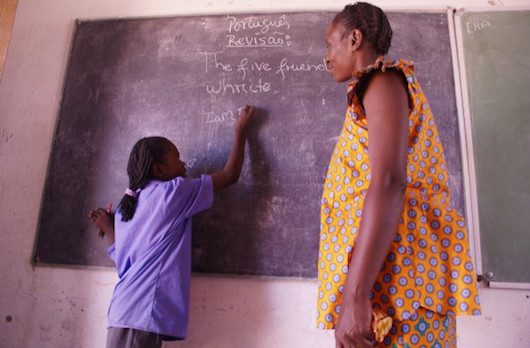
The Global Health Security Agenda was launched in 2014 as a way to bring focus to the need for a global health strategy that would respond quickly and effectively to potential epidemics — a need that was highlighted later that year by an outbreak of Ebola in West Africa.

“GHSA is about strengthening health systems for every country,” said U.S. Ambassador Bonnie Jenkins. “That means GHSA will help to prevent, detect and rapidly respond to infectious diseases like Ebola.”

The assessment is designed to measure baselines and strategies for potential improvement in regards to 11 action packages developed by GHSA countries in 2014.

Following the “Prevent-Detect-Respond” framework, these action packages include, among others, preventing microbial resistance, strengthening biosecurity, delivering immunizations, facilitating surveillance and reporting, fostering global communication and coordinating emergency response deployment and operations.

Each pilot country was scored on their capacity to take these actions based on indicators such as having biosecurity training programs, proper communication practices, national vaccine coverage, trained epidemiologists and resources to implement emergency responses. The teams then evaluated the assessment itself to determine if it was constructive and scalable.

Evaluators in Portugal, which is considered to have a strong health security strategy, noted several important improvements the assessment needs to undergo before it is launched on a broader scale.

They say that current indicators do not reflect global objectives as closely as they could. They recommended pulling indicators from existing global health initiatives (such as the Global Vaccine Action Plan) in order to maintain a focus.

Evaluators also noted that their team was given a limited amount of time to complete their assessment. This prevented them from conducting random samples from various regions across the country, in order to verify the information they received from the central health ministry. They also noted a lack of efficiency in the process stemming from the fact that the country being evaluated was not given the assessment ahead of time. The evaluators therefore suggest giving assessment missions a three-month lead time in order to properly prepare.

Overall, the teams think the tool is a promising step in assessing progress toward the Global Health Security Agenda. With further development, they are confident it can be launched in all partner countries.

– Ron Minard

Sources: Borgen Project, CDC, Huffington Post
Picture: Google Images

February 3, 2016
https://borgenproject.org/wp-content/uploads/borgen-project-logo.svg 0 0 Borgen Project https://borgenproject.org/wp-content/uploads/borgen-project-logo.svg Borgen Project2016-02-03 01:30:082024-05-27 09:28:44Assessing the Global Health Security Agenda
Development, Education, Global Poverty

Education in Namibia and Its Role in Development

Education in Namibia
The United Nations recently presented its Human Development Report in Windhoek, Namibia. The Report included the U.N.’s Human Development Index (HDI) which not only measures a nation’s economic well-being but also that of its citizens. Many find the HDI useful because it takes into account the citizenry’s quality of life.

The Report provided sobering news for the host nation when it was revealed its HDI rank was 126 out of 188. Despite its status as an upper middle-income nation, Namibia ranks fairly low on quality of life metric.

The HDI shows that a rising gross domestic product cannot cover up the citizen’s poor standard of living. The HDI points out that there is wealth inequality, poverty, poor healthcare and educational underperformance in Namibia.

Babatunde Omilola, the United Nations Development Programme’s chief of development planning in New York offered his opinion on solutions to these issues. In particular, Omilola noted that Namibia “could do better if it invests more in education.”

For example, Namibia invests billions of dollars in its education, yet only 30 percent of 12th graders in 2013 met the requirements for college admissions. With statistics showing that college graduates earn more throughout their lifetime, Namibia’s lack of collegiate students translates to unrealized potential.

By improving education in Namibia, it is likely that its citizens will benefit from increased opportunities and a higher HDI as the country tries to overcome a staggering poverty rate of 30 percent.

Omilola also noted that education “allows people to enhance their capabilities by providing them with acquired skills and knowledge.”

He then concludes this by saying Namibia’s “Education and skills need to be boosted.”

With a greater focus on education in Namibia, it is hoped that the country will produce more college graduates that have 21st century skills. These graduates will be able to fill the nation’s skills gap, and take advantage of the nation’s abundant resources.

– Andrew Wildes

Sources: Capacity4dev, World Bank, UNDP, Namibian 1, Namibian 2, Namibian Sun, WHO
Photo: UNDP

January 30, 2016
https://borgenproject.org/wp-content/uploads/borgen-project-logo.svg 0 0 Borgen Project https://borgenproject.org/wp-content/uploads/borgen-project-logo.svg Borgen Project2016-01-30 01:30:052024-06-07 05:07:35Education in Namibia and Its Role in Development
Development, Global Poverty, Women and Female Empowerment

Zambian Women Team Up to End Poverty

Zambian Women
Women in Kabwe, Zambia’s central province are establishing clubs and associations to help fight poverty. Through these organizations, Zambian women are educated on aid programs available and encouraged to take advantage of them.

Kabwe is a rural province with an 80 percent poverty rate. Women are especially vulnerable to poverty because of the tradition of gender inequality.

In the Mumbwa district of Kabwe, the Tandabale Wakamana Club has 20 female members who work to improve the quality of life and agriculture. Together they grow maize, groundnuts, and keep livestock.

Rhoda Kakoma, a member of the Tandabale Wakamana Club, said: “Through our club, I now own goats. I keep chickens and I also make fritters and the money I raise I am able to send my children to school. I have now managed to build a house which I have roofed.”

According to Mumbwa community development officer Abel Mwape, women are empowering one another in areas such as agriculture, weaving, tailoring, and rearing animals. These clubs help women find markets so they can sell their produce to make for profits.

In the Itezhi tezhi clubs have encouraged women to get involved in peanut butter making, basket weaving, and netting to sell in the markets.

The clubs are also making women aware of the Food Security Pack (FSF) which is a safety net program for farming households; particularly aiding households headed by women, children, and disabled persons.

Women are also connected to the Social Cash Transfer which provides women involved in agriculture with cash incentives in order to maintain their farms and livelihoods.

“Empowering rural women, therefore, remains cardinal to the well-being of individuals, families and rural communities,” said Engwase Mwale, the executive director for Non-Governmental Organizations Coordinating Council (NGOCC). “This is largely because women are the bedrock of our families, and indeed society at large.”

– Marie Helene Ngom

Sources: Dailymail, MCDMCH, IDS
Photo: Dailymail

January 23, 2016
https://borgenproject.org/wp-content/uploads/borgen-project-logo.svg 0 0 Borgen Project https://borgenproject.org/wp-content/uploads/borgen-project-logo.svg Borgen Project2016-01-23 01:30:012024-05-27 09:28:34Zambian Women Team Up to End Poverty
Development, Global Poverty

Income Growth Relieves Poverty in Rural Botswana

Rural Botswana
According to the Botswana Poverty Assessment released by the World Bank, thousands have risen out of poverty in rural Botswana as a result of government-supported programs that improved people’s livelihoods.

The report said increased agricultural income and improved welfare resulted in 158,000 people being removed from poverty in rural Botswana between 2002 and 2010.

Botswana was one of the 10 poorest countries in the world. However, it is now categorized among high middle-income countries. The World Bank said if this trend continues, less than 15 percent of the population will be living below the poverty line by 2018.

“Tackling poverty is at the heart of our National Development Plan. We are pleased to see that our welfare programs have improved the lives of many and made a dent in poverty levels,” said Olebile Gaborone, coordinator of Poverty Eradication.

The report accredits the 87 percent decrease in rural poverty to a drastic change in the demographic structure of the population and a decrease in household size and dependency rations.

Assistant Minister for Presidential Affairs and Public Administration, Dikgang Makgalemele, said “the remarkable reduction in poverty was a result of sustained robust economic growth over the past few decades and sound government policies and programs that ensure the benefits of economic growth trickle down to the whole strata of the society.”

The study also predicts that with the help of education, social protection and employment, poverty levels in Botswana could fall below 12 percent by 2018, and below six percent by 2030.

The report advises investing in education so that more Botswanans have the skills to meet the labor demand, as well as creating a private sector that focuses on creating better jobs for the impoverished population.

“We see from our research that agricultural support programs were clearly a big part of the progress achieved during the period under review,” World Bank Senior Economist Victor Sulla said. “Going forward, investments in human capital and efficient safety-net targeting will be critical to accelerating poverty reduction and reducing inequality further.”

– Marie Helene Ngom

Sources: AllAfrica, World Bank
Photo: Google Images

January 19, 2016
https://borgenproject.org/wp-content/uploads/borgen-project-logo.svg 0 0 Borgen Project https://borgenproject.org/wp-content/uploads/borgen-project-logo.svg Borgen Project2016-01-19 01:30:512020-06-24 13:26:47Income Growth Relieves Poverty in Rural Botswana
Activism, Development, Global Poverty, Refugees and Displaced Persons

Ikea Builds 10,000 Shelters for Syrian Refugees

syrian_refugeesShowing no signs of stopping, the surge of Syrian refugees poses many issues for European and Middle Eastern countries, mainly housing, as the Northern hemisphere gears up for winter.

According to the International Organization for Migration (IOM), since the start of 2015 more than 750,000 migrants have arrived by sea to Europe. The large amount of refugees has not only sparked international interest but also a crisis as many European countries struggle to cope with the influx of refugees fleeing to Europe for a better life.

The IKEA Foundation, in collaboration with Better Shelter, has partnered to create safer, more reliable housing options for the thousands of Syrian refugees fleeing to Europe.

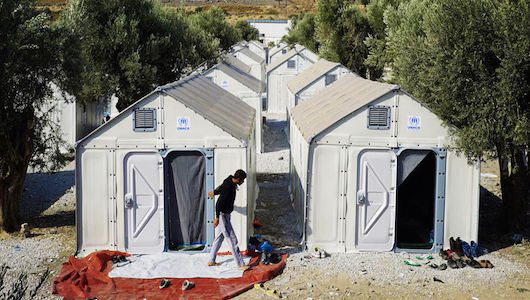
Focusing on cost-effectiveness, IKEA developed a tent that costs approximately $1,000. The tent can comfortably house a family of five and only takes four to eight hours to assemble. The structures come in two sizes: 57 square feet or 188 square feet of living space and will last up to three years. Comparatively, the United Nations (UN) shelters only last three months.

“This is just a tiny part of humanitarian aid. But it’s an important one when it comes to allowing displaced people to live with dignity,” said Johan Karlsson, the main Swedish Industrial designer.

Additionally, the shelters are equipped with solar panels that are durable against extreme temperatures. The solar panels were developed in response to the cited lack of electricity among refugee shelters.

A woman by the name of Mayada, one of many refugees seeking asylum, came to a camp in Jordan ten months ago. She said she never imagined having to live without the most basic necessities, particularly electricity.

“Nowadays electricity is life, and without it even the most simple things become a struggle,” she told visitors from the UN Refugee Agency.

The absence of light and power makes everyday living activities difficult, as well as dangerous, particularly for women. Mayada’s daughter is too scared to go to the bathroom at night and has to wake her parents to accompany her. The solar panels will help to quell their fears.

With the arrival of winter and light disappearing earlier in the day, basic daily functions, as well as communication among refugees, become more difficult.

“You can’t visit friends, the kids can’t do their homework. By nine or 10 o’clock most of the camp is in bed,” Mayada said.

In addition to the solar panels, the tents will also have mosquito nets, windows and a door that locks. The lock option for doors is a simple solution to help prevent sexual assault among refugee women traveling across the Middle East and Europe.

“People tell us it will make a huge difference to them just to be able to switch a light on again, making them feel more at home,” UN Refugee Agency Energy Advisor Paul Quigley said.

The UN has ordered 10,000 of the units to help reduce the Syrian housing crisis. Europe will receive 755 units and 2,600 homes will go to Iraq.

Mayada said when electricity is made more available to the refugee camps, she will no longer have to put on a brave face for the sake of her kids, particularly her daughter.

“I wish I could give [IKEA] all a big kiss between their eyes! It will mean everything to us!” Mayada said.

– Alyson Atondo

Sources: PBS, UNHCR, Business Insider, BBC
Photo: Google Images

January 16, 2016
https://borgenproject.org/wp-content/uploads/borgen-project-logo.svg 0 0 Borgen Project https://borgenproject.org/wp-content/uploads/borgen-project-logo.svg Borgen Project2016-01-16 01:30:122024-12-13 18:05:29Ikea Builds 10,000 Shelters for Syrian Refugees
Development, Global Poverty, Water

Conference Calls for Clean Water

Clean WaterThe first West and Central Africa Innovative Financing for Water Sanitation & Hygiene conference recently convened in Dakar, Senegal to discuss efforts to increase access to clean water in rural areas.

For three days, 24 governments in the sub-Saharan region had the opportunity to meet with major investment banks, international organizations, businesses and experts.

Their collective goal is to find new methods to raise an estimated $20 to $30 billion annually for the water, sanitation and hygiene sector. Success will bring universal access of those services to West and Central Africa, home to nearly half the global population currently living without access to improved drinking water.

The Joint Monitoring Report Update of 2015 estimates 663 million people globally still lack access to improved drinking water sources. 2.4 billion people have no access to improved sanitation facilities, and of that number, 946 million defecate in the open.

According to UNICEF, no country in West and Central Africa has universal access to improved drinking water and access to sanitation even rarer. In countries with the best coverage of the sub-Saharan area, as many as one in four people still lack adequate sanitation.

Within the last 25 years, the population of the sub-Saharan area has nearly doubled. Growing populations are outpacing government efforts to provide essential services. Access to improved sanitation and clean water has not kept pace with these changes. In fact, improved sanitation only increased by 6 percent and water only 20 percent within the same time period.

The number of people in the region who defecate in the open is higher now than it was in 1990.

Without speedy action, UNICEF warns the situation could drastically worsen within the next 20 years.

The UN estimates global economic losses due to inadequate water, sanitation and hygiene amount to $260 billion dollars per year. As the sub-region with the worst access, West and Central Africa carries a significant portion of this burden.

Clean_Water

Funding for the water, sanitation and hygiene sector is uneven and insufficient, noted UNICEF. No African country has allocated more than 0.5 percent of its gross domestic product to the sector.

Meanwhile, of the $3.8 billion overseas development aid (ODA) allocated for the water, sanitation and hygiene sector in 2012, approximately three-quarters went to water and the remaining quarter to sanitation.

Most ODA funding goes to countries that are already doing well, and while rural access to clean water is far behind urban access, both external and domestic funding go primarily to urban systems.

“While we know what needs to be done, we have to figure out a way to do it faster and better,” UNICEF Regional Director for West & Central Africa Manuel Fontaine said. “There are a lot of options on the table; what is not an option is to continue to allow children to pay for our lack of action.”

– Kara Buckley

Sources: WASH Finance, UN, UNICEF
Photo: Wikimedia Commons, Flickr

January 8, 2016
https://borgenproject.org/wp-content/uploads/borgen-project-logo.svg 0 0 Borgen Project https://borgenproject.org/wp-content/uploads/borgen-project-logo.svg Borgen Project2016-01-08 05:00:292024-06-11 02:48:17Conference Calls for Clean Water
Aid, Development, Global Poverty

EU Finances Program Tackling Poverty Reduction in Pakistan

Poverty_Reduction_in_PakistanIn 2015, the European Union (EU) and partners in Pakistan, including the non-profit National Rural Support Programme (NRSP), launched the SUCCESS program targeting rural development and poverty reduction in Pakistan. Based in the Sindh province, the program will provide aid for development in eight districts faced with high levels of rural poverty.

The Sindh Union Council and Community Economic Strengthening Support (SUCCESS) program will be funded for six years by the European Union. During the launch of the SUCCESS program, organizers told Pakistani newspaper The News, that the objective is to “reduce poverty through undertaking the Community Driven Development (CDD) based on the proven social mobilization approach of the Rural Support Programmes (RSPs).”

RSPs have been part of the country’s development strategy for decades. Utilizing community driven initiatives, they have a record for poverty reduction, aiding development and empowering women through community programs. Additionally, Deputy Secretary Sindh Ajaz Ali Khan told The News “it was encouraging that the SUCCESS programme would involve and be led by women.”

Social mobilization is also a key element for the SUCCESS program and NRSP to incorporate the poorest people into the development process. These programs provide a multi-level approach according to the NRSP website. They promote “a culture of participation, inclusivity and solidarity, direct provision of front-line services, planning and development, business creation, savings, conflict resolution, dialogue and interaction with local authorities.”

Approximately 770,000 rural households will be mobilized through the SUCCESS program. Going forward, households will come together in Community Organisations (COs), one of the several tiers the rural support programs use to mobilize and organize.

RSPN Chief Executive Officer Khaleel Ahmed Tetlay told The News that the SUCCESS program would focus on sustainable and financially viable approaches to poverty reduction in Pakistan. The program also aims to “link the community institutions with the government service delivery departments.”

The Daily Times in Pakistan reports a fundamental issue for the Sindh province is “to accommodate talented and educated youth into industry and job market.” With the support of the Sindh government, the organizations involved hope the SUCCESS program will help the province retain rural youth by creating new work opportunities.

– Cara Kuhlman

Sources: The Daily Times, National Rural Support Programme, The News
Photo: Google Images

January 4, 2016
https://borgenproject.org/wp-content/uploads/borgen-project-logo.svg 0 0 Borgen Project https://borgenproject.org/wp-content/uploads/borgen-project-logo.svg Borgen Project2016-01-04 08:09:312020-06-25 10:52:37EU Finances Program Tackling Poverty Reduction in Pakistan
Page 115 of 163«‹113114115116117›»

Get Smarter

  • Global Poverty 101
  • Global Poverty… The Good News
  • Global Poverty & U.S. Jobs
  • Global Poverty and National Security
  • Innovative Solutions to Poverty
  • Global Poverty & Aid FAQ’s
Search Search

Take Action

  • Call Congress
  • Email Congress
  • Donate
  • 30 Ways to Help
  • Volunteer Ops
  • Internships
  • Courses & Certificates
  • The Podcast
Borgen Project

“The Borgen Project is an incredible nonprofit organization that is addressing poverty and hunger and working towards ending them.”

-The Huffington Post

Inside The Borgen Project

  • Contact
  • About
  • Financials
  • President
  • Board of Directors
  • Board of Advisors

International Links

  • UK Email Parliament
  • UK Donate
  • Canada Email Parliament

Get Smarter

  • Global Poverty 101
  • Global Poverty… The Good News
  • Global Poverty & U.S. Jobs
  • Global Poverty and National Security
  • Innovative Solutions to Poverty
  • Global Poverty & Aid FAQ’s

Ways to Help

  • Call Congress
  • Email Congress
  • Donate
  • 30 Ways to Help
  • Volunteer Ops
  • Internships
  • Courses & Certificates
  • The Podcast
Scroll to top Scroll to top Scroll to top