• Link to X
  • Link to Facebook
  • Link to Instagram
  • Link to TikTok
  • Link to Youtube
  • About
    • About Us
      • President
      • Board of Directors
      • Board of Advisors
      • Financials
      • Our Methodology
      • Success Tracker
      • Contact
  • Act Now
    • 30 Ways to Help
      • Email Congress
      • Call Congress
      • Volunteer
      • Courses & Certificates
      • Be a Donor
    • Internships
      • In-Office Internships
      • Remote Internships
    • Legislation
      • Politics 101
  • The Blog
  • The Podcast
  • Magazine
  • Donate
  • Click to open the search input field Click to open the search input field Search
  • Menu Menu

Archive for category: Development

Information and stories on development news.

Development, Global Poverty

Indian Farmers Empowered by the British Asian Trust

Rural Indian Farmers British Asian Trust
Prince Charles is not only royalty, but he is also the founder and president of the British Asian Trust (BAT). And on Feb. 3, 2016, he announced a new fund designed to improve the lives of small Indian farmers at the BAT’s annual fundraising gala in London.

Like many farmers in developing countries, rural Indian farmers are caught in a poverty trap. They make just enough money to survive but not enough money to invest in productivity-raising methods and equipment. Without access to affordable loans, they are unable to improve their lives for themselves and their families.

Prince Charles understands their plight and hopes to reverse their situation. At the gala, he said, “These smaller holder farmers often realize only a small proportion of the value of their products and can get caught in a poverty trap with no obvious way out. By making real inroads into helping the [agricultural] sector upscale, the fund will increase productivity in a sustainable way and make a staggering difference to so many lives.”

According to a 2012-2013 Report on Employment and Unemployment Survey by the Indian government, the majority of rural Indian households rely on agriculture as their means of employment. Furthermore, nearly half are self-employed. By giving them the means to invest in themselves, Prince Charles hopes he can change the face of poverty in the Indian countryside.

History provides a reason to be optimistic about Prince Charles’ goals. Prior to the 1980s, Chinese farmers were also caught in a poverty trap. By privatizing collective farms and encouraging an open market, Chinese farmers could make more money than they needed to feed themselves. They invested this extra money into increasing their agricultural productivity. Little by little, the Chinese economy grew and then exploded into the powerhouse economy of China today.

The BAT also announced another fund dedicated to skills training in Pakistan. This will be its “largest-ever fund” — and the BAT will work alongside the Aman Foundation to bring knowledge and skills to the country’s most disadvantaged people.

To raise money for this project and for South Asian communities in general, the BAT will also begin a public fundraising drive with the UK Department for International Development (DiFD). The goal is to raise £3 million and the DiFD will match donations given by the public.

This will be the first time that the British Asian Trust appeals to the public on a national basis. While the BAT has raised millions for South Asian nations over the last nine years, all proceeds have come from private and corporate donations. At this year’s gala, for example, over £900,000 was raised for charity. Numerous celebrities attended, including British filmmaker Gurinder Chadha and actor Sanjeev Bhaskar.

Prince Charles and his British Asian Trust have ambitious plans for the year, such as starting a new fund in India, a new fund in Pakistan and its first-ever public fundraising drive. If they succeed, they’ll bring Indian farmers out of poverty, give Pakistani people much-needed skills and raise money and awareness for South Asia’s most vulnerable.

– Dennis Sawyers

Sources: Government of India, Ministry of Labor and Employment, International Business Times, NDTV
Photo: Wikimedia

February 25, 2016
https://borgenproject.org/wp-content/uploads/borgen-project-logo.svg 0 0 Borgen Project https://borgenproject.org/wp-content/uploads/borgen-project-logo.svg Borgen Project2016-02-25 01:30:042024-06-05 04:10:44Indian Farmers Empowered by the British Asian Trust
Development, Global Poverty

Largest Library in the Arab World to Open in 2017

Largest Library in Arab World
Dubai has announced plans to open what will become the largest library in the Arab World in 2017.

At least 4.5 million books will be housed by the library, which is designed in the shape of an open book placed on an Arabic lectern.

The Mohammed Bin Rashid Library expects a crowd of nine million people from across the world to arrive each year.

In addition to traditional print books, the library will be stocked with two million electronic books and one million audiobooks. Visitors can also expect to see a cinema and a gallery within the library, where lectures, presentations and documentary screenings will be held. The library is expected to host 100 cultural events, Gulf Business reports.

His Highness Sheikh Mohammed bin Rashid Al Maktoum, Vice President and Prime Minister of the United Arab Emirates and Ruler of Dubai, who announced the launch, said, “We are the leaders of civilization, duty and culture, and so we need to revive the spirit of learning and curiosity within our culture through innovative initiatives that push our boundaries.” Trade Arabia reports the launch came during the United Arab Emirates’ Year of Reading.

Sheikh Mohammed launched the Arab Reading Challenge in September 2015 to encourage 2.5 million students from 20,000 schools in Arab countries to read more. This library will promote that initiative with the aim of encouraging reading, supporting translation and documentation and preserving Arabic heritage and language.

This follows a 2012 report from the Arab Thought Foundation stating that Arab children read only “six minutes a year.”

A museum section housing various artifacts from the royal Al Maktoum family will be on display. It will also have Internet services and open reading spaces.

The library will include eight sections: children, youth, family, business, Arabic, international, popular and multimedia.

Gulf Business reports that the library hopes to translate 25,000 books into Arabic and print an additional one million books for schools and universities.

Construction work has begun on the seven-story tall building, which will be built with enough room for 2,600 visitors, reported The National.

– Kaitlyn Arford

Sources: The National, Trade Arabia, Arabian Business, Gulf Business, 7 Days, Al Arabia News
Photo: Trade Arabia

February 24, 2016
https://borgenproject.org/wp-content/uploads/borgen-project-logo.svg 0 0 Borgen Project https://borgenproject.org/wp-content/uploads/borgen-project-logo.svg Borgen Project2016-02-24 01:30:202024-12-13 18:05:44Largest Library in the Arab World to Open in 2017
Children, Development, Global Poverty

UNICEF’s Adaptable Approach to Child Welfare

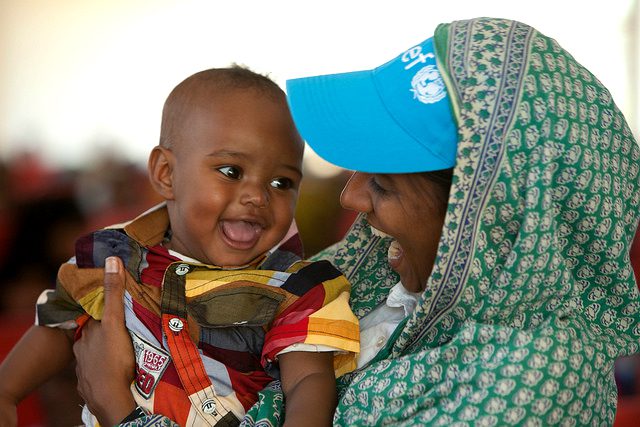
UNICEF’s Adaptable Approach to Child WelfareAfter almost 70 years of protecting and supporting child welfare, UNICEF has become a household name throughout the world. But where did the name itself come from in the first place?

Like other common acronyms such as SCUBA or LASER, UNICEF has become so ingrained in everyday language that few may realize the letters themselves hold meaning:

United
Nations
International
Children’s
Emergency
Fund

When the organization was first founded by the United Nations in December of 1946, the program was entitled United Nations International Children’s Emergency Fund (UNICEF). Because the program was created in the wake of World War II, its initial mission was to find speedy solutions for children left without resources and caretakers.

The post-war efforts were extremely successful: UNICEF spent $120,000,000 clothing, feeding and housing children, primarily in Europe. The results were striking and quickly lauded.

Actress Audrey Hepburn later spoke of her experiences with the organization during this time, attributing what she called her “long-lasting gratitude and trust for what UNICEF does” to the fact that she was among those who received food and medical relief right after World War II.

By the early 1950s, the immediate emergency needs of post-war children were mostly met. At that point, UNICEF was able to begin developing long-term plans and finding solutions for global childhood poverty, sickness and mistreatment.

At this point, in 1953, UNICEF was officially indoctrinated as a permanent program of the United Nations and shortened its name to the “United Nations Children’s Fund.” Despite the new title, the organization has kept the acronym of its previous name to this very day.

While its original purpose and title may have changed slightly since its founding, UNICEF remains committed to its overall mission of advocating for the wellbeing of all children. It is an example of an organization demonstrating adaptability in an ever-changing world.

As technology develops and advances, UNICEF takes full advantage of useful upgrades and discoveries. In 2007, the organization launched an “innovation branch,” meant to mobilize thinkers and guide funding towards technological advances helping children across the globe.

Using open source technology, all of the innovation branch’s projects harness the power of high technology for the betterment of the organization’s mission. This initiative is just one of many that reflects UNICEF’s ability to reimagine the way it approaches child welfare in a dynamic world.

While its name and focus may have changed over the years, the organization’s unyielding passion for helping the world’s children has not.

– Jen Diamond

Sources: Nobel Prize, UNICEF 1, UNICEF Stories, UNICEF 2, Venture Burn
Photo: Flickr

February 24, 2016
https://borgenproject.org/wp-content/uploads/borgen-project-logo.svg 0 0 Borgen Project https://borgenproject.org/wp-content/uploads/borgen-project-logo.svg Borgen Project2016-02-24 01:30:062024-12-13 18:05:43UNICEF’s Adaptable Approach to Child Welfare
Development, Education, Global Poverty

10 Inspirational Quotes On Education

Quotes On Education
The power of education is undeniable all across the world, both socially and personally, in both developing and developed countries. It has even been referred to by the U.N. as the universal “passport to human development.”

With that in mind, here are some of the most thought-provoking and inspiring quotes on education, from several well-known and important figures across time, helping to articulate the true value that can come from receiving one:

  1. “It is in fact a part of the function of education to help us escape, not from our own time — for we are bound by that — but from the intellectual and emotional limitations of our time.
”
    – T.S. Eliot
  2. “The beautiful thing about learning is that no one can take it away from you.”
    – B.B. King
  3. “It is easier to build strong children than to repair broken men.”
    – Frederick Douglas
  4. “Learning is the only thing the mind never exhausts, never fears, and never regrets.”
    – Leonardo da Vinci
  5. “It is time for parents to teach young people early on that in diversity there is beauty and there is strength.”
    – Maya Angelou
  6. “So let us wage a global struggle against illiteracy, poverty, and terrorism, and let us pick up our books and pens. They are our most powerful weapons.”
    – Malala Yousafzai
  7. “Slavery is one of the worst forms of violence – as is the denial of education. Education is key to liberating children from slavery.”
    – Kailash Satyarthi
  8. “Education is not preparation for life; education is life itself.”
    – John Dewey
  9. “The purpose of education is to replace an empty mind with an open one.”
    – Malcolm Forbes
  10. “Education is learning what you didn’t even know you didn’t know.”
    – Daniel J. Boorstin

– Mayra Vega

Sources: Better World, Brainy Quote, Good Housekeeping, Inspirational Quotes, Learning Revolution, Positivity Blog, Rasmussen College, U.N., UN Foundation Blog
Photo: Globalization 101

February 23, 2016
https://borgenproject.org/wp-content/uploads/borgen-project-logo.svg 0 0 Borgen Project https://borgenproject.org/wp-content/uploads/borgen-project-logo.svg Borgen Project2016-02-23 01:30:142024-12-13 18:05:4310 Inspirational Quotes On Education
Development, Global Poverty

The Four Cs Behind Cool Giving

The Four C's Behind Cool GivingIn the United States’ current sociopolitical climate, charitable donations and the appeal of philanthropic investments continue to increase, according to the Chronicle of Philanthropy. Although down from the 2.4 percent of gross domestic product (GDP) allocated to giving in the pre-recession 2000s, sources find that philanthropy is on an upswing, inching back to 2.1 percent in 2015 from 1.8-1.9 percent between 2008 and 2012. This trend may be due in part to a social movement of “cool giving.”
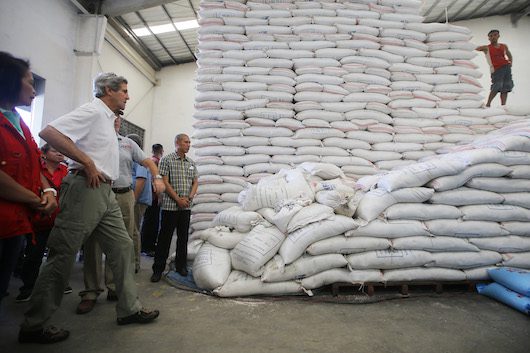
Although donations from corporations have had a sharper increase, individual giving, too, has gained traction, both in dollar amount and in frequency, according to Forbes’ list of “50 Top Givers in 2014.”

This uptick demonstrates more than a numerical increase in donations; it delineates a social movement of philanthropy, and a widespread attitude of cool giving.

The four Cs below articulate why now, perhaps more than ever, helping the world’s poor is considered cool.

1. It is often in the form of a challenge.

Be it the ALS Ice Bucket Challenge of 2014 (linked to ALS by Chris Kennedy, because of a relative suffering from the disease) or The Bill and Melinda Gates Foundation Grand Challenge program, a competition for grantees in specific fields to solve key global health and development problems, competition sparks change. And, in an age of social media, competitive opportunities are expanding and becoming more easily accessible.

There is nothing like throwing a bucket of icy water on your head to help those in need.

2. It demonstrates strong character.

A desire for generous rebranding, fueled by the 2016 presidential election, is taking place in the U.S. Republicans and Democrats alike — Michael R. Bloomberg, Paul Singer, Charles Koch, to name a few — have made momentous contributions to charitable organizations. Partisanship aside, when philanthropic organizations reap the benefits of the one-upmanship of doing good, the world’s poor benefit too.

3. Collaboration is key.

In 2015, The Bridgespan Group, a nonprofit resource for mission-driven organization and philanthropies, published research about the U.S.’s top donors and the “big bets” hedged in such contributions. The results illustrated that 80 percent of multi-million dollar donations are given with a specific goal in mind. (Bridgespan gives the example of Don and Foris Fisher’s participation with the Knowledge Is Power Program (KIPP) for the improvement of public education).

Increased Internet access and online materials make donation allocation easy. And, with these specifications posted online for a larger readership, corporations and individual donors feel team-like camaraderie in taking steps toward remedying a problem. As with the Bill and Melinda Gates Foundation, key steps are clearly outlined and updated in the website’s mission statement and strategic planning pages. Collaborating on a goal and seeing first-hand results, Bridgespan concluded, further incentivizes charitable acts.

4. The sky’s the limit on creativity.

Founded in 2012, Global Citizen focuses on making policy changes toward global poverty eradication as an organization that couples artistry with charity. The Global Citizen Festival, promoted by Coldplay’s Chris Martin at the Super Bowl, epitomizes the longstanding relationship between the arts and philanthropy. At the September 2015 festival, artists like Beyoncé and Pearl Jam blended the beats of Bob Marley to the inspiring words of Nelson Mandela. The result? Wide coverage of the program’s Sustainable Development Goals, which aim to end global poverty by 2030.

Celebrity influence certainly brings attention to an issue but the multimedia tools of exposure — concerts, festivals, videos — also make the issues relatable and memorable.

Whether they come from competition, creative incentive, collaboration or character building, good deeds in 2016 are all the rage. Isn’t it cool to give?

— Nora Harless

Sources: The Bill and Melinda Gates Foundation, The Bridgespan Group, The Chronicle of Philanthropy, Forbes Magazine, Global Citizen, TIME Magazine
Photo: Flickr

February 23, 2016
https://borgenproject.org/wp-content/uploads/borgen-project-logo.svg 0 0 Borgen Project https://borgenproject.org/wp-content/uploads/borgen-project-logo.svg Borgen Project2016-02-23 01:30:052024-12-13 18:05:43The Four Cs Behind Cool Giving
Aid, Development, Education, Foreign Aid, Global Poverty, Health

USAID to Provide Millions in Aid Abroad Through ASHA

ASHAThe U.S. Agency for International Development (USAID) has established the goal of ending poverty by the year 2030. Contributing to this effort is $23 million in awards that will be released by USAID to 25 countries this year through the agency’s Office of American Schools and Hospitals Abroad (ASHA).

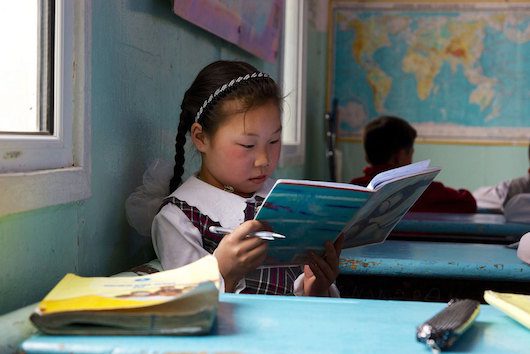
The funding will go to “U.S. organizations and their overseas partners to support construction projects and to purchase equipment for 15 hospitals and clinics, six secondary schools, 16 universities, and one library,” as stated on the USAID website. The awards were announced on Feb. 1, 2016, and will be allocated toward global innovation and development.

USAID/ASHA provides assistance to international schools and hospitals. The organization has also served a public diplomatic role in fostering positive relationships between countries. It provides health services and education to over 80 countries and 300 international institutions.

“It is a remarkable honor to play a role in overseas institutions which advance education and health in their countries and around the world,” says Katherine Crawford, director of USAID. The education awards will reach universities in regions of the Middle East, Asia, Latin America, the Caribbean and Africa.

Among the winners is Ashesi University College in Ghana, which received $700,000 to go toward classroom innovation. This funding will provide students with a rich engineering education that compares to top U.S. universities. Further contributions include the development of educational facilities in Somalia and Zambia.

In Somalia, USAID funding will help create a new science building, an auditorium and more areas for student dining. In Zambia, the award will help build a library that provides educational outreach and innovative programs to more than 35,000 children.

In the area of health, USAID will provide $570,000 in funding to the CURE Ethiopia Children’s Hospital. The funds will be utilized for operating room equipment, training and the delivery of medical care.

Other countries receiving a portion of this funding include India, where labor rooms for six women and a neonatal intensive care unit for 25 children and 45 mothers will become available.

In India, nursing training will also be accommodated by the grant. Medical equipment for maternal and pediatric programs will be made available in Afghanistan along with a diabetes-fighting program.

This grant will continue USAID’s overseas programs in the areas of health and education. USAID seeks to educate and provide care to the globally disadvantaged while promoting innovation in sciences and technology.

Through these awards, ASHA can impact communities and continue to stimulate progress.

– Mayra Vega

Sources: Foreign Affairs, USAID,
Photo: IBT

February 22, 2016
https://borgenproject.org/wp-content/uploads/borgen-project-logo.svg 0 0 Borgen Project https://borgenproject.org/wp-content/uploads/borgen-project-logo.svg Borgen Project2016-02-22 01:30:552024-05-27 09:33:13USAID to Provide Millions in Aid Abroad Through ASHA
Children, Development, Education, Global Poverty, Technology

Remote Learning as Key to Expanding Global Education

Remote-Learning
Remote learning, or the process of acquiring knowledge and skills through a program accessible through mobile or computer technologies, has the ability to expand access to education throughout the developing world.

Provided in the form of online lectures, quizzes and projects, online course material may allow large numbers of students worldwide to gain access to a world-class education that would otherwise be unavailable to them.

The number of students not enrolled in school has been rising in recent years, often due to poverty, conflict or financial issues. According to the United Nations Educational, Scientific and Cultural Organization (UNESCO), 124 million children between the ages of six and 15 were not enrolled in school as of 2013, up from 122 million in 2011. One out of every 11 primary-school-age children continues to be denied the right to education across the globe.

According to the Gates Foundation’s 2015 annual letter, remote learning will revolutionize education for people around the world by 2030 by giving citizens in impoverished areas educational opportunities that were previously inaccessible.

“Before a child even starts primary school, she will be able to use her mom’s smartphone to learn her numbers and letters, giving her a big head start,” Bill Gates said in the letter. “She will collaborate with teachers and other students in a much richer way. If she is learning a new language, she’ll be able to speak out loud and the software will give her feedback on her pronunciation.”

Educational access has always been a significant issue in developing and poverty-stricken areas. Students are limited when it comes to the classes and materials offered at the schools in their own communities. Digital education gives students within these developing or conflict-marred regions the ability to access educational materials.

In areas without significant funding for building heavy infrastructure, children would still be able to access education without traveling hours to schools in nearby communities. A shift to digital materials for use in learning courses also saves a significant amount of money for communities that may be struggling to provide educational materials such as textbooks.

Due to the lowering cost of mobile phones and tablets with online connectivity, technology is connecting students with teachers like never before. While many areas still lack service, Internet access and communications technologies have rapidly been emerging and expanding in developing nations over the last several years. Google Inc. is currently planning to spend more than $1 billion to bring service to these communities and expand Internet access to unwired regions of the globe via small, high-capacity satellites orbiting the earth, according to the Wall Street Journal.

The challenge of keeping children in school after primary school is tremendous, as the costs associated with secondary schooling are much higher, which is often difficult for families with lower income levels to afford. Also, secondary schooling facilities are often located farther away from rural communities, making transportation a challenge. Though online classes will never be able to replace a teacher, the technology may give children the ability to continue their education after primary school, while also pursuing other commitments.

Online education also has the ability to impart literacy skills and market-worthy training to adults who missed out on formal schooling opportunities when they were younger. It allows these individuals to pursue their education in their spare time by fitting in learning after they work a day job, provide for their families or while they are in between jobs or unemployed.

One organization, Lynda.com, an online education site providing e-learning platforms to more than two million subscribers worldwide, currently provides access to over 80,000 instructional videos relating to job skills in areas such as retail, construction and graphic design.

Many concerns remain about the challenges mobile education may pose. The cost of electricity in developing areas, the cost of network use, and the constant risk of theft or damage to the devices the children use are all threats to the sustainability of remote learning. Though these challenges in the current implementation of online education in these communities persist, technological advancement in the field continues to progress.

– Lauren Lewis

Sources: Business Insider, CNBC, CNN, Gates Notes, The Verge, The Wall Street Journal, UNESCO 1, UNESCO 2
Photo: Google Images

February 22, 2016
https://borgenproject.org/wp-content/uploads/borgen-project-logo.svg 0 0 Borgen Project https://borgenproject.org/wp-content/uploads/borgen-project-logo.svg Borgen Project2016-02-22 01:30:082020-06-23 08:29:03Remote Learning as Key to Expanding Global Education
Children, Development, Education, Global Poverty

How Literacy Reduces Poverty

UNESCO
Literacy is a crucial socioeconomic factor in poverty. In developing countries, approximately one in every two adults can’t read or write, with the situation only worse in the rural areas, especially for women and minors. UNESCO is working to prove that literacy reduces poverty and to support initiatives in the area.

According to UNICEF, “Children and youth living in rural areas have little access to education or skills training programs, and overall the quality of education in rural areas is generally low due to poverty and limited investment resources.”

Additionally, the drop-out rate for children leaving an educational institution after primary school is high, leaving minors without adequate literacy and skills to survive.

“Literacy is a fundamental human right and the foundation for lifelong learning,” according to UNESCO. “It is fully essential to social and human development in its ability to transform lives… A literate community is a dynamic community, one that exchanges ideas and engages in debate. Illiteracy, however, is an obstacle to a better quality of life, and can even breed exclusion and violence.”

Better assessment of literacy challenges is critical to reducing global illiteracy. UNESCO’s main focus will be to encourage the governments of developing countries to consider education as a crucial instrument in driving development and transformation as well as in reducing poverty and empowering citizens.

“The administrative institutions of these countries have to prioritize the development and provision of access to primary education to children under 15 years,” said a spokesperson for UNESCO. Governments should provide literacy courses and basic skills training to people who left school or received no education at all.

Furthermore, this year UNESCO plans to introduce “livelihood-oriented adult non-formal education initiatives,” offered in partnership with other community-based organizations, in order to promote education, reduce illiteracy and alleviate poverty.

For more than 60 years, UNESCO has worked to ensure that literacy remains a priority; however, this year, the introduction of a program with a vision toward livelihood-oriented initiatives will bring a new type of dynamism to the effort.

“Literacy is at the core of sustainable solutions to the world’s greatest problems,” said former First Lady, Laura Bush. “Literacy builds the foundation for freedom from poverty, and freedom from oppression.”

– Isabella Rölz

Sources: DDV International, UNESCO, The White House Education, Mrs. Bush
Photo: UN

February 21, 2016
https://borgenproject.org/wp-content/uploads/borgen-project-logo.svg 0 0 Borgen Project https://borgenproject.org/wp-content/uploads/borgen-project-logo.svg Borgen Project2016-02-21 01:30:342020-06-23 08:31:35How Literacy Reduces Poverty
Development, Global Poverty, Technology

The Digital Divide

Digital Divide
A report released by the World Bank shows that while technology has expanded, more people have remained poor. This phenomenon is often referred to as the digital divide.

The World Bank finds that more households in developing countries own a mobile phone than have access to electricity or clean water, according to “Digital Dividends,” its 2016 World Development Report.

The digital divide is created because most benefits for private enterprises arrive instantly, such as streamlined communication and information, online convenience and social connectivity throughout the global community.

The investments from these enterprises would ideally generate employment growth and services for those in the developing world — but progress there is more stagnant.

According to the World Bank report, digital dividends have not grown at the same rate as digital technologies because 60 percent of the world’s population does not have Internet access and are therefore unable to participate in the digital economy.

There are also emerging risks – such as polarized labor markets and inequality – that contribute to the digital divide. Routine jobs are replaced when technological advancements are made, which means more unskilled individuals compete for fewer low-wage jobs.

To combat these effects, solutions include infrastructure investment, providing worldwide Internet access and monitoring offline factors of technologies by region.

“While technology can be extremely helpful in many ways, it’s not going to help us circumvent the failures of development over the last couple of decades. You still have to get the basics right: education, business climate and accountability in government,” said Digital Dividends Co-Director Uwe Deichmann.

Education in the developing world can provide people with the skills needed to utilize digital technologies and become more productive in the workplace, which reduces polarity within the job market, according to the World Bank.

Accountable government agencies should implement policies and regulations that create a competitive digital market so that information costs go down and societies have the opportunity to become more inclusive.

Though growth has slowed in the developing world, organizations have found ways for the poor to benefit from the information and communication technology sector.

Question Box exists as a telecommunications network that provides populations suffering from high illiteracy rates and social or technical barriers with access to information.

According to the Guardian, Question Box has installed a series of ‘call boxes’ in areas of Uganda, that connect disconnected communities to someone with Internet access who can relay answers to questions regarding health, employment or other related issues.

Otherwise disconnected communities have the ability to create successful societies if given access to the digital information many of us take for granted.

– Kelsey Lay

Sources: The Guardian, Question Box, World Bank 1, World Bank 2
Photo: Google Images

February 19, 2016
https://borgenproject.org/wp-content/uploads/borgen-project-logo.svg 0 0 Borgen Project https://borgenproject.org/wp-content/uploads/borgen-project-logo.svg Borgen Project2016-02-19 01:30:112020-06-23 13:17:08The Digital Divide
Children, Development, Education, Global Poverty

SOS Children’s Villages

SOS Children’s Villages
SOS Children’s Villages is a nonprofit group whose mission is to provide every child with the opportunity to grow up in a loving home to secure their futures as successful adults.

This international organization was founded in 1949 by Hermann Gmeiner to help orphaned children in Europe rebuild their lives after World War II. Now, SOS Children’s Villages sponsors vulnerable children and fragmented families in 125 countries, across 12 different continents, with headquarters in Cambridge, United Kingdom.

SOS Children’s Villages aims to help families stay together by offering community outreach programs that provide each family with a development plan designed specifically for their needs.

The nonprofit offers aid to children who have lost their parents, those living in an orphaned household and those whose parents suffer from a life-threatening disease. Funding for these villages comes from donations, volunteer workers, corporate partnerships, fundraising and sponsorships that offer donors the chance to support an orphaned child.

Each child that lives in an SOS village receives guaranteed education and health care. Nearly 100,000 children are enrolled in 187 SOS primary and secondary schools. Tens of thousands of people attend the 51 SOS vocational training centers created to enhance employment opportunities.

“If SOS Children was not here, our children would have become street children, with all the risks this may cause. Today, we are proud of ourselves, and many of us have found dignity. We can now stand on our own feet,” said a mother in Dakar, Senegal, now able to find financial independence thanks to an SOS outreach program.

With 150 SOS villages in 45 African countries, more educational projects are run in Africa than in any other continent. According to UNICEF, educating young people can support economic resilience and stability, as children learn to address family vulnerabilities and gain skills for future employment.

A total of 79 SOS medical centers have been built by the organization, primarily in Africa and the Middle East. In more remote areas that lack clinic access, SOS children train local people in the medical field, passing on first-aid skills and health advice garnered from SOS family health awareness campaigns.

Because vulnerable children often live in non-democratic societies, SOS prides itself on strong communication with central and local governments that hold legal responsibility for the welfare of these children. According to SOS, this has allowed them to bring aid to children in Zimbabwe, where other organizations have been asked to leave.

“As a result of the various economic opportunities that were created for many vulnerable families since the inception of the project [SOS Children’s Villages Ghana], more than 78 percent of caregivers have become more self-reliant and are capable of accessing social services like health, education, water and sanitation without external support,” said Alexander Mar Kekula, National Director of SOS Children’s Villages Ghana.

– Kelsey Lay

Sources: Ghana Web, SOS Children’s Villages 1, SOS Children’s Villages 2, SOS Children’s Villages 3, SOS Children’s Villages 4, SOS Children’s Villages 5, UNICEF, 
Photo: Flickr

February 18, 2016
https://borgenproject.org/wp-content/uploads/borgen-project-logo.svg 0 0 Borgen Project https://borgenproject.org/wp-content/uploads/borgen-project-logo.svg Borgen Project2016-02-18 01:30:262024-12-13 18:05:40SOS Children’s Villages
Page 114 of 163«‹112113114115116›»

Get Smarter

  • Global Poverty 101
  • Global Poverty… The Good News
  • Global Poverty & U.S. Jobs
  • Global Poverty and National Security
  • Innovative Solutions to Poverty
  • Global Poverty & Aid FAQ’s
Search Search

Take Action

  • Call Congress
  • Email Congress
  • Donate
  • 30 Ways to Help
  • Volunteer Ops
  • Internships
  • Courses & Certificates
  • The Podcast
Borgen Project

“The Borgen Project is an incredible nonprofit organization that is addressing poverty and hunger and working towards ending them.”

-The Huffington Post

Inside The Borgen Project

  • Contact
  • About
  • Financials
  • President
  • Board of Directors
  • Board of Advisors

International Links

  • UK Email Parliament
  • UK Donate
  • Canada Email Parliament

Get Smarter

  • Global Poverty 101
  • Global Poverty… The Good News
  • Global Poverty & U.S. Jobs
  • Global Poverty and National Security
  • Innovative Solutions to Poverty
  • Global Poverty & Aid FAQ’s

Ways to Help

  • Call Congress
  • Email Congress
  • Donate
  • 30 Ways to Help
  • Volunteer Ops
  • Internships
  • Courses & Certificates
  • The Podcast
Scroll to top Scroll to top Scroll to top