• Link to X
  • Link to Facebook
  • Link to Instagram
  • Link to TikTok
  • Link to Youtube
  • About
    • About Us
      • President
      • Board of Directors
      • Board of Advisors
      • Financials
      • Our Methodology
      • Success Tracker
      • Contact
  • Act Now
    • 30 Ways to Help
      • Email Congress
      • Call Congress
      • Volunteer
      • Courses & Certificates
      • Be a Donor
    • Internships
      • In-Office Internships
      • Remote Internships
    • Legislation
      • Politics 101
  • The Blog
  • The Podcast
  • Magazine
  • Donate
  • Click to open the search input field Click to open the search input field Search
  • Menu Menu

Archive for category: Development

Information and stories on development news.

Development, Global Poverty

Investing in Uganda

Investing_In_Uganda
Uganda’s most obvious investment appeal is its location – bordered by Sudan in the north, Kenya in the east, the United Republic of Tanzania to the south, and the Democratic Public of Congo to the west – that offers the nation a powerful base for central trade partnerships as the country acts as a regional hub for investment.

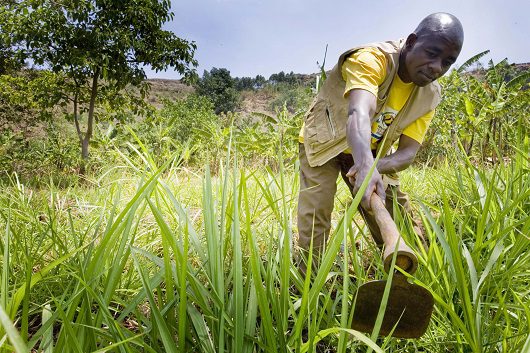
Uganda is a nation that depends on agriculture for economic stimulation thanks to the country’s favorable climate and fertile soils. Investing in Ugandan farming expansion and sustainability efforts will help support the 80 percent of the population working in agriculture, feed the nation and will support economic growth.

According to the State House of Uganda, the country is among the leading producers of coffee and bananas, with exports of tea, cotton, tobacco, fruit, vegetables, and silk contributing to Uganda’s 2014 record GDP of $26.3 billion.

Agricultural opportunities for investors include commercial farming, value addition, fertilizer and pesticide manufacturing, machinery supply, packing materials, and cold storage facilities.

The Agriit Institute of Uganda, an agricultural development advocacy organization, states that growth in agriculture is up to 11 times more effective in reducing poverty within sub-Saharan Africa than development in any other divisions.Investing_in_Uganda

The international Food Policy Research Institute (IFPRI) finds that agricultural growth can reduce urban poverty levels as food prices go down. These prices are often lowered when crop sustainability measures are taken through investments in developmental farming technologies.

Uganda offers investment prospects due to the growth in natural resource discovery. According to the Petroleum Exploration and Production Department of Uganda, there have been 21 discoveries of oil and/or gas throughout the nation.

A total of 87 oil wells have been drilled from 21 fields in Uganda. There are currently 3.5 billion barrels of unprocessed oil, with 1.2 billion recoverable barrels in existence. The U.S. Department of State reports that only 40 percent of the oil-rich areas in the region have been explored, which leaves great investment opportunity.

The potential growth and discovery of these natural resources welcome investors into untapped markets licensing for petroleum production, crude oil pipeline construction and maintenance, environmental services, waste disposal and drilling services.

According to the U.S. Department of State, Uganda’s foreign direct investment doubled from 900 million to $1.7 billion from 2011 to 2012 due to investor interest in the oil sector. The Uganda Poverty Status Report of 2014 shows a direct link to these investments and poverty alleviation, stating that the national poverty rate dropped from 24.5 percent in the 2009-2010 fiscal year to 19.7 percent during 2012-2013.

– Kelsey Lay

Sources: Agritt Institute, International Food Policy Research Institute, The State House of Uganda, Uganda Ministry of Finance, U.S. Department of State
Photo: Google Images, Flickr

January 4, 2016
https://borgenproject.org/wp-content/uploads/borgen-project-logo.svg 0 0 Borgen Project https://borgenproject.org/wp-content/uploads/borgen-project-logo.svg Borgen Project2016-01-04 05:37:082024-06-05 23:35:38Investing in Uganda
Development, Global Poverty

South Korea’s New Village Movement

Village_South_Korea_DevelopmentWhen people think of South Korea, they may imagine an export powerhouse replete with skyscrapers, neon lights and a booming economy. Few remember the South Korea of yesteryear, a war-torn nation with a GDP per capita of $70 in 1957, equivalent to Ghana. Even fewer recall the New Village Movement. To teach the world about this program that eliminated its extreme rural poverty, South Korea held its second annual Global Saemaul Leadership Forum (GSLF) from Nov. 24 to Nov. 27, 2015.
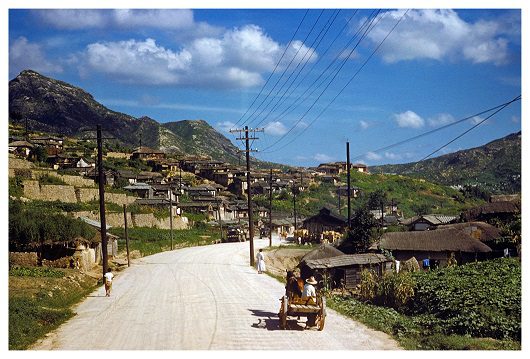
The New Village Movement is called “Saemaul Undong” in Korean.  Begun by President Park Chung-Hee, South Korea’s dictator from 1961 to 1979, it is based on a simple idea: community-led development. Park provided each of the nation’s 33,267 villages with 335 bags of cement, a half ton of iron rods and a plan.

The plan consisted of four steps that began with selecting community leaders and gathering seed money. Step 2 featured small meetings with villagers to persuade everyone to join. Step 3 was the main phase of the project, and involved modernizing homes, establishing cultural facilities and launching cooperative ventures. Lastly, villages would create their own newspapers, build city halls and partner with neighboring towns.

Within 9 years, rural income nearly sextupled from a household average of 225,800 won to 1,531,800 won. Thatched huts gave way to tiled houses across the country. Rural poverty decreased from 27.9 percent before the program to 10.8 percent after, and women gained a more prominent place in the local economy.New_Village_Movement

Due to the success of the New Village Movement, the United Nations recognized the program as a model for rural development. At the November GSLF conference in Daegu, more than 500 delegates from 50 countries gathered to learn more about the model. Countries with representatives included Afghanistan, Ethiopia, Rwanda, Myanmar, Mongolia, Sri Lanka, Honduras and Azerbaijan.

The primary aim of the conference was education for New Village Movement leaders in countries outside of South Korea. Leaders are trained at the Global Saemaul Undong Training Center in Seoul, but the conference provides a unique opportunity for them to learn from each other as well as their Korean mentors.

South Korea has made considerable progress in getting other countries to adopt its model. According to a press release in September 2015, the United Nations Development Programme (UNDP), in partnership with the Korean government, created an updated New Village Movement called “Saemaul toward Inclusive and Sustainable New Communities” (ISNC). ISNC is being implemented in Bolivia, Vietnam, Uganda, Myanmar, Laos and Rwanda .

Whether the New Village Movement will flourish in other countries remains to be seen, but there is reason to hope. Sri Lanka has already implemented seven New Village Movement projects in its country. By following the Korean model, villages now have concrete roads, a city hall and electricity. One village has already seen its income quadruple through the addition of powered pottery wheels. This had the added benefit that local women could become potters.

People often dismiss efforts to eradicate poverty, but in truth, it has already been done. South Korea lifted millions of impoverished villagers out of poverty while entwining them in the larger fabric of the national community. As the New Village Movement spreads around the globe, millions more are sure to benefit.

– Dennis Sawyers

Sources: Asia Foundation, Modern Ghana, Saemaul Undong, The Sunday Times, UNDP
Photo: Flickr1, Flickr

December 20, 2015
https://borgenproject.org/wp-content/uploads/borgen-project-logo.svg 0 0 Borgen Project https://borgenproject.org/wp-content/uploads/borgen-project-logo.svg Borgen Project2015-12-20 01:30:512024-12-13 18:05:32South Korea’s New Village Movement
Children, Development, Education, Global Poverty

Global Education Conference Redefines Education

global education
As the world becomes more tightly connected, the opportunity and demand for education increase.

The sixth annual Global Education Conference explores the concept of redefining education. Over a period of four days, from Nov. 16 to 19, the conference promoted both classroom and “real world” education to provide participants with a well-rounded and highly informative experience.

The annual online event connects classrooms, raises awareness of cultural diversity and supports educational access for all. Anyone with internet access can learn more about upcoming changes in education, as well as promote their own ideas.

Though the Global Education Conference isn’t a conventional method of online learning, it offers many of the same benefits. Participants learn from speakers and instructors of many different countries and backgrounds and receive a much broader perspective on the topics.

Technology allows questions to be answered immediately and for multiple discussions to take place at once. The nonstop sessions make sure everyone, no matter how busy, can attend at least one seminar a day and choose the topic that best meets their interests.

The conference presented two topics in particular that could prove beneficial to the war on global poverty: learning more about refugees and understanding the relationship between poverty and education.

Because half of the Syrian refugees are children and many are in refugee camps instead of schools, the Global Education Conference dedicated a session to The Refugee Story Circle, a student-run project founded by Qatar Foundation International.

Resettled refugees had the opportunity to tell their personal experiences in a respected and dignified environment. The audience was then able to connect first-hand with the refugees through online discussions and letters of encouragement.

Richard Close, CEO of Chrysalis Campaign, Inc., explained the viewpoint of poverty and education. “Students who are given resources and encouragement realize over time that they have a bright future. Children who live in poverty learn early on to think, ‘What future?’ Consequently, they don’t develop the skills and self-motivation needed to succeed.”

Mary Brownell, a member of iEARN-USA, explained the nonprofit network’s partnership with Kids Can Make a Difference to encourage teachers to discuss hunger, inequality and poverty with their students.

“The goal is to imprint upon students what the effects really are on our world,” Brownell said.

Furthermore, impoverished students will feel like their needs are being addressed. Those who can’t attend schools will, hopefully, receive more attention and assistance.

– Sarah Prellwitz

Sources: Elluminate, EdSurge, Franklin University, Global Education Conference 1, Global Education Conference 2, iEARN
Photo: Europa Education

December 19, 2015
https://borgenproject.org/wp-content/uploads/borgen-project-logo.svg 0 0 Borgen Project https://borgenproject.org/wp-content/uploads/borgen-project-logo.svg Borgen Project2015-12-19 01:30:002024-06-05 23:35:37Global Education Conference Redefines Education
Development, Global Poverty

Plant Lamps Light the Way for Rainforest Villages

Plant_Lamps
According to the Universidad de Ingenieria y Tecnologia (UTEC), around 40 percent of the rainforest villages in Peru do not have much electricity.

Translation: sundown means lights out. It’s a genuine problem for families and students unless they resort to unhealthy and dangerous kerosene lamps which are bad for eyesight and lungs because of the resulting smoke.

Nature, the geographical isolation of these communities and routine flooding are all part of the problem.

However, researchers and students at UTEC decided to make nature part of the solution. Taking stock of their surroundings, the team used two plants and soil to create “plantalámparas” or plant lamps.

Elmer Ramirez, a professor of Energy and Power Engineering at UTEC, explains, “We can obtain energy from the earth. Based on principles and findings documented in other countries we developed our own prototype, using a clean energy system.”

Ramirez goes on, “Every plant produces nutrients, and these nutrients — in contact with microorganisms in the earth called geobacter — undergo an oxidation process generating free electrons that are captured through electrodes. These electrodes are in a grid. This energy is stored in a conventional battery to be used to light an LED light bulb.”

Each plant lamp unit consists of a planter with an electrode grid buried in the soil, in which a single plant is growing. The electrode grid collects free electrons generated by oxidation processes and stores the energy in a conventional battery, also buried in the soil.

The battery then powers the low-consumption LED lamp, attached to the side of the planter. Each lamp is capable of generating enough power to supply two hours of light per day.

UTEC has partnered with global ad agency FCB Mayo to produce several prototypes for distribution. As of now, ten houses in Nuevo Saposoa have a plant lamp. With such innovation and low production costs, the demand for plant lamps will likely increase.

A promotional video provided by UTEC presents many members of the Nuevo Saposoa community expressing their gratitude. One resident is heard saying, “electricity is life for our children.”

– Kara Buckley

Sources: Discovery News, Slate, MIT Technology Review, YouTube
Photo: Vimeo

December 18, 2015
https://borgenproject.org/wp-content/uploads/borgen-project-logo.svg 0 0 Borgen Project https://borgenproject.org/wp-content/uploads/borgen-project-logo.svg Borgen Project2015-12-18 01:30:282024-12-13 17:54:10Plant Lamps Light the Way for Rainforest Villages
Development, Nonprofit Organizations and NGOs

FINCA Boots Entrepreneurship in Underserved Countries

FINCA
FINCA International helps small business owners in more than 23 countries worldwide by providing the finances and resources they need to keep their businesses up and running.

The innovative nonprofit focuses on four core areas: financial assistance, social intermediation, enterprise development and social service impact.

FINCA International serves as a financial intermediary by providing developing business owners with loans, teaching them how to open savings accounts and helping them find insurance tailored to the products and services they offer. This helps new businesses blossom into full-running operations that help women and men provide for their families.

Their second facet, social intermediation, is also an important part of their business model. Because they are serving entrepreneurs in countries that may be lacking in gender equality, they have to serve as people who can help bring change to these communities. FINCA International provides this intermediation through education in financial literacy and Village Banking loan programs.

In addition to enterprise development, they also help developing communities through educational programs, nutrition services, and health training. These programs contribute to the success and growth of the villages and towns they serve.

FINCA International was launched in 1984 by former Peace Corps member Dr. John Hatch. Hatch started the organization as Village Banking, which operated in Bolivia and served as a financial intermediary for farmers struggling through tough economic times. The following year, Hatch started the organization.

In its early days, FINCA International operated primarily in Latin America, including Honduras, Mexico, and El Salvador, but by the early 1990s, its services had spread to Africa and Eurasia as well. Since its inauguration, FINCA International has lived up to its name and has provided services in countries all over the world.

Subsidiaries exist in countries in Africa, Western Europe, Latin America and Asia.

– Julia Hettiger

Sources: FINCA, Give, Philanthropedia, MicroCapital
Photo: Flickr

December 17, 2015
https://borgenproject.org/wp-content/uploads/borgen-project-logo.svg 0 0 Borgen Project https://borgenproject.org/wp-content/uploads/borgen-project-logo.svg Borgen Project2015-12-17 01:30:222024-06-05 02:36:35FINCA Boots Entrepreneurship in Underserved Countries
Developing Countries, Development, Global Poverty, Technology

Using Cell Phones to Measure Poverty in Developing Countries

Poverty_in_Developing_Countries
A new study published by the University of Washington and the University of California, Berkeley reports that mobile cell phone information can be used to measure levels of wealth and poverty in developing countries.

Historically, poverty data in developing countries has been difficult to measure because information is captured through door-to-door surveys.

“[Cell phones] could be a useful policy instrument to estimate the geographic distribution of poverty and wealth,” said Joshua Blumenstock, one of the study’s authors, in a NY Times interview.

Blumenstock and his colleagues used anonymous data from 1.5 million subscribers of Rwanda’s largest mobile phone network. The team analyzed billions of interactions which included the time and length of phone calls as well as text messages. Cellphone towers helped them get a rough idea of geographic location.

During the study, the researchers also interviewed 850 cell phone owners. The respondents were asked about their housing situations, the assets they had access to and other indicators of wealth or poverty.

The researchers used this information to create an algorithm that predicts a person’s wealth based on their cellphone usage. Using this model, the team was able to answer more specific questions including whether a house has electricity.

Notably, the resulting wealth and poverty maps closely mirrored the findings of the Rwandan government’s door-to-door surveys.

The researchers are trying to conduct similar work in Afghanistan because certain areas are dangerous or too difficult to access and door-to-door surveys are not possible.

“We do not think this method is the be-all or end-all, but in the absence of good information, this is better than nothing,” said Blumenstock. However, the researchers’ approach could lead to new ways to quickly analyze poverty at a fraction of the cost of other methods.

– Jordan Connell

Sources: PC Tech Magazine, The New York Times
Photo: Flickr

December 17, 2015
https://borgenproject.org/wp-content/uploads/borgen-project-logo.svg 0 0 Borgen Project https://borgenproject.org/wp-content/uploads/borgen-project-logo.svg Borgen Project2015-12-17 01:30:182020-06-29 10:38:27Using Cell Phones to Measure Poverty in Developing Countries
Development, Global Poverty, Technology

WeChat Wallet Launches in South Africa

WeChat_Wallet
Social messaging app, WeChat recently introduced a digital wallet service in Johannesburg, South Africa.

With WeChat Wallet, users can securely store bank cards and make instant cash payments just as they would with a physical wallet. The new service also enables users to electronically send cash to friends or family.

In addition, WeChat Wallet also offers the use of three chip, PIN debit and credit cards and the capability to transact via cards verified by Visa and MasterCard.

WeChat, which is owned by Chinese juggernaut, Tencent has partnered with Standard Bank for the launch of WeChat Wallet.

When registering for the digital wallet, users automatically become Standard Bank Instant Money users, which makes it possible for those without bank accounts to use the service. Accountholders at other banks are also able to access WeChat Wallet.

Brett Loubser, Head of WeChat Africa told IT News Africa, “The service is another way WeChat is merging the online and offline worlds, providing people with seamless payment integration in a single application. Now they won’t be inconvenienced if they forget their purses or money at home because everything they need is at their fingertips.”

WeChat Wallet is available to South Africans who are sixteen or older with a Valid ID who use iOS or Android phones. To register for the digital wallet service, all they have to do is log into WeChat, tap “wallet” then follow the step-by-step instructions.

To use the digital wallet service for in-store payments, customers simply need to scan the QR code located in stores that support this mobile payment platform and then enter the amount of their purchase into their phone. Users can even “cash in” and “cash out” via Instant Money vouchers at Standard Bank ATMs and other participating retailers.

According to Tencent, more than 200 million customers globally have added their bank cards to the mobile payment platform in November 2015.

– Jordan Connell

Sources: NFC World, It News Africa


December 16, 2015
https://borgenproject.org/wp-content/uploads/borgen-project-logo.svg 0 0 Borgen Project https://borgenproject.org/wp-content/uploads/borgen-project-logo.svg Borgen Project2015-12-16 01:30:112020-06-24 20:49:27WeChat Wallet Launches in South Africa
Development, Food & Hunger, Global Poverty

Hydroponic Systems: Food Security in Developing Countries

Hydroponic_Systems
Hydroponic systems use water and nutrients to grow high-yield crops through a sustainable method that does not require soil. As an agricultural alternative, it uses less water and boosts local markets by providing food security. The methodology also creates opportunities for additional income in developing regions.

While advanced hydroponic systems remain impractical for some developing regions there is an alternative, simplified hydroponics growing system. Such a system is accessible with training and a small initial investment. Yields from simplified systems are lower than advanced systems but still outperform traditional farming methods and use 80 percent less water.

Simplified hydroponics can be taught to farmers and individuals with no prior knowledge. These farmers can generate income from small plots of land with vertical farm tools, even in urban areas. New jobs and farms supported by hydroponics contribute to a green economy.

The World Bank sees the potential for simplified hydroponic systems. Jonathan Coony, Program Coordinator for the Climate Technology Program at the World Bank writes, “These sustainable techniques enhance climate resilience while creating local jobs and fostering regional investment.”

hydroponic_systems

Research by students at MIT also noted that materials such as fish tanks, ceramic and aluminum containers can be appropriated into hydroponic systems at a low cost. In addition, some materials, especially in simplified hydroponic systems, can be locally sourced.

A pilot program for low-resource communities in Ecuador utilized simplified hydroponics to improve nutrition, especially among children. The diet of most poor Ecuadorians contains little to no fruits and vegetables.

Practical Hydroponics & Greenhouses published a report of the pilot program, which organizers saw as an opportunity to improve nutritional options with simplified hydroponics.

The program’s objective was to consistently provide high-quality vegetables and train the community on how to use hydroponic systems. After two years, the program concluded and the report affirmed the viability of simplified hydroponics as “an effective alternative for integration into food security.”

Hydroponic systems can be utilized to grow crops for livestock as well. Hydroponics Kenya, a Nairobi-based company, sells hydroponic supplies and systems to the local community. According to the company, a 6m x 9m area can produce 500kg or 1,100lbs of fodder for livestock.

Hydroponics Kenya founder Peter Chege has been recognized by several NGOs for his innovations modifying hydroponic systems for the Kenyan climate with fabric and specialized trays. His business is growing and hiring more employees, “We are recruiting, and every week we sell five hydroponic systems,” Chege said.

– Cara Kuhlman

Sources: InfoDev, Mission 2014 at MIT, Practical Hydroponics & Greenhouses, The World Bank
Photo: Flickr1, Flickr

December 15, 2015
https://borgenproject.org/wp-content/uploads/borgen-project-logo.svg 0 0 Borgen Project https://borgenproject.org/wp-content/uploads/borgen-project-logo.svg Borgen Project2015-12-15 01:30:482024-05-27 09:28:32Hydroponic Systems: Food Security in Developing Countries
Development, Global Poverty, Water

South African Company Makes Water from Air

Water_from_Air
In South Africa, one company is tapping into an alternative yet ubiquitous source for drinking water—the air.

Water From Air is pioneering technology for use in domestic settings that allows clean, drinkable water to be harvested from the humidity in the air.

Even though the technology used in Water From Air’s machines is not new, the company’s CEO Ray de Vries told news24 that his company is the first to make home units available.

The machines operate according to the humidity in the air, drawing it in and cooling it to allow condensation to form in a collecting tank. The collected water is then disinfected with ultraviolet light and filtered to remove further impurities.

Since the water is drawn from the air rather than the ground, it is already cleaner and excludes contaminants more commonly found in terrestrial sources. The result is “100 percent pure and clean” water, according to de Vries.

The company manufactures different sized machines powered through solar, diesel or gas. The most popular machine is the AW3 model designed for domestic use in households and clinics. Depending on the humidity of the surrounding air, the AW3 model is capable of capturing 32 liters of water per day.

Models designed for larger scale use are estimated to be capable of producing up to 1,500 liters of water per day. The company estimates that in cities such as Cape Town where humidity averages approximately 75 percent, the device might be able to provide an average of between 25 and 28 liters of water every day.

Water From Air has sold upwards of 400 units since its debut earlier this year. As severe drought conditions persist in South Africa, the company is trying to keep pace with the growing demand for its units.

The main idea behind marketing the devices is to provide households in drier regions with a more secure supply of water, especially in times of water shortage or drought. The Water From Air devices enable users to directly harvest water from the surrounding air instead of transporting the precious resource from other areas of the country.

Unlike more expensive alternatives such as desalination, Water From Air also offers a cost-effective and novel approach geared towards sustainability.

The machines are manufactured in the company’s native South Africa, “made by South Africans for South Africans” according to de Vries. Water From Air expects to provide 300 initial jobs to South Africans and potentially add another 600 as the company’s operations continue to grow.

– Jace White

Sources: Water From Air, Business Standard, News24
Photo: Flickr

December 15, 2015
https://borgenproject.org/wp-content/uploads/borgen-project-logo.svg 0 0 Borgen Project https://borgenproject.org/wp-content/uploads/borgen-project-logo.svg Borgen Project2015-12-15 01:30:442024-12-13 18:05:29South African Company Makes Water from Air
Development, Global Poverty

India Seeks MIT Expertise for Energy Solutions

Energy_Solutions
Minister Piyush Goyal meets with MIT Energy Initiative Expertise to seek energy solutions for India.

India has recently set some of the most aggressive near-term energy goals of any nation in the world. Minister Goyal met with MIT Energy Initiative and Tata Center for Technology and Design to discuss and look for solutions that will help India meet its goals.

Goyal serves as minister for coal, power and renewable energy said, “India is embarking on most of its new development initiatives on the back of technology and that engagement with the United States has been very deep.”

One goal of India is to ensure that every part of the country gets electricity in the next 1,000 days.

There are currently 220 million people in India with no access to electricity at all, which is an estimated 50 million households. Those that do get electricity only have access for a few hours a day.

In major cities blackouts and power cuts are a common occurrence at peak usage times. Goyal is determined to make reliable 24 hours seven days a week electricity a reality in India.

“Affordability is a very integral part of our plans,” said Goyal.

India relies heavily on coal to power to power the country. Ahmed Ghoniem, Professor of Mechanical Engineering at MIT, agreed that fossil fuels are an important part of the equation for developing countries that require energy solutions immediately.

“We cannot ignore the fact that there are billions of people who need power. Their lives are in danger unless we help to get the right technology for them. And it needs to happen right now, not fifty years from now,” said Ghoniem.

One solution to the electricity problem is the potential for solar-powered micro-grid solutions that could reach remote areas. The government would need to properly incentivize companies to invest in these projects.

Goyal and MIT have decided to collaborate in order to create new technologies and policies to meet India’s electrification goals.

Goyal says, “We will make it happen.”

This is not the first time India has looked to MIT for solutions. In September, India’s business, nonprofit and government sectors attended The Tata Center for Technology and Design Annual Symposium at MIT’s Media Lab. India continues to work with MIT researchers to overcome challenges and meet opportunities in the developing world.

– Jordan Connell

Sources: MIT News, Tata Center Technology and Design
Photo: Google Images

December 15, 2015
https://borgenproject.org/wp-content/uploads/borgen-project-logo.svg 0 0 Borgen Project https://borgenproject.org/wp-content/uploads/borgen-project-logo.svg Borgen Project2015-12-15 01:30:052020-06-24 20:51:57India Seeks MIT Expertise for Energy Solutions
Page 116 of 163«‹114115116117118›»

Get Smarter

  • Global Poverty 101
  • Global Poverty… The Good News
  • Global Poverty & U.S. Jobs
  • Global Poverty and National Security
  • Innovative Solutions to Poverty
  • Global Poverty & Aid FAQ’s
Search Search

Take Action

  • Call Congress
  • Email Congress
  • Donate
  • 30 Ways to Help
  • Volunteer Ops
  • Internships
  • Courses & Certificates
  • The Podcast
Borgen Project

“The Borgen Project is an incredible nonprofit organization that is addressing poverty and hunger and working towards ending them.”

-The Huffington Post

Inside The Borgen Project

  • Contact
  • About
  • Financials
  • President
  • Board of Directors
  • Board of Advisors

International Links

  • UK Email Parliament
  • UK Donate
  • Canada Email Parliament

Get Smarter

  • Global Poverty 101
  • Global Poverty… The Good News
  • Global Poverty & U.S. Jobs
  • Global Poverty and National Security
  • Innovative Solutions to Poverty
  • Global Poverty & Aid FAQ’s

Ways to Help

  • Call Congress
  • Email Congress
  • Donate
  • 30 Ways to Help
  • Volunteer Ops
  • Internships
  • Courses & Certificates
  • The Podcast
Scroll to top Scroll to top Scroll to top