• Link to X
  • Link to Facebook
  • Link to Instagram
  • Link to TikTok
  • Link to Youtube
  • About
    • About Us
      • President
      • Board of Directors
      • Board of Advisors
      • Financials
      • Our Methodology
      • Success Tracker
      • Contact
  • Act Now
    • 30 Ways to Help
      • Email Congress
      • Call Congress
      • Volunteer
      • Courses & Certificates
      • Be a Donor
    • Internships
      • In-Office Internships
      • Remote Internships
    • Legislation
      • Politics 101
  • The Blog
  • The Podcast
  • Magazine
  • Donate
  • Click to open the search input field Click to open the search input field Search
  • Menu Menu

Archive for category: Development

Information and stories on development news.

Development, Global Poverty

New Ministry of Happiness in India Focuses on Well-Being

Ministry of happiness

In April, Chief Minister Shivraj Singh Chauhan of India’s central state, Madhya Pradesh, announced plans to create a Ministry of Happiness. This new ministry will oversee the growth of the state in terms of Gross National Happiness, an alternative national development index.

In contrast to GDP, GNH measures the well-being of a nation in terms of “community, culture, governance, knowledge and wisdom, health, spirituality and psychological welfare, a balanced use of time, and harmony with the environment.”

Proposing the Ministry of Happiness

Chief Minister Chauhan, a yoga enthusiast and a Master of Philosophy, hopes that the ministry of happiness will improve citizens’ mental and physical health.

The ministry of happiness is also set to run over 70 social programs such as yoga, meditation, spirituality, arts, and religious pilgrimages for seniors.

Building on existing programs, such as the state’s “Girl Child” program, the ministry of happiness will continue to financially reward families of female students for remaining in education. The funding will also be used to employ a team of psychologists dedicated to improving the well-being of citizens.

The ministry of happiness was proposed amid a severe drought that has left many citizens of Madhya Pradesh, a largely agrarian state, without income and has increased the rate of suicide among farmers.

In addition, Madhya Pradesh has seen 27 suicides of school-age children in the last year due to exam-related stress. The state also suffers from high rates of malnutrition, infant mortality and the highest rate of rape in the country.

Tracking Happiness for Economic Growth

Some citizens of Madhya Pradesh are skeptical of the need for a ministry of happiness, citing a lack of basic rights and resources as the main causes of suffering.

This has sparked questions about the legitimacy of government psychological and spiritual intervention. However, India is not the first government to try to track happiness.

Along similar lines, the United Nations World Happiness Report measures the well-being of populations using GDP per capita, as well as markers for social support, healthy life expectancy, freedom to make life choices, generosity, and perceptions of corruption.

In Bhutan, the birthplace of the GNH index, the commitment to a holistic measure of well-being rather than solely financial measures one has led to positive results. By prioritizing well-being over material growth, Bhutan has become an example of alternative economic growth for the rest of the world.

Hope for an Equitable Society in India

“GNH is an aspiration,” said Thakur Singh Powdyel, Bhutan’s minister of education, “a set of guiding principles through which we are navigating our path toward a sustainable and equitable society. We believe the world needs to do the same before it is too late.”

The idea for a ministry of happiness demonstrates Madhya Pradesh’s commitment to these guiding principles. Heading the charge, Shivraj Singh Chauhan hopes that a new emphasis on the ideals of equality and community will improve the well-being of the state’s citizens.

– Lia Jean Ferguson

Photo: Pixabay

August 17, 2016
https://borgenproject.org/wp-content/uploads/borgen-project-logo.svg 0 0 Borgen Project https://borgenproject.org/wp-content/uploads/borgen-project-logo.svg Borgen Project2016-08-17 01:30:482020-06-12 18:47:16New Ministry of Happiness in India Focuses on Well-Being
Development, Global Poverty

Purchase for Progress Changed Farming in Ghana

Farming in Ghana

More than half of Ghana’s population works in agriculture, according to the Food and Agriculture Organization. Low-income families farming in Ghana are facing new challenges, such as climate change and the increase of conflicts, natural disasters and pandemics. The World Food Programme launched Purchase for Progress in 2008 to provide support for smallholder farmers to handle these shifts. The program connects smallholder farmers to markets and creates consistent demands. Below are five ways the program changed farming in Ghana:

Weighing System

Purchase for Progress introduced a weighing system to solve the problem of farmers’ lost revenue due to the “bush weight” system.

“Size 5” bags of grains weighing 150–170 kilograms were sold for the price of a 100-kilogram bag, leaving the farmers with less money than their valued crop. The World Food Programme’s Purchase for Progress program introduced weighing scales, which allowed the farmers to see the disparity between their product and its price when using the bush weight system.

Transition to Fair Bagging

The exposed, unfair system influenced the government to transition to a new method of fair bagging.

Since the upkeep of weighing scales can be expensive, the officials in the Ejura-Sekyedumasi municipality introduced another solution to ensure farmers received fair prices for their product. They have implemented the mandatory use of the “Size 4” bag, which holds 110 kilograms, instead of 150–170 kilograms.

Trained Farmers to Offer Quality Goods

Farmers learned to make sure their products do not have inferior grains and inorganic items. This improvement gives buyers the best quality crops and ensures that they will return.

Increased Transparency Within Trade Markets

The new standardized market system of trade allows for clarity and accountability between both farmers and buyers.

To establish awareness and acceptance of the new system across the market, the community radio joined Farm Radio International to give farmers a place to share their position.

Empowers Farmers

The new systems empower smallholder farmers and transformed farming from mere survival into a business. Farmers’ income has increased, sometimes up to 40% — the amount that was previously lost with “Size 5” bags.

The new system gives farmers the opportunity to estimate the amount of money they will make each season, helping them to predict their future income.

– Erica Rawles

Photo: Grain

August 15, 2016
https://borgenproject.org/wp-content/uploads/borgen-project-logo.svg 0 0 Borgen Project https://borgenproject.org/wp-content/uploads/borgen-project-logo.svg Borgen Project2016-08-15 01:30:002024-12-13 17:54:47Purchase for Progress Changed Farming in Ghana
Development, Global Poverty, Poverty Reduction

European Union Champions In Poverty Reduction Goals

Poverty Reduction GoalsThe European Union, or EU, is the world’s largest development aid donor with over half of all developmental aid coming from the organization’s funding. Thanks in part to the EU’s efforts to achieve global poverty reduction goals, the number of people living in poverty has fallen by 600 million since the year 1990.

However, poverty analysts feel that significant progress can still be made towards reducing the death rate of mothers during childbirth and expanding access to clean drinking water. Because of this, the EU has pledged to help support 79 impoverished nations by raising an additional €1 billion in aid.

One of the projects supported by this funding provides over 5,000 households in rural Timor-Leste access to safe drinking water. Much of the project has already been completed, and local communities in the area are thriving like never before.

Before the program was launched, only 57 percent of the population in this rural community had access to safe drinking water. Now over 26 community water systems have been implemented in the area with 5,950 people being granted clean water access. The EU program has also expanded toilet access from 35 to 65 percent in the Aileu District.

Ludivina, a 9-year-old girl from the Aileu District in rural Timor-Leste told the European Commission that because of the program, she was able to enjoy life as a child should.

“After I collected the water, I would go to school and feel tired in the classroom. But when I first heard that I didn’t have to collect water because of the water system with the pump, I was so happy! Now I have time to play with my friends, go to school and sing!” Ludivina said.

This program is just one many the EU hopes to continue with the additional funding. In the past three years, the EU has spent €56.2 billion on developmental aid.

Simon Maxwell, the chair of the European Think Tanks Group, speaks highly of the EU to The Guardian. However, he says that the EU still has room for reform on all aspects of its development and humanitarian policies.

Much of these reform ideas can and will be found in universities, research centers, think tanks, NGOs and the private sector. Therefore, engagement in the EU can not benefit only the organization, but the countries that participate in it as well.

“The more we invest in the EU, the more successful we are likely to be in our efforts to achieve the global goals. We have to believe in the power of collective action and in the possibilities the EU can offer,” says Maxwell.

There is still much work to be done according to EU supporters. But with participation and support, the EU can be an example to other countries of a framework for successfully achieving with human rights, peacebuilding and poverty reduction goals.

– Katie Grovatt

Photo: Pixabay

August 14, 2016
https://borgenproject.org/wp-content/uploads/borgen-project-logo.svg 0 0 Borgen Project https://borgenproject.org/wp-content/uploads/borgen-project-logo.svg Borgen Project2016-08-14 01:30:232024-12-13 17:54:41European Union Champions In Poverty Reduction Goals
Activism, Development, Food & Hunger, Global Poverty

10 World Hunger Facts from the UN World Food Programme

World hunger facts

Sixteen years ago, the world decided it was time to formally prioritize ending world hunger. The United Nations (U.N.) Millennium Development Goal One (MDG1) was to eradicate extreme poverty and hunger. MDG1, Target 1.C, was to “halve, between 1990 and 2015, the proportion of people who suffer from hunger.”

The U.N.’s target was largely met: the proportion of undernourished people in the world’s developing regions has fallen by almost half since 1990. But, there are still 795 million people hungry in the world and more than 90 million children under age five are underweight and malnourished. World hunger facts offer us insight into why this is still a problem in the world today.

According to the U.N. World Food Programme (WFP), there are two faces to world hunger and 10 crucial facts to understand. The two sides to world hunger are crises and chronic malnutrition. Emergencies such as wars and natural disasters “account for less than eight percent of hunger’s victims.”

Chronic hunger can continue with no end in sight with people living on less than the recommended 2,100 kilocalories daily intake of food. This chronic hunger accounts for mental disadvantages in adults, stunted growth in children and weakened immune systems.

10 World Hunger Facts from the U.N. World Food Programme

  1. Approximately one in nine or 795 million people worldwide do not receive enough food to lead a healthy, active life.
  2. Most of the world’s hungry live in developing countries: 12.9% of the inhabitants of these areas do not have enough food.
  3. Asia is the continent with the largest number of hungry people, making up two-thirds of the total number of malnourished peoples.
  4. Sub-Saharan Africa has one in four people undernourished; it is the region with the highest percentage of its population going hungry.
  5. Malnutrition causes 45% of the deaths of children under five. This accounts for 3.1 million deaths of children each year.
  6. In developing countries, one in six children is underweight.
  7. Stunting affects one in four of the world’s children and one in three children in developing countries.
  8. The number of malnourished could be reduced by 150 million if female farmers had the same access to resources as their male counterparts do.
  9. In the developing world, 66 million primary children attend classes hungry, 23 million of those in Africa.
  10.  WFP believes that the 66 million school-aged children could be fed with $3.2 billion per year.

Just as there are more than 10 world hunger facts, so too are there many organizations working to combat world hunger. One group that is helping to end world hunger is The World Bank. The group has been working with other international groups by “investing in agriculture, creating jobs, expanding social safety nets, expanding nutrition programs that target children under two years of age, universalizing education, promoting gender equality and protecting vulnerable countries during crises.”

– Rhonda Marrone

Photo: Flickr

August 14, 2016
https://borgenproject.org/wp-content/uploads/borgen-project-logo.svg 0 0 Borgen Project https://borgenproject.org/wp-content/uploads/borgen-project-logo.svg Borgen Project2016-08-14 01:30:212024-12-13 17:54:4910 World Hunger Facts from the UN World Food Programme
Development, Education

The EON Educational Program Improves Developing Countries

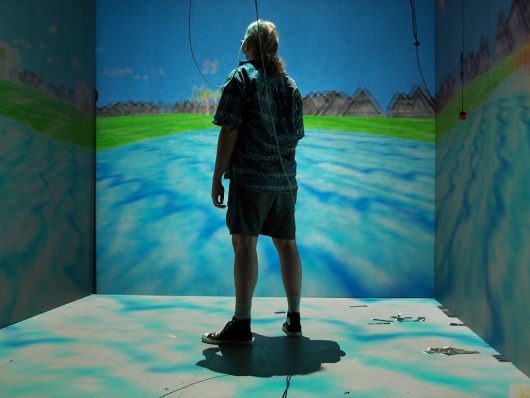
EON_Educational_ProgramFor those in the developing world with scarce resources and limited access to computers and tablets, a number of innovations in education are creating exciting opportunities. One such innovation is the EON educational program — the next step in progressing developing countries.

EON Reality, which specializes in virtual reality (VR) and augmented reality (AR), is opening the first interactive digital center (IDC) on the African continent in Tshwane, South Africa.

The project is a collaborative effort between the software developer and Tshwane’s city government. It is part of the latter’s Tshwane Vision 2055, a plan which seeks to “break the cycle of generational poverty, inequality and underdevelopment.”

According to Dave Lockwood, the director of the new IDC, VR and AR remove language and literacy barriers to education because they show rather than tell. VR creates an artificial environment that users can move in. (The Oculus Rift, for example, is a VR headset). AR, on the other hand, modifies the existing environment by adding artificial sensory input, such as images or sound.

Lockwood believes that students would learn better and retain more information with the help of the EON educational program, and more specifically, VR and AR. Furthermore, content and applications can be created for both science education and vocational training, which are crucial for economic growth and development.

VR and AR, it seems, are poised to make a real change in the way in which education is delivered in Africa. The Tshwane IDC is an example of how educational technology can assist with government efforts to promote the development and improve services.

Across the Indian Ocean, a team from Carnegie Mellon University recently completed an experiment in “compassionate engineering” at the Mathru School for the Blind in Bangalore, India. The idea is to use existing technology with a focus on the people, allowing it to evolve to suit their needs.

As part of the project, students received low-cost braille tutors. M. Bernardine Dias, the Carnegie Mellon professor who led the case study, argues that electronic reading and writing aids such as these can go a long way in reducing poverty, because poverty is often concentrated among the disabled population.

A World Trade Organization study that she cited, for example, found that 90 percent of visually impaired people live in low-income households.

By combining virtual and augmented reality, the EON educational program is changing the way the world looks at education, one student at a time. Whether using cutting-edge devices or only putting old tools to new use, educational technology is helping alleviate poverty by catering to the needs of different people and the way they learn best.

– Philip Katz

Photo: Wikipedia

August 12, 2016
https://borgenproject.org/wp-content/uploads/borgen-project-logo.svg 0 0 Borgen Project https://borgenproject.org/wp-content/uploads/borgen-project-logo.svg Borgen Project2016-08-12 01:30:592024-12-13 17:54:53The EON Educational Program Improves Developing Countries
Development, Economy

Kenya: Model for African Nations in UN’s Blue Economy

Kenya_Economy“The New Frontier of African Renaissance” is the “blue economy,” according to the African Union. The United Nation’s Economic Commission for Africa (ECA) recently released a handbook on how Africa can make the most of its vast coastal and freshwater resources.

Out of 54 total countries in Africa, 38 are coastal, including the fastest growing economy on the continent, Kenya. Last year, Bloomberg ranked Kenya the third fastest growing economy in the world. The key to its success has been a strong blue exporting economy.

The backbone of Kenya’s private sector is its horticulture and tea industries, which are both export markets. Kenya not only produces the most black tea in the world, but it also exports the most. However, while neighboring nations like Tanzania produce more horticulture than Kenya, Kenya’s well-designed shipping infrastructure makes it a vastly superior exporter.

The economic trend visible in Kenya is that even when production is comparatively low, a streamlined exportation system can cause a big economic boom. The new handbook by the ECA explains how African nations can use their coastal status to promote long-term growth.

As in Kenya, the handbook emphasizes the blue economy involving shipping and other markets. The ECA calls for an update of maritime transportation to make Africa a center for global trade.

An overarching theme of the handbook is sustainability, particularly the use of hydroelectric power over petroleum or coal. As expected, Kenya mirrors the ECA’s suggestion, with 71 percent of national electricity coming from hydroelectric sources.

It will take a lot of work to make the handbook’s blue economy a reality. Countries with big shares of coastline like Eritrea and Somalia nonetheless trail far behind economically due to political instabilities in its region. Furthermore, the other African nation seeing major GDP growth, Nigeria, is heavily reliant on oil exports–the opposite of what the ECA suggests.

While the ECA cannot expect changes overnight, Executive Secretary Carlos Lopes is hopeful that Africa will benefit massively from a well run blue economy. According to Lopes, “If fully exploited and well managed, Africa’s Blue Economy can constitute a major source of wealth and catapult the continent’s fortunes.”

– John English

Photo: Flickr

August 12, 2016
https://borgenproject.org/wp-content/uploads/borgen-project-logo.svg 0 0 Borgen Project https://borgenproject.org/wp-content/uploads/borgen-project-logo.svg Borgen Project2016-08-12 01:30:072024-12-13 17:54:44Kenya: Model for African Nations in UN’s Blue Economy
Activism, Development, Water

Orlando Bloom’s Dedication to Water Conservation

Orlando Bloom

Orlando Bloom has traveled to Nepal twice to learn about how UNICEF aids impoverished communities. He has become informed about the impact UNICEF has, whether it be educating people about water sanitation, providing vaccinations or providing safe homes for young girls.

Bloom and UNICEF

During a trip to Nepal in 2007, Orlando Bloom was made aware of the power and importance of spreading information. He learned about the process, supported by UNICEF, that young kids often use to create clean and sanitary water using UV rays from the sun. By filling a clear plastic water bottle to the top (leaving no air inside) and placing it at a 30-degree angle on a rooftop, the sun’s rays are able to kill any unsafe bacteria and germs.

In an interview, Bloom explains, “When the message is made clear to people, they can start to advance forward.”

By educating and spreading valuable information to kids on creating safe water, they are able to bring multiple bottles of clean water home to their families. He encourages people to spread valuable information that can help communities, as he has first-hand seen the benefits of this through UNICEF’s water sanitation programs.

Rita’s Story

Bloom’s trip to Nepal opened his eyes to how precious a resource water is. He was able to spend time with a 6 year old girl named Rita, who occupies half of her day collecting water.

She uses a water tank in a basket, which connected to a strap that goes over her head. He explains her journey, “She walks a few miles up and down a mountain to get to a well and collects water to bring back to her house. And the water she’s collecting from the well is not clean, it can make her sick.”

Bringing it Home

Now at home in the United States, Bloom is speaking out about the importance of conserving water. Inspired by his trip to Nepal, he explains that we cannot take our daily access to water for granted. He has instilled this mindset into his son, for example, by teaching him to turn off water while brushing his teeth.

Orlando Bloom has also visited places including Liberia, Jordan and Moscow to learn about the struggles families go through, to further raise awareness for other issues besides water conservation and sanitation.

– Casey Marx

Photo: Flickr

August 8, 2016
https://borgenproject.org/wp-content/uploads/borgen-project-logo.svg 0 0 Borgen Project https://borgenproject.org/wp-content/uploads/borgen-project-logo.svg Borgen Project2016-08-08 01:30:592024-12-13 17:54:55Orlando Bloom’s Dedication to Water Conservation
Development, Food & Hunger, Health, Water

Water Quality in Afghanistan

Water quality in Afghanistan pollution

Water is a basic necessity for all life–it must be safe and clean for use. For the people of Afghanistan, water that is safe and clean is especially hard to come by. Fortunately, poor water quality in Afghanistan is a problem that both a global organization and its Afghan partners are working to resolve.

After more than a decade of armed conflict and neglect, Afghanistan has a problem with getting sanitary water to its people. The country of 32.5 million people gets its water from rivers and underground supply, which is reliant on rainfall and snow.

In recent years, climate change has caused a reduction in precipitation, resulting in a drop in water levels of six meters.

Other major obstacles stand in the way of improving the water quality in Afghanistan. Not only is there less water, but the water that is available is contaminated. In most major cities, underground water supplies have been compromised, due to the lack of canalization, proper waste management and proper waste disposal.

In big cities, hospitals commonly bury their waste underground or leave it above ground. Medical waste can contain poisons and infectious inhabitants, seeping into the underground water supply over time.

However, change is underway to improve this dire situation.

The Improvement of Water Quality in Afghanistan

Domestically, the Afghan Urban Water Supply and Sewerage Corporation has been working for the last 30 years constructing 40,000 clean water posts, with access for one million people. But, the Afghanis cannot do it alone. Much work is still to be done to meet all water needs in Afghanistan.

External help is underway from GIZ, a German company that specializes in developing solutions to global problems. With the backing of the German Federal Ministry for Economic Cooperation and Development, GIZ is making great strides.

In collaboration with the Afghan Urban Water Supply and Sewerage Corporation, GIZ has developed and is implementing a massive plan to decentralize and overhaul the Afghani water infrastructure. They will work with and train Afghani workers to complete the project and independently maintain it, also creating a sanitation and management program for water in Afghanistan.

Between 2011 and 2013, GIZ trained around 2,000 employees from the institutions involved. As a result, they are now able to better perform the work necessary improve water quality in Afghanistan.

Now that the workforce has been trained, substantial progress is being seen.

From 2007 to 2013, the number of households with a newly connected water supply in Kunduz, a major city in northeastern Afghanistan, rose from 370 to 7,700. This represents about 75 percent of Kunduz’s population. Kunduz is only one example of a trend spreading around the country.

Currently, newly constructed water infrastructure is not only becoming self-sufficient, but also now has the ability to self-fund more growth. In 2012, the Afghani government introduced a water tariff, which significantly increased the income of the water infrastructure. In some cities, Afghanis are willing and able to pay for their new access to clean water.

Since then, in the major cities of Kabul, Harat and Kunduz, the proportion of water that is paid for has risen greatly. As a result, the cities of Herat, Kunduz and Mazar-e Sharif have built and are operating six new wastewater plants. Big change is taking place for the better.

Not long ago, the majority of Afghanis were desperate for clean water. Today, with the help and intervention of Germany, the major components that led to the water problem in Afghanistan are on the way to being improved. The work being done is changing lives, communities and cities across Afghanistan.

– Steven Jenkins

Photo: Flickr

August 6, 2016
https://borgenproject.org/wp-content/uploads/borgen-project-logo.svg 0 0 Borgen Project https://borgenproject.org/wp-content/uploads/borgen-project-logo.svg Borgen Project2016-08-06 01:30:112024-12-13 17:54:54Water Quality in Afghanistan
Development, Global Poverty

CCRO: Securing Communal Land Rights in Tanzania

Communal land rights
The Nature Conservancy, the Ujamaa Community Resource Team (UCRT) and the Northern Tanzania Rangelands Initiative (NTRI) have teamed up to find a solution for tackling communal land rights in Tanzania. They have come up with an initiative called the Certificate of Customary Right of Occupancy (CCRO).

The Nature Conservancy states that the “CCRO is a form of customary land tenure within a larger village holding. This is an effective tool for strengthening community land rights and securing communal lands.”

However, UCRT has updated the concept of land grants to a more secure communal forum where the land can be used by the community for several other purposes such as farming, grazing and foresting to name a few.

Historically, assigning land rights has been a topic of major concern throughout the world. According to the Nature Conservancy, 2.5 billion people “depend on land and natural resources that are held, used or managed collectively.”

This number includes 370 million indigenous peoples. These communities live on half the world’s surface but have recognized rights to only 10 percent of the land.

When the people who need this land lack any legal right to them, they are extremely susceptible to losing access to the very thing they need to survive.

Edward Loure, a program director at UCRT, has been working to give the people of northern Tanzania a voice in the communal community and to help reduce conflict. The main solution that has been put into place is the CCRO.

In its first year, the CCROs secured approximately 22,000 hectares of collective lands. By the end of 2015, the amount had reached 90,000 hectares with 200,000 more hectares hoped to be acquired by the end of 2017.

According to UCRT, “most traditional pastoralist and hunter-gatherer communities are currently at great risk of loosing (sic) their land and resources due to progressive land encroachment and lack of representation in modern Tanzania.” UCRT works to empower these communities.

Land acquired by hunter-gatherers or pastoralists often seems to be unused because the group is moving with the seasons or with the grazing patterns of the herd. This makes them particularly vulnerable to losing their land.

CCRO not only promotes equality in these communities but it also protects the rights of vulnerable people “who share and depend on communal land and its resources.”

Another problem in Tanzania that the CCRO works on solving is wildlife migration as 60 percent of African wildlife drift throughout the year. To that end, the NTRI has partnered with the Community Wildlife Management Area (CWMA) to help set up the corridors where livestock is not allowed during migration seasons.

As a result, the villages who are CWMA compliant are in a good position to negotiate with tourists during the migration seasons.

Recently, Edward Loure won The Goldman Environmental Prize for 2016 for Africa. The prize honors grassroots heroes who “take extraordinary actions to protect the natural world.”

The winners of the prize encourage sustainability, protect endangered ecosystems or species, combat destructive development and fight for environmental justice and policies.

– Rhonda Marrone

Photo: Flickr

July 22, 2016
https://borgenproject.org/wp-content/uploads/borgen-project-logo.svg 0 0 Borgen Project https://borgenproject.org/wp-content/uploads/borgen-project-logo.svg Borgen Project2016-07-22 01:30:482024-12-13 17:54:37CCRO: Securing Communal Land Rights in Tanzania
Development, Education, Global Poverty

Organizations Improving Education in the Developing World

Improving Education
Education is essential to achieving a higher quality of life. Many individuals in developing countries find it difficult to access quality education due to poverty, violent conflict and a myriad of other issues.

Global access to education may seem like a daunting problem, but there are numerous organizations you can support to increase a child’s access to education in the developing world.

The African Children’s Educational Trust (A-CET)

A-CET focuses on developing education in Ethiopia. It provides long-term scholarships to at-risk children that are funded by individual donations. The charity also works to improve and build schools within the country.

The BOMA Project

The BOMA Project is based in the U.S. and strives to better the lives of women in drought-prone areas. The organization gives grants to women within various communities as well as provides a two-year “poverty graduation program” which teaches these women how to run a small business.

By educating vulnerable women about business, the BOMA Project helps to create self-sustainable communities. The NGO is only operating in Kenya currently, but it hopes to expand its reach in the near future.

She’s the First

She’s the First is another organization focused on impoverished women within developing countries. The NGO provides girls throughout the world with the resources and connections essential to a quality education and future.

UNICEF

UNICEF is a well-known UN program dedicated to providing aid to developing countries. Access to education in these countries is among the numerous humanitarian issues UNICEF aims to address through collaboration with governments and NGOs.

Save the Children

Save the Children was originally founded in London in 1919 to address hunger caused by World War I. Today, the organization fights for vulnerable children throughout the world. Through teacher training and empowering parents and their children, Save the Children helps improve the quality of education in developing countries.

All of these organizations strive to increase education in the developing world. While some work on a smaller level, they are all making a difference. Donating or even volunteering for these and similar organizations are just a few ways you can help a child in need access a quality education and escape the cycle of poverty.

– Saroja Koneru

Photo: Flickr

July 16, 2016
https://borgenproject.org/wp-content/uploads/borgen-project-logo.svg 0 0 Borgen Project https://borgenproject.org/wp-content/uploads/borgen-project-logo.svg Borgen Project2016-07-16 01:30:052024-12-13 17:54:39Organizations Improving Education in the Developing World
Page 110 of 163«‹108109110111112›»

Get Smarter

  • Global Poverty 101
  • Global Poverty… The Good News
  • Global Poverty & U.S. Jobs
  • Global Poverty and National Security
  • Innovative Solutions to Poverty
  • Global Poverty & Aid FAQ’s
Search Search

Take Action

  • Call Congress
  • Email Congress
  • Donate
  • 30 Ways to Help
  • Volunteer Ops
  • Internships
  • Courses & Certificates
  • The Podcast
Borgen Project

“The Borgen Project is an incredible nonprofit organization that is addressing poverty and hunger and working towards ending them.”

-The Huffington Post

Inside The Borgen Project

  • Contact
  • About
  • Financials
  • President
  • Board of Directors
  • Board of Advisors

International Links

  • UK Email Parliament
  • UK Donate
  • Canada Email Parliament

Get Smarter

  • Global Poverty 101
  • Global Poverty… The Good News
  • Global Poverty & U.S. Jobs
  • Global Poverty and National Security
  • Innovative Solutions to Poverty
  • Global Poverty & Aid FAQ’s

Ways to Help

  • Call Congress
  • Email Congress
  • Donate
  • 30 Ways to Help
  • Volunteer Ops
  • Internships
  • Courses & Certificates
  • The Podcast
Scroll to top Scroll to top Scroll to top