• Link to X
  • Link to Facebook
  • Link to Instagram
  • Link to TikTok
  • Link to Youtube
  • About
    • About Us
      • President
      • Board of Directors
      • Board of Advisors
      • Financials
      • Our Methodology
      • Success Tracker
      • Contact
  • Act Now
    • 30 Ways to Help
      • Email Congress
      • Call Congress
      • Volunteer
      • Courses & Certificates
      • Be a Donor
    • Internships
      • In-Office Internships
      • Remote Internships
    • Legislation
      • Politics 101
  • The Blog
  • The Podcast
  • Magazine
  • Donate
  • Click to open the search input field Click to open the search input field Search
  • Menu Menu

Archive for category: Development

Information and stories on development news.

Development, Global Poverty

Young Entrepreneurs Can End World Hunger

Young Entrepreneurs

The future of poverty and hunger alleviation may rest in the hands of today’s youth. Young entrepreneurs embarking into the business world have immense power in aiding those in need. Creative thinkers and digital-savvy youth have unique skills and ideas that may give them an advantage in giving back.

In an article recently published by The Huffington Post, it was found that many of the world’s hunger-aiding programs were inspired or founded by the youth of today. Young entrepreneurs are starting programs such as “The Future Isn’t Hungry” and “3B Brae’s Brown Bags” to counter national poverty in the United States, with many working to expand internationally.

Three young entrepreneurs, Jake Harriman, Beth Schmidt and Leila Janah, have already made their mark in the fight against poverty. While Harriman’s NGO works to end world hunger, Schmidt’s organization is reducing poverty by helping people living in poverty have better access to college. Janah’s company works with American companies to crowdsource staff from developing countries, providing countless people with jobs to lift them out of poverty.

All three of these entrepreneurs recognized a call for action and drastically changed their lives to help give everyone a fighting chance. These are just a few of today’s young entrepreneurs using their skills to combat poverty and hunger.

In a report published by the Overseas Development Institute, it was stated that teaming young entrepreneurs with volunteers between the ages of 18 and 25 can combat unemployment around the world. Volunteering abroad can help young business owners acquire new skills and knowledge to better understand the developing world. In turn, volunteers working with business people can help them gain a better understanding of business tactics that they can apply to the volunteer work they do internationally.

The study uncovered a positive correlation between young entrepreneurs volunteering or working abroad and the development of skills necessary to end poverty. Volunteers and entrepreneurs worked in countries, such as Tanzania and Nicaragua, where their skills and businesses were put to the test. In the end, both the entrepreneurs and the citizens of these countries benefited in the study.

The initiative to increase the number of entrepreneurs working to give back has already begun and is continuing to grow. In Africa alone, multiple NGOs are working to unleash the continent’s untapped potential through educational, microfinance and health nonprofits. And many of these are run by or work with young entrepreneurs. Jake Harriman’s goal, along with the world’s young business people who are following in his footsteps, is to alleviate poverty by 2030.

– Julia Hettiger

Photo:  Flickr

April 27, 2016
https://borgenproject.org/wp-content/uploads/borgen-project-logo.svg 0 0 Borgen Project https://borgenproject.org/wp-content/uploads/borgen-project-logo.svg Borgen Project2016-04-27 01:30:562024-12-13 18:06:00Young Entrepreneurs Can End World Hunger
Development, Global Poverty

Bank Loans in Bangladesh Open Doors for Poor Farmers

Loans in Bangladesh

Nearly half of the population in Bangladesh work in the poor agricultural sector where they have traditionally been excluded from accessing credit facilities that could improve their livelihoods.

To help farmers lift themselves out of poverty, USAID’s Development Credit Authority has partnered with Bangladeshi banks to provide customized financing options that fit the needs of local communities. Here are Benefits of Small Loans in Bangladesh.

3 Benefits of Small Loans in Bangladesh

  1. Bank loans give farmers the opportunity to become self-sufficient. Many poor farmers lack the resources to invest in the land they work on and often spend a significant portion of their income on rent or lease  agreements. Through credit facilities, small farmers can purchase the land they work on providing them with stability and opportunities for growth.
  2. Some farmers have used loans to diversify or increase their crop production or to purchase livestock. Through loans, some workers have even been able to make the switch from being a laborer on someone else’s farm to developing a farm of their own. Each small investment that farmers are able to make moves them one step closer to economic stability.
  3. Entrepreneurs have the option to expand their businesses through bank loans. One of USAID’s success stories is of a man who had run a carp farm for 16 years. His business was well-established but in order to expand he required a loan, which he received through the USAID program. Farmers can increase their livelihoods when they have more land, because they can cultivate more crops or raise more livestock.

The availability of loans in Bangladesh that are customized for small borrowers will go a long way to benefit farmers, their families and local communities.

– Emily Milakovic

Photo: Flickr

April 25, 2016
https://borgenproject.org/wp-content/uploads/borgen-project-logo.svg 0 0 Borgen Project https://borgenproject.org/wp-content/uploads/borgen-project-logo.svg Borgen Project2016-04-25 05:18:512024-12-13 17:54:18Bank Loans in Bangladesh Open Doors for Poor Farmers
Activism, Development, Global Poverty

Gates Foundation Pledges $50 Million to (RED) Campaign

Bill Gates Donate World Economic Forum

The Bill and Melinda Gates Foundation gave (RED), an organization that fights AIDS, the best 10th-anniversary gift ever: a $50 million match for all Global Fund donations in 2016.

The foundation announced its pledge at the 2016 World Economic Forum in Switzerland according to Look to the Stars.

(RED) and the Fight Against Aids

“Over the past decade, (RED) has enrolled millions of people and dozens of brands in the global fight against AIDS,” said Bill Gates, co-founder of the Bill & Melinda Gates Foundation, in a statement at the 2016 World Economic Forum.

“Today’s match will provide the Global Fund with up to $100 million to help save 60,000 lives, prevent 2.3 million new infections and generate more than $2 billion in economic gains for developing countries,” he said. “That’s an amazing return on investment.”

The Bill and Melinda Gates Foundation and the (RED) campaign has actively supported the Global Fund over the years.

Since its inception in 2006, (RED) has raised $350 million thanks to partners, events and products sold according to the organization’s website.

“We owe a debt of gratitude to all the companies, the creative collaborators and the activists who step-up to fight AIDS with (RED),” said (RED) CEO Deborah Dugan in a statement in January 2016.

A portion of the profits from (RED) branded products, like Beats by Dr. Dre Solo 2 headphones, Apple iPods and GAP clothing, benefit the Global Fund to Fight AIDS, Tuberculosis and Malaria.

The Gates and the Global Fund

The Global Fund was established in 2002 to end AIDS, malaria and tuberculosis as epidemics through government, civil society and private sector partnerships according to its website.

To date, the Gates Foundation has contributed a total of $1.4 billion to the Global Fund, which includes the issuance of the long term promissory note of $750 million according to the Global Fund’s website.

“The Global Fund is one of the most effective ways we invest our money in every year,” said Bill Gates at the 2012 World Economic Forum. “By supporting the Global Fund, we can help to change the fortunes of the poorest countries in the world. I can’t think of more important work.”

The Bill and Melinda Gates Foundation and the (RED) campaign even partnered together through Snapchat in honor of World AIDS Day 2015.

Every time a user sent a Snapchat message using a (RED) filter, the Bill and Melinda Gates Foundation agreed to donate $3 to the organization’s fight against AIDS according to Re/code.

– Summer Jackson

Photo: CNN

April 22, 2016
https://borgenproject.org/wp-content/uploads/borgen-project-logo.svg 0 0 Borgen Project https://borgenproject.org/wp-content/uploads/borgen-project-logo.svg Borgen Project2016-04-22 01:30:122024-12-13 17:54:11Gates Foundation Pledges $50 Million to (RED) Campaign
Development, Foreign Relations, Global Poverty

What is the Global Development Lab Act?


Global Development Lab Act
The Senate Committee on Foreign Relations announced the introduction of the Global Development Lab Act. It was introduced by Senators Ben Cardin and Johnny Isakson on March 4, 2016. This bipartisan legislation states that the effectiveness of U.S. foreign aid could be significantly enhanced through the use of scientific and technical innovations and by involving the private sector. As a result, there would be more low-cost and common-sense solutions to development challenges such as improved health outcomes and reduced global poverty.

Established in April 2014, USAID’s Global Development Lab builds upon the belief that innovation, technology and partnership can accelerate development impact fast, cheap and sustainably.

“The Lab’s role is to rethink assumptions and harness the power of the crowd and America’s leading research institutes and universities, coupled with the democratization of science and technology, to lead to new breakthroughs that it can bring to scale,” Alex Dehgan, USAID’s former chief scientist said interviewing with Center for Global Development. “If the Lab isn’t pushing boundaries, it isn’t creating discomfort, it isn’t attracting new solvers (including from the developing world), it will fail to achieve its promise.”

The Global Development Lab Act (S. 2629) establishes five key duties: (1) increase the application of science, technology, innovation and partnerships to cultivate and gauge new ways to end extreme poverty; (2) discover, test and scale development innovations to increase cost-effectiveness and support U.S. foreign policy and development goals; (3) leverage the expertise, resources and investment of businesses, private organizations, science and research organizations, and universities to increase program impact and sustainability; (4) utilize innovation-driven competitions to expand the number and diversity of solutions to challenges of development; and (5) support USAID missions and bureaus in applying science, technology, innovation, and partnership approaches to decision-making, obtainment and program design according to the legislation.

On March 4, 2016, in a press release, Senator Isakson stated: “The Global Development Lab Act would provide the integration of science, technology into our development solutions for eradicating poverty. The USAID Global Development Lab has created cost-effective solutions to solve challenges around the world. Through public and private coordination, we are leveraging the resources of business, non-governmental organizations, science and research to advance greater global health and economic development.”

The House version of this legislation (H.R. 3924) was introduced by Reps. Joaquin Castro, D-TX, and Michael McCaul, R-TX, on Nov. 4, 2015. The House Foreign Affairs Committee held a consideration and mark-up session for this legislation on Feb. 24, 2016.

– Summer Jackson
Photo: USAID

April 20, 2016
https://borgenproject.org/wp-content/uploads/borgen-project-logo.svg 0 0 Borgen Project https://borgenproject.org/wp-content/uploads/borgen-project-logo.svg Borgen Project2016-04-20 01:30:152024-12-13 18:05:56What is the Global Development Lab Act?
Development, Global Poverty

People Tree Sets a Precedent for the Garment Industry

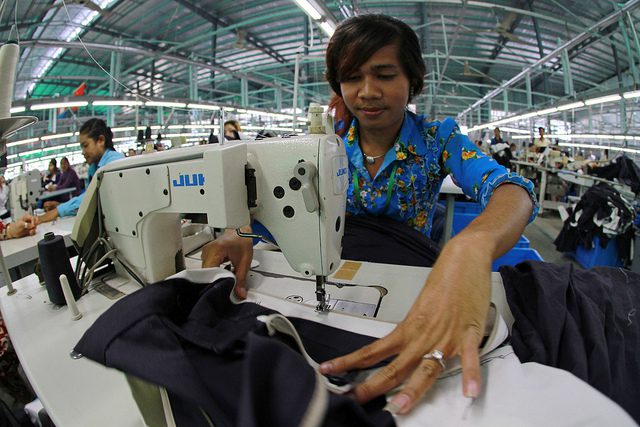
Garment IndustryThe fashion tastes of consumers in advanced nations can have serious impacts on the well-being of workers that manufacture clothing products in developing nations.

Not only are these workers often paid unfair wages, but they also often suffer from extremely unsafe working conditions. In 2013, for instance, the collapse of a poorly-built factory in Bangladesh killed over 1,000 people, according to The Guardian.

Garment Industry in Bangladesh

Bangladesh, like many other developing countries, is highly dependent on the garment industry. This means that companies who fail to treat workers respectfully can defend themselves against critics by claiming they provide jobs to people who would not otherwise be able to work.

There is some sense to such a claim. According to The Guardian, 80 percent of Bangladesh’s GDP relies on the ready-made garment industry.

Nevertheless, it is certainly possible for garment companies to do more, both to protect workers as well as to support support development of the economies and societies in which those workers live.

People Tree: A Company Making Changes

One company that has proven to be true is People Tree, a London and Tokyo-based brand that aims to be 100 percent Fair Trade throughout its supply chain.

People Tree has attracted the attention of The Guardian, The Telegraph and other prominent publications for its commitment to Fair Trade policy.

In 2013, it became the first clothing company in the world to receive the product mark of the World Fair Trade Organization.

On its website, People Tree states that “people and the planet are central to everything we do.”

Central to its business model is what the People Tree calls “Slow Fashion,” which is a philosophy that rebels against the high-speed mode of trade that is standard in the fashion industry. It is that rushed mentality that leads to socially and environmentally hazardous practices.

As People Tree’s website defines it, “Slow Fashion means standing up against exploitation, family separation, slum cities and pollution—all the things that make fast fashion so successful.”

With regard to the environment, People Tree engages in a number of sustainable practices ranging from the use of certified organic cotton to dyeing with safe and azo-free chemicals. Products are sourced locally and from recycled material when possible. Once the products are made, People Tree prioritizes shipping by sea over shipping by air, thereby reducing the company’s impact on global warming.

Perhaps most importantly, People Tree’s fabric is woven by hand. Specifically, by the hands of real people whom the company strives to pay well and treat with dignity.

Indeed, one of the reasons People Tree cares so much about environmental friendliness is that it understands the effect pollution has on the environments in which their workers live. Environmentally conscious practices lead to sustainable development and happier workers, which in turn lead to higher productivity and more business, according to the company.

People Tree makes 50 percent advance payments on orders so that farmers and producers can more easily finance Fair Trade. And it manages its Collections so that workers will have enough time to produce garments by hand without being crunched, which the company says “is rare in the fashion industry.”

Setting the Stage for Sustainable Fashion

People Tree goes beyond paying fair wages and maintaining safe conditions, however. In some communities, it provides clean water and offers free education to poor families. In many cases, People Tree partners with organizations that empower disadvantaged workers, such as women and the physically disabled.

A new precedent has been established for the garment industry, as social business and corporate responsibility become increasingly popular in other industries. People Tree’s success demonstrates the potential for companies to think beyond profit and consider the wider impact business can have on impoverished communities in developing countries.

– Joe D’Amore

Sources: Telegraph 1, Telegraph 2, People Tree, The Guardian 1, The Guardian 2
Photo: Flickr

April 8, 2016
https://borgenproject.org/wp-content/uploads/borgen-project-logo.svg 0 0 Borgen Project https://borgenproject.org/wp-content/uploads/borgen-project-logo.svg Borgen Project2016-04-08 01:30:432024-12-13 17:54:13People Tree Sets a Precedent for the Garment Industry
Development, Global Poverty

What Causes Famine in Africa?

What Causes Famine in Africa
What causes famine in Africa? Over 40 million African lives are threatened by famine and food crisis. A number of factors contribute to widespread and stubborn famine, such as extreme weather, weakening currencies and a failure to mobilize resources.

Although international aid is an imperative aspect of a country’s ability to cope, food aid alone will never solve the reoccurring problem.

“Food aid is focused on short-term emergencies and doesn’t address the causes of the crisis,” according to Poverties, an organization that provides social and economic research. “That’s why even if it’s badly needed in emergencies, a long-term plan is also vital.”

Programs such as The Purchase for Progress and World Food Program seek to develop local farming industries. Investing in agriculture prevents future food shortages and supports a local economy rather than only relieving famine in the short-term.

For international aid to be most effective, it is crucial that it arrives in a timely fashion in predictable amounts and is properly targeted. An earlier response to a crisis builds resilience in a community and is more cost-effective than waiting to treat seriously malnourished people. According to Mail and Guardian Africa, the continent needs at least $4.5 billion for emergency relief.

Across the Horn of Africa and South Sudan, a combination of war and severe drought create food insecurity.

“In war, food sometimes becomes a weapon,” according to World Food Program, the world’s largest humanitarian organization addressing hunger. “Soldiers will starve opponents into submission by seizing or destroying food and livestock and systematically wrecking local markets. Fields are often mined and water wells contaminated, forcing farmers to abandon their land.”

Continuous fighting hinders food aid; the areas that need it the most are the areas hardest to reach due to the security situation. Ethnic discrimination is a factor as well as the region being hit hard by AIDS. The disease causes those weakened by starvation to be unable to fight for survival.

Instability in the market causes food prices to fluctuate, making it difficult for the poor to have access to nutritious food consistently. These spikes in price hit children and the elderly the hardest.

With unrestricted access and thorough planning, international aid can drastically relieve food crisis. Providing resources and assistance to Africans can foster sustainable development strategies specific to the region and its weather as well as boost economic development, preventing famine in the future.

– Emily Ednoff

Sources: Poverties, Mail & Guardian Africa, Deutsche Welle, World Food Programme
Photo: Flickr

April 6, 2016
https://borgenproject.org/wp-content/uploads/borgen-project-logo.svg 0 0 Borgen Project https://borgenproject.org/wp-content/uploads/borgen-project-logo.svg Borgen Project2016-04-06 01:30:262024-12-13 17:54:13What Causes Famine in Africa?
Development, Global Poverty

Crowdsourcing Multinationals Solve Social Problems

Crowdsourcing
The process of collecting contributions in the form of ideas and services is not a new phenomenon. In fact, crowdsourcing has historically been used to solve challenging innovation problems.

Companies have for a long time used consumer wisdom to tackle tough scientific and technological challenges, design new products, generate marketing ideas and increase customer satisfaction. Platforms like the Heineken Ideas Brewery, BMW customer innovation lab and My Starbucks Ideas show how major organizations are successfully tapping into the power of the crowd to co-create innovative concepts.

Beyond simply a new approach to research and development, some companies have taken crowdsourcing a step further. Organizations are now using the powerful platform to tackle social challenges in the areas of sustainability and poverty reduction.

Unilever Foundry Ideas is a crowdsourcing platform that was launched by a corporate giant, Unilever in 2015. Through the platform, Unilever seeks to make sustainable living mainstream by sourcing ideas from customers and entrepreneurs. An article in CSR Asia talks about the success of Unilever Foundry ideas highlighting how it has generated over 300 ideas to encourage recycling of bathroom products, reduction of water dependency while doing laundry and invention of concepts for more luxurious and sustainable showers for the future.

“Big social, environment and economic issues are so huge that no one organization or company or group can solve them alone,” says a Unilever Foundry Ideas representative. “Aspects of sustainability affect all of us and so all of us have ideas.”

General Electric has the open innovation branch of its Ecomagination program. This is a collaborative problem-solving environment.

Open innovation posts a variety of challenges and creates an open call to the global brain, a growing community of over 400 million, to submit creative ideas to tackle these challenges. Contributors of winning ideas normally receive cash prizes, internships and future collaboration opportunities.

Open innovation has so far fielded challenges in the areas of solving water scarcity through Water Reuse and managing chronic disease by developing wearable monitoring technologies to mention a few.

BASF, one of the world’s leading chemical companies, has the co-creation platform the Creator Space. In 2015, Creator Space conducted a tour in six cities around the globe, Mumbai, Shanghai, New York, Sao Paulo, Barcelona and Ludwigshafen. Creator space aimed to develop solutions for problems that citizens in the different cities were facing. It did this through enlisting inputs from government officials, NGOs, the society as well as artists.

In Mumbai, for example, BASF Creator Space was tackling the challenge of water accessibility. According to a white paper on the Mumbai visit, a holistic approach has been developed to augment Mumbai city’s plans to revamp the on-grid water infrastructure.

Coca-Cola takes part in the crowdsourcing space by hosting an annual grant challenge known as “Shaping a Better Future”. For the grant, Coca-Cola has partnered with the Global Shapers Community of the World Economic Forum to scale proven solutions to the world’s biggest problems.

There are over 500 Global Shaper hubs around the world that comprise of young people with an exceptional drive to make a contribution to their communities. They have a focus on matters such as bettering the environment, kick-starting civic engagement and eradicating poverty to name a few.

Coca-Cola offers five 10,000 dollar grants through the program to accelerate the most impactful and promising Global Shaper hub projects.

François Pétavy, eYeka CEO notes that crowdsourcing often has its beginnings in the creation of better products and experiences, but often results in a more collaborative and sustainable world.

– June Samo

Sources: BASF 1, BASF 2, Coca-Cola, Crowdsourcing.org, CSR Asia, Entrepreneur, GE 1, GE 2, Open Innovation, Unilever

April 4, 2016
https://borgenproject.org/wp-content/uploads/borgen-project-logo.svg 0 0 Borgen Project https://borgenproject.org/wp-content/uploads/borgen-project-logo.svg Borgen Project2016-04-04 01:30:032024-05-27 09:33:29Crowdsourcing Multinationals Solve Social Problems
Charity, Development, Global Poverty

The Clinton Foundation: Bill’s Other Legacy

The Clinton Foundation
Bill Clinton will always be remembered first and foremost for his eight years in the White House, but he has another legacy that deserves just as much attention: The Clinton Foundation.

Founded in 1997 with a focus on Little Rock, Arkansas, the foundation has grown into an international powerhouse that has raised more than $2 billion to fund charity work around the world.

Like most ex-presidents, Clinton initially faded from the public eye. According to the Washington Post, he spent much of his time watching TiVo. Then, in 2002, he moved the Clinton Foundation to Harlem, New York, following Hillary Clinton’s successful election bid for U.S. Senate.

The foundation brought in consultants from Booz Allen Hamilton to give advice to small business owners in the local community, and the projects piled on from there. Using his celebrity power, Clinton was able to consistently recruit top-notch partners. Besides Booz Allen, he also brought in Princeton Review to bolster local students’ SAT scores.

It was not until 2002, however, that Clinton’s international work began. He met an old friend, former President of South Africa, Nelson Mandela, at an AIDS conference. Mandela reminded Clinton of a promise he made while still in office, a promise to help Africa after he left.

That promise materialized into the Clinton Health Access Initiative (CHAI). According to the Clinton Foundation Website, CHAI has helped reduce the cost of lifesaving HIV/AIDS medication from $10,000 annually for one patient to only $100 to $200. This has helped over eight million people in developing countries, many of them in Africa, afford medication without which they’d die.

CHAI was so successful that it became its own organization, but the Clinton Foundation actively promotes nine other initiatives: the Clinton Climate Initiative, the Clinton Development Initiative, the Clinton Foundation in Haiti, the Clinton Glustra Enterprise Partnership, the Clinton Global Initiative, the Clinton Health Matters Initiative, the Clinton Presidential Center and Too Small to Fail and No Ceilings: The Full Participation Project.

The Clinton Foundation is unique in that its initiatives are its own. It consists of over 2,000 employees that serve both as administrators and field workers. As such, it operates more as a nonprofit consulting firm than a grant-making agency. A New York Times story from 2015, for example, reports that the group’s work in Rwanda includes such diverse efforts as teaching farmers to double their yields, training nurses and specialists and supporting factories that turn soybeans into cooking oil.

Behind the power of the Clinton Foundation is Bill’s celebrity. As ex-President of the most powerful country in the world, he truly is a star among stars. With this power, he has been able to raise funds that few others on Earth could hope to achieve and partner with the best organizations to put the money to good use.

As the 2016 presidential election approaches, increasing scrutiny is being paid to the foundation. With Hillary as the first female President and Bill as the first “First Man,” some people would worry about influence-buying through the foundation. Still, the breadth and depth of the good work of the Clinton Foundation cannot be denied. Bill could’ve easily faded into the background after his presidency. Instead, he used his influence and recognition to benefit not just the United States, but the entire world.

– Dennis Sawyers

Sources: New York Times, The Clinton Foundation, The Washington Post

April 3, 2016
https://borgenproject.org/wp-content/uploads/borgen-project-logo.svg 0 0 Borgen Project https://borgenproject.org/wp-content/uploads/borgen-project-logo.svg Borgen Project2016-04-03 01:30:302024-12-13 18:05:54The Clinton Foundation: Bill’s Other Legacy
Development, Education, Global Poverty

World Leaders Meet to Discuss Global Education Aims

World Leaders in DubaiLeaders from the private and public sectors came together in Dubai on March 12-13 to discuss tactics for improving global education in the fourth annual Global Education and Skills Forum (GESF).

During the two-day event, speakers lectured on a variety of topics pertinent to the advancement of global education. These included such timely topics as the need for education to combat the spread of terrorism, and the lack of access to education for refugees, such as the three million children currently out of school due to war in Syria.

Workshops and debates were also held to challenge attendees to consider the practicality of solutions.

The Varkey Foundation, a nonprofit organization with the goal of improving education for underprivileged children, convened educators, academics, nonprofit leaders and government leaders, including 22 education ministers.

The aim of the Varkey Foundation is involving everyone in producing real-world global education solutions.

“The main topic will be rethinking collective responsibility for public education. This is in the context that there are still half a billion children in failing schools all around the world,” Varkey CEO Vikas Pota told Education Journal prior to the summit.

Sunny Varkey, Founder of the Varkey Foundation, did an interview with the online magazine Teach UAE. In that article he states, “it is not only important to find more money to overcome the crisis, but my belief is that by pooling our creativity, generosity, and persistence, we can collectively overcome this education crisis. If we work together – government, business and civil society – we have it in our power to finally give every child their birthright: a good education.”

Notable among the speakers at this year’s summit were: Tariq Al Gurg, CEO, Dubai Cares, UAE, as well as Sir Martin Sorrel, Group Chief Executive of WPP and Irina Bokova, Director General of UNESCO. According to the UNESCO website, Bokova spoke to the need for stronger education systems and the importance of strong teachers.

Bokova also spoke of the importance of education in combating radicalism. “Education is a vital tool also in the fight against violent extremism, to counter radicalisation‎.”

The GESF summit also featured a Global Teacher Prize. The winner was picked from a list of 50 which were drawn from thousands of nominations from countries around the world. According to the Education Journal, the idea behind this was to nominate an exceptional teacher in order to highlight the importance of educators.

The winner of the prize at this year’s summit was Hanan Al-Hroub, a female Palestinian teacher. The prize includes an award of $1 million.

The MENA Herald reported that The Varkey Foundation initiated three new alliances for promoting global education which met for the first time at the GESF 2016 Summit: the Alliance on Girls’ Education, the Alliance on Teachers and the Alliance on Innovation. Alliance partners include government leaders and representatives from UNESCO, Harvard University and Amazon.

They will produce their findings and recommendations at next year’s summit.

– Katherine Hamblen

Sources: Financial Express, TeachUAE, Education Journal, UNESCO, MENA Herald, The Herald
Photo: Education Journal Me

April 2, 2016
https://borgenproject.org/wp-content/uploads/borgen-project-logo.svg 0 0 Borgen Project https://borgenproject.org/wp-content/uploads/borgen-project-logo.svg Borgen Project2016-04-02 01:30:592024-06-12 07:49:28World Leaders Meet to Discuss Global Education Aims
Aid, Development, Global Poverty

Highlighting the Benefits of Cash Transfers

Cash TransfersCash transfers are one of the most thoroughly evaluated types of humanitarian aid that have been shown to effectively reach individuals and families in developing countries and can be provided with accountability. This form of aid has proven effective in reducing suffering by increasing limited household budgets and providing for basic needs.

According to a report by the Center for Global Development (CGD), cash transfers may come in the form of “an envelope of cash, a plastic card, or an electronic money transfer to a mobile phone, with which [recipients] can buy food, pay rent and purchase what they need locally.”

This report also suggests that these transfers should be complemented by services such as immunization and sanitation, where cash transfers may not be sufficient.

Other benefits through transfers include the transparency provided. They allow precise measurement of how much aid is arriving to the desired target population.

Receivers are granted the benefit of being able to choose what the aid is spent on. This decision making process further empowers communities and allows them to receive what they really need.

Despite the benefits, the CGD states that cash transfers are still often overlooked in favor of other forms of assistance. Today, cash payments make up only six percent of aid. Evidence from global crises, in Ethiopia, for instance, has proven that “cash was more effective than food aid by 25-30 percent,” says the CGD.

There are also challenges in the distribution of cash transfers. According to the World Bank, one challenge is ensuring that cash directly reaches needy recipients, avoiding corrupt processes and opportunistic elites.

Overall, cash transfers are practical. They can also reduce administration and operating costs. Respected nonprofits such as Give Well assert that unconditional cash transfers help the poor begin to create a better life on their own terms.

Giving the impoverished the freedom to utilize cash payments means they have the ability to meet individual needs and accelerate progress in their developing countries.

– Mayra Vega

Sources: Center For Global Development, World Bank, The New York Times
Photo: Flickr

March 29, 2016
https://borgenproject.org/wp-content/uploads/borgen-project-logo.svg 0 0 Borgen Project https://borgenproject.org/wp-content/uploads/borgen-project-logo.svg Borgen Project2016-03-29 01:30:192024-12-13 18:05:54Highlighting the Benefits of Cash Transfers
Page 112 of 163«‹110111112113114›»

Get Smarter

  • Global Poverty 101
  • Global Poverty… The Good News
  • Global Poverty & U.S. Jobs
  • Global Poverty and National Security
  • Innovative Solutions to Poverty
  • Global Poverty & Aid FAQ’s
Search Search

Take Action

  • Call Congress
  • Email Congress
  • Donate
  • 30 Ways to Help
  • Volunteer Ops
  • Internships
  • Courses & Certificates
  • The Podcast
Borgen Project

“The Borgen Project is an incredible nonprofit organization that is addressing poverty and hunger and working towards ending them.”

-The Huffington Post

Inside The Borgen Project

  • Contact
  • About
  • Financials
  • President
  • Board of Directors
  • Board of Advisors

International Links

  • UK Email Parliament
  • UK Donate
  • Canada Email Parliament

Get Smarter

  • Global Poverty 101
  • Global Poverty… The Good News
  • Global Poverty & U.S. Jobs
  • Global Poverty and National Security
  • Innovative Solutions to Poverty
  • Global Poverty & Aid FAQ’s

Ways to Help

  • Call Congress
  • Email Congress
  • Donate
  • 30 Ways to Help
  • Volunteer Ops
  • Internships
  • Courses & Certificates
  • The Podcast
Scroll to top Scroll to top Scroll to top